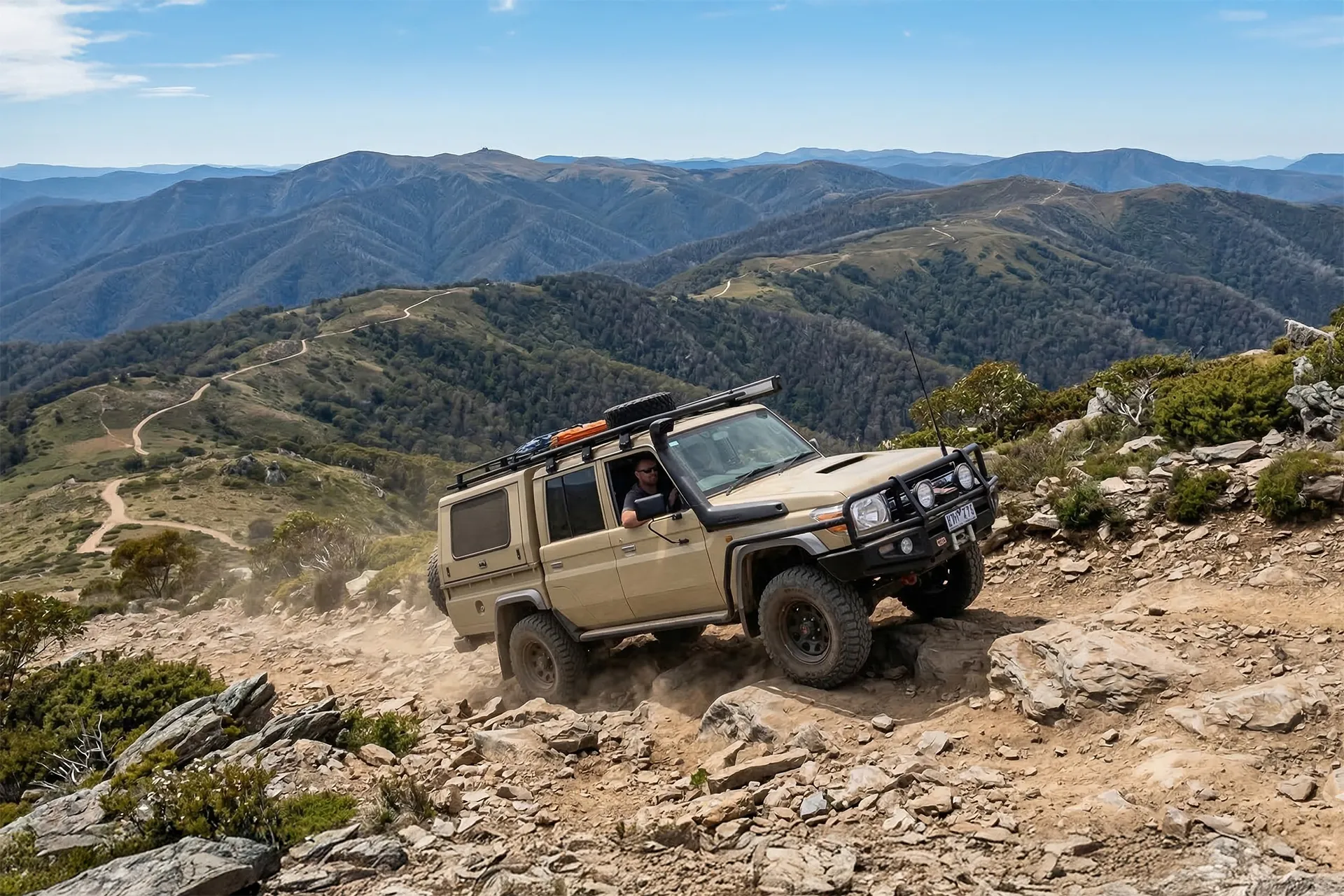

For many Australian 4WD enthusiasts, the Victorian High Country isn’t just a destination. It’s a spiritual home. A rugged expanse of snow-capped peaks in winter and sun-drenched, challenging tracks in summer calls to those seeking adventure beyond the bitumen.
At the heart of this call, standing as a true test of both machine and mettle, is the legendary Blue Rag Range Track.
This isn’t merely a scenic drive. It is a pilgrimage. A demanding ascent to one of the most breathtaking 360-degree alpine panoramas Australia has to offer. Prepare your rig, check your recovery gear, and brace for an unforgettable journey to the very spine of the Alps.
A True Victorian High Country Adventure
The Blue Rag Range Track is more than just a line on a map. It is a High Country rite of passage that separates the casual tourer from the committed adventurer.
While many scenic drives in the region wind through valleys or offer distant glimpses of the landscape, Blue Rag pushes you directly onto the exposed, rocky spine of the Great Dividing Range. Its appeal lies in its unapologetic challenge and the unmatched reward waiting at the summit.
Located in the heart of the Victorian High Country and accessible from the gateway towns of Dargo or Bright, this track is not for the faint-hearted or the unprepared. It demands respect, skill, and a capable low-range 4WD.
The climb is relentless. It is a technical dance over rocks and ruts that tests every component of your vehicle. With every kilometre gained, the views grow wider, hinting at the spectacular panorama that defines the Roof of the Victorian High Country.
Here the air is crisp, the silence is profound, and the sense of achievement is as vast as the landscape itself.
Track Details and Key Facts
Understanding the key details of the Blue Rag Range Track is essential for preparation and safety. These figures highlight both the technical difficulty and the natural rewards of the drive.
Location and Access
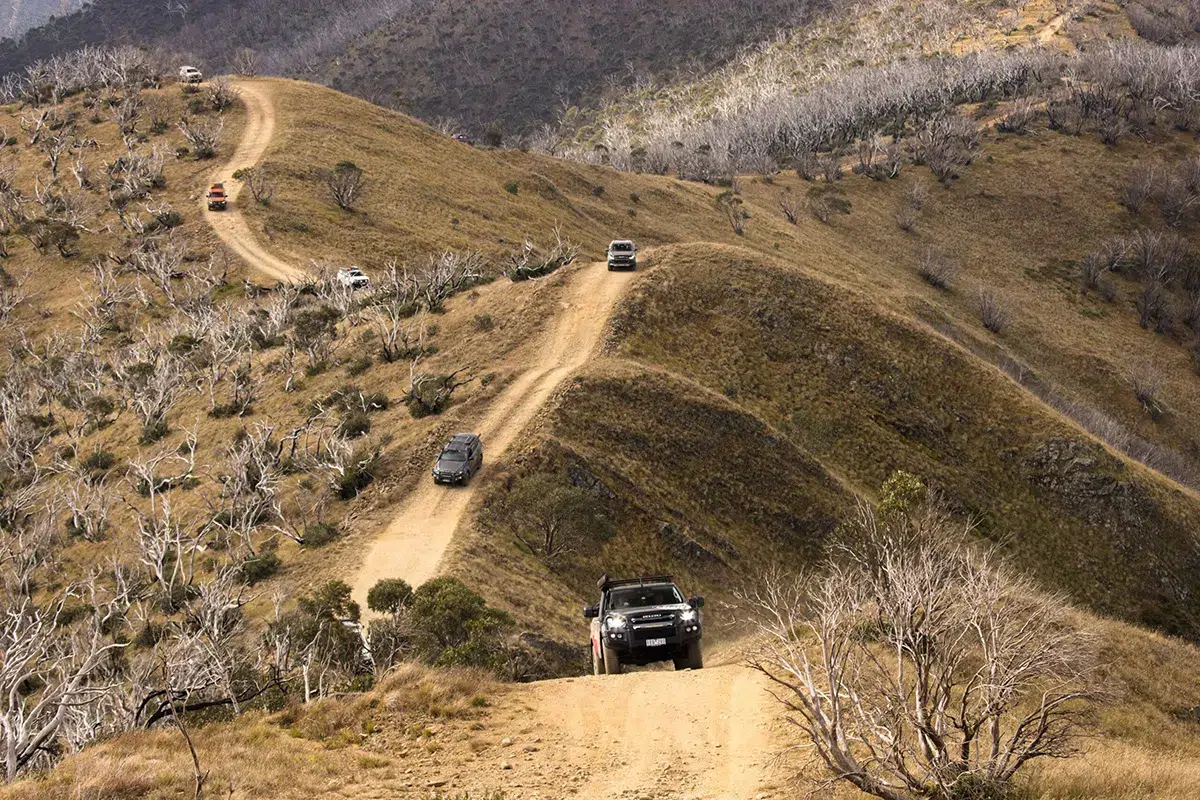
The track sits deep within the Victorian High Country, making Dargo and Bright ideal staging points for your trip.
Access usually begins from the Dargo High Plains Road, where Blue Rag Range Track branches off and quickly begins climbing. Because of the remote location, visitors must be self-sufficient, as there are no services once you leave the main roads.
Distance and Difficulty
From its turn-off on the Dargo High Plains Road, the Blue Rag Range Track runs approximately 7 kilometres one way to the trig point.
While 7km might appear short, the track carries a Grade 3 to Grade 4 difficulty rating, which makes it a serious challenge.
A Grade 3 track typically includes:
- Unsealed surfaces
- Steep sections
- Ruts and rocky obstacles
- The need for high clearance and low-range 4WD
A Grade 4 track increases the difficulty with:
- Very steep gradients
- Larger obstacles
- Technical sections that require advanced driving skill
Blue Rag delivers a constant combination of steep climbs, loose rock, and technical terrain that demands careful tyre placement and steady throttle control.
Elevation and Alpine Views
The reward for reaching the end of the track is the trig point at 1,726 metres above sea level.
From here you truly stand on the Roof of the Victorian High Country.
On clear days the views stretch across rolling mountain ranges, deep valleys, and the wider Australian Alps. It is one of the most spectacular viewpoints in Victoria and a favourite location for adventure photographers.
Seasonal Closures and The Razorback
Seasonal access is a critical factor when planning a trip. Blue Rag Range Track is usually closed from June to October because of heavy snowfall.
During this time the track becomes dangerous and environmentally sensitive. Attempting to drive it during the closure period is illegal and extremely risky.
Most visitors plan trips between November and May, when conditions are safer.
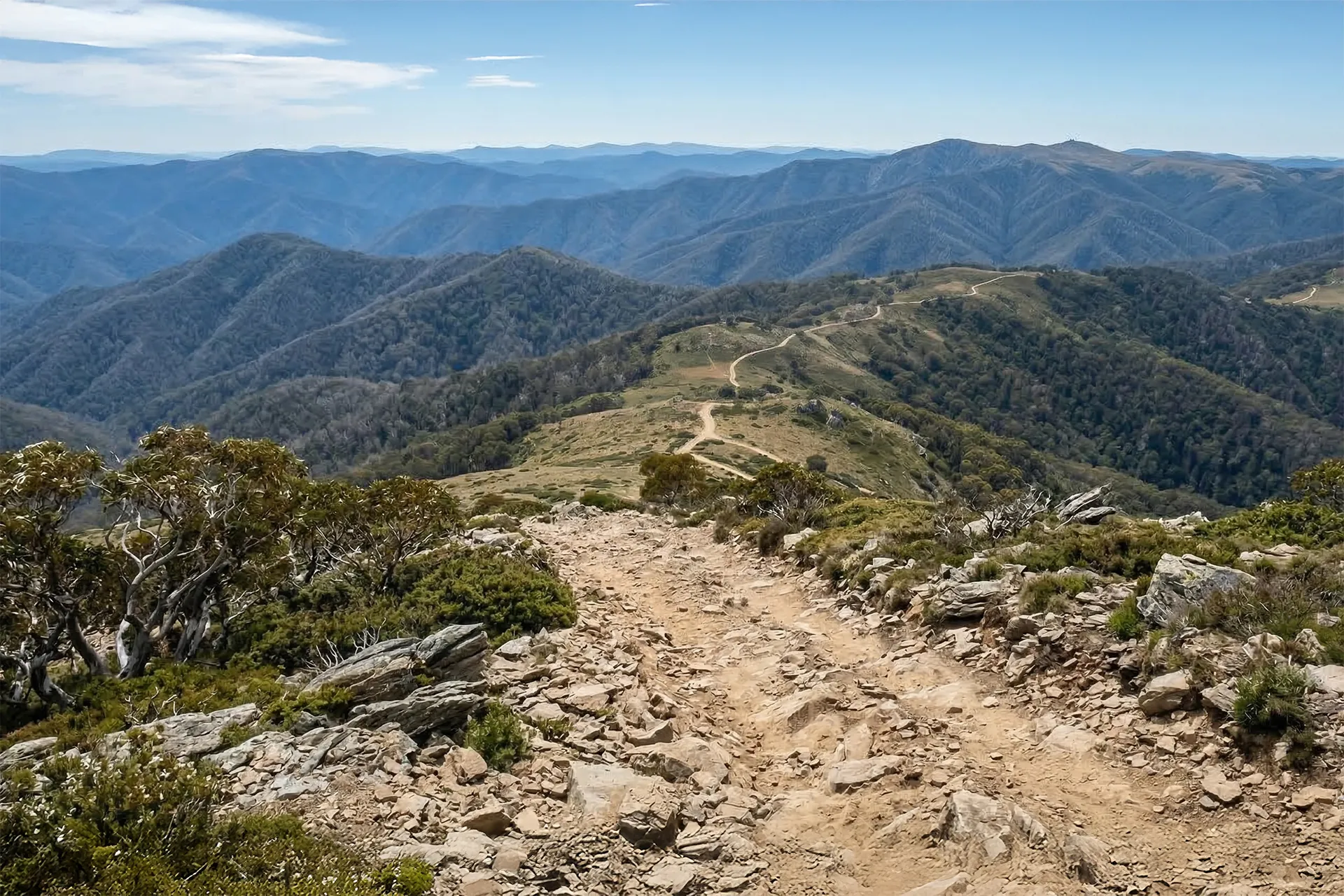
One of the most iconic sections of the drive is The Razorback.
This narrow ridge line follows the exposed spine of the mountain with steep drop-offs on both sides. Driving along it reinforces the feeling of travelling across the Alps and requires steady nerves and full attention.
Driving Challenge and Vehicle Requirements
While the climb to the summit is demanding, the real challenge often comes on the way back down.
Descending Blue Rag can be more dangerous than climbing it, which is why a true low-range 4WD is essential.
Why Low-Range 4WD Is Essential
Blue Rag’s difficulty rating is not only about climbing the mountain. It is about maintaining control over rough terrain.
A proper low-range transfer case provides the gear reduction needed for slow and controlled driving.
This is particularly important for engine braking.
Using only the foot brake on steep rocky descents can lead to brake fade and loss of control. Low-range allows the engine to slow the vehicle naturally, giving the driver far greater control.
Other important requirements include:
- Good ground clearance to avoid underbody damage
- Wheel articulation to maintain traction on uneven terrain
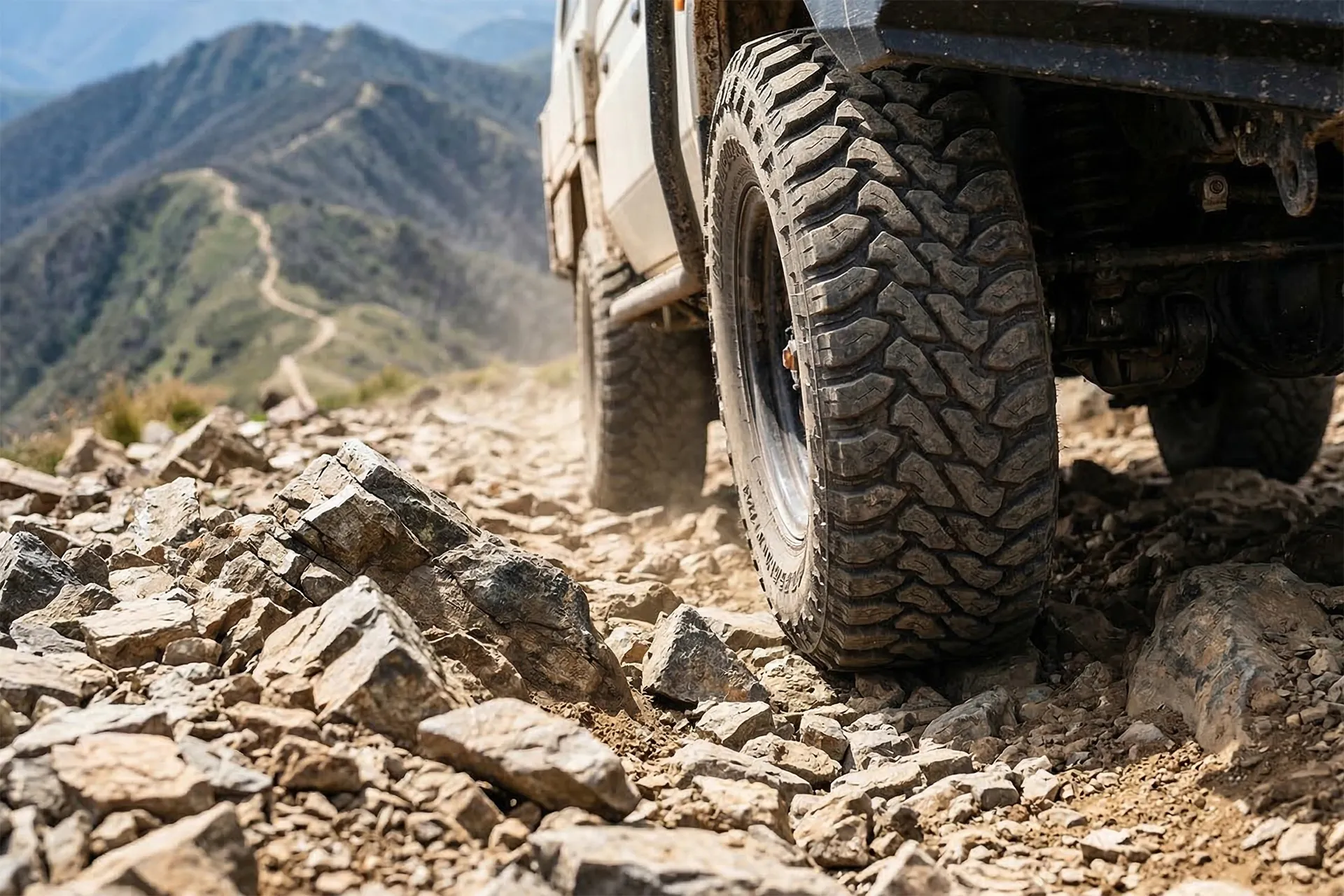
- Correct tyre pressures, aired down for better grip on loose rock
These factors can make the difference between a smooth trip and a difficult recovery situation.
The Descent: Where Drivers Need the Most Focus
Many drivers focus on reaching the summit, but descending Blue Rag presents its own serious challenges.
Gravity now works against the vehicle, constantly pulling it downhill.
Key risks include:
Loss of traction
Loose surfaces on steep descents can cause wheels to slide if braking is too aggressive. Engine braking in low range helps maintain control.
Brake fade
Constant braking on long descents can overheat the brakes and reduce their effectiveness.
Momentum management
A small mistake in line choice can quickly build speed on a steep slope.
Vehicle control
Drivers must carefully balance steering, braking, and throttle to avoid losing grip or damaging the vehicle.
Driver fatigue
The focus required during the climb can lead to fatigue during the descent, which can affect judgement and reaction time.
The Blue Rag Range Track is an adventure that demands respect for both the terrain and your vehicle.
Reaching the roof of the Victorian High Country is only part of the experience. The real achievement comes from completing the entire journey safely.
Prepare properly, drive carefully, and Blue Rag will reward you with one of the most memorable 4WD experiences in Australia.