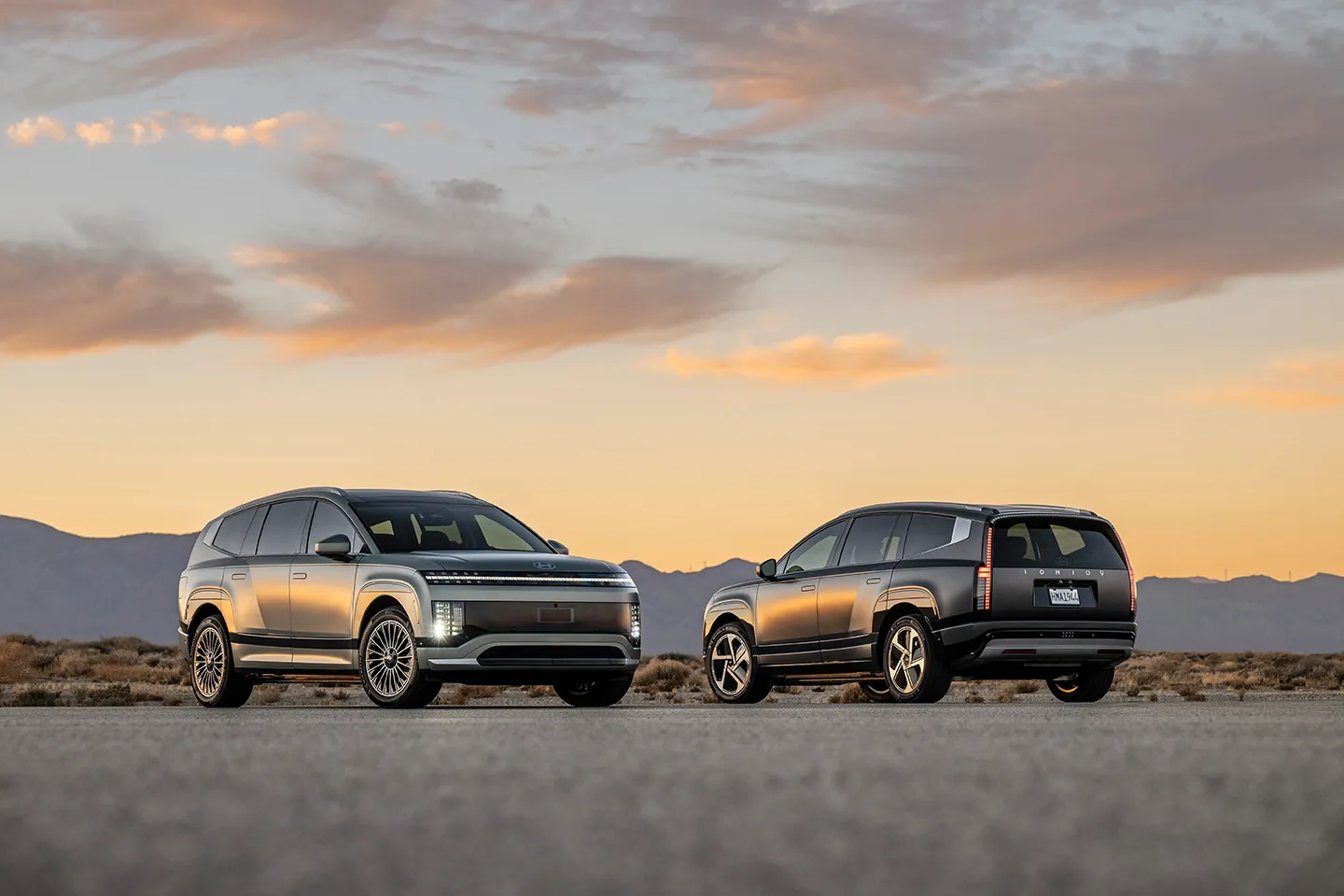

Hyundai’s 2026 Ioniq 9 arrives with big promises. This seven-seat electric SUV targets large families and luxury buyers. It shares its E-GMP platform with the Kia EV9. But the Ioniq 9 brings a more aerodynamic design and a “lounge-like” interior. The big question for Australia: can it replace a trusty Palisade or Carnival for those long road trips, or does the $105,000 to $135,000 price tag make it a tough sell?
Quick Verdict
Pros: Exceptional range (620km WLTP), ultra-fast charging, versatile 7-seat interior with swivel seats, strong performance (315kW AWD).
Cons: High price point, still limited fast-charging infrastructure in regional Australia, large footprint can be challenging in city parking.
Cabin & Technology
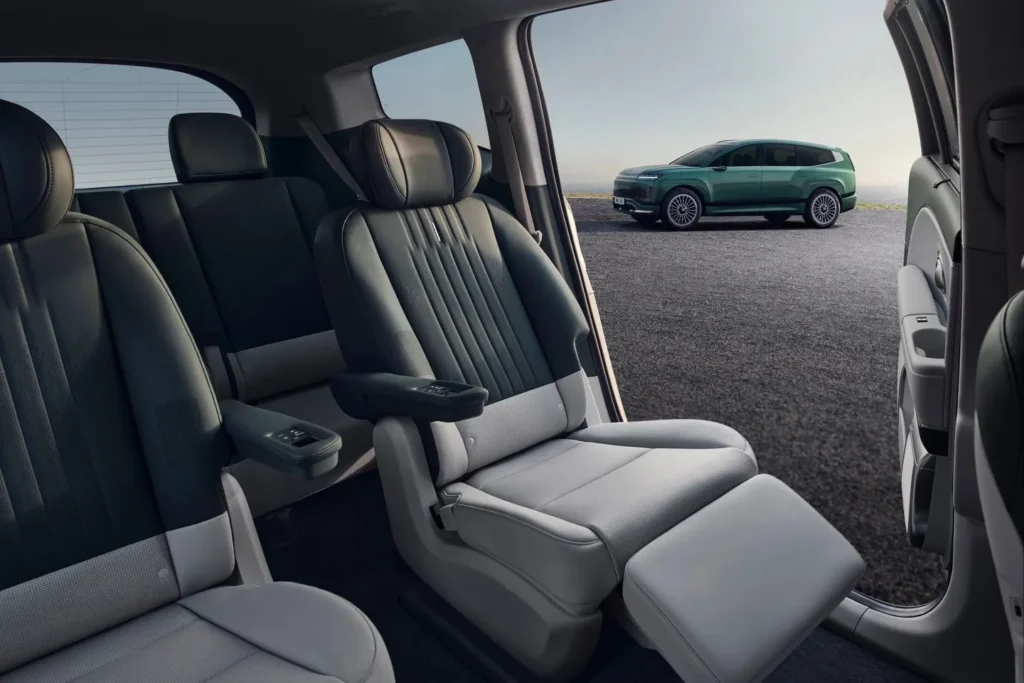
The Ioniq 9 offers a genuinely spacious and tech-forward cabin. Its 7-seat layout, including optional swivel second-row seats, provides remarkable flexibility for families. A substantial 620L boot capacity with all seats up rivals top ICE SUVs, making it highly practical for daily use and family adventures.
Step inside the Ioniq 9 and the “lounge-like” description makes sense. The interior feels open and airy. High-quality materials are evident throughout. The dashboard integrates large digital displays seamlessly. Physical buttons remain for key functions, a welcome touch for drivers.
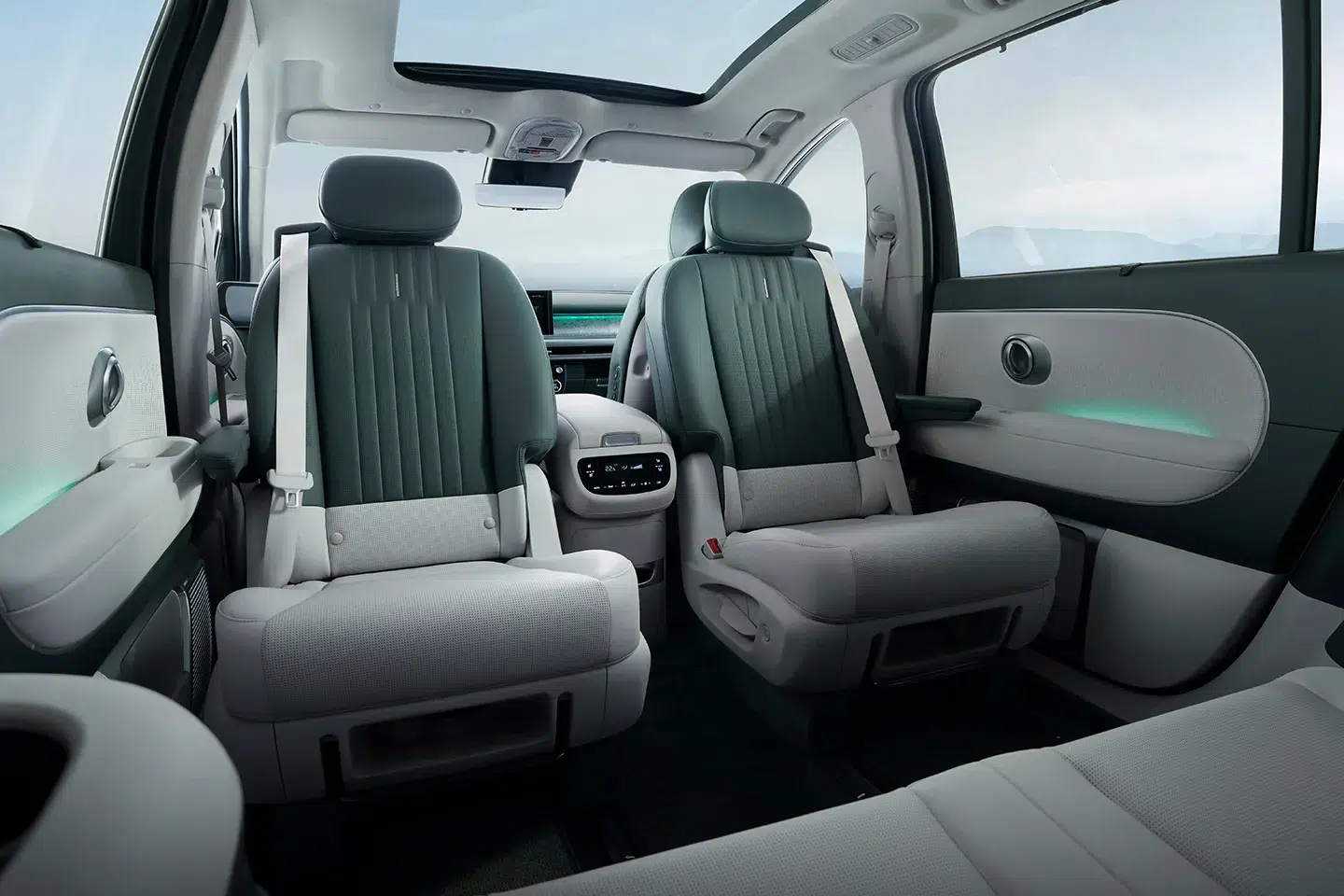
The headline feature for families is the seating. Seven seats are standard. Optional second-row swivel seats transform the cabin. Kids can face each other, or parents can easily access children in car seats. This flexibility is a game-changer for school runs and longer journeys. Compared to a Hyundai Palisade, the Ioniq 9 feels equally spacious, if not more innovative in its seating arrangements.
Practicality & Connectivity
Boot space is impressive. With all seven seats in use, 620 litres are available. This is crucial for prams, sports gear, or holiday luggage. Fold the third row, and cargo capacity expands significantly. Multiple USB-C ports and wireless charging pads keep devices powered up. The infotainment system is intuitive. It supports wireless Apple CarPlay and Android Auto. Over-the-air updates ensure the car stays current.
On-Road Performance
The Ioniq 9 delivers robust performance with 315kW from its Performance AWD setup. Its 110.3kWh battery provides a 620km WLTP range, suitable for many Australian road trips. Crucially, 350kW charging allows 10-80% in just 24 minutes, minimising downtime on long hauls, though regional charger availability remains a factor.
On the road, the Ioniq 9 feels substantial yet agile. The 315kW all-wheel-drive system provides instant torque. Overtaking on the M1 is effortless. The ride quality is excellent. It soaks up typical Australian road imperfections with ease. Steering is light but precise, making city driving less of a chore despite its size.
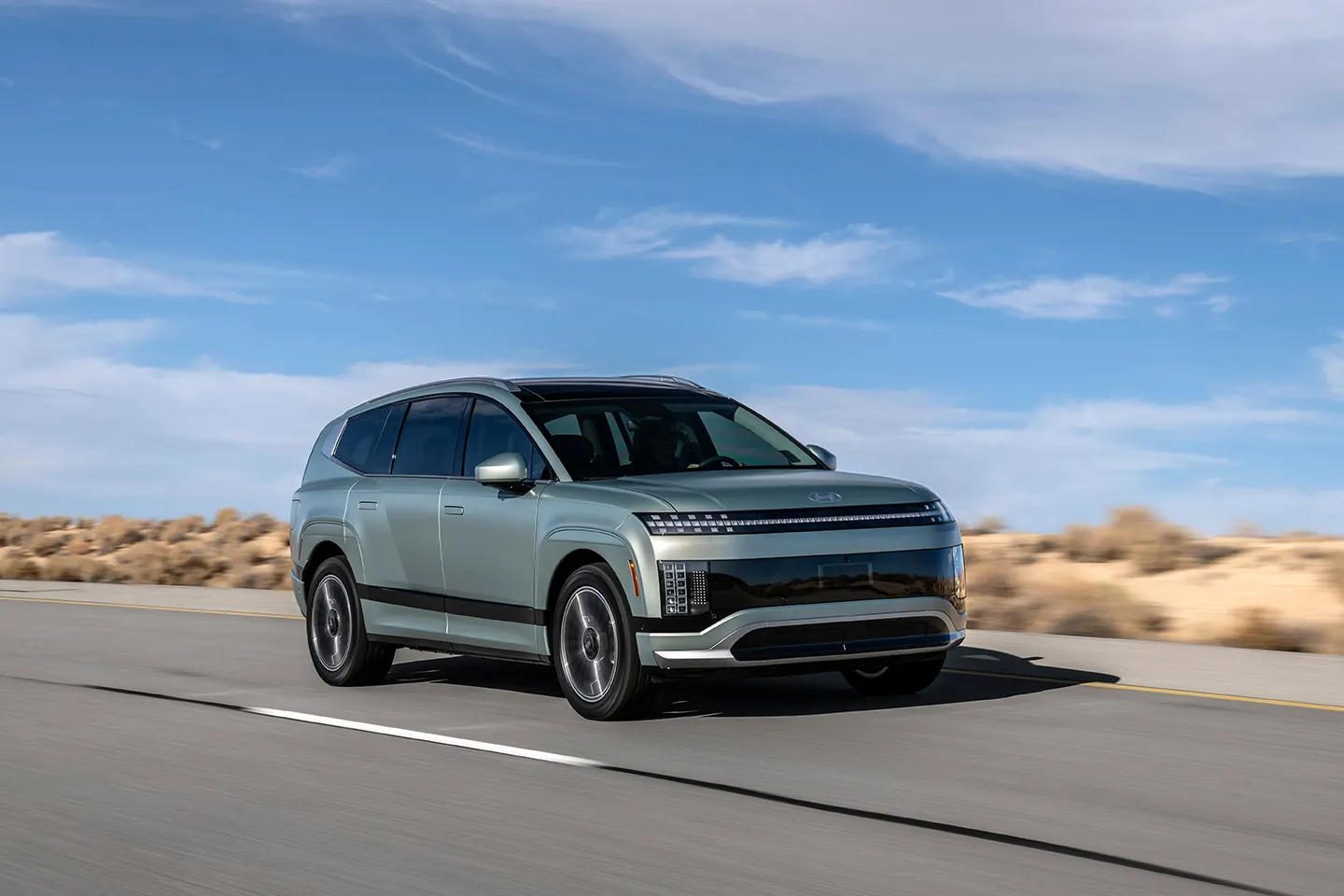
Range anxiety is a common EV concern. The 110.3kWh battery and 620km (WLTP) range alleviate much of this. A trip from Sydney to Canberra, or Melbourne to Bendigo, is easily managed on a single charge. However, extended regional travel, like heading deep into the outback, still requires careful planning due to sparser 350kW charging infrastructure.
Charging & Long Journeys
The ultra-fast charging capability is a major draw. A 10-80% charge in 24 minutes is comparable to a quick fuel stop. This makes long-distance travel more viable than with many other EVs. For families heading to the Gold Coast or down to the Great Ocean Road, these rapid top-ups are essential. It makes the Ioniq 9 a genuine contender against ICE family haulers like the Kia Carnival or Toyota Kluger for road trips.
Safety & Value
Hyundai has equipped the Ioniq 9 with a full suite of advanced safety features, expected to achieve a top ANCAP rating. Priced between $105,000 and $135,000, it sits at the premium end of the family SUV market. Its value proposition is strong for those prioritising EV technology, long range, and luxury features, but it’s a significant investment compared to traditional ICE alternatives.
Safety is paramount for a family vehicle. The Ioniq 9 includes Hyundai’s latest SmartSense suite. This covers adaptive cruise control, lane-keeping assist, blind-spot monitoring, and a 360-degree camera. Expect a five-star ANCAP safety rating. These systems work unobtrusively, enhancing driver confidence without being overly intrusive.
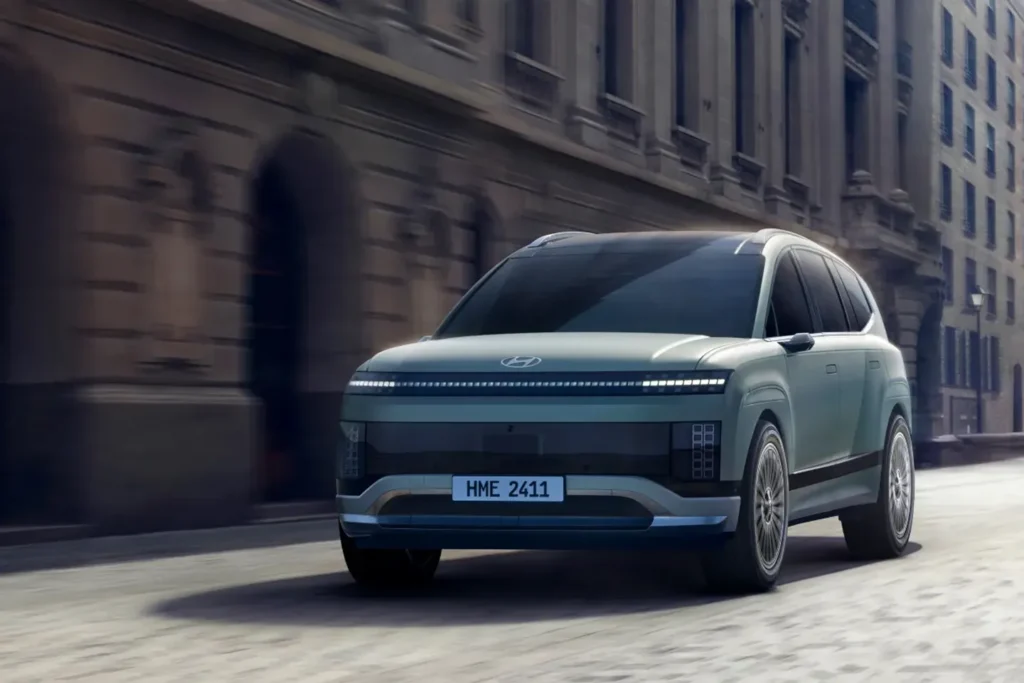
The price point of $105,000 to $135,000 places the Ioniq 9 firmly in the luxury segment. This is significantly above a top-spec Palisade or Carnival. It also positions it above many competitors like the Tesla Model Y or even its platform sibling, the Kia EV9. However, the Ioniq 9 offers a unique blend of range, charging speed, and interior innovation.
The Investment Perspective
From a practical standpoint, the Ioniq 9 is an investment. Running costs will be lower than a petrol SUV, especially with home charging. Electric vehicle resale values are holding strong in Australia. This mitigates some of the initial purchase price. For families needing a large, capable, and future-proof vehicle, the Ioniq 9 presents a compelling, albeit expensive, option. It’s not a direct competitor to a Ford Ranger or Isuzu D-MAX for towing heavy loads, but for family adventures, it’s a strong contender.