
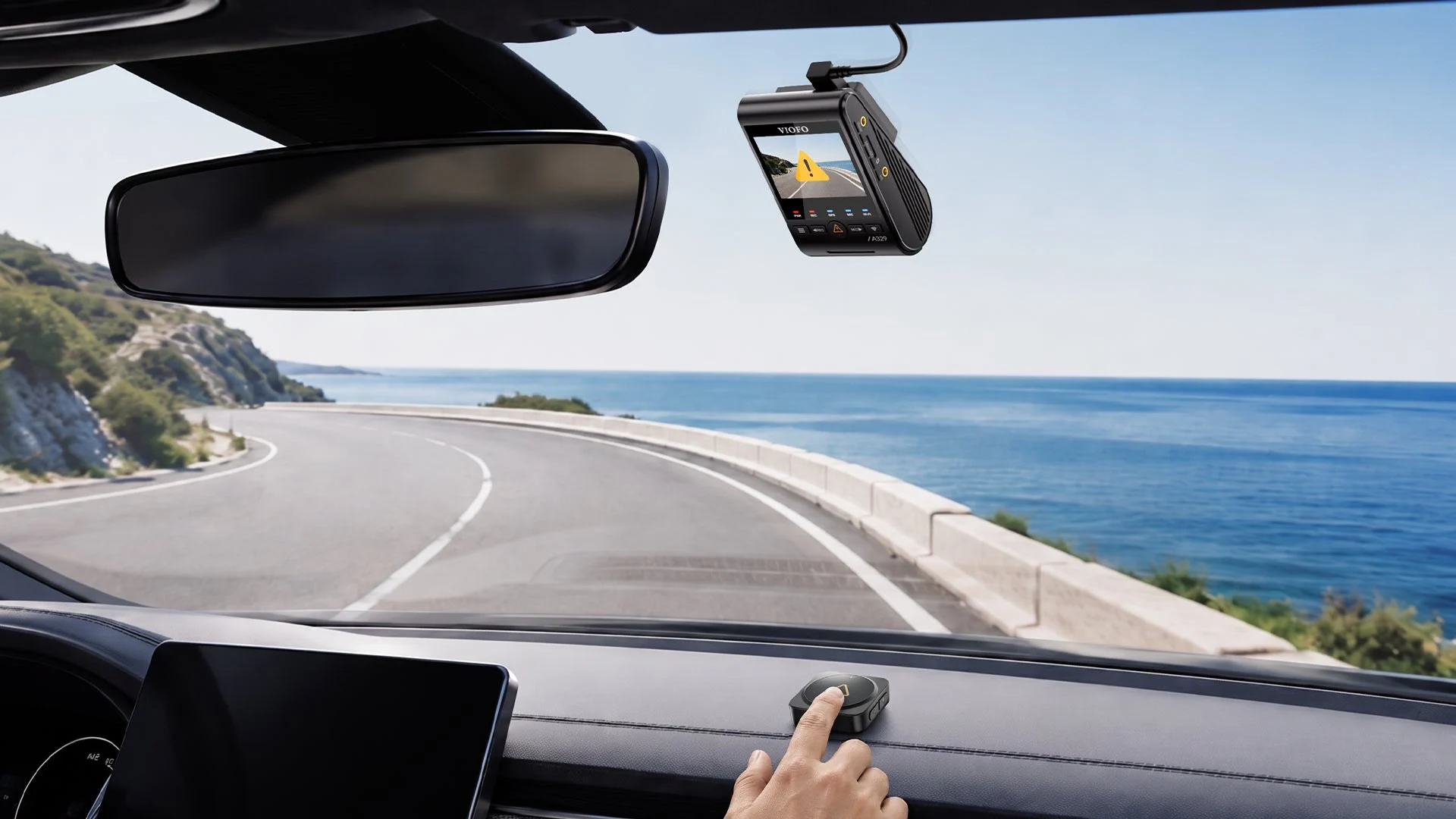

Buy a dash cam with a lithium battery, stick it to the windscreen of a car that lives outdoors, and you’ve bought a consumable. Australian summers punish them. A supercapacitor model handles the heat far better and needn’t cost more, since our $150 budget pick has one, and that’s the first filter we’d apply before resolution, apps or price.
We’ve compared five dash cams sold in Australia now, from a $150 Pioneer to an $1,099 BlackVue, using manufacturer specifications and retailer prices checked in October 2026. Our VIOFO A329S 3CH review is the benchmark. Nobody paid to be included.
Which dash cam should you buy in Australia?
The VIOFO A329S 3CH is the best all-rounder, with front, rear and cabin cameras, Sony STARVIS 2 sensors and a supercapacitor for $759.99. If you only need front and rear, the VIOFO A229 Plus does most of it for $359.99. Both prices are VIOFO Australia sale prices, so check before you buy.
| Dash cam | Price | Channels | Front camera | Power storage | Warranty |
|---|---|---|---|---|---|
| VIOFO A329S 3CH | $759.99 (sale) | 3 | 4K 30fps, STARVIS 2 | Supercapacitor | 18 months |
| VIOFO A229 Plus 2CH | $359.99 (sale) | 2 | 2K 60fps, STARVIS 2 | Supercapacitor | 18 months |
| Garmin Dash Cam X310 | $679 | 1 | 4K 30fps | Lithium battery | 1 year |
| BlackVue Elite 10 2CH | $1,099 | 2 | 4K 30fps, STARVIS 2 | Supercapacitor | 3 years, registered |
| Pioneer VREC-H120SC | $149.99 | 1 | 1296p 25fps | Supercapacitor | 12 months |
Sources: VIOFO Australia, JB Hi-Fi and Supercheap Auto prices, and VIOFO, Garmin, BlackVue and Pioneer specifications, checked 20 October 2026. VIOFO prices are time-limited sales.
VIOFO A329S 3CH: the benchmark
The VIOFO A329S 3CH records 4K at 30fps up front on a Sony STARVIS 2 IMX678 sensor, plus 2K rear and a 210-degree infrared cabin camera. It has no battery, only a supercapacitor, and VIOFO rates it from -20 to 65 degrees. Built-in GPS, 5GHz Wi-Fi and a front CPL filter come in the box.
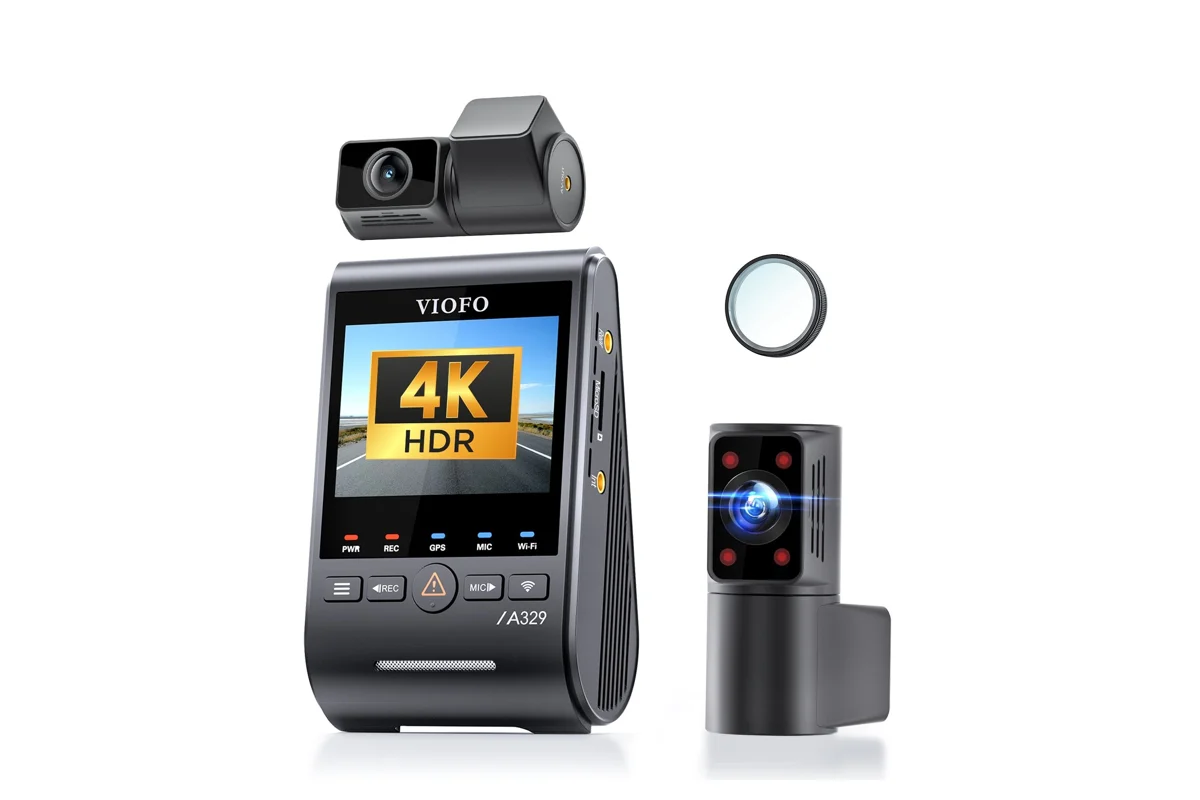
Its standout is parking mode. Five modes include buffered recording, and VIOFO’s low-power impact mode draws under 40mA at 12.6V. It can also record to an external SSD of up to 4TB, which no rival here offers. It’s the camera for rideshare drivers and anyone who parks on the street.
Weakness: the full parking features and battery cut-off need VIOFO’s HK6 hardwire kit, an extra $44.99. Running three channels also caps the front camera at 30fps. At $759.99 on sale, it’s the dearest VIOFO here, and $799.99 at full price.
VIOFO A229 Plus 2CH: the value front-and-rear pick
The VIOFO A229 Plus 2CH puts STARVIS 2 IMX675 sensors front and rear, recording 2K at 60fps up front and 2K at 30fps behind. Like the A329S, it uses a supercapacitor, with the same -20 to 65 degree rating, built-in GPS and dual-band Wi-Fi. VIOFO Australia lists it at $359.99, down from $409.99.
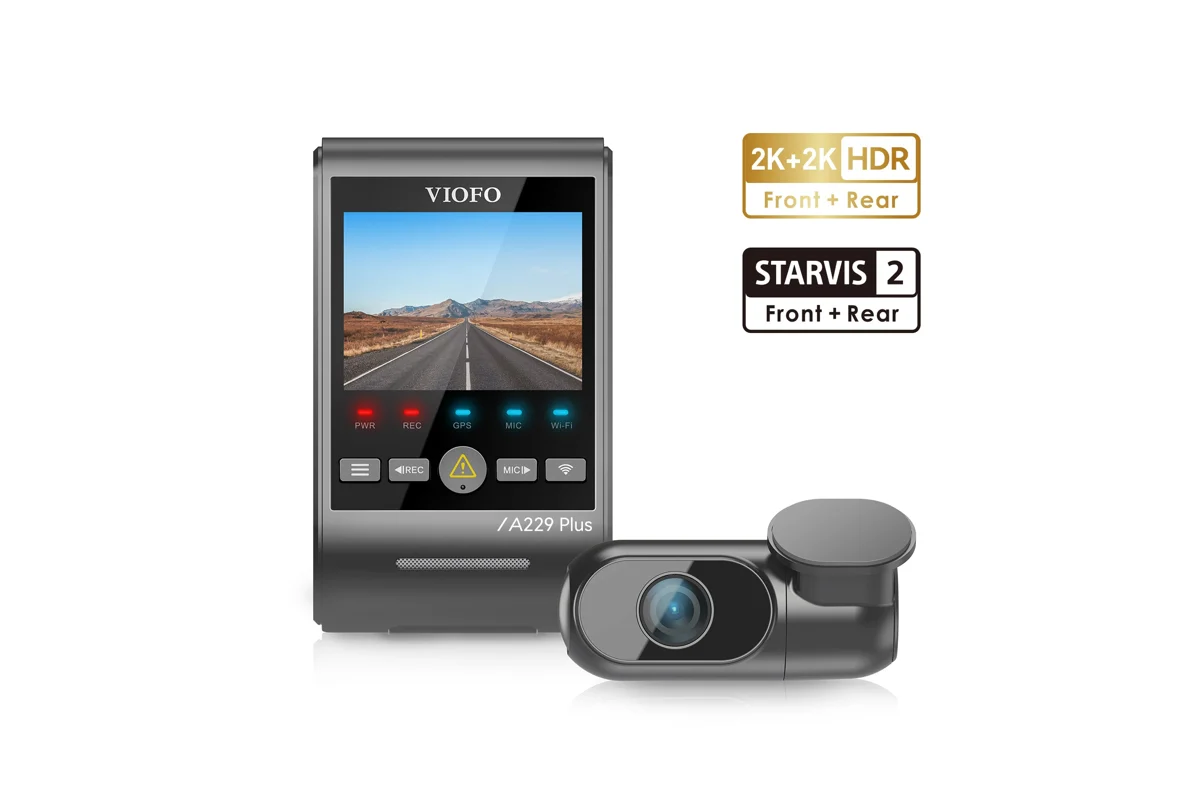
That’s a little under half the A329S price for the two channels most drivers need. Weakness: no CPL filter in the box, and parking mode is basic, with no low-power impact mode. Want 4K up front and a CPL included? The A229 Pro 2CH was $485.99 on sale when we checked.
Garmin Dash Cam X310: the easy retail buy, with a catch
The Garmin Dash Cam X310 is $679 at JB Hi-Fi and the most polished package here. It records 4K at 30fps, has a 2.4-inch touchscreen, voice control and a built-in polariser, and you can buy it on the way home. For many shoppers, that convenience is the whole appeal.
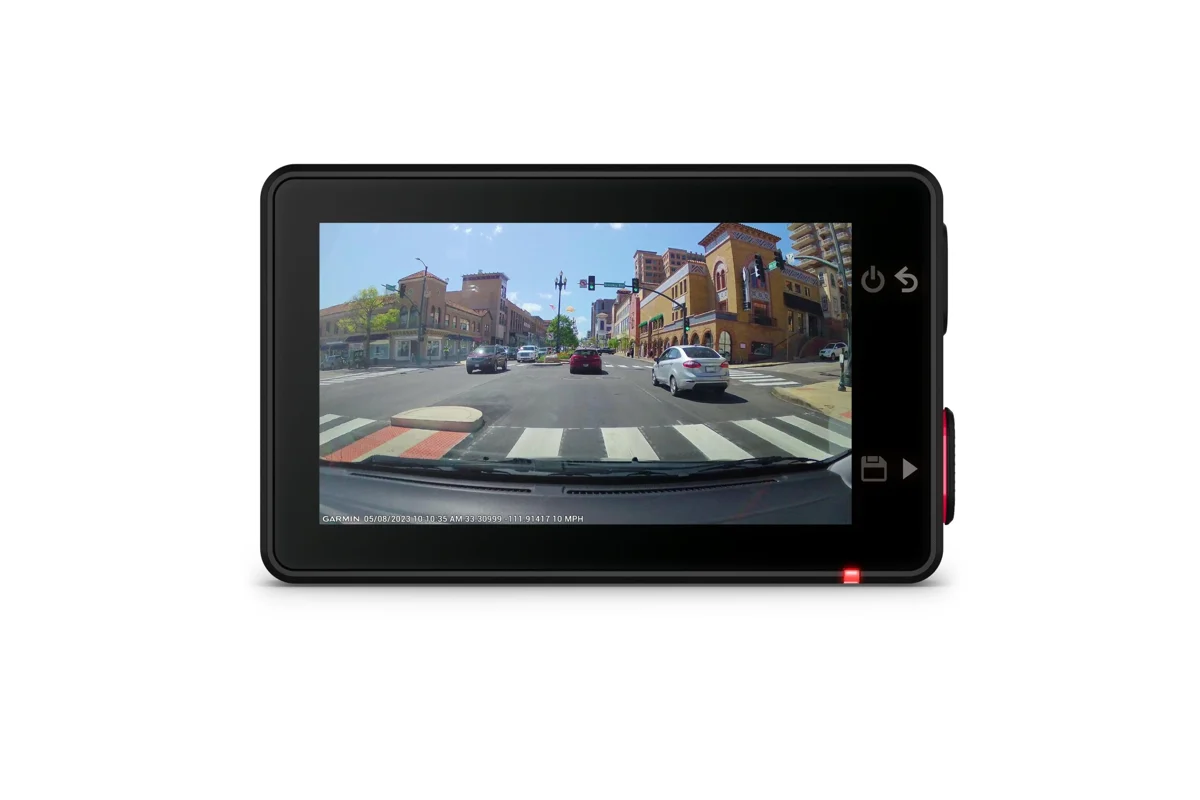
The catch is power. The X310 uses an internal rechargeable battery, and Garmin’s owner’s manual rates it to 60 degrees. It’s front only, buffered parking footage needs a constant power cable, and phone alerts need a paid Vault subscription. That’s a lot to ask at $679.
BlackVue Elite 10 2CH: dual 4K and the cloud
The BlackVue Elite 10 2CH, new for 2026, records 4K at 30fps through STARVIS 2 IMX678 sensors front and rear. Supercheap sells it for $1,099, and BlackVue Australia offers a 36-month warranty with free registration. It uses a supercapacitor and cuts out at about 75 degrees.
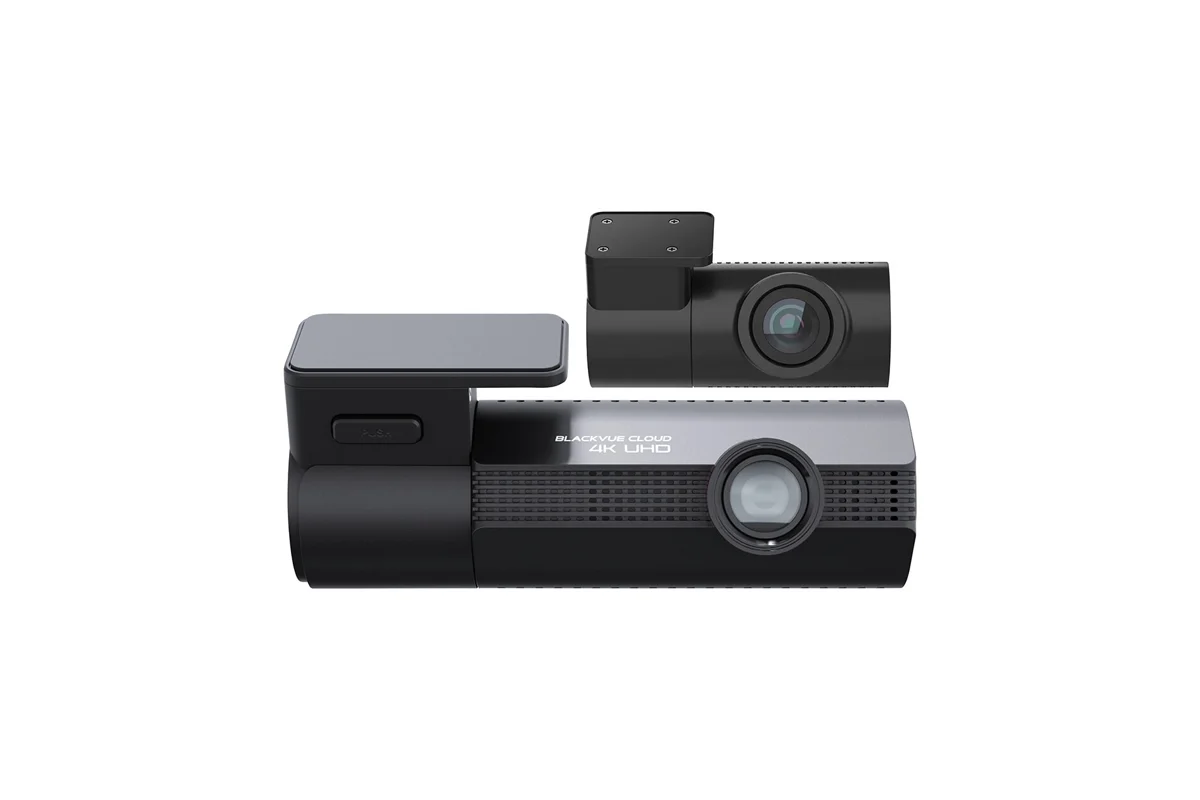
Its standout is parking efficiency. BlackVue quotes a power-saving parking mode under 1mA, plus timer and low-voltage cut-offs to protect your battery. Weakness: price, and cloud features need either a hotspot or an optional LTE module with your own data. It’s for owners who want remote alerts on an expensive car.
Pioneer VREC-H120SC: the $150 starter
Pioneer’s VREC-H120SC costs $149.99 at Supercheap, uses a supercapacitor and comes with a 64GB card. It records 1296p at 25fps through a 120-degree lens, connects over 2.4GHz Wi-Fi, and mounts with adhesive. A genuine brand name at this price is rare.
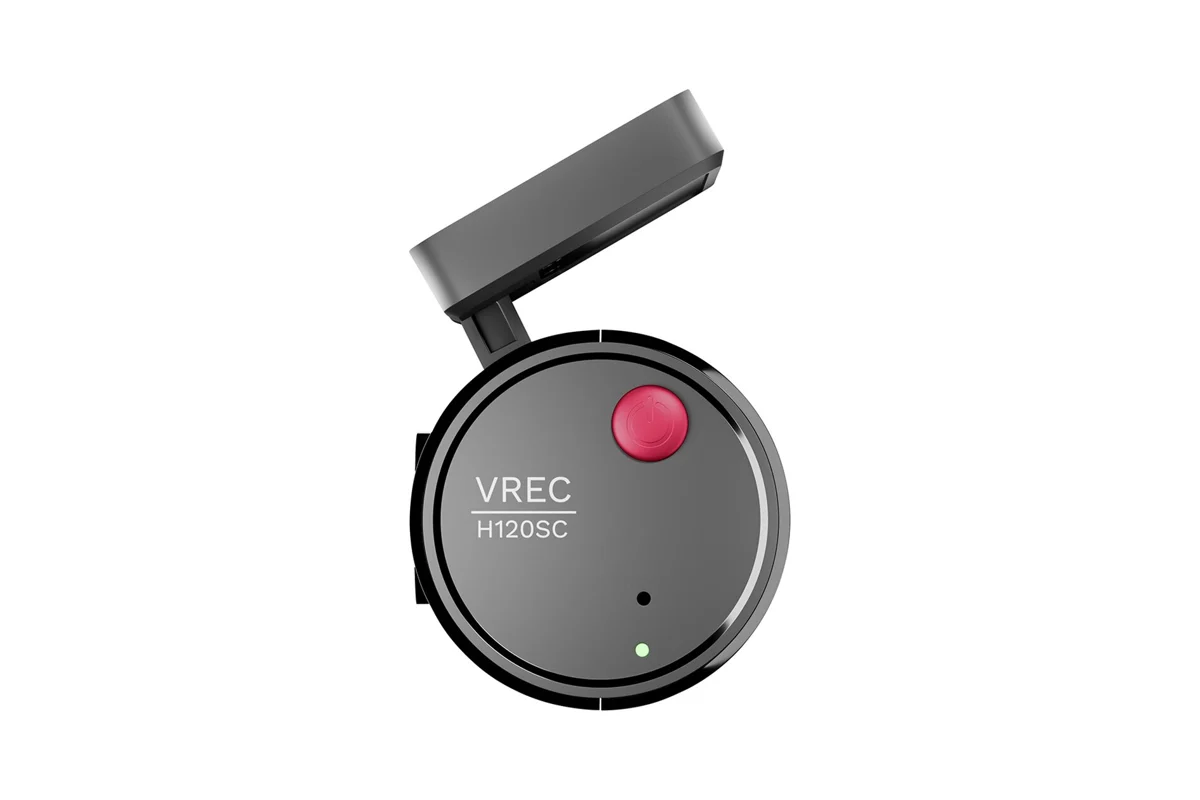
Weakness: it’s front only, has no GPS and records at 25fps, so number plates are harder to read on the move. Parking mode needs a hardwire kit, which Supercheap sells for $25. It suits a second car or a learner’s hatch, not a rideshare driver.
Supercapacitor or battery: does it matter in Australia?
Yes. A parked car gets far hotter than the air outside. The Royal Children’s Hospital says a car’s interior can be 20 to 30 degrees hotter than outside, and up to 60 degrees on a 30-degree day. RACQ found cabin temperatures can rise 10 degrees in just 10 minutes. BlackVue says lithium-ion batteries crave room temperature.
60°C: a parked car on a 30°C day, per the Royal Children's Hospital
The battery-powered Garmin is rated to exactly 60°C, the figure the RCH gives for a car's cabin on a 30°C day. The supercapacitor cams leave about 5°C of headroom.
Sources: VIOFO, BlackVue (global specification; its Australian page quotes 70°C) and Garmin X310 manual ratings; Pioneer does not publish one. Cabin figure: Royal Children's Hospital Melbourne. The windscreen, where the camera sits, isn't measured in these figures. Comparison is our analysis.
BlackVue says a supercapacitor stores energy electrostatically rather than chemically, and VIOFO describes its supercapacitor models as heat resistant. Four of our five picks use one. Park in the shade or under a sunshade where you can, and don’t leave a battery-powered camera baking on the dash between drives.
Do you need a hardwire kit and CPL filter?
For parking mode, yes. A hardwire kit runs the camera from the fuse box so it can record while you’re away, and the better kits cut power before the car’s battery goes flat. A CPL filter cuts dashboard reflections on the windscreen, which matters under harsh Australian sun. Budget for both.
Mount it behind the mirror. Victoria’s transport department recommends that spot, and road rule 297 requires a clear view of the road. If your windscreen ever needs replacing, the camera will have to come off. A dash cam also pairs well with a GPS tracker on a theft-targeted car.
Will insurers and police use your dash cam footage?
Insurers will, but don’t expect a discount. AAMI says a dash cam doesn’t affect your premium but can help a claim, and Allianz says clear footage can speed up the claim process. Queensland Police accepts footage through an online evidence portal, and Crime Stoppers Victoria takes uploads of dangerous driving.
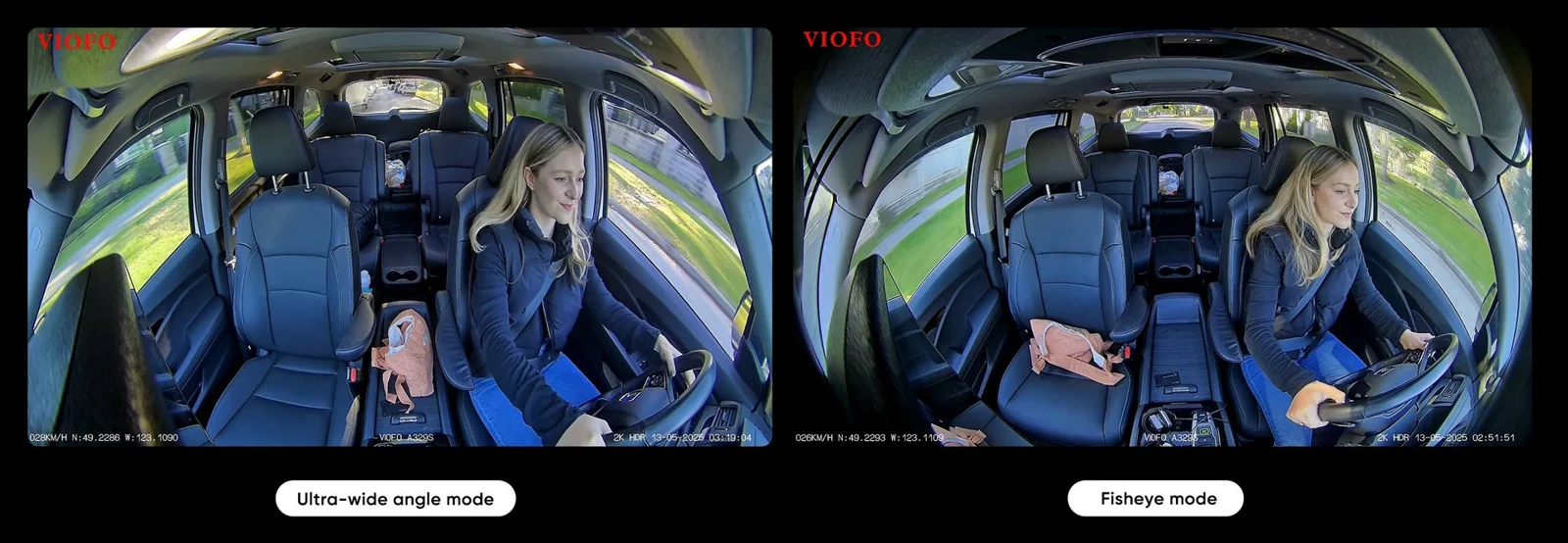
Audio is where it gets tricky. Victoria’s Surveillance Devices Act lets a party to a conversation record it, but NSW requires consent or a lawful-interest reason. Rideshare drivers can register a dash cam with Uber, which tells riders. If in doubt, switch the microphone off. Our car data privacy explainer covers the rest.
Who should buy which dash cam?
Match the camera to how and where you park, not to the headline resolution. A car that lives in a carport needs less than one parked on a sun-baked street, and a rideshare car needs a cabin camera. Here’s where we’d spend the money.
- Rideshare drivers and street parkers: VIOFO A329S 3CH with the HK6 kit.
- Most commuters and families: VIOFO A229 Plus 2CH with the HK4 kit.
- Expensive cars and remote alerts: BlackVue Elite 10 2CH.
- Second car or learner driver: Pioneer VREC-H120SC.
- Garmin X310: only if the car lives in a garage and you value the retail convenience.
Skip any dash cam that hides its battery type. In an Australian car park, a supercapacitor is the safer bet for having footage on the day you need it, and it’s the one spec worth checking before anything else.
At the end of the day, the best dash cam isn’t the one with the flashiest marketing or the highest headline resolution. It’s the one that reliably boots up every time, survives scorching cabin heat, and captures clear, usable footage when you actually need it.


