
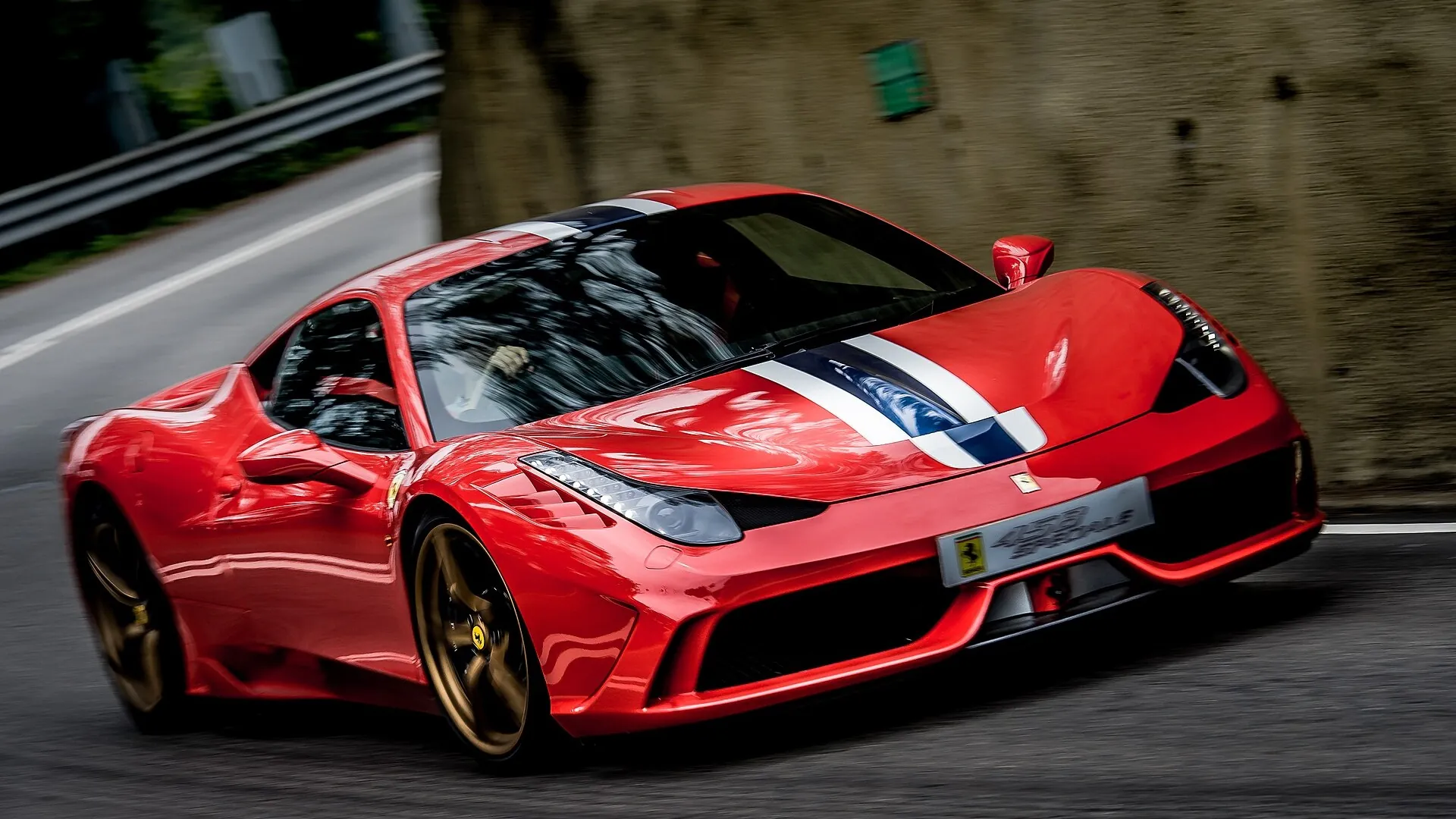

Ferrari's naturally aspirated V8 didn't fade out. It hit 9,000rpm and stopped. The last series-production road car built around it was the 458 Speciale A, and Ferrari told US regulators in 2015 that it expected to finish building them that November. Every V8 Ferrari since has been turbocharged, and the faithful still argue about what was lost.
The usual line, repeated all over the internet, is that the 458 Speciale coupe was the last. It wasn't quite. Ferrari's 2015 listing documents gave staggered end dates: the 458 Italia in May 2015, the Spider by July, the Speciale by October and the open-top Speciale A by November. The A was the full stop.
Why it matters: the end of a 40-year line
Ferrari's mid-engined V8 story began with the 308 GTB in 1975 and ran through the 328, 348, F355, 360 and F430 to the 458. There were turbo detours, the 288 GTO and F40 among them, but the series cars breathed naturally. The 458 was the last of them, and the Speciale was its sharpest form.
Ferrari's own magazine calls the Speciale the ultimate evolution of its naturally aspirated V8. The front-engined California T had already gone turbo in April 2014, the first turbo Ferrari since the F40, and the 488 GTB followed in March 2015. Both the latest V8s, the Amalfi and the hybrid 849 Testarossa, are twin-turbo.
The engine: 135 horsepower per litre
The Speciale's 4.5-litre V8 made 445kW (605cv) at 9,000rpm and 540Nm at 6,000rpm, according to Ferrari's technical specifications. Ferrari claimed its 135cv per litre was the highest specific output of any naturally aspirated road engine, and its 14:1 compression the highest yet for a naturally aspirated V8.
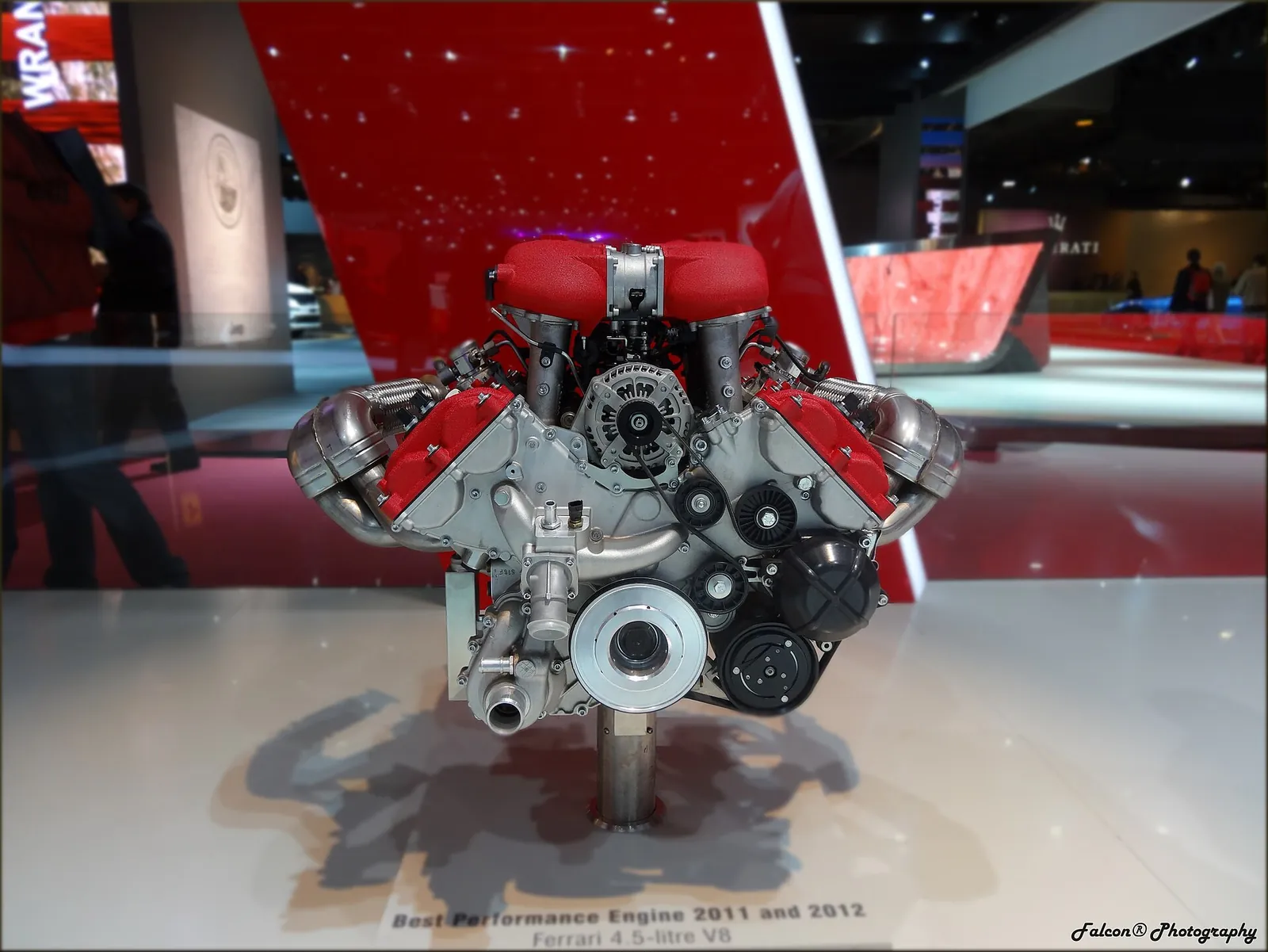
Getting there took detail work. Ferrari shortened the inlet ducts by 10mm, raised valve lift by 5 per cent, revised the cam profiles and crankshaft, and fitted new pistons with DLC-coated pins. Carbon-fibre plenums and an aluminium exhaust cut about 8kg from the engine. Ionisation sensing across the spark plug gap managed knock at those revs.
The engine family was decorated, too. The 4.5 won Best Performance Engine and Best Engine Above 4 Litres at the International Engine of the Year Awards in 2011, 2012 and 2014, Ferrari's history pages record. Only Ferrari's own F12 V12 beat it in 2013.
The numbers that made it special
| 458 Speciale | 458 Speciale A | |
|---|---|---|
| Engine | 4,497cc naturally aspirated V8 | Same |
| Power / torque | 445kW at 9,000rpm / 540Nm at 6,000rpm | Same |
| Gearbox | 7-speed dual-clutch | Same |
| Dry / kerb weight | 1,290kg / 1,395kg | About 1,340kg dry |
| 0 to 100km/h / 0 to 200km/h | 3.0s / 9.1s | 3.0s / 9.5s |
| Fiorano lap | 1min 23.5s | 1min 23.5s |
| Built | 2013 to 2015 | 2014 to 2015, 499 cars |
| Australian price new | $550,000 plus on-roads | $635,000 plus on-roads |
Sources: Ferrari specifications for the 458 Speciale and 458 Speciale A; Ferrari's 2015 SEC filing; Australian pricing as announced by Ferrari Australasia (December 2013 and September 2014).
The Speciale lapped Ferrari's Fiorano test track in 1min 23.5s, 1.5 seconds quicker than the Enzo's time there. Ferrari's launch release claimed 1.33g of lateral grip and 0.06-second steering response, both records for its range cars at the time. A V8 special series had out-lapped Maranello's V12 hypercar.
Aero, slides and the first Ferrari with SSC
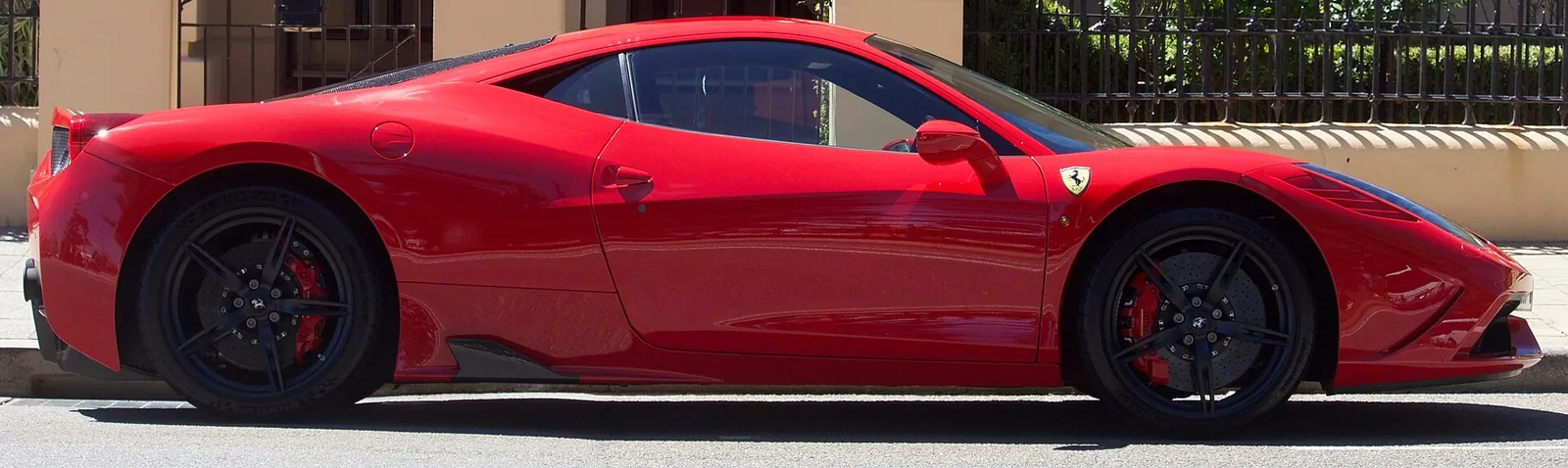
The Speciale introduced two things every later Ferrari would borrow. The first was active aero: vertical flaps in the nose opened above 170km/h to cut drag, a horizontal flap lowered above 220km/h to shift downforce rearward, and diffuser flaps dropped by up to 17 degrees to stall the diffuser on the straights.
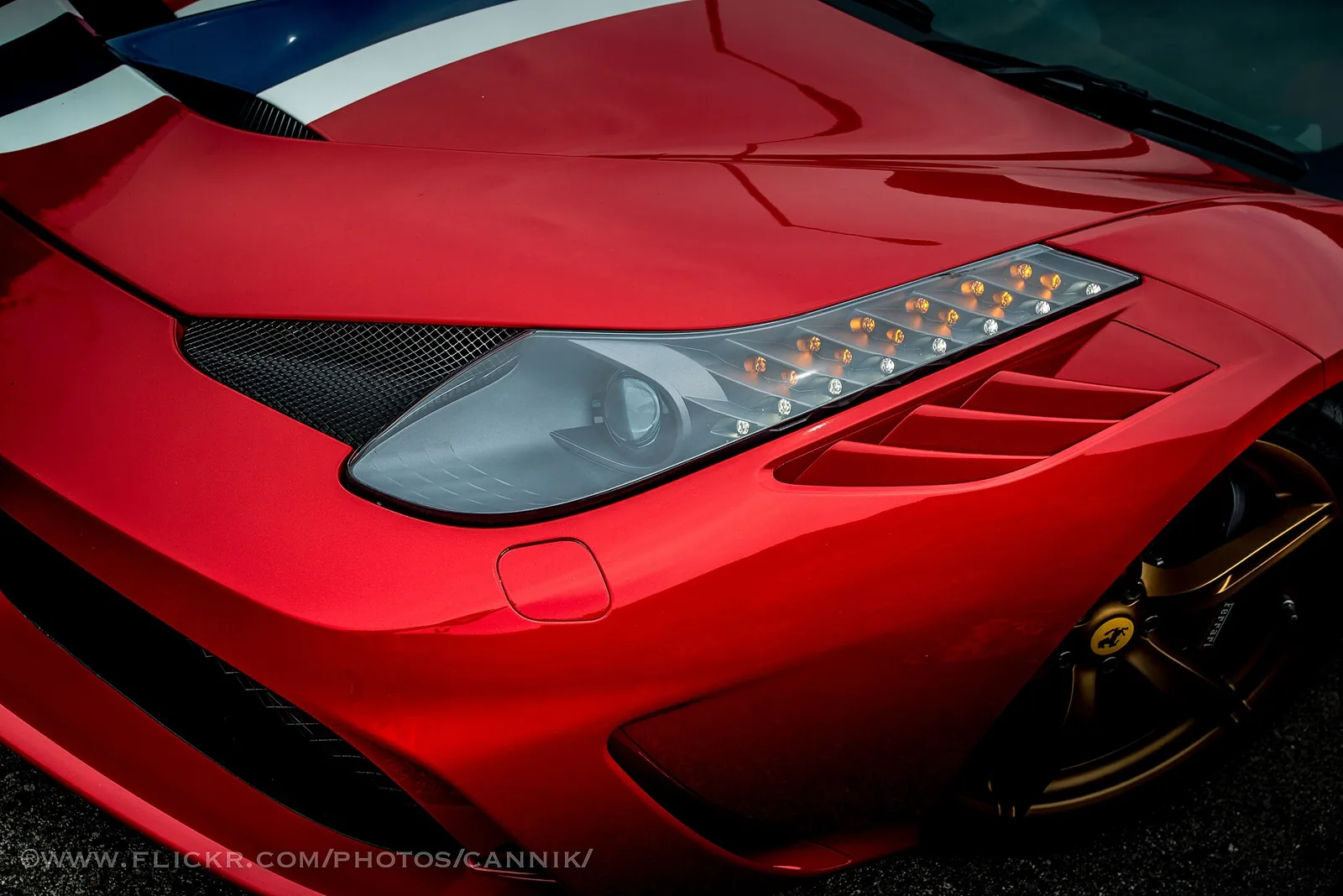
The second was Side Slip Angle Control, which read how far the car was sliding and managed the E-Diff and F1-Trac traction control to keep it there. It was a world first on the Speciale, and the first step in the slide-control systems Ferrari has kept building on since. Three louvres beside the headlights nodded to the 250 GTO and F40.
Design and character
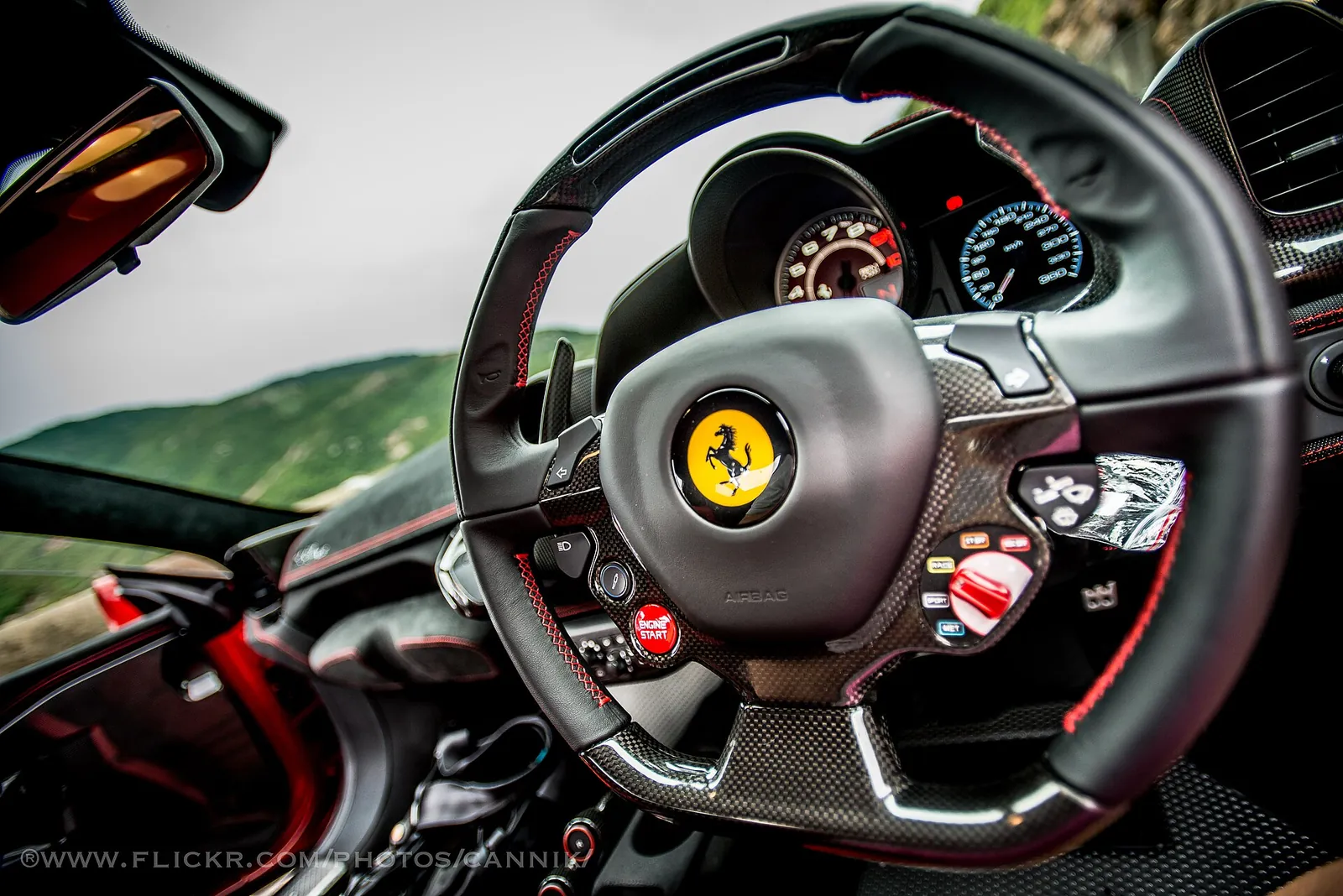
Ferrari credits the design to its Styling Centre working with Pininfarina, and the 458 family is often described as the last mid-engined V8 shaped with that long-time partner. The Speciale traded the Italia's smoothness for function: a taller nose with its active flaps, a Kamm tail, relocated exhausts, a Lexan rear screen and a cabin with no glovebox.
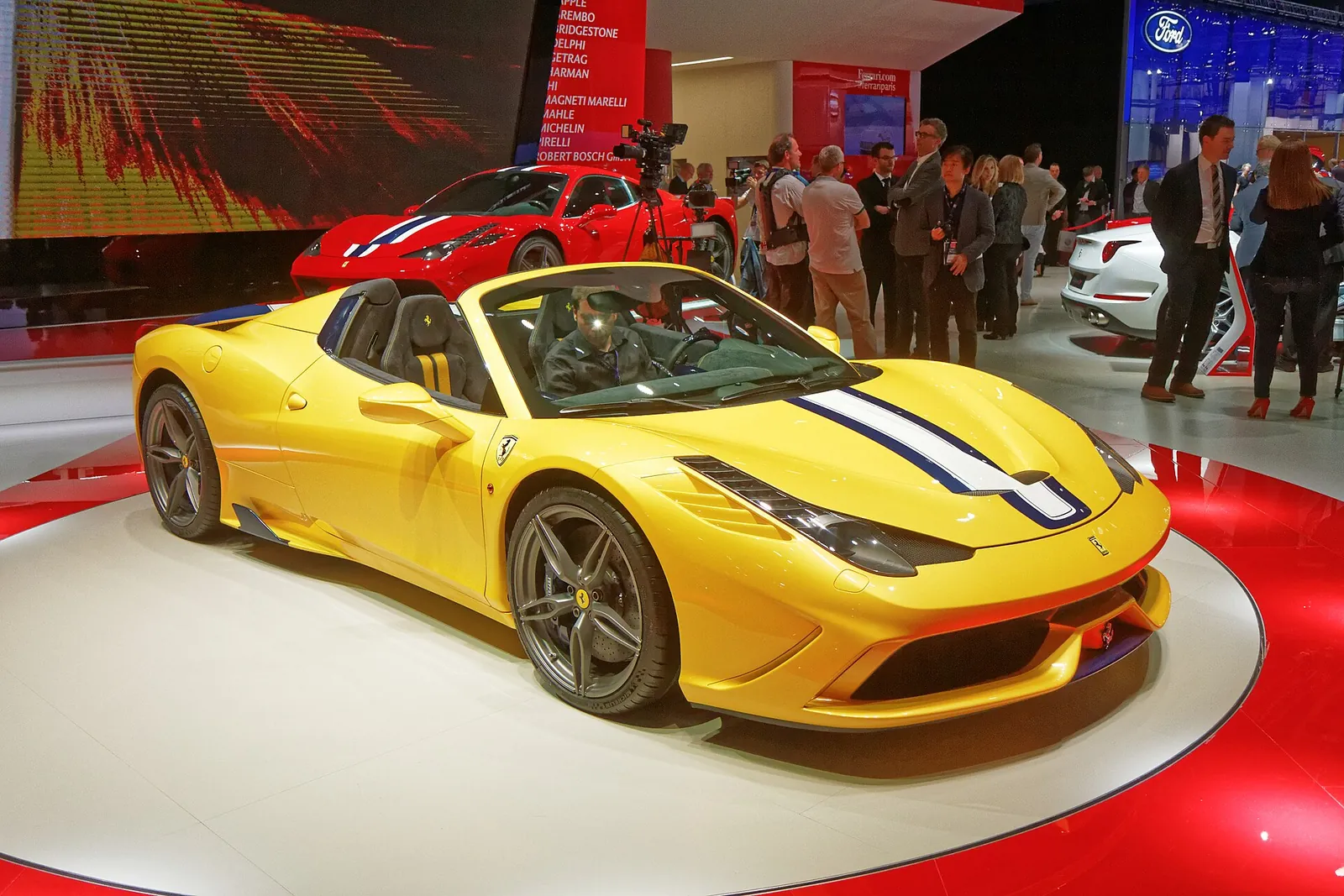
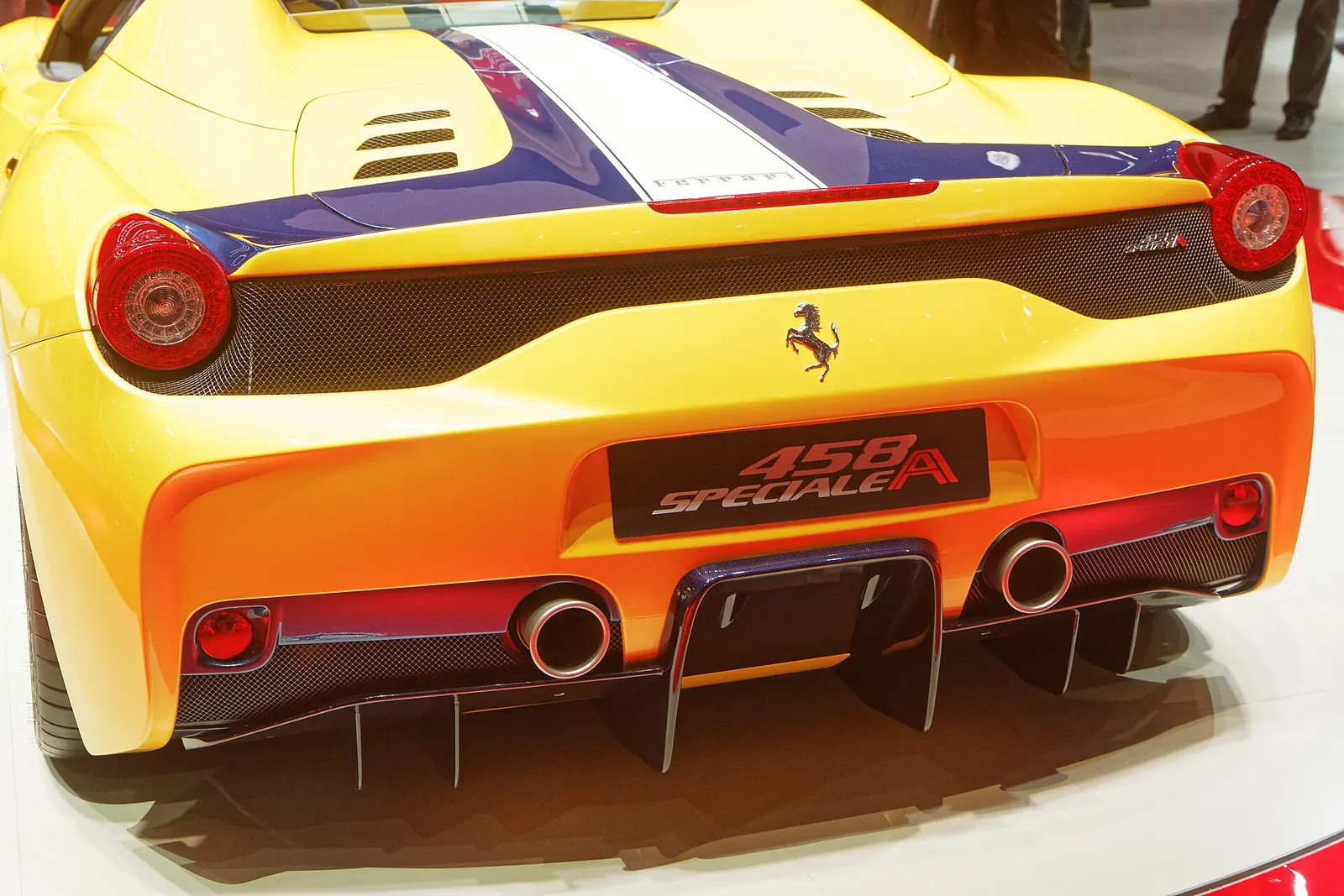
The Speciale A added an aluminium folding hardtop for about 50kg, and kept the coupe's Fiorano time. Ferrari called it the most powerful naturally aspirated V8 it had built for a spider. Only 499 were made, and the first went under the hammer at a Ferrari gala in Beverly Hills for US$900,000.
Rarity in the real world
Australia and New Zealand were allocated about 60 Speciales over two years, at $550,000 plus on-roads, and the Speciale A arrived from early 2015 at $635,000. Locally, they almost never come up in public. Ferrari Australasia never published how many Speciale As came here, and none was listed for sale nationally when we checked.
A Speciale A sold for €515,200 in 2015. In 2026, the same model has made more than €1 million in Monaco and US$2.4 million at Monterey. Kilometres matter enormously: almost every big result has been for a car with delivery miles.
Sources: RM Sotheby's and Broad Arrow published results (prices include buyer's premium); Australian list price as announced by Ferrari Australasia in September 2014.
Internationally, values have run hard. A Speciale A sold for €1,175,000 in Monaco in April, and a 175-mile American car made US$2,425,000 at Broad Arrow's Monterey sale in August, the highest public result we found. A low-kilometre 2015 Speciale coupe was reported sold in Australia in August for well over a million dollars.
The legacy: the turbo won the awards
Here's the irony the faithful hate. The 3.9-litre twin-turbo V8 that replaced the 4.5 was named overall International Engine of the Year four years running, from 2016 to 2019, and voted the best engine of the awards' first 20 years. By every measurable standard, it was better.
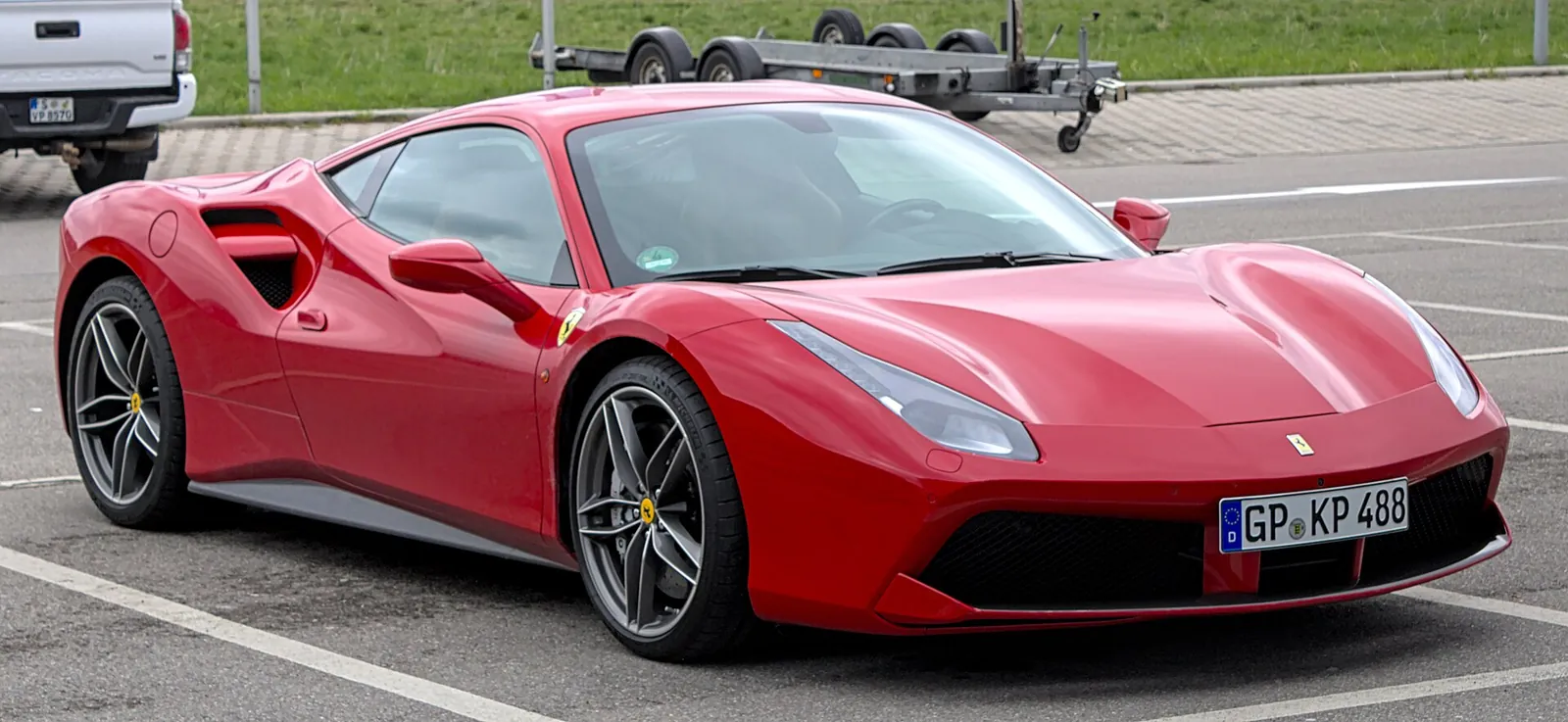
It just wasn't the same. The 458 Speciale A is the last Ferrari V8 that sounds the way it does because of air, revs and nothing else, which is why collectors now chase it like a V12. If you want the manual-gearbox version of this argument, read our story on the last manual Ferrari 599 GTB. This is the other dividing line, and it's just as permanent.
Source: Ferrari technical specifications and press materials, Ferrari's 2015 SEC filing and 2016 Annual Report, with auction results from RM Sotheby's and Broad Arrow.
Via: Photos via Wikimedia Commons: CANNIK (CC BY 2.0, header and detail images), Thesupermat (CC BY-SA 3.0), EurovisionNim (CC BY-SA 4.0), Falcon® Photography (CC BY-SA 2.0) and Alexander Migl (CC BY-SA 4.0).


