
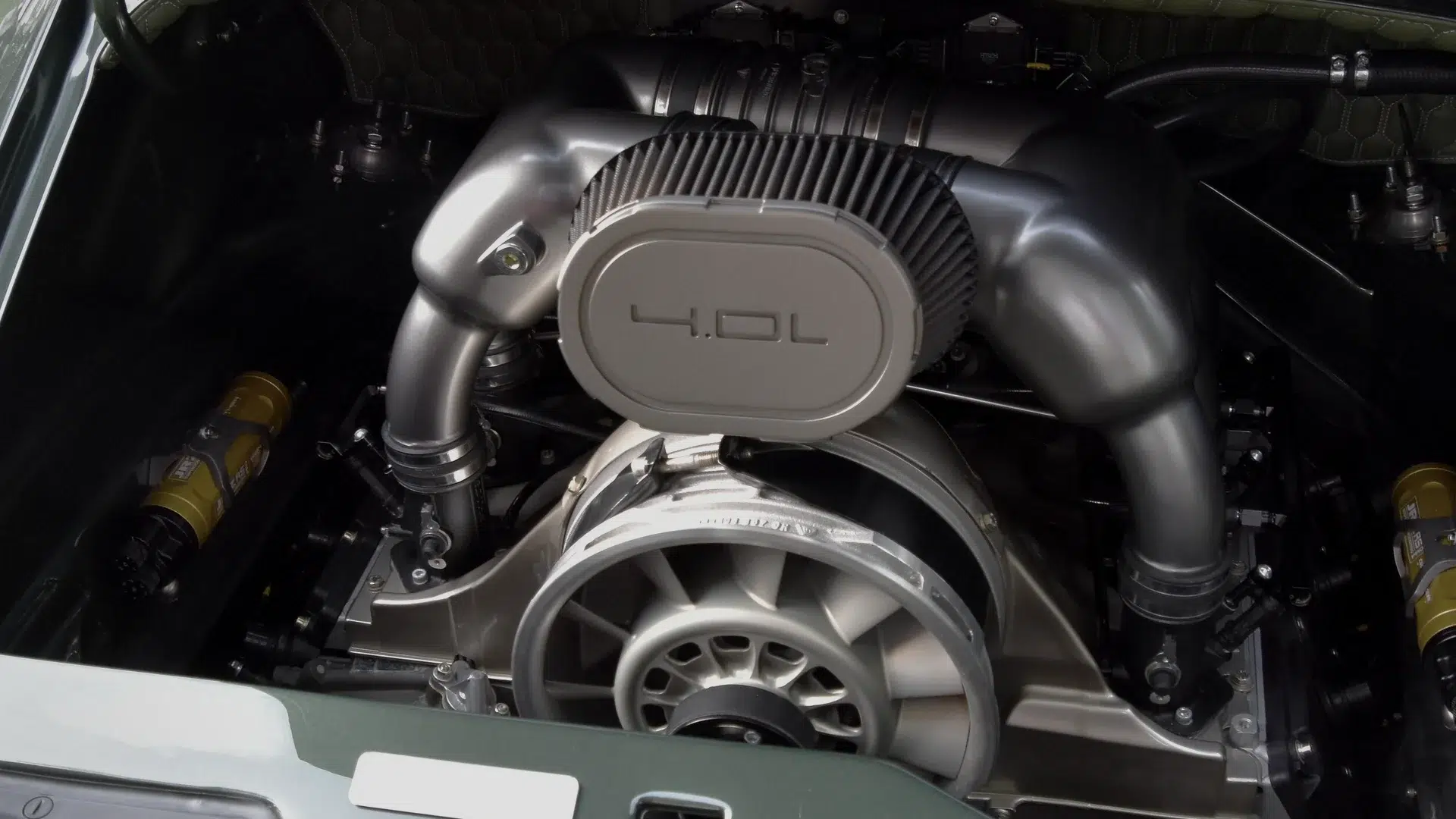

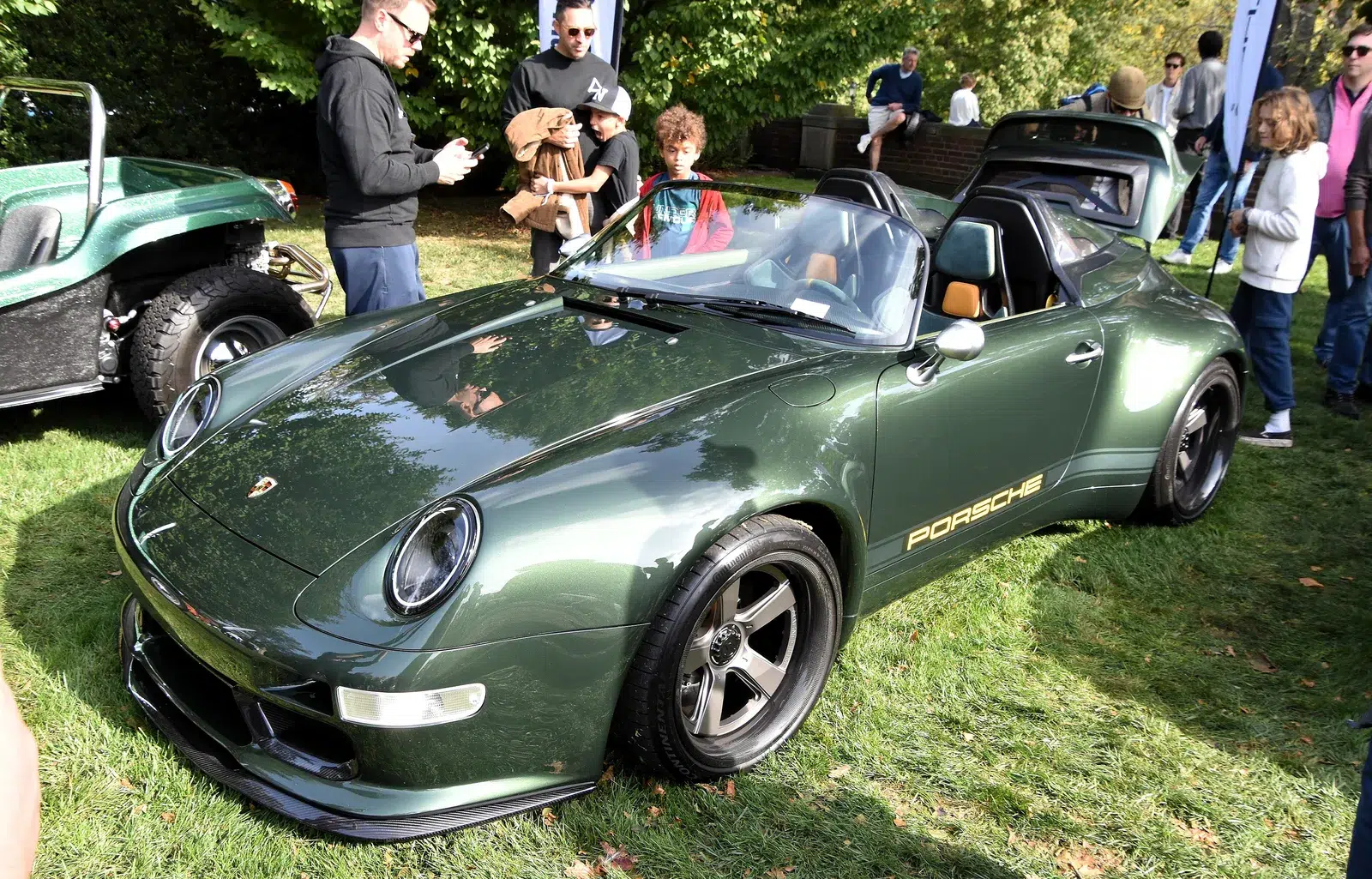
Twenty-five cars, and not one of them has a turbo. That was the pitch when Gunther Werks rolled the 400R onto the lawn at The Quail during Monterey Car Week in 2017: a Porsche 993 rebuilt from the shell up, clothed in carbon fibre and powered by a 4.0-litre air-cooled flat-six that breathes on its own.
It became the benchmark 993 restomod almost overnight. It also gathered plenty of mythology along the way, including figures that belong to later Gunther Werks cars rather than this one. So here’s the 400R as its builder and the outlets that examined it in period actually documented it, with the loose claims corrected.
What Is the Gunther Werks 400R?
A 25-car series of reworked Porsche 993s, built in California by Gunther Werks, the Vorsteiner offshoot run by Peter Nam. Hagerty reported in 2017 that the conversion cost US$525,000 or more, with the buyer supplying the donor car, and that 20 of the 25 build slots were already spoken for.
The name tells you the target: Hagerty quoted 400hp in standard trim and 431hp with the exhaust in its loud mode. The company name nods to Guenter Wendt, the engineer Gunther Werks credits with exacting standards on NASA’s Apollo programme. It’s a fair hint at how the shop wanted its work judged.
Sources: Hagerty (2017), Top Gear (2017), Gunther Werks, CLASSIC.COM market data (2025 to 2026).
Why Build a 993 Without a Turbo?
Because the 993 is the last air-cooled 911, and the throttle response is the reason people want one. Gunther Werks says it chose the car to explore what it could become if re-engineered to modern standards “without losing its soul”. Boost would have bought power and spent exactly the response its buyers were paying for.
Porsche had already built a twin-turbo 993. The 400R went the other way: more displacement, more revs and less weight. It’s the logic of a naturally aspirated GT car applied to a shape Porsche stopped building in 1998, and it’s why the 400R reads as the purist’s answer rather than the loudest one.
The irony is that Gunther Werks has since gone turbo itself. Its current line-up includes an 850hp 993 Turbo conversion and the 1,067hp twin-turbo F-26. That leaves the 400R as the purist in its own family tree, and arguably the car that taught the market what the badge stands for.
Inside the Build
Engine and drivetrain
The engine comes from Rothsport Racing in Oregon. Top Gear’s 2017 feature lists 3,996cc, custom pistons, forged conrods, twin-plug ignition and a Motec ECU, with a 7,800rpm redline. Torque is quoted at 427Nm there and 447Nm by Robb Report, so treat the exact figure as approximate.
Drive goes to the rear wheels through a single-mass flywheel, a single-plate GT2 clutch and a Getrag six-speed manual with bespoke ratios. PistonHeads adds a 40 per cent locking differential. A manual is the only gearbox any of the period coverage lists, which tells you exactly who it was built for.
The carbon body
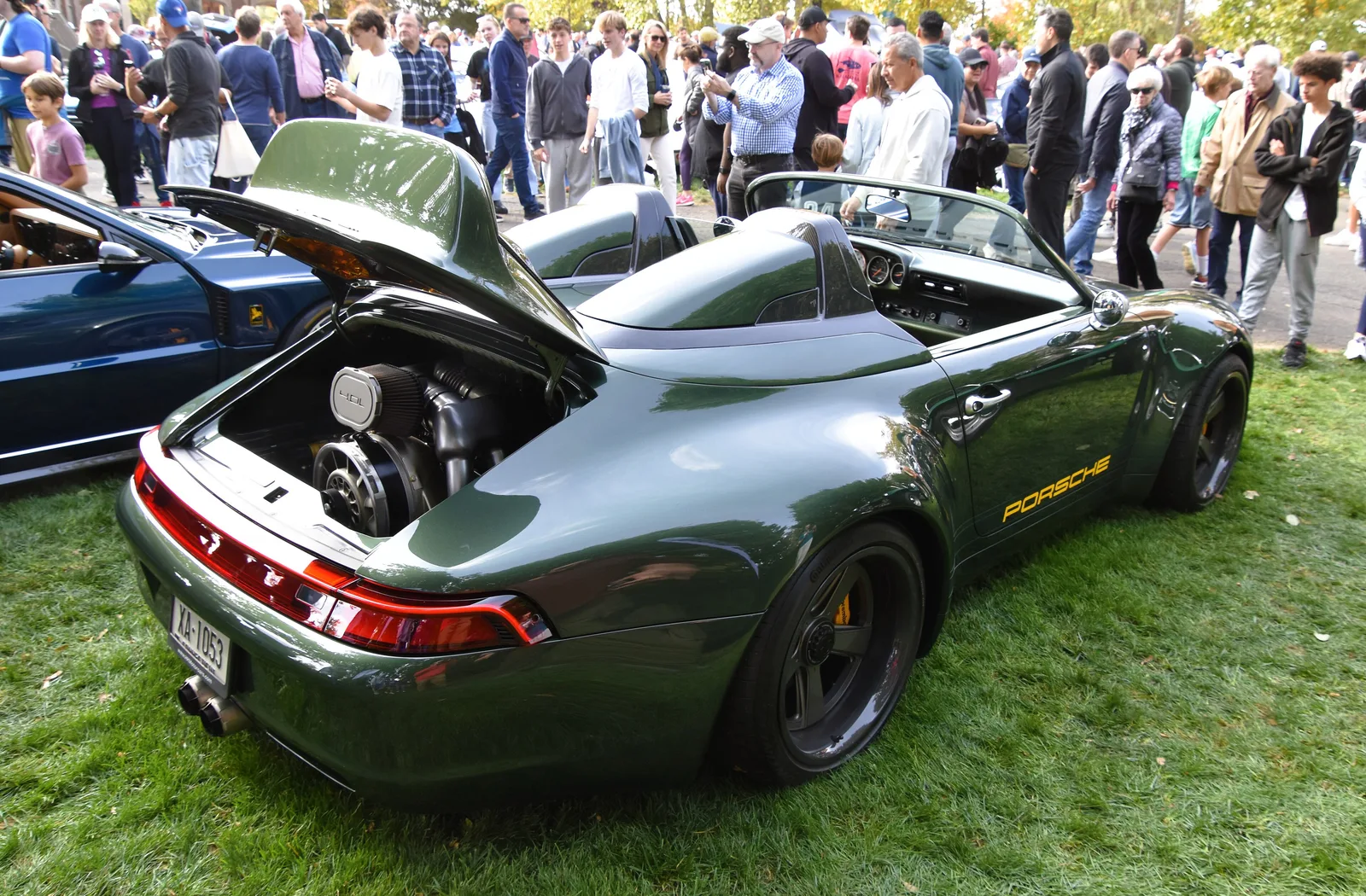
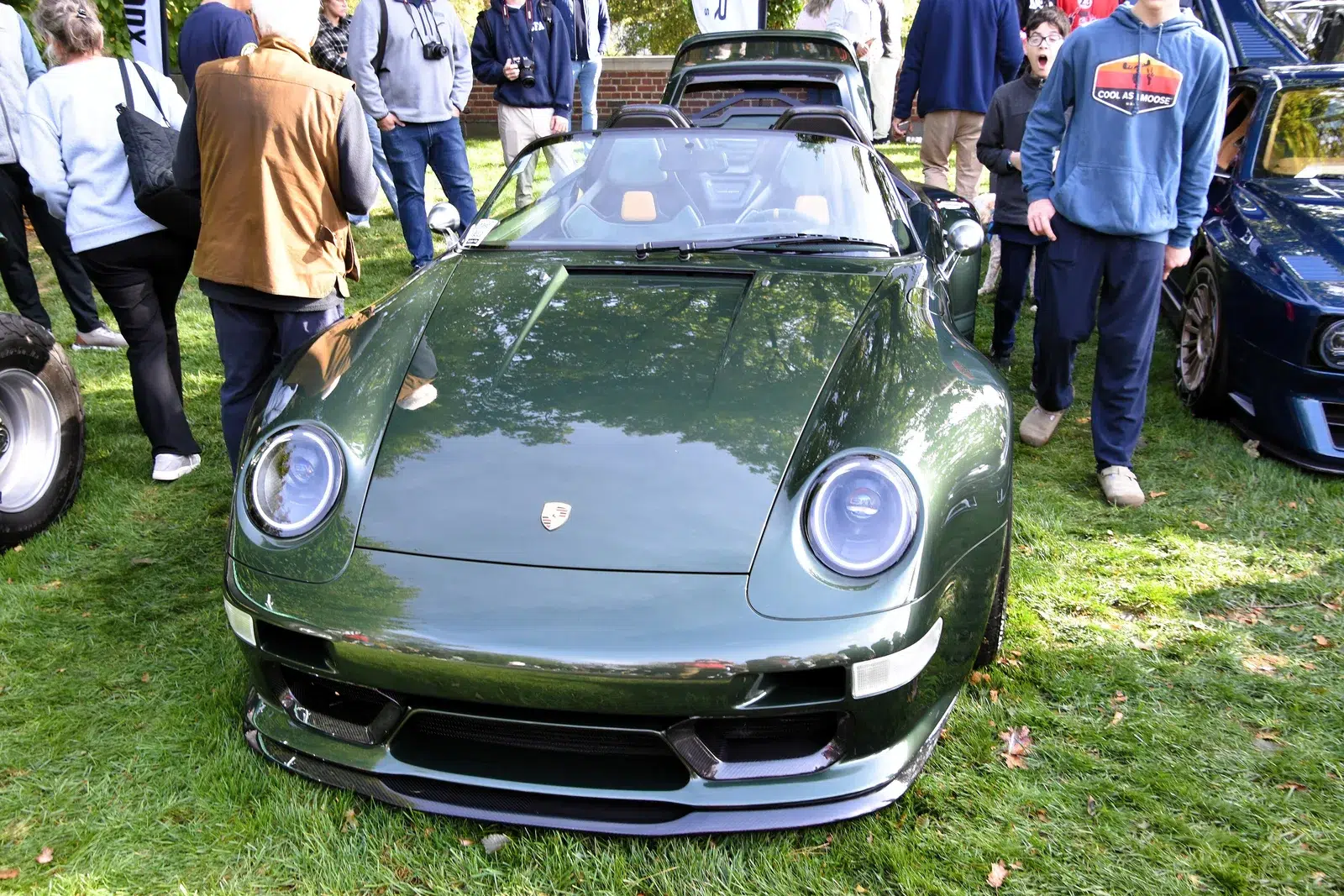
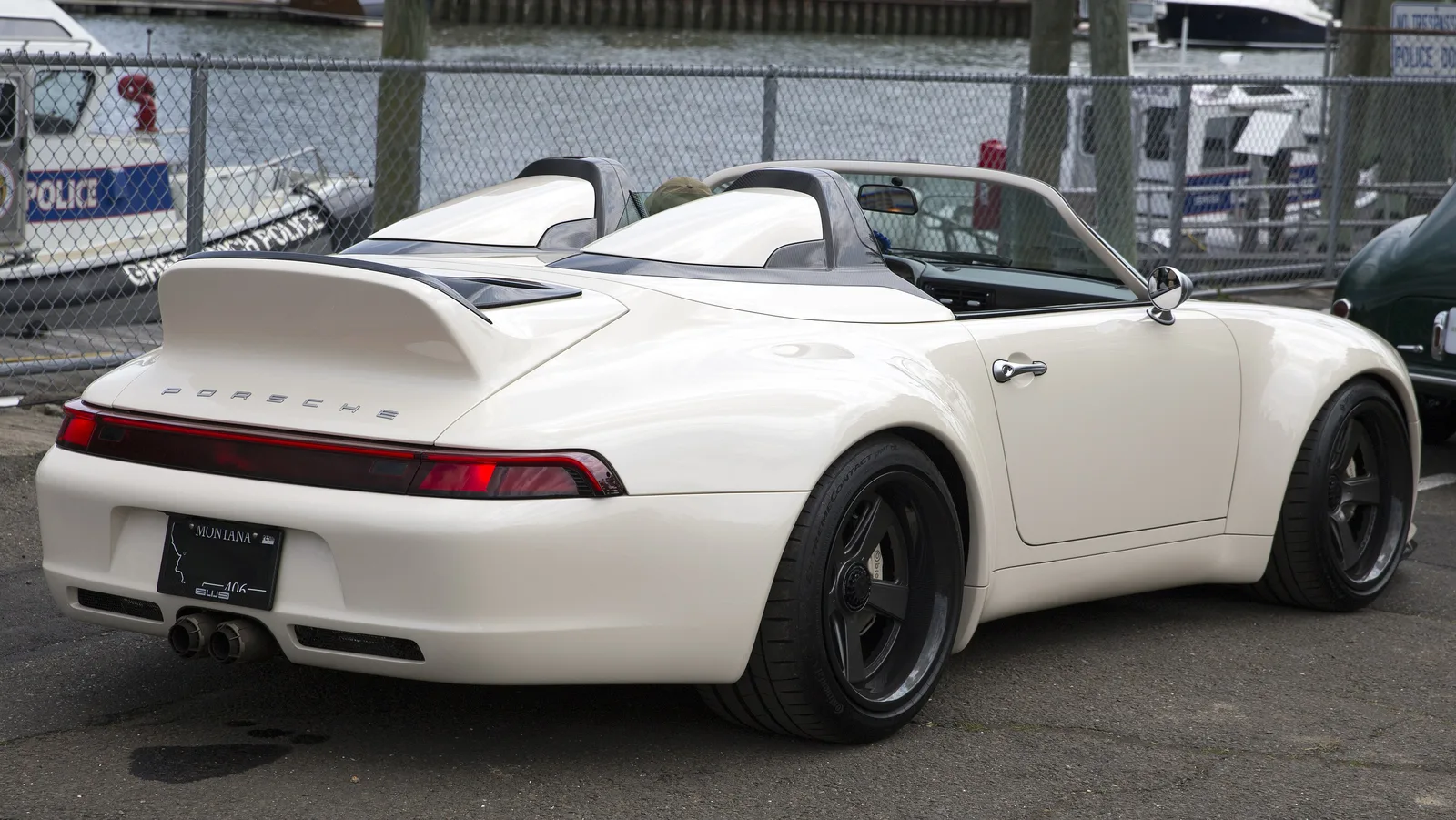
Every exterior panel is carbon fibre except the doors, which Hagerty says stay stock for the safety structure. That’s the one correction to the full-carbon line you’ll often read. The body runs considerably wider than a factory 993, according to Robb Report, and Top Gear notes milled aluminium headlight housings with LED lighting.
The payoff is a 1,211kg unladen weight, the figure both Top Gear and PistonHeads quoted in 2017. Hagerty’s 2,670lb figure, measured with a quarter tank of fuel, matches it. Against 400hp, that works out at roughly 330hp per tonne, serious numbers for a car that still looks like it rolled out of Stuttgart in 1995.
Chassis, brakes and cabin
Suspension is KW Clubsport coilovers, set up by E-Motion Engineering, and Robb Report notes a hydraulic lift system for driveways. Brakes are Brembo six-piston calipers up front, a package Robb Report traces to Nissan’s R35 GT-R, with carbon-ceramics available. Wheels are 18-inch forged items with titanium bolts.
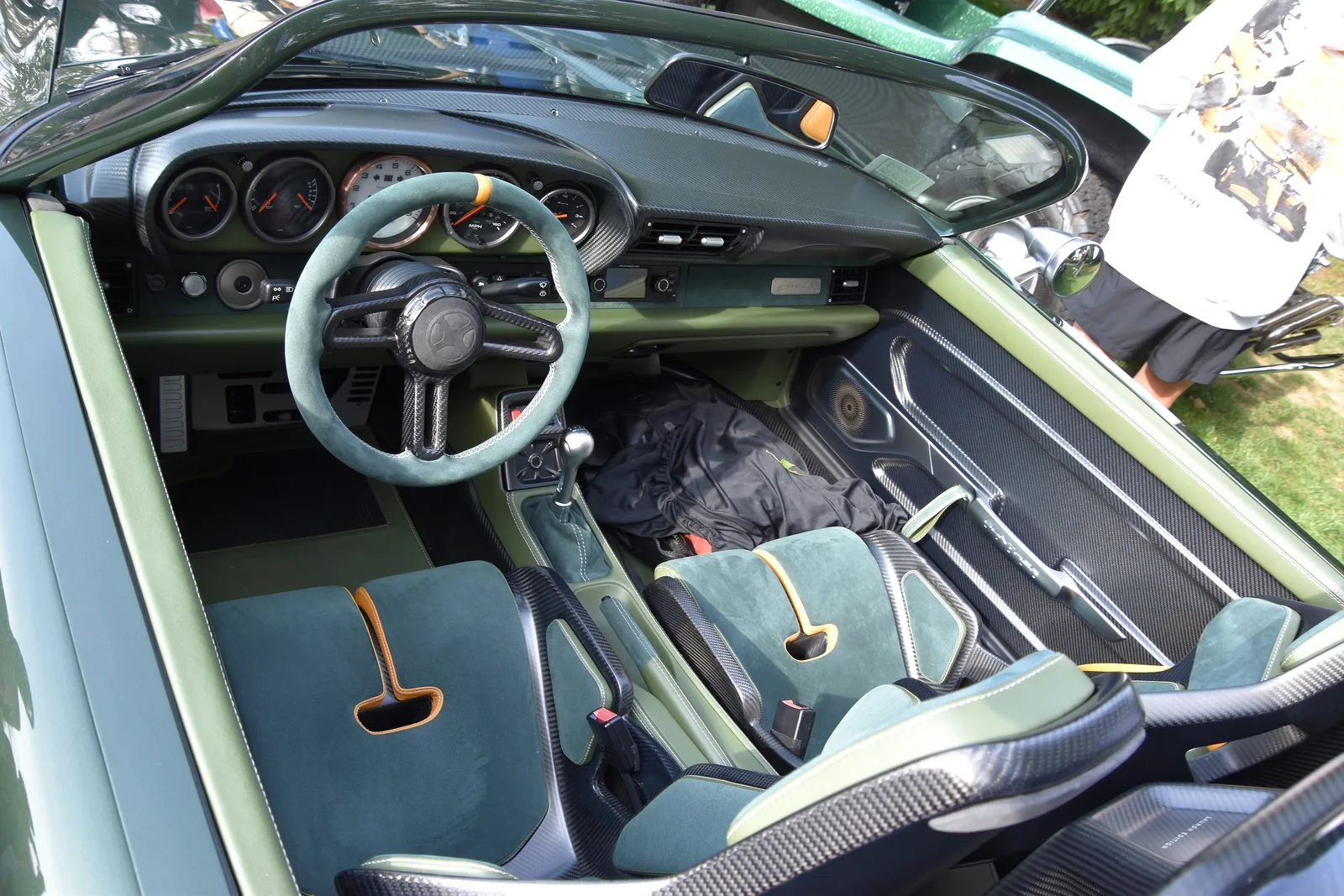
Launch cars wore Pirelli P Zero Rosso rubber, a period-correct choice of performance tyre for a car this light. Inside, owners got carbon bucket seats, bespoke leather, a half-cage and a five-dial cluster with Gunther Werks faces. Each car was tailored to its buyer, which is why no two on the auction circuit look alike.
What Is a 400R Worth Now?
More than it cost new, though not by as much as the hype suggests. CLASSIC.COM’s market tracker records Bring a Trailer sales of US$1,000,000 in December 2025 and US$850,000 in August 2026. In 2023, car one (the first of the 25, per Carscoops) was bid to US$1.15 million on the same site and still failed to meet its reserve.
Australian dollar figures are currency conversions at 69.5 US cents to the Australian dollar (1 October 2026), not Australian market values. Launch price excludes the donor 993. Sources: Hagerty (2017), Carscoops (2023), CLASSIC.COM (2023 to 2026).
At the exchange rate on 1 October 2026, the two recent sales convert to roughly A$1.22 million and A$1.44 million. The launch price works out at about A$755,000 in today’s money, before the donor. Each of the three results since 2023 has landed lower than the one before, so treat any claim that these only go up with caution.
Can You Import a 400R to Australia?
Not as a 25-year-old car, going by the federal department’s own wording. Its import guidance says significant modifications, including body, drivetrain and braking changes, must also be more than 25 years old for a vehicle to count as an older vehicle. A 400R conversion dates from 2017 onward, so the donor’s 1990s build date doesn’t help.
The department says such vehicles may qualify through another pathway, but won’t be added to the Register of Approved Vehicles and aren’t eligible for general registration. So don’t win a 400R at auction and assume it can wear Australian plates. Talk to a licensed import compliance specialist before you bid. This isn’t legal advice.
It’s a shame, because a light, analogue 911 like this belongs on roads like the Targa Tasmania stages that are open to everyone. For now, the closest most Australians will get is a properly sorted factory 993 and a lot of imagination. On current rules, a 400R’s modifications won’t turn 25 until the 2040s.
Why the 400R Is Still the Benchmark
Because it set the template every carbon 993 since has followed: keep the shape, strip the weight, and make the engine bigger rather than boosted. Gunther Werks’ own successor, the GWR, is a 40-car run quoting 500hp and 2,400lb (about 1,089kg). That’s the 400R’s recipe turned up again, not replaced.
The real story is better than the myth. A 400R isn’t full carbon, it was never built at 25 cars a year, and it didn’t cost a million dollars new. It’s 25 cars from a California shop that bet on the air-cooled 911’s purest form, and won. Plenty of restomods have been quicker since. Few have been as sure of what they were.
Source: Gunther Werks, with build details from Hagerty (2017), Top Gear (2017) and Robb Report.
Via: Photos via Wikimedia Commons: Charles from Port Chester, New York (CC0) and Mr.choppers (CC BY-SA 4.0). Images show later Gunther Werks Speedster builds that share the 400R's 993 base and air-cooled 4.0-litre layout, not a 400R.


