
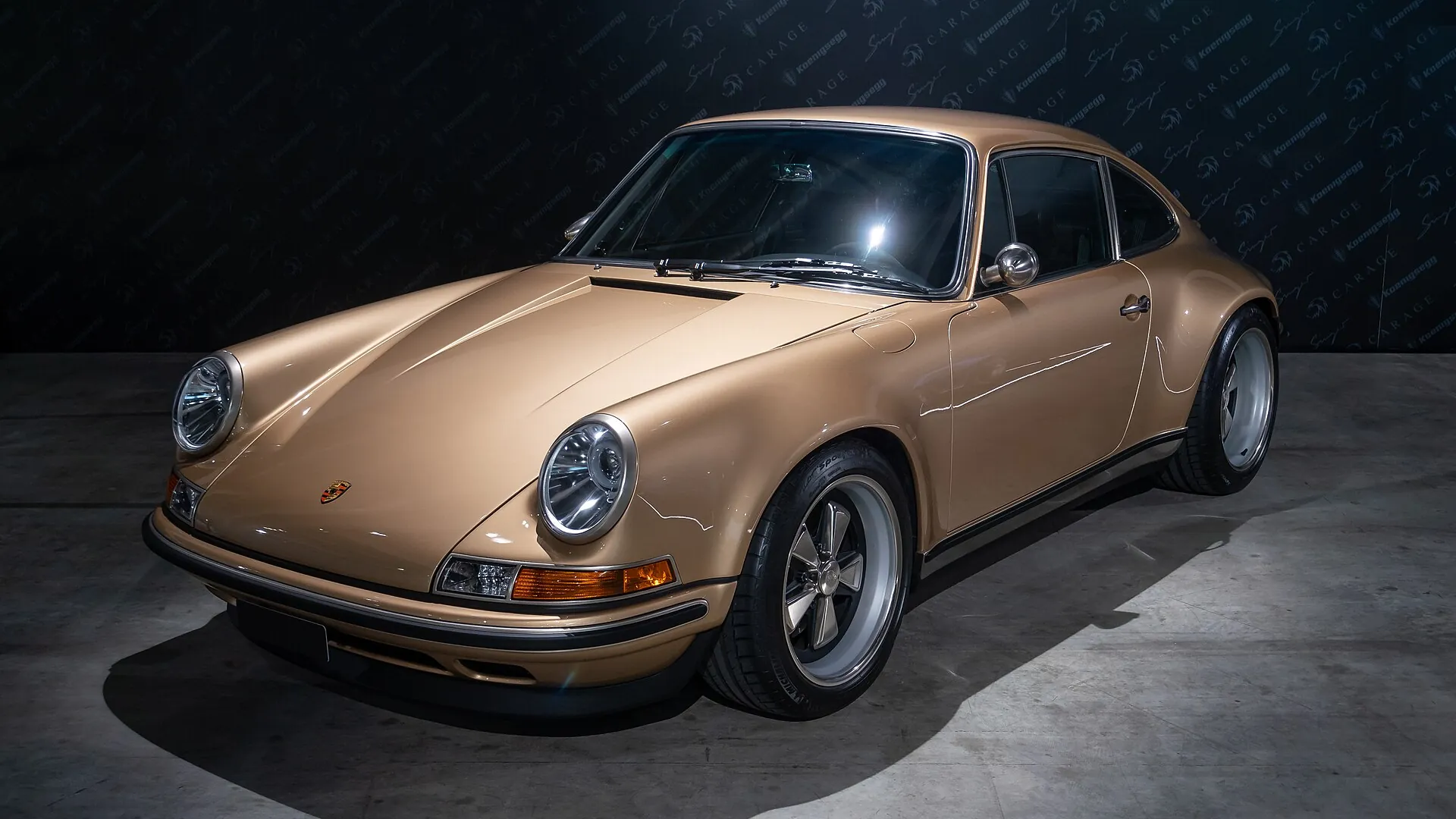

Most restomods replace parts. Singer reconsiders them. Send the Los Angeles company your Porsche 964, and it comes back stripped to bare steel, rebuilt around a new engine, reclothed in carbon and trimmed like a watch. It is, by any measure, the most obsessive Porsche 911 on Earth, and the price says so out loud.
Singer calls the result a Porsche 911 Reimagined by Singer. It isn't a new car, and it isn't a Porsche product: Singer's own disclaimer says it isn't sponsored, approved or affiliated with Porsche in any way. It's a restoration service, performed on the owner's car, and every one is built to a single client's taste.
The brief: a 911 the way Rob Dickinson remembered it
Founder Rob Dickinson fronted the British band Catherine Wheel in the 1990s, after studying car design at Coventry and working at Lotus. He set up Singer in Los Angeles in 2009 and showed the first restoration at Monterey Car Week that year. His first ride in a 911, he says, was a black 930 Turbo in 1976, aged 11.
The idea was to build the air-cooled 911 that lived in his head: early-car looks, modern performance, no compromise in finish. Singer has since grown to more than 600 staff across California and the UK, according to its 2024 release marking the 300th Classic, with assembly in Torrance and its most extreme work in Oxfordshire.
The base car: why it has to be a 964
Every Singer starts with a Type 964 911, built by Porsche from 1989 to 1994, which the owner supplies. Singer's own description of the process starts there: the car is taken down to its bare monocoque, assessed, cleaned and strengthened. The original M64 flat six is removed and becomes the basis of the new engine.
The 964 makes sense. It's the first 911 with power steering and ABS, it's still air-cooled, and its body shares the classic silhouette Singer wants to sharpen. Owners name their cars at the start, which is why auction catalogues are full of Commissions: Fiona, Palm Beach, Sun Valley.
The build
| Programme | Engine | Output | Numbers |
|---|---|---|---|
| Classic (2009 on) | Air-cooled flat six, typically 4.0 litres | Up to about 390bhp | Capped at about 450; orders closed 2022 |
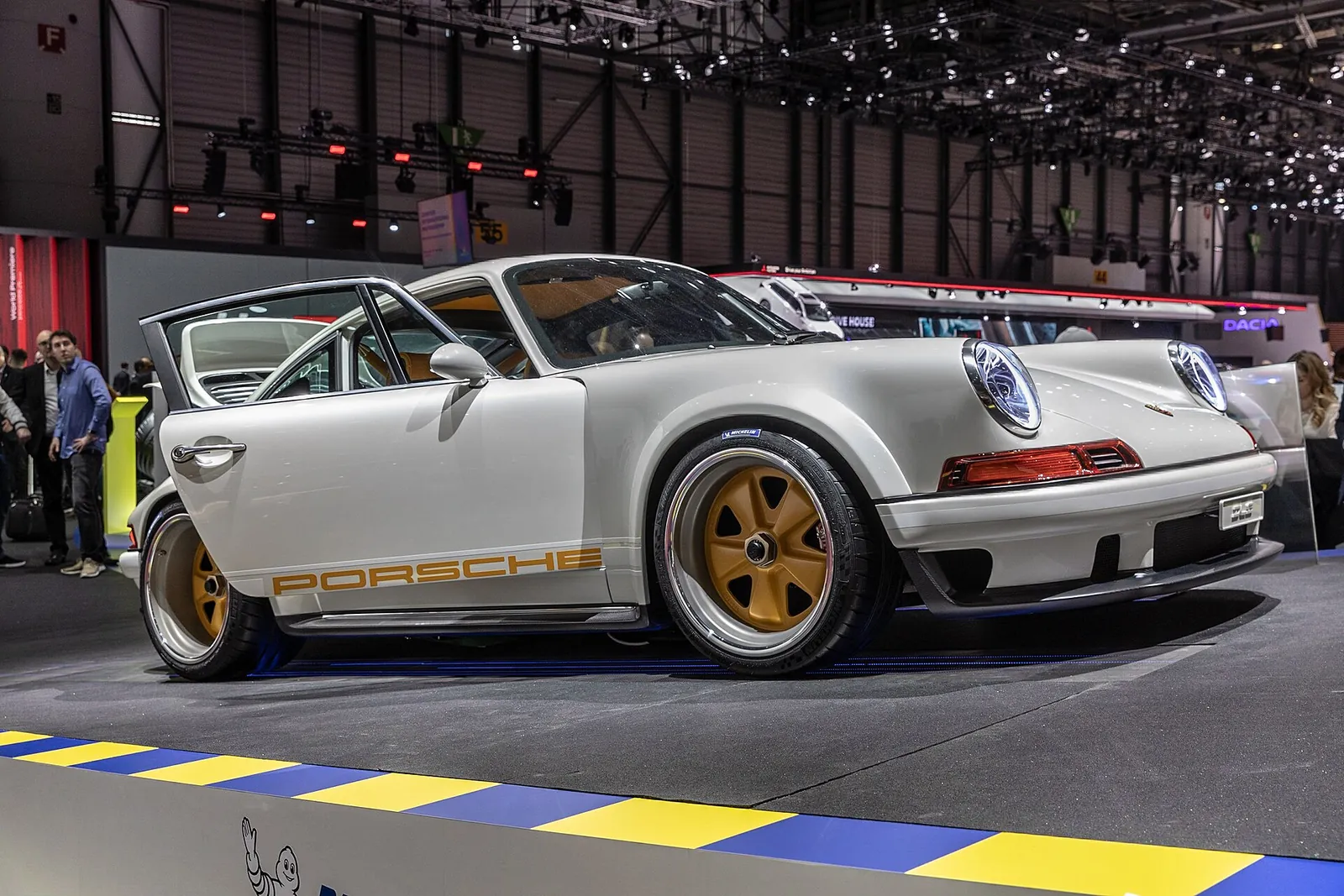
| DLS (2018) | 4.0 four-valve flat six, with Williams Advanced Engineering | 500hp, over 9,000rpm | 75 |
| Classic Turbo (2022) | 3.8 twin-turbo air-cooled flat six | 450 or 510hp | Not published |
| DLS Turbo (2023) | 3.8 twin-turbo, water-cooled heads | 710hp (SAE), 750Nm | Reported at 99 |
| Carrera Coupe and Cabriolet (2025 to 2026) | 4.0 flat six with variable valve timing, co-developed with Cosworth | 420hp, over 8,000rpm | 100 coupes, 75 cabriolets |
Sources: Singer press releases 2022 to 2026 (DLS, Classic Turbo, DLS Turbo, Carrera); Classic cap from Rob Dickinson to Top Gear, 2022; DLS numbers as widely reported since 2018.
Engine and drivetrain
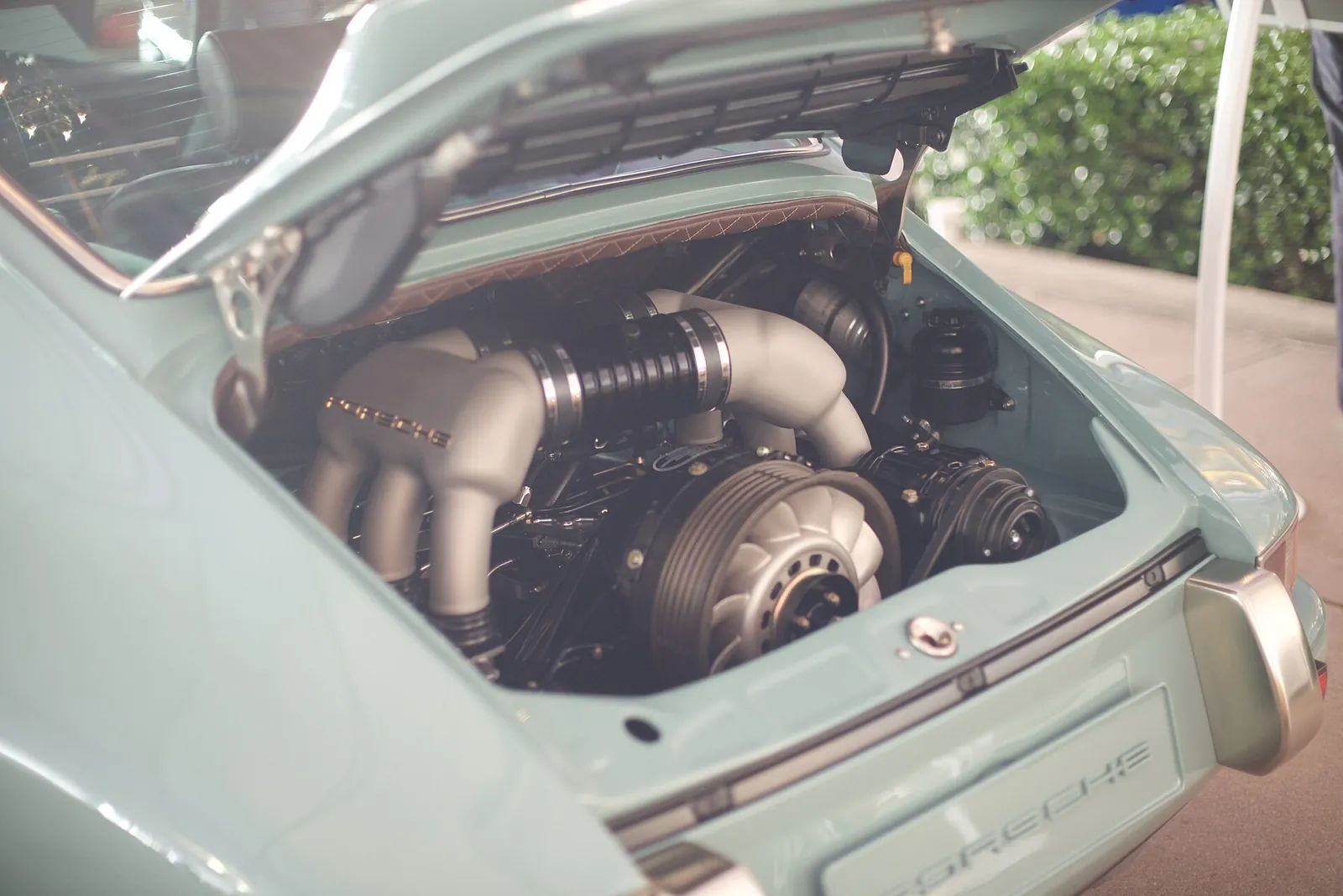
Classic engines are typically air-cooled 4.0-litre flat sixes making up to about 390bhp. The DLS took that further. Williams Advanced Engineering developed its 4.0-litre four-valve flat six, with Porsche engine legend Hans Mezger consulting, and Singer quotes 500hp at more than 9,000rpm through a magnesium six-speed manual. The Classic Turbo's 3.8-litre twin-turbo engine hides air-to-water intercoolers inside its plenums.
Chassis, suspension and brakes
The DLS gained bespoke double-wishbone front suspension, Brembo carbon-ceramic brakes and Bosch ABS, traction and stability control, according to Singer's 2022 specification. For the open Classic Turbo cars, Singer brought in Red Bull Advanced Technologies, which designed 13 carbon reinforcing structures that lift torsional rigidity by 175 per cent, Singer says.
Bodywork, wheels and tyres
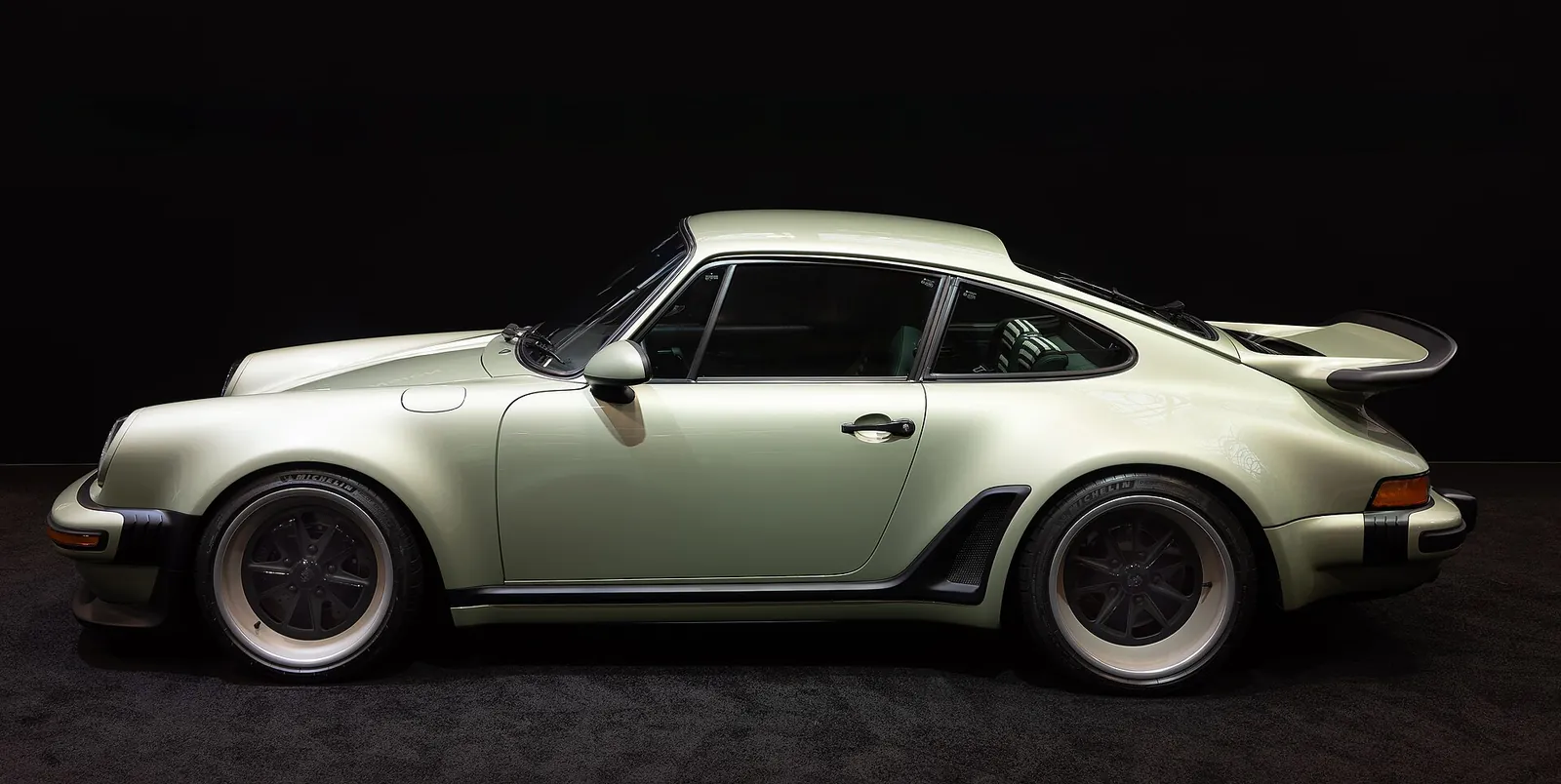
Every panel is carbon fibre. The DLS rolls on 18-inch centre-lock forged magnesium wheels by BBS with what Singer calls bespoke Michelin Pilot Sport Cup 2 tyres, and Singer quoted a target minimum weight of 990kg for the first car. Classics typically wear Fuchs-style wheels, the classic five-leaf 911 design.
Paint and interior
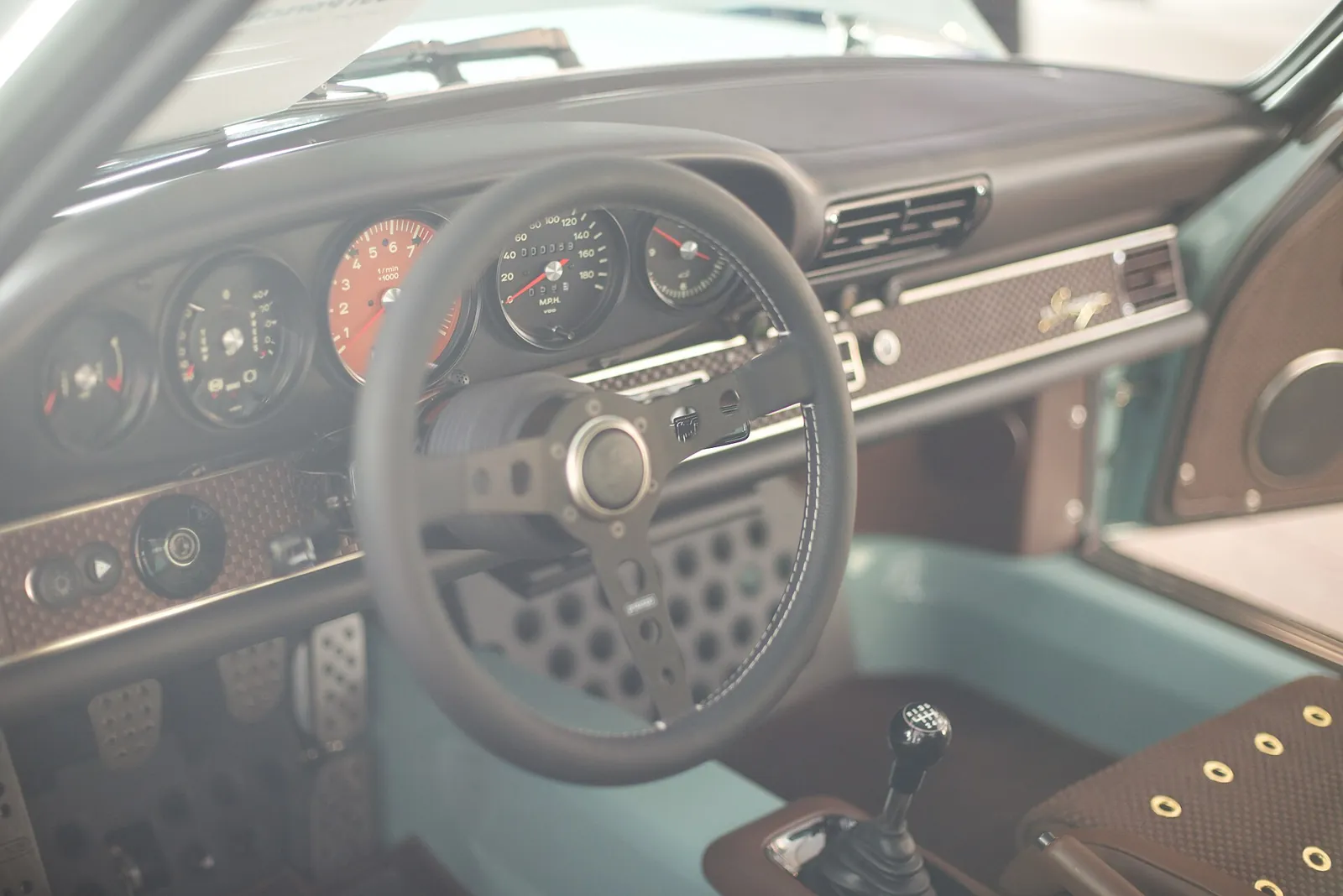
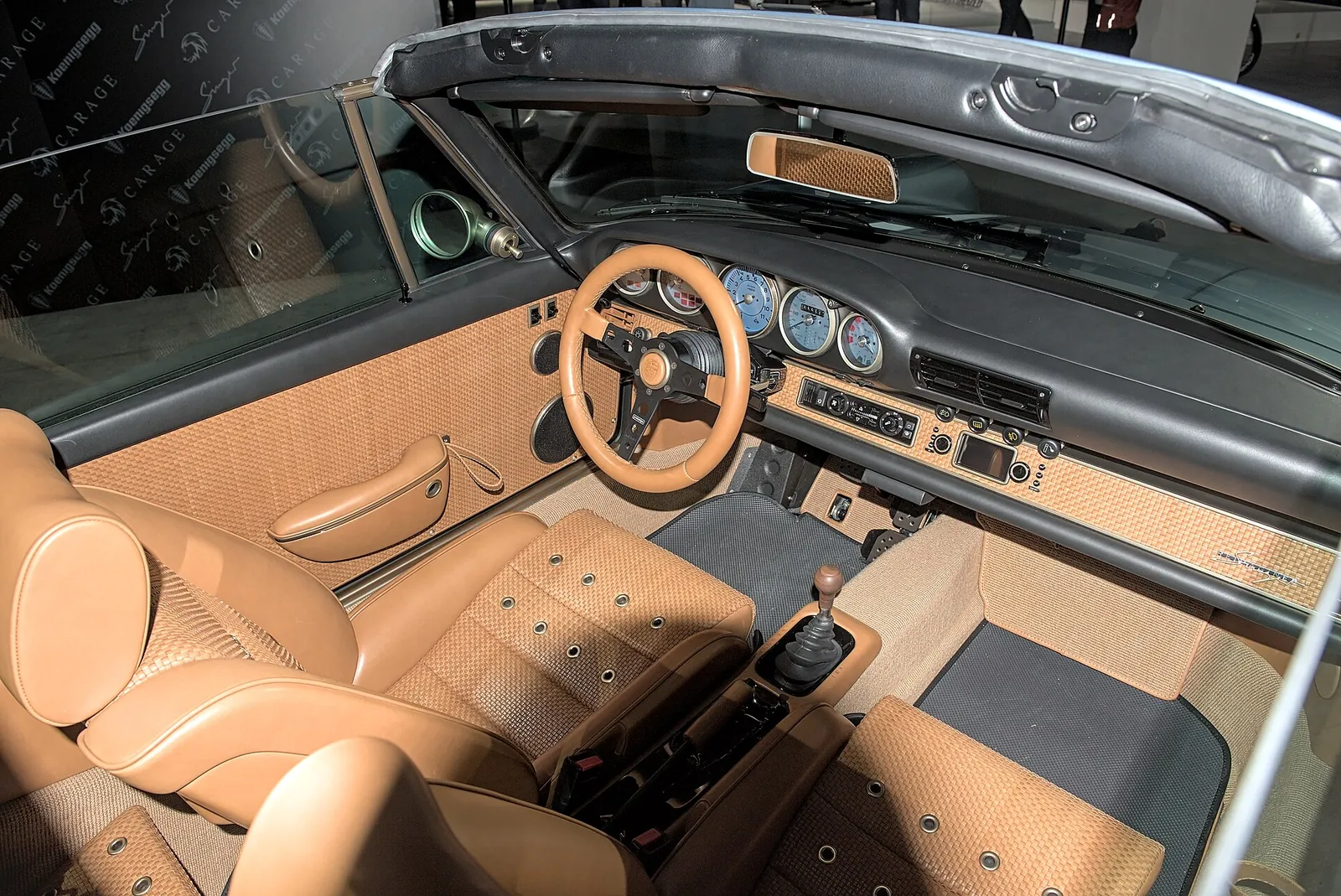
There's no standard colour or trim. Interiors mix leather, woven leather and basket-weave inserts, with five-dial clusters and bespoke switchgear. Owners choose everything, which is why no two Singers look alike, and why waiting lists of about three years were reported in 2021.
The craft: where the obsession shows
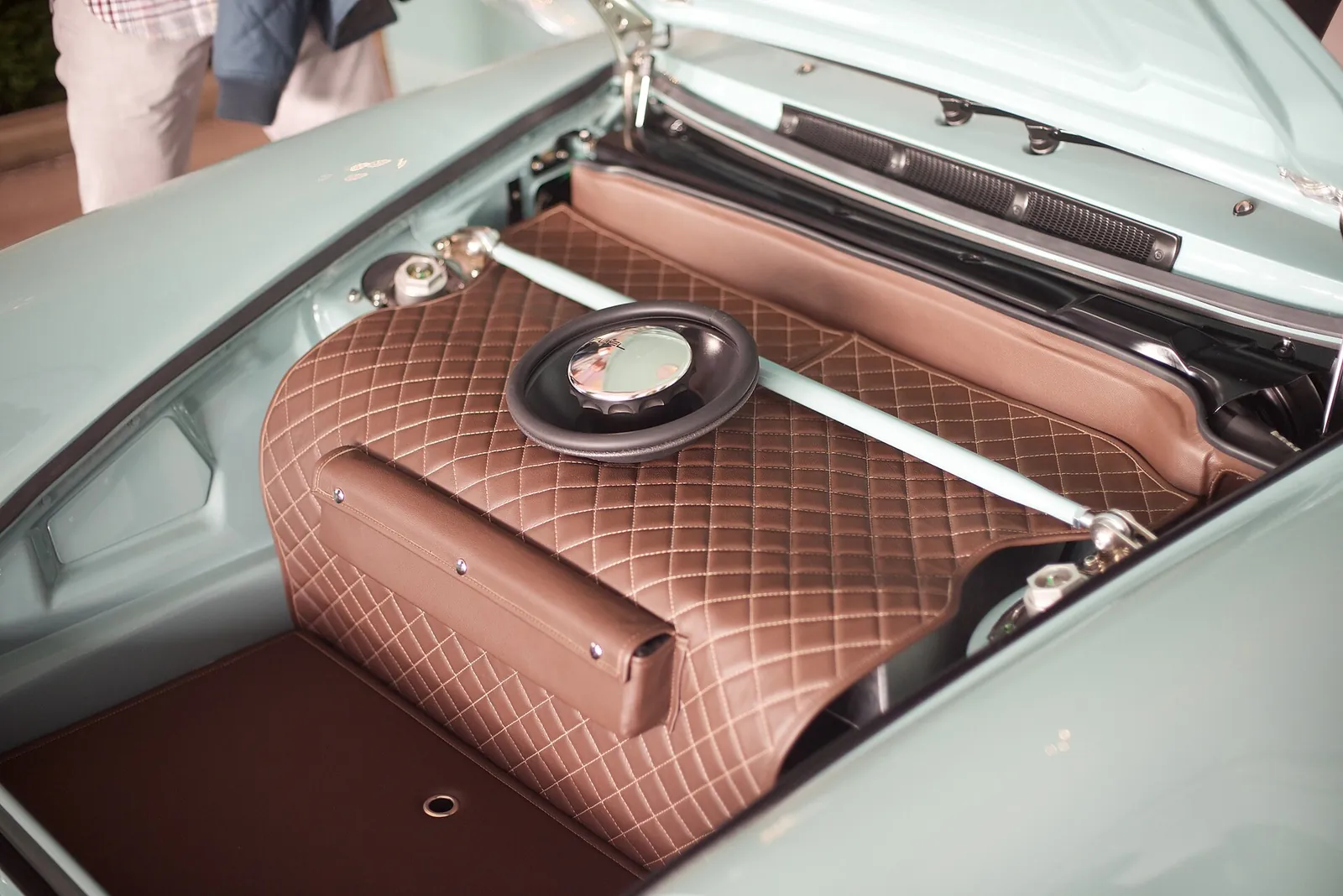
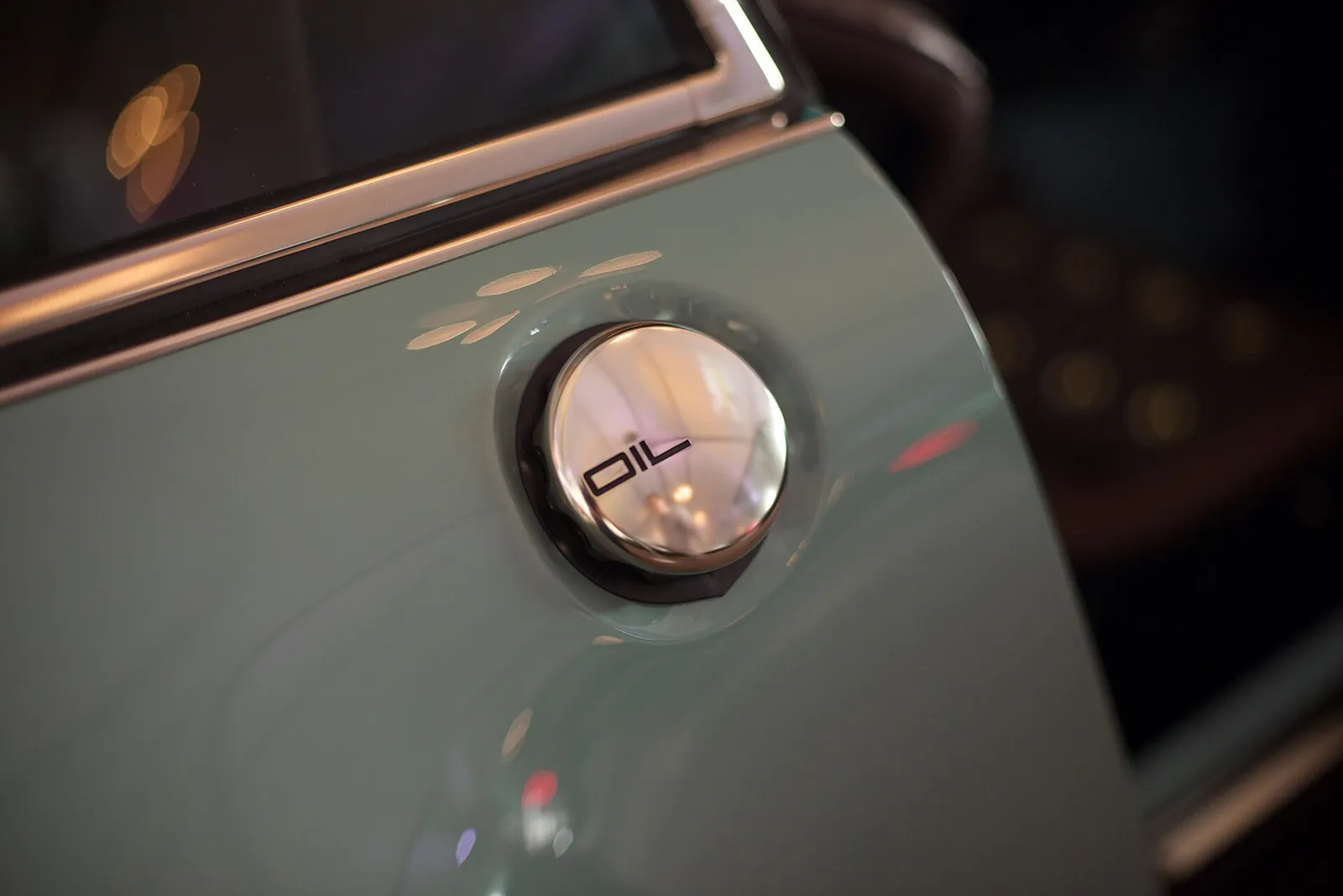
The details are the point. Singer moves the fuel filler to the centre of the bonnet, a nod to racing 911s, and runs the filler neck up through a quilted leather front trunk. The oil filler sits exposed in the rear quarter, recalling the 1972 911. RM Sotheby's describes each car as the result of thousands of hours of work.
That attention extends past the car. Singer now tests at Millbrook, IDIADA, Nardo and the Nurburgring, where TÜV certification is carried out, according to its January 2026 release. The newest programme, the Carrera, adds variable valve timing to an air-cooled-style engine for the first time in Singer's history.
Why it matters: restomod as a luxury category
Singer turned the restomod from a garage hobby into something closer to haute couture. The Classic programme was capped at about 450 cars and closed to orders in 2022. The 2018 DLS carried a reported price of about US$1.8 million plus the donor car, and the DLS Turbo is reported near US$3 million. Dickinson told Top Gear in 2022, “We've capped it to about 450.”
At October 2026 exchange rates, the Classic Turbo's result is about A$2.4 million. That's for a restored 964 that started life as a car worth a fraction of that. DLS and DLS Turbo cars have been offered with estimates above US$3 million, but no public result has been confirmed.
Sources: RM Sotheby's and Bonhams published results; Gooding and PCARMARKET results as reported by Hagerty (2021). AUD conversion at the RBA rate of 26 October 2026 (A$1 = US$0.7031).
Resale has kept pace. Classics sold for about US$825,000 to US$860,000 in 2019; in February, RM Sotheby's sold the Palm Beach Commission for US$1.16 million. In 2025 Singer named RM Sotheby's its preferred partner for secondary sales, which tells you how seriously it takes the cars' second lives.
Singer in Australia
Melbourne's Zagame Automotive Group became Singer's partner for Australia and New Zealand in June 2021, handling sales, servicing and maintenance, and is still listed on Singer's partner network. At the time, a Classic was reported to start at around US$650,000 plus a right-hand-drive 964. How many Singers have since landed here hasn't been published.
If a Singer is beyond reach, we've covered two other famous restomods: the Gunther Werks 400R and the Kimera EVO37. None has done more than Singer to convince the world that an old car, rebuilt obsessively, can be worth more than a new one.
Source: Singer Vehicle Design press releases (2022 to 2026), with programme history from Motor Sport (2017) and Top Gear (2022), and sale results from RM Sotheby's and Bonhams.
Via: Photos via Wikimedia Commons: Matti Blume (CC BY-SA 4.0, header image), Mustang Joe (CC0), steve lyon (CC BY-SA 2.0) and Alexander Migl (CC BY-SA 4.0).


