
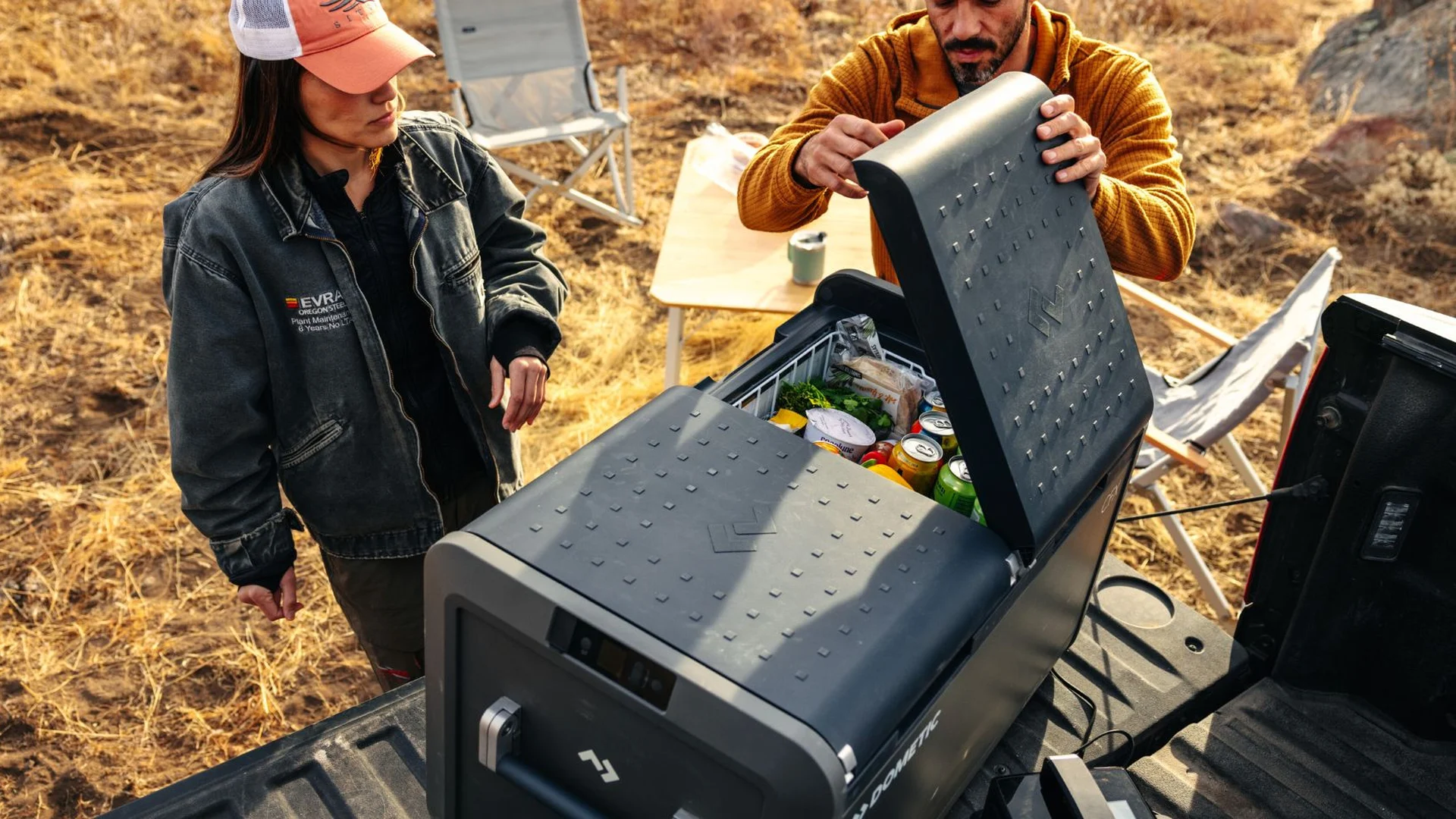

The litre figure sells the fridge. The amp-hour figure decides whether your food makes it to day three. Most buyers pick a 55 or 60-litre box first, then discover their battery was never going to carry it. It’s an expensive way to learn some very simple arithmetic.
We take five in-production 12V fridges, priced against Australian retailers as of October 2026 and judge them on what they cost to run off a battery as much as on what they hold.
Which 12V Fridge Should You Buy in 2026?
The Dometic CFX5 55 is the best all-rounder: $1,649, 55 litres and a published draw of 0.87Ah per hour at 32°C ambient, about 21Ah a day. The Bushman SC35-52 posts the lowest figure, the myCOOLMAN 60 is the value buy, and anyone eyeing a dual-zone should read the battery maths first.
- Best overall: Dometic CFX5 55, $1,649
- Lowest published draw: Bushman SC35-52, $1,599
- Best value: myCOOLMAN 60 Recreational, $799
- Best dual zone: Dometic CFX5 75DZ, $1,999
- Best for ARB-equipped rigs: ARB Zero 69L Dual Zone, $1,973
| Fridge | Price (RRP) | Capacity | Published draw | Per 24 hours | Compressor | Zones |
|---|---|---|---|---|---|---|
| Dometic CFX5 55 | $1,649 | 55L | 0.87Ah/h (32°C ambient, 4°C) | 20.9Ah | Dometic VMSO3.5 | Single |
| Bushman SC35-52 | $1,599 | 35, 45 or 52L | 0.67Ah/h (25°C ambient, −4°C, 52L) | 16.1Ah | Secop BD35 | Single cabinet |
| myCOOLMAN 60 Recreational | $799 | 60L | 0.88Ah average (4°C, ambient not stated) | 21.1Ah | Not stated | Single |
| Dometic CFX5 75DZ | $1,999 | 75L | 2.45Ah/h (32°C ambient, 4°C and −15°C) | 58.8Ah | Dometic VMSO3.5 | Dual |
| ARB Zero 69L Dual Zone | $1,973 | 69L (45L + 24L) | 2.9kWh, test conditions not stated | Not published | Variable speed, brand not stated | Dual |
Prices are manufacturer RRPs as of 5 October 2026. Per-24-hour figures are our calculations (published hourly figure × 24). Test conditions differ by brand, so treat this as a guide, not a like-for-like ranking.
Why Amp-Hours Matter More Than Litres
Your battery holds a fixed number of amp-hours, and the fridge spends them day and night. A fridge using 21Ah a day empties the usable half of a 100Ah AGM in under two and a half days, before lid openings or a hot ute tray. Litres only tell you how much food you stand to lose.
The catch is that makers don’t test the same way. Dometic quotes 32°C ambient at a 4°C setting. Bushman uses 25°C ambient at −4°C. myCOOLMAN gives an average at 4°C with no ambient stated. A 30°C summer day sits between those test points, so read the gaps between brands as indicative.
Assumes 50 per cent usable capacity for AGM and 90 per cent for lithium, and adds 25 per cent to published draw for lid openings, warm stock and heat in the vehicle. Bushman's figure is tested at 25°C ambient, which flatters it against Dometic's 32°C test. ARB does not publish a comparable figure.
Dometic CFX5 55: Best Overall
The Dometic CFX5 55 takes the top spot because it pairs a sensible 55 litres with the clearest spec sheet here. Dometic quotes 0.87Ah per hour at 32°C ambient, the hardest test condition in this group. RRP is $1,649, and BCF lists it at the same price.
The standout is the insulation. Dometic uses vacuum insulated panels in the CFX5 range alongside a variable-speed VMSO3.5 compressor, and it shows in the draw figure. It weighs 20.7kg empty and holds 85 cans. The full story is in our Dometic CFX5 55 review.
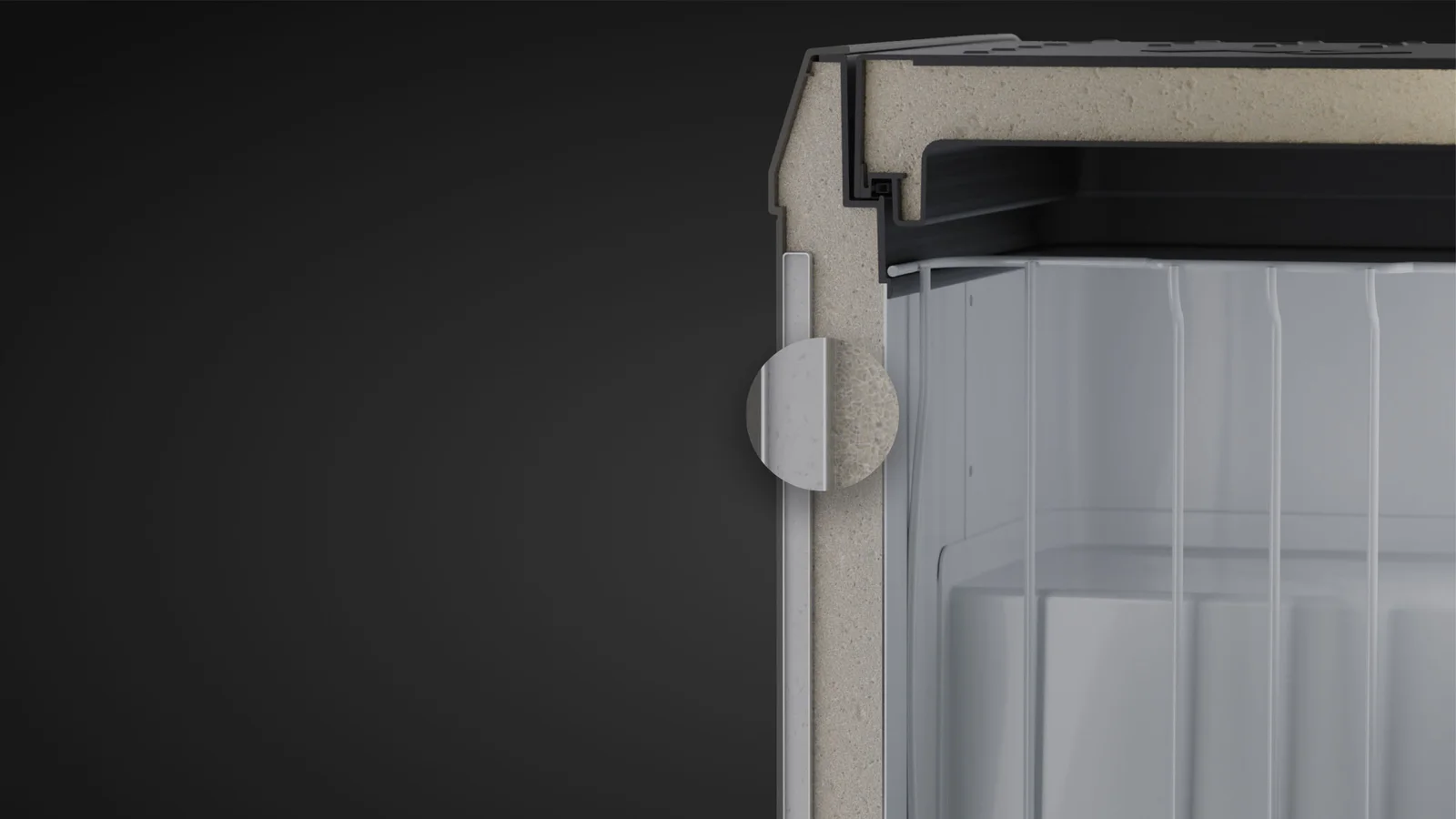
The weakness is price. On paper the CFX5 55 uses about the same power as the $799 myCOOLMAN 60, and costs twice as much. You’re paying for the tougher test standard, the build and the brand. If you camp twice a year at powered sites, spend the difference on a better battery instead.
Bushman SC35-52: Lowest Published Draw
The Bushman SC35-52 posts the lowest number here: 0.67Ah per hour in 52-litre mode, about 16Ah a day. It runs a Secop BD35 compressor, from the line once sold under the Danfoss name, and costs $1,599 direct. Battery Force lists it at $1,495.
The standout is flexibility. An extension collar turns the 35-litre cabinet into a 45 or 52-litre one, so a solo weekend and a family fortnight don’t need two fridges. Bushman also backs the compressor with a seven-year warranty, the longest in this group.
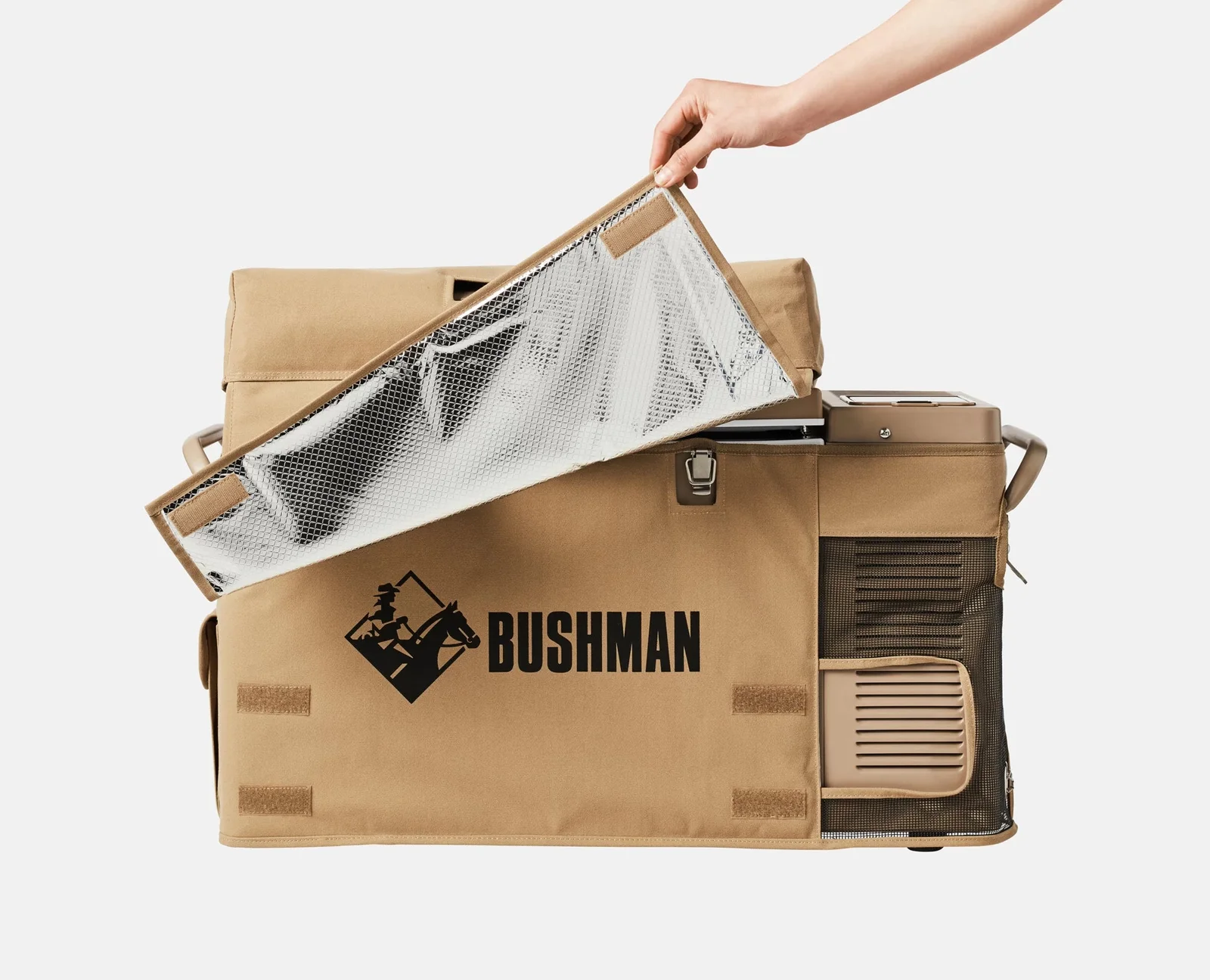
The weakness is that the headline figure comes from a 25°C test, seven degrees kinder than Dometic’s. Expect the real-world gap to narrow on a hot day. Bushman describes freezer, fridge and crisper layers in the 52L, but they share one cabinet. If you need truly separate freezer control, look at the dual-zones below.
myCOOLMAN 60 Recreational: Best Value
The myCOOLMAN 60 Recreational is the value buy. It costs $799 for 60 litres, and myCOOLMAN quotes 0.88Ah average at a 4°C setting, which works out at about 21Ah a day. On paper, that matches the Dometic for half the money.
The standout is simply capacity per dollar: 60 litres and 85 cans in an 18.9kg box. Caravan RV Camping had it at $629 when this guide was written, so shop around. It’s the right fridge for weekenders and school-holiday campers who mostly stay near power.
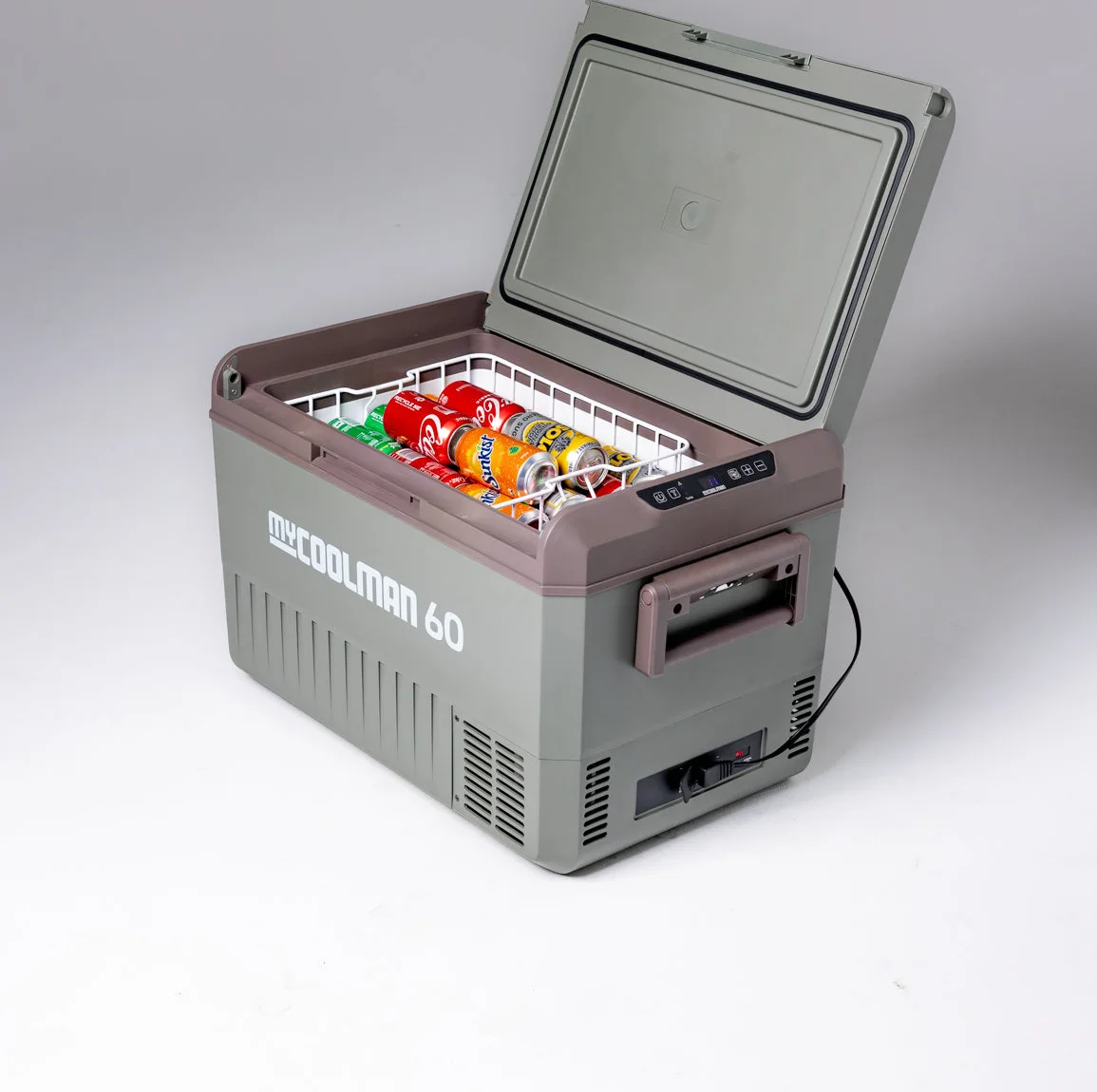
The weakness is transparency. myCOOLMAN doesn’t name the compressor or the ambient temperature behind its figure, and the warranty is three years. That doesn’t make it a bad fridge. It does mean the 21Ah figure deserves more caution than Dometic’s, especially in a 40°C ute tray.
Dometic CFX5 75DZ: The Dual-Zone Reality Check
The CFX5 75DZ is the dual-zone pick, and Dometic deserves credit for publishing the uncomfortable number. Its spec sheet lists 2.45Ah per hour with the small zone at −15°C, at 32°C ambient. That’s about 59Ah a day, close to three times the single-zone CFX5 55. RRP is $1,999.
That freezer is the cost. Running half the box at −15°C in a hot climate makes the compressor work hard, and the grid above shows the result: barely a day on a 100Ah lithium with no charging. The fridge itself is excellent, with 75 litres and 113 cans of space. It’s your electrical system that has to keep up.
Buy it if you tour for weeks, carry 200Ah or more of lithium and run solar, and need frozen meat on day ten. Don’t buy it for long weekends. A single-zone fridge with a cheap freezer brick will serve that trip better and leave your battery alone.
ARB Zero 69L Dual Zone: For ARB-Equipped Rigs
The ARB Zero 69L Dual Zone suits buyers already running ARB fridge slides and fit-outs. It’s $1,973, splits into 45 and 24-litre zones (or 73 litres single), and adds Bluetooth app control, dual DC inlets and a USB outlet. It weighs 31kg, the heaviest here.
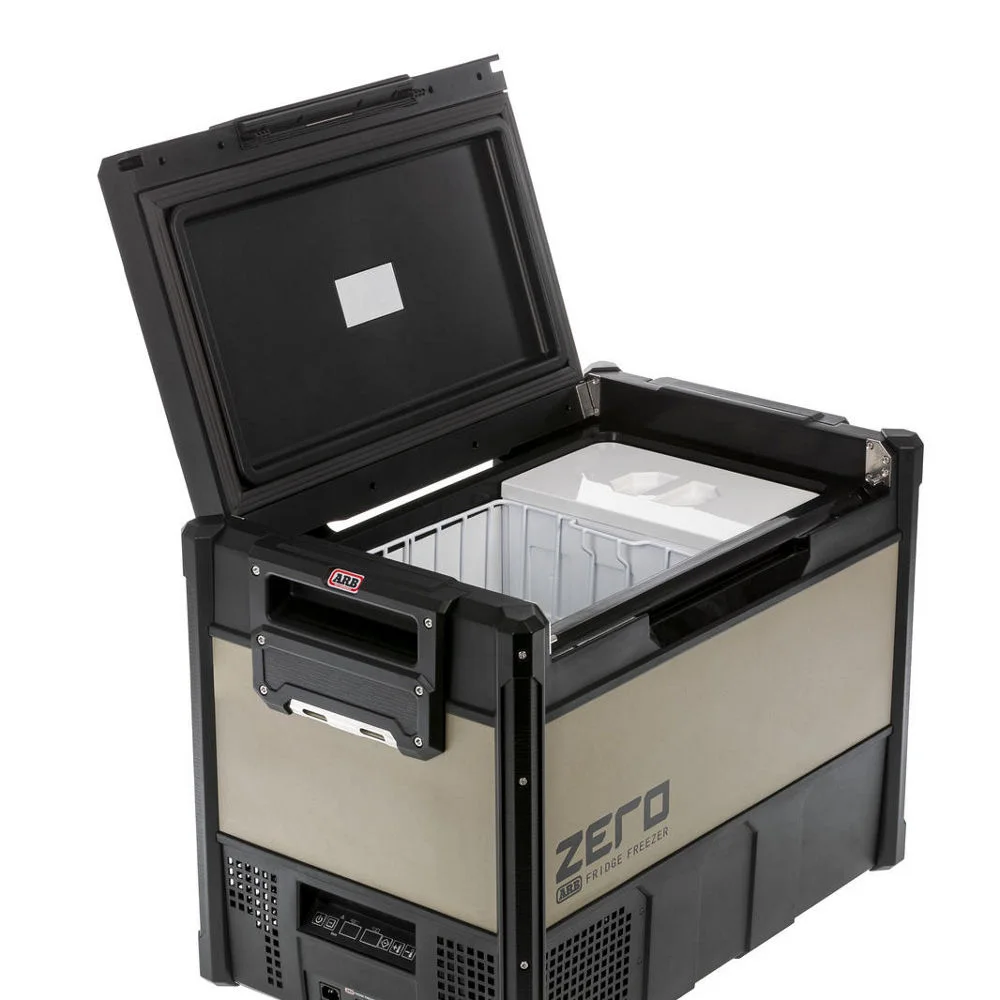
The weakness is the spec sheet. ARB lists a 5.3A current rating at 20°C and a power consumption of 2.9kWh, with no time period or test temperature stated. That can’t be compared with Dometic’s figure. Ask ARB for a daily amp-hour number at 32°C before you buy, and assume dual-zone draw sits nearer the 75DZ’s than the 55’s.
Size the Battery Before You Size the Fridge
Start with the daily amp-hours, then check what your battery can actually give. We assume half of an AGM’s rating is usable and about 90 per cent of a lithium’s. That makes a 100Ah AGM a 50Ah battery in practice, which is why a 21Ah-a-day fridge struggles to see day three.
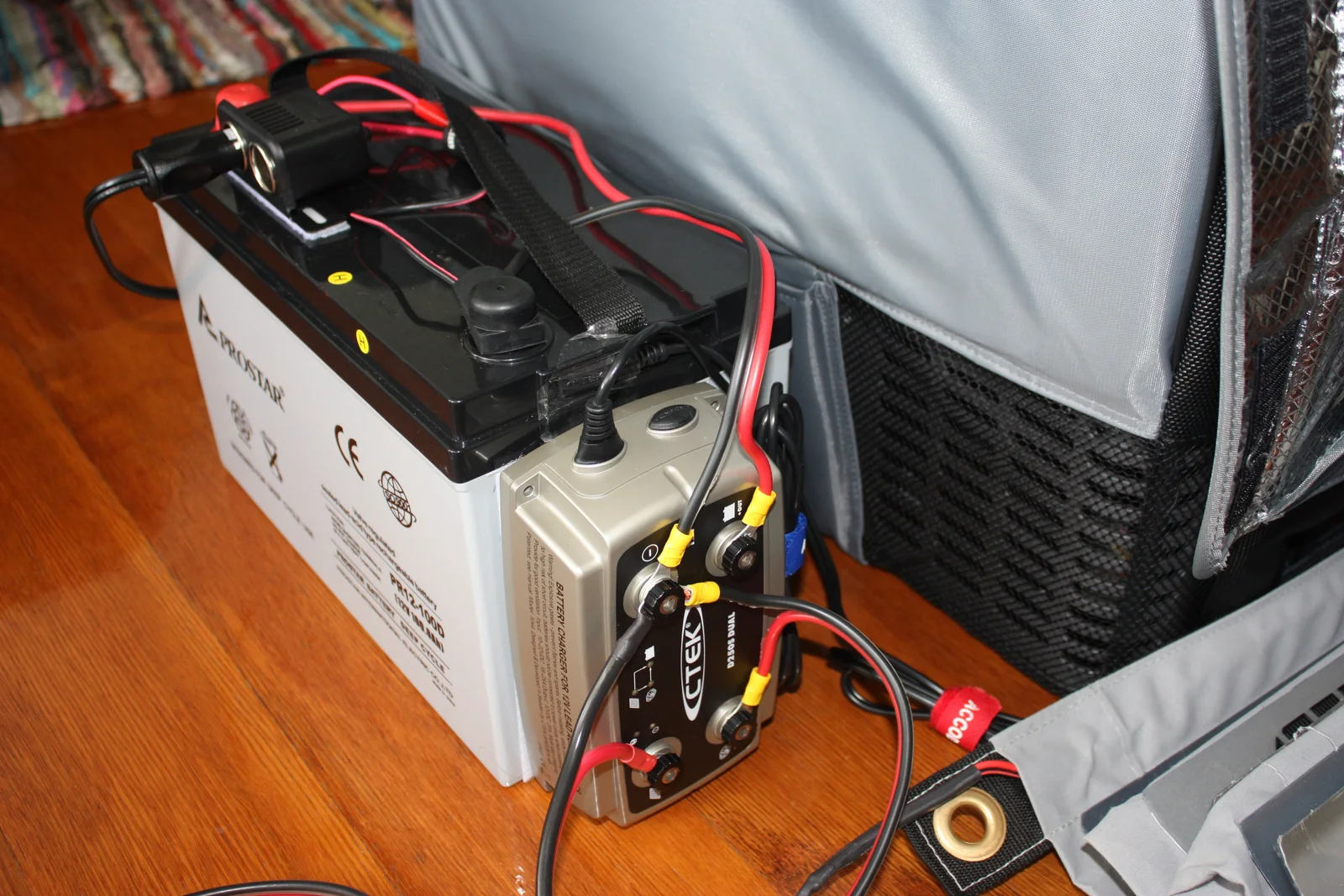
Charging changes everything. A DC-DC charger refills the auxiliary battery while you drive, and solar covers stationary days. Before a remote run like the Blue Rag Range Track or the Oodnadatta Track, do the sums with your real camp pattern: how many days parked, how much sun, how hot.
And don’t confuse the fridge battery with the starting battery. A dual-battery system keeps the fridge from flattening your cranking battery, but things still go wrong. A portable jump starter is cheap insurance, whichever fridge you pick.
What’s the Best?
Buy the Dometic CFX5 55 if you want the best-documented fridge and can afford it. Buy the Bushman if efficiency and a flexible size matter most, or the myCOOLMAN if budget rules. Only buy a dual-zone after you’ve priced the battery and solar to match. The fridge is the easy bit. The battery is the bill.


