
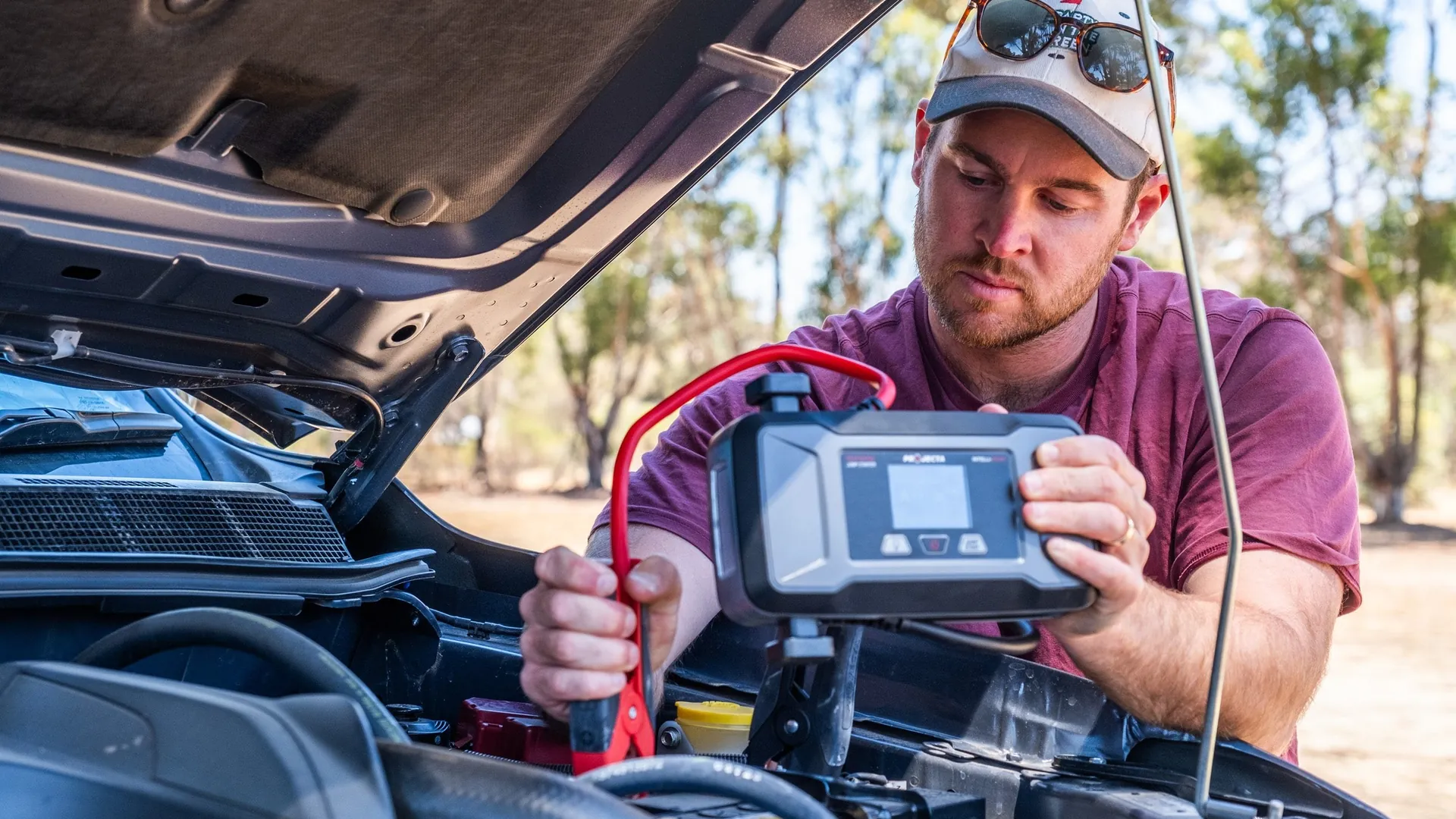

The glovebox is the obvious place to keep a jump starter. In an Australian summer, it’s also the worst. A closed car can top 70 degrees inside within minutes, and the lithium units here that publish a storage limit top out between 45 and 60 degrees.
So this guide picks the best jump starters for Australian cars and conditions, and tells you where to keep them. We compared each maker’s published specifications, Australian prices and warranty terms, and haven’t bench-tested them ourselves. Prices were checked in late October and again in November 2026. If your battery keeps going flat, a jump starter only buys time; our battery replacement cost guide covers the fix.
The short list
The NOCO Boost X GBX55 is the best jump starter for most Australian drivers. It covers diesels up to 5.0 litres, charges over USB-C, is sealed to IP65 and weighs 1.17kg. It usually sells for about $340 and is discounted often. It was $285 at Supercheap Auto in early November. Buy something bigger only if you drive a large diesel and tour remote country.
| Jump starter | Best for | Where and how much | Diesel rating |
|---|---|---|---|
| NOCO Boost X GBX55 | Best overall | About $340 at Supercheap Auto and Autobarn, often on sale | Up to 5.0L |
| Projecta Intelli-Start IS1400 | 4WD tourers and hot climates | $418 RRP (Projecta); $429 at Auto One | Up to 5.0L |
| TOPDON JumpSurge3000 | Big diesels on a budget | $249 at TOPDON's Australian store | Up to 7.0L |
| RYOBI 18V ONE+ RJSC18 | RYOBI tool owners | $199 skin only (Bunnings special order) | Up to 5L |
| NOCO Boost Plus GB40 | Small petrol cars | $184.99 at Supercheap Auto | Up to 3.0L |
| Kings 1000A MKII | The glovebox spare | $89.95 at 4WD Supacentre | Not stated |
Prices checked 27 October 2026 and change often. Engine ratings are each maker's claim for diesel, the harder engine to start.
NOCO Boost X GBX55: the one to buy if you buy one
The GBX55 is rated for petrol engines up to 7.5 litres and diesels to 5.0, which covers everything from a hatchback to a V8 LandCruiser 70, though a 4.5-litre diesel doesn’t leave much margin. It’s a 1,750A peak, 46Wh lithium-ion unit with 60W USB-C charging in and out, so it doubles as a laptop power bank.
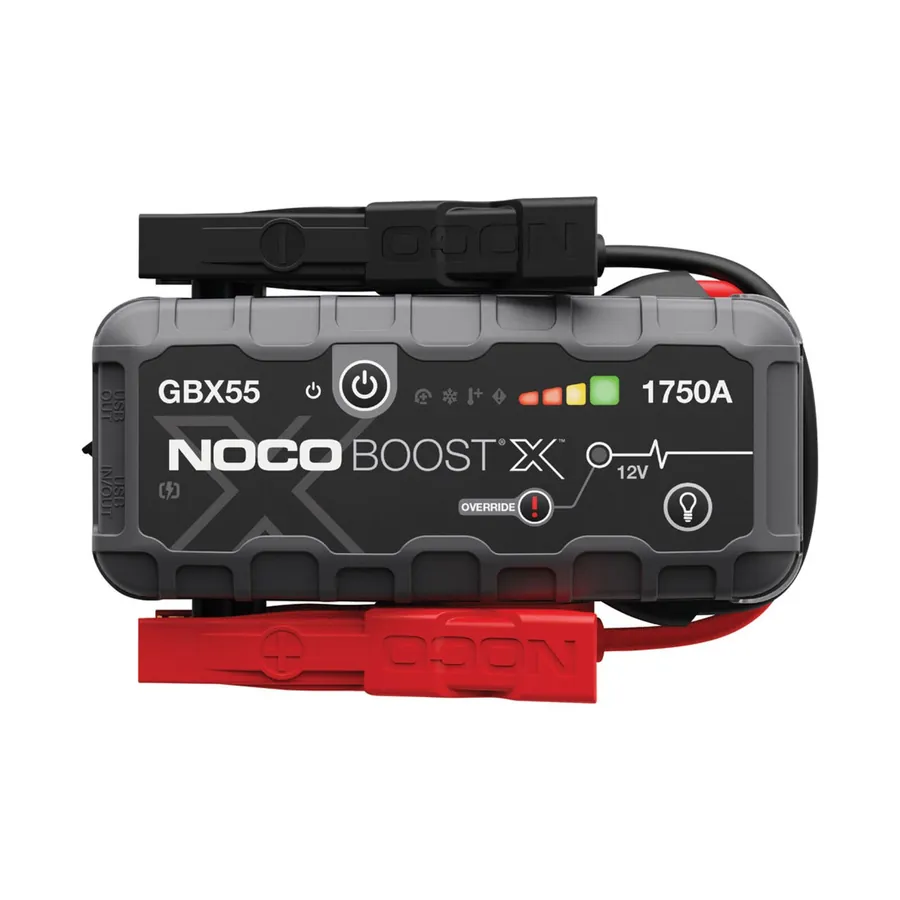
The manual override is the feature that matters. Normally the GBX55 detects batteries down to 3 volts. Below that it sees nothing, so you hold the override for three seconds to force it on. That switches off the spark-proof and reverse-polarity protection, so check your clamps twice first. NOCO’s user guide says no more than five attempts in 15 minutes, then let it rest. The weak point is the one-year warranty, which is short at this price. Buy it on sale.
Projecta Intelli-Start IS1400: the touring pick
Projecta’s IS1400 uses lithium iron phosphate (LiFePO4) cells, generally regarded as more thermally stable than standard lithium-ion, and carries a two-year warranty. It’s rated for 7.0L petrol and 5.0L diesel, and its Rapid Recharge mode tops itself up from your alternator in about 40 seconds after a start.
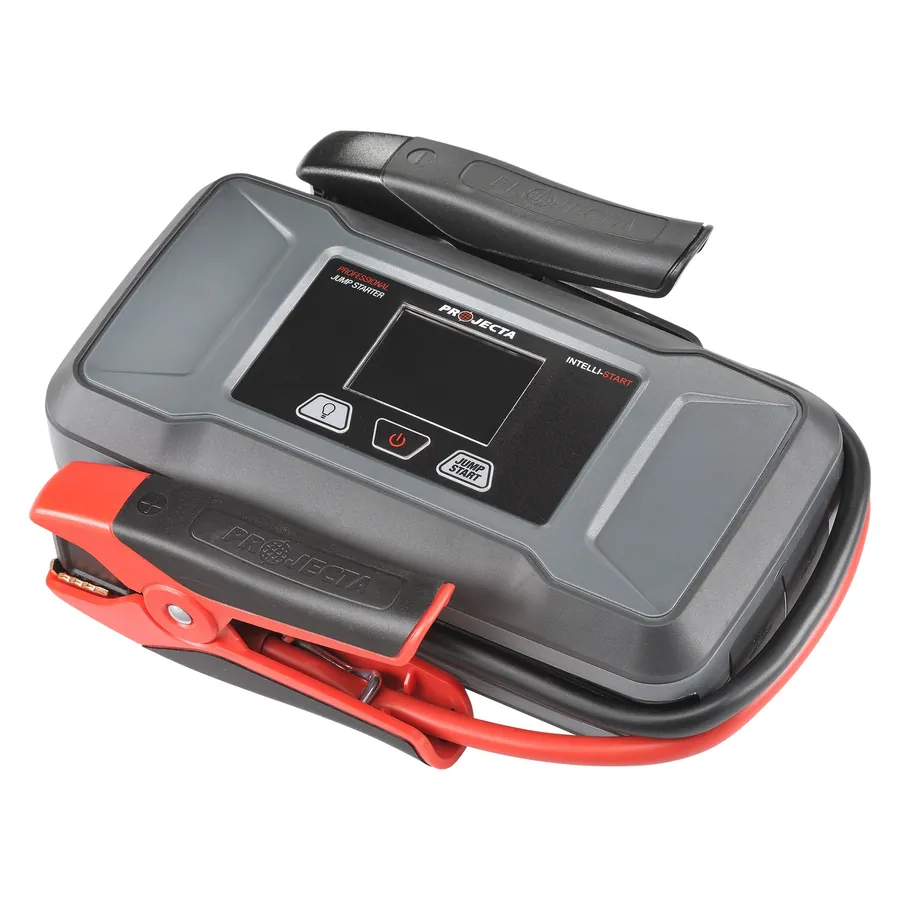
It’s also the most honest about its numbers. Projecta quotes 1,400A peak but publishes 500A as the current actually available at the clamps. At $418, it’s the dearest here, and Projecta listed it as sold out online when we checked. Auto One had stock at $429 for click and collect. 4X4 Australia tested the smaller 1,200A version and came away happy with it.
TOPDON JumpSurge3000: the most engine for the money
For $249 on TOPDON’s Australian store, the JumpSurge3000 claims 9L petrol and 7L diesel, the highest ratings here, plus an 88.8Wh battery and 45W USB-C in and out. That makes it the cheapest unit on this list rated for a V8 diesel with room to spare.
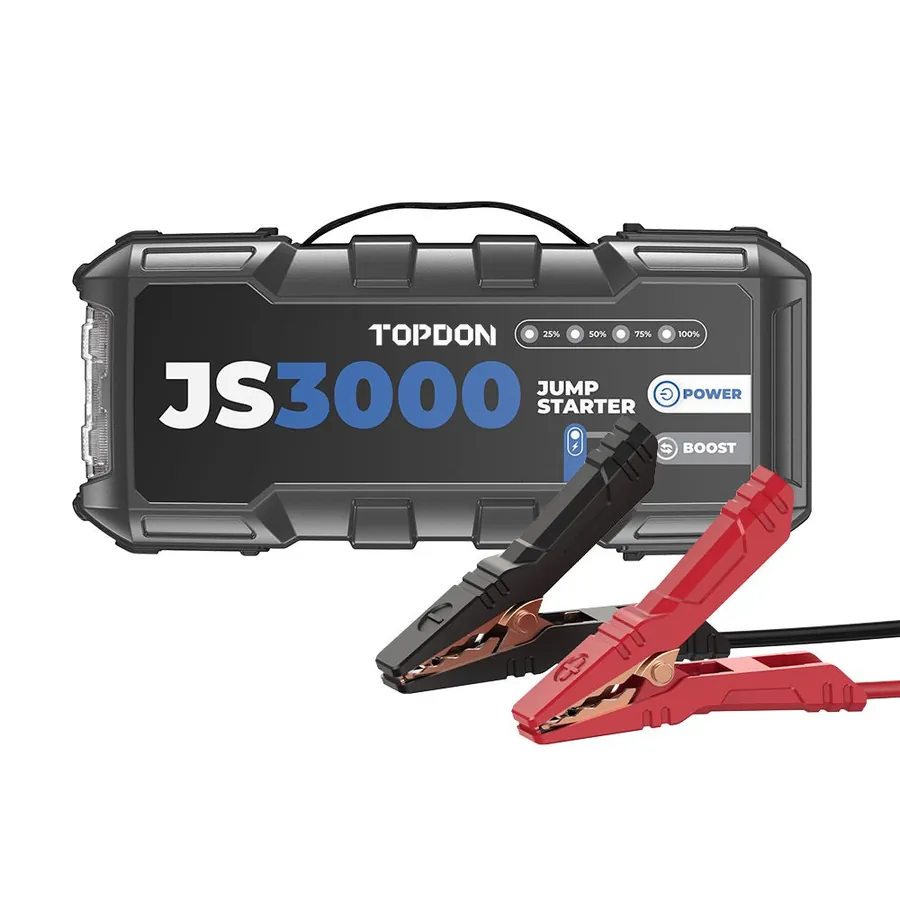
Two things hold it back. The clamp leads are just 250mm positive and 200mm negative, which is awkward on a tall 4WD with the battery tucked away. The warranty is one year, and the Australian listing doesn’t state weight or an IP rating. Pro Tool Reviews found it larger than most and missed having a display.
RYOBI 18V ONE+ RJSC18: for the tool-shed crowd
The RJSC18 has no battery of its own. Clip on any RYOBI ONE+ pack, wait about 60 seconds while it energises, and it delivers up to 1,600A peak. RYOBI Australia doesn’t publish engine-size ratings. Its UK arm rates the same tool for 6L petrol and 5L diesel engines, which is what we’ve used in the table below. With nothing inside to go flat or cook, it’s the most heat-tolerant on paper.
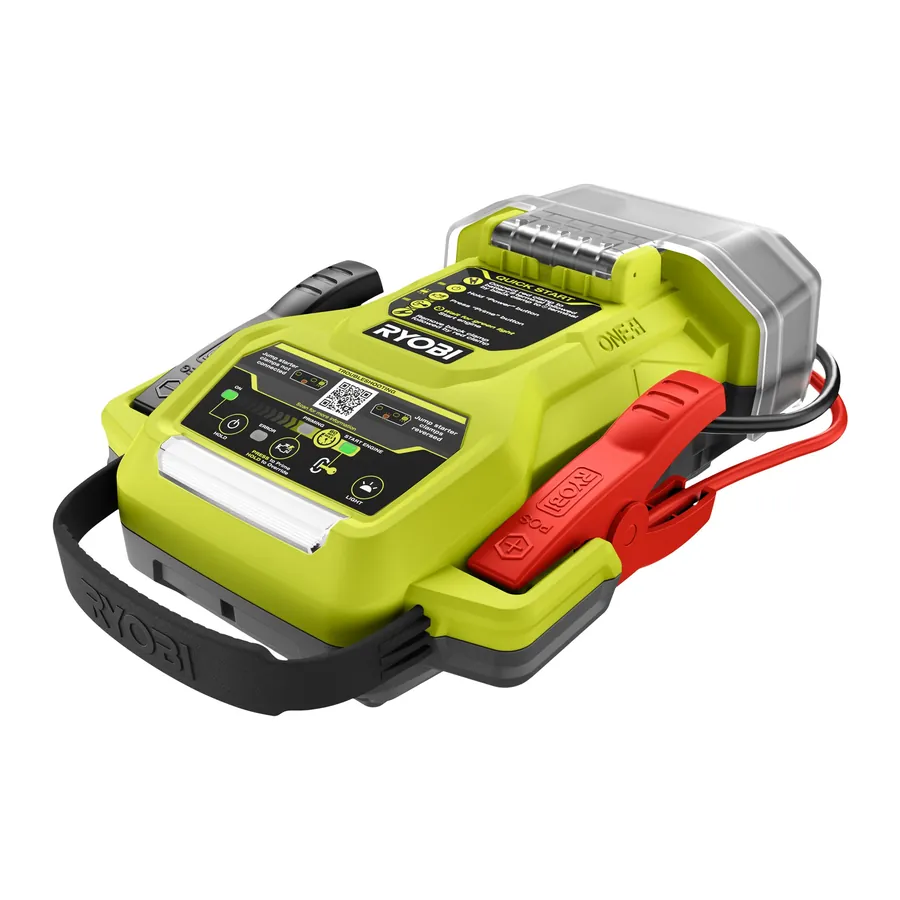
If you already own ONE+ batteries, $199 is the cheapest way to cover a big diesel. If you don’t, the battery adds to the cost. The 300mm leads are short and it’s special order at Bunnings. Its four-year warranty extends to six with registration.
NOCO Boost Plus GB40: the small-car benchmark
The GB40 has been the default compact jump starter for years: 1,000A, IP65 and a manual override, for $184.99. It’s rated for petrol engines up to 6.0 litres, which covers almost every hatch, sedan and petrol SUV on Australian roads. TechGearLab started a 4.0-litre V6 with a dead battery three times with one, liked the clamps, and measured less usable capacity than NOCO claims. It doesn’t recommend it for big utes or SUVs.
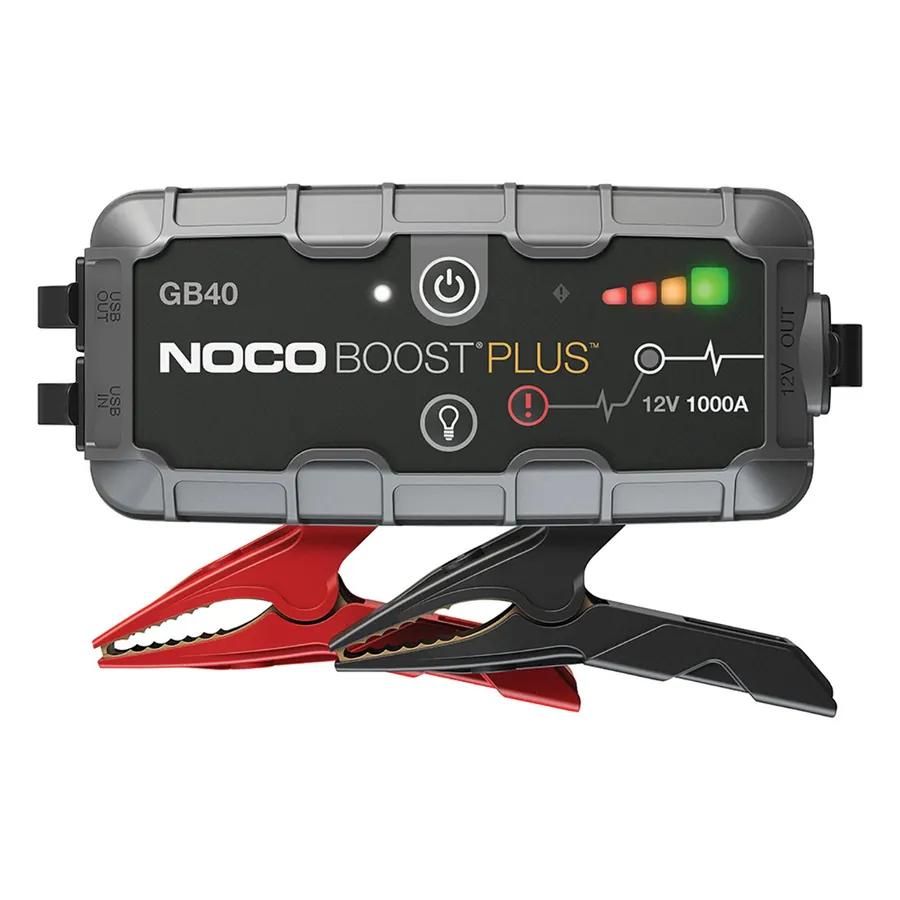
Diesel is the problem. The GB40 is rated for diesels up to 3.0 litres only. That’s fine for a HiLux’s 2.8 but marginal for a 3.0-litre D-Max, and too small for a Ranger V6 or any LandCruiser. If you drive a diesel 4WD, walk past it and buy the GBX55.
Kings 1000A MKII: cheap glovebox insurance
At about $90 from 4WD Supacentre, the Kings unit is the cheapest jump starter worth considering. It’s light at 0.57kg, has twin USB-A outputs and a force-start button, and covers the basic protections, including reverse polarity and short circuit.
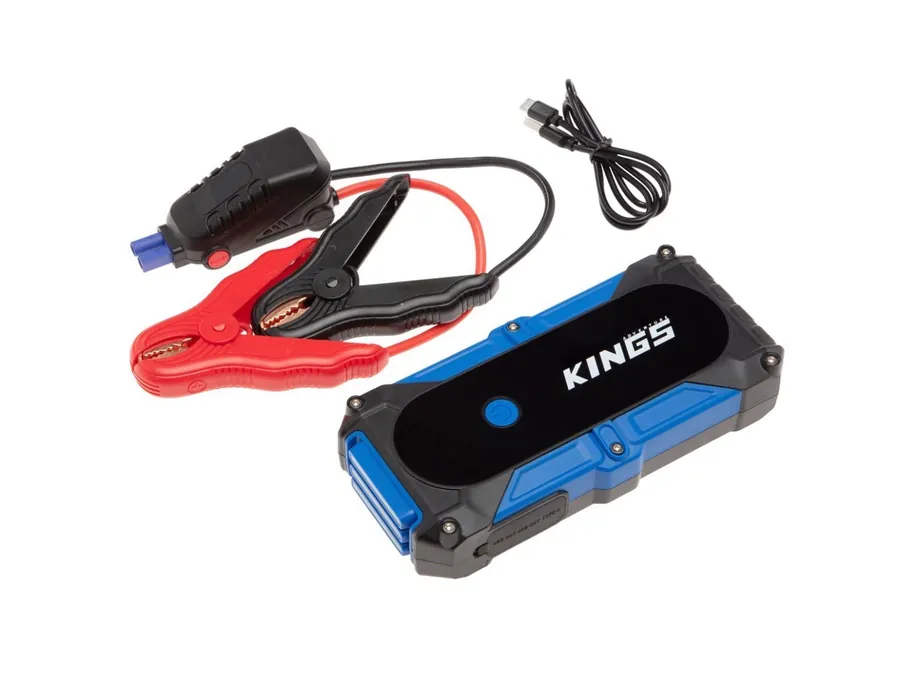
Its specs are vague. The listing claims enough power for a V8 diesel, then says it suits most four- and six-cylinder vehicles. There’s no litre rating or IP rating on the listing. Owner feedback is mixed. On ProductReview the earlier version sits at 2.6 out of 5 from 61 reviews, with complaints about units not holding charge after a year or two and two owners of 3.2-litre BT-50s who couldn’t get a start. Treat it as a backup for a small petrol car, not the tool for a flat 4.5-litre diesel.
Which jump starter will start your diesel?
Buy on the diesel rating, not the amp figure. Diesels need more cranking effort than petrol engines of the same size, and every maker here publishes a separate diesel limit. Match it to your engine with some margin, because a very flat battery or a cold High Country morning increases the load.
| Engine | GB40 | GBX55 | IS1400 | RJSC18 | JS3000 |
|---|---|---|---|---|---|
| 2.8L HiLux or Prado | Yes | Yes | Yes | Yes | Yes |
| 3.0L D-Max or BT-50 | Yes, just | Yes | Yes | Yes | Yes |
| 3.0L V6 Ranger or 3.2L PX Ranger | No | Yes | Yes | Yes | Yes |
| 3.3L V6 LandCruiser 300 | No | Yes | Yes | Yes | Yes |
| 4.5L V8 LandCruiser 70 | No | Yes | Yes | Yes | Yes |
Our analysis of each maker's published diesel rating (GB40 3.0L, GBX55 5.0L, IS1400 5.0L, RJSC18 5L, JS3000 7.0L). A very flat battery or a cold morning raises the demand, so leave a margin. Kings doesn't publish a litre rating.
Why peak amps don’t mean much
There’s no common method behind the big number on the box. Projecta’s 1,400A unit delivers 500A at the clamps, and it’s still rated for the same 5.0-litre diesel as NOCO’s 1,750A unit. Compare engine ratings, clamp lead length and whether there’s a manual override.
Where should you keep a jump starter?
Not in the glovebox, and not on the dash. On a 30-degree day, RACV testing found car interiors can pass 70 degrees within minutes. Every lithium unit here with a published storage limit sits below that. Projecta’s manual gives 45 degrees and its product page 60 for long-term storage. NOCO says 50. The RYOBI copes best because it has no battery inside once you take the pack off.
No lithium jump starter here is rated to be stored at the temperature a closed car reaches in summer. The RYOBI only gets close because it has no internal battery, and RYOBI still says to store it indoors with the pack removed.
Sources: RACV media release, 29 January 2024; NOCO GBX55 user guide; Projecta IS1400 instruction manual (Projecta's web page lists 60°C); RYOBI RJSC18 Australian manual, July 2026. TOPDON lists "-20°C or 60°C" without saying whether that's for storage or use.
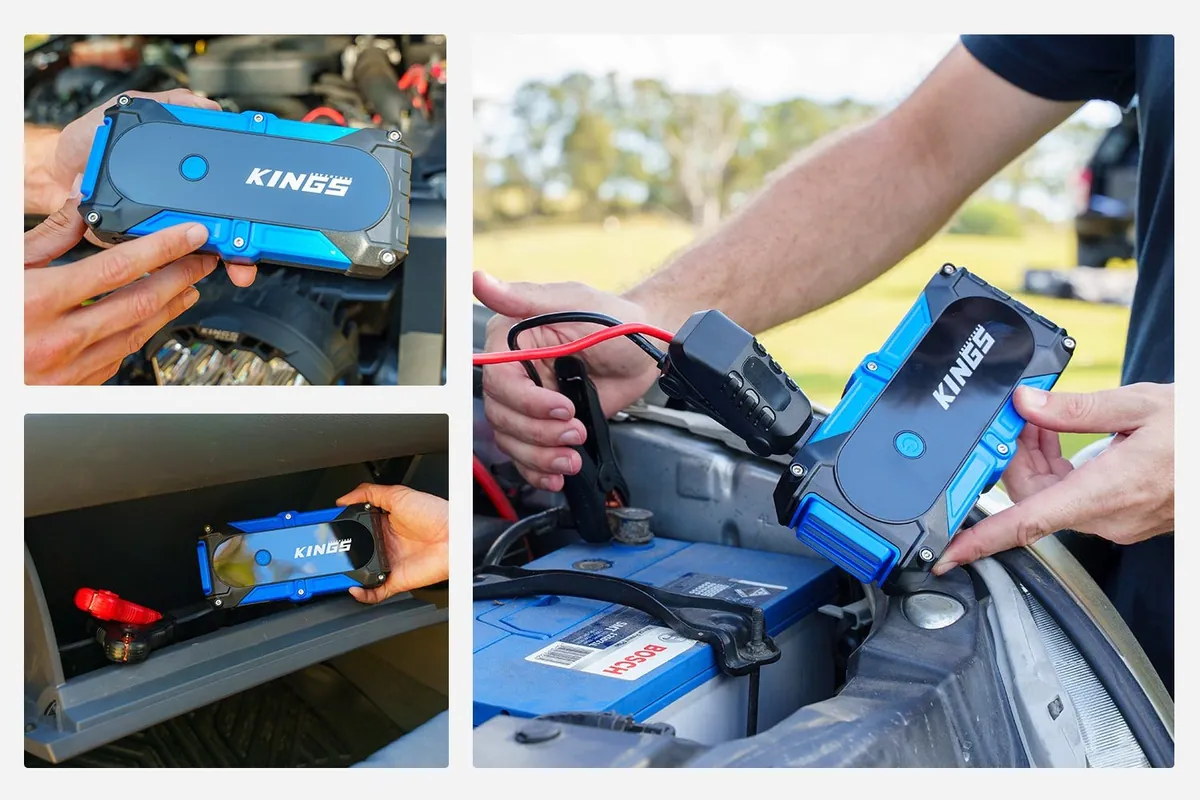
Keep it under a seat or in a shaded spot in the boot, bring it inside during heatwaves, and top it up every few months so it’s ready when you need it. Let it cool after use before charging. If you run a 12V fridge or a hardwired dash cam in parking mode, check your battery more often too.
Lithium fires aren’t theoretical. Several jump starters have been recalled in Australia over the years, including Powercon jump packs whose lithium batteries could overheat and catch fire. The ACCC’s 2023 battery safety warning recorded 231 lithium-ion safety reports in five years and urged owners to store batteries out of direct sunlight.
How to use one without frying anything
- Turn everything off in the car.
- Red clamp to the positive terminal, black to the negative or a bare metal earth point.
- Wait for the unit’s ready light. Smart clamps won’t send power until they detect a battery, which is what stops sparks if you get the polarity wrong.
- Start the car, then disconnect, black first.
If the unit shows nothing, the battery is probably too flat for it to detect. That’s what the override or boost button is for. Re-check the clamps before you press it, because the protections are off in that mode.
A jump starter earns its place if a fridge has drained the battery at camp, if the car sits for weeks at a time, or if you’re a long way from help.
Which one should you buy?
Buy the NOCO GBX55, on sale if you can. It covers almost every car and 4WD in Australia and has the override a properly dead battery needs. Tourers in hot country should spend more on the Projecta. Whatever you buy, add it to your car maintenance checklist, keep it out of the sun, and charge it before it’s needed.
Prices checked October and November 2026. Product images supplied by the manufacturers.


