

The Minimalist Mirage
The touchscreen era was sold as innovation but driven by cost-cutting. Now, plunging safety ratings, customer backlash, and damning user-testing times have forced manufacturers to reverse course and reintroduce physical buttons for critical cabin functions.
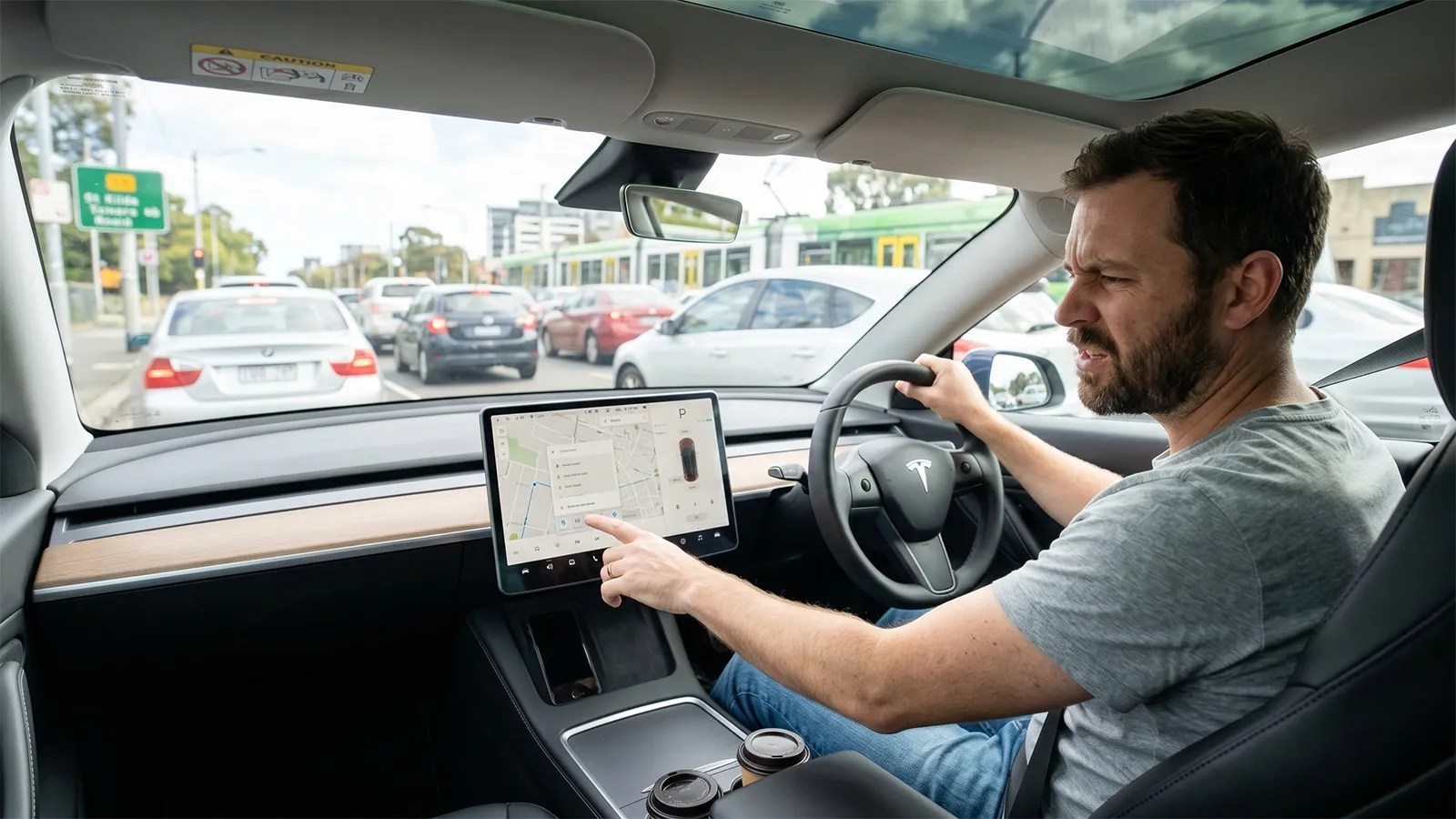
The digital cabin trend was always a financial decision dressed up as a design revolution. Replacing physical switchgear with a central piece of glass saved manufacturers millions in development and assembly costs. But the reality for drivers has been a decade of frustration.
A 2022 study by Swedish publication Vi Bilägare exposed the true cost of this shift.
Testers drove a 2005 Volvo V70 and several modern screen-heavy cars at 110km/h and performed four basic climate and radio tasks.
The results were stark. The Volvo driver finished the test in exactly 10 seconds. The driver in a touch-heavy MG Marvel R needed 44.6 seconds to complete the same sequence. That translates to 1.3 kilometres travelled with eyes primarily off the road.
The Industry Reversal
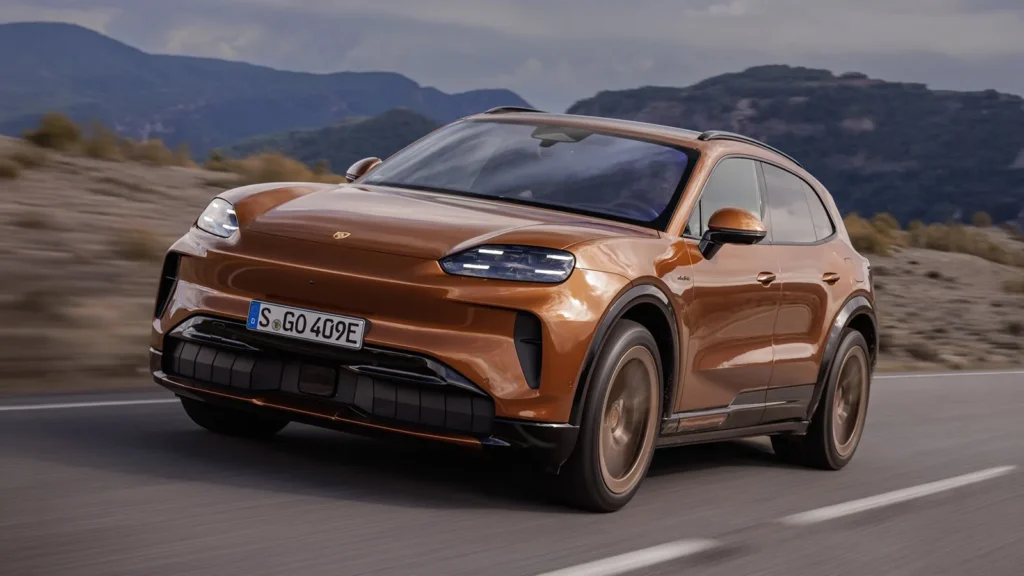
Major automakers are abandoning screen-only cabins. Volkswagen is restoring physical controls after severe customer complaints, while Hyundai and Porsche have committed to hard buttons for climate and media controls in their latest generation interiors.
Volkswagen is the most high-profile defector. Former CEO Herbert Diess pushed the brand toward capacitive sliders and buttonless steering wheels. Customers hated them. Current Volkswagen CEO Thomas Schäfer publicly admitted the move damaged the brand.
The upcoming ID.2all and refreshed Golf will bring physical controls back.
Other brands are doubling down on tactile feedback. Hyundai design boss SangYup Lee recently told Cars Guide that physical buttons are simply safer.
He noted that drivers need a hard key they can sense and feel without looking down.
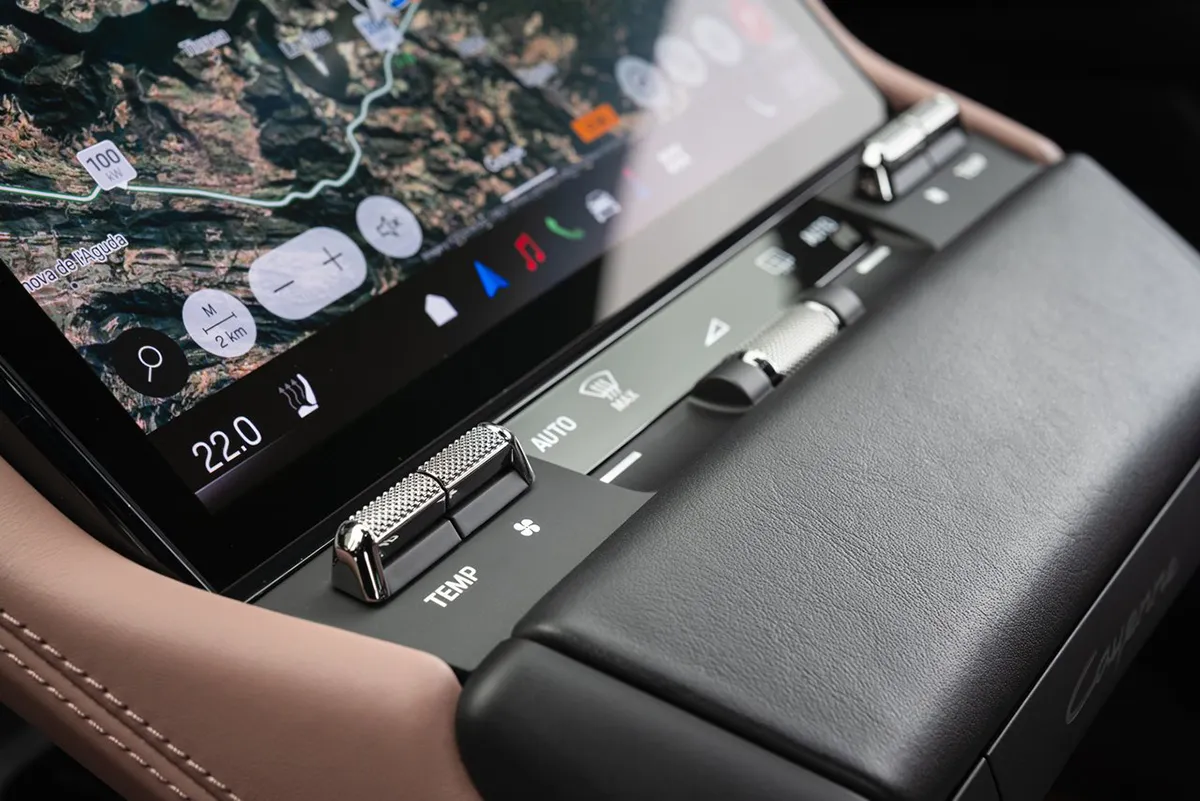
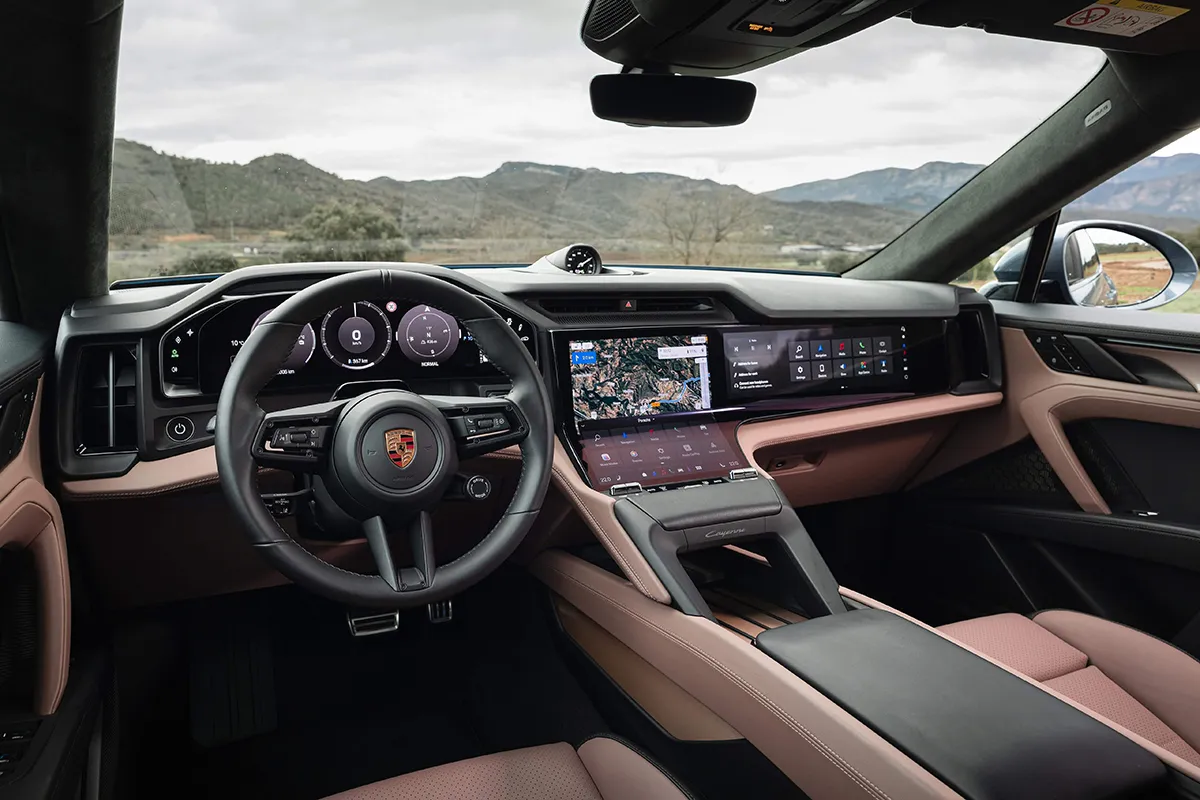
Porsche has also course-corrected. The refreshed Cayenne and Panamera interiors feature a heavily revised centre console. It blends a digital screen with mechanical toggles for temperature control and a physical volume roller, ensuring critical functions remain tactile.
Safety Regulators Step In
Euro NCAP will mandate physical controls for indicators, hazard lights, wipers, the horn, and SOS functions by 2026. Vehicles relying entirely on touchscreens for these features will face points deductions and lose their five-star ratings.
The return to analogue controls is not just a response to customer complaints. It is about to become a strict regulatory requirement. Euro NCAP director of strategic development Matthew Avery told the Times that the overuse of touchscreens is a severe industry problem.
From 2026, the European safety authority will heavily update its testing protocols. To achieve a five-star rating, manufacturers must provide separate, physical controls for basic functions. If you need a digital menu to turn on your hazard lights or wipers, your car will lose safety points.
This marks a crucial turning point for global markets. The shift back to analogue controls mirrors a broader pushback against invasive cabin technology, including a parallel crackdown on car data privacy in 2026.
These new protocols will effectively kill the extreme minimalist interior design for both European and Australian motoring landscapes.
Even Ferrari Got It Wrong
After shifting to haptic steering wheel controls on models like the Purosangue, Ferrari faced intense owner backlash. The brand has now admitted fault and is offering physical button retrofit kits to disgruntled buyers.
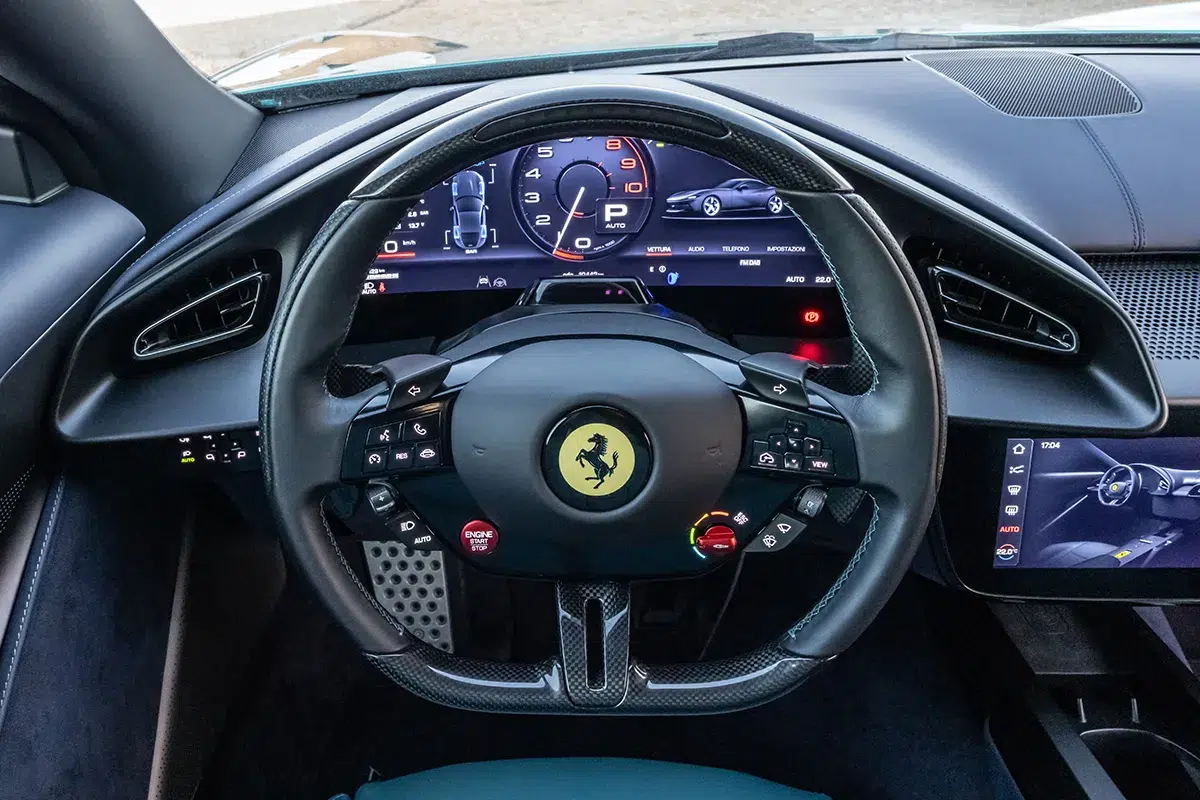
The premium sector is not immune to the touchscreen backlash. When Ferrari launched recent models like the 296 GTB and Purosangue, they replaced traditional steering wheel buttons with capacitive touch surfaces. The owner feedback was universally disastrous.
Ferrari is now taking the highly unusual step of offering a factory retrofit. A spokesperson confirmed to Car and Driver that owners can pay to replace their steering wheel centre module.
The new unit strips out the haptics and restores real buttons for phone and menu functions.
The great touchscreen experiment is coming to a close. Drivers never asked for their dashboards to feel like an iPad, and the automotive industry is finally admitting it. Real driving requires real feedback, and the tactile switch is officially back.


