
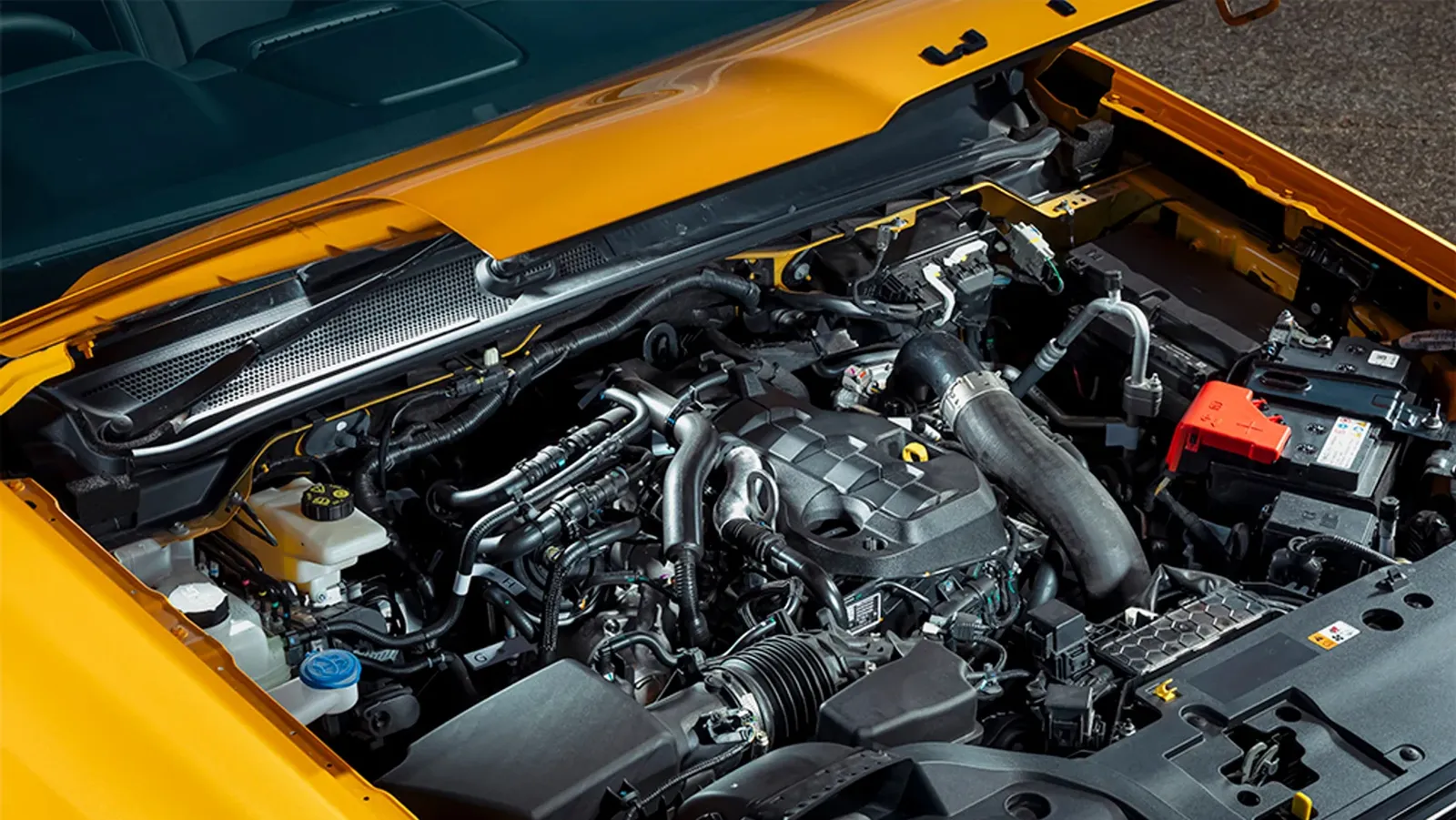

Ford has spent real engineering money taking a rubber belt out of Australia’s best-selling vehicle and putting a chain back in.
The 2.0-litre four-cylinder diesel in the Ranger and Everest switches to a timing chain for 2026, with Chasing Cars confirming the change with Ford Australia in November 2025. Nobody re-engineers the timing drive on a volume seller because it is going well. That single decision tells you more than any workshop blog will.
The Answer Is in the Engine Code, Not the Badge
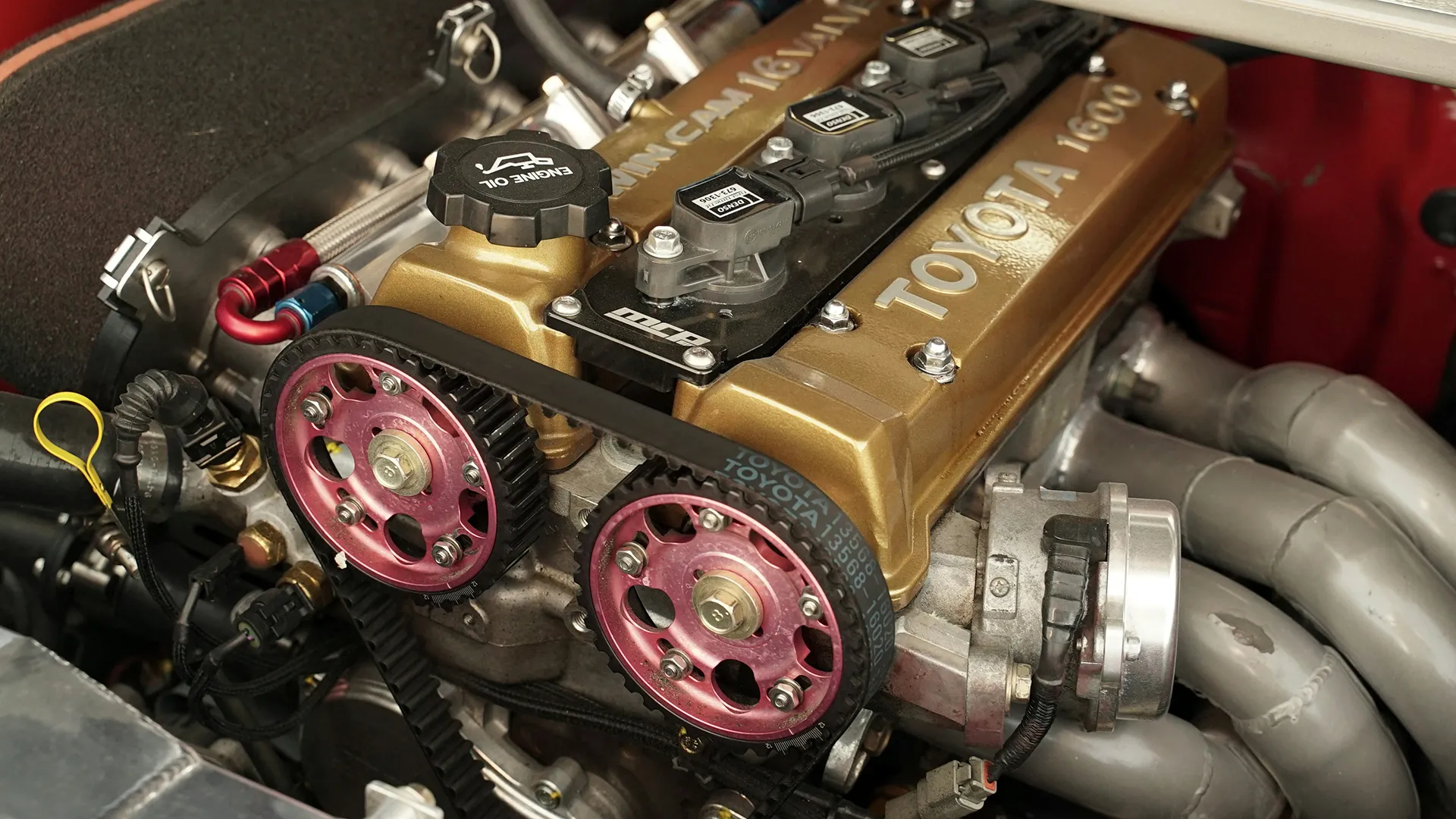
Asking whether a model has a belt or a chain is the wrong question, because the same nameplate often has both. You need the engine, the build year, and ideally the engine code off the build plate. A seller who cannot tell you which engine is in the car has told you something useful anyway.
The Subaru Forester is the cleanest example. CarsGuide traces it back to 1997: EJ-series cars run a belt, the FB engines from 2013 run a chain, 2011 and 2012 cars could be either, and the 2008 turbo-diesel was a chain from the start.
The Ranger has gone the other way and back again. The old 3.2-litre five-cylinder used a chain. The 2.0-litre that replaced it used a belt running in oil. The 2026 car uses a chain again. Three answers, one badge, one decade.
What a Belt Job Actually Costs Here
Budget between $550 and $1,300 for a conventional belt replacement in Australia, which is the range AutoGuru quotes across its network. European engines sit at the top of it. carsales puts the invoice upwards of $750 on top of a service, at three to five hours of labour.
Intervals move around more than owners expect. carsales notes most Volkswagens fall due at 105,000km, though some need doing at 90,000. Subaru has revised its EJ figure upward over the years, so the number in a 2004 handbook and a 2011 one are not the same. Check the logbook for that specific build rather than trusting a forum.
One detail separates a proper job from a cheap one. Melbourne Subaru specialist AllDrive Subaroo points out that on EJ engines the tensioner bearing, not the belt itself, causes most failures. A quote that lists a belt and nothing else is not a timing belt service.
Does the water pump have to come out too?
On most belt-driven engines, yes, and you should insist on it. The pump sits behind the timing cover and is driven by the belt. Replacing it later means paying the same three to five hours of labour a second time to reach a part worth well under a hundred dollars.
Chains Are Not Free. They Are Just Not Scheduled.
A chain has no replacement interval, which is not the same as never needing replacement. It means there is no line in the logbook, no budget for it, and no warning. When a chain does let go, it costs more than the belt job you were smug about avoiding.
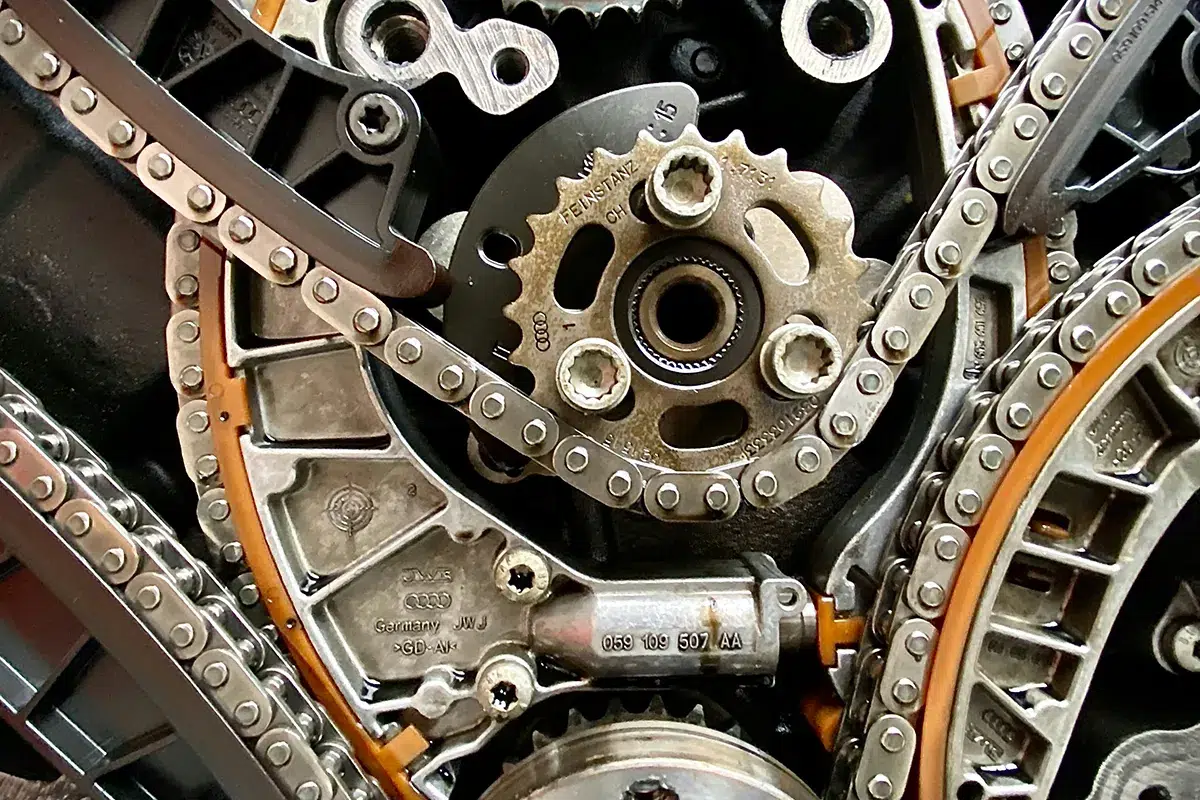
Melbourne workshop ARN Pro publishes its actual figures: around $2,200 for a straightforward front-mounted chain on a petrol engine, $2,500 to $4,500 for a Volkswagen Group EA888, and north of $5,500 for a BMW N47 diesel, where the chain sits at the back of the engine and the engine has to come out to reach it.
Then there is the sharpest example of all. Ford Australia recalled 13,490 Ranger and Everest models built between 2022 and 2025 over a camshaft sprocket on the 3.0-litre V6 diesel that could fracture and stall the engine, reported by CarExpert in 2025. That is the chain engine.
The Third Answer Nobody Told You About
Some engines run the timing belt inside the engine, submerged in oil. It is quieter and cuts friction, and it fails differently. As the belt degrades, rubber particles work loose and block the oil pump pickup. Oil pressure disappears. The engine does not lose timing so much as lose lubrication.
Haynes traces the design back to Ford’s 1.8-litre TDCi in 2007, with Peugeot, Citroen and the Volkswagen Group following. Ford’s published interval for the 2.0-litre EcoBlue was ten years or 240,000km.
It did not hold. Ford cut the figure to six years or 160,000km on Transit and Transit Custom vans running the same engine, and told Fleet News the change was down to oil dilution from diesel particulate filter regeneration and how the vehicles were actually used. The reduction was issued for the vans, not the Ranger. Short-trip suburban duty is short-trip suburban duty regardless of the body on top.
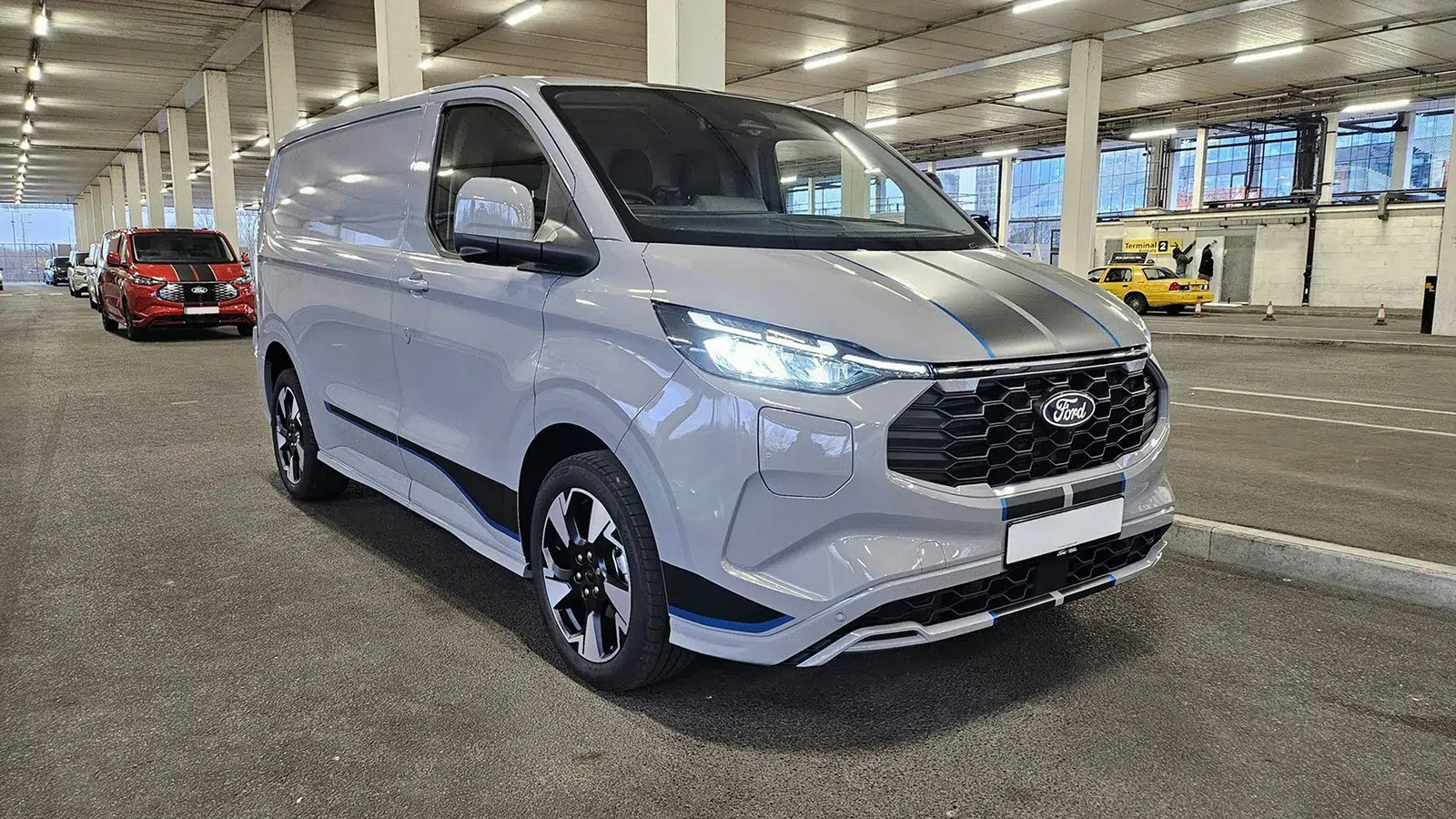
Which cars sold in Australia have a wet belt?
Confirm by engine code before you act on any list, because generations changed mid-run. The engines that turn up here:
- Ford Ranger and Everest 2.0-litre diesel, single and bi-turbo, 2018 until the 2026 update
- Ford Transit and Transit Custom with the 2.0-litre EcoBlue
- Ford Fiesta, Focus, EcoSport and petrol Puma with the 1.0-litre EcoBoost, all now discontinued locally
- Earlier Peugeot and Citroen 1.0 and 1.2-litre PureTech petrols
- Some Volkswagen Group EA211 1.4-litre TSI engines, and EA288 Evo diesels which use a wet belt to drive the oil pump
Stellantis has extended warranty cover and opened a compensation scheme for affected PureTech engines in the UK and Europe. No equivalent programme has been announced for Australian buyers, so do not walk into a dealer expecting one.
Timing Drive Comparison
What an Overdue Belt Does to the Price
On a cheap car the maths gets brutal fast. A $1,100 belt service on an $8,000 hatch is roughly fourteen per cent of the purchase price, which is why the belt is such a common feature of the used cars P-platers get pushed toward. The car is not cheap. It is unfinished.
Dealers already know. They price the job into the buy figure and say nothing, which is why the trade-in number on a 100,000km Subaru feels insulting. Private sellers do the other thing and list the car at 95,000km, letting the next owner discover the bill.
Here is the part worth remembering. A belt done on schedule, with a dated invoice, is worth more at resale than the invoice cost. An overdue one is worth less than the job, because a buyer prices in the risk as well as the labour.
The Tax Trap for Anyone Buying a Work Ute
Buying a used ute with an overdue belt and replacing it straight away is not a deduction. ATO ruling TR 97/23 treats an initial repair, meaning work that remedies deterioration already present when you acquired the asset, as capital in nature and not immediately deductible. It does not matter whether you knew.
Wear that accumulates on your watch is different, and is claimable as a repair. Which method you use decides how much of it lands. The cents-per-kilometre method sits at 88 cents for 2025-26, caps at 5,000 business kilometres, and bundles everything. No separate claim for the belt.
The logbook method claims the work-related percentage of what you actually spent, which is the only method where a $1,200 wet belt service does you any good. Worth confirming with a registered tax agent before you commit either way, because the choice is locked per car per year.
How to Ask Without Sounding Like a Tyre-Kicker
Ask for the engine code, then ask for the invoice. A logbook stamp proves a service happened. It does not prove a belt was replaced, or that the tensioner and water pump went with it. The invoice lists parts. Sellers who did the work keep it, because they know it is worth money.
Beyond the paperwork, three checks cost you nothing. Listen on a genuine cold start, because chain rattle in the first few seconds is the classic tell. Ask when the oil filter was last cut open if the car runs a wet belt. Then plug in a scanner and read the camshaft correlation data, which is where chain stretch shows up long before you hear it.
What not to do: buy the high-kilometre European diesel priced suspiciously well with no belt receipt, on the theory that the seller would have mentioned it. Walk, or take the full cost of the job off the asking price in writing.
Ford removed a rubber belt from its most important product and replaced it with metal, at cost, mid-cycle. Every seller with a 2018 to 2025 four-cylinder Ranger in the driveway is hoping you have not read that news yet.
The question is not belt or chain. It is show me the invoice.


