
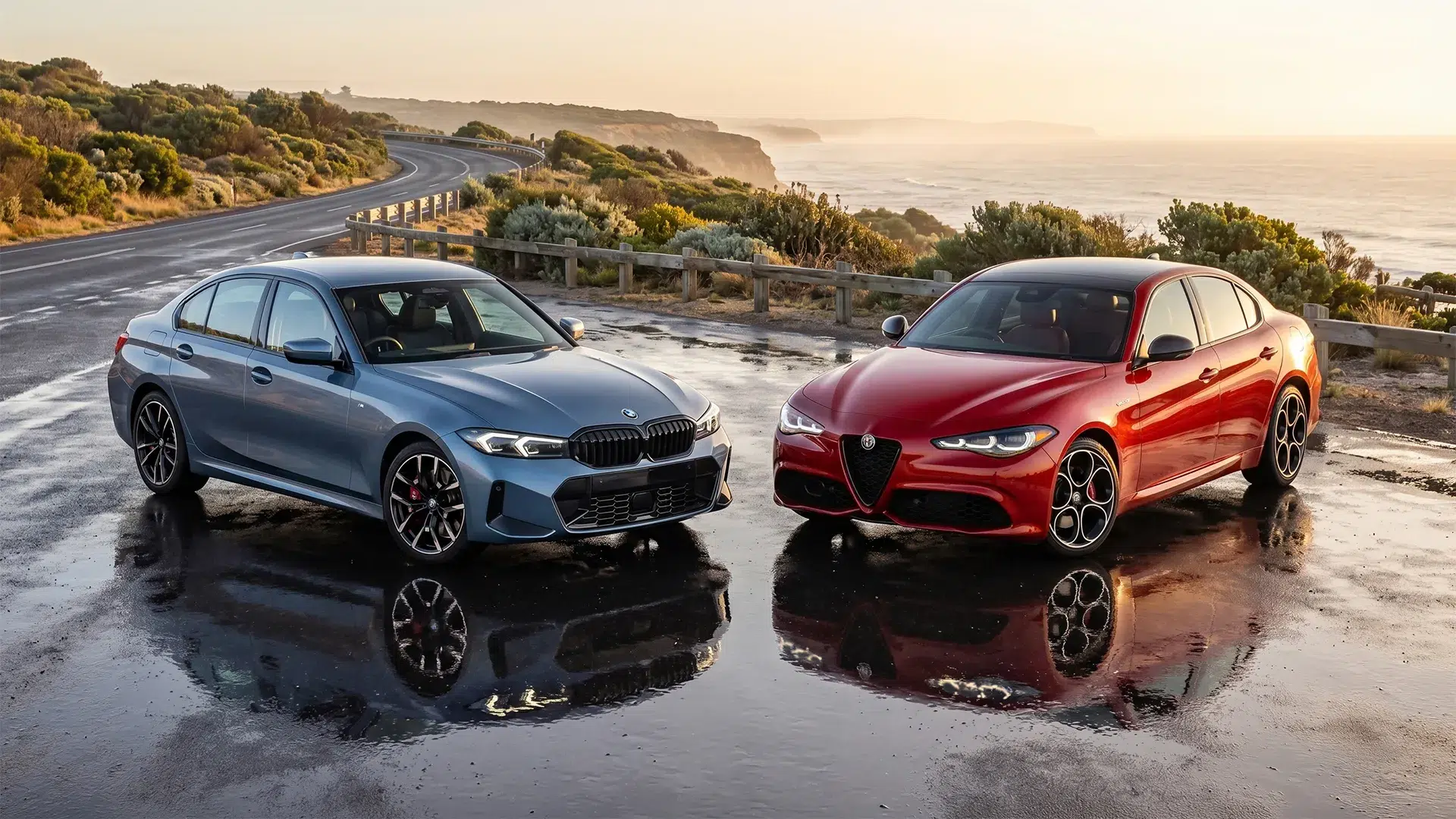

The SUV has not killed the sports sedan yet. If you are looking for a practical daily driver that actually communicates with the person behind the wheel, the four-door, rear-wheel-drive formula remains undefeated. The difficulty lies in choosing which philosophy to park in your driveway.
On one side, the benchmark. The 2026 BMW 330i M Sport is the clinical German standard. It has spent decades defining this category. On the other side sits the 2026 Alfa Romeo Giulia Veloce. It is incredibly beautiful, famously emotional, and carries a reputation that makes sensible buyers hesitate.
Both run 2.0-litre turbocharged four-cylinder engines, both use brilliant eight-speed automatic transmissions and both send power exclusively to the rear wheels. But the way they deliver that experience could not be more different.
The Trade-off Verdict
The BMW 330i is the definitive all-rounder. It offers superior infotainment, a more resolved ride in traffic, and rock-solid residual confidence. The Alfa Romeo Giulia Veloce requires compromises in interior packaging and software logic, but rewards you with a chassis balance and steering feel that the German cannot match.
2026 BMW 330i vs Alfa Romeo Giulia
Powertrain Head-to-Head
Which engine pulls harder?
The Alfa Romeo Giulia Veloce holds a straight-line advantage on paper. It produces 206kW and 400Nm from its 2.0-litre turbo, edging out the BMW 330i’s 190kW and 400Nm. This translates to a claimed 5.7-second sprint to 100km/h for the Italian, just ahead of the BMW’s 5.8 seconds.
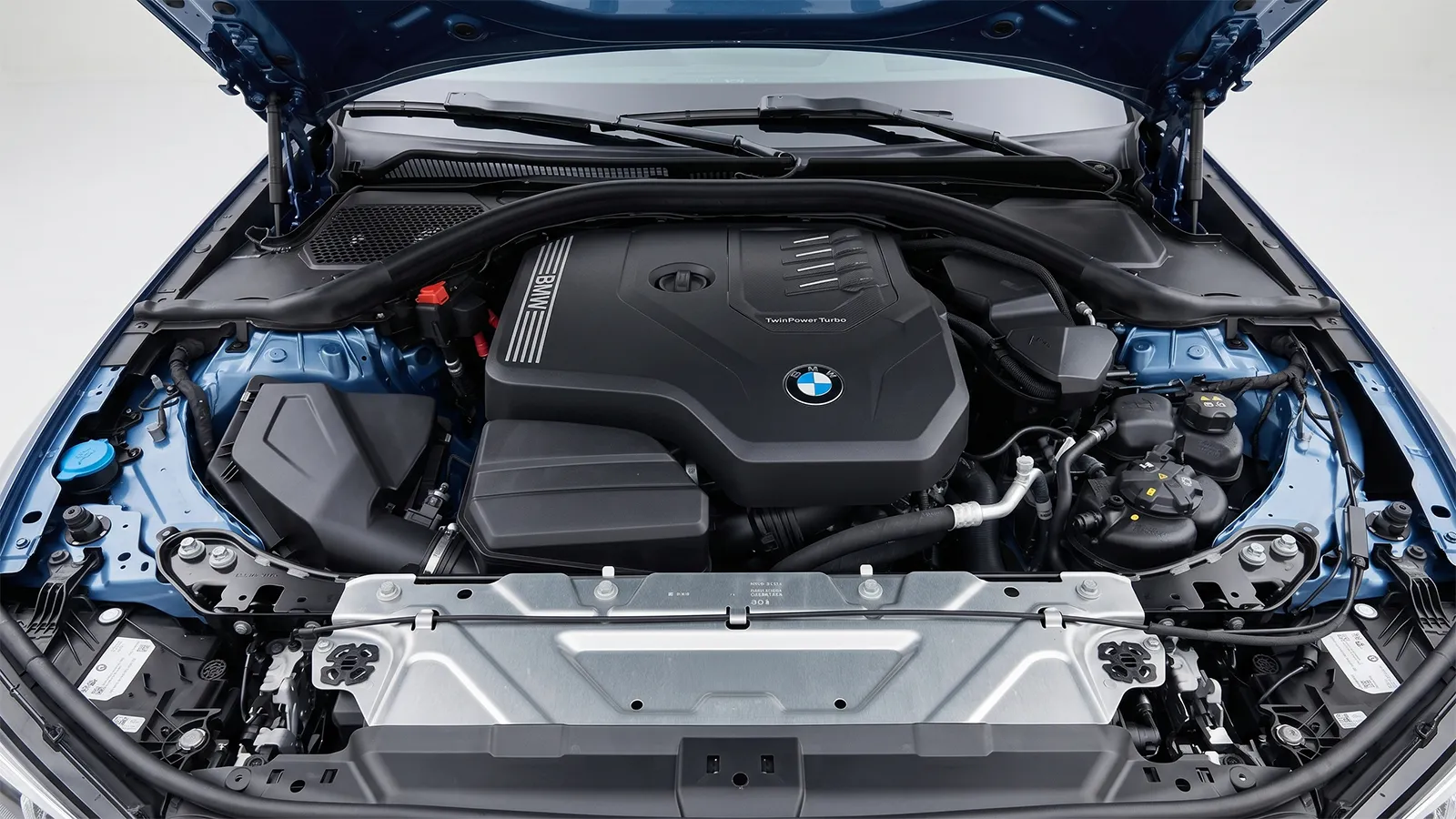
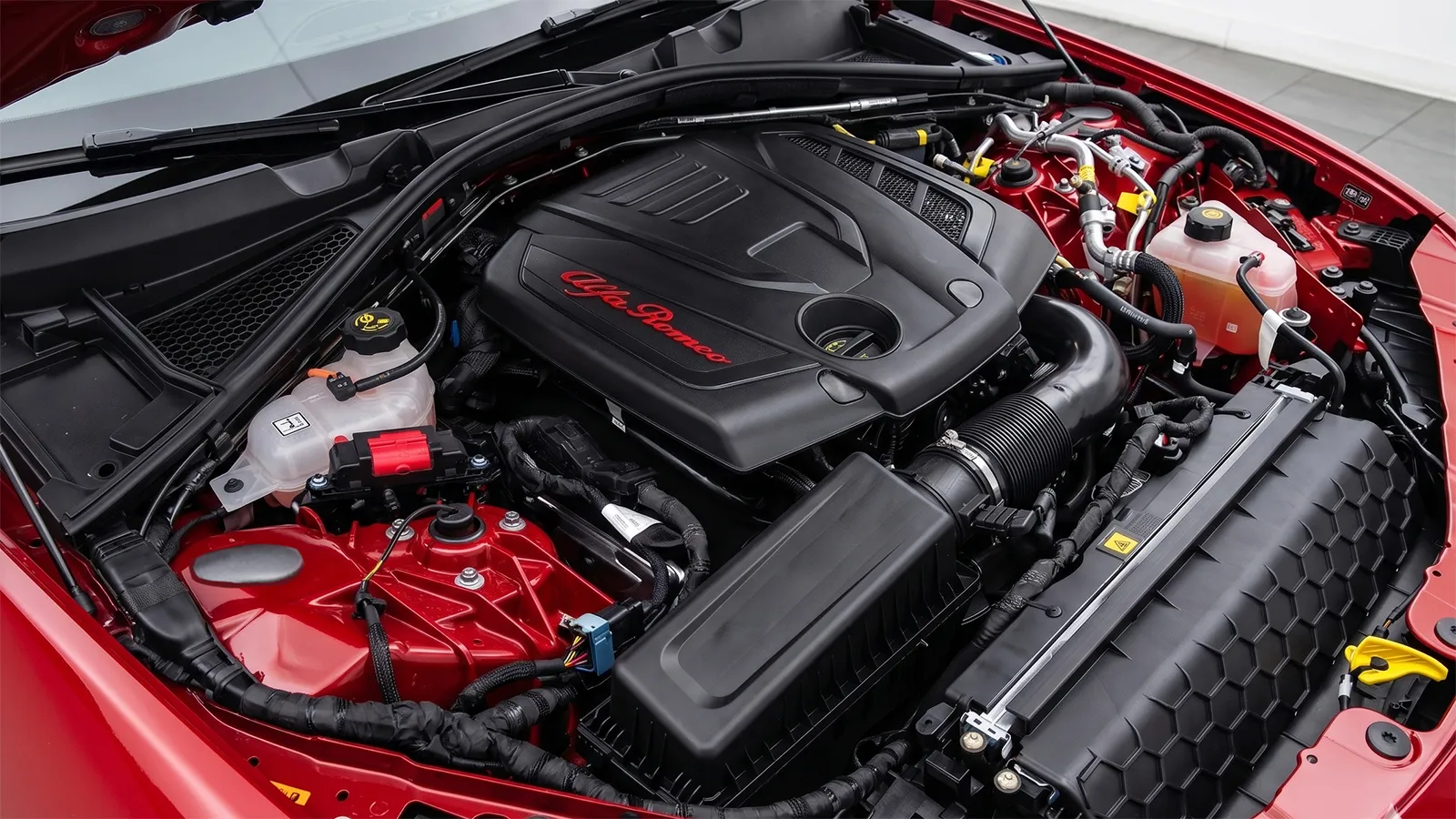
Both manufacturers rely on forced-induction 2.0-litre four-cylinder engines. A 2026 check of official BMW Australia specifications confirms the 330i delivers its 400Nm of torque from an exceptionally low 1550rpm. This low-end delivery makes the German sedan feel effortless during the daily commute.
Alfa Romeo tunes the Giulia Veloce for higher engine speeds. The Italian engine asks you to work it slightly harder to access maximum shove. It feels more urgent near the redline, matching its sporting character. Where the BMW surges quietly, the Alfa snarls.
Both vehicles use an eight-speed automatic transmission sourced from ZF. It is arguably the best torque-converter automatic in the industry. BMW tunes its gearbox calibration to be nearly invisible in daily driving. It shuffles through gears seamlessly and reacts quickly when you ask for downshifts.
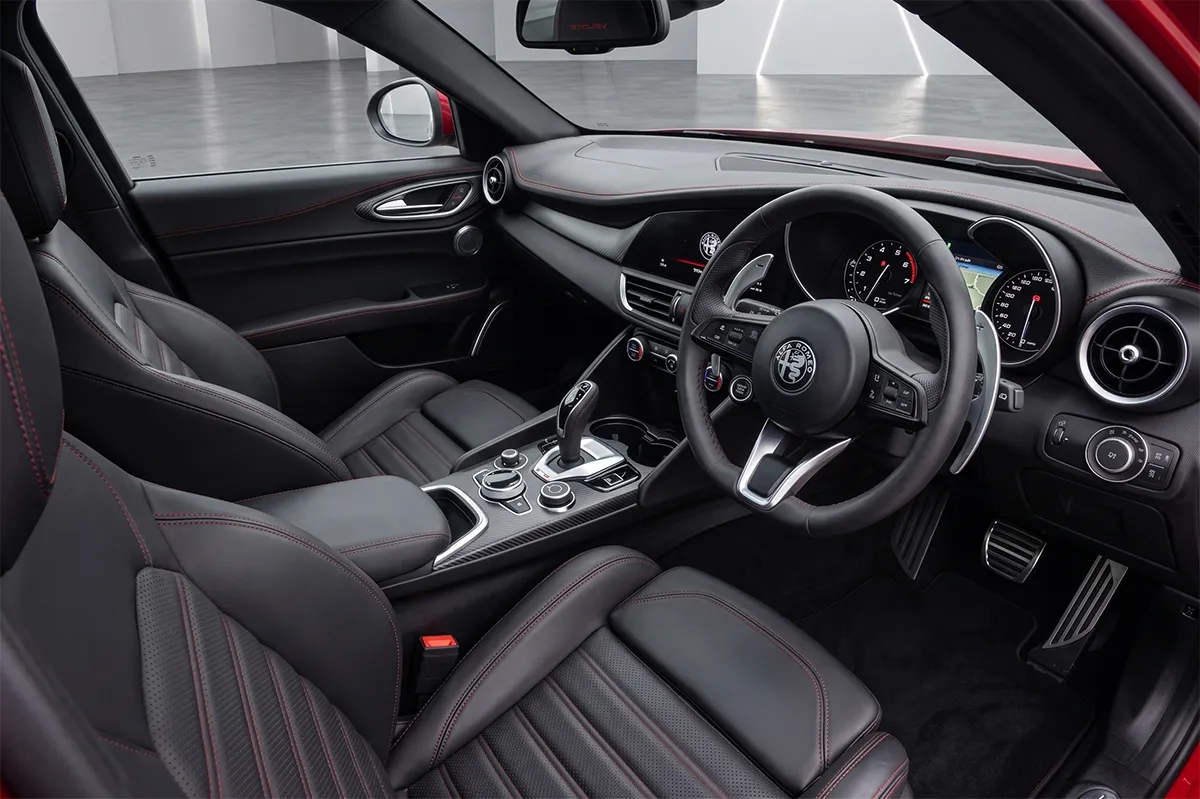
Alfa Romeo gives the Giulia enormous, fixed aluminium shift paddles on the steering column. They feel like they belong in a supercar. Pulling the right paddle delivers a satisfying mechanical click. The Giulia’s transmission mapping in Dynamic mode is sharper, holding gears longer and shifting with engineered aggression.
The chassis dynamics separate them further. The Giulia is built on Alfa’s Giorgio platform, achieving a perfect 50:50 weight distribution. Its steering is famously hyper-quick. You only need small inputs to dart through corners. It feels incredibly light on its feet.
The BMW 330i feels more planted and substantial. Its M Sport suspension setup provides brilliant grip and a neutral balance. It is highly capable, but it attacks corners with clinical precision rather than the playful enthusiasm of the Giulia. The BMW is fast and secure. The Alfa is genuinely fun.
Interior Head-to-Head
Who builds a better cabin?
The BMW 330i dominates cabin technology with its massive curved display and iDrive 8.5 software. It feels a generation ahead. The Alfa Romeo Giulia Veloce cabin is heavily driver-focused and beautifully styled, but its infotainment screens and software logic lag noticeably behind the German benchmark.
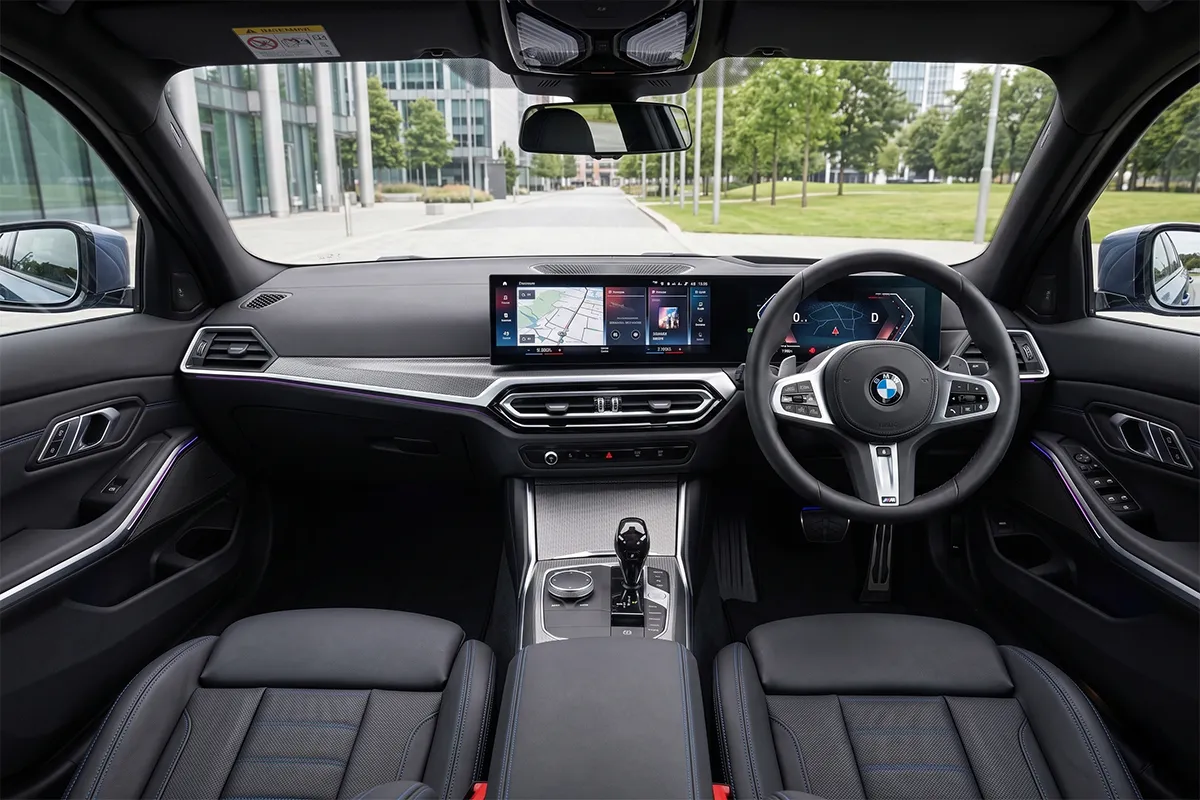
Stepping into the 2026 BMW 330i feels like entering a premium technology suite. The dashboard is dominated by the sweeping curved display panel. It houses a 12.3-inch digital instrument cluster and a 14.9-inch central touchscreen. The materials feel expensive, the build quality is flawless, and the ambient lighting is highly customisable.
BMW’s software is dense but powerful. It handles wireless phone mirroring flawlessly and processes commands instantly. The trade-off is the reliance on screen menus for basic functions like climate control. It takes time to learn, but it functions perfectly once you understand the layout.
The Alfa Romeo Giulia takes a traditional approach. The dashboard design is sweeping and elegant, featuring actual physical dials for climate control. This analogue focus is a relief for drivers who hate touchscreen menus. The driving position is superb, sitting you low and deep within the chassis.
However, the technology suite shows its age. The 8.8-inch central screen is small by modern standards. The software can be clumsy and occasionally slow to respond. The digital instrument cluster introduced in recent updates helps, but the overall digital experience cannot compete with the sheer processing power of the BMW.
Storage is another clear win for the German. The BMW offers deep door bins, a spacious centre console, and generous cupholders. The Giulia struggles here. The door pockets are small, and finding a place for a large phone or a set of keys can be frustrating.
Rear passenger space is acceptable in both, though neither is vast. The BMW offers slightly more knee room and headroom. The Giulia’s sloping roofline and thick front seats make the rear quarters feel quite cozy. If you regularly carry tall adults, the BMW is the more accommodating host.
The Practicality Case
Can a sports sedan do family duties?
Both the BMW 330i and Alfa Romeo Giulia offer identical 480-litre boots, but the BMW pulls ahead on cabin storage and rear seat space. Neither is a family hauler, but the 3 Series handles weekend luggage and back-seat passengers with noticeably more grace.
You do not buy a sports sedan to lug furniture. But Australian buyers expect a primary vehicle to handle weekend chores without complaint. Boot space is a dead heat on paper. Both sedans claim exactly 480 litres of cargo volume.
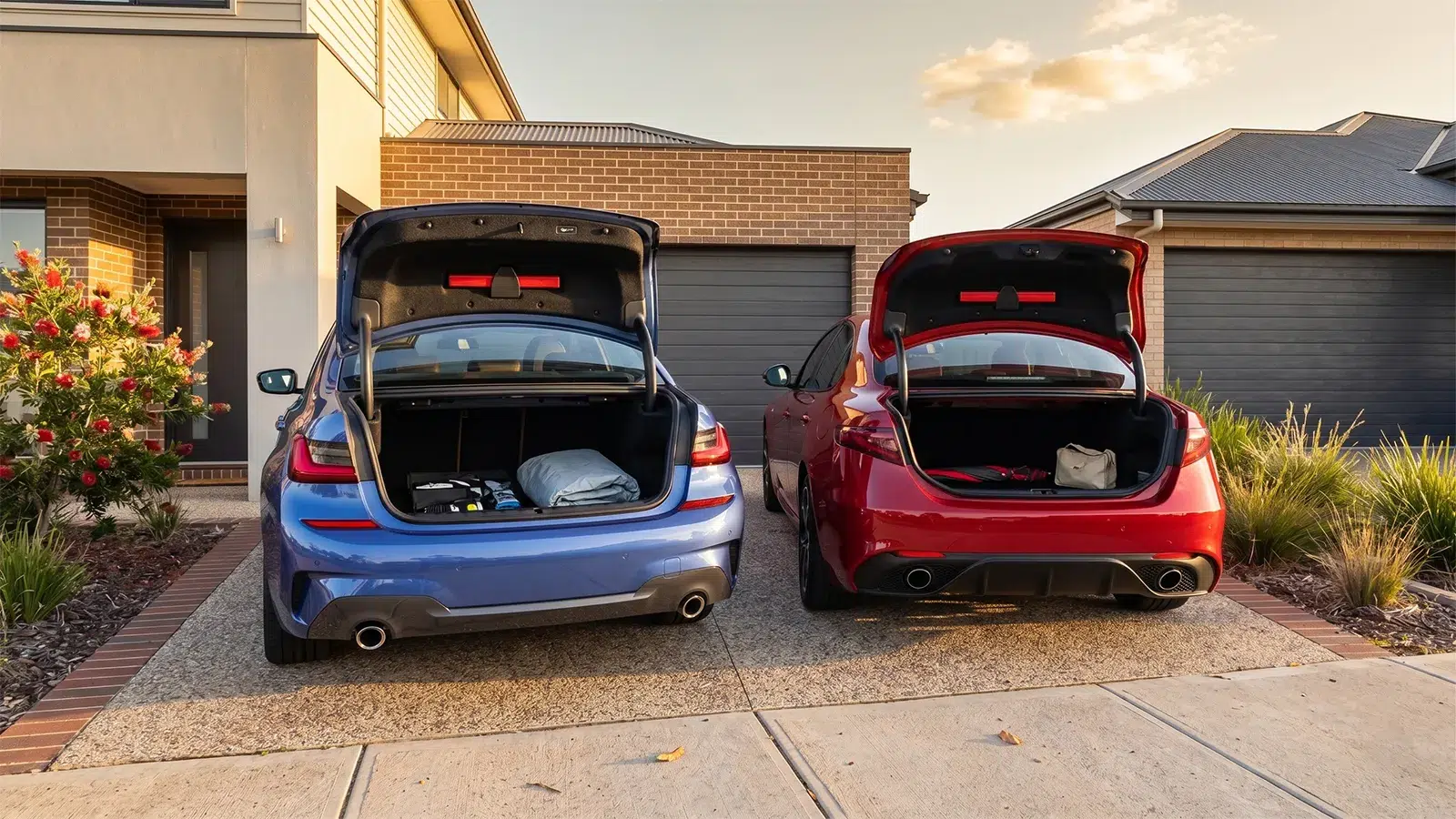
The difference lies in access. The BMW’s boot opening is slightly wider and more uniformly shaped. It makes loading bulky suitcases or a pram noticeably easier. The Alfa Romeo’s boot is deep, but the aperture is narrower. Both vehicles offer split-folding rear seats to accommodate longer items like skis or flat-pack furniture.
Cabin storage is where the German pulls clearly ahead. The 330i offers deep door bins, a spacious centre console, and generous cupholders. The Giulia struggles here. The door pockets are small, and finding a place for a large phone or a set of keys can be genuinely frustrating on a long road trip.
Rear seat space is acceptable in both, though neither is vast. The BMW offers slightly more knee room and meaningful extra headroom for adults over six feet tall. The Giulia’s sloping roofline and bulky transmission tunnel cut into rear quarters, making the back seat feel cozy on longer trips.
If you regularly carry tall teenagers or need a proper flat load floor for dogs or mountain bikes, BMW offers the 330i Touring wagon. The Alfa Romeo Giulia is sedan-only. That single fact will quietly decide a lot of family purchases in this segment.
Pricing and Servicing
What do they cost to own?
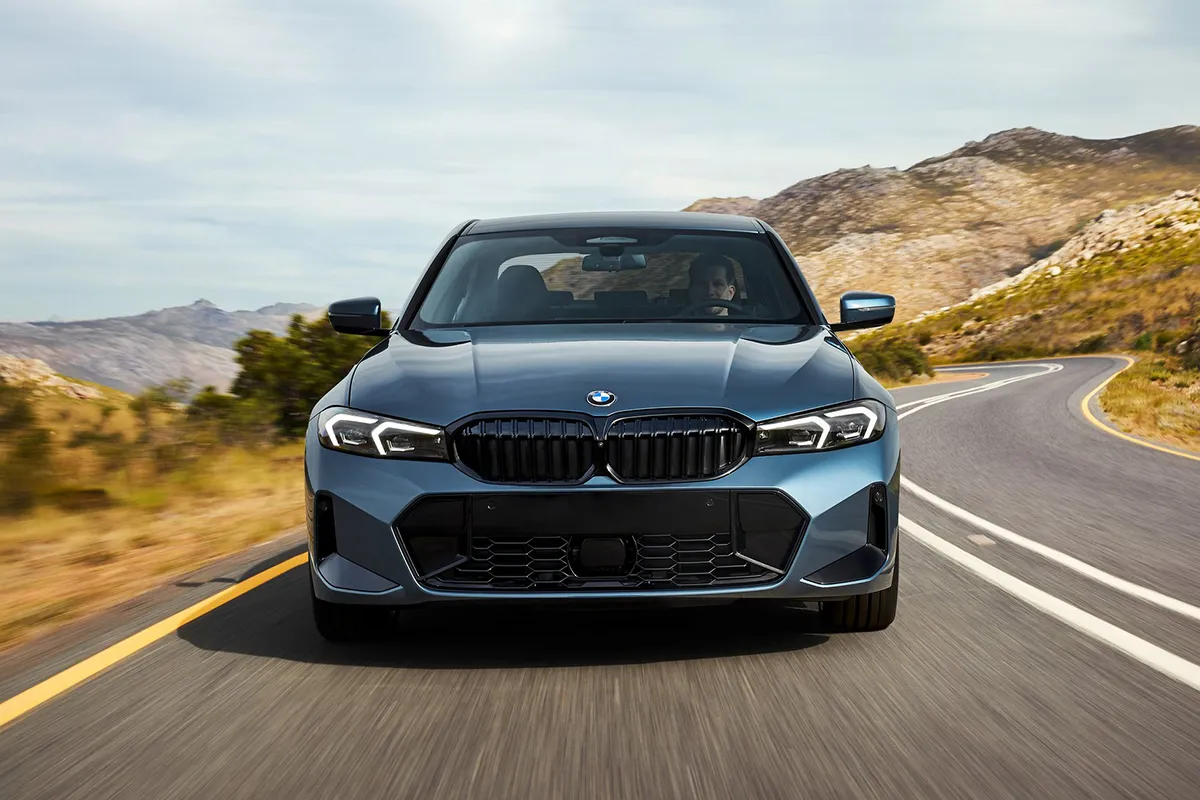
The Alfa Romeo Giulia Veloce is the value proposition, currently priced around $95,990 drive-away. The BMW 330i M Sport carries a premium, commanding around $111,000 drive-away. The BMW counters with superior retained value and a more extensive national dealer network.
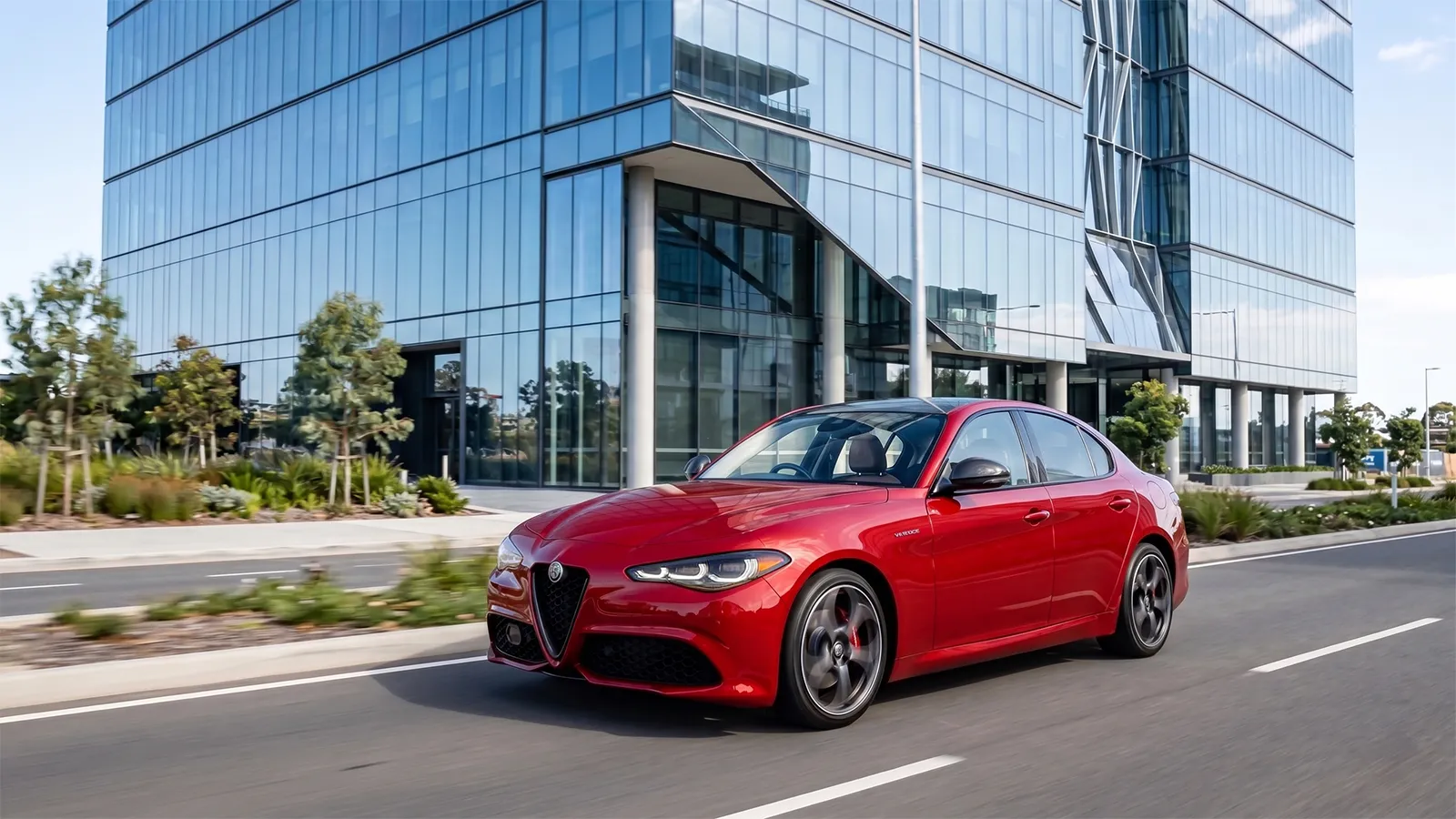
Current pricing separates these two rivals significantly. Based on current listings from Zagame Alfa Romeo, a 2026 Giulia Veloce sits at roughly $95,990 drive-away. It represents exceptional performance value for a European sports sedan.
The BMW demands a larger initial investment. Dealership inventory, such as recent stock at Brighton BMW, shows the 2026 330i M Sport landing closer to $111,000 drive-away once typical options are included. You are paying a substantial premium for the badge, the technology, and the German build quality.
Depreciation is the hidden cost. The BMW 3 Series historically holds its value well in the Australian market. There is constant demand for second-hand 330i models. The Alfa Romeo suffers from steeper depreciation. The brand’s historical reputation, whether currently justified or not, impacts resale value heavily.
Servicing networks also favour the German. BMW has a massive, established footprint across Australia. Finding an authorised mechanic or a specialist is easy, even outside capital cities. Alfa Romeo’s network is much smaller. If you live regionally, getting the Giulia serviced might involve a significant drive. Both offer a five-year, unlimited-kilometre warranty.
Verdict by Use Case
Which one actually suits your driveway?
Buy the Alfa Romeo Giulia Veloce if driving dynamics are your absolute priority. Buy the BMW 330i if you want a flawless daily commuter with leading technology. The German is the better car, but the Italian is the better drive.
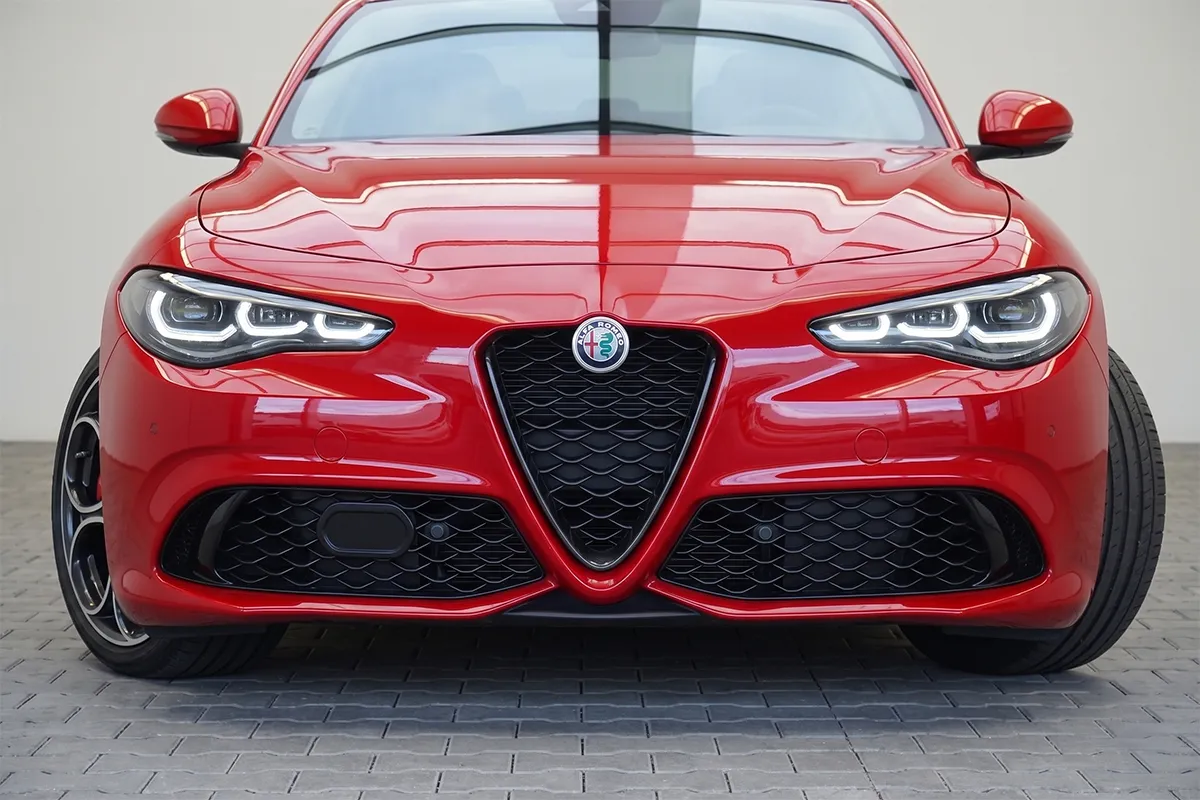
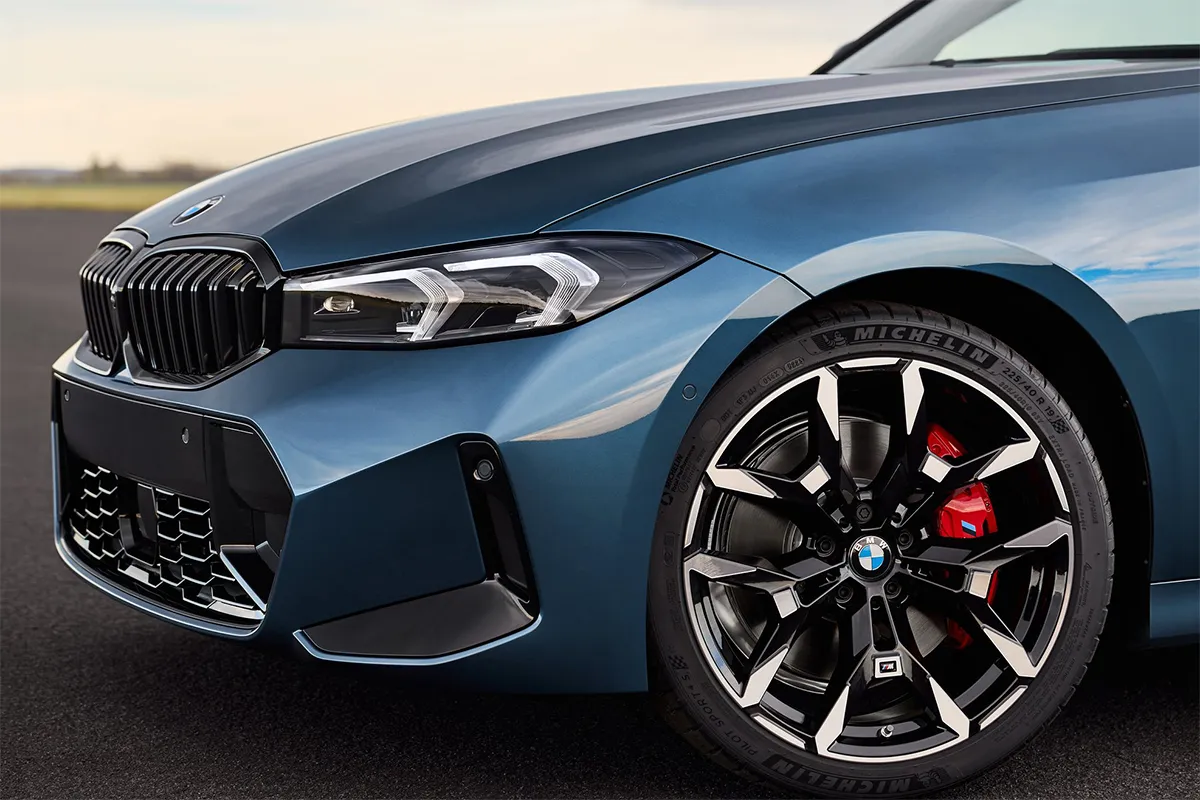
If you measure a car by how it makes you feel on a twisting road, the Alfa Romeo Giulia Veloce wins. It has a steering rack that feels alive and a chassis balance that makes every corner an event, it feels special. It makes the daily commute feel slightly more dramatic. The trade-off is the clumsy software, tighter cabin storage, and the inevitable hit in depreciation.
If you view your car as a premium mobility tool, the BMW 330i M Sport is virtually unbeatable. It is clinically brilliant. The technology works flawlessly, the cabin is beautifully built, and the powertrain is effortless. It is incredibly capable on a back road, but it never lets you forget that it is a serious, sensible machine.
You buy the BMW with your head. You buy the Alfa Romeo with your heart. If you want maximum theatre and you are willing to forgive a few ergonomic flaws, the Giulia is a rare treat. But if you want a vehicle that will execute every daily task without a single complaint for the next five years, the BMW 330i remains the benchmark for a reason.



The BMW is manufactured in Mexico not Germany whilst the Alfa Romeo is made in Italy