
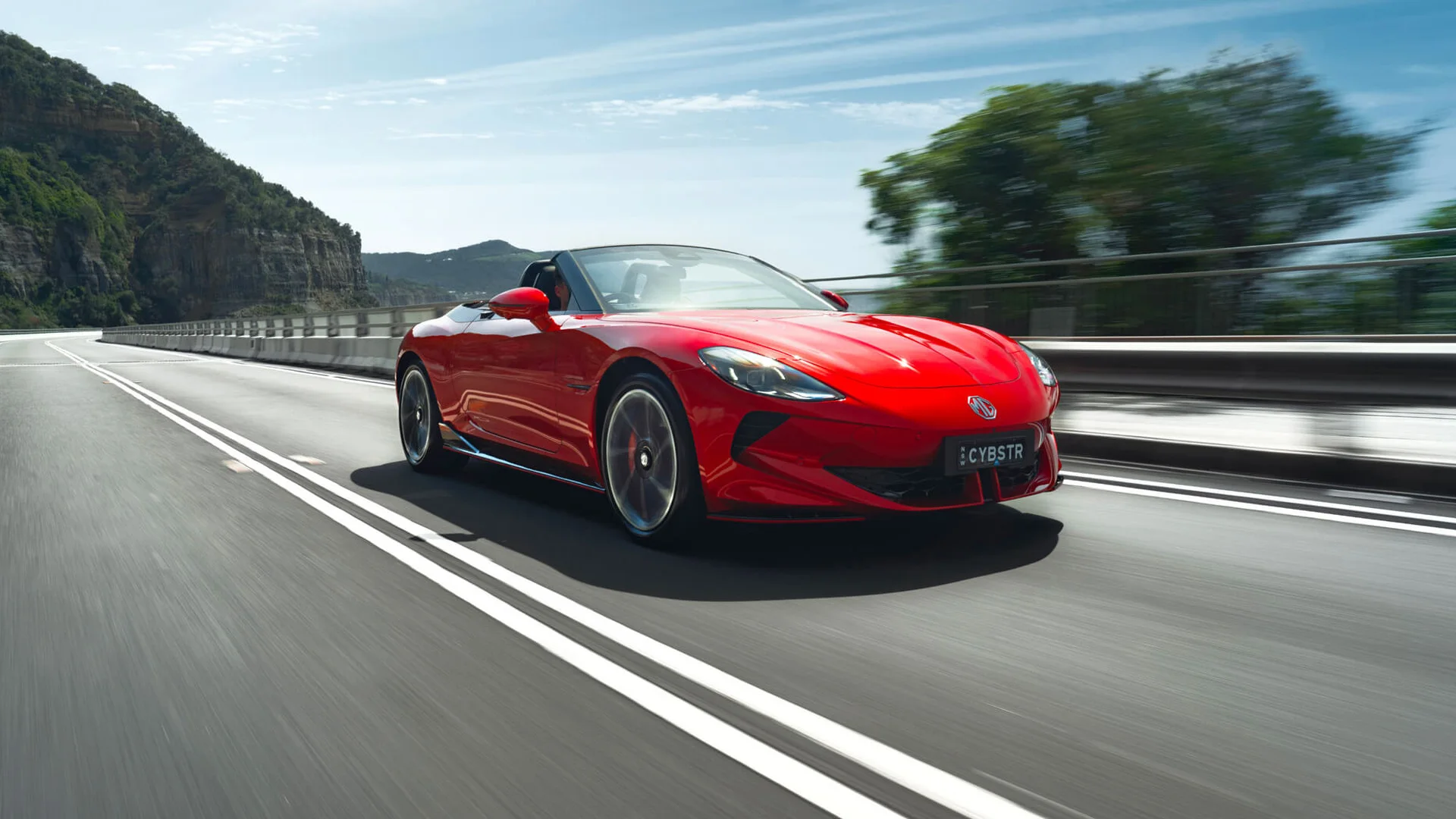

MG’s roadster is back in Australian showrooms, and it arrives carrying something no MGB ever did: 1885kg in its lightest form. That’s 850kg more than a base Mazda MX-5. It also brings up to 375kW, electric scissor doors and a price that starts at $99,900 before on-road costs. The weight is the number that shapes everything else here.
So is the Cyberster the affordable electric drop-top the badge suggests, or a fast appliance in a party frock? We’ve worked through MG Australia’s own figures, the published reviews from the NRMA, CarExpert, Chasing Cars, evo and Top Gear, and the national sales data. Nobody paid for this guide, and we haven’t driven the car, so every driving impression below belongs to a named tester.
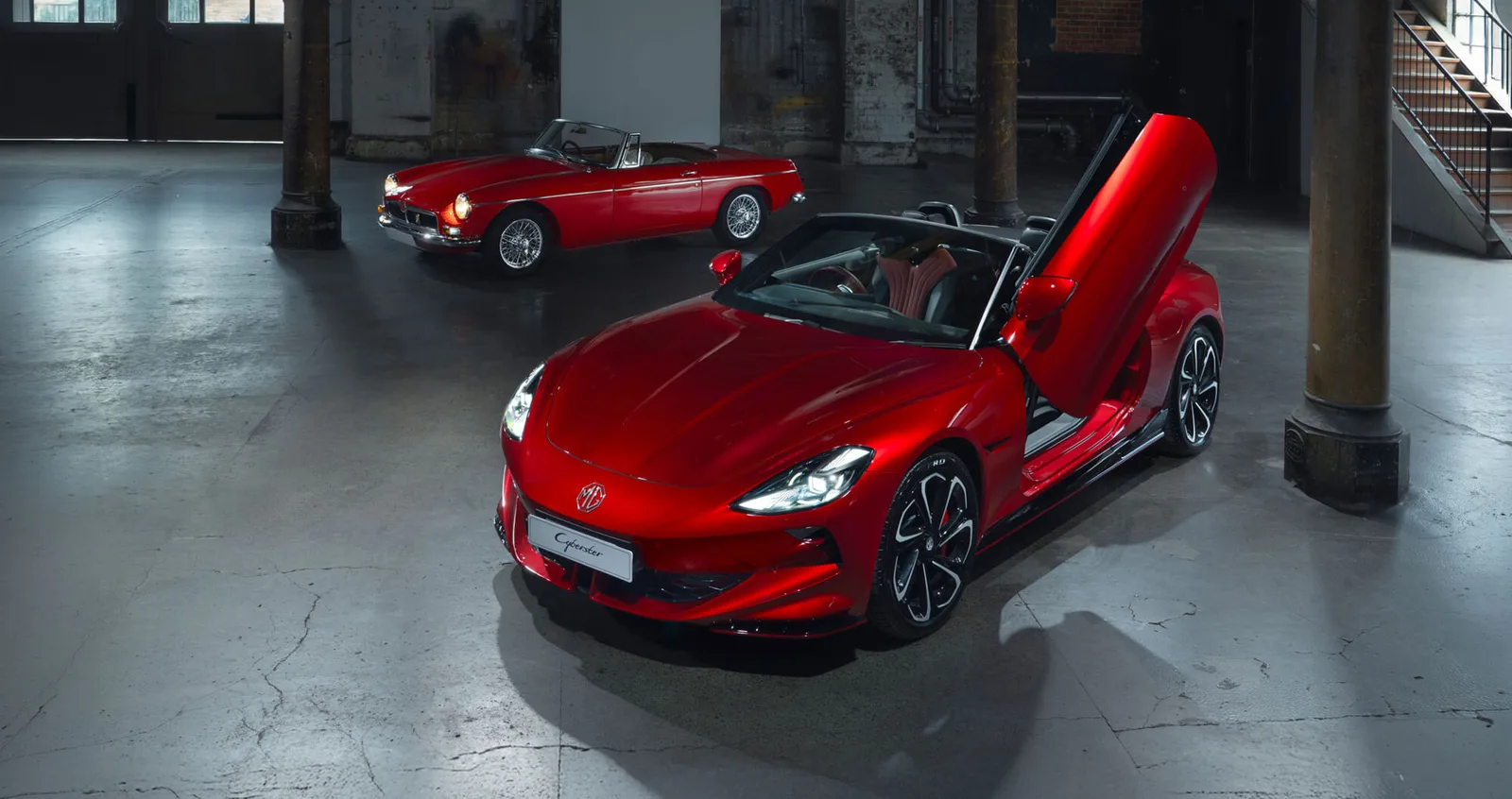
There are two versions. The MG Cyberster 77kWh RWD ($99,900) runs a single 250kW rear motor and claims 507km of WLTP range. The 77kWh AWD ($115,000) adds a front motor for 375kW and a claimed 3.2-second 0–100km/h, but its range drops to 443km. Prices and specs are MG’s as of October 2026.
The Cyberster Verdict
The Cyberster is a quick, striking electric grand tourer that happens to have a folding roof. It isn’t a lightweight sports car, and it doesn’t drive like one. Buy the RWD if you want the look, the range and easy open-air cruising. Skip it if steering feel, low weight or an independent crash rating sit high on your list.
- RWD claims 507km WLTP range from a 77kWh battery
- AWD: 375kW and a claimed 3.2sec 0–100km/h for $115,000
- Roof folds in 15 seconds at up to 50km/h
- 249L boot, roof up or down
- Seven-year warranty, 10 with dealer servicing
- 7-year warranty, 10 with dealer servicing
- 1885kg to 1985kg: up to 950kg more than an MX-5
- No ANCAP or Euro NCAP rating
- Outer screens hidden behind the wheel rim
- Scissor doors take 5.8 to 7.5 seconds to open
- Ride gets busy on broken roads
- No spare tyre, only a repair kit
Living with scissor doors and a magpie dashboard
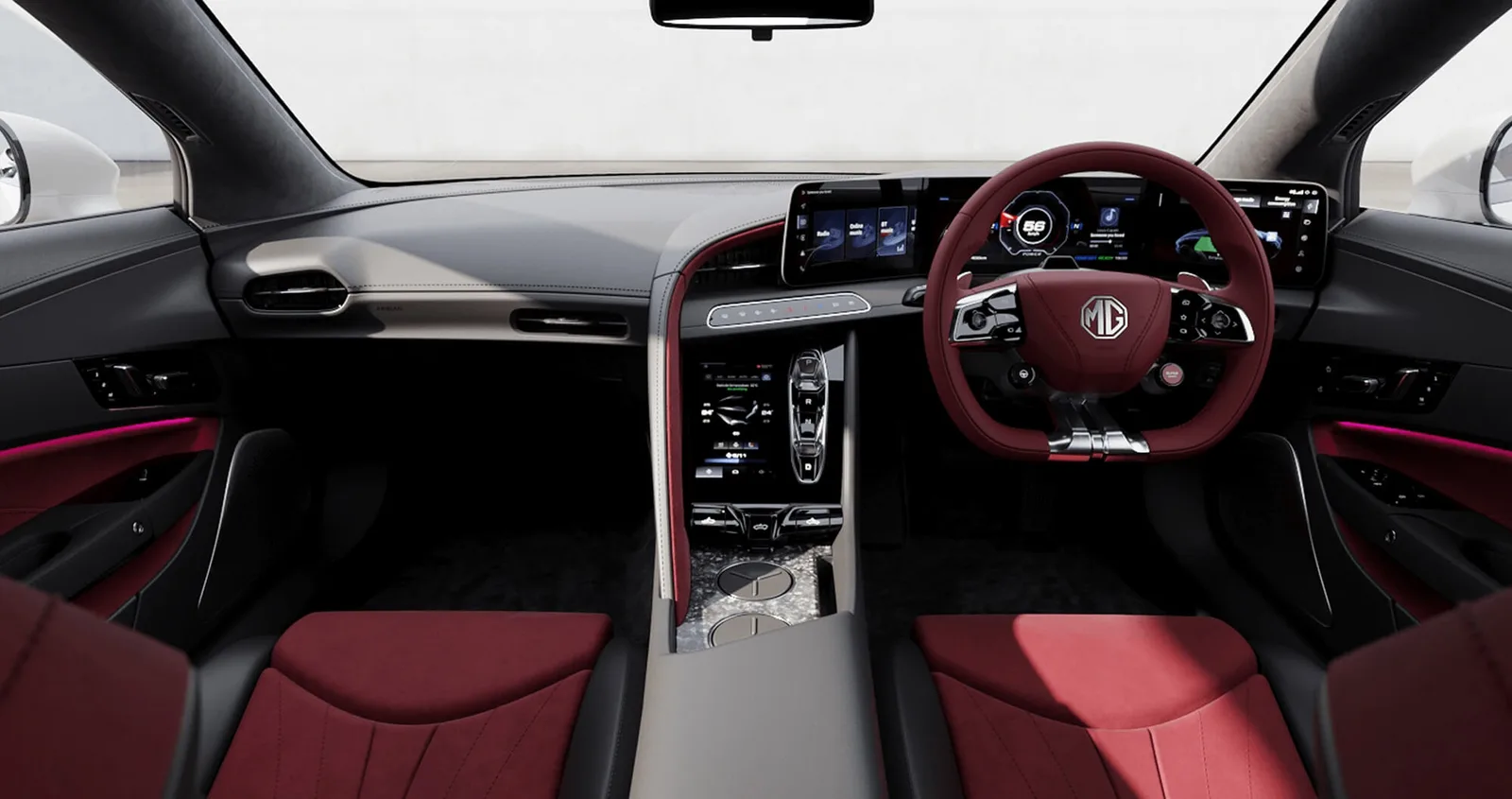
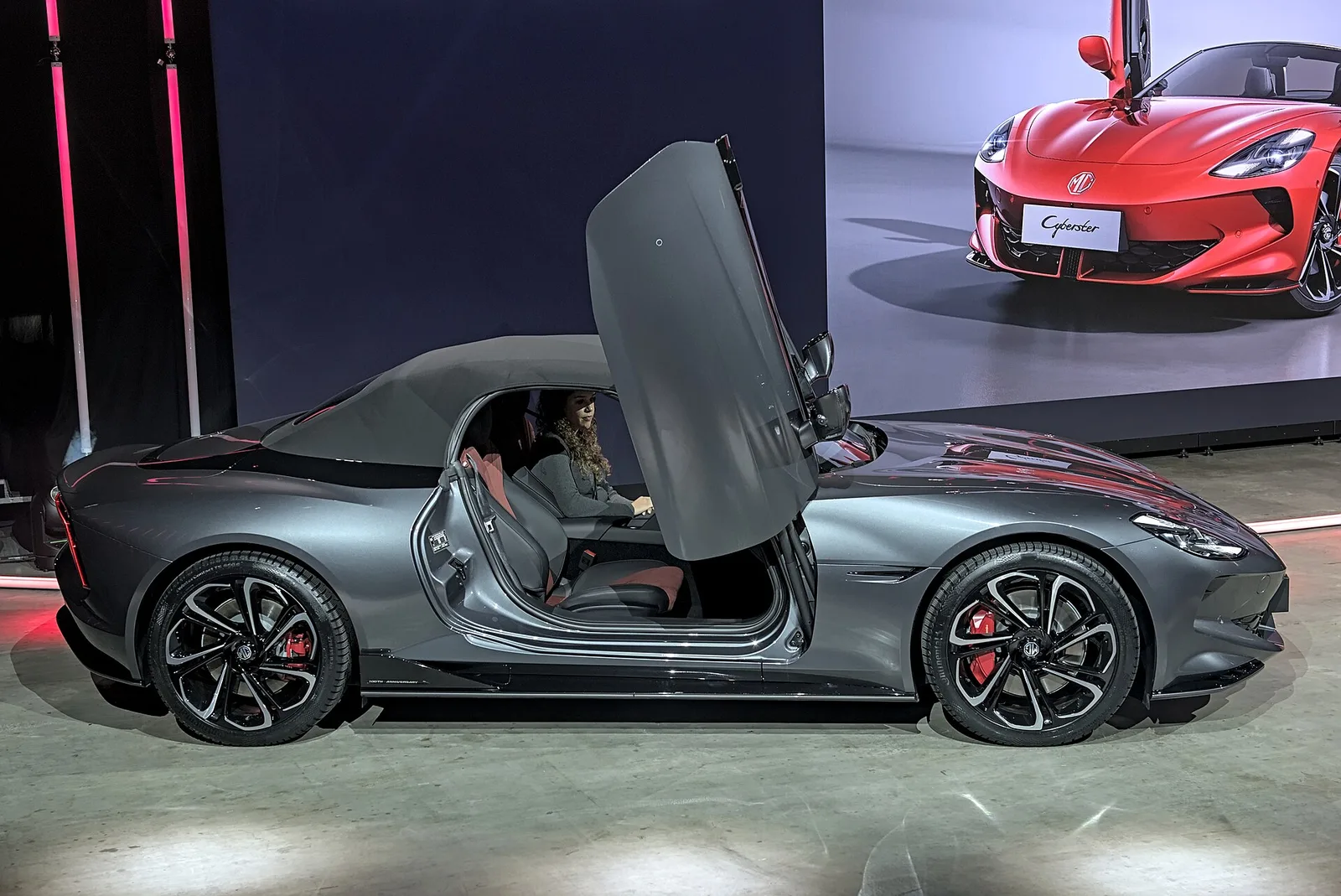
The cabin is the Cyberster at its most theatrical and least practical. Electric scissor doors and a wraparound bank of four screens grab attention in any car park. Living with them is another matter. The published reviews we’ve read agree the doors are slow, and that the outer screens hide behind the steering wheel rim.
MG fits sensors so the doors stop short of obstacles, and you can work them from the key, buttons on the door or switches inside. Top Gear UK timed them at 5.8 seconds from the door button and 7.5 seconds from the key. That’s a long wait in a downpour. Chasing Cars called them form over function.
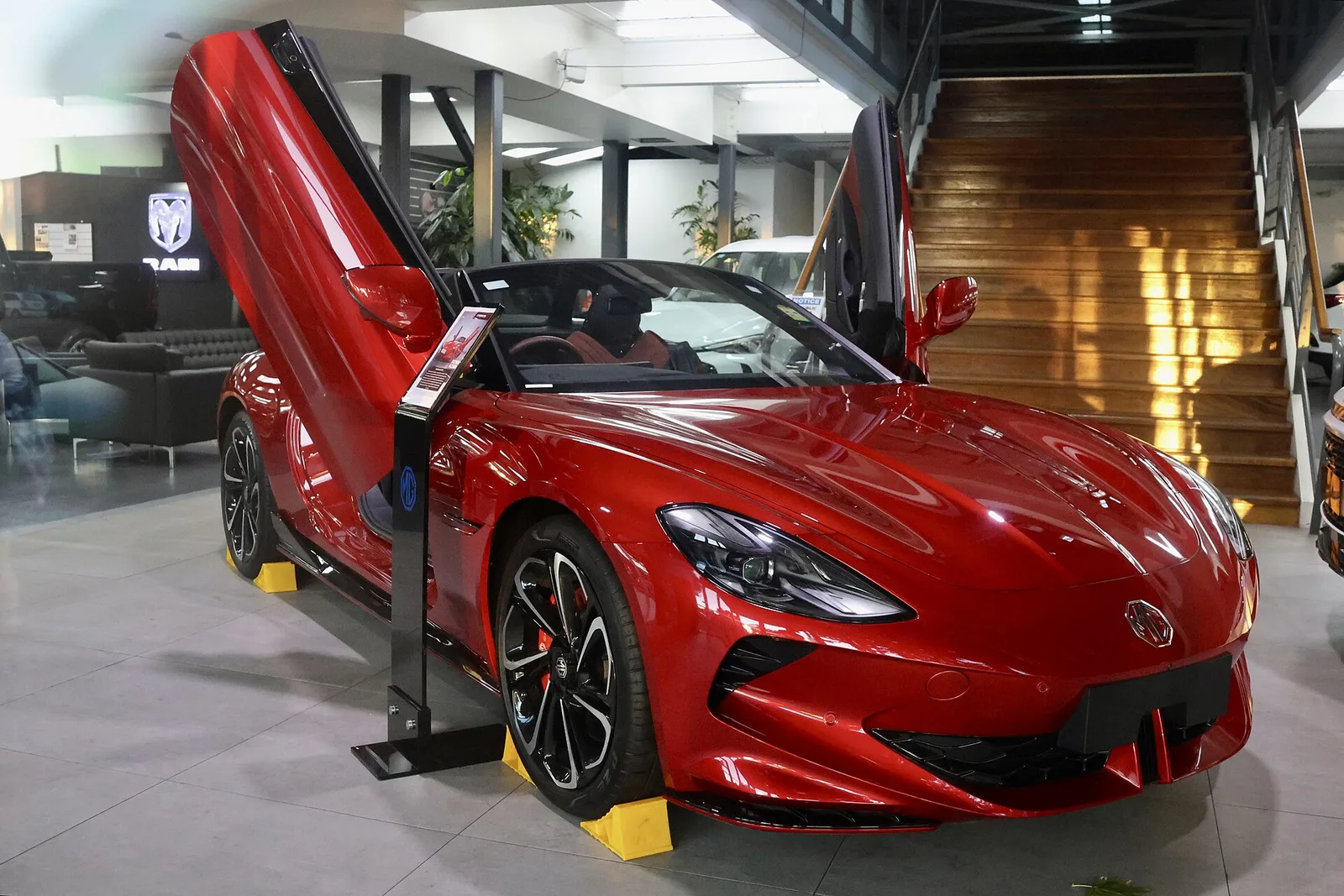
There is one upside. In a tight bay, a door that swings up needs less room beside the car than one that swings out. Top Gear’s Ollie Kew found he could get out of a British parking space where conventional doors would have trapped him. Australian shopping-centre bays are hardly more generous, so that’s a real, if narrow, win.
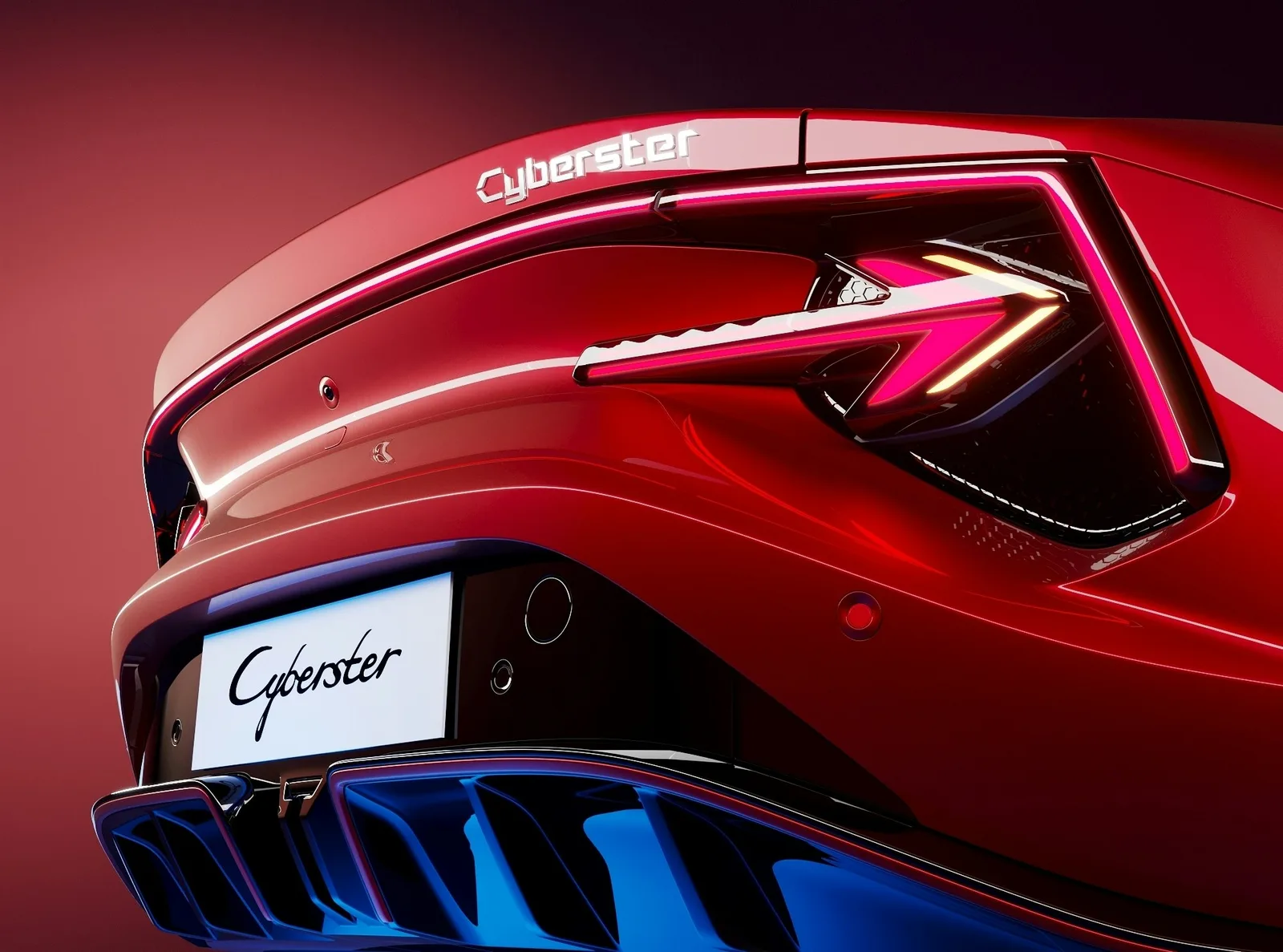
Then there’s the dash. A 10.25-inch driver display sits between two 7-inch screens, with another 7-inch touchscreen on the console. CarExpert and Chasing Cars both found the outer pair blocked by the wheel, and the NRMA’s Kris Ashton said you have to tilt your head ‘like a magpie’ to read them. It looks great in a photo. Less so at 100km/h.
How practical are the roof and boot?
More than you’d guess for a two-seater. The boot holds 249 litres whether the roof is up or down, because the electric fabric roof stows clear of it. CarsGuide puts the roof at about 15 seconds, and it works at up to 50km/h, so a passing shower in traffic doesn’t mean pulling over. For a weekend away for two, it’s enough.
There’s no spare, only a tyre repair kit, which matters if your weekends involve country roads a long way from a tyre shop. Ground clearance is 116mm, so steep driveways deserve care. Equipment is generous, with a Bose stereo, a 360-degree camera and vehicle-to-load (V2L) power standard on both variants.
Does 1885kg kill the roadster magic?
Not entirely, but it changes the kind of magic on offer. CarExpert’s Jack Quick called the Cyberster properly rapid, and more settled on sweeping roads than tight ones, like a grand tourer. What it can’t do is feel light. The reviews keep coming back to the weight, and the numbers show why.
The RWD Cyberster carries 7.5kg per kW, almost the MX-5's 7.7kg. It just does it with 82 per cent more mass to stop, steer and settle.
Our calculations. Cyberster figures from MG Motor Australia's 2026 brochure (correct as at August 2026). MX-5 2.0 soft-top manual figures from CarExpert's 2026 data. Prices are before on-road costs, October 2026.
Our numbers make the point. The RWD carries 7.5kg per kilowatt, almost identical to the MX-5’s 7.7kg, so on paper the cheaper Cyberster and the Mazda haul the same load per unit of power. The difference is the 850kg the MG has to stop, turn and settle over every bump. Power hides weight in a straight line. Corners find it out.
The reviews agree on the broad picture and split on the detail. The NRMA found the car ‘ironing-board flat in corners’, yet said its weight makes it want to drift sideways if pushed hard through a long bend. evo criticised poor suspension control and said the car made every kilogram felt.
Ride quality draws the same split. CarExpert found the suspension more supple than expected, while the NRMA said the body ‘hops like a jackrabbit’ on poor surfaces and noted suspension upgrades are a hot topic on owner forums. Given the state of many regional Australian roads, we’d weigh the NRMA’s verdict more heavily for local buyers.
Is the RWD or AWD better on the road?
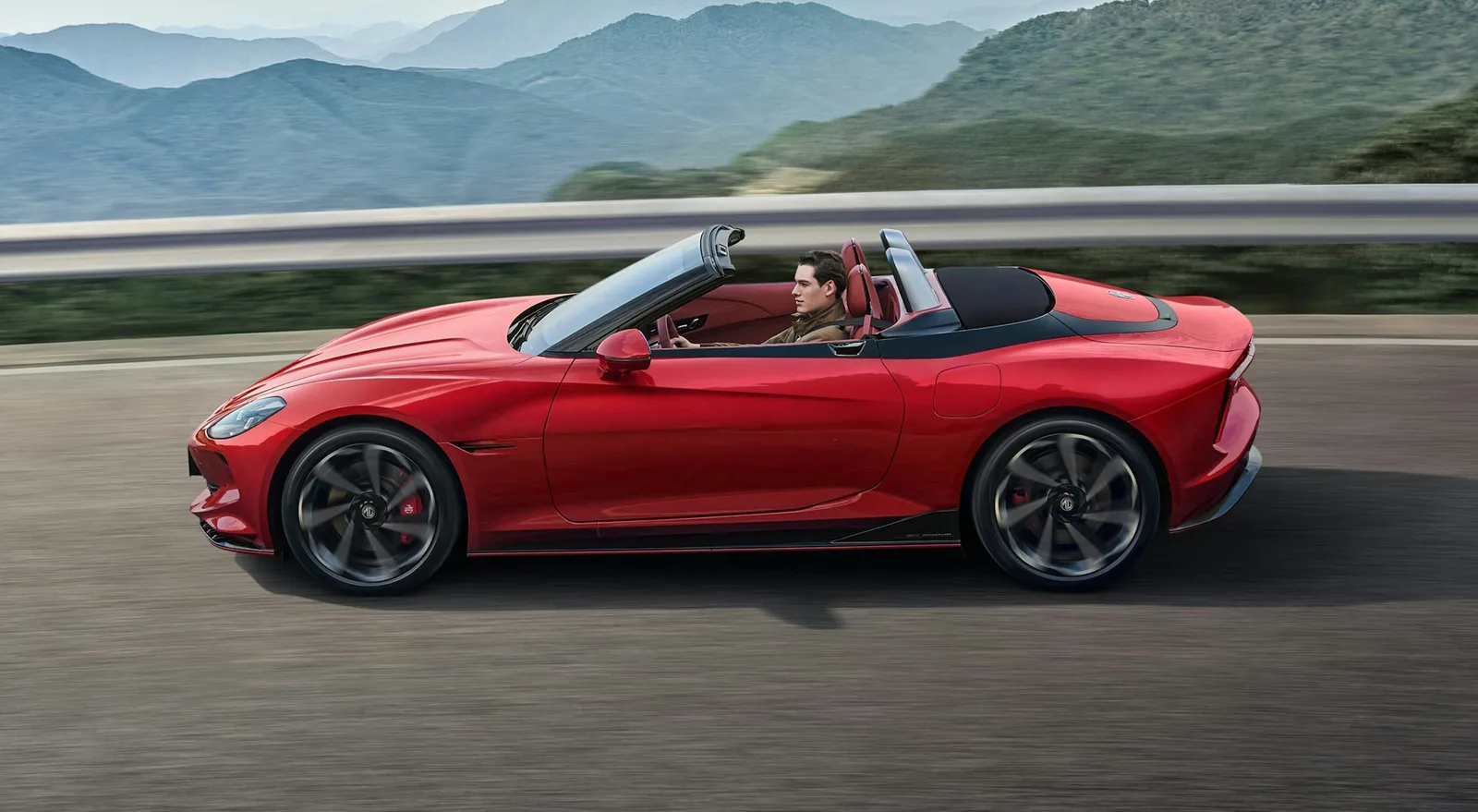
The RWD is the better roadster. It’s 100kg lighter, runs 19-inch wheels with more tyre sidewall than the AWD’s 20s, and claims 507km of range against 443km. evo found the single-motor car keener to turn, if a little more jittery over bumps. The AWD’s 3.2-second sprint is a party trick you’ll rarely use on a public road.
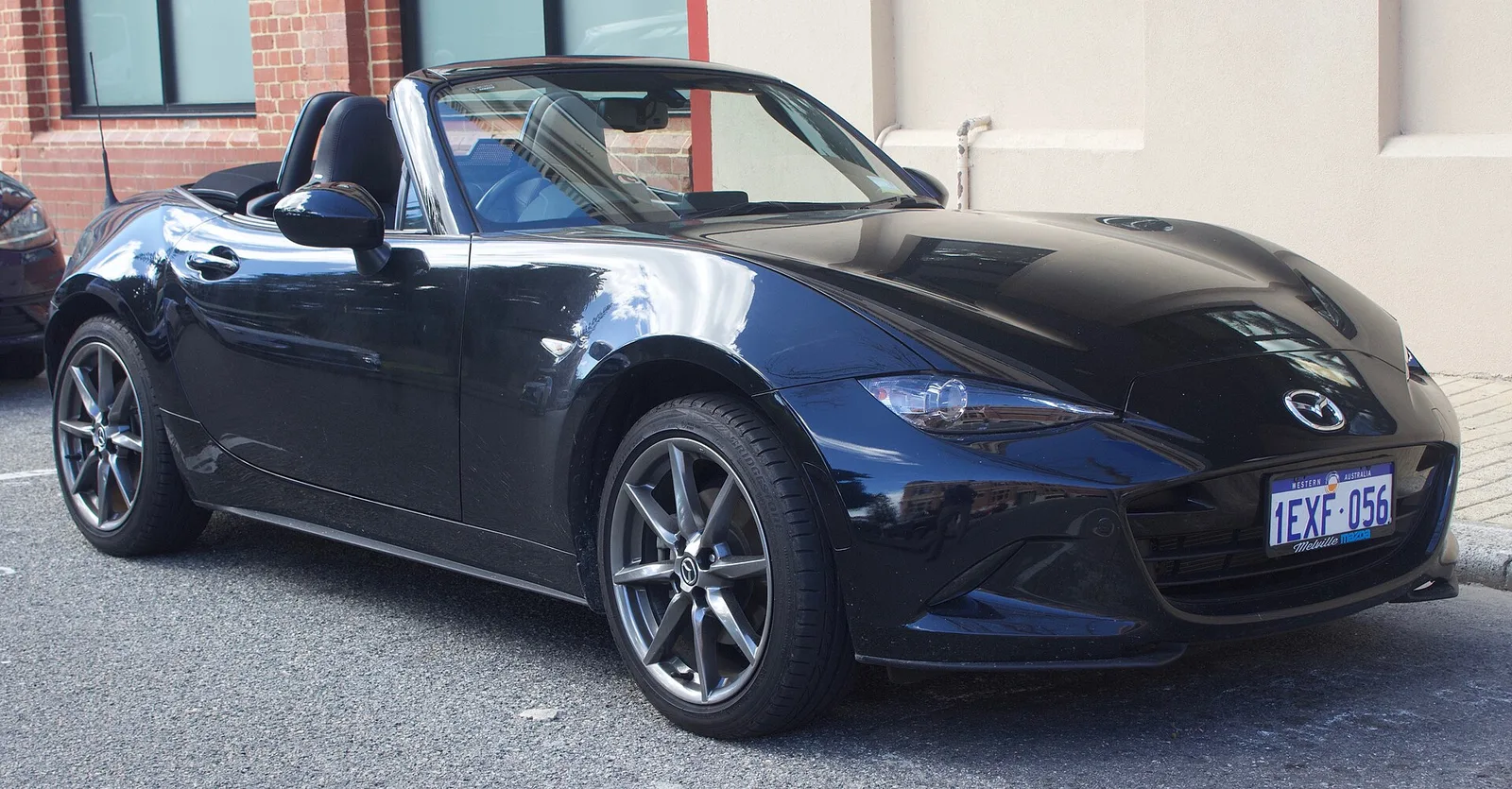
Which brings us to the Mazda. The MX-5 2.0 manual costs $44,590 before on-roads after its October 2026 update and weighs 1,035kg. If steering feel and a car that dances on a back road matter more than pace, it’s still the answer. If you want a quick, quiet electric cruiser with a folding roof, the MG makes more sense.
Cross-shoppers have other petrol options with fixed roofs. Our Toyota GR86 guide covers the lightweight end, and our used Porsche 718 Cayman guide shows what a mid-engined chassis does.
What about an Audi RS3 for the same money?
It’s the obvious cross-shop if pace is the goal. The RS3 sedan lists at $107,727 and the Sportback at $104,727, between the two Cybersters. Its 2.5-litre turbo five-cylinder makes 294kW and 500Nm, it hits 100km/h in 3.8 seconds, and at 1,640kg it weighs about 350kg less than the AWD MG. You also get four doors, a back seat and a 321-litre boot in the sedan.
The MG answers with a roof that folds, a 3.2-second sprint in AWD form and no fuel bill. The Audi uses 8.2L/100km of 98. They’re very different cars for the same money. If you need one car to do everything, it’s the Audi. If it’s a second car for sunny days, the MG makes its case.
Safety, price and the sums behind the badge
Is the MG Cyberster safe?
It has no crash rating to prove it either way. The NRMA reported in its August 2026 review that the Cyberster ‘has not been crash-tested and doesn’t have an ANCAP rating’, and Euro NCAP hasn’t tested it either. That’s common for low-volume sports cars, but it leaves you relying on the equipment list rather than an independent score.
That list is long. MG’s 2026 Cyberster brochure includes autonomous emergency braking, adaptive cruise, lane keeping and emergency lane keep, blind-spot detection, rear cross-traffic alert with braking, driver monitoring and a door-open warning. Front airbags and integrated head and thorax airbags complete it. For a weekend car, that’s reassuring. As a family daily, it’s a harder sell.
Is the Cyberster good value at $99,900?
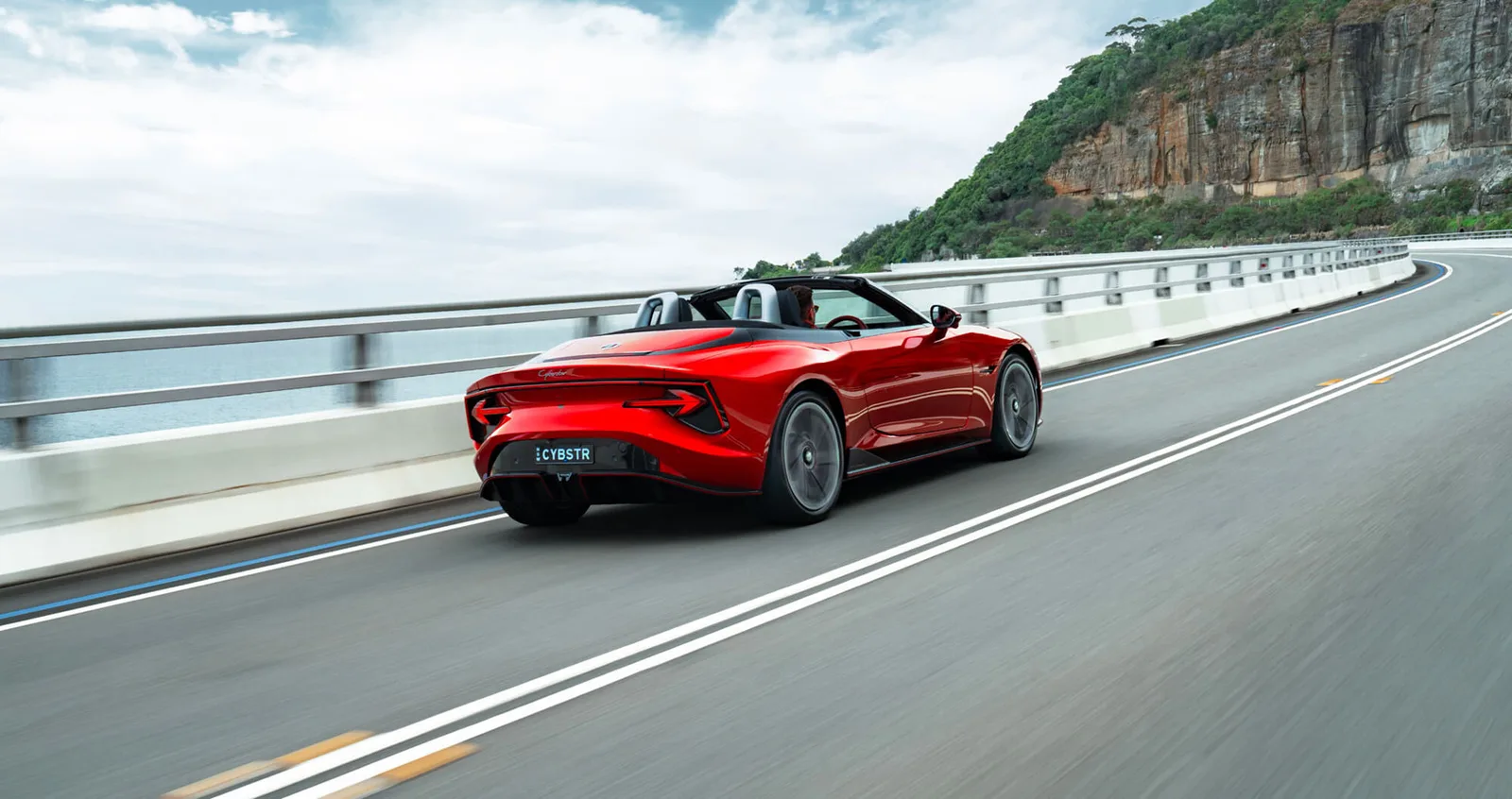
Against an MX-5, no. Against what 375kW and a folding roof usually cost, the AWD looks sharp. Our working puts the AWD at about $307 per kilowatt, below the MX-5’s $330, while the RWD sits at about $400. Whether that’s value depends on what you’re buying: speed, or the feel of a light car.
Two tax details matter. Both variants sit above the ATO’s $91,661 luxury car tax threshold for fuel-efficient cars in 2026–27. On our estimate, LCT accounts for roughly $1,900 of the RWD’s price and $5,400 of the AWD’s. It also rules both out of the electric car FBT exemption, as our novated lease explainer covers.
Running costs look reasonable. Servicing is every 12 months or 25,000km. CarExpert has quoted $5,034 for ten years of capped-price services, and CarsGuide lists individual visits between $246 and $785. Ask the dealer for the current schedule. The warranty is seven years with unlimited kilometres, extending to 10 years or 250,000km with MG dealer servicing. The battery gets seven years or 150,000km.
| Spec | RWD | AWD |
|---|---|---|
| Price (before on-roads) | $99,900 | $115,000 |
| Power and torque | 250kW / 475Nm | 375kW / 725Nm |
| 0–100km/h (claimed) | 5.2 seconds | 3.2 seconds |
| WLTP range | 507km | 443km |
| Energy use | 167Wh/km | 191Wh/km |
| Kerb weight | 1885kg | 1985kg |
| Wheels and tyres | 19-inch, 245/45 front, 275/40 rear | 20-inch, 245/40 front, 275/35 rear |
| Charging | 144kW DC peak, 11kW AC | 144kW DC peak, 11kW AC |
| Boot | 249L | 249L |
Source: MG Motor Australia 2026 Cyberster brochure (correct as at August 2026) and MG configurator, October 2026. Range and performance are manufacturer claims.
Why are there so few on the road?
Because hardly anyone is buying one. CarExpert’s VFACTS and EVC sales data shows 43 Cybersters sold in 2024, 58 in 2025 and fewer than two dozen so far in 2026. Slow sellers rarely hold their value well at trade-in.
Rarity can help a classic, but a low-volume EV is a different proposition when it’s time to sell, as our EV depreciation guide explains. The list price hasn’t moved, but with sales this slow it costs nothing to ask a dealer what they can do.
Which Cyberster should you buy?
The 77kWh RWD. It’s $15,100 cheaper, 100kg lighter, rides on smaller wheels with more tyre sidewall, and goes further on a charge. The AWD’s extra 125kW turns a quick car into a very quick one, but in a car whose real talent is cruising, the RWD does the job better. Skip both if your sports car must feel light.
Plan around charging. DC charging peaks at 144kW, and MG claims about 40 minutes from 10 to 80 per cent on a 150kW charger. That’s fine for a coastal day out on the Grand Pacific Drive, but longer trips need planning, as our EV road trip guide shows. At home, 11kW AC charging takes about nine hours, and our home EV charger guide covers the hardware.
The Cyberster isn’t the MX-5’s electric twin, and it was never going to be. It’s a fast, well-equipped and heavy GT with a roof that folds and doors that put on a show. Buy it for that, in RWD form. If you want a featherweight roadster, the best one is still built in Hiroshima and costs less than half as much.


