
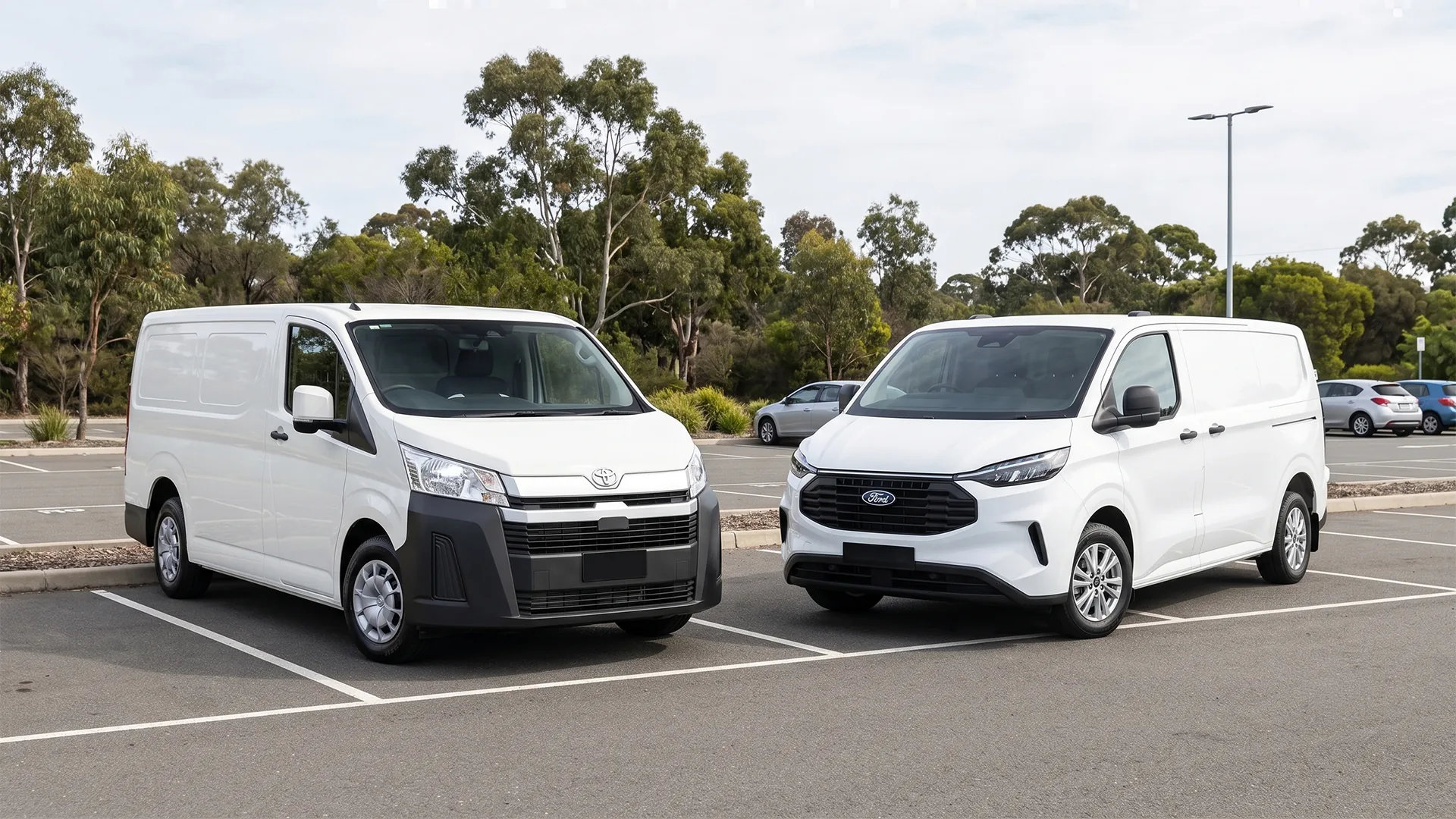

Toyota sells roughly three HiAce vans for every Transit Custom Ford moves. That gap isn’t an accident, and it isn’t quite fair either. One van is the safe default the whole trade already trusts. The other is the more modern tool, and it knows it.
This is the diesel 2026 Toyota HiAce LWB Van against the diesel 2026 Ford Transit Custom Trend LWB. Both are the long-wheelbase, two-seat workhorses that couriers, sparkies and fleet buyers actually put on the road. Both run a single turbo-diesel and a torque-converter auto. From there, they split hard.
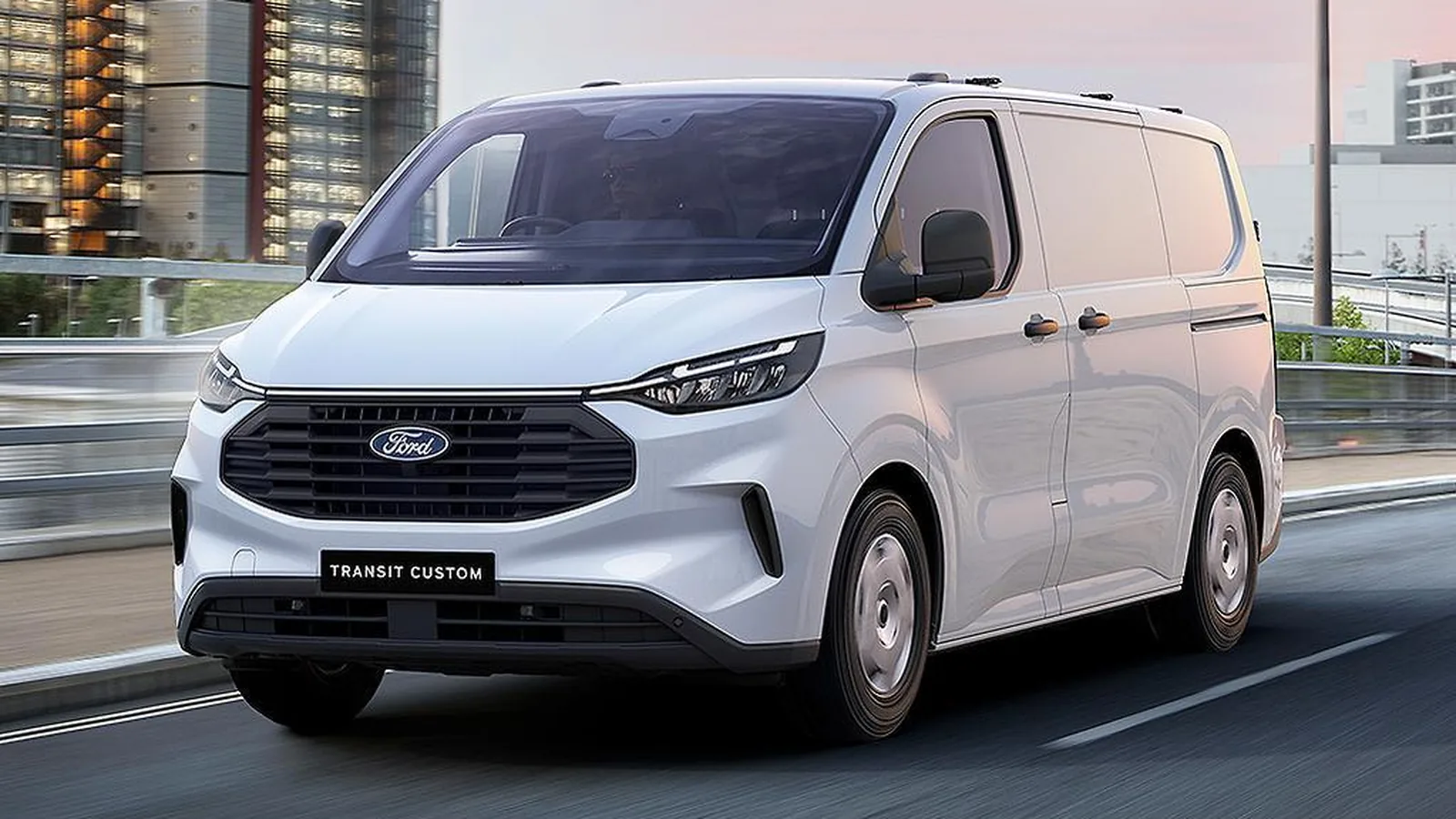
The HiAce is rear-wheel drive, old-school, and built around the idea that nothing should ever go wrong. The Transit Custom is front-wheel drive, car-like to steer, and carries a 13-inch screen most utes would envy. Picking between them isn’t about which is better. It’s about what kind of operator you are.
HiAce LWB vs Transit Custom Trend LWB
Diesel, Drivetrain and the Rear-Wheel-Drive Question
The HiAce uses a 2.8-litre turbo-diesel making 130kW and 450Nm, driving the rear wheels through a six-speed auto. The Transit Custom Trend counters with a 2.0-litre diesel: 125kW and 390Nm, eight gears, front-wheel drive. Toyota has the muscle on paper. Ford has the gears and the traction logic.
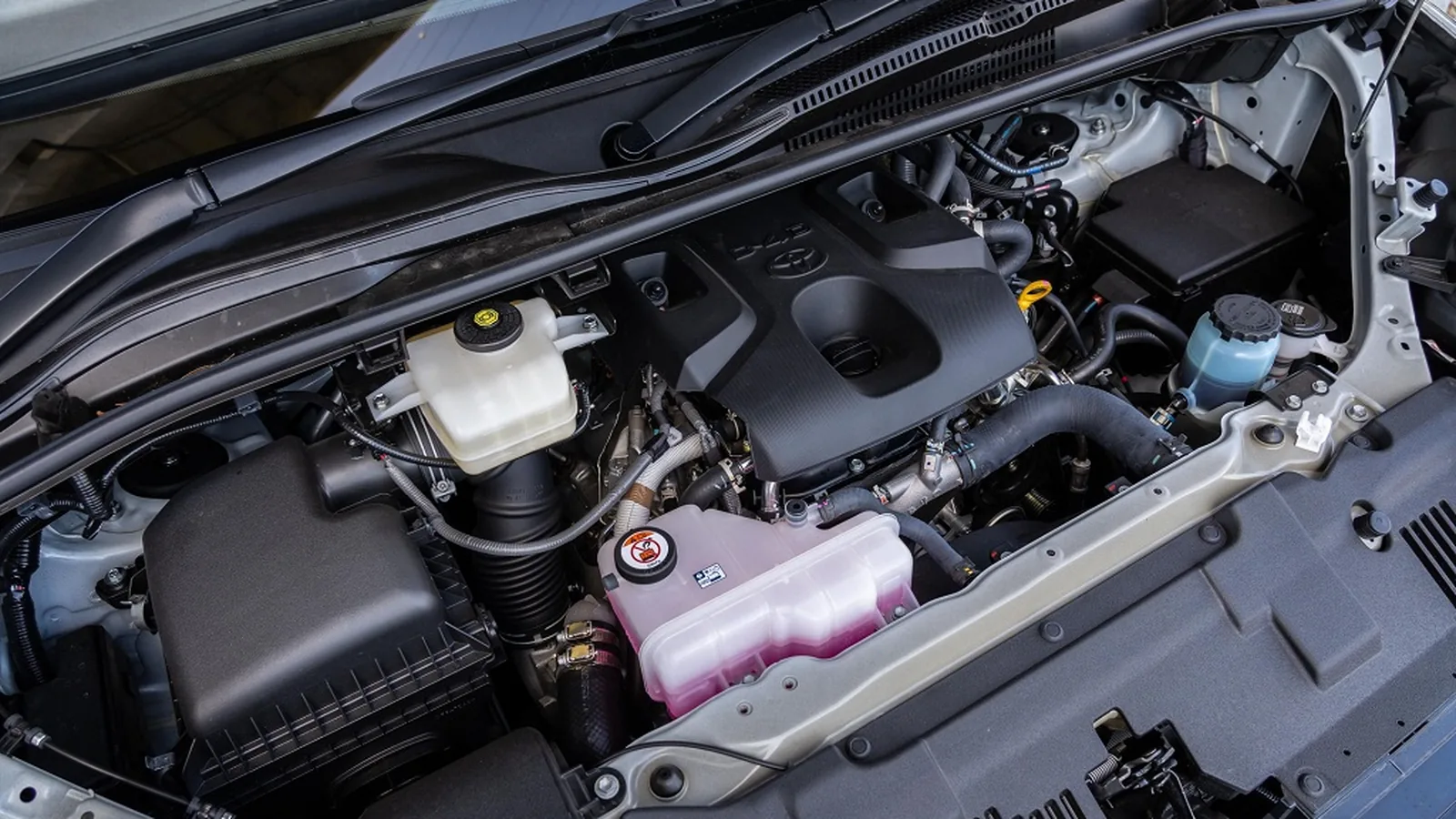
Those numbers are closer than they feel from the driver’s seat. The HiAce’s extra torque shows when it’s loaded, and the rear-drive layout means weight over the back axle helps it dig in once the cargo bay is full. Empty, a rear-drive van in the wet is a different story, and every old HiAce hand knows the back end gets light.
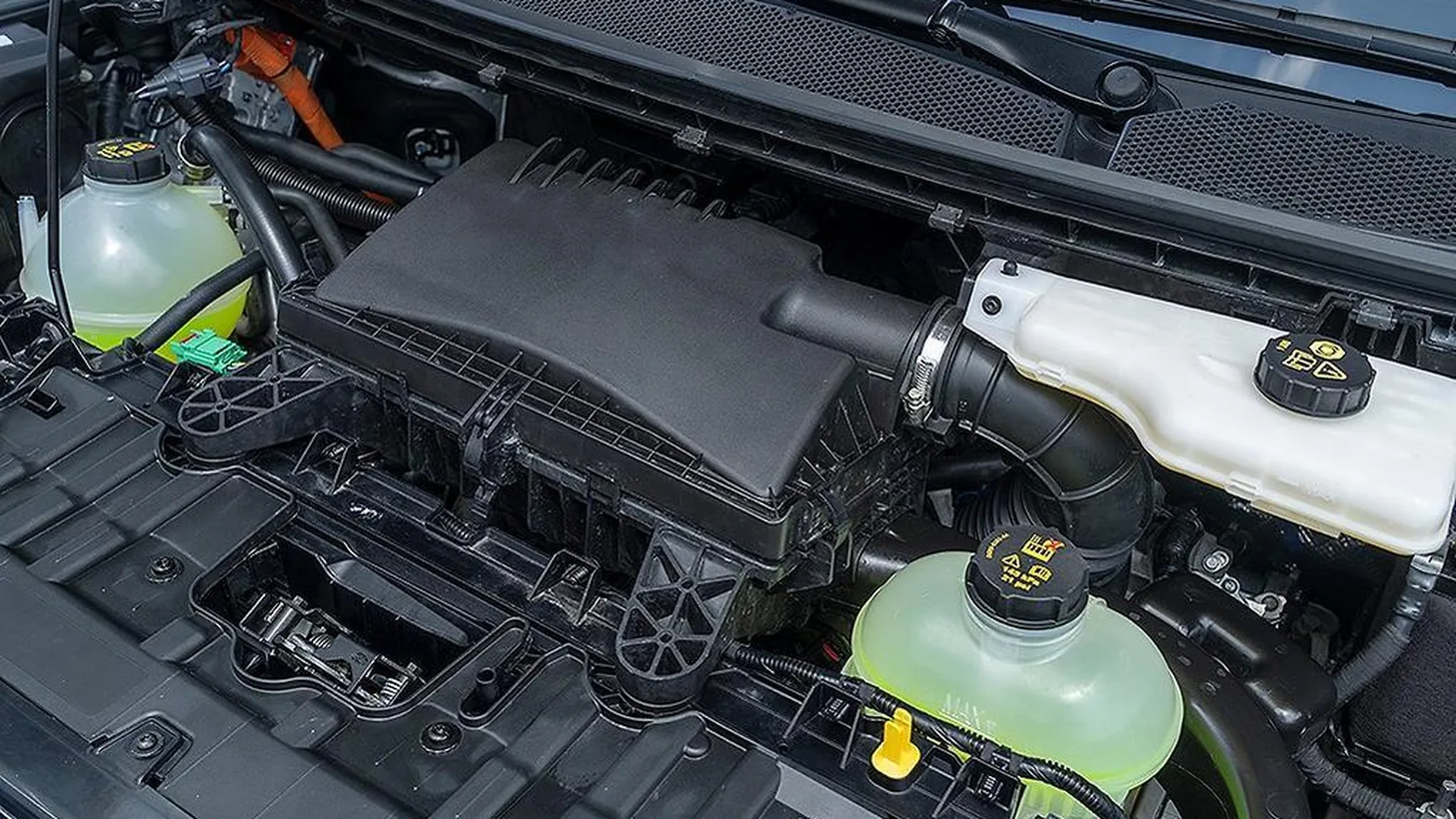
Ford’s front-drive setup flips that logic. The weight of the engine sits over the driven wheels, so an empty Transit Custom pulls away cleanly on a wet ramp where the Toyota scrabbles. The eight-speed auto also keeps the smaller engine in its torque band better than you’d expect from the 390Nm headline.
The real separation is towing. The HiAce LWB auto is rated to tow 1500kg braked. The manual lifts that to 1900kg, but most fleets buy the auto, so 1500kg is the honest working figure. The Transit Custom Trend is rated to 2500kg braked with Ford’s genuine towbar.
That’s a full tonne of difference if you’re hooking up to a plant trailer or a decent box trailer of tools. For a courier who never tows, it means nothing. For a landscaper dragging a bobcat, it decides the whole argument.
There’s a running-cost angle too. Ford claims around 8.0L/100km combined for the Trend, helped by the smaller engine and the extra two ratios. The HiAce’s bigger 2.8 sits a touch thirstier on paper, though real-world van economy hangs on load and traffic far more than badge. Neither will sip fuel once the bay is full and you’re stop-starting through suburbia all day.
The other quiet factor is service intervals. Toyota services the HiAce every six months or 10,000km, which is frequent but cheap and predictable through a dealer network that reaches every regional town in the country. Ford’s network is thinner once you leave the cities, and that matters more to a sole trader than any torque figure.
The Cabin and the 13-Inch Screen Divide
The Transit Custom Trend runs a 13-inch SYNC 4 touchscreen and a 12-inch digital cluster, with wireless CarPlay and Android Auto. The HiAce answers with an 8-inch touchscreen, a 7-inch driver display, and physical climate dials. One cabin feels like a modern SUV. The other feels like a tool that won’t argue.
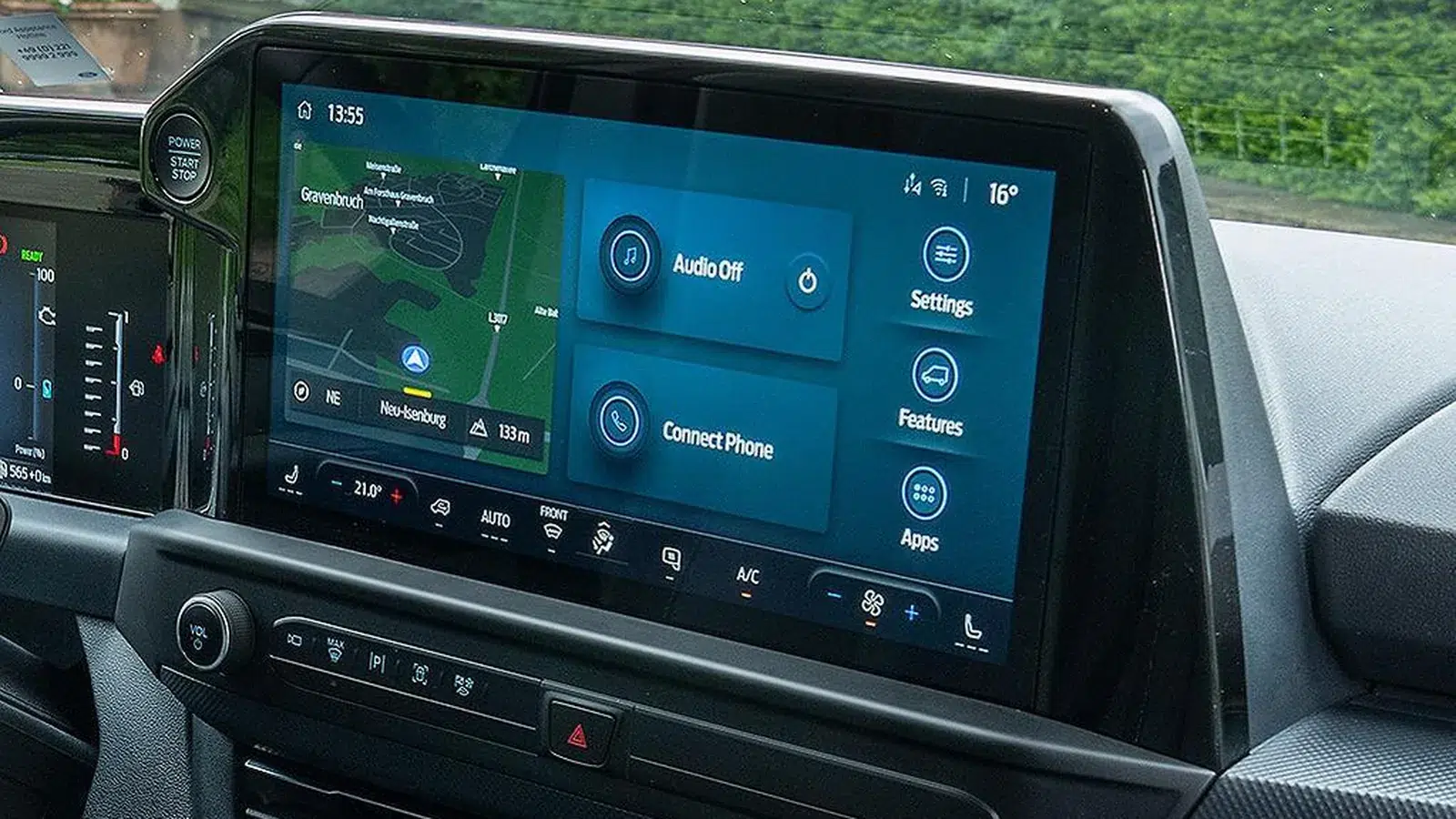
This is where the two vans stop pretending to be rivals and start being philosophies. Ford has thrown the kitchen sink at the dashboard. The big landscape screen is genuinely one of the better infotainment systems in any van, fast and clear, with built-in nav and a 5G-connected FordPass app that lets a fleet manager check the vehicle remotely.
Are touchscreen controls a problem in a work van?
They can be. Burying climate controls in a screen means taking your eyes off the road to change the fan speed, which is exactly the trend a growing number of buyers and safety bodies are pushing back against. The HiAce keeps its main controls as physical dials you can find by feel.
Ford’s system houses a few too many functions inside the screen, air conditioning included, and in a van you’re in and out of all day that gets old. The HiAce’s approach looks dated next to the Ford, but there’s a reason physical buttons are clawing their way back into new cars across the industry.
The Toyota’s cabin is plainer, with a smaller screen and hard plastics everywhere, but everything falls to hand and nothing needs a menu. For a driver doing 40 drops a day, that simplicity is a feature, not a shortfall. The Ford wins on tech. The Toyota wins on not making you think.
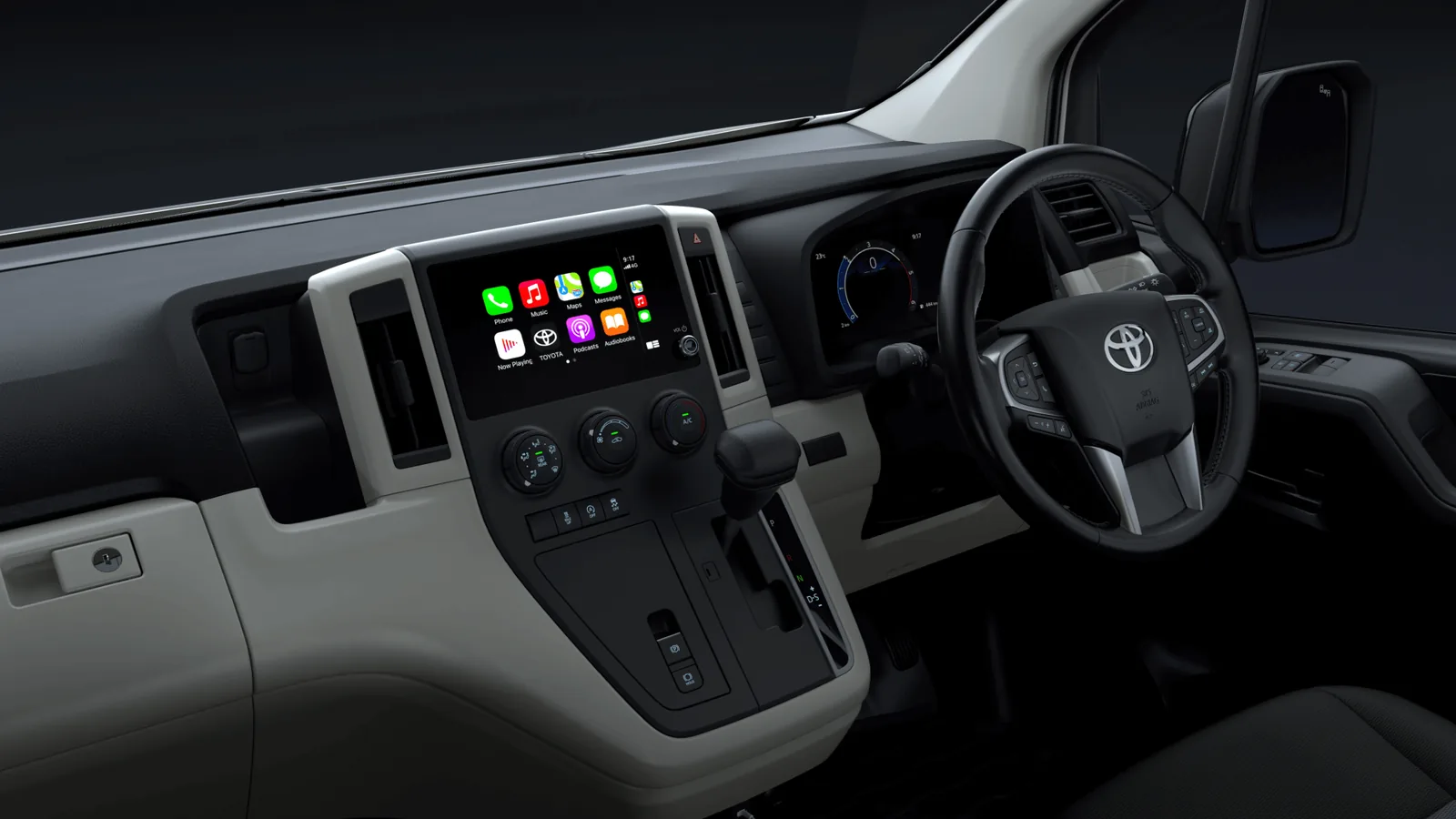
Storage tells the same story. Both cabins are built for the working day, with deep door bins, overhead shelves and enough cup holders to lose a thermos in. The Ford layers in nicer touches: a wireless charge pad, more USB-C ports, configurable cluster screens. The HiAce gives you a clipboard-friendly dash and a gear selector you could operate wearing welding gloves.
Seat comfort goes to Ford on a long haul, with better bolstering and heated outboard seats on the Trend. The HiAce seat is flatter and more upright, fine for short urban runs but less forgiving on a four-hour interstate leg. If your drivers live in the van, that difference adds up over a year of rosters.
The Load Bay: Tailgate, Barn Doors and Payload
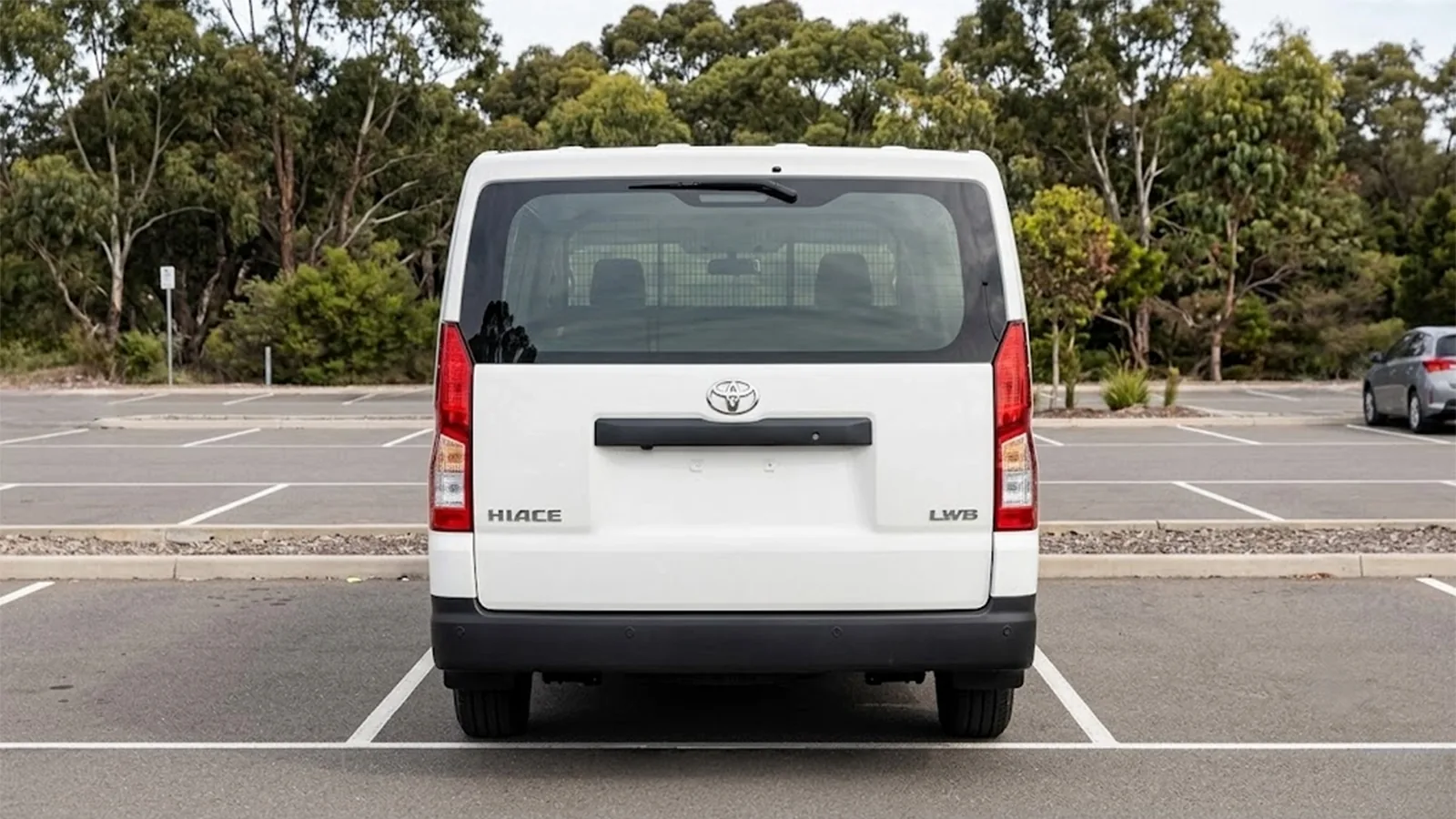
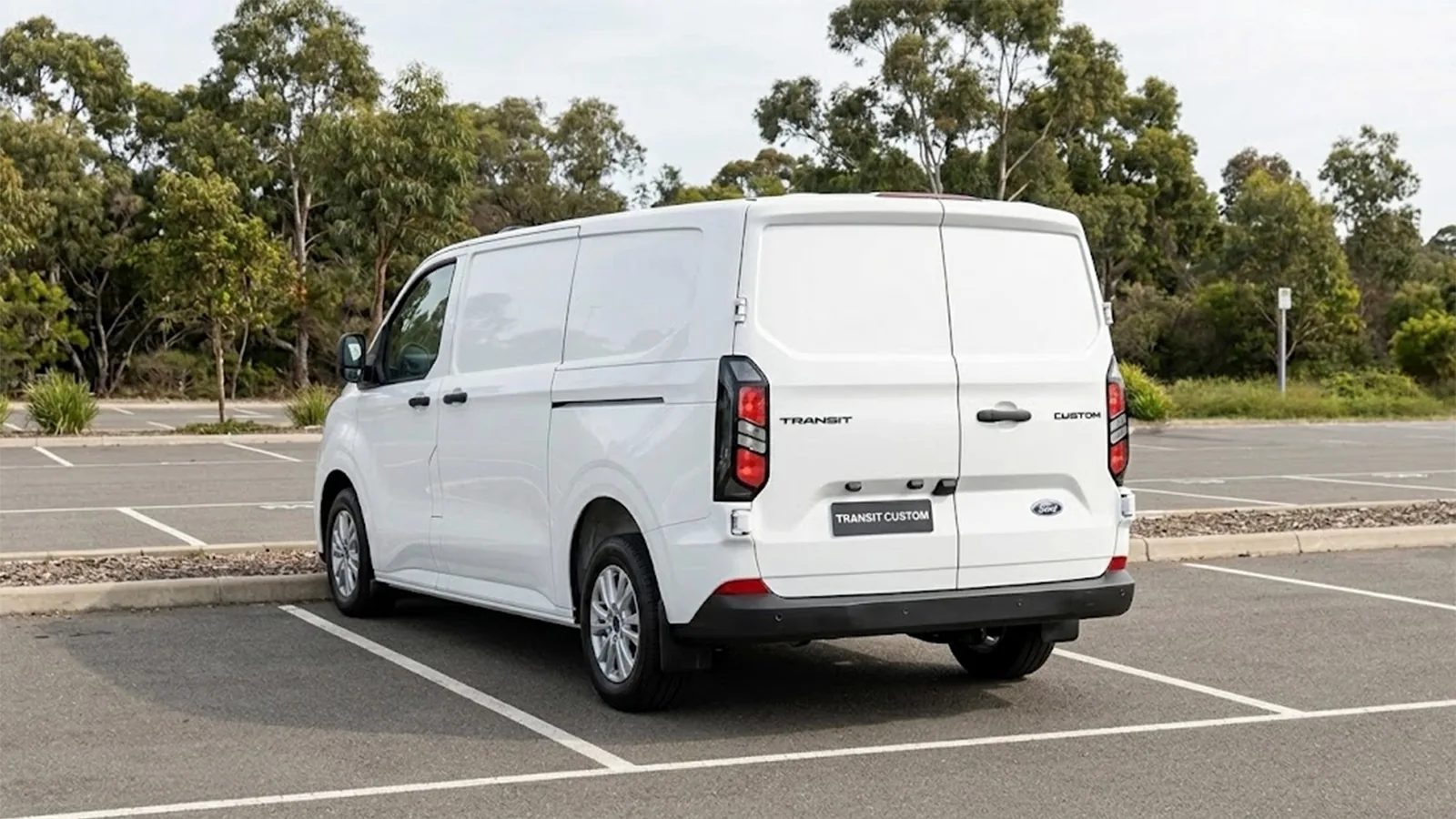
The HiAce LWB swallows 6.2 cubic metres of cargo. The Transit Custom Trend LWB takes 6.0 cubic metres. The Ford gets barn doors as standard, while the HiAce ships with a lift-up tailgate and offers barn doors as an option. On raw volume the Toyota edges it, but how you load matters more than the gap.
Six-tenths of a cubic metre sounds decisive on a spec sheet and disappears in practice. Both vans take Euro pallets, both have wide side-loading doors, and both give you a flat, usable floor. Where they differ is the back. The Ford’s barn doors swing wide for forklift and loading-dock access, the kind of thing a warehouse run needs every day.
The standard HiAce tailgate lifts up in one piece, which is fine for kerbside drops but awkward against a raised dock, and it leaves a wet roof dripping on you in the rain. If that matters to your work, the HiAce’s optional barn doors close the gap, but it’s an extra box to tick where the Ford gives it to you out of the box.
Payload is closer than the volume figures suggest, and it’s where you need to read the compliance plate rather than the brochure. The HiAce LWB auto carries around 1095kg once you account for the auto and a full tank. The Transit Custom Trend LWB is rated up to roughly 1290kg depending on the exact build.
So the Ford generally carries a touch more weight, and the Toyota holds slightly more volume. If you fill up on bulk before you hit weight, the HiAce suits you. If you’re loading dense gear like tiles, batteries or tooling, the Transit Custom’s payload headroom is the one to have.
Which Van Actually Wins for You
For most couriers and light-trade buyers chasing reliability and resale, the HiAce is still the safe money. For anyone towing seriously, carrying dense loads, or living in the cabin all day, the Transit Custom Trend is the more capable and more modern tool. There’s no single winner here, only the right answer for your job.
Buy the HiAce if your day is volume, drops and decades of service. It tows less, the cabin is plain, and you’ll pay a strong price for it, but Toyota’s dealer network and resale are unmatched and the thing simply refuses to break. It’s the same Toyota-versus-Ford fight playing out one tier up in the ute world.
Buy the Transit Custom Trend if you tow, if you carry heavy, or if the cabin is your office. The 2500kg rating, the bigger payload, the front-drive traction and the genuinely good screen add up to the more rounded vehicle. The catch is the badge on the resale chart in five years, which still favours the Toyota.
Safety is close to a wash on the headline rating, with both vans carrying a five-star ANCAP result and the usual modern kit: autonomous emergency braking, lane assist and the rest. Toyota’s move to electric power steering and sharper driver-assist tech narrowed a gap the Ford used to own outright. Neither van will leave you exposed on a fleet safety audit.
If you tow more than 1500kg regularly, the HiAce is simply the wrong answer, and no amount of brand loyalty fixes a towing rating. If you never tow and plan to keep the van for ten years, the Ford’s extra cleverness is weight you don’t need to pay for.
The HiAce is the van you buy with your head when you want zero surprises. The Transit Custom Trend is the one you buy when the job has outgrown the default.


