
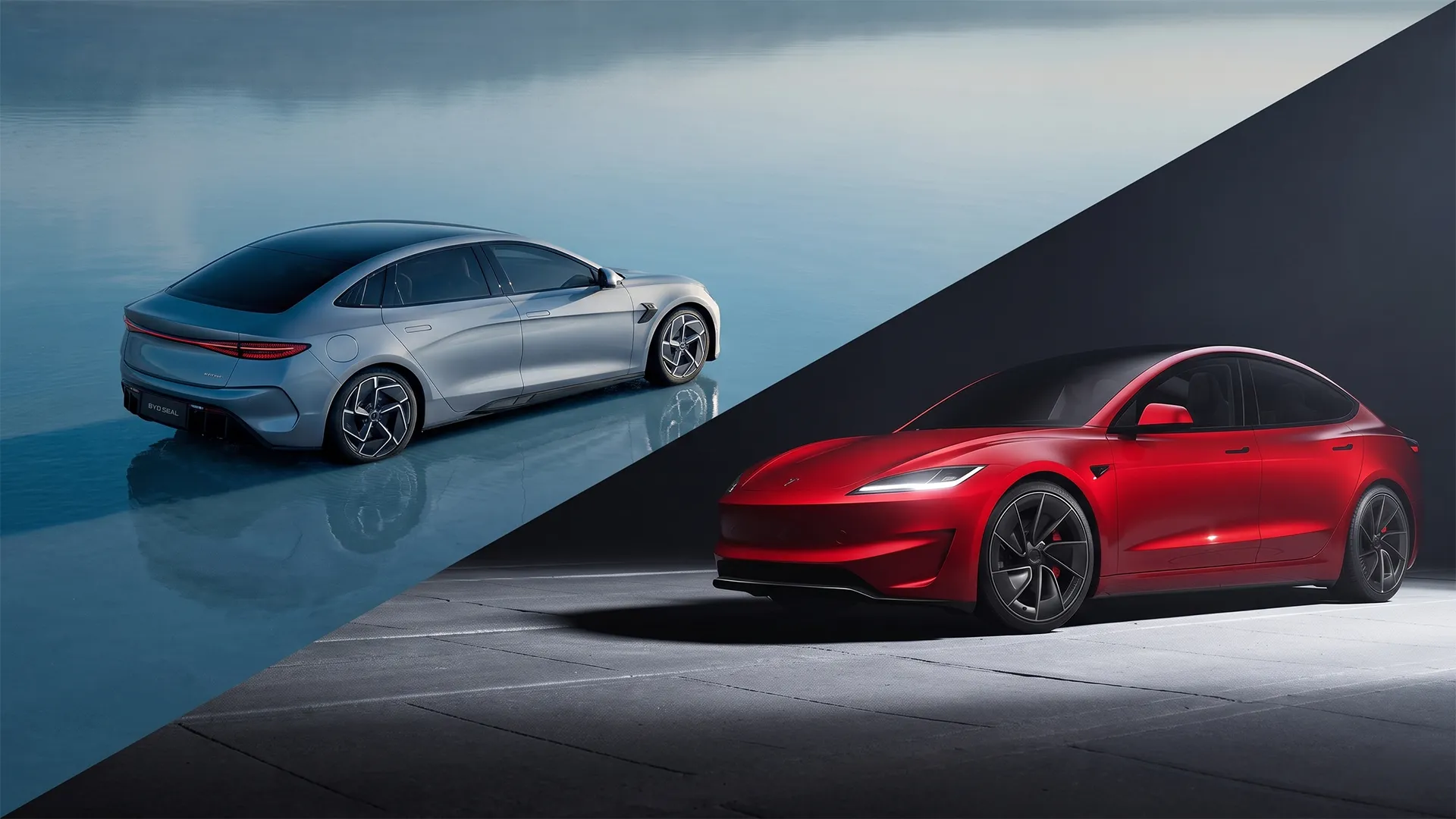

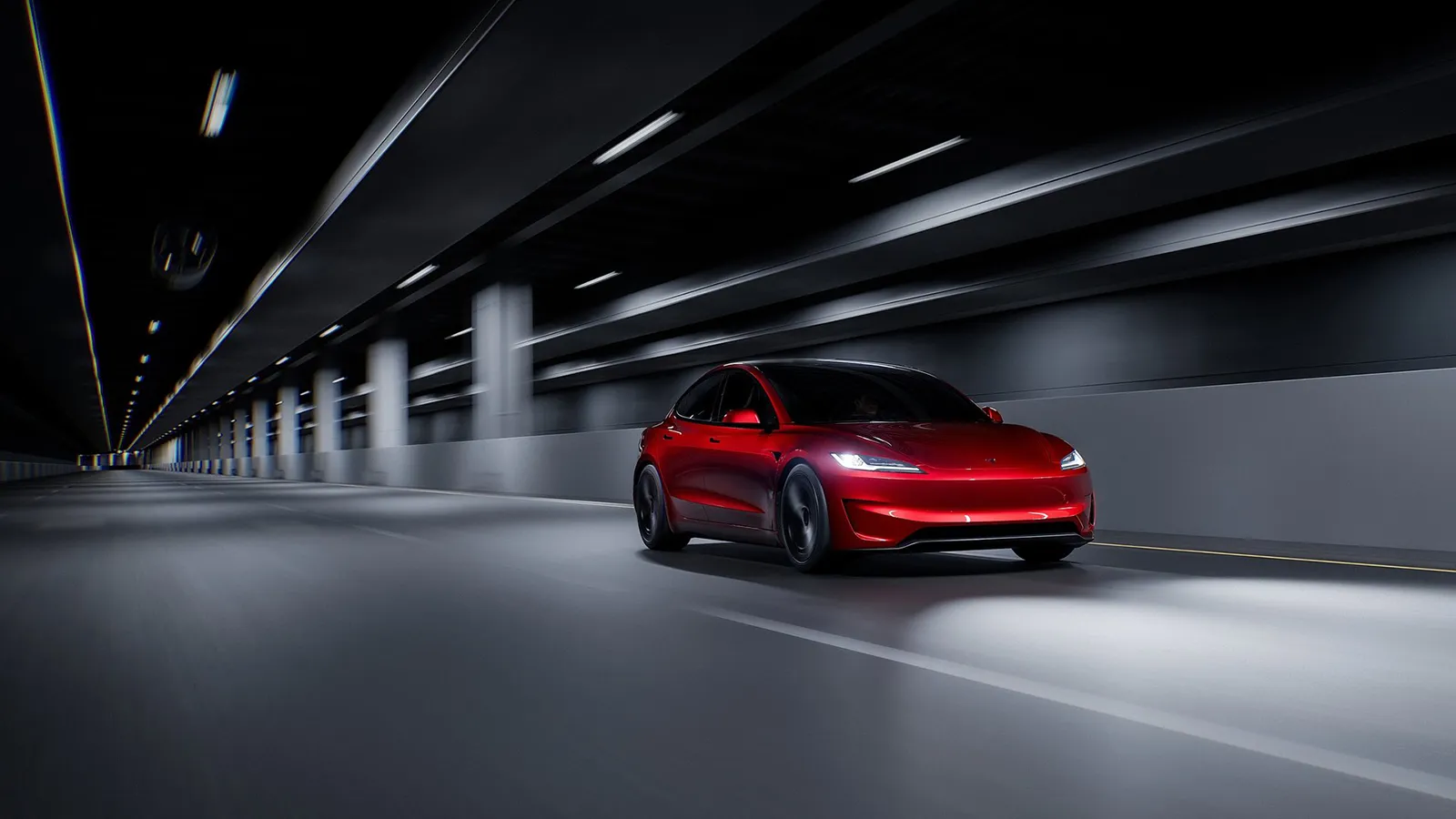
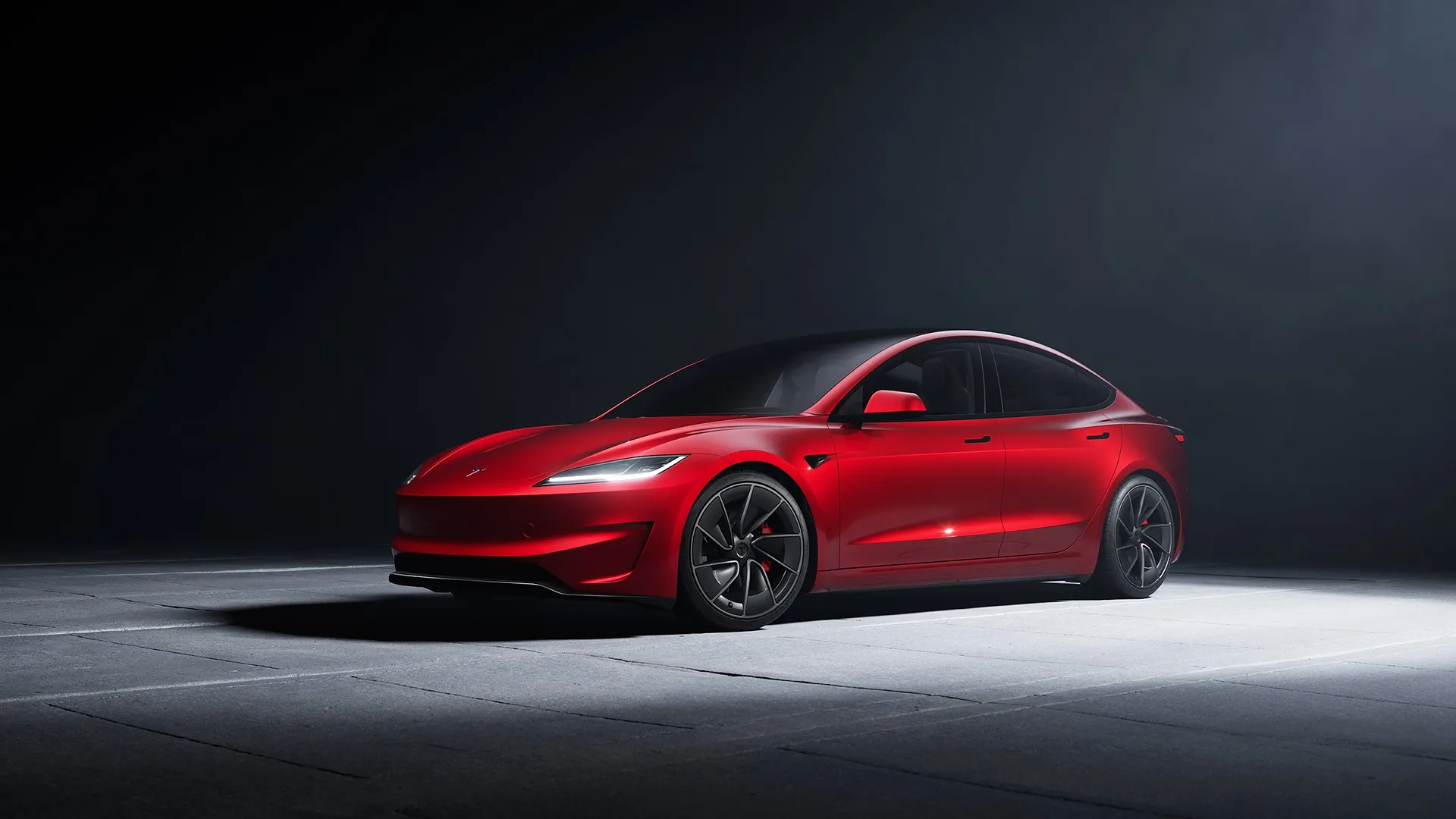
Both cars are dual-motor, all-wheel-drive performance sedans targeting the same buyer: someone who wants genuine pace, zero fuel costs, and a car that doesn’t apologise for being an EV. The Model 3 has been the benchmark every EV performance sedan has aimed at since it landed in Australia. The Seal is BYD’s clearest argument that the gap has closed. At $61,990 versus $80,900 before on-road costs, BYD has made that argument with a price gun.
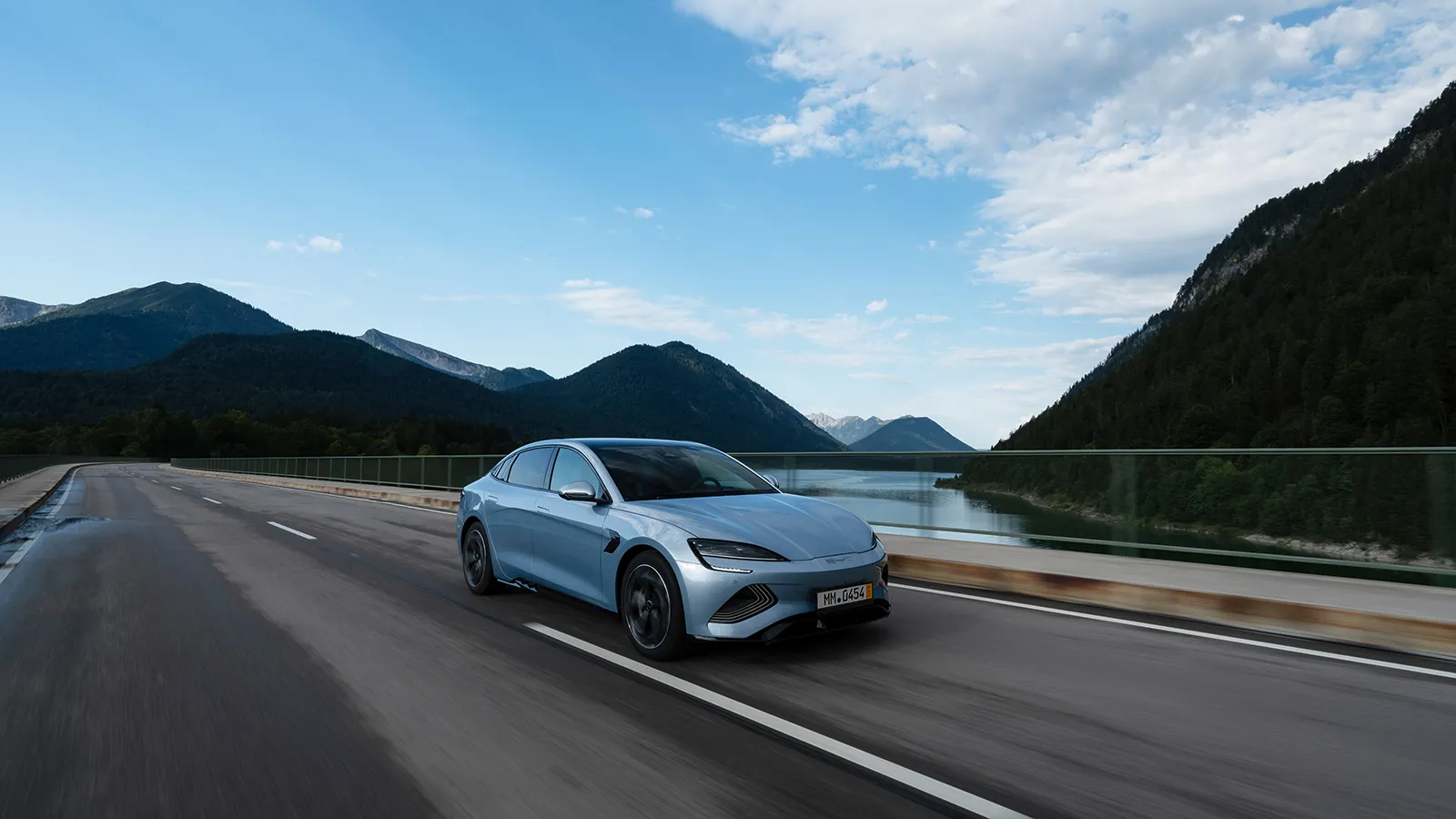
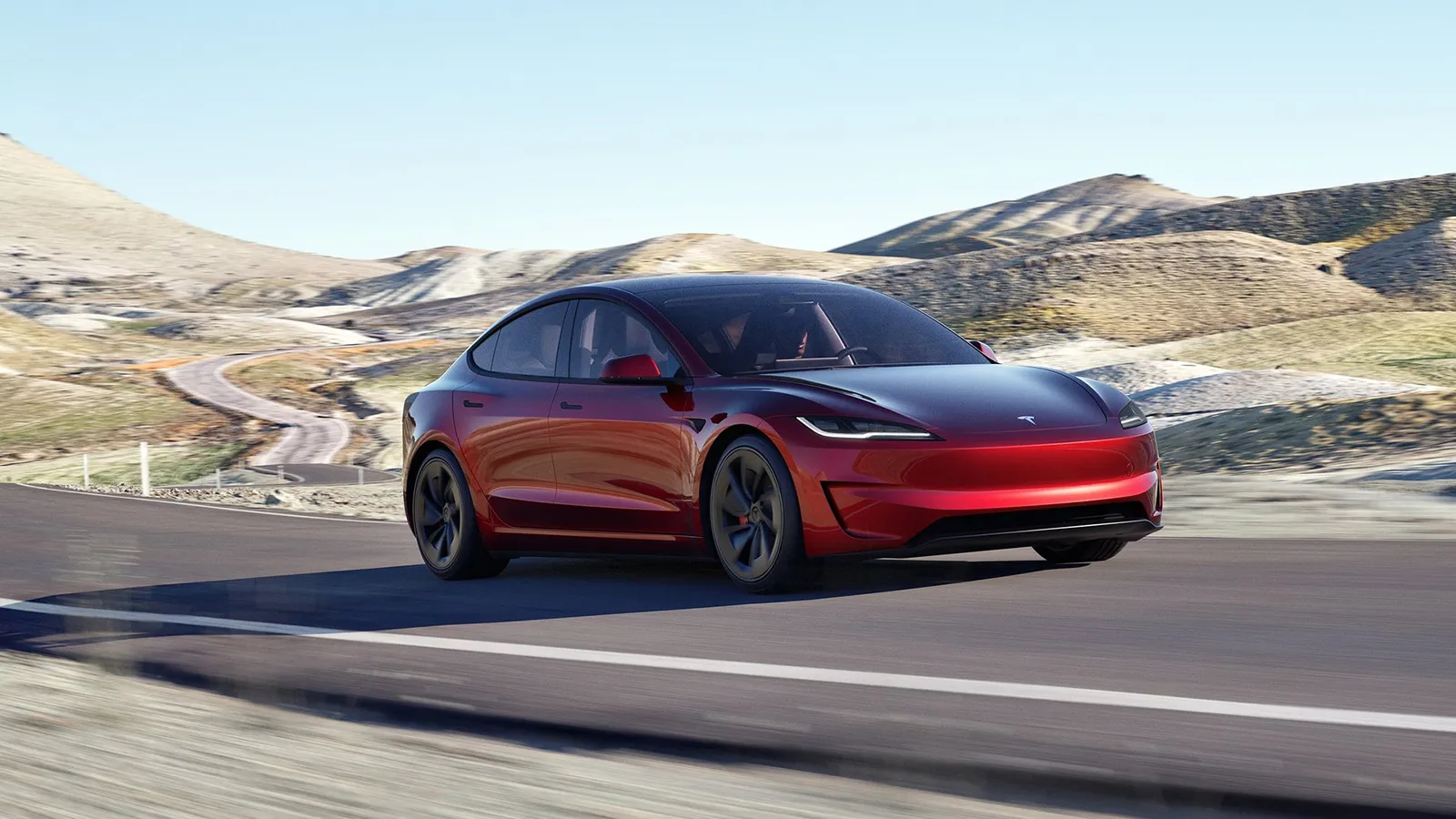
Tesla Model 3 Performance vs BYD Seal Performance
Less Power, More Speed
Which EV sedan gets to 100km/h first?
The answer is the Tesla, by 0.7 seconds, despite making 47kW less power. BYD’s 390kW system and Tesla’s 343kW both put you in the three-second bracket, but the Model 3 Performance’s 331kg weight advantage over the 2,185kg Seal settles the argument at the lights: 3.1 seconds versus 3.8 seconds.
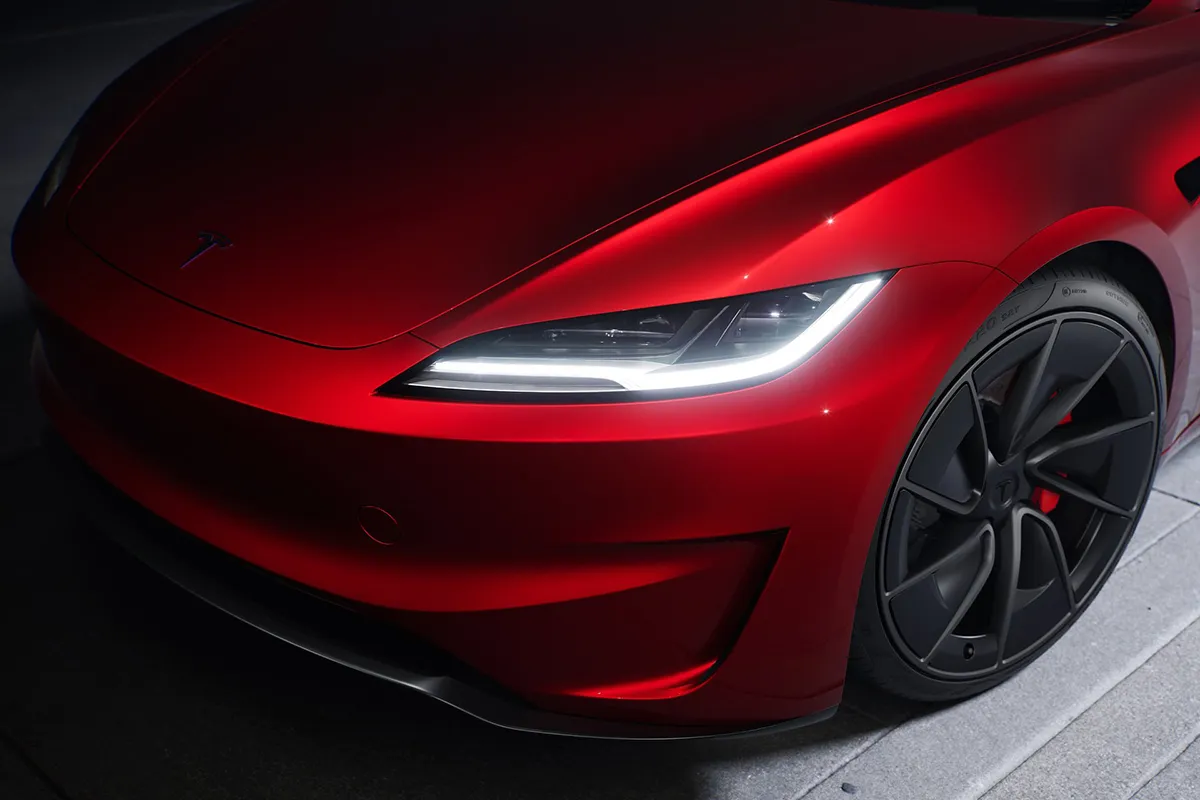
The physics follows. BYD’s dual-motor setup produces 390kW and 670Nm. Tesla’s produces 343kW and 681Nm. On the spec sheet, the Seal should launch harder. Carrying 331 extra kilograms says otherwise. It is the EV version of a lightweight car at the dragstrip: power gets you moving, weight decides how fast.
WLTP range produces another counter-intuitive result. BYD’s larger 82.56kWh Blade Battery covers 520km on the WLTP cycle. Tesla’s 79kWh unit claims 571km. A 51km advantage for the lighter car with the smaller battery. BYD’s LFP Blade Battery chemistry does offer something back: owners can charge to 100% daily without the degradation risk that makes Tesla recommend stopping at 80–90% for everyday use. That discipline costs claimed range on any day you don’t need it.
Charging speed is the clearest mechanical gap between these two cars. Tesla’s 250kW DC peak takes the 79kWh pack from 10 to 80% in approximately 18 minutes at a compatible Supercharger. BYD’s 150kW DC ceiling takes closer to 30 minutes for the same window on its 82.56kWh pack. Both support 11kW AC charging at home. On a multi-stop run, that 12-minute difference per session adds up in a way that matters.
Two Cabins, Two Answers
Which interior is better to live with?
The question most buyers overlook until they’re sitting in the showroom: does this car work with my phone? BYD offers wireless Apple CarPlay and wireless Android Auto. Tesla offers neither. Everything else (quality, screen size, software depth) matters less than this single fact for the majority of buyers.
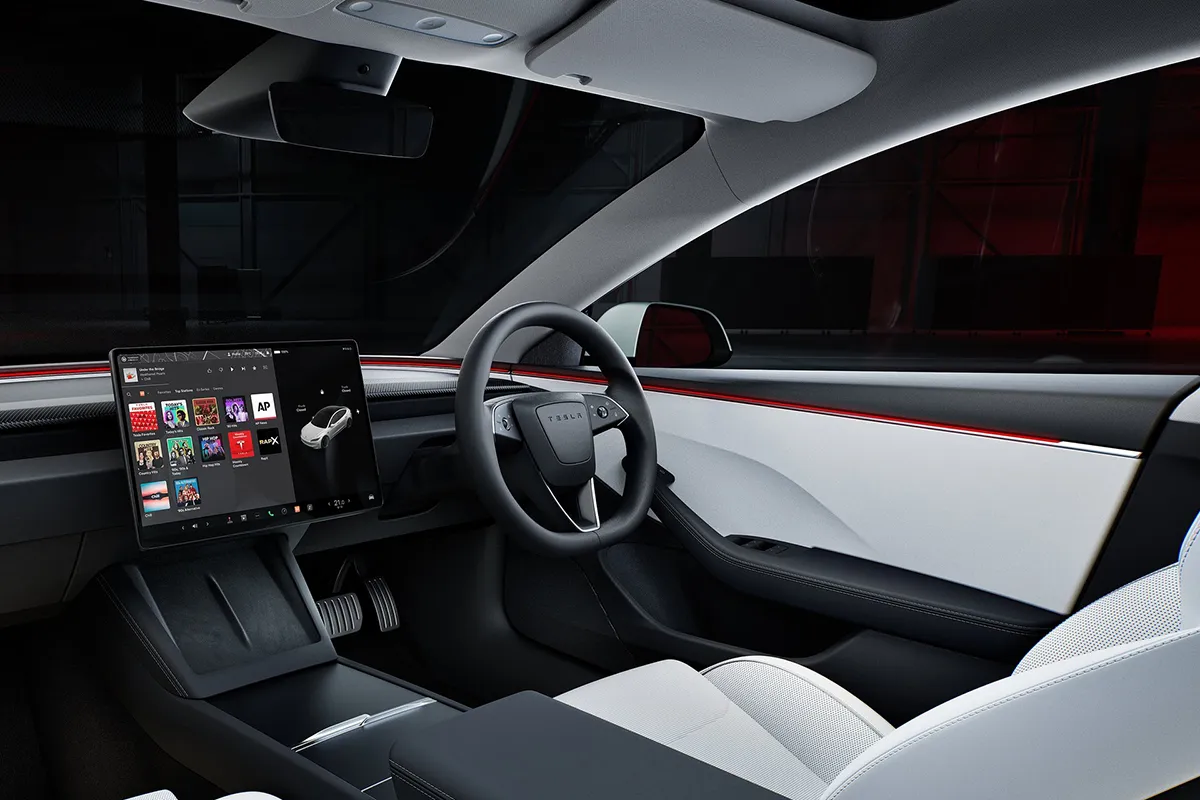
Tesla’s cabin is a deliberate departure from convention. No stalks: indicators and wipers use buttons on the steering wheel, gear selection is a touchscreen swipe. The 15.4-inch portrait display manages climate, navigation, mirrors, and media. The software is fast and the interface is polished. The ask is that you adapt to it rather than the other way around. Some buyers find this liberating. Others discover that preference in the car park at three months.
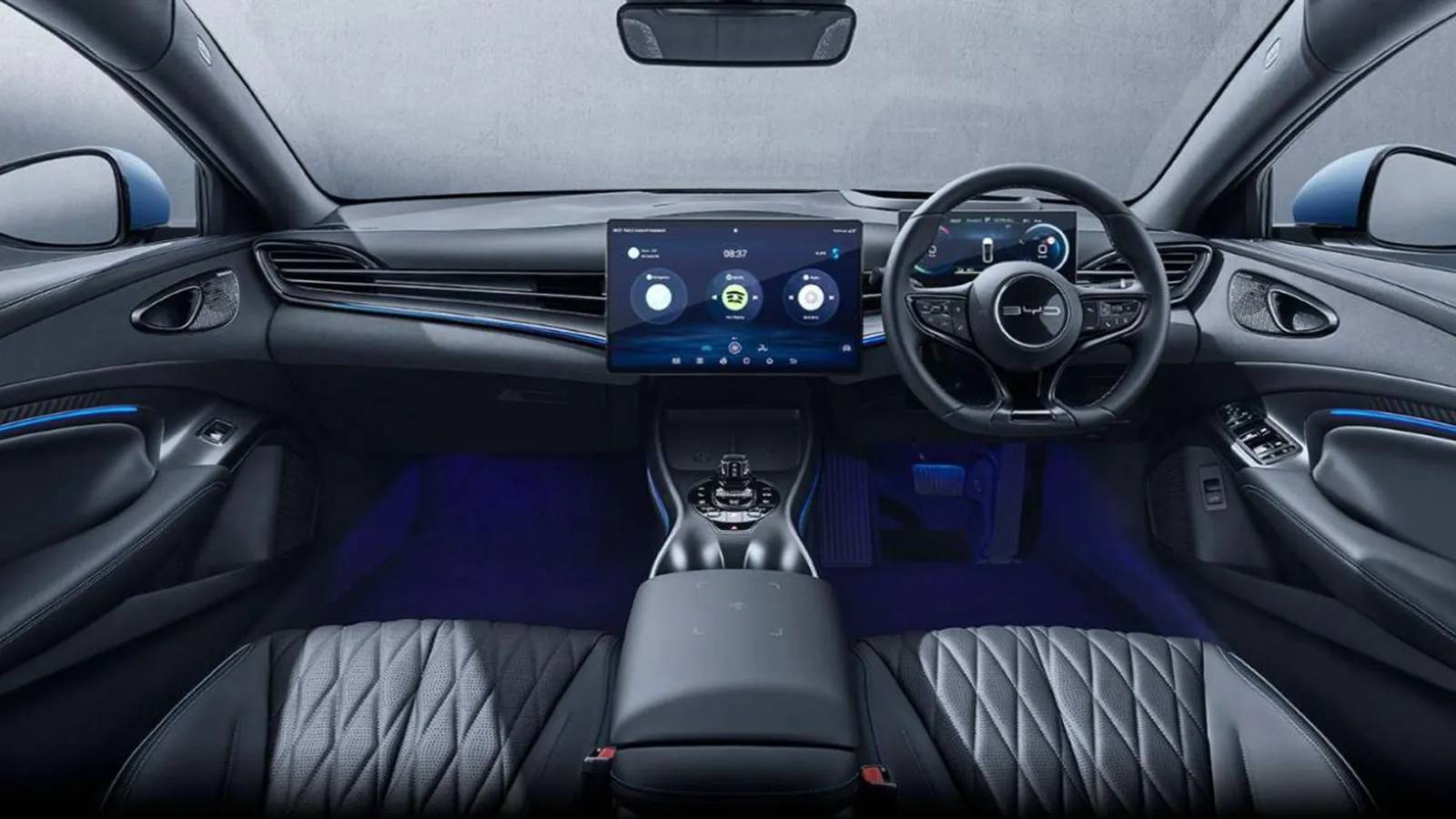
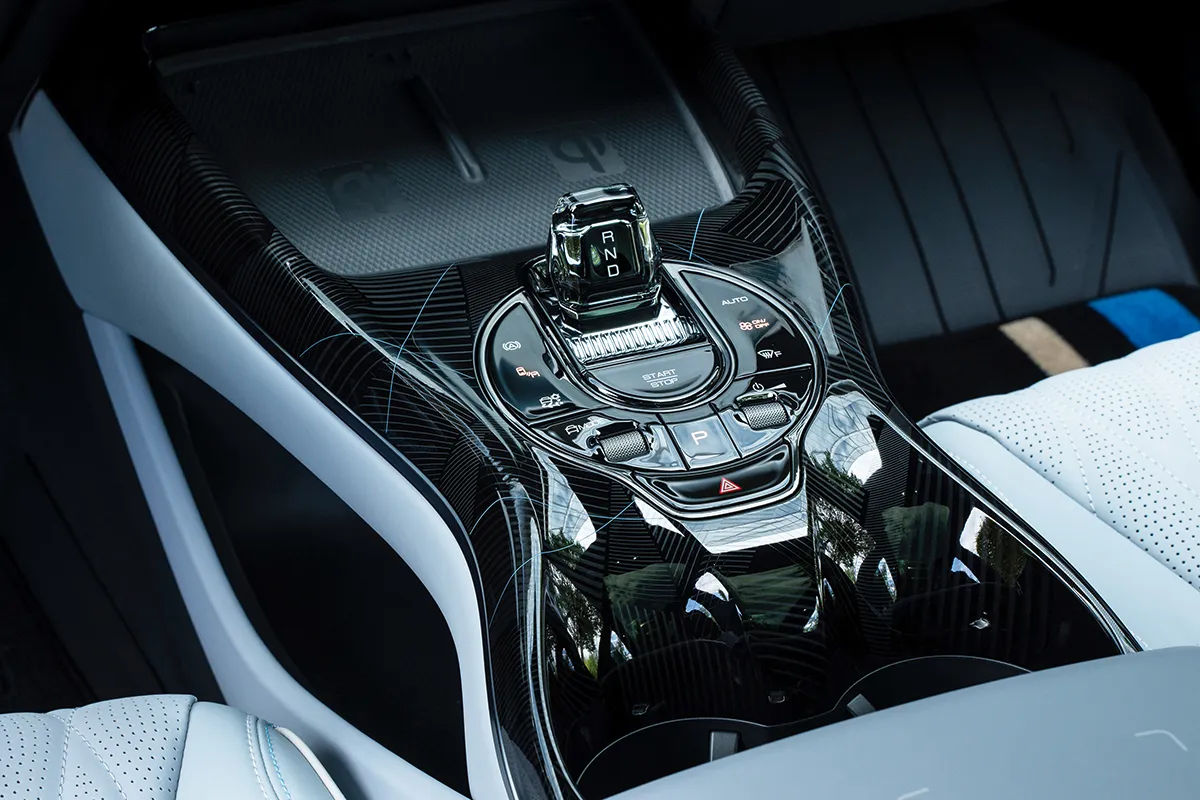
BYD takes the opposite approach. The Seal has physical HVAC controls, a conventional gear selector, and a 15.6-inch screen that rotates between portrait and landscape. The 12-speaker Dynaudio audio performs well above the price point. Rear legroom is genuinely spacious. The interior reads as premium in the way buyers expecting $62,000 expect: soft-touch materials, clean trim, a layout that needs no instruction.
Physical buttons are returning to car cabins across the industry, as buyers push back against touchscreen-only interiors. BYD has positioned itself well for that shift.
Tesla’s sustained advantage is software depth. Over-the-air updates add features to existing cars that weren’t present at delivery. BYD’s driver assistance system is improving, but local media has noted the lane-keeping system can over-react to oncoming traffic in Australian conditions. Tesla’s Autopilot behaves more consistently on local roads. Neither car offers hands-free motorway driving. Neither should be treated as if it does.
What These Cars Can Actually Carry
Can either car handle a trailer?
The BYD Seal Performance cannot tow. Not advisory light: the braked towing rating is zero. Tesla’s Model 3 Performance offers towing capability with the optional towbar. Boot space runs 594 litres in the rear plus 88 litres in the waterproof frunk, 682 litres total, against BYD’s 400 litres rear boot plus 72 litres in the frunk
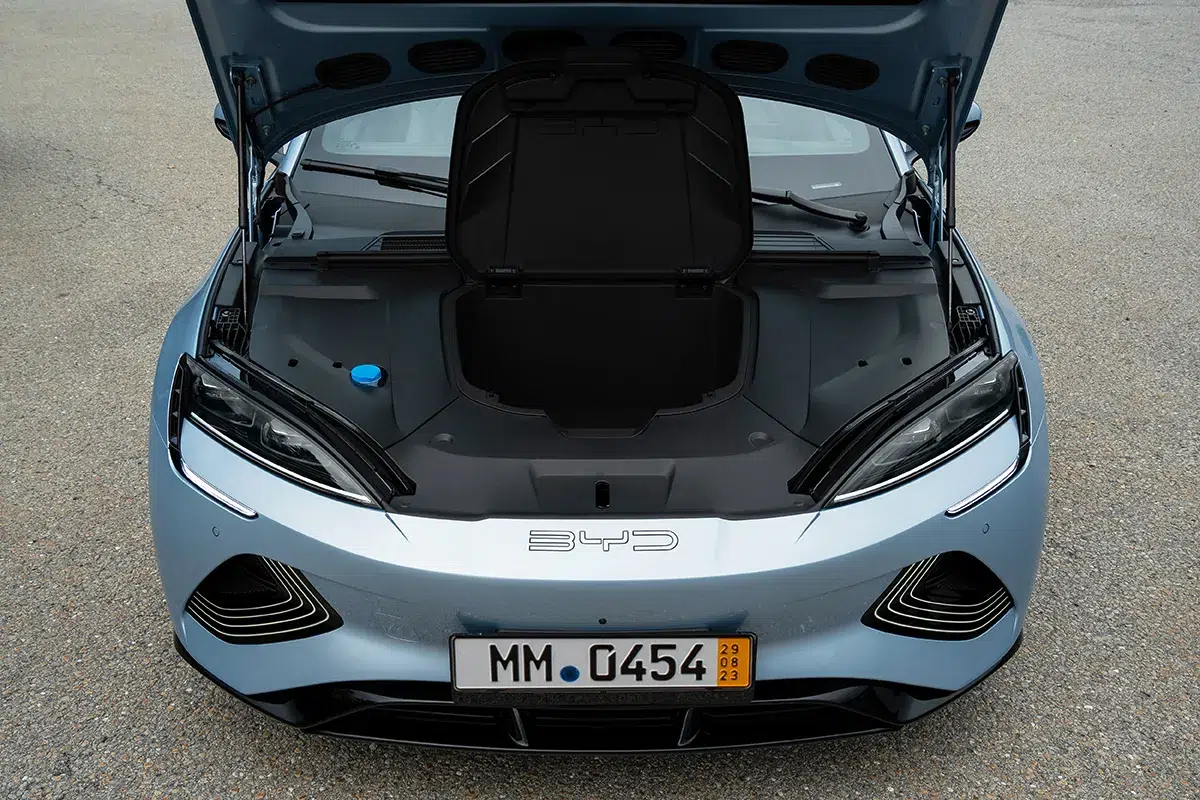
The Seal’s zero towing figure is not a soft recommendation. BYD Australia lists it plainly on the specification page: the Seal Performance cannot tow. A box trailer, a jet ski, a bike on a towball-mounted carrier: none of it. If towing is part of your life even once a year, the BYD is not the car.
Tesla’s storage lead is still meaningful. The frunk is waterproof and drainable, against BYD’s 72-litre front storage which is not. At 682 litres combined versus 472, Tesla carries more. The frunk is more usable for wet gear or groceries you’d rather keep separate.
The Charging Gap Is Real
Which EV handles the Melbourne to Sydney run better?
Tesla’s Supercharger network covers Australia’s main driving corridors with a consistency that CCS2 public networks are still building toward. At 250kW peak versus 150kW, and roughly 18 minutes versus 30 minutes for a 10–80% charge, the Model 3 Performance spends less time at chargers on every multi-stop drive.
The Supercharger network in Australia now covers capital-to-capital routes as well as regional corridors the broader EV market is expanding into. Superchargers operate at consistent speeds and are purpose-built for Tesla vehicles. Third-party networks like Chargefox and Evie are expanding for CCS2 vehicles including the Seal, and the infrastructure gap is narrowing. On routes outside major cities, it is not yet closed.
BYD’s LFP battery chemistry offers a different kind of range confidence. Charging to 100% every night without penalty is a genuine daily-use advantage for the Seal owner who plugs in at home. Tesla recommends keeping the battery at 80–90% for everyday use and raising to 100% for long trips. BYD owners can ignore that entirely.
On a Melbourne-to-Sydney drive requiring three charging stops, the 12-minute difference per session adds 36 minutes to the BYD’s journey, assuming both find chargers at the same rate. On Tesla’s Supercharger network, that availability variable is largely removed. Consistent infrastructure is part of what the $18,910 price premium buys.
The Verdict: Who Should Buy What
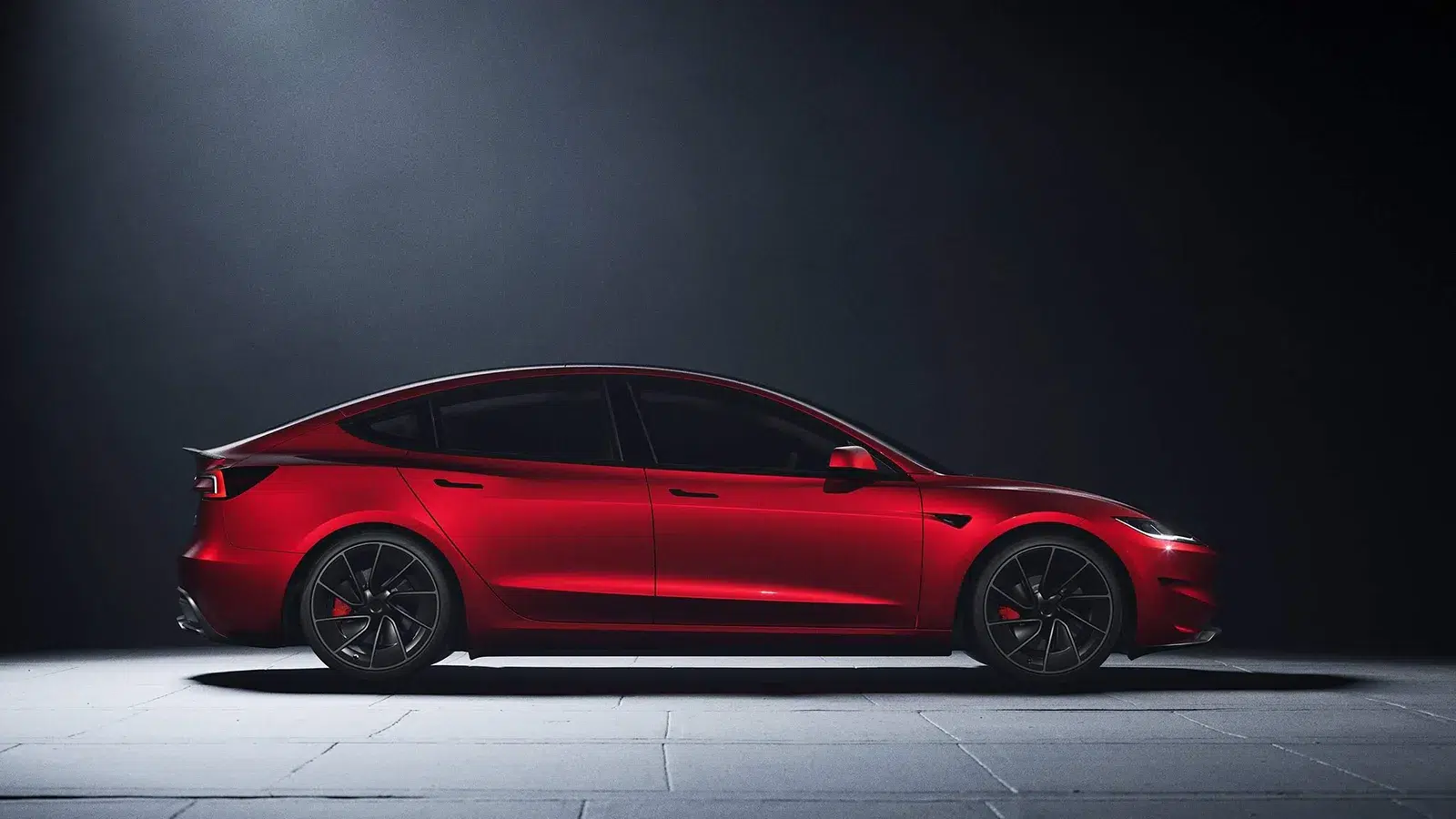
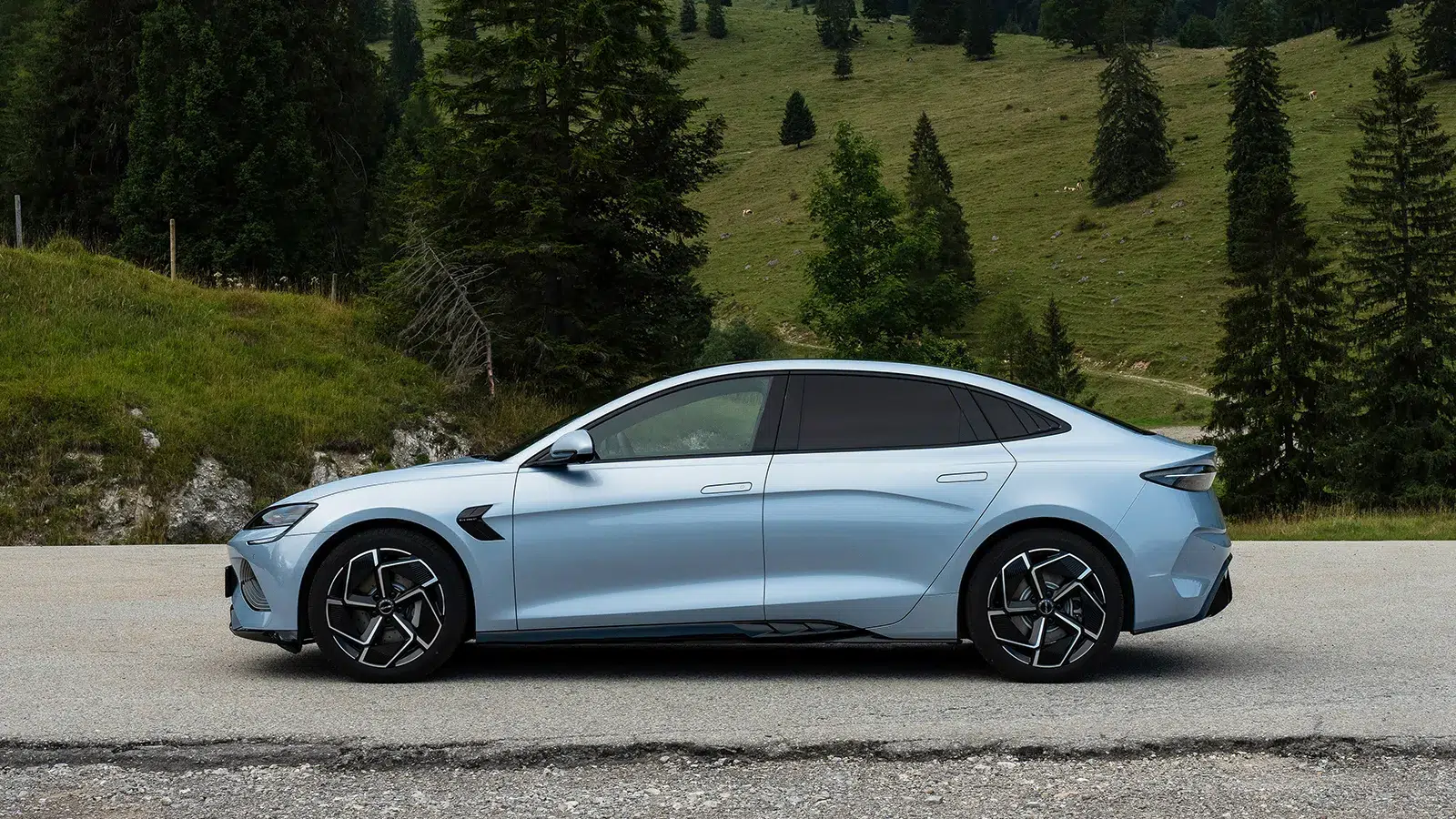
So which one is actually the right car?
Buy the Tesla if you road trip regularly, need the storage, or want towing capability. Buy the BYD if Apple CarPlay or Android Auto is non-negotiable, the lower price is what makes the purchase work, and your driving is mostly urban. If you need to tow anything at all, the BYD’s answer is no.
BYD has already taken second place in Australian new-car sales, behind only Toyota. The Seal is the car making that claim most loudly.
The BYD Seal Performance is the value proposition of the 2026 EV segment. Nearly $19,000 cheaper, it has more raw power, wireless CarPlay and Android Auto, a six-year vehicle warranty against Tesla’s five, and scheduled servicing capped at $2,390 over 8 years and 160,000km. For the buyer who commutes in the city, charges at home overnight, and rarely tackles a regional drive, the charging speed and infrastructure gap is largely academic.
The Tesla earns its premium most clearly on distance. The Supercharger network leads public CCS2 for reliability on regional routes. The 571km WLTP range is genuine cushion. The 18-minute charge time makes stops feel like breaks rather than delays. Add the 682 litres of storage, the towing option, and software that improves over time, and the gap between $61,990 and $80,900 becomes an honest conversation rather than a one-sided one.
Don’t buy the Tesla Performance if Apple CarPlay or Android Auto is non-negotiable: Tesla’s own phone integration is not an equivalent substitute. Don’t buy the BYD if you need to tow, or if you regularly drive routes where CCS2 reliability is uncertain. Don’t buy either car expecting the driver assistance system to drive for you.


