
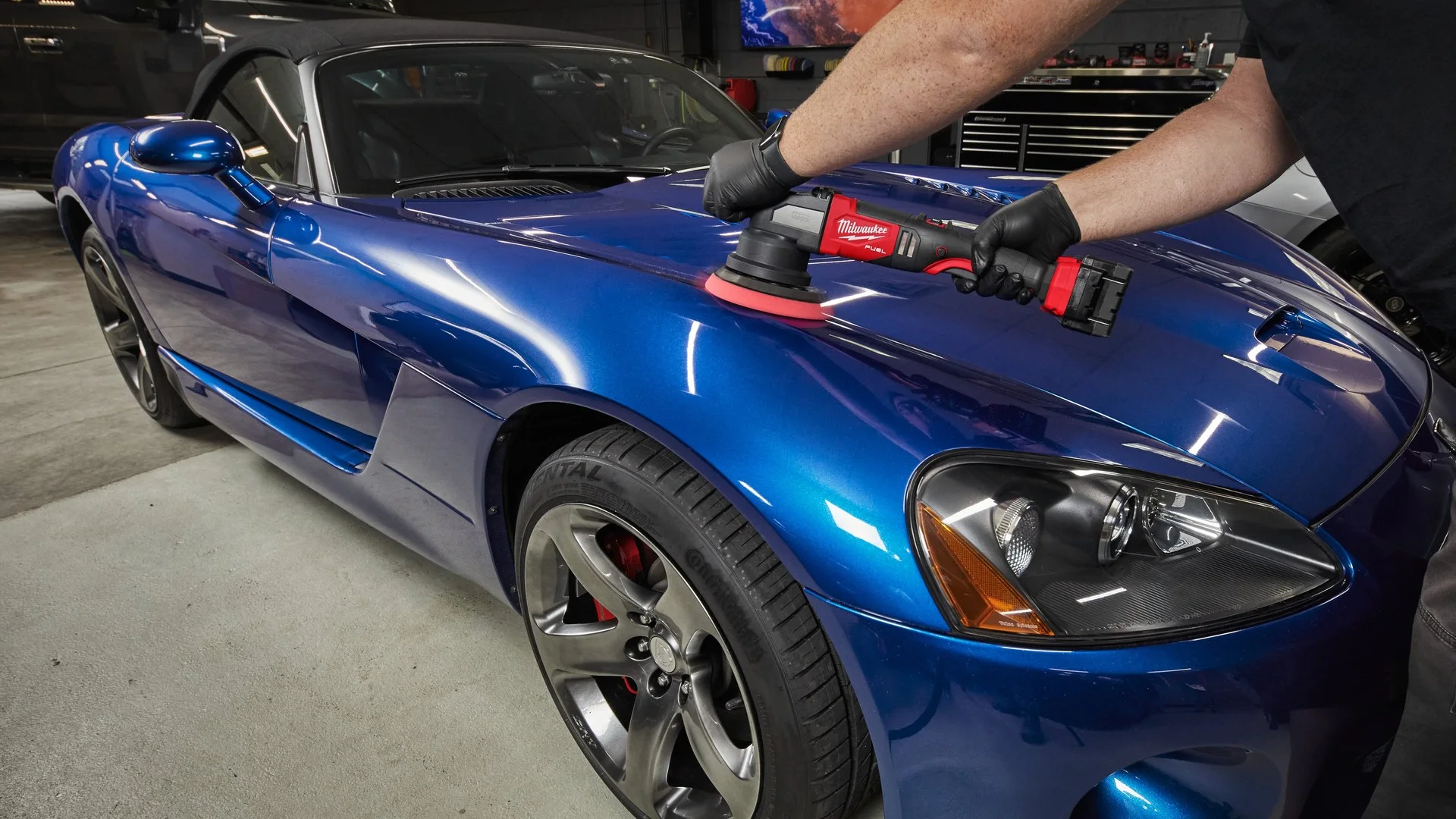

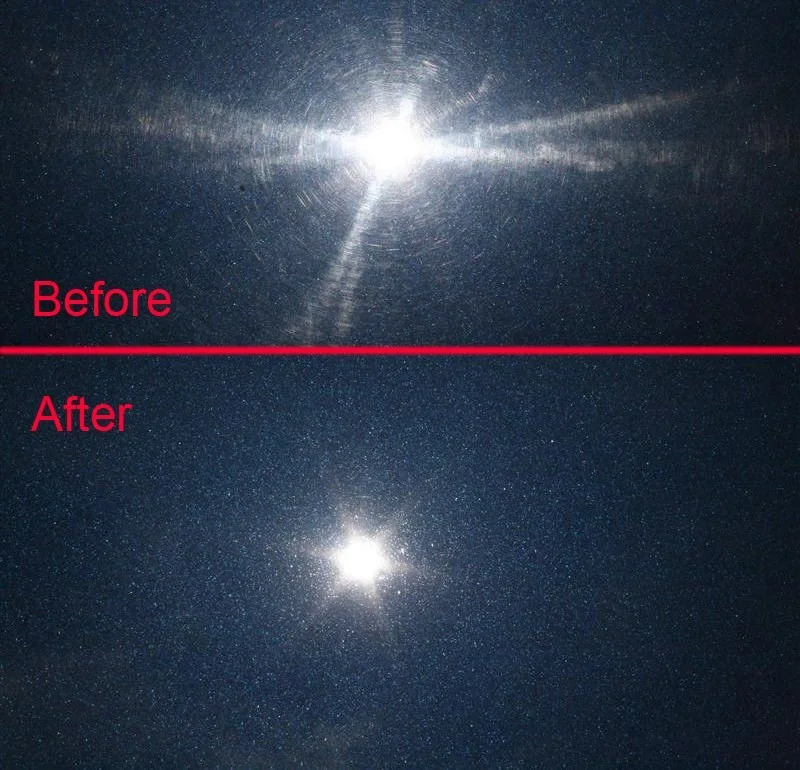
A ceramic coating laid over swirled paint doesn't hide the swirls. It seals them in under a hard gloss. Gtechniq says correction must leave the clear coat flawless before the coating permanently locks in any defects. That's the Saturday most people skip, and a dual action polisher is how you get it back.
We've compared five DA polishers you can buy in Australia now, from a $140 Supercheap machine to a $1,100 Rupes, plus kits that bundle pads and compounds. Prices come from manufacturer and retailer pages, checked in October 2026. Nobody paid to be included.
Which dual action polisher should you buy?
The Maxshine M15 Pro V2 is our pick for most weekend detailers. It pairs a 15mm long throw with 1000W for $329, which is a lot of correction for the money. If budget isn't the issue, the Rupes BigFoot LHR15 Mark V is the benchmark. First-timers on a tight budget can start with the ToolPRO 150mm from Supercheap.
| Polisher | Price | Orbit | Power | Motion | Warranty |
|---|---|---|---|---|---|
| Maxshine M15 Pro V2 | $329 | 15mm | 1000W | Long-throw DA | 12 months |
| Rupes BigFoot LHR15 Mark V | $1,099.95 (kit) | 15mm | 500W | Free-spinning | 5 years, registered |
| ToolPRO 150mm DA 720W | $139.99 | Not published | 720W | Dual action | 3 years |
| Rupes BigFoot Mille LK900E | $1,149.95 (kit) | 5mm | 900W | Forced rotation | Check with retailer |
| Milwaukee M18 FUEL M18FROP1500 | $497 (tool only) | 21mm | 18V cordless | Free-spinning | 5 years (tool) |
Sources: Detailing Shed, Waxit, Supercheap Auto and Repco prices, and Rupes, Milwaukee and Supercheap specifications, checked 16 October 2026. Rupes prices are Waxit's Standard Kit.
Maxshine M15 Pro V2: the one most people should buy
The Maxshine M15 Pro V2 costs $329 at Detailing Shed. It runs a 15mm orbit, 1000W and 2200 to 4800rpm, with a 4m cord and an Australian plug. It takes 5-inch pads on a 125mm plate, the most common size, so pads are easy to find.
Its standout is cut for the money. Rupes says a 15mm throw improves defect removal over large panels, and the Maxshine's 1000W rating is double the Rupes LHR15's 500W. It's the machine for the enthusiast doing two or three cars a year, plus the odd mate's.
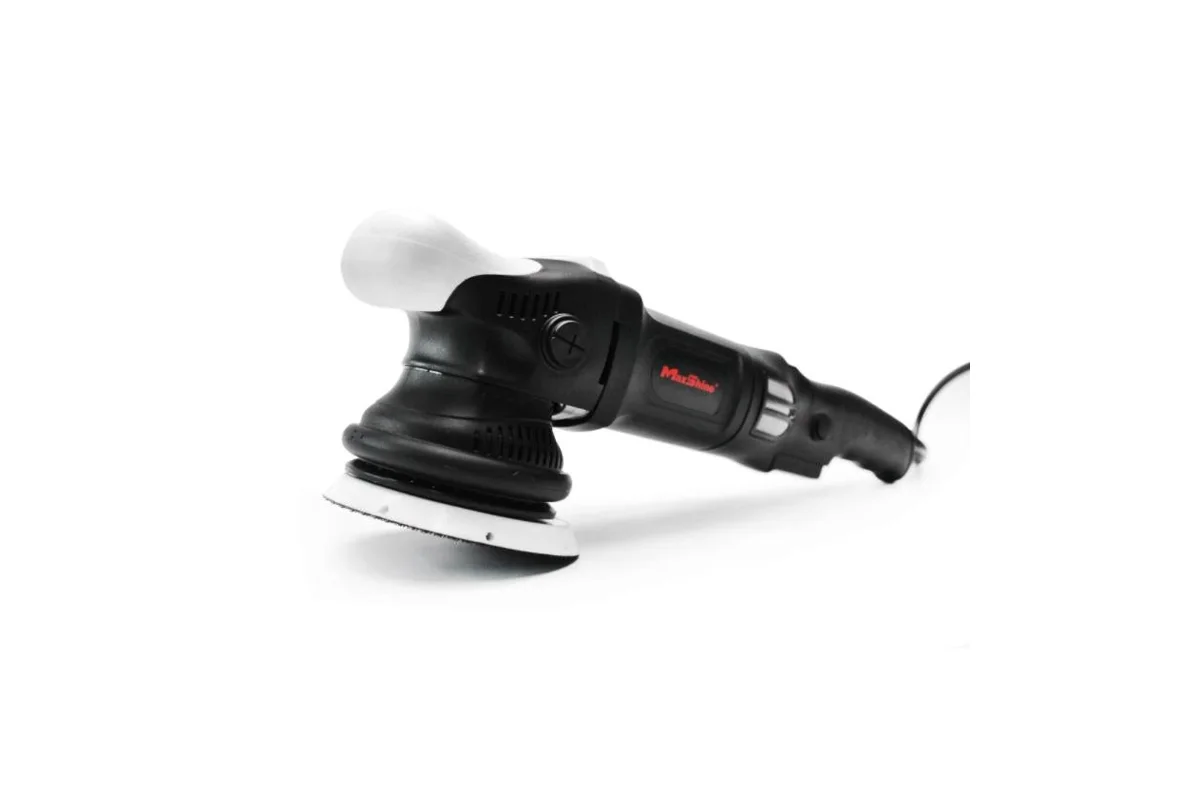
Weakness: a 12-month warranty, against three to five years for most rivals here. If that matters, Meguiar's Australia sells the AutoCosmetica Hornet M15, also 15mm and 1000W, for $369.99 with a three-year warranty. That's $40 well spent if you don't fancy a warranty claim to a retailer.
Rupes BigFoot LHR15 Mark V: the benchmark, at a price
The Rupes LHR15 Mark V is the polisher the professionals measure others against. It runs a 15mm orbit on a 125mm pad, 500W, 3000 to 5200rpm and weighs 2.35kg. Rupes claims a 47 per cent cut in noise and a lower centre of gravity than before. Waxit sells the Standard Kit at $1,099.95.
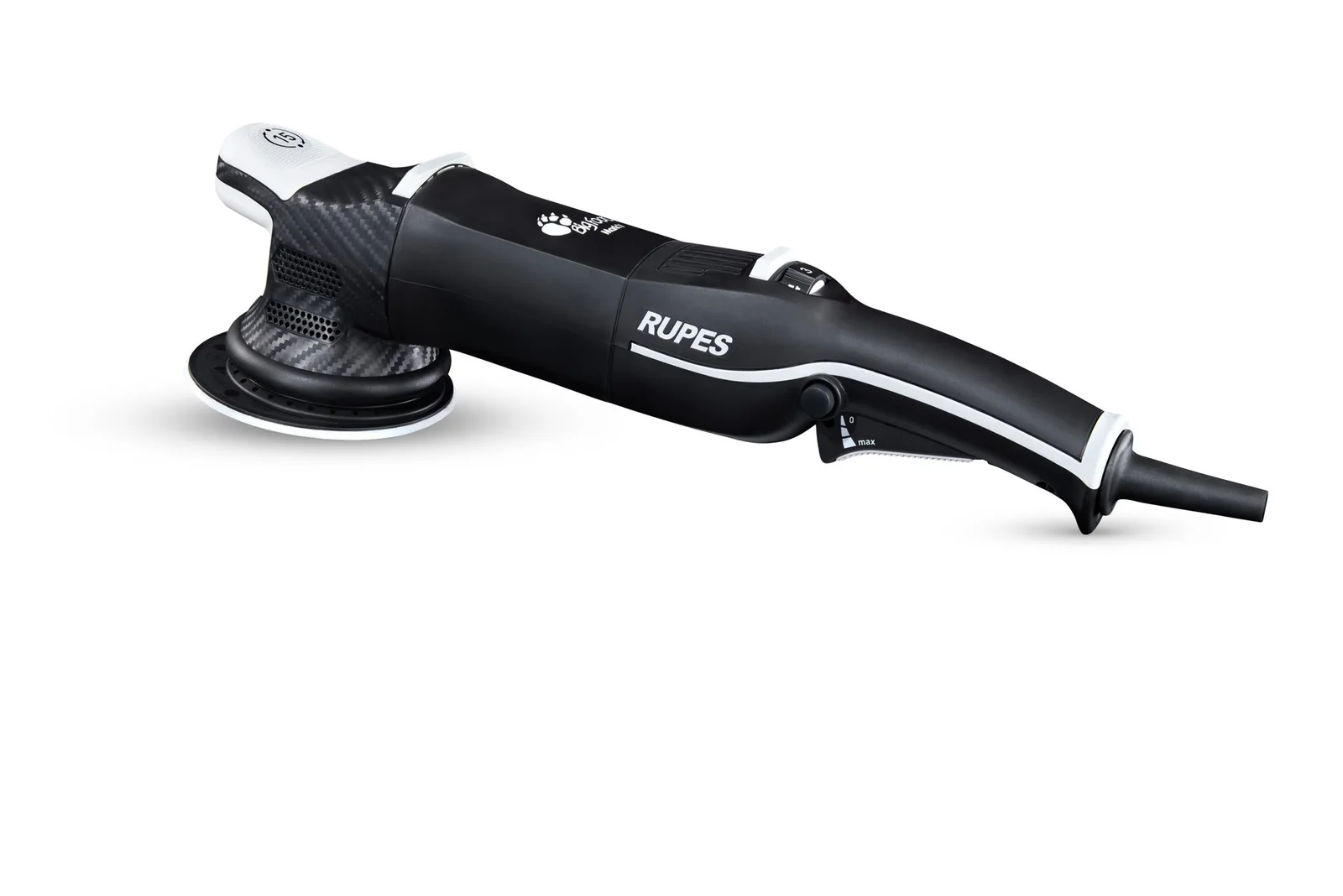
Weakness: price, at about eight times the ToolPRO. Registering it unlocks a five-year warranty. If you want Rupes for less, Supercheap stocks the BigFoot LHR125E for $599. It's 400W rather than 500W, still with a 15mm orbit, and carries 12 months plus four years with online registration.
ToolPRO 150mm DA Polisher: the cheap way in
Supercheap's ToolPRO 150mm 720W costs $139.99, making it the cheapest machine in this guide by a long way. It runs 2100 to 5000rpm on 150mm pads, with soft-start and externally accessible brushes. The three-year warranty beats the Maxshine's, which is unusual at this price.
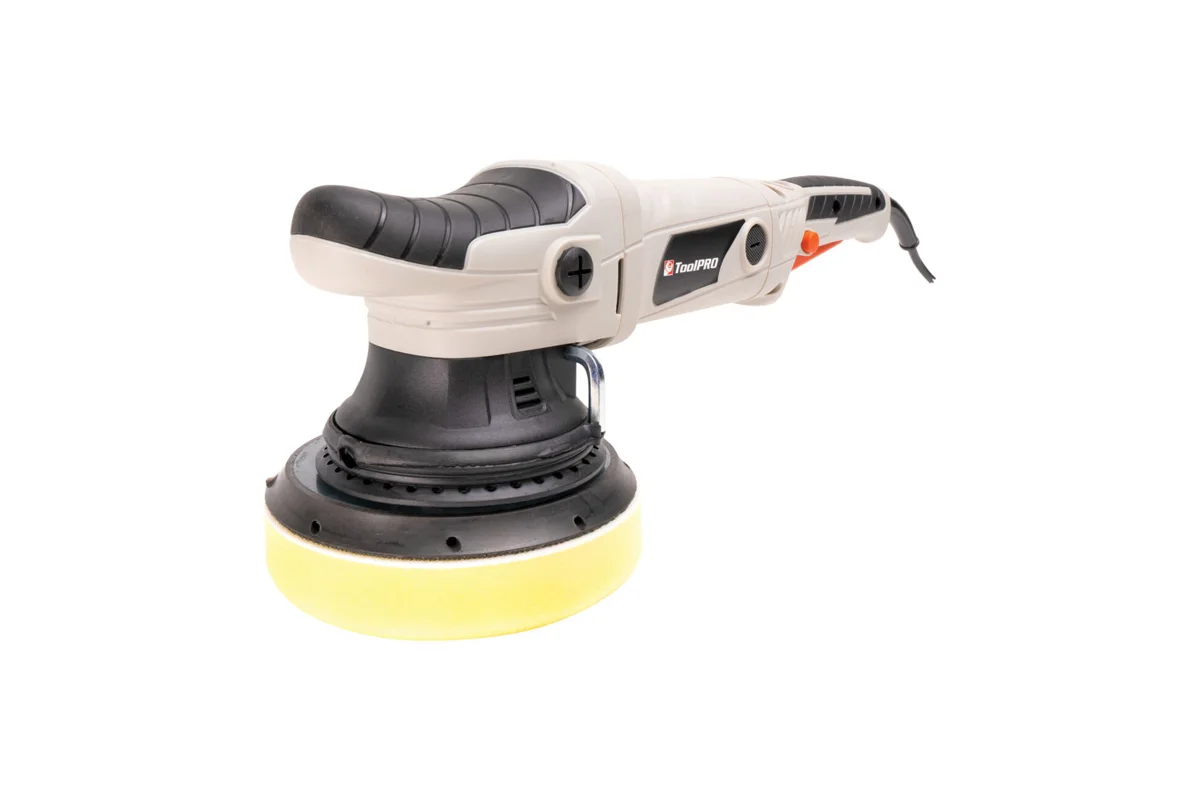
Weakness: Supercheap doesn't publish the orbit size, so you can't compare its cut with the long-throw machines. It ships with one sponge and no compound, and at 2.63kg it's the heaviest corded pick. The $189.99 ToolPRO kit adds foam and wool pads, but still no compound.
Rupes BigFoot Mille LK900E: forced rotation for neglected paint
The Rupes Mille is gear driven, so the pad keeps rotating however hard you lean on it. Rupes says it bridges the gap between a rotary and a free-spinning DA. It runs a 5mm orbit, 900W and weighs 2.8kg. Waxit's $1,149.95 Standard Kit includes coarse and fine compounds and two foam pads.
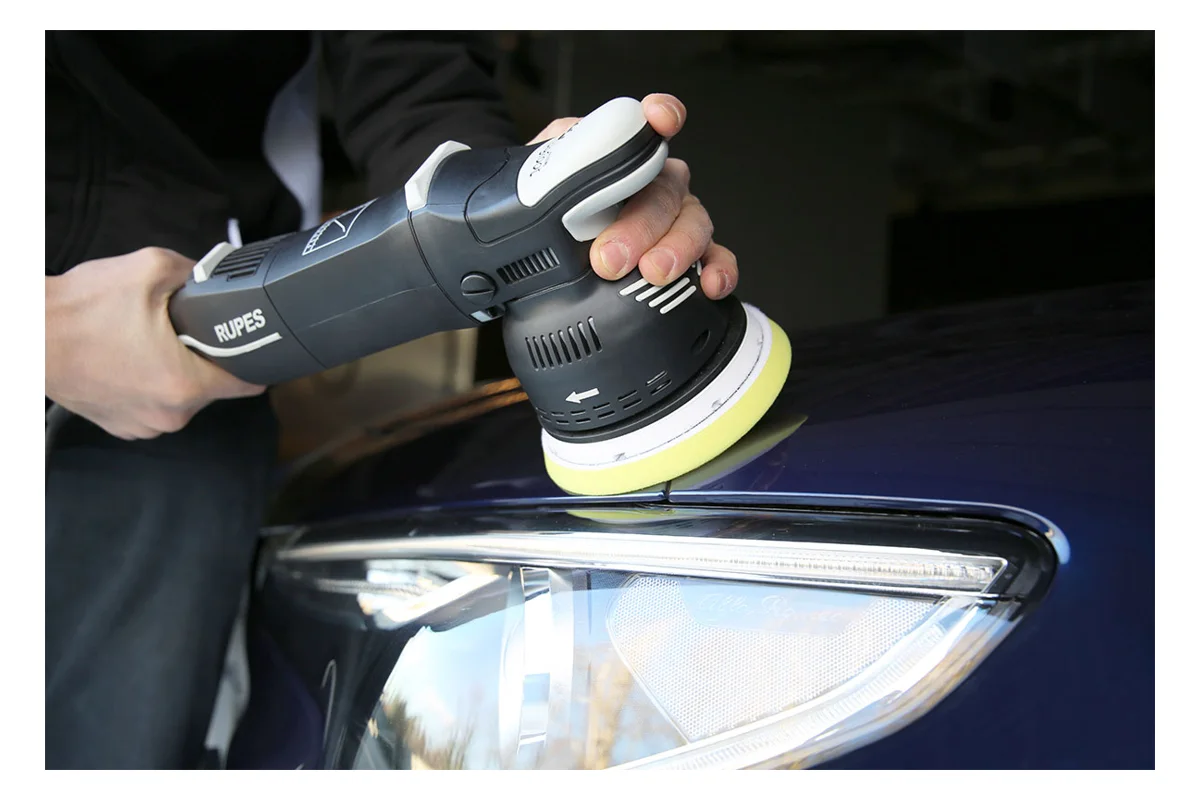
Rupes itself says gear drive is more aggressive and generates more vibration than a random orbital. That's the trade. It suits a used-car flipper facing oxidised, neglected paint, not a first-timer. It also uses Rupes' own six-screw backing plates, so check spares before you buy.
Milwaukee M18 FUEL M18FROP1500: no cord, 21mm throw
Milwaukee's M18 FUEL 150mm polisher is the cordless pick, with a 21mm orbit, 2,400 to 4,500rpm and 2.6kg before the battery. Milwaukee says the battery sits more than 50mm clear of the work surface. Repco lists it at $497, tool only, and the tool carries a five-year warranty.
Weakness: battery and charger cost extra, so it only makes sense if you're already on Milwaukee's M18 platform. A 150mm head with a 21mm throw is also big for pillars, mirrors and bumper corners. It suits a tradie who details the ute in the driveway, not a show-car perfectionist.
Why shouldn't you buy a rotary polisher?
Because there's very little paint to play with. A rotary spins the pad on one axis at speed, building heat in one spot. Meguiar's Australia says a DA avoids the buff trails, burnt-through edges and destroyed badges you risk with a traditional rotary. If you're reaching for a rotary because it's cheaper, put it down.
On these figures, the whole correction budget is about a sixth of a 50-micron clear coat. Edges and body lines start with less, which is why they burn first.
Sources: DeFelsko, How to use paint thickness gauges for automotive detailing (paint gauge maker). Ranges vary by car and panel; DeFelsko notes some roofs carry only 75µm in total. Ratio is our calculation.
Paint gauge maker DeFelsko puts typical clear coat at 35 to 50 microns. Edges are thinner still. Detailing educator Mike Phillips explains that paint flows off high points before it sets, so body lines carry less. Tape them off, and polish up to a hard line, never over it.
Which pad and compound do you pair with it?
Start with the gentlest combination, then step up only if it doesn't work. Rupes' advice is to test a small spot with a fine foam pad and fine compound first. If it doesn't remove the defects, move to a more aggressive pad (foam, then microfibre, then wool) or a coarser compound. If it hazes, step back.
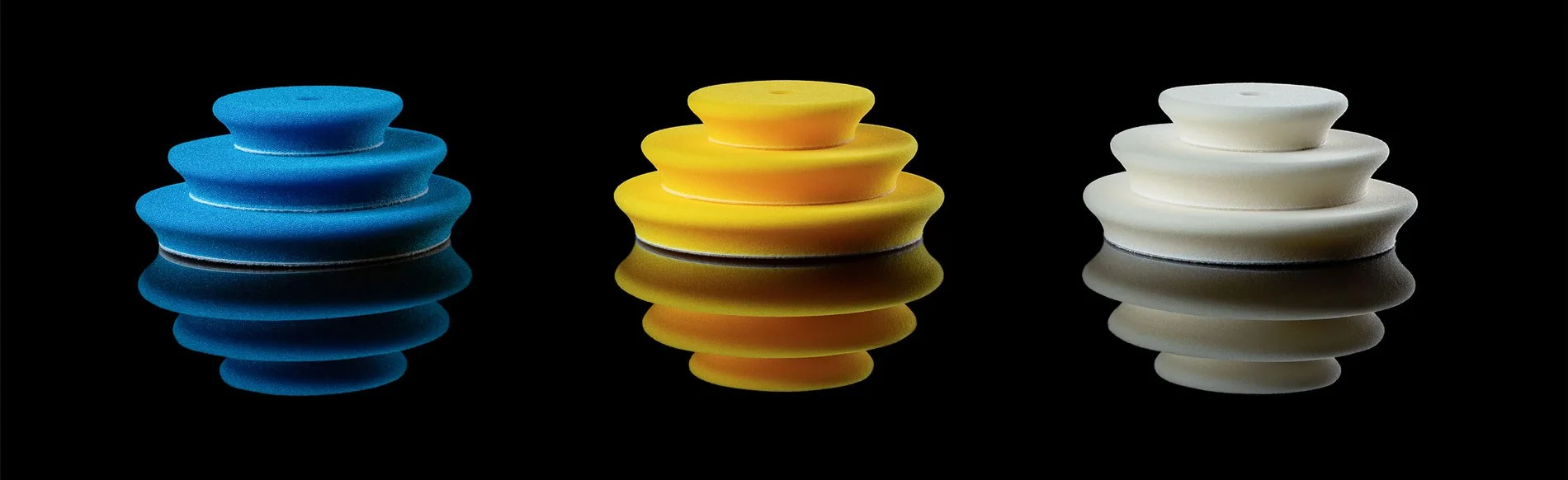
Buying everything together is easiest. Waxit's Enthusiast Car Polishing Kit pairs a 9mm ShineMate DA with seven pads and three Koch Chemie compounds for $359.95, down from $489 at the time of checking. Rupes' LHR15 Deluxe Kit adds compounds, seven pads and a bag for $1,349.95 at Waxit.
Polish first, coat second
Correction is only half the job. Ceramic Pro Australia puts it plainly: the coating can only perform over the surface beneath it. Polish, wipe down, then protect, and our DIY ceramic coating kit guide covers that step. Our detailing kit guide covers the washing beforehand, and our headlight restoration guide the lights.
Here's where we'd spend the money, matched to the paint you actually have and how often you'll use the machine. Buying more machine than your paint needs is easy to do, and the compound and pads matter as much as the motor.
- First car, first polish: ToolPRO 150mm, plus a fine compound and finishing pad.
- Weekend enthusiast: Maxshine M15 Pro V2, or the Hornet M15 for the longer warranty.
- Prepping for a ceramic coat on a car you'll keep: Rupes LHR15 Mark V.
- Flipping cars with tired, oxidised paint: Rupes Mille, with care.
- Already on Milwaukee batteries: M18FROP1500.
Skip the rotary, skip the coating-over-swirls shortcut, and give the paint a Saturday. A DA polisher is the safest way to take back the gloss your car left the factory with, as long as you remember how little clear coat you have to spend.


