

Let’s face facts. Nothing ruins your morning commute down the M1 faster than turning the key and hearing that dreaded rapid-fire clicking sound. Your battery is completely dead, and you are staring down two frustrating choices. You can knock on your neighbour’s door at 6:00 AM begging for a jump, or sit on hold for 40 minutes waiting for roadside assist.
Neither option is ideal, which is exactly why a modern portable jump starter is an essential investment. These compact power packs sit quietly in your glovebox and instantly fire up dead engines without needing a donor vehicle. Forget those massive, 15kg lead-acid jumper boxes from the nineties. Today’s advanced lithium tech packs serious cranking amps into a unit the size of a standard paperback novel.
You do not need mechanical expertise to use one because they are incredibly safe and user-friendly. Let’s look at exactly what you get and why you need one in your car right now.
What You Get for the Money
For roughly $250, you get a compact 1500-amp lithium-ion jump starter capable of instantly cranking a dead 6.0L V8 diesel. These kits include smart jumper cables with reverse polarity protection, integrated 400-lumen LED work lights, and dual USB charging ports.
Let’s talk dollars and sense from a practical standpoint. Entry-level units start around $100 at your local auto parts store. However, you really want to spend between $200 and $300 for reliable, heavy-duty gear that will actually perform. Factoring this into your true cost of owning a car in Australia makes perfect sense because it saves you from expensive call-out fees.
That money buys you a high-density 15,000mAh lithium-ion battery packed into a rugged casing. These premium packs hold their full charge for up to 12 months while sitting in your boot. You absolutely do not want a dead jump starter when your main car battery gives up the ghost.
The cranking numbers matter most when you are stranded. A quality $250 unit delivers roughly 1500 to 2000 peak amps. That is enough grunt to easily crank over a stubborn 4.5L V8 turbo-diesel LandCruiser on a freezing winter morning. Cheaper 500-amp models will start a basic 2.0L petrol hatchback, but they will severely struggle with big diesels.
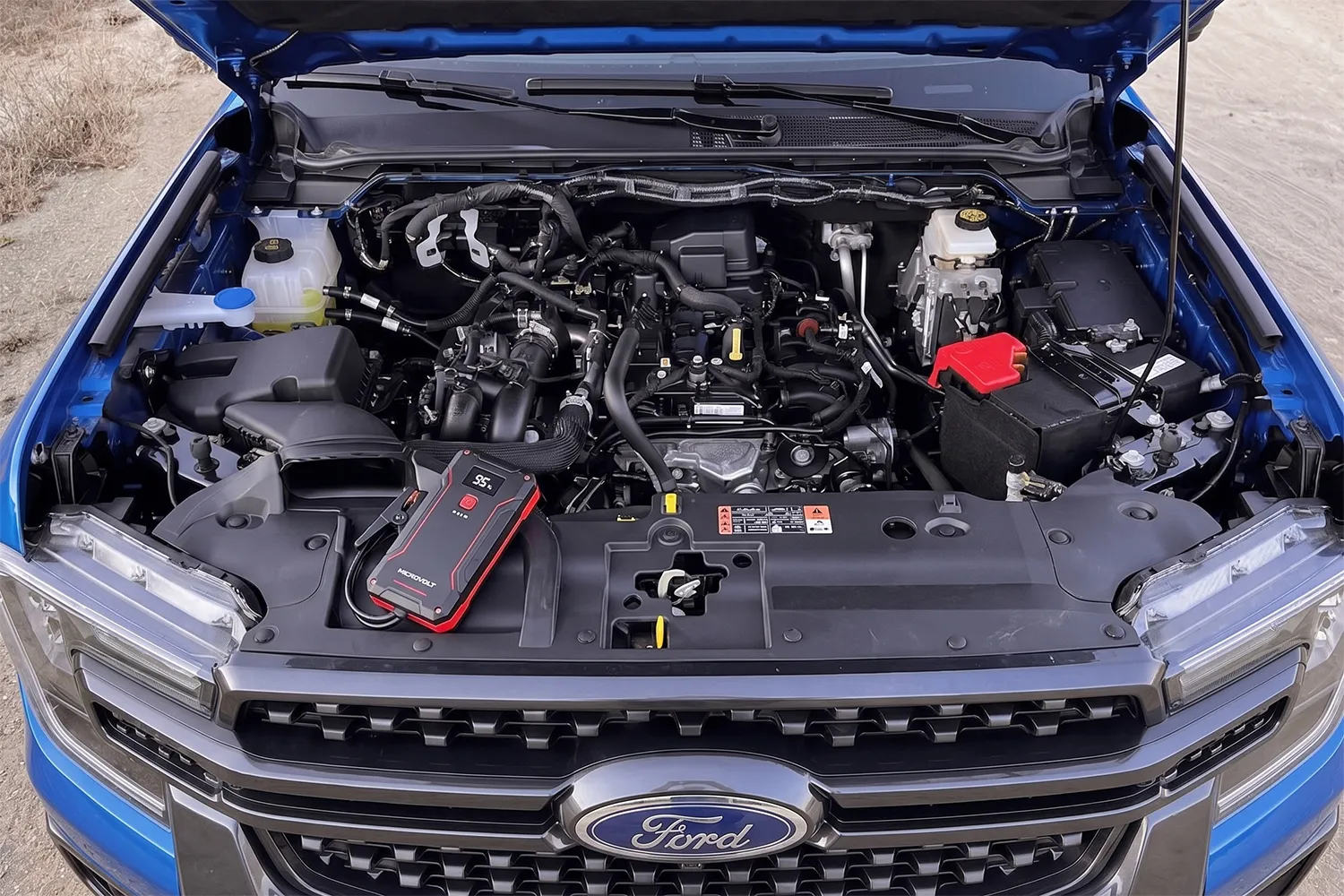
Essential Safety Protections
Modern packs include a vital set of intelligent smart jumper cables. These have built-in reverse polarity protection and spark-proof technology. If you accidentally hook the red clamp to the negative terminal in the dark, it will not fry your car’s expensive ECU. The unit simply beeps loudly and refuses to send any power.
That fool-proof design is brilliant for stressful, late-night emergencies on the side of the road. Most premium packs also feature a built-in 400-lumen LED flashlight to illuminate your workspace. You also get 18W USB-C output charging ports built straight into the side. You can charge a dead smartphone five times over from one fully charged jump pack.
How It Performs in the Real World
Real-world testing proves these rugged lithium packs can easily start a completely flat 3.2L diesel Ranger in under 60 seconds. They provide enough consecutive cranking power for up to 20 jump starts before needing a recharge via a wall socket.
We took a handful of popular units out to the workshop to see how they handle Australian conditions. We tested them on a dead-flat 2020 Ford Ranger 3.2L diesel. In real terms, these packs absolutely deliver on their promises. You plug the smart cables directly into the side of the pack and attach the heavy-duty clamps firmly to the battery.
A solid green light immediately tells you that you have a safe, secure connection. Turn the ignition key, and the engine fires up immediately without any hesitation. It genuinely takes less than 60 seconds from start to finish.
There is absolutely no waiting around for the dead battery to slowly absorb charge like old jumper leads. Adding this device to your first-time owner’s maintenance checklist is a complete no-brainer. It guarantees you will never be stuck waiting for a mate.
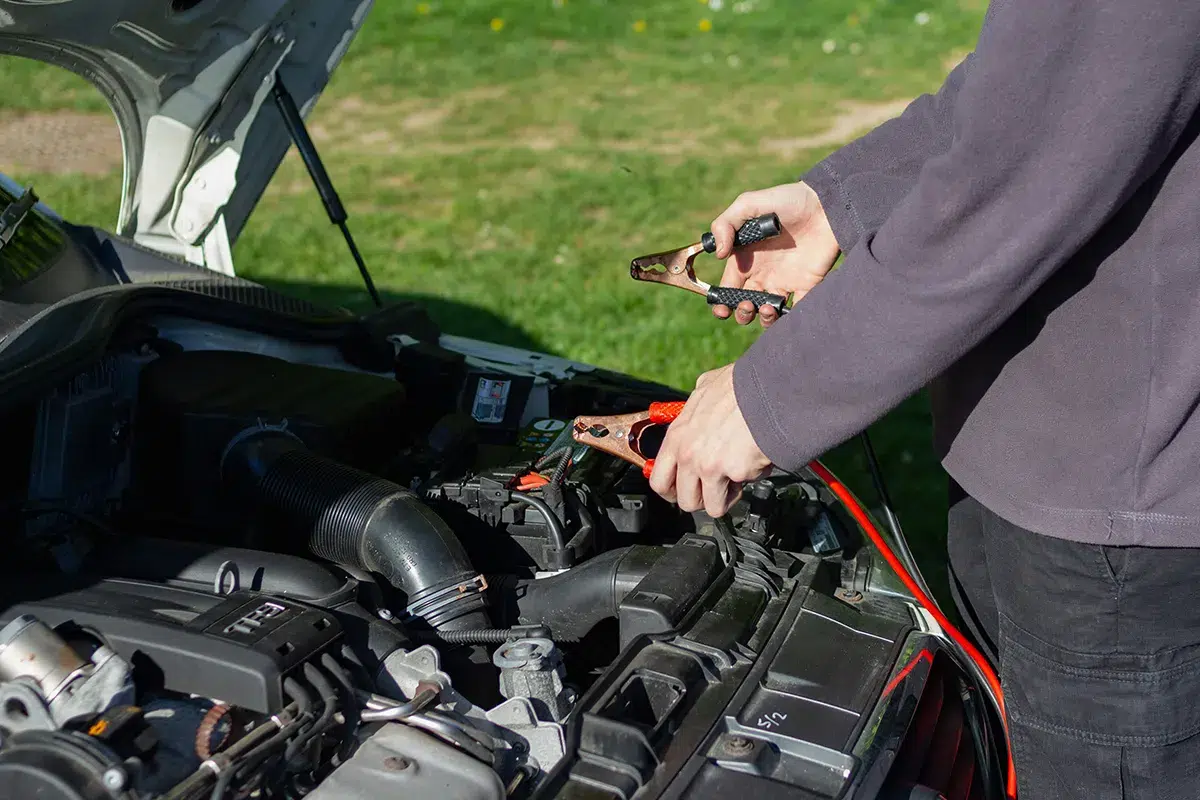
The Critical Boost Function
Sometimes a car battery is completely destroyed and drops well below 2.0 volts. When this happens, the standard smart cables cannot detect the battery to authorise the jump. This is exactly where the manual override, or “Boost” button, comes into play. You hold this button for three seconds to force maximum 12V voltage straight to the clamps.
You must double-check your terminal connections before doing this because the internal safety protections are temporarily disabled. However, this feature is the actual difference between driving away and calling an expensive tow truck. These packs do not lose their punch after just one single use. A robust 15,000mAh unit will comfortably jump start a mid-sized SUV 15 times before draining entirely.
Who Should Buy This
Every single Australian driver should carry a portable jump starter for basic roadside safety and convenience. They are especially critical for 4WD owners travelling remotely, classic car enthusiasts, and anyone driving an older vehicle prone to rapid overnight battery drain.
The short answer is every single driver on Australian roads. It should be a standard part of your everyday glovebox toolkit alongside your tyre pressure gauge. It buys you total independence on the road so you never have to ask a stranger for help.
For older car owners, it is absolute cheap insurance. Classic cars that sit idle for weeks notoriously suffer from severe battery drain. A trusty jump pack saves you from constant mechanical frustration. You can fix the problem in two minutes and get on with your day.
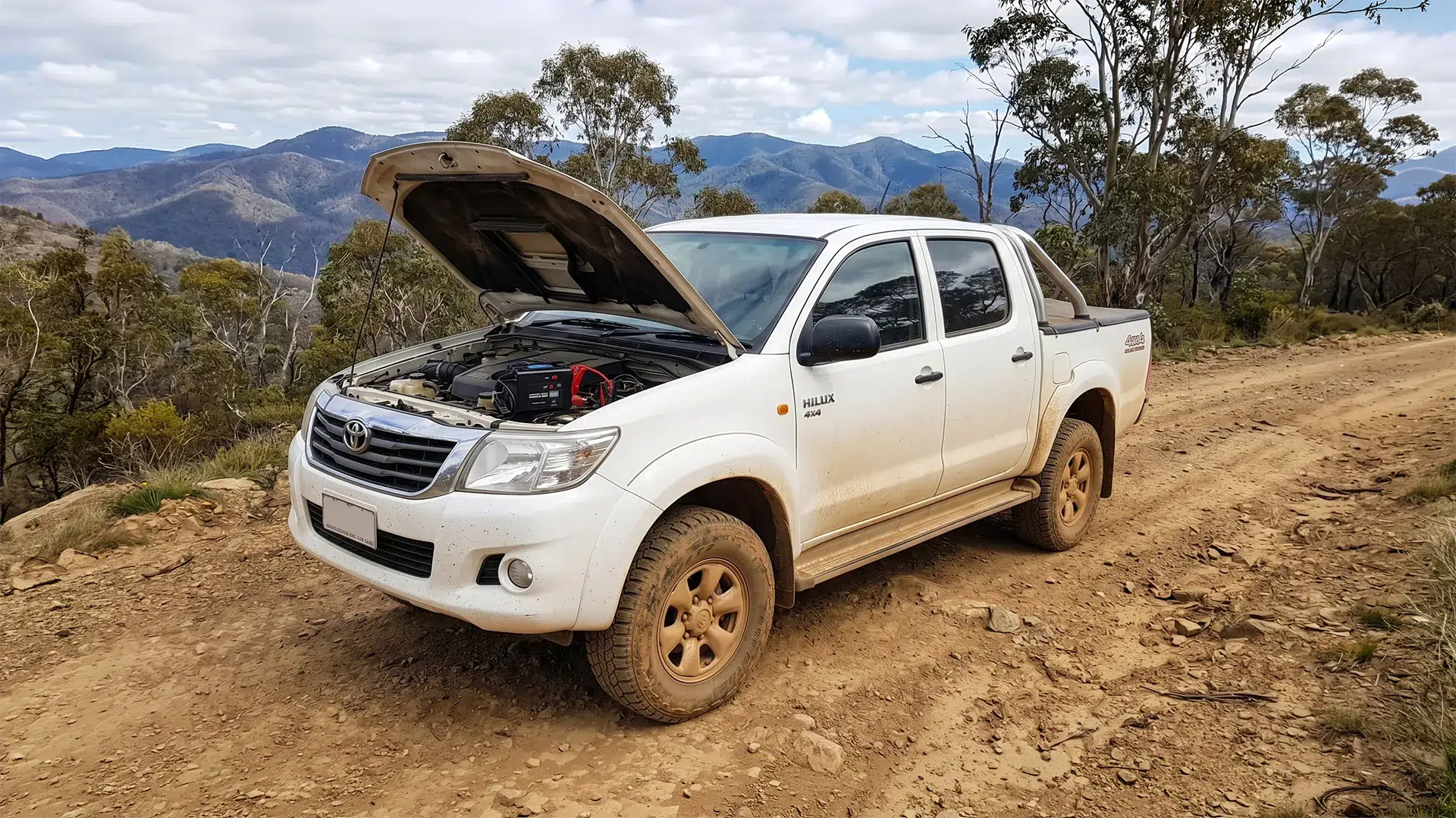
If you drive a 4WD, this gear is entirely non-negotiable. Imagine camping way out past Oodnadatta or tackling the steep tracks detailed in our Blue Rag Range Track Guide. You accidentally leave your camp fridge running overnight, and your main cranking battery dies completely. A portable jumper pack gets you out of serious trouble instantly.
The bottom line is incredibly simple. A $250 portable jump starter is the most useful piece of emergency gear you can buy. Do not wait for your primary battery to fail before getting one.


