

Depreciation never sends you an invoice. That is exactly why most Australians underestimate what their car costs them, often by four figures a year. The registration notice arrives, the insurance renewal arrives, the fuel receipts pile up in the console. The single largest cost of ownership generates no bill at all.
Run the verified 2026 figures and a $45,000 mid-size petrol SUV in a capital city costs roughly $10,700 a year owned outright. Put it on finance and $14,000 is realistic. Here is where every dollar goes, with a named Australian source behind each number.
The Weekly Figure Everyone Quotes, and the Cost It Hides
The Australian Automobile Association’s Transport Affordability Index put the typical capital-city household’s transport bill at $468.52 a week in the June 2025 quarter, with loan repayments alone accounting for $212.09 of that. It covers fuel, insurance, registration, servicing, tyres and tolls. It excludes depreciation, and the AAA says so plainly.
Depreciation Is the Bill Nobody Posts You
Depreciation is the largest single ownership cost for almost every new car, and the 2026 gap between fuel types is stark. The Australian Automotive Dealer Association’s 2025 Annual Automotive Insights Report, drawing on AutoGrab data, found a one-year-old EV loses 25 per cent of its value. Petrol loses 11.5 per cent, diesel 5 per cent, hybrids just 1.7 per cent.
Run it forward and the picture worsens for electric. The same data has the average EV retaining 68.7 per cent after two years and 60.3 per cent after three, against 92.4 per cent for a hybrid at the same mark. On a $60,000 car that difference is close to $19,000.
Timing matters as much as the badge. Buying a run-out model at a discount means somebody else has already absorbed the brutal first-year hit, which is the whole argument for working out whether a clearance car beats waiting for the update.
Which cars actually hold their money?
Dual-cab utes and the Toyota LandCruiser remain the strongest performers, and Toyota and Ford holds value better than the market generally. Electric cars have been weakest, largely because Tesla’s repeated price cuts reprice used stock overnight. Pickles and Datium Insights data from September 2025 had two-year-old Model 3s retaining 54 per cent, though that gap narrowed through 2026.
Rego and CTP: The Same Car, Three Very Different Bills
Registration is the one cost set purely by postcode. Victoria bundles injury cover into the TAC charge, New South Wales makes you buy a separate Green Slip, and Queensland prices registration by cylinder count. For a four-cylinder car on 12 months in 2026, the totals land closer together than the structures suggest.
Registration Costs by State
Victoria’s zoning is why an identical car swings almost $500 between the bush and metropolitan Melbourne, and its $100 EV registration discount ended on 1 January 2026. On road user charges, ignore anything written before late 2023. The High Court struck down Victoria’s per-kilometre EV charge in Vanderstock v Victoria, and no state has replaced it.
Insurance Went Up While You Were Not Looking
Comprehensive cover is the line item that moved hardest. Canstar’s 2026 Car Insurance Star Ratings, using premium data from late May 2026, put the national average at roughly $2,460 a year, up 4.7 per cent. Victorians pay the most at around $3,293 and Tasmanians the least at $2,014.
Age drives the number harder than the car does, with Canstar putting males under 25 at $3,020 against $1,260 for the over-50s. The switching saving is the part everyone ignores: the average five-star policy came in at $1,809, roughly $651 under the market. Electric owners face premiums climbing faster than the petrol equivalent.
Fuel: The Windscreen Sticker Is Optimistic
That combined-cycle figure on the windscreen is a laboratory result. The Australian Automobile Association’s Real-World Testing Program reported in February 2026 that of 141 petrol, diesel and hybrid vehicles tested on road, 76 per cent used more fuel than their official figures. The GWM Tank 300 was worst at 25 per cent over, 11.9 litres per 100km against a claimed 9.5.
So budget on the real number. Add at least 10 per cent to the claimed consumption, more for a heavy SUV, because real-world testing keeps exposing optimistic factory claims. At 14,000km a year and $2.00 a litre that is about $2,450, though a temporary fuel excise cut from April 2026 has made annual averages unreliable.
Servicing Is Cheap Until the Interval Is Not
Capped-price servicing made the scheduled cost predictable, and the interval now matters more than the price. Toyota’s Service Advantage covers the Corolla and RAV4 at 12 months or 15,000km, around $250 and $270 a visit on 2025 dealer pricing. The HiLux runs 6 months or 10,000km, which doubles the visits.
Mazda sits nearer $350 to $385 a service, Kia lands about $418 for a Cerato, and BMW asks $2,575 for five years on a 3 Series. A diesel dual-cab on a six-month cycle is the quiet budget killer, as the HiLux service maths makes clear. The Electric Vehicle Council has EV owners saving $300 to $400 a year here.
Tyres and the wear items that sneak up
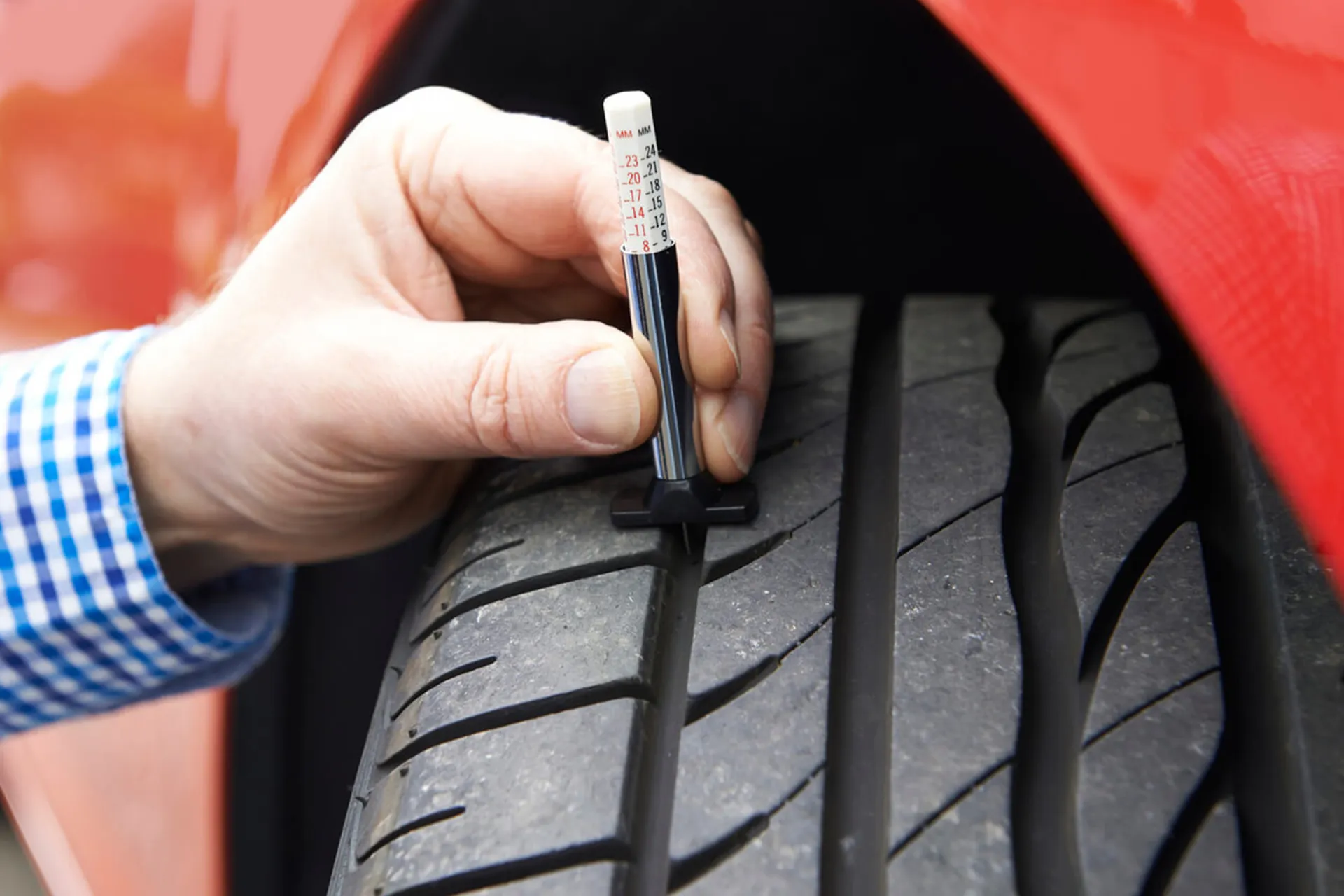
Tyres get forgotten because they arrive every third year rather than every twelve months. A set for a small car runs roughly $480 to $720, a medium SUV $720 to $1,120, and a large 4WD or performance car from $1,000 well past $2,000 once you are on 20-inch rims.
Bridgestone Australia puts typical passenger tyre life at 40,000 to 80,000km, with performance rubber often under 20,000. On a medium SUV doing 14,000km a year, budget $250 to $400 annually, and remember that the grip-versus-life trade-off changes the sums considerably.
The Tax Rules Most Buyers Never Use
If any part of your driving is work-related, the Australian Taxation Office rate is money left on the table. The cents-per-kilometre rate is 88 cents for 2025-26 and 91 cents for 2026-27, capped at 5,000 work kilometres per car. Above that ceiling, a 12-week logbook is the only sensible route.
The bigger lever is the fringe benefits tax exemption on electric cars, which makes a novated lease markedly cheaper for salaried buyers. Eligibility requires the car to sit under the luxury car tax fuel-efficient threshold, $91,661 for 2026-27. Plug-in hybrids lost eligibility on 1 April 2025, and the fuel-efficient definition tightened to 3.5 litres per 100km that July.
One trap worth naming. A novated lease leaves you personally liable for the residual, set at about 28 per cent of cost after five years, against whatever the car is actually worth by then. On a fast-depreciating EV, that gap is the number to model before the weekly payment.
Petrol, Hybrid or Electric: Where the Cents Land
Charging at home is the entire electric cost advantage, and it evaporates at a public fast charger. A mid-size EV using 16 to 18kWh per 100km costs about $5 to $7 on a standard tariff and $3 to $4 on an off-peak plan. Petrol at 7.5L/100km costs $14 to $15. Public DC charging lands between $8 and $12.
Which makes the honest advice unglamorous. Without a home charger the running-cost case weakens sharply and a hybrid is usually the better financial answer, helped by the strongest resale in the market. Two years of real electric ownership shows where the savings actually turn up.
What a $45,000 SUV Actually Costs a Year
Assemble the verified figures for a $45,000 mid-size petrol SUV in a capital city, driven 14,000km a year and owned outright, and the total lands near $10,700. Depreciation takes the biggest slice at roughly $4,500, averaged across a five-year hold rather than front-loaded into the first twelve months.
Annual SUV Ownership Cost
Based on a $45,000 vehicle driven 14,000 km per year in Australia.
Drive a small hatch 10,000km a year and shop your insurance properly and the same exercise lands nearer $6,500. Buy a European SUV on finance at the current average secured rate of about 7.5 per cent and $18,000 is not hard to reach. The range is enormous because almost all of it is chosen.
Where the Money Is Actually Saved
The savings that matter are structural, not behavioural. Choosing a car that holds its value beats every fuel-saving trick combined, because depreciation dwarfs fuel on any normal ownership pattern. Shopping your insurance annually is worth around $650 on Canstar’s own numbers. Most of the rest is rounding error.
Now the things not worth doing. Chasing cheap fuel across three suburbs saves a few dollars a tank and burns some of it getting there. Extended warranties on a reliable Japanese car rarely pay for themselves. And do not buy a diesel dual-cab for a school run, because that six-month service cycle punishes low-kilometre owners hardest.
First-time buyers get far more back from getting the purchase right than from optimising the running costs, which is where a sensible used option under $10,000 earns its keep. A cheap car that starts every morning beats a clever one that quietly sheds value.
The sticker price is the smallest decision you make. The real cost is set by what the car is worth in five years, what your postcode does to the premium, and how often the workshop wants to see you. Get those three right and everything else is noise.


