
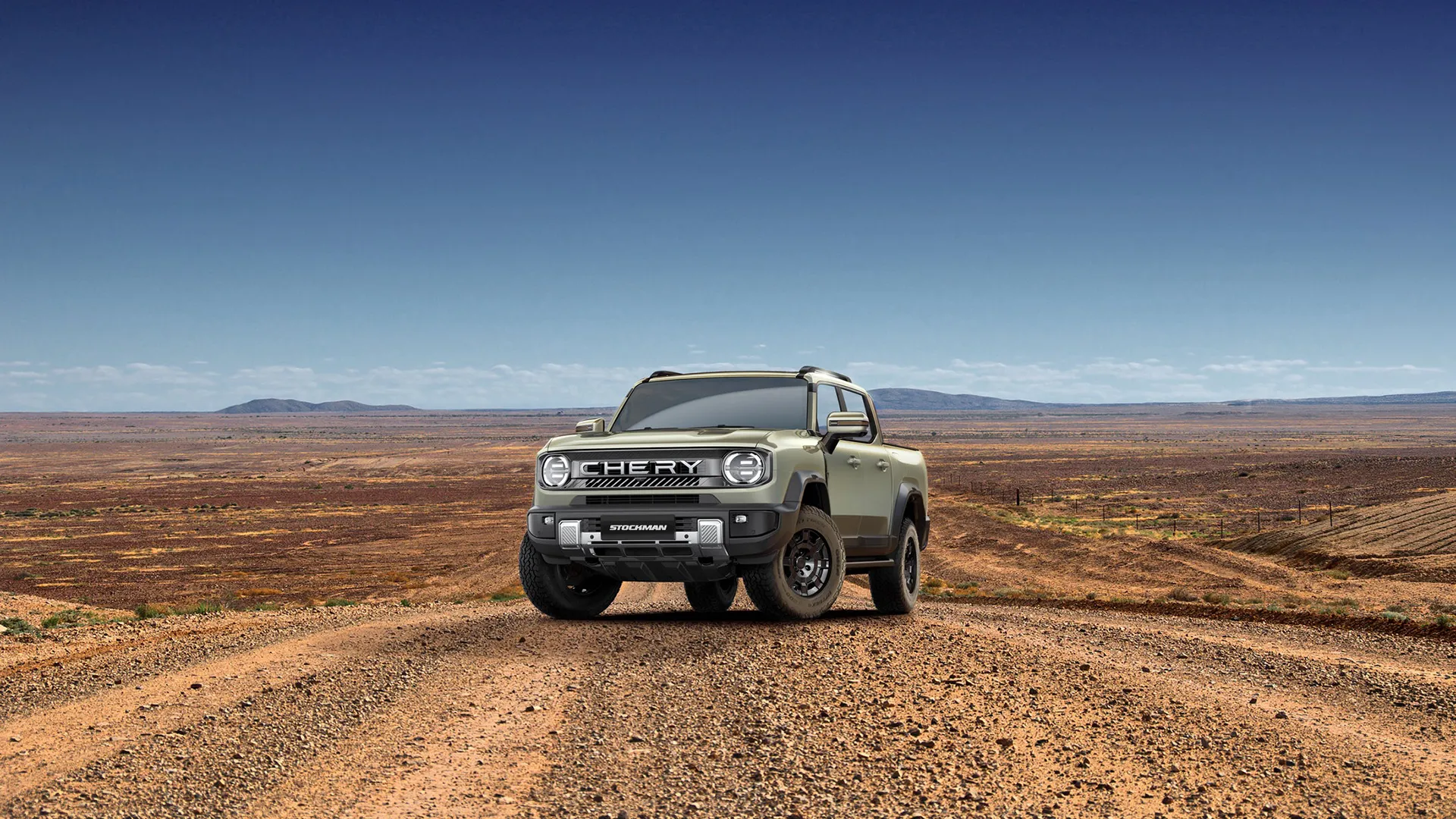

Every plug-in hybrid ute on sale in Australia runs a petrol engine, and every one of them gets thirsty the moment the battery goes flat with a trailer behind it. Chery looked at that problem and fitted a 2.5-litre turbo-diesel instead.
The Stockman, still wearing its KP31 codename in the engineering paperwork, made its first public appearance at Everything Electric in Sydney from 18 to 20 September. The headline is 350kW. The story is the fuel it burns on the 101st kilometre.
Why a diesel plug-in ute makes sense once the battery is flat
A plug-in ute lives two lives. For the first 100km, Chery’s NEDC claim, it is an electric vehicle. After that it is whatever engine sits under the bonnet, dragging up to 3.5 tonnes of trailer. The Stockman’s answer is a 2.5-litre turbo-diesel in a hybrid system claiming 350kW and 800Nm.
The rivals all chose petrol. BYD’s Shark 6 uses a 1.5-litre turbo (a 2.0-litre in the new Performance), Ford’s Ranger PHEV a 2.3-litre EcoBoost, GWM’s Cannon Alpha PHEV a 2.0-litre turbo. Small petrol fours pulling a big van at highway speed drink.
Carsales’ May 2025 tow test of the Shark 6 recorded 17.4L/100km with a 2,400kg trailer attached. The official figure is 2.0L/100km. That is the flat-battery problem in one number, and why the Chinese ute wave has so far skipped the serious caravan crowd.
Chery claims the diesel runs at 47 per cent thermal efficiency and uses about 10 per cent less fuel than an average diesel. Both are manufacturer numbers, and the Stockman’s own 2.0L/100km combined figure will evaporate just as fast with a van on.
But a diesel under sustained load is the right tool. Chery executive director of engineering Peter Matkin told CarsGuide in February that “it’s easier to do the gasoline version.” Chery did the hard one.
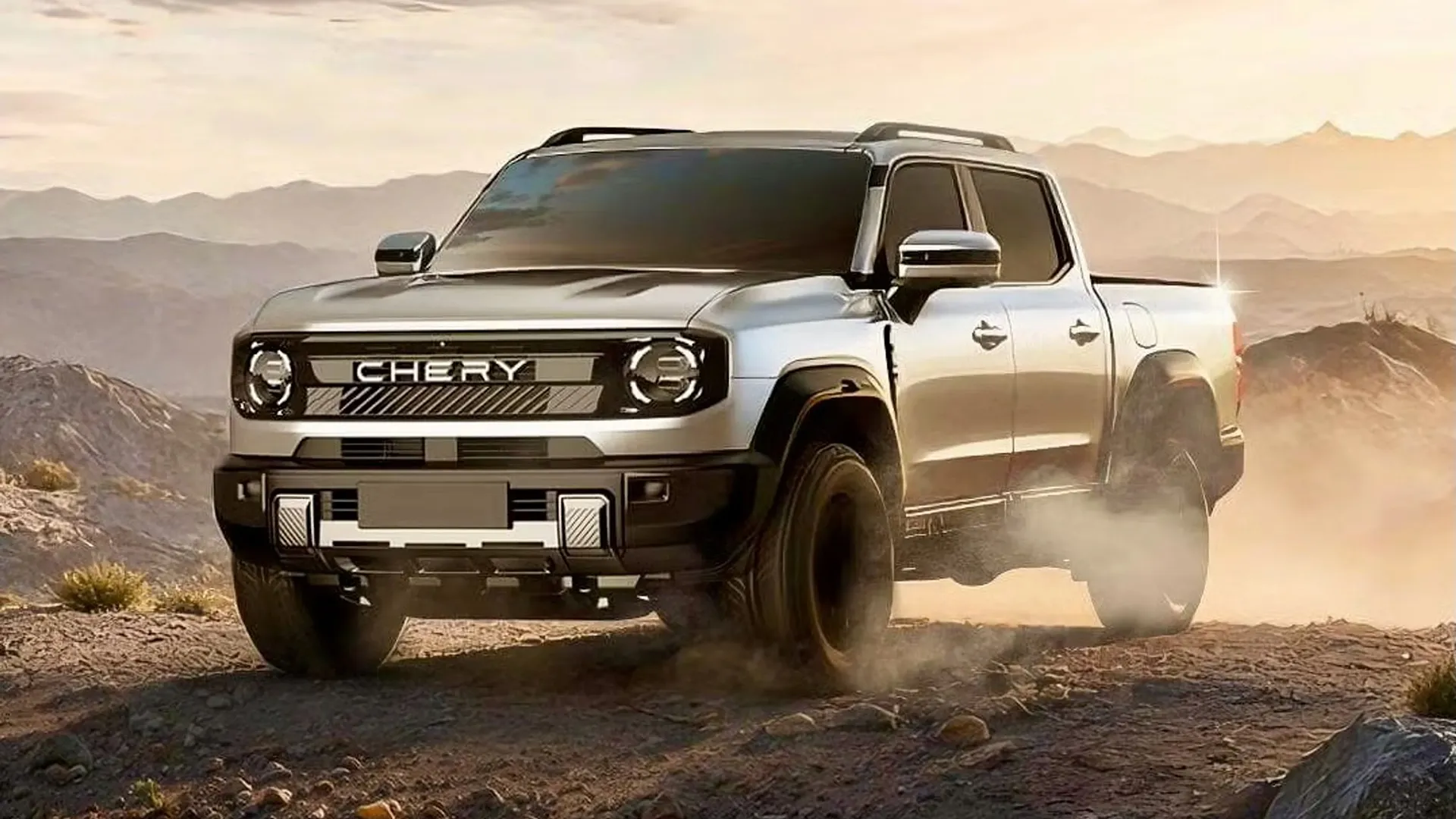
Stockman towing: the number Chery hasn’t published matters more than 3,500kg
Braked towing is 3,500kg and unbraked 750kg, per Chery Australia’s Stockman page. Missing are the gross combination mass, kerb weight and battery size. Until those land, nobody can say how much payload the Stockman keeps with a full-weight van behind it. That figure decides whether a plug-in ute really tows.
The Ranger PHEV shows how it plays out. CarsGuide’s November 2025 GVM test of the XLT PHEV put payload at 553kg when towing the full 3,500kg. Unhitched it carries 973kg. The 6,580kg GCM runs out first.
The Cannon Alpha PHEV is tighter still. Its 2,812kg kerb weight and 6,745kg GCM leave 433kg for people, gear and ball weight at maximum tow. Hybrid hardware is heavy, and a diesel, a drive battery and a mechanical 4WD system will not add up to a light ute.
Chery lists a centre diff lock and has shown a low-range selector in the cabin. That points to a Cannon Alpha-style mechanical driveline, not the Shark 6’s motor-per-axle layout. Payload is quoted at up to 1,000kg. Wait for the GCM before you hand over a deposit.
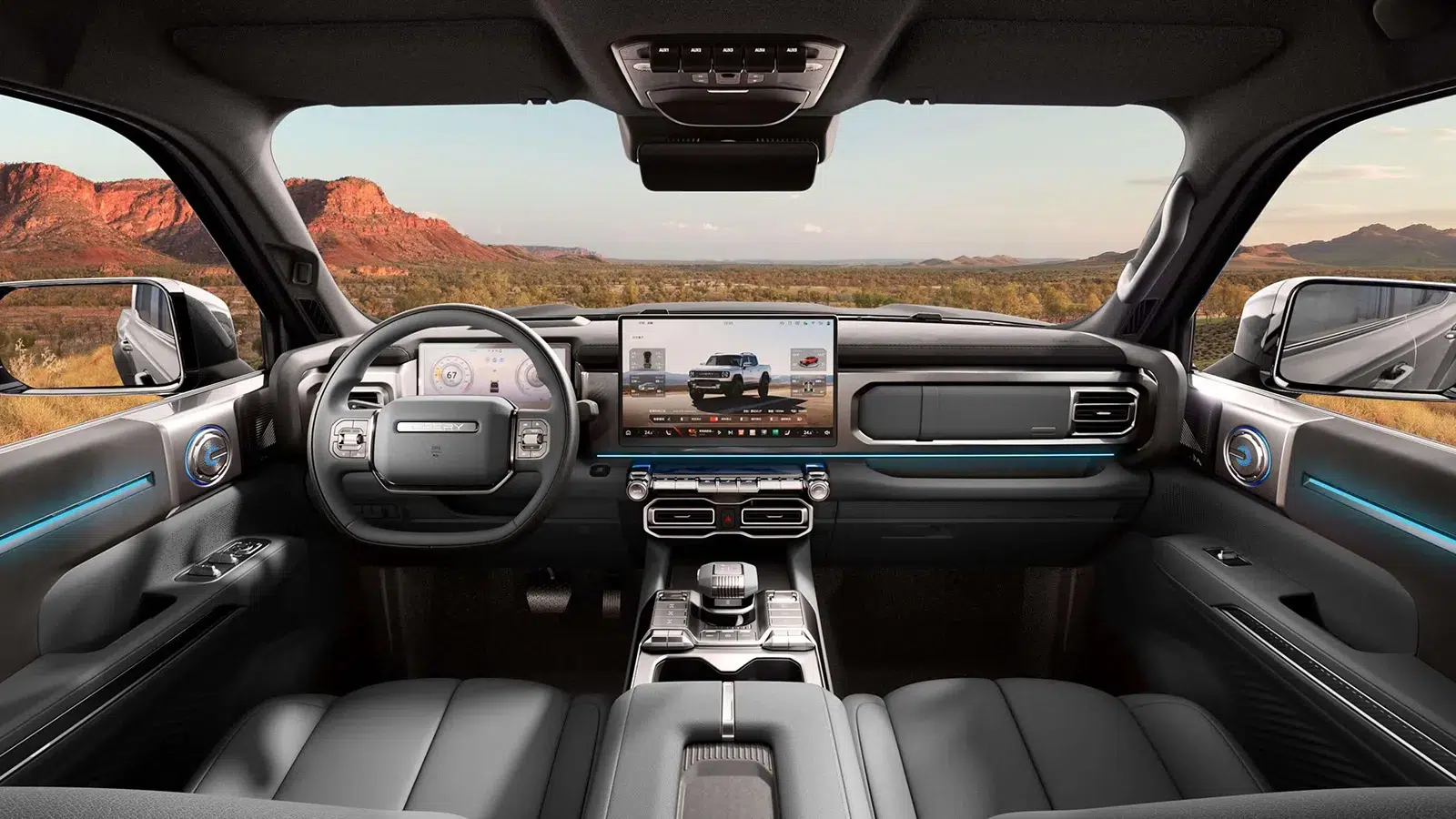
One more caveat on the range figure. That 100km is NEDC, the lenient old cycle; CarsGuide has reported roughly 80km on WLTP and Chery is yet to publish one. Given how far real-world figures drift from the sticker, plan your electric commuting around the smaller number, not the brochure one.
What the Stockman means for Aussie ute buyers
If you tow a 2.5-tonne-plus caravan regularly and want a plug-in, this is the first one worth waiting for. If you are an urban tradie who hooks up a box trailer twice a year, it is not: a petrol Shark 6 does that job for less money, today.
How much will the Chery Stockman cost?
Chery has not announced pricing. The competitive set is clear as of September 2026: the Shark 6 lists from $57,900 before on-roads, with the 3,500kg-rated Performance at $62,900. Ford’s Ranger PHEV runs from $59,000 to $70,000 drive-away after May’s price cuts, and the Cannon Alpha PHEV sits around $64,490 drive-away.
Chery Australia COO Lucas Harris has said the brand “wouldn’t bring a ute to the market if our intention wasn’t to compete with the top players.” Expect pricing against that set, not under it. The seven-year unlimited-kilometre warranty and eight-year battery cover are where Chery will argue value.
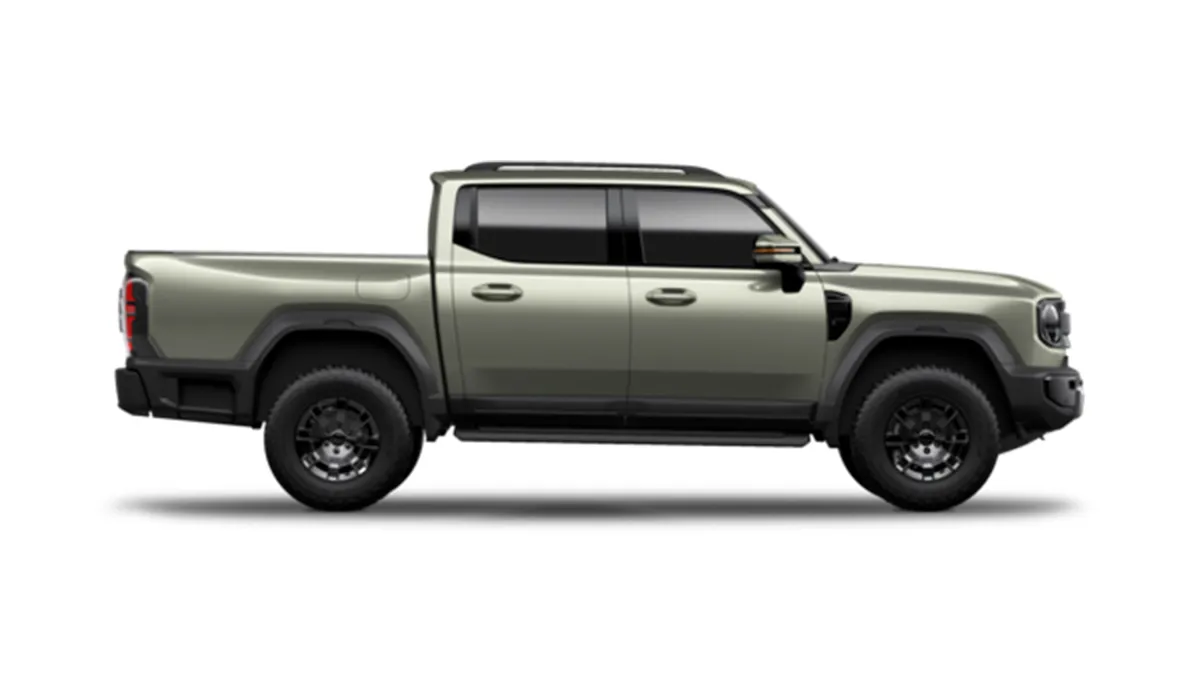
When does the Chery Stockman arrive in Australia?
Fourth quarter of 2026 for the diesel, October to December, with a 2.0-litre petrol plug-in following in 2027. Chery had around 1,000 deposits and more than 5,000 expressions of interest by late July, before a price existed. The first pre-production ute was registered for testing in NSW the same month.
Premcar, the Melbourne outfit behind Nissan’s Warrior models, was appointed in August to validate ride and handling. Its CEO Bernie Quinn says Chery “has gone the extra mile” with the Stockman. Plenty of Chinese utes have landed needing a second go at the ride tune. That is money well spent.
Chery has picked the hard version of the plug-in ute and brought it to the one market that will punish it if the weights come up short. The 350kW will sell the test drives. The GCM will sell the utes.


