
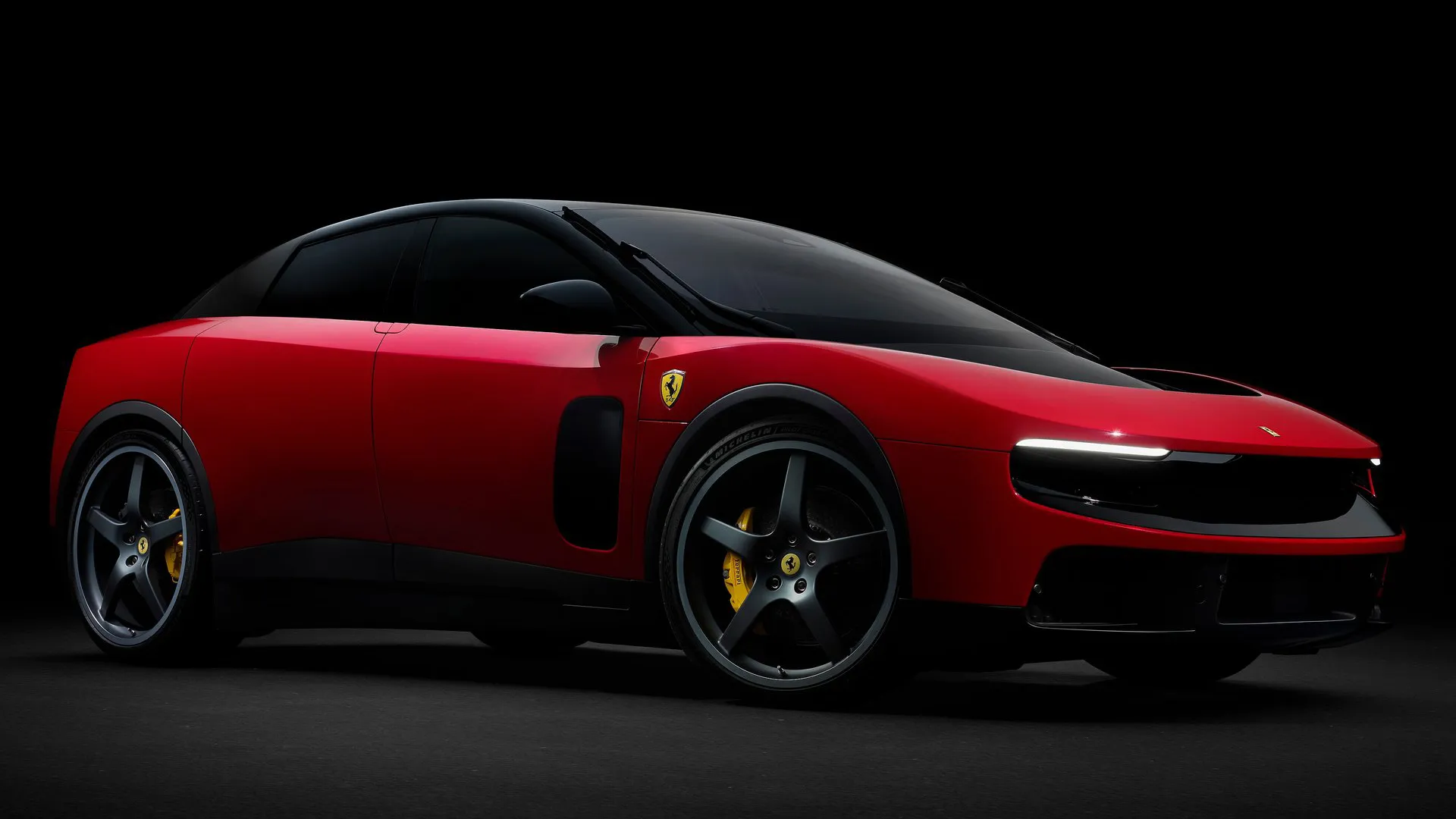

No one asked for a five-seat Ferrari. That was the point.
The Luce landed in Rome on May 25, 2026, and within 24 hours it had done something no Ferrari in living memory had managed: it united petrolheads and financial analysts in the same feeling of unease. Ferrari’s Milan-listed shares fell roughly 8% the day after the reveal. The comment sections didn’t need a Bloomberg terminal to reach the same conclusion.
Maranello didn’t care. The order book already runs into late 2027.
What the Luce Actually Is
Four motors, 1,035 hp, €550,000 (roughly $640,000 AUD), five seats, and a body styled by Jony Ive’s LoveFrom. Ferrari’s first production EV is not a concept, a limited halo run, or a trial balloon. It is a regular production model sitting alongside the 296 and the 12Cilindri in the current lineup, with deliveries beginning October 2026.
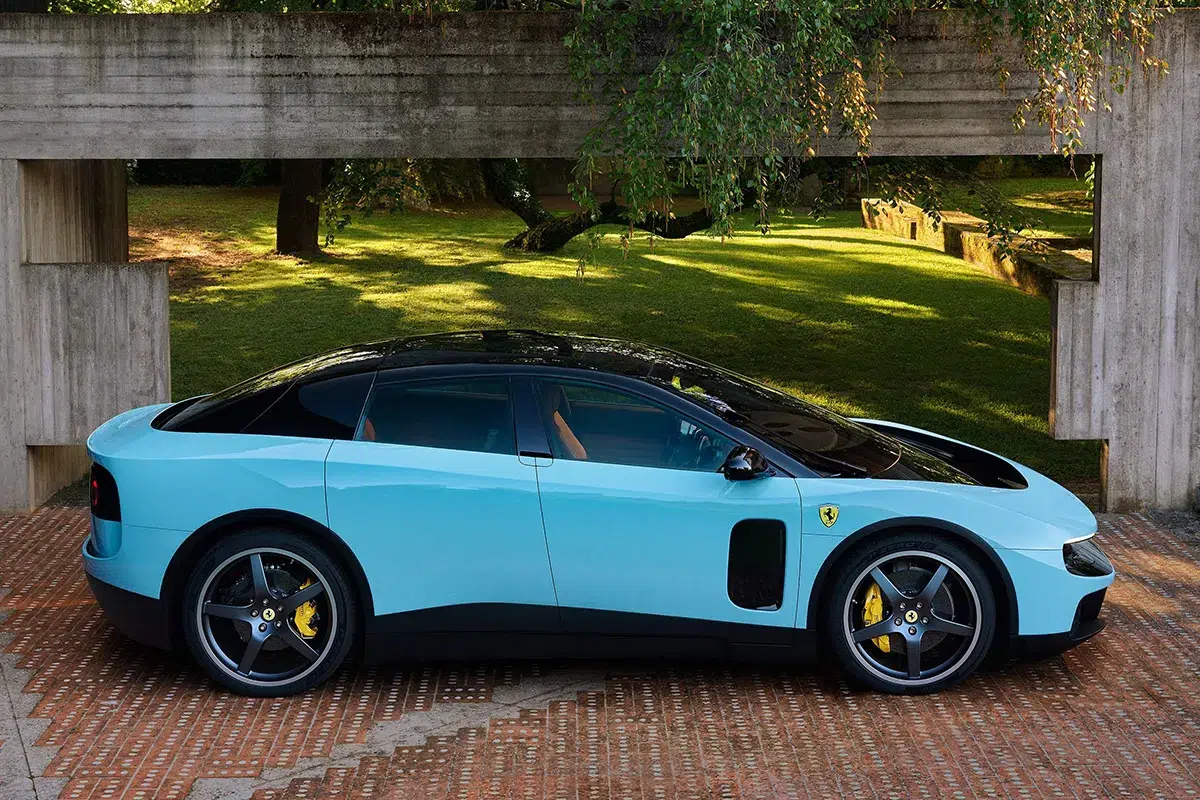
Luce rides on a bespoke 800V platform with a 122 kWh structural battery co-developed with SK On, supports 350 kW DC fast charging, and claims a WLTP range over 530 km. The official 0–100 km/h figure is 2.5 seconds. Top speed is over 310 km/h. Kerb weight is 2,260 kg, which tells you everything about the engineering challenge and nothing about whether the design is going to sit right.
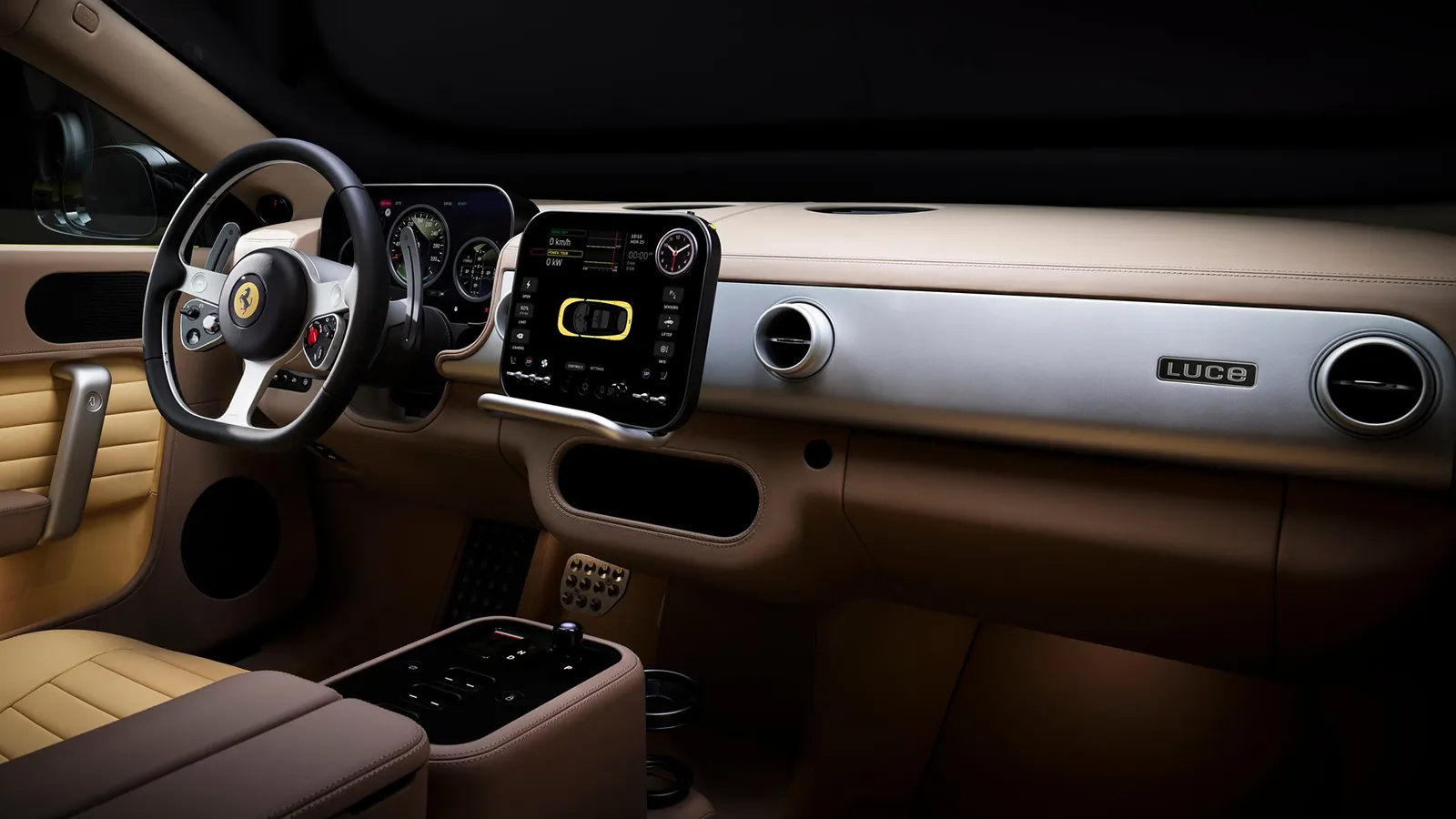
The interior is where the real argument starts. Four Samsung OLED panels across three zones. A ball-and-socket central console that rotates toward driver or passenger. A Corning glass gear selector. An E Ink key that docks in a recess. The binnacle moves with the steering column. And alongside all of that: real, physical buttons. Two manettinos. Toggles. Dials. Ferrari made the active choice to bring back the tactile controls that half the industry spent the last decade removing.
Charles Leclerc, in Ferrari’s own launch video, said it directly: “I love that it’s back to having more physical buttons so you can actually drive, look at the road, and you can feel.”
Two Tribes, One Car
The reaction split almost exactly along predictable lines. And Ferrari’s own launch strategy proved they knew it would. Shmee150, attending the Rome reveal, made the sharpest observation: the people he noticed approving of the Luce were wearing smartwatches. The people who hated it were wearing mechanical watches.
That is not a trivial distinction in the world the Luce is aimed at.
Ferrari ran a deliberately two-tier media event. Tech creators, including Marques Brownlee, got earlier, superior access, reportedly including track time at Alfa Romeo’s Balocco proving ground. The traditional automotive press got a second wave: approximately 30 minutes with the static car, surrounded by Ferrari PR staff, cameras monitored or stickered at multiple checkpoints.
Veteran journalist Chris Harris said publicly he was not invited after being asked over the phone how positive he felt about EVs and answering “not very.” This is not how you treat the petrolhead press when you’re trying to win the petrolhead press. It’s how you treat them when they’re not your target audience anymore.
Shmee150 himself, a Ferrari owner and someone who normally receives friendly access from Maranello, reacted with “what have they done?” His post-reveal video, “We Need to Talk About FERRARI LUCE!”, made clear his own discomfort, while also being honest enough to observe that the car’s supporters existed, and that they looked like a different kind of person entirely.
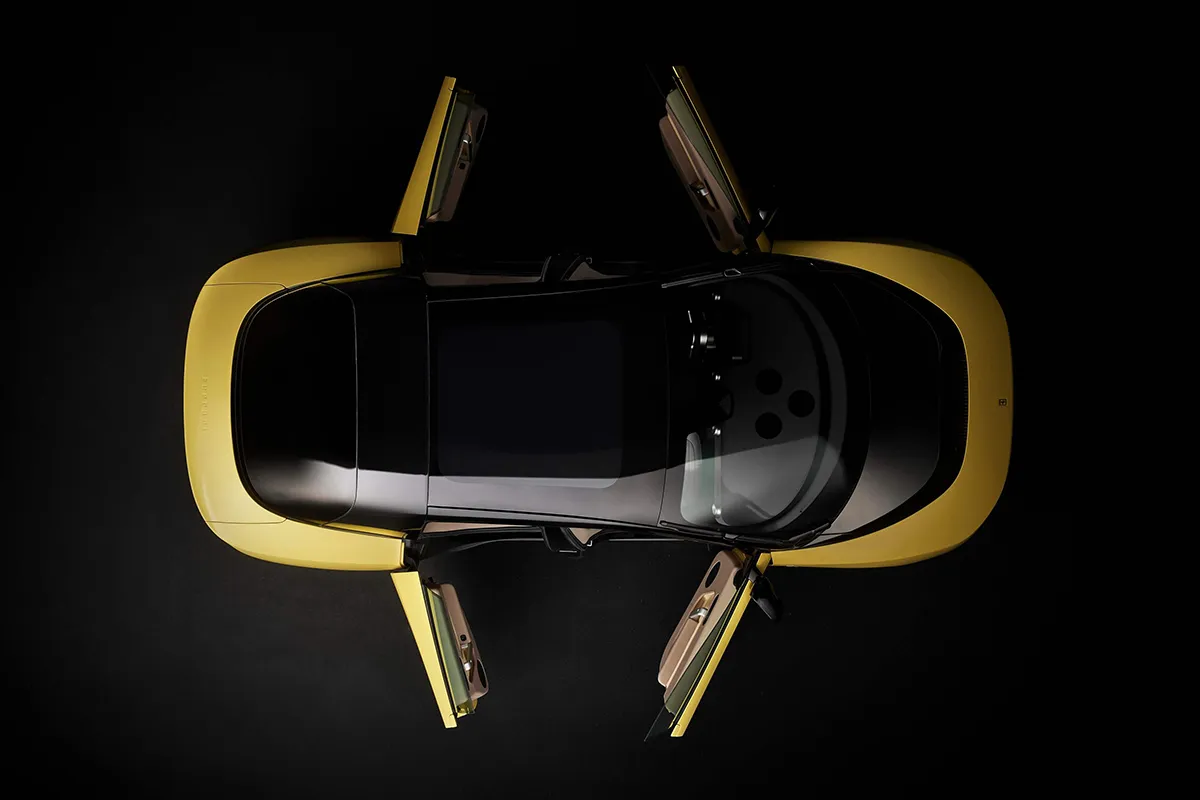
The smartwatch crowd sees a 1,035 hp product-design object with a glass gear selector and an E Ink key. The mechanical-watch crowd sees a five-seat liftback with an Apple Magic Mouse silhouette wearing a prancing horse. Both groups are looking at the same car.
What Ferrari Was Actually Betting On
Ferrari did not build the Luce to replace the 12Cilindri. It built it to add a customer who would never have bought a 12Cilindri. The goal is to ensure that customer buys Ferrari rather than Rolls-Royce, Bentley, or whatever Porsche launches next.
CEO Benedetto Vigna’s response to the backlash, posted to LinkedIn, was telling: “True innovation does not look for immediate consensus, nor does it stem from the ordinary.”
That is not a defensive statement. It is a statement from someone who expected the reaction and built it into the plan. The Luce order book running to late 2027 before a single delivery suggests the commercial logic is holding, whatever the comment sections say.
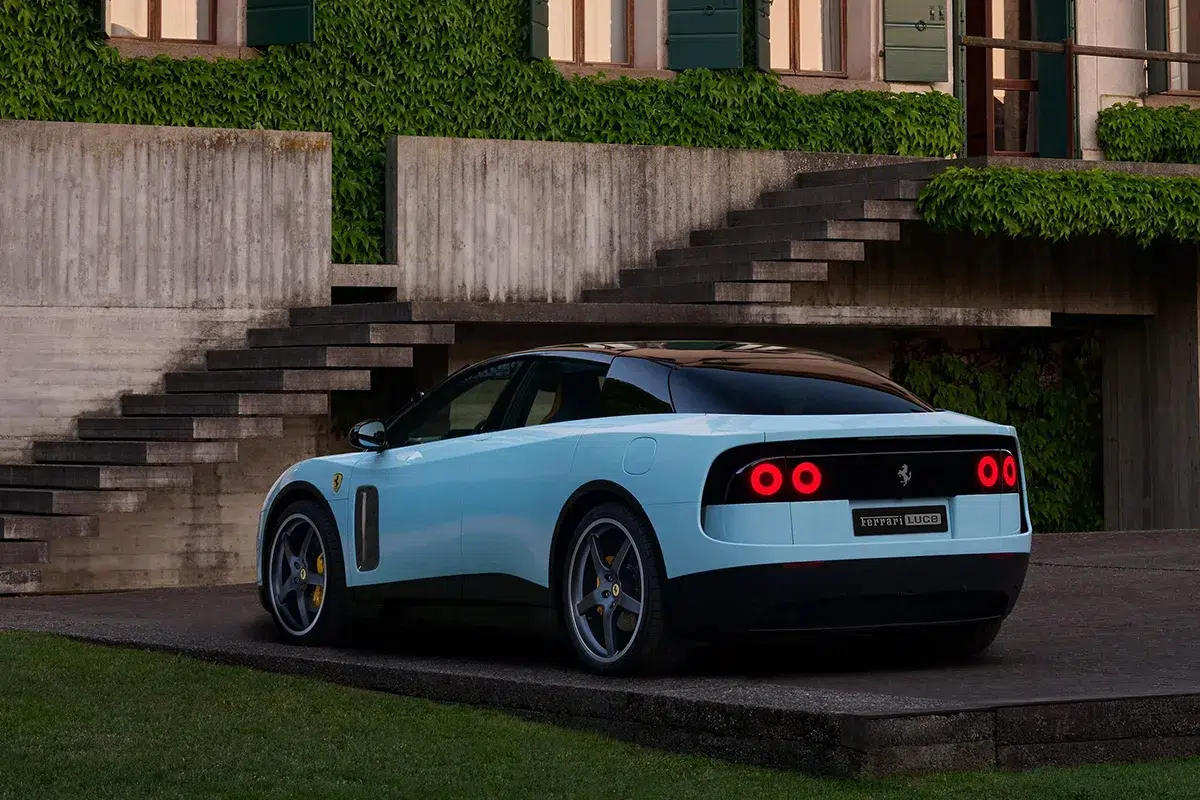
[IMAGE: Ferrari Luce rear, distinctive halo tail-lights, Rome urban setting, dusk lighting, straight-on rear angle] [ALT: Rear view of the Ferrari Luce showing the circular halo tail-lights that reference the 360 Modena and 458 Italia]
Ferrari simultaneously announced it is delaying its planned second EV to at least 2028, citing weaker high-performance EV demand. Lamborghini’s CEO used the Luce backlash as a moment to publicly validate his own brand’s decision to cancel its all-electric Lanzador in favour of plug-in hybrids, telling CNBC the EV “acceptance curve for our type of customers is not increasing.”
The two Italian supercar brands, for the first time in memory, are pointing in opposite directions. Ferrari is betting that a new class of ultra-wealthy, tech-comfortable buyer will pay €550,000 to belong to the brand. Lamborghini is betting its existing buyers would rather stay loud and combustion-powered. Both could be right.
This lands differently in Australia, where the prestige EV market is moving faster than most. The Porsche Taycan’s trajectory here is instructive: mocked at launch, now one of the strongest-selling Porsches in the country. Ferrari’s local team will have noticed.
The Montezemolo Problem
The most quoted voice of the backlash was not a forum commenter or a YouTuber. It was Luca di Montezemolo. The man who ran Ferrari from 1991 to 2014, oversaw 19 Formula 1 world championships, and is widely credited with turning the brand into what it is today.
Standing outside the Rome venue, Montezemolo told Italian media: “If I said what I really think, I’d harm Ferrari. We’re risking the destruction of a myth. I’m very sorry about that. I hope they at least remove the Prancing Horse from that car.”
He added, pointedly: “This is certainly one car the Chinese won’t copy from us.”
There is a layer of irony in that line. Ferrari built the Luce partly to court Chinese ultra-luxury buyers, a segment growing faster than any other in the brand’s target market. Montezemolo’s dig doubles as an accidental pitch.
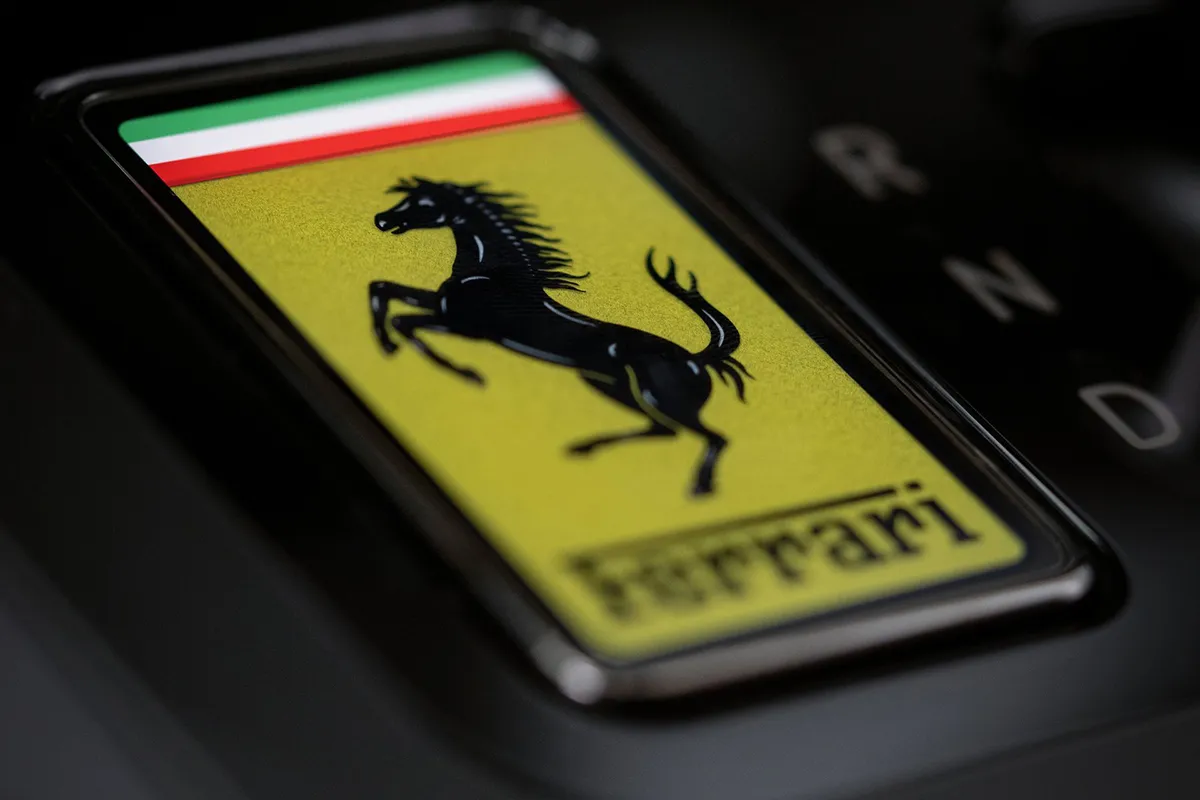
The deeper tension is this: the Luce is the first Ferrari that requires no prior belief in Ferrari. You do not need to have grown up caring about the Scuderia, the V12, Fiorano, or Maranello to want one. You need to be wealthy, design-literate, and comfortable paying for something that signals a particular kind of taste. That customer exists. They buy Patek Philippe, they buy Moncler, they buy Leica. Ferrari wants them buying Luce.
Whether the prancing horse survives that transaction with its meaning intact is Montezemolo’s question. Ferrari’s answer, evidenced by a two-year order book and a CEO posting about innovation on LinkedIn, is: watch us find out.


