
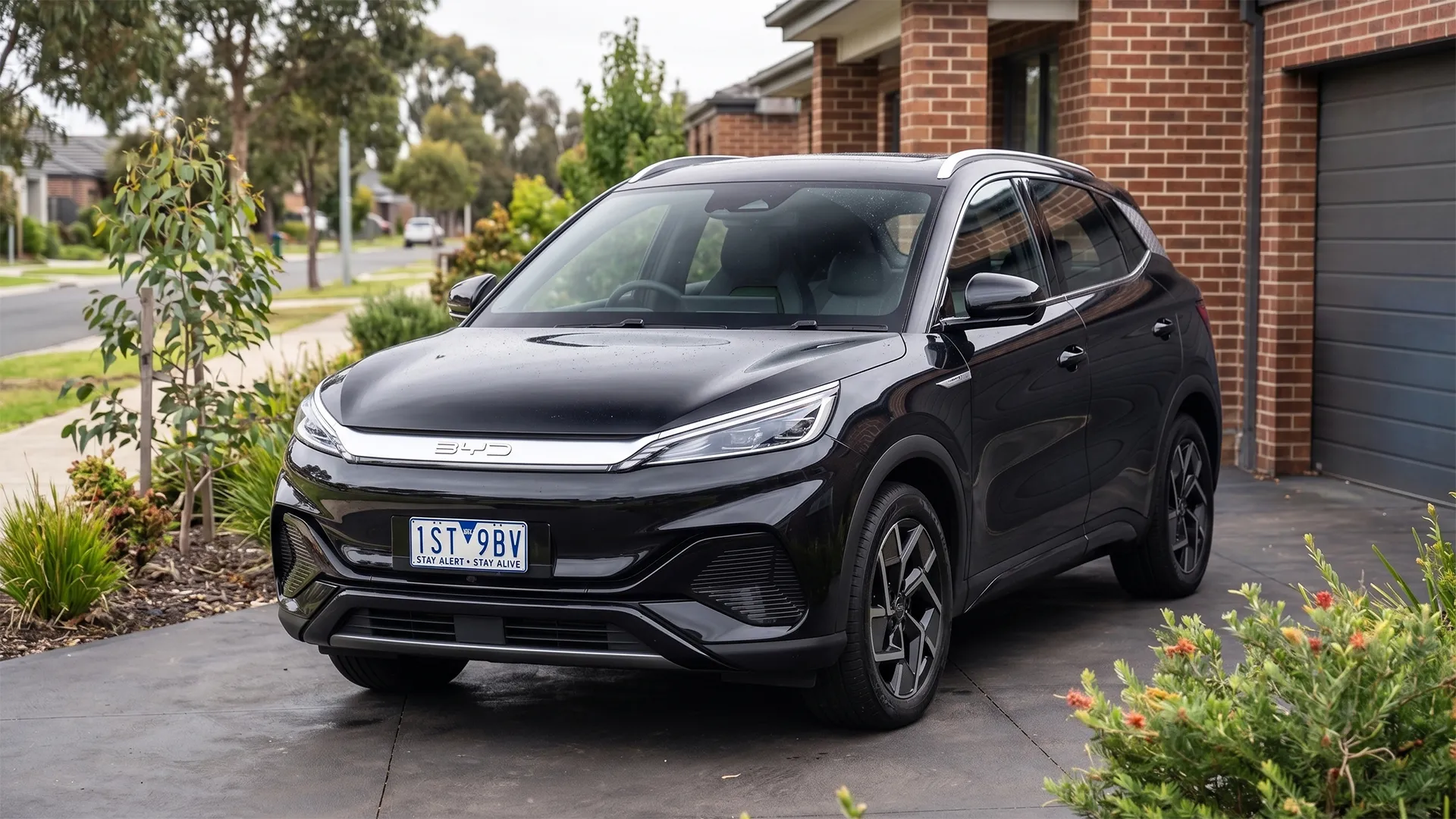

Everyone warned you the battery would be the problem. Two years into the BYD Atto 3, the battery is the least of your worries. The real headaches sit elsewhere: an early touchscreen that liked to freeze, a tiny 12V battery with a habit of going flat, and a resale chart that fell down a lift shaft.
This is a used-buyer’s read on the original Atto 3, the 2022 to 2024 car with the now-deleted “Build Your Dreams” tailgate badge, not the 2025 facelift. Most of what sits on Australian used lots is the Extended Range: a 60.48kWh Blade battery, a claimed 420km WLTP range, with 150kW and 310Nm through the front wheels.
Where a Used Atto 3 Lands After Two Years
Better than the doomsayers predicted, worse than the badge suggests. The Blade battery ages slowly, the drivetrain stays solid, and prices have cratered in your favour. The catch is the buggy early software, the 12V gremlins, and the short warranty on the very screen most likely to fail.
What’s aged well, and what hasn’t, splits cleanly down the middle.
The good:
- The LFP Blade battery shows minimal degradation and handles daily 100% charging without complaint.
- Motor and drivetrain failures are rare. This is mechanically a simple car.
- Heavy depreciation makes a two-year-old example genuinely cheap.
The bad:
- Early DiLink software froze, lagged and dropped wireless phone connections.
- The 12V battery has a documented habit of going flat and stranding the car.
- The infotainment screen carries only a three-year warranty, not the headline eight.
Part of that price collapse is BYD itself. BYD has climbed to second place in the Australian market, and it keeps cutting new-car prices to stay there, which drags down every used example that came before.
The Cabin Two Years In: DiLink, Wear and the Niggles
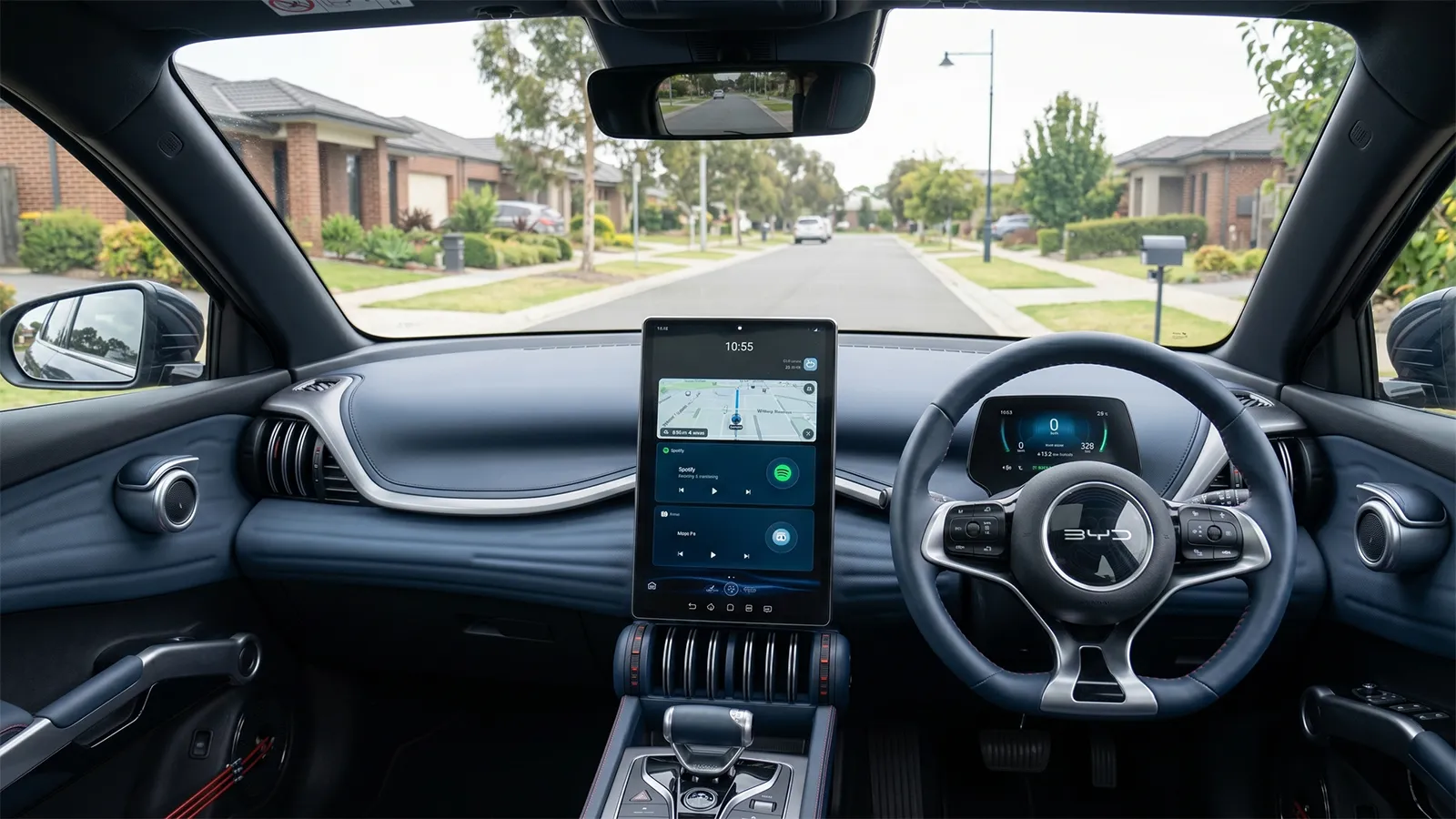
The cabin still presents well. Synthetic leather wears better than expected, the rotating 15.6-inch screen still turns heads, and build quality holds up. The software is the variable: a strong system on paper that earned a rough early reputation owners haven’t entirely forgotten.
Has the DiLink software actually improved?
Yes, mostly. Over-the-air updates from late 2024 cut the freezing and black-screen complaints that dogged 2022 and 2023 cars. The hardware was never the issue. It was memory management, and a soft reset still fixes most day-to-day glitches.
The fix owners learned the hard way is simple. Hold the volume scroll wheel for 10 to 15 seconds and the system reboots, usually clearing a frozen screen or a stuttering map. It became reflex for early adopters running Spotify and Google Maps at the same time.
Wireless Apple CarPlay and Android Auto are the other soft spot. Random disconnections were common, and the late updates helped without fully curing them. You know the moment: third in line at the servo, podcast cuts out, phone refuses to reconnect.
Australian fault records log the same recurring complaints across early cars, from frozen displays to dropped phone mirroring. None of it is catastrophic, but a test drive should include a proper play with the screen before money changes hands.
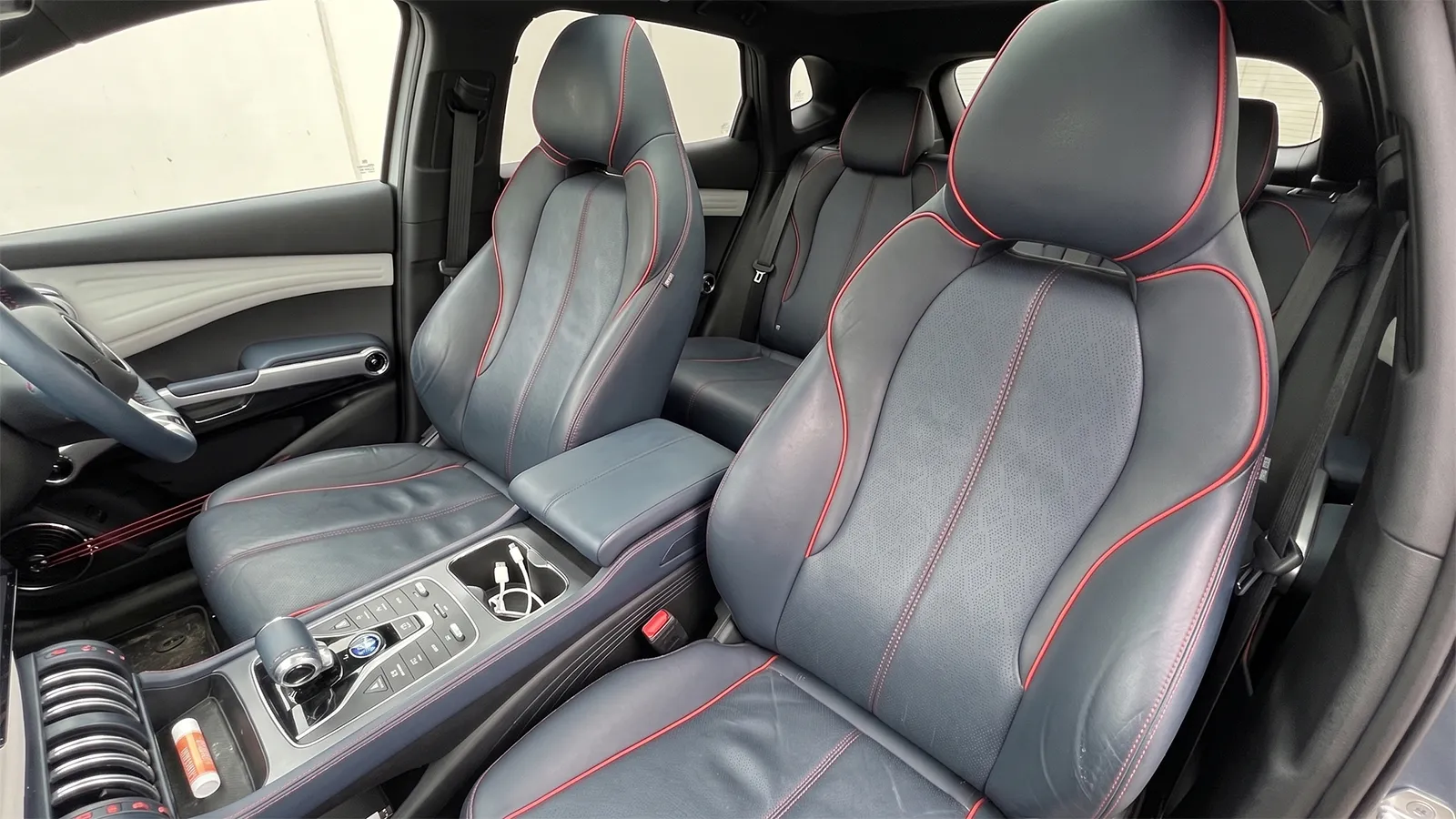
On wear, the news is good. The synthetic leather seats shrug off two years of school runs and shopping loads, and the cabin plastics hold together. The most common gripes are minor: the occasional trim rattle from a loose clip, a sunshade that can stick, and budget original tyres that owners replace early.
How It Drives, and What the Battery’s Doing Now
Unchanged, which is the point. The 150kW front motor still pulls cleanly, the soft suspension still favours comfort over corners, and a claimed 7.3-second 0–100km/h still feels brisker than it reads. This was never a driver’s car, and two years hasn’t made it one.
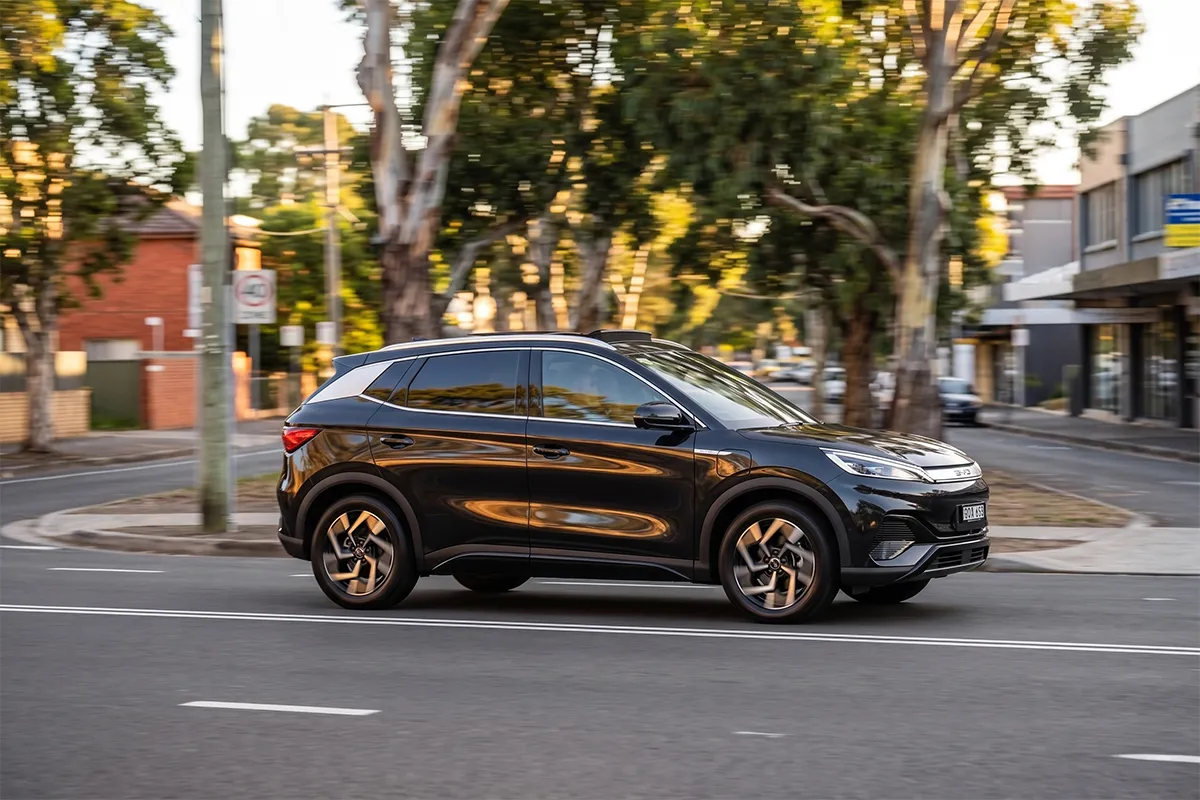
The driving manners suit the brief. Around town the Atto 3 is quiet, easy and light to steer. Push it on a back road and the body leans, the front tyres run wide, and the steering tells you nothing. Treat it as comfortable transport and it delivers exactly that.
Two things stand out for daily duty. Regen is mild even in its stronger setting, so this is not a true one-pedal car, and the driver still uses the brake pedal often. The flip side is refinement: cabin noise stays low at suburban speeds, and the ride soaks up speed humps and tram tracks without fuss.
How much range have these actually lost?
Less than you’d fear. The lithium-iron-phosphate Blade chemistry degrades slowly and tolerates being charged to 100% every night, which is rare. Most two-year cars still return close to their original real-world range, well inside warranty limits.
Analyses of early high-mileage Blade-battery cars put capacity loss at roughly 8 to 12 percent past 100,000km, on par with a petrol-chemistry Tesla and far better than the old Nissan Leaf curve. A two-year Atto 3 with sensible kilometres has barely moved off its launch figure.
The warranty backs this up. BYD guarantees the traction battery for eight years or 160,000km and promises at least 70% capacity over that period. One caveat for hot-climate buyers: owners who lean hard on DC fast charging through a Queensland or Top End summer will wear the pack faster than a gentle AC-at-home commuter.
What’s charging and running it like day to day?
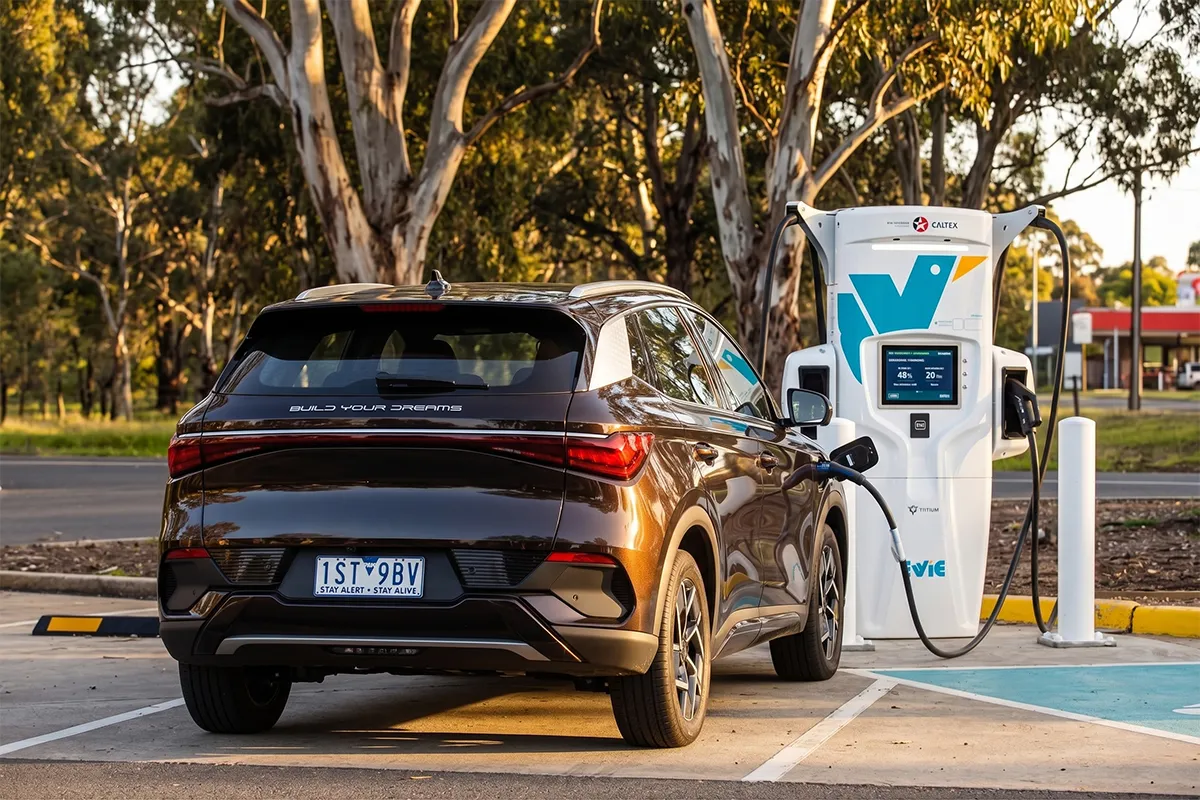
Fine for a commuter, slow for a road-tripper. The Extended Range tops up usefully fast on AC at home and is merely adequate on a DC charger by 2026 standards. The hidden perk is vehicle-to-load, which still pays its way two years on.
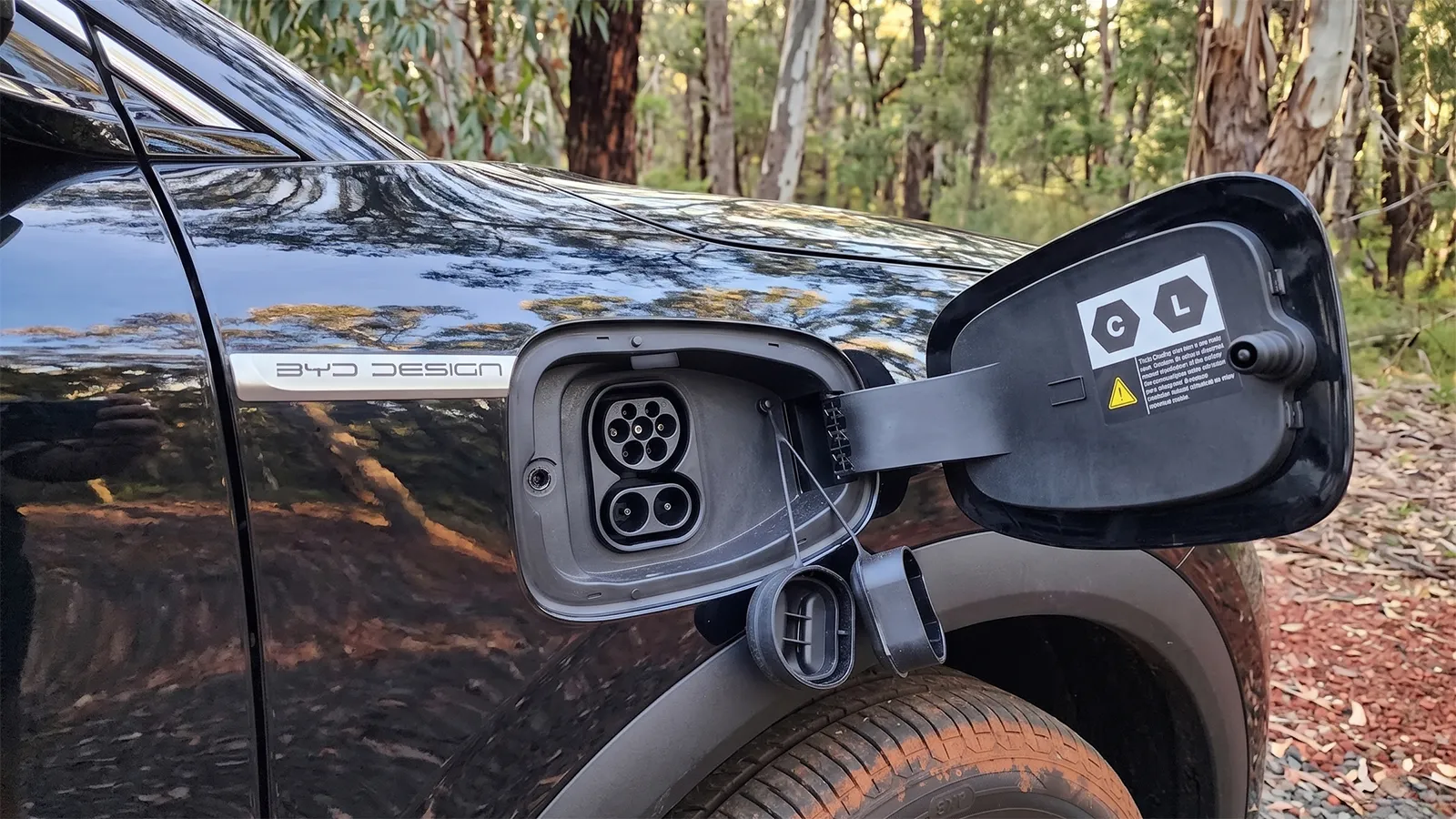
On charging speed, set your expectations honestly. BYD quoted around 80kW DC at launch for the Extended Range, with real-world sessions peaking near 88kW before settling to an average closer to 77kW. A 10–80% top-up takes roughly 45 minutes. Home AC charging is capped at 7kW, or about nine hours for a full battery.
The trick still worth having is vehicle-to-load. The Atto 3 can run a 230V appliance straight from its battery through an adapter, which turns it into a giant power bank. Owners use it for camping fridges, power tools and worksite gear, and it remains a genuine point of difference at this used price.
Then there’s the gremlin. The cheapest part in the car is the one most likely to strand you: a small 12V battery that can drain overnight and leave the doors locked and the screen dead. Owners trace it to parasitic drain, and the common fix is swapping the factory unit for a quality AGM or lithium replacement.
Safety, Price and Whether a Used One Stacks Up
For the money, very well, with eyes open. A 2022 five-star ANCAP rating still stands, the powertrain has proven dependable, and depreciation has done the hard work for you. The fine print on warranty and the early software are the only things keeping this from a clean recommendation.
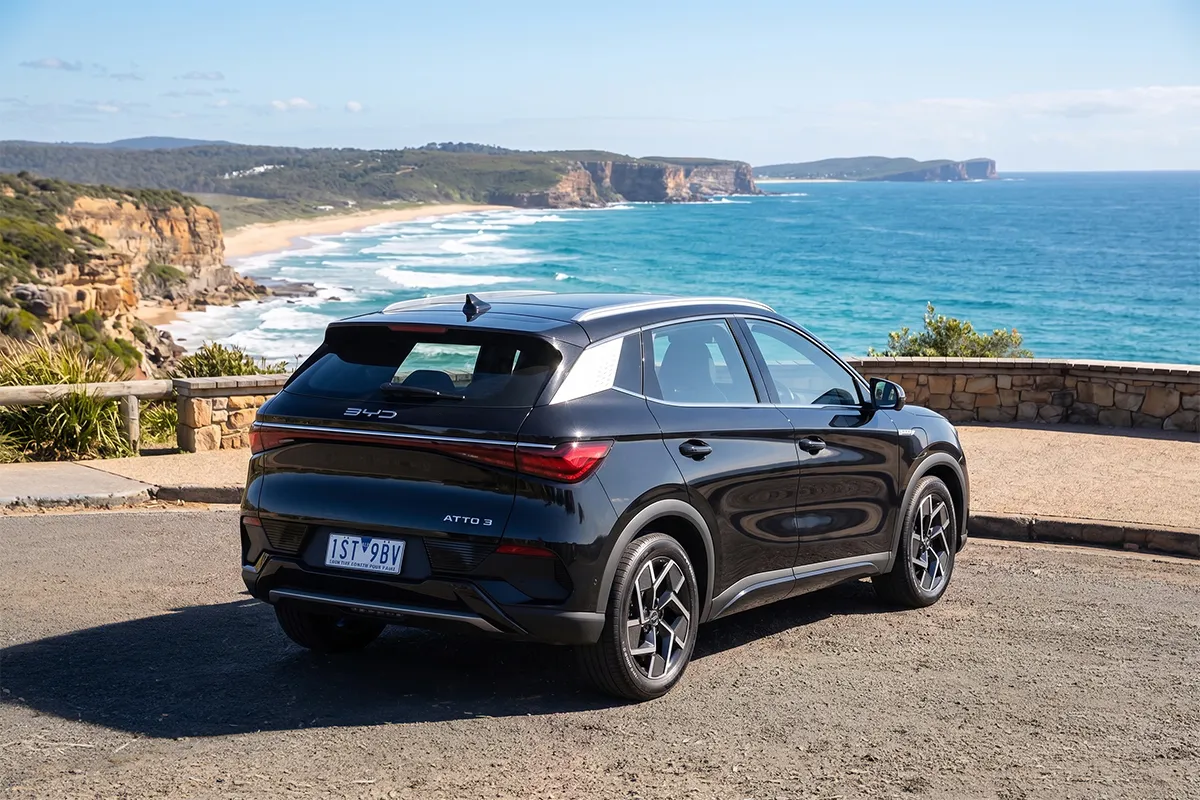
Safety holds up. The Atto 3 earned a five-star ANCAP rating in 2022 with the full suite of active assists, and nothing about that has changed on a used car. The warranty story is more nuanced. A 2023 example still carries factory vehicle cover to around 2029 and battery cover to roughly 2031, and both transfer to you.
Read the small print, though. The vehicle warranty runs six years or 150,000km and the battery eight years or 160,000km, but the infotainment screen, the part with the patchiest track record, is covered for only three years or 60,000km. Most used cars have already aged out of that window. Budget for the risk.
Now the reason you’re here. Used 2022 and 2023 Extended Range examples now list around $30,000 to $36,000, well under their high-$40,000s launch price, and higher-kilometre cars dip below that. The first owner absorbed the brutal depreciation. You get a near-new EV for hatchback money.
Running costs sweeten it further. Cheap home charging, no oil changes, and brake pads that last because of regen all keep the spreadsheet friendly. Plug the Atto 3 into the true cost of owning a car in Australia and the sums look kinder than the resale chart suggests.
Before you sign, do three things. Ask a BYD service centre for a battery health diagnostic so you see the real state of charge capacity, not a guess. Sit in the car and stress the screen with maps and music at once to provoke any lag. And confirm the 12V battery has been replaced, or budget to do it yourself.
So who should walk away? If you road-trip constantly and rely on DC fast chargers through a tropical summer, the slow charging and heat-stressed pack make this the wrong used EV. If you want guaranteed screen warranty cover, check the build date, because that protection is long gone on most of them. And if you bought your last car as an investment, the depreciation will sting all over again.
For everyone else, the maths is hard to argue with. The Atto 3 was a flawed but likeable EV at $48,000. At $32,000 with a healthy battery and most of its warranty intact, it’s one of the smartest used electric buys in the country.


