
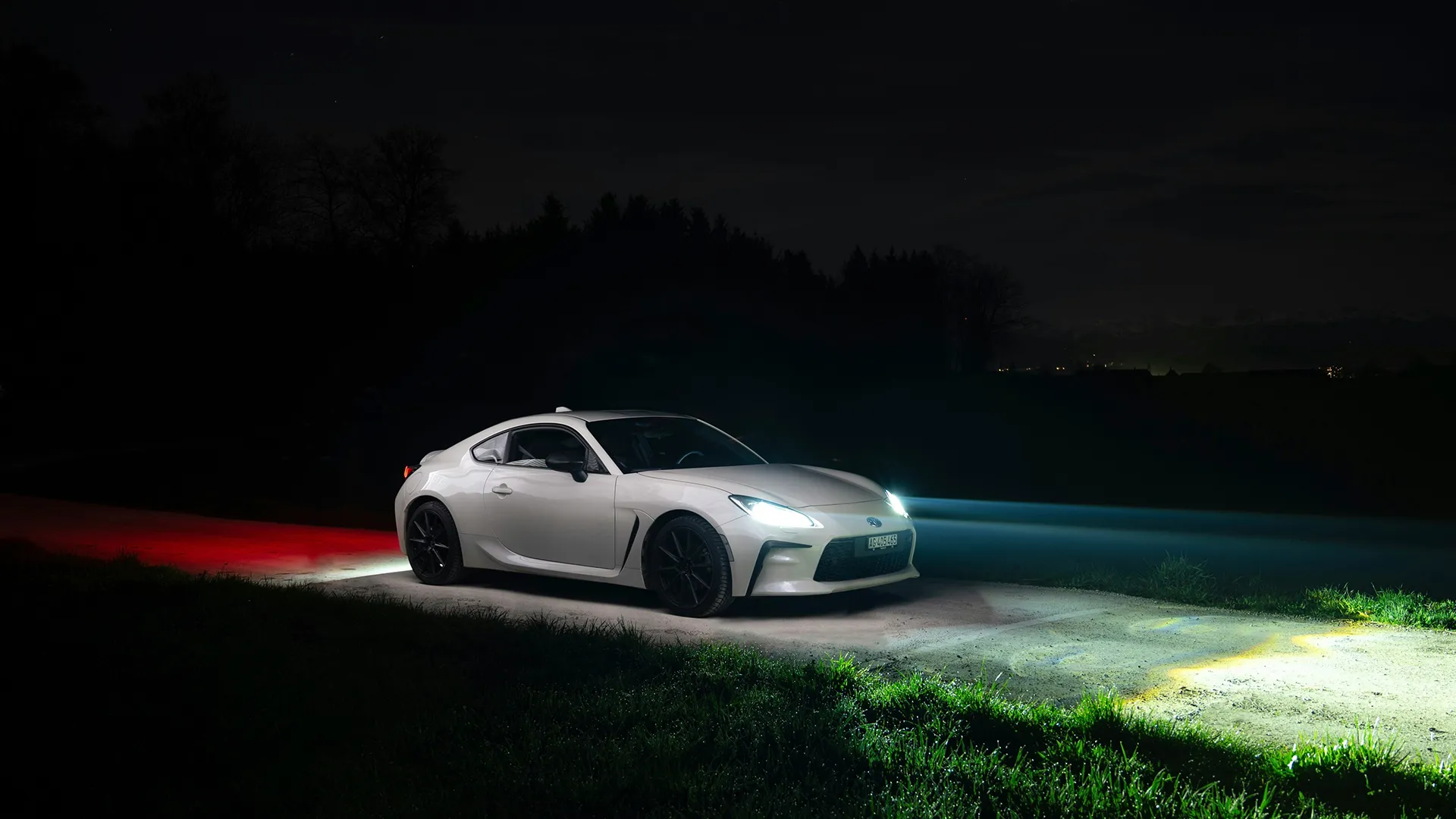

Tick the manual and Toyota deletes your rear parking sensors. That is not a rumour, it is the specification, and it should decide this car for a lot of people. The gearbox that makes the GR86 worth owning is the same box on the order form that removes the parking aids you want most in a low coupe with a letterbox rear window.
So the answer is yes, you can daily it, with conditions rather more specific than the internet suggests. The ride is not the thing that will wear you down, and neither is the clutch everyone warns you about. The seats behind you, the fuel bill and the reversing are the real friction, and all three are knowable before you sign.
The GR86 Verdict
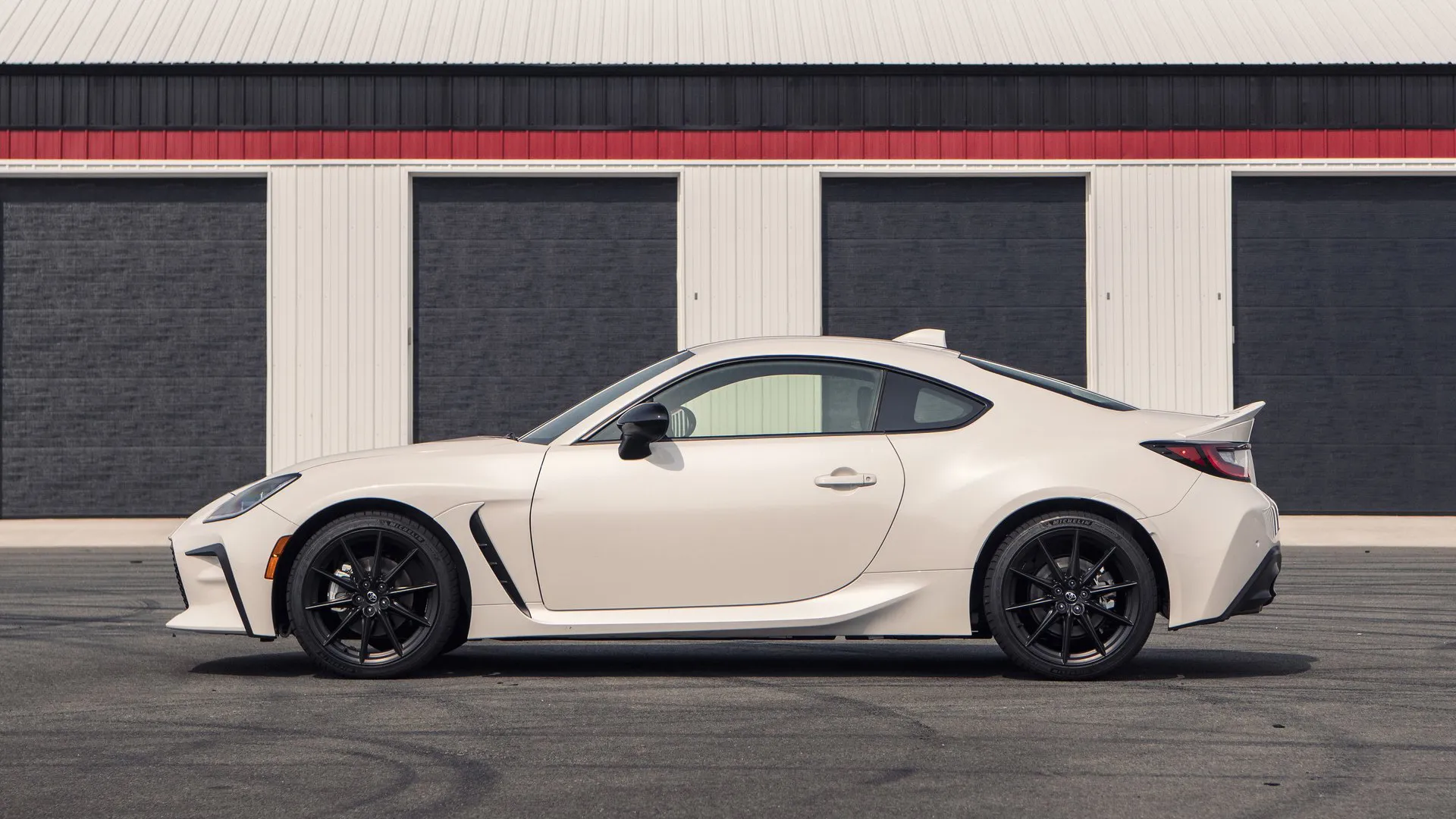
The case for is short and strong: 174kW, 250Nm, 1291kg, rear-wheel drive and a six-speed manual for $43,940 before on-road costs. Almost nothing else on sale in Australia offers that combination at that money, and the GT grade is where the value sits rather than the top of the range.
The case against is not really about the driving at all. It is about a 2+2 body, a boot with an awkward opening, premium fuel at a rate that would embarrass a Kluger, and a safety sheet with holes in it that you choose yourself.
The Daily Driver Test
Works as a daily
- 237-litre boot, more than most sports cars
- Physical buttons, minimal chimes
- Five-year warranty, seven if dealer-serviced
- Services capped at $335 each
Fights you as a daily
- No ANCAP rating at all
- Manual deletes rear parking sensors
- Rear seats good for about 15 minutes
- 98 RON minimum, 11.0L/100km on test
Living with the cabin
The boot is the pleasant surprise. At 237 litres it comfortably beats a Mazda MX-5 and swallows a weekly shop, though the aperture is narrow enough that bulky items become a puzzle. Think suitcases and grocery bags rather than flat-packed furniture, and it does the job most buyers actually need.
The rear seats are the opposite of a surprise. Toyota lists four seats in a car 4265mm long with a 2575mm wheelbase, which is the geometry of a parcel shelf with seatbelts attached. There are ISOFIX and top tether points for both positions, which is either thorough or optimistic depending on your view.
Treat them as luggage space with upholstery. An adult will fit for a short suburban hop and will remember it afterwards. Anyone shopping for a car that carries four people should stop reading here, because this is a two-seater that keeps its options open.
Getting in and out deserves a thought, and the number that tells you why is 1310mm. That is the roof height. You do not step into a GR86, you lower yourself into it and then push yourself back out, and doing that twice a day in a work car park is a different proposition to doing it on a Sunday.
The screen that knows its place
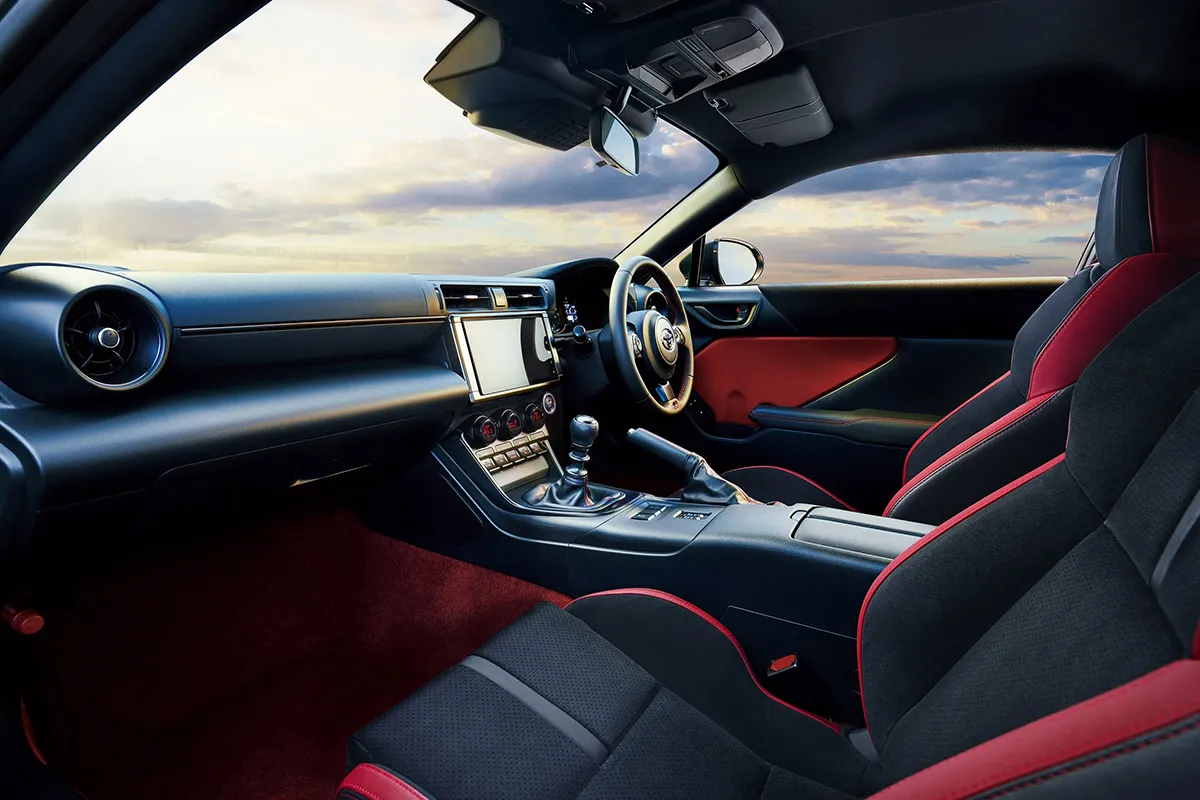
Here the GR86 is quietly excellent, and it is worth saying loudly because so few new cars manage it. The 8.0-inch touchscreen handles audio, settings and navigation, and that is the extent of its ambition. Climate control stays on physical switches where your hand can find it without your eyes leaving the road.
There is no permanent chorus of chimes and warnings either, which on a car built after 2025 is close to an act of defiance. For anyone worn down by a modern SUV supervising their every input, a cabin that trusts the driver is a genuine daily-driving feature rather than a nostalgic indulgence.
The materials are where the $43,940 shows. Plastics dominate anywhere your fingers do not routinely land, and the cupholders hide under a cover behind the driver’s elbow, which is a solution to a problem nobody had. None of it undermines the car. All of it explains the price.
What it is actually like to drive
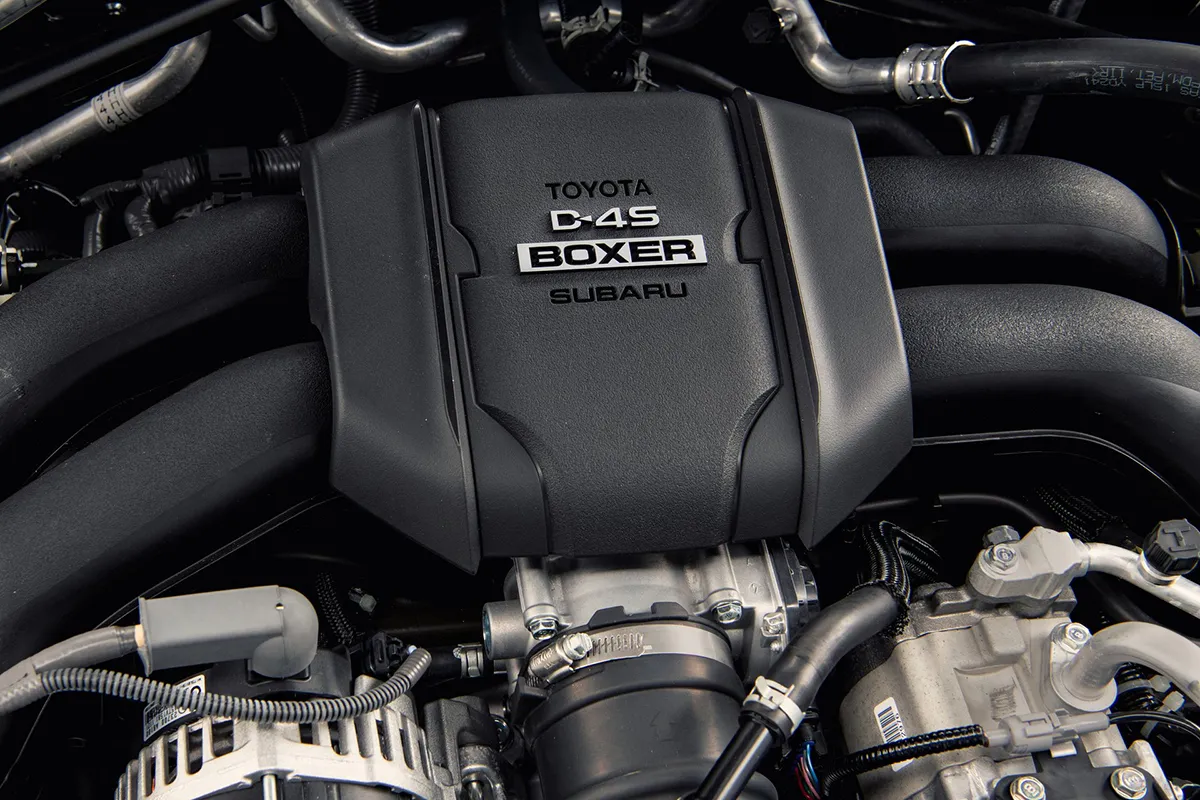
The specification tells you most of it. A 2.4-litre flat-four making 174kW and 250Nm in a 1291kg rear-driven coupe with a six-speed manual is a recipe with almost no modern equivalent, and the low kerb weight matters more than the power figure. Light cars flatter their drivers. Heavy fast ones flatter their engineers.
The ride question is the one everybody asks and it has a specification answer. The GTS with the Dynamic Performance Pack adds Sachs sports dampers and upgraded brakes, which is a track-biased package by definition. Firmer is the point of it, not a side effect, and a car set up to control body movement on a circuit will always be busier on a broken city street.
What that does not mean is punishing. There is a difference between firm and crashy, and the GR86 sits on the right side of it. Australia’s CarsGuide rated the GTS with that pack 7.5 out of 10 and recorded 11.0L/100km across mountain roads, highway and stop-start city traffic, which is a real-world figure worth holding onto for later.
The practical conclusion for a commuter is straightforward. If your daily route is pockmarked inner-city bitumen, the Dynamic Performance Pack is money spent on hardware that pays you back on a circuit and charges you rent every other day. The GT is the softer, cheaper, more sensible car.
About that clutch
The GR86 has a reputation for a heavy clutch that the evidence does not support. No published Australian road test describes the pedal as heavy, the Dynamic Performance Pack does not touch it, and the pedal is common across grades. The reputation appears to be inherited from older, harder-edged Japanese coupes rather than earned by this one.
What a manual genuinely costs you in traffic is attention rather than effort. Three pedals in a stop-start crawl is work whether the clutch is light or not, and anyone who has never daily-driven a manual should test that honestly before signing rather than discovering it on day four.
The manual costs you the parking sensors
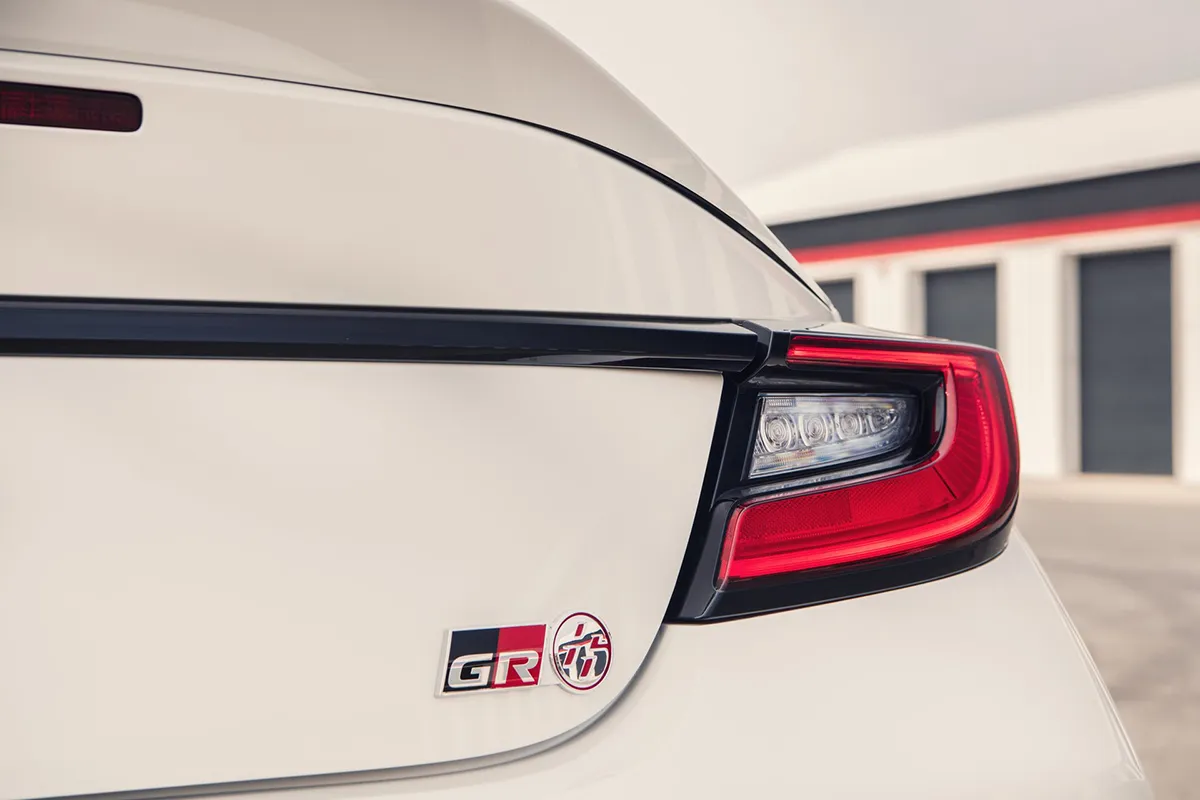
This is the finding that should shape your order, and it is pure specification rather than opinion. There is no ANCAP rating for the GR86 at all. On top of that, there are two separate ways to lose safety equipment: choose the GT and you forgo rear cross-traffic alert and blind-spot monitoring, or choose a manual and you forgo the parking support brake and rear parking sensors.
Read that twice if you are ordering a manual GT, because you are opting out of both lists simultaneously. In a coupe with a roof 1310mm off the ground and minimal rear vision, parked daily in city car parks, that is the single most consequential decision on the configurator and almost nobody discusses it.
What remains is not thin. Seven airbags, autonomous emergency braking on every variant, lane departure warning, auto high-beam and hill-start assist all come standard. Rear cross-traffic alert and blind-spot monitoring should join them, and the fact that they are grade-dependent on a $50,000 car is difficult to defend.
The missing ANCAP rating is a separate judgement call. For an enthusiast buying a third car it is close to irrelevant. For a household where this is the only car, it is a real gap in the information you would normally use, and it deserves a decision rather than a shrug.
One more thing if you are young
Run the arithmetic before you fall in love. Toyota’s own figures of 174kW and 1291kg work out to roughly 135kW per tonne, which sits above the 130kW per tonne ceiling New South Wales and Victoria apply to provisional drivers. That is a calculation from published specifications, not a legal ruling.
Check your state’s restricted vehicle list directly, because the schedules do not always follow the formula cleanly and the rules differ across borders. The wider issue is set out in this breakdown of how P-plate power laws have reshaped what young drivers can buy, and the GR86 sits squarely inside it.
What it costs to run
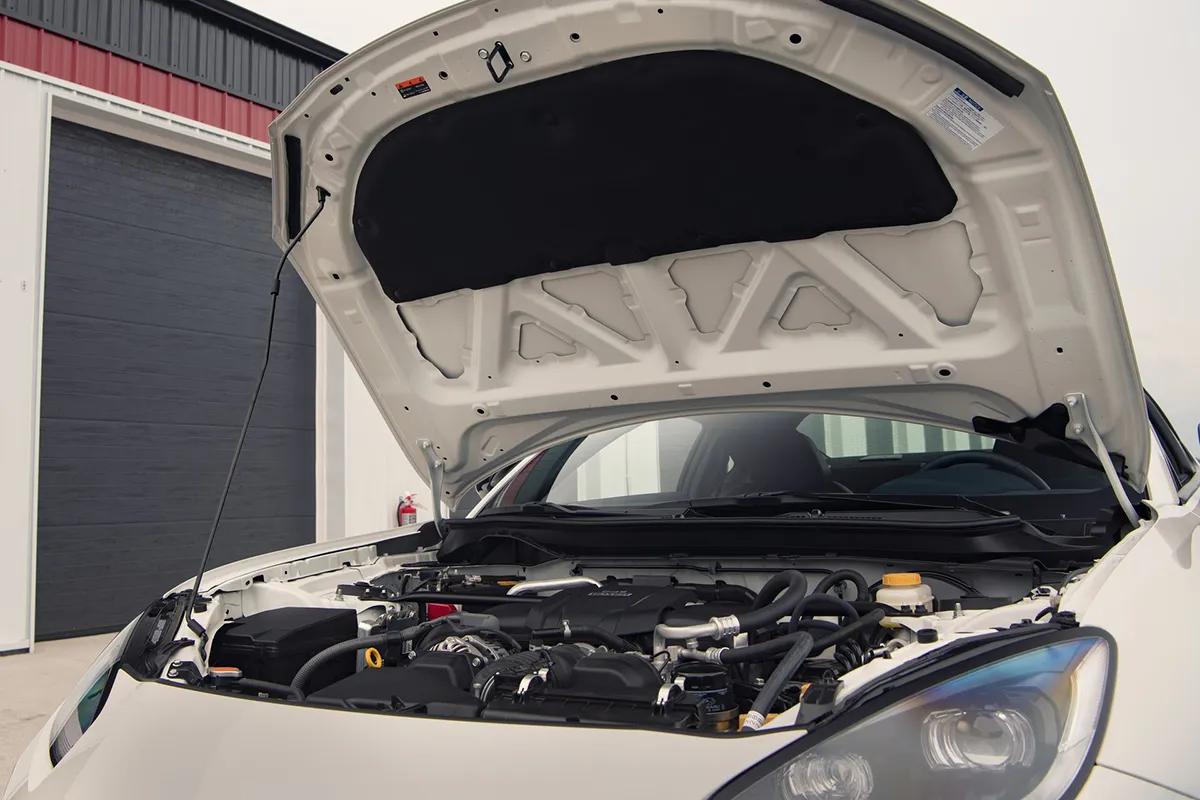
The fuel bill is the daily-driving cost that catches people out. Toyota claims 9.5L/100km for the manual and 8.8 for the automatic, and the engine requires a minimum of 98 RON. Against the 11.0L/100km recorded in mixed real-world driving, budget for premium fuel at a rate closer to a large SUV than a small coupe.
On a 50-litre tank that works out to a touring range around 500km, and premium-only means every fill is at the expensive end of the board. Acceptable for a weekend car. Less charming when it is also the thing taking you to work five days a week, and worth modelling honestly before you commit.
Ownership costs are where Toyota rebuilds the case. Five years and unlimited kilometres of warranty, stretching to seven if you service within the Toyota network, and the first five services capped at $335 each. Against almost any other rear-drive manual coupe that is remarkable, and it belongs in a full cost of ownership calculation rather than a footnote.
Pricing runs $43,940 for the GT to $50,490 at the top of the range. The GTS opens at $46,090, the Dynamic Performance Pack adds $2,200, and premium paint is $575 on top of whichever you choose. Spec a GTS with the pack and a colour and you are near $50,000 before on-roads.
So can you daily it?
Yes, if the car carries one or two people. The boot handles a weekly shop, the ride is firm rather than punishing, the servicing is genuinely cheap and the interface does not nag. Buy the GT manual, accept that you have traded parking sensors for the better gearbox, and spend the difference on tyres.
Do not buy it if the rear seats need to work. A car that cannot carry four people is a second car wearing a first car’s badge, and pretending otherwise leads to resentment about eight months in. That is a practical line rather than a snobbish one.
Do not buy the GTS with the Dynamic Performance Pack for commuting either. It is a track package sold to road buyers, and on a rough urban route you pay for it daily and collect on it rarely. If your weekends genuinely involve a circuit, the answer flips.
If that rules it out, the alternatives are a warm hatch with four usable doors or a mid-engined coupe with a bigger badge and bill. Neither gives you this much chassis for the money, and a Saturday on the Black Spur is where that gap shows.
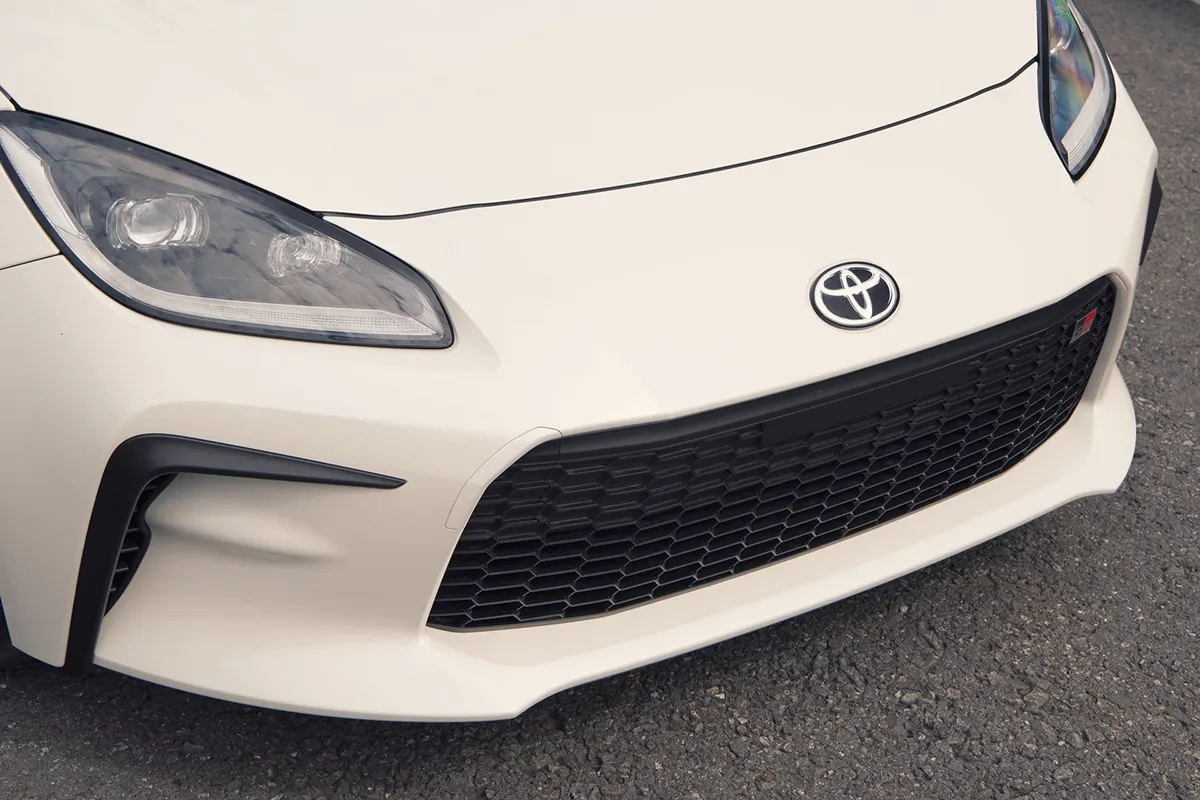
The GR86 is a sports car that tolerates commuting, not a commuter that happens to be sporty. That distinction is the whole review, and the buyers who come unstuck are the ones who read the price and assumed the second thing.


