

A folding metal roof makes a Mazda MX-5 legal for a P-plater in New South Wales. Buy the soft-top instead and it’s banned. Same engine, same 135kW, same showroom. The roof adds enough weight to drag the car under the line. That’s how finely balanced the P-plate rules are, and why a guess based on “it’s only a four-cylinder” goes wrong so often.
This guide answers the question the way people actually ask it: one car at a time. Statuses come from the NSW and Victorian government databases or the published state rules, checked in September 2026. For why the rules exist and why they favour heavy four-wheel drives, read how P-plate power laws are killing the hot hatch.
Where to check a car, and who can get an exemption
Each restricting state runs its own official checker, and that result is the only one that counts. NSW and Victoria search by make and model. Queensland and South Australia need a rego or VIN, so run the check on the actual car before you pay. Exemptions exist everywhere, but only Victoria lets a supervising full licence holder in the passenger seat make a banned car legal.
| State | Who it covers | Supervisor in passenger seat? | Other exemptions | Official checker |
|---|---|---|---|---|
| NSW | All P1 and P2 | No | Exceptional circumstances, such as genuine work use (Service NSW application) | NSW prohibited vehicle search |
| VIC | All P1 and P2 | Yes | Driving for work, or undue hardship (application, $69.90) | Victorian probationary vehicle database |
| QLD | P1 and P2 under 25 | No | Severe hardship, work, or the only car available (granted rarely) | QLD high-powered vehicle check |
| SA | P1 and P2 under 25 | No | Special circumstances (form MR1329) | EzyReg high-powered vehicle check |
Western Australia, Tasmania, the ACT and the Northern Territory have no power restriction, so there’s nothing to check there. A P-plater from those states still has to obey the local rules when driving interstate. Sources: the NSW, Victorian, Queensland and South Australian government pages linked above, checked September 2026.
Why your own maths gets it wrong
Most people who get caught out did the sum themselves and trusted it. The formula is simple (power divided by tare mass in tonnes), but the inputs are where it breaks. Carmakers publish kerb weight, not tare, and kerb is heavier because it includes a full tank. A heavier figure flatters the ratio. The MX-5 Roadster GT RS shows 127kW per tonne on kerb and about 134 on tare.
There’s no rounding to save you either. Transport for NSW states that 130.1 is over the line. And the maths isn’t the whole test. NSW and Victoria can ban cars that sit under 130 by listing them, and NSW does exactly that with the Subaru WRX automatic and the BYD Seal Premium.
Modifications override everything. Any engine change that lifts performance bans the car outright, whatever the ratio. A $600 ECU tune on a legal i30 N Line turns it into a prohibited vehicle the moment it’s flashed. And for cars built before 2010, Queensland’s rules also ban V8s, non-diesel turbos and anything over 210kW, with South Australia running a similar list.
The P-plate verdict on popular cars
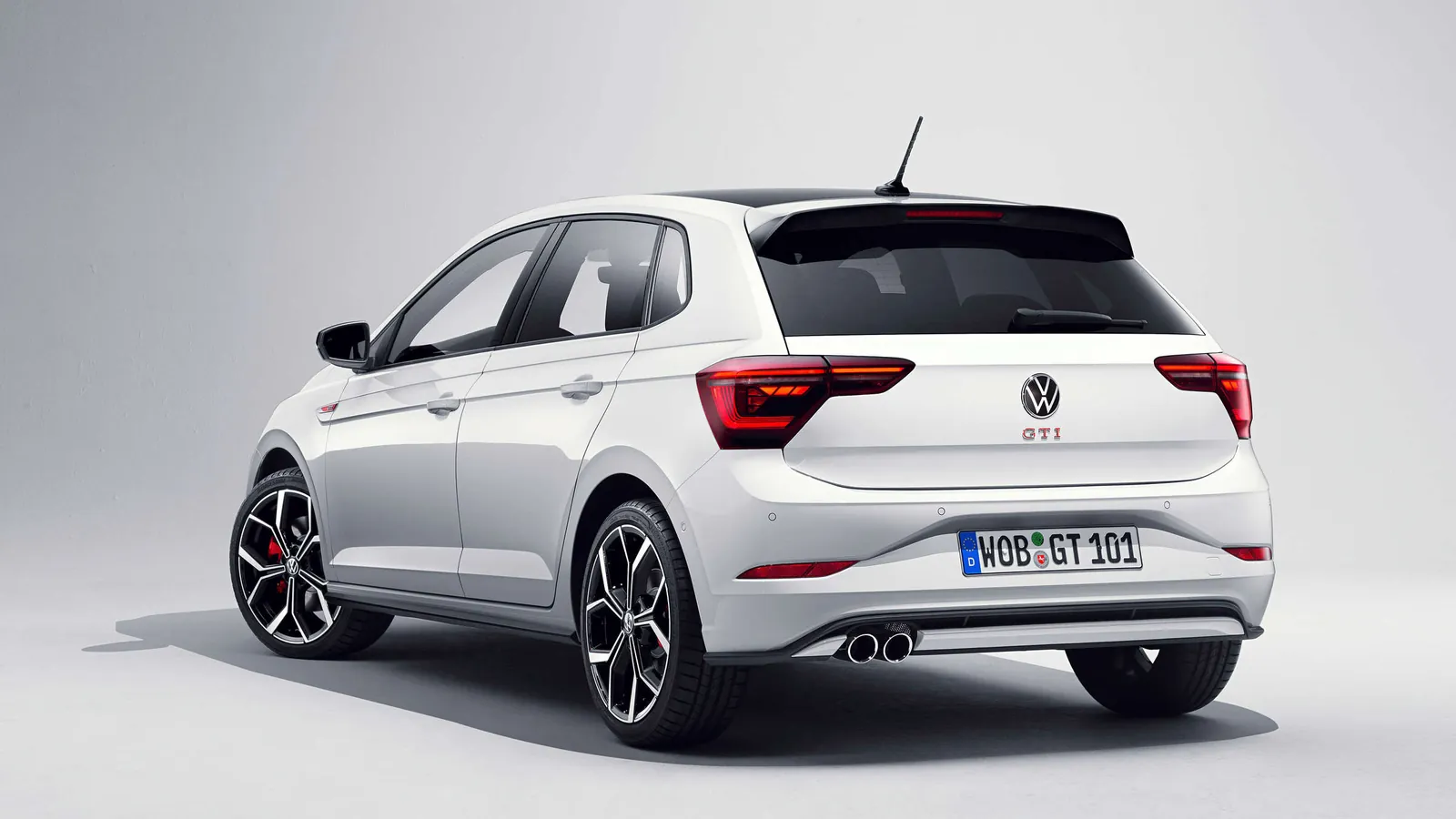
Most warm hatches and small sedans pass. Almost every true hot hatch fails. The dividing line sits around 150kW in a car of normal weight. Below it you have the i30 N Line, Polo GTI and K4 GT-Line, all legal everywhere. Above it sit the Golf GTI, i30 N, GR86 and every Golf R, banned in all four restricting states.
Tare figures are Redbook and JATO data, because most carmakers don't publish tare. NSW and Victorian statuses are the listed database results where queried; banned cars above 130 follow directly from the rule. *Queensland and South Australian statuses are calculated from each state's published rule, since their checkers need a rego or VIN. Always check the exact car you're buying.
Can a P-plater drive a Hyundai i30 N Line?
Yes, in every state. The i30 Sedan N Line's 150kW turbo four works out at about 113kW per tonne, and both the NSW and Victorian databases approve it. The runout N Line hatch (117kW) is legal too. The full i30 N is the one to avoid: 206kW puts it at 136 or more. The Cerato GT vs i30 N Line comparison picks between the two legal warm options.
Is the Golf GTI or Golf R P-plate legal?
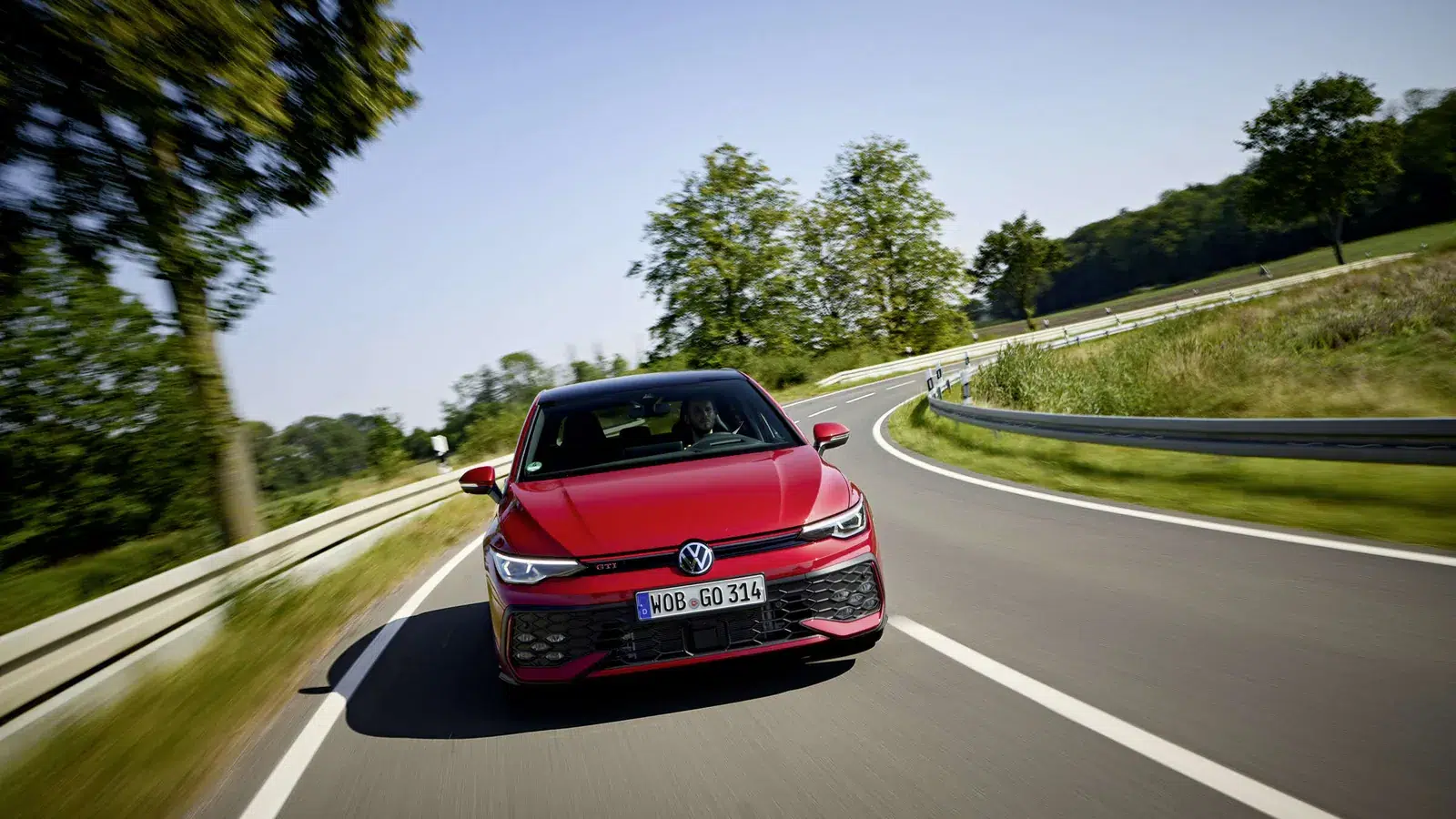
The current Golf GTI isn't. The Mk8.5 update lifted power to 195kW, which pushed it to 134.7kW per tonne and onto Victoria's banned list. The Mk8 before it, at 180kW, was approved. Every Golf R ever sold here is banned, from the Mk7's 143 to the Mk8.5's 161. If a Volkswagen hot hatch is the goal, the Polo GTI is the only current one that passes.
Why is the GR86 banned when it has no turbo?
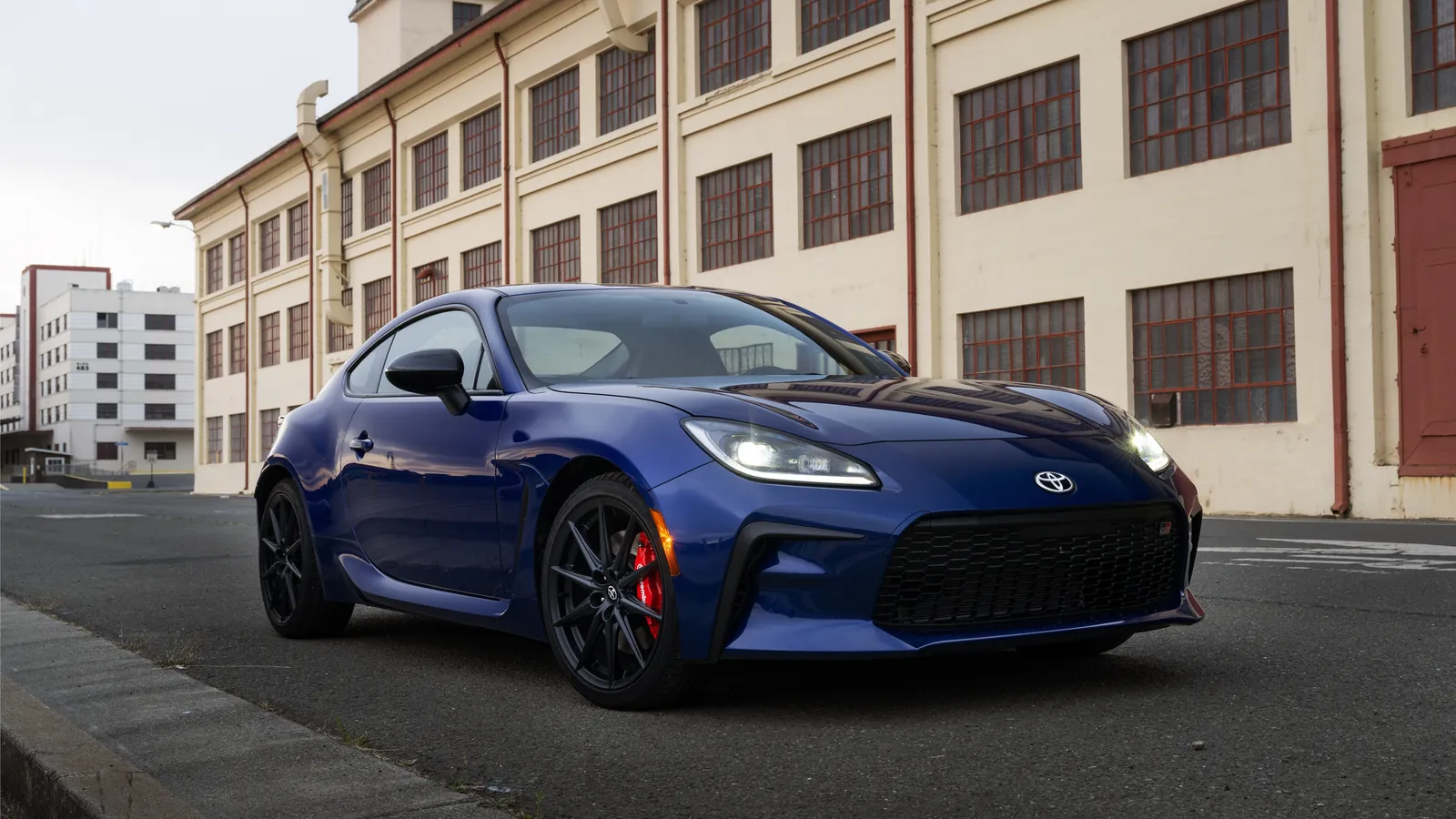
Because the rule doesn't care about turbos, only power against weight. The GR86 and its Subaru BRZ twin make 174kW from a naturally aspirated 2.4-litre flat four and weigh under 1,300kg tare. That lands them between 136 and 142kW per tonne, banned in every restricting state. Light and honest is exactly what the rule catches. The GR86 daily-driver review will have to wait until the green Ps come off.
Can a P-plater drive a Subaru WRX?
Only in Victoria, and only the automatic. The manual WRX sits between 133 and 136kW per tonne and is banned everywhere with a restriction. The heavier auto dips to 127 to 130, which Victoria's database approves. NSW has put every current WRX automatic on its high-risk list anyway, so a Sydney P-plater can't drive any version. Queensland and South Australian under-25s can, on the numbers, drive the auto.
Which Mazda MX-5 is P-plate legal?
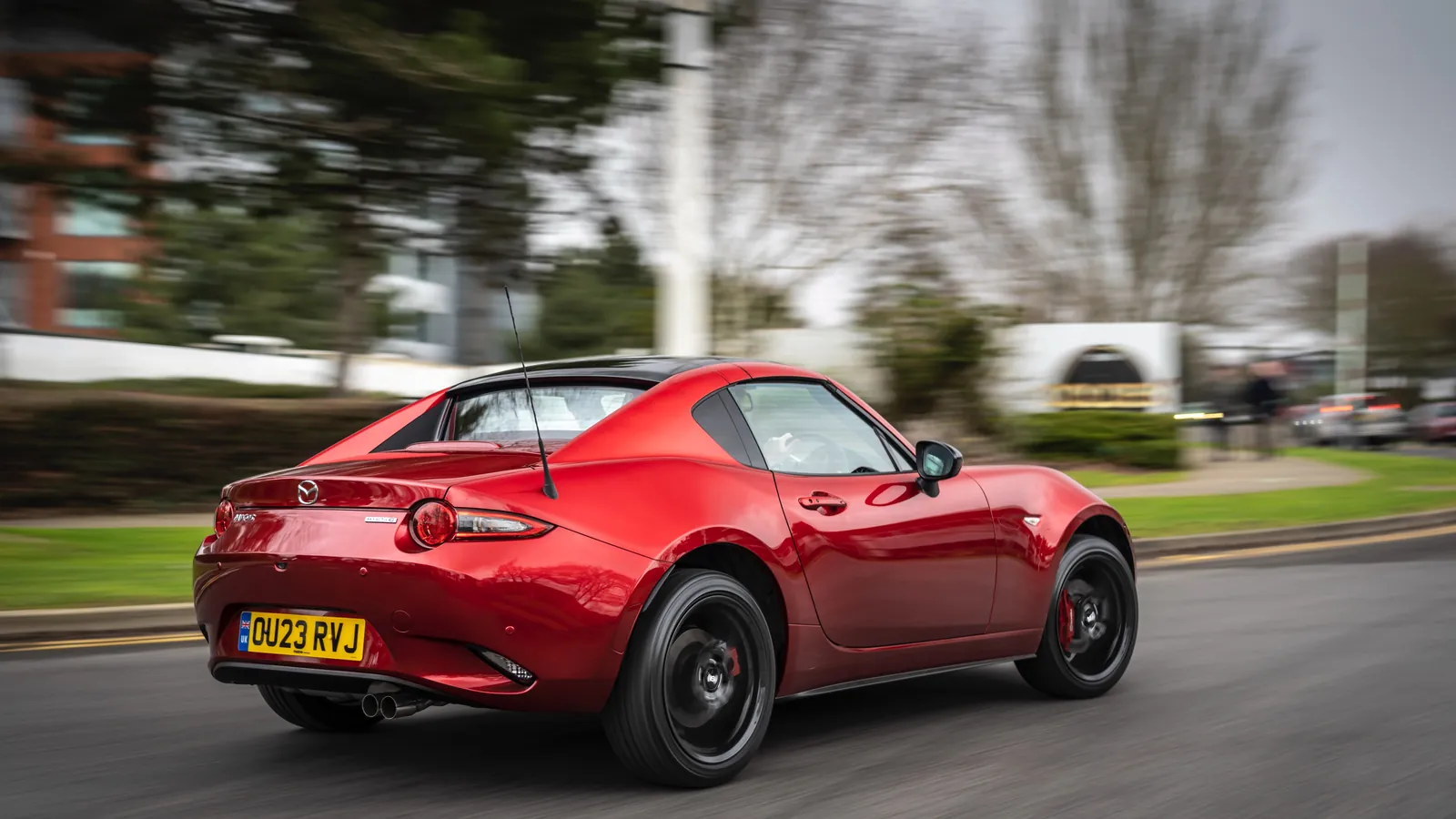
The RF. Its folding hardtop adds roughly 50kg, which drops the ratio to between 124 and 127kW per tonne, legal in all four restricting states. The soft-top Roadster sits at 130.4 to 133.8 and is banned. Victoria's database lists the Roadster GT RS as approved, most likely because its record lacks a tare figure. NSW bans it. Treat that listing as a data quirk, not a loophole.
EVs: the power figure you can't see on the window sticker
Electric cars face exactly the same 130kW per tonne test, and they fail it more often than buyers expect. Drive reported in April 2026 that more than 40 per cent of current EVs are banned in NSW, and around 30 per cent in Victoria. Instant torque and big dual-motor outputs do the damage, even in heavy cars.
Tesla doesn't even publish kilowatt figures, so owners are relying on Redbook data. On those numbers, the base Model 3 RWD at 208kW is legal at 118kW per tonne, while the Long Range RWD's 235kW puts it at 134.5 and bans it. Same body, same seats. The Model 3 Performance and Seal Performance are both far over the line.
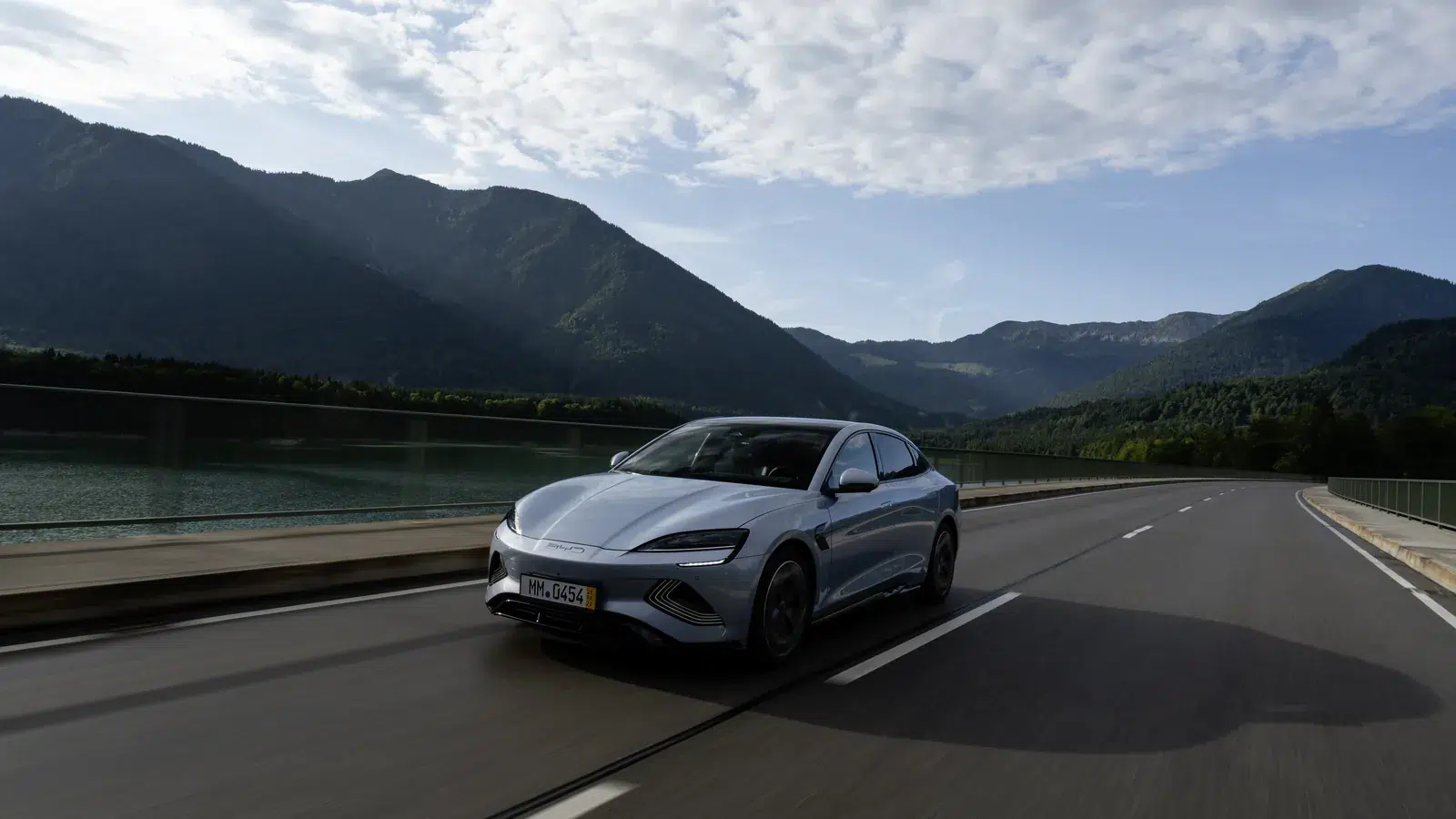
The BYD Seal Premium is the strangest case in the country. At 111.9kW per tonne it passes easily on the maths, and Victoria approves it. NSW bans it by listing it as high-risk. A Melbourne P-plater can drive one home from the dealer; a Sydney P-plater can't legally drive the same car across the showroom car park.
Buying used: the model-year trap
Power often creeps up through a model's life, so the same badge can be legal in one year and banned the next. The Mk7 Golf GTI (162kW) and early Mk7.5 (169kW) are approved in Victoria. From MY19 the Mk7.5 gained 180kW, reached 130.7kW per tonne and was banned. Special editions like the TCR and Performance Edition 1 are banned too.
That's a trap on Marketplace, where sellers list "Golf GTI 2019" without a build date. Check the compliance plate, run the VIN through your state's checker, and walk away if the numbers don't match. The Mk7 GTI and R buying guide covers what to look for mechanically, and the Mk7 DSG survival guide covers the gearbox that decides whether it's worth buying.
What getting caught costs, and what not to do
In NSW, driving a prohibited vehicle carried a $704 fine and seven demerit points as of 2025, according to CarExpert. That alone suspends a P1 licence. Queensland and South Australia issue a fine and points too. Victoria confirms a fine, with a court maximum of 10 penalty units. And the Victorian supervisor exemption doesn't cross the border. In NSW, a parent in the passenger seat changes nothing.
- Don't do the maths on kerb weight. It flatters the ratio. Only tare counts.
- Don't tune, remap or fit a performance intake to a legal car. Any engine modification bans it outright.
- Don't buy on the badge. Check the exact VIN in the state checker before you pay.
- Don't forget the insurer. A car the law allows can still be one an insurer refuses to cover for a driver under 25, and hot hatch premiums for young drivers can outweigh the car's price within a few years.
The best P-plate legal cars for enthusiasts
The Polo GTI is the pick for a new car. At 111kW per tonne it's legal everywhere, it's genuinely quick, and it teaches car control without the numbers that end licences. The MX-5 RF is the driver's choice if two seats will do. On a budget, a used Cerato GT or Mk7 Golf GTI gives most of the fun for a fraction of the price.
Not every first car needs to be fun, and plenty of parents would rather it wasn't. If the brief is cheap, safe and reliable rather than quick, the best used first cars under $10,000 is the better starting point. Every car on that list clears the 130kW line by a wide margin, so the checker becomes a formality.
The rule is blunt, the databases are inconsistent, and a folding roof can decide the outcome. Don't argue with it. Check the VIN, buy the car the checker approves, and save the GR86 for the day the green Ps come off.


