
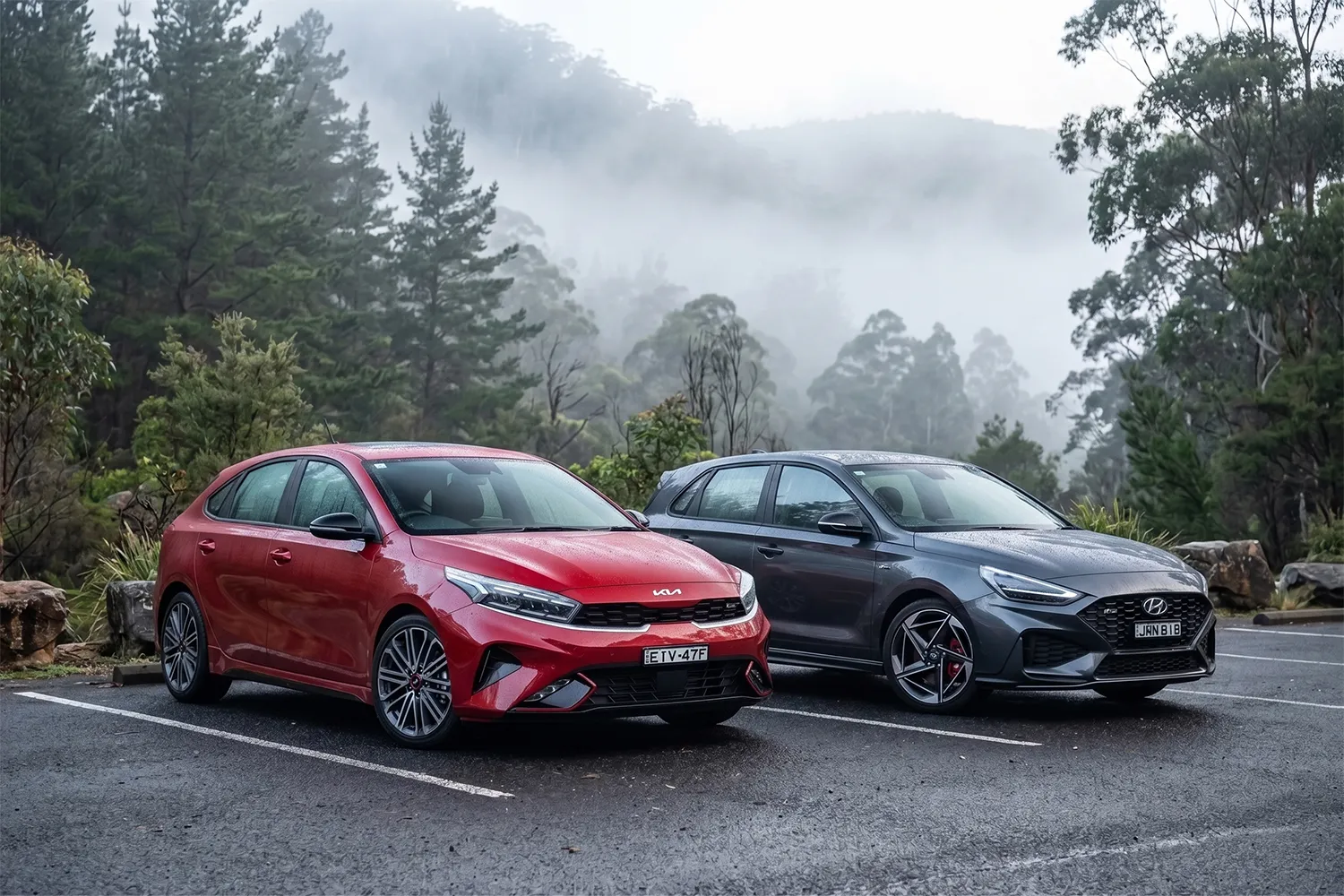

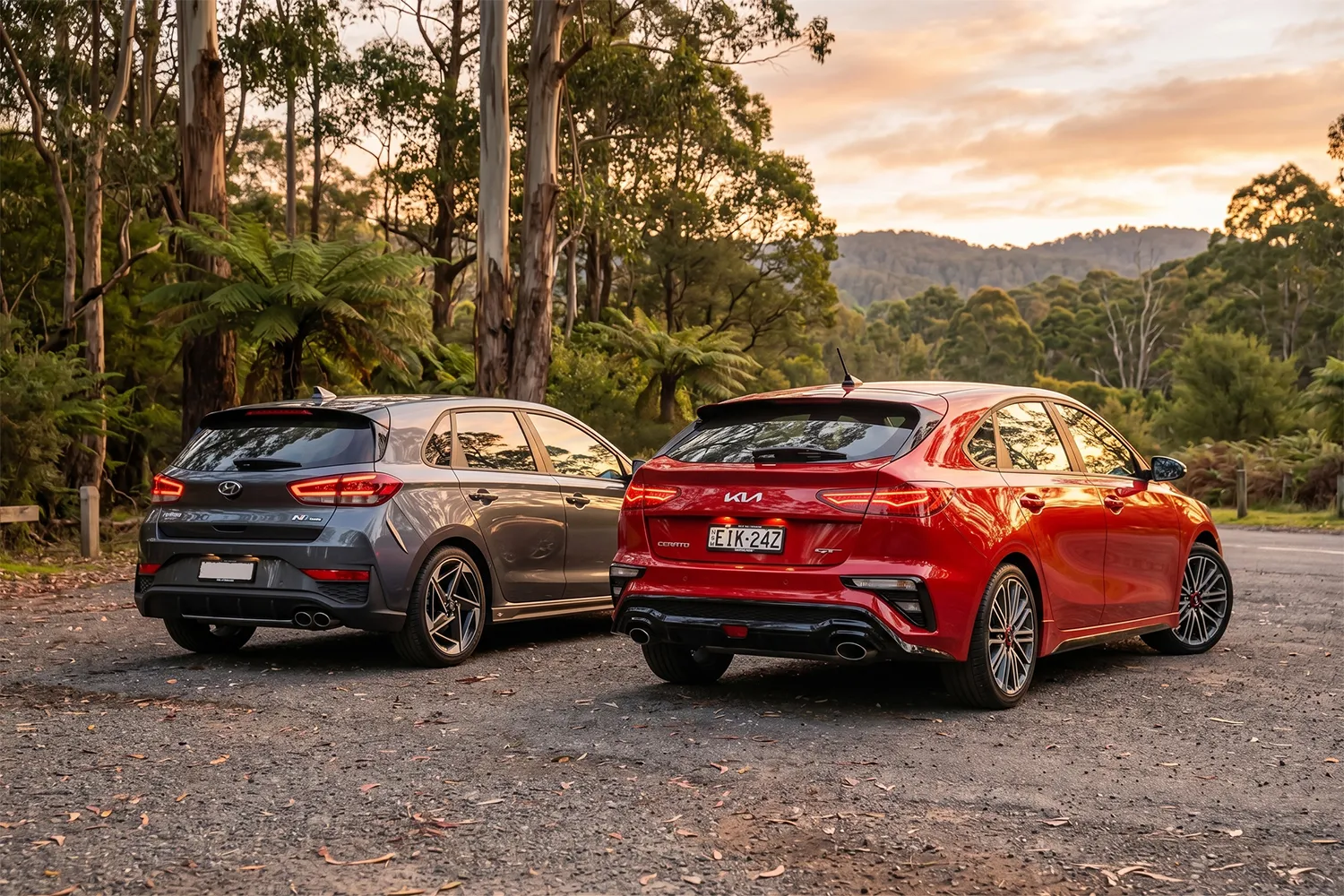
Not everyone has $70,000 to drop on a flagship hot hatch. The 2026 Kia Cerato GT and Hyundai i30 N Line hatchbacks provide the answer for budget-conscious driving enthusiasts. They offer an accessible blend of daily comfort and weekend capability without the crippling insurance premiums.
For drivers wanting pace on a realistic budget, these two hatchbacks represent the default choices. They share a parent company, but recent mechanical updates mean they are no longer identical twins beneath the sheet metal. The decision ultimately comes down to your appetite for firm suspension and whether you prefer raw power over hybrid efficiency.
Let us look at how the latest iterations of these warm hatches stack up on Australian roads before you sign a finance contract.
Powertrain Head-to-Head: The Twins Diverge
Which hatch is actually faster?
The 2026 Cerato GT is faster, retaining its 150kW 1.6-litre turbocharged engine. The i30 N Line hatch has shifted to a 117kW 1.5-litre mild-hybrid setup. If you want outright pace, buy the Kia. If you want fuel efficiency, choose the Hyundai.
Historically, these vehicles shared an identical 1.6-litre turbocharged four-cylinder powertrain. That is no longer the case for the hatchback variants. Hyundai has updated the i30 N Line hatch for 2026, dropping the older engine in favour of a 1.5-litre turbocharged unit paired with a 48V mild-hybrid system.
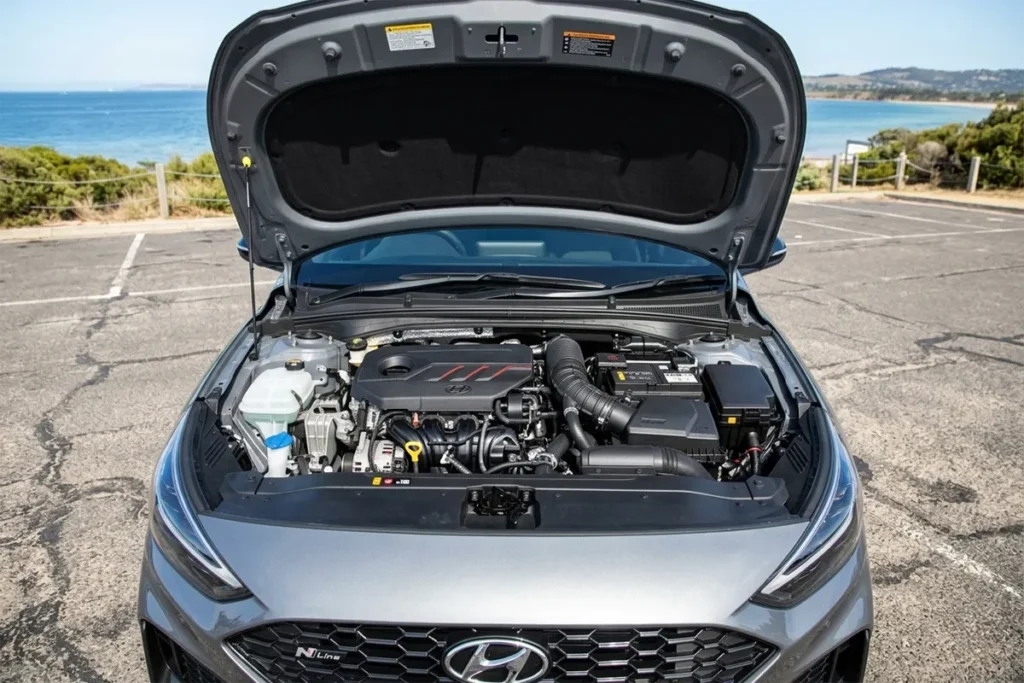
This new Hyundai powertrain produces 117kW and 253Nm. It is noticeably less powerful than the outgoing model, focusing instead on reducing emissions and dropping claimed fuel consumption to 5.6L/100km. If you want to understand how official efficiency numbers translate to the daily commute, reading about real-world fuel economy expectations is mandatory before you buy.
The 48V mild-hybrid system in the Hyundai provides a subtle torque fill at low RPMs. This masks any inherent turbo lag, making the car feel instantly responsive when pulling away from traffic lights. The Kia relies entirely on traditional boost pressure, meaning you wait a fraction of a second longer for the surge of acceleration to arrive.
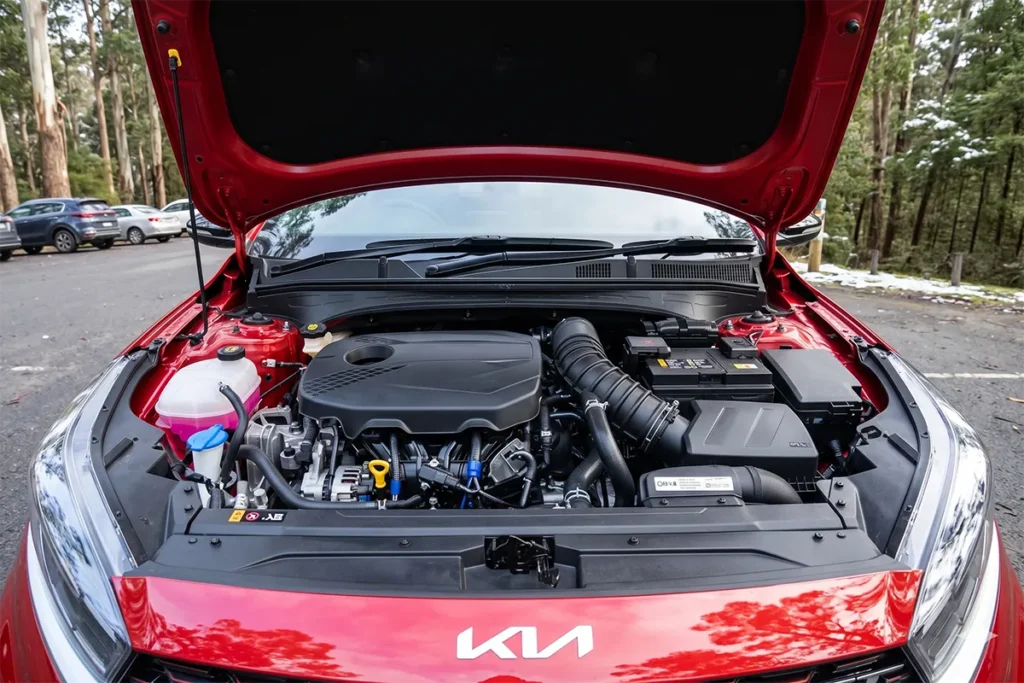
The Kia Cerato GT stubbornly sticks to the traditional formula. It retains the proven 1.6-litre turbocharged engine producing a healthy 150kW and 265Nm. Peak torque arrives early in the rev range. This characteristic makes city overtakes effortless and highway merging completely stress-free compared to the milder Hyundai.
Both vehicles utilise a seven-speed dual-clutch automatic transmission. The calibration on both units is significantly smoother in stop-start traffic than earlier Korean dual-clutch efforts. They shift crisply and decisively when pushed hard on a winding coastal road, though neither offers a manual option for driving purists.
The Chassis and Suspension Divide
Do they ride the same on poor roads?
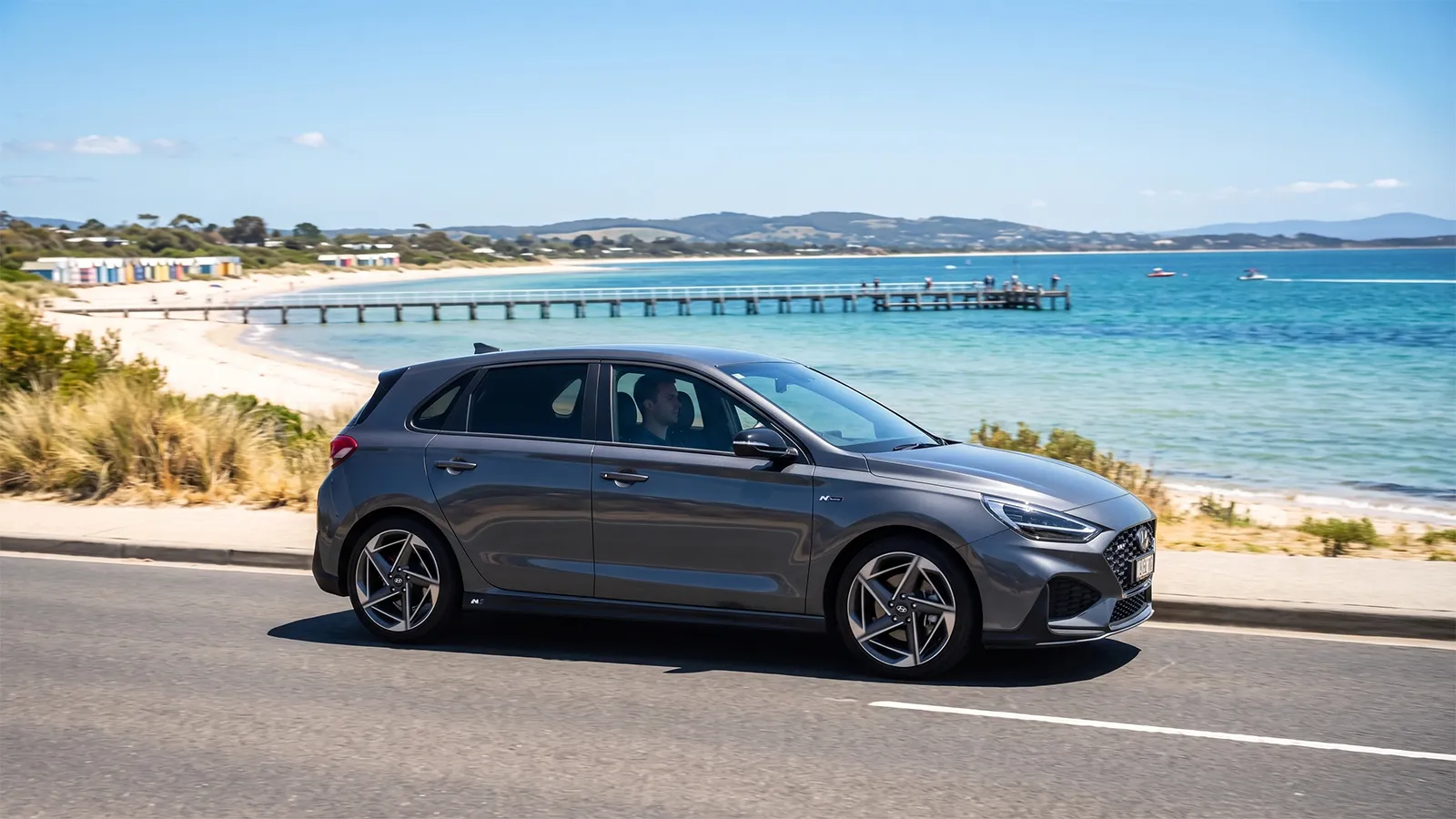
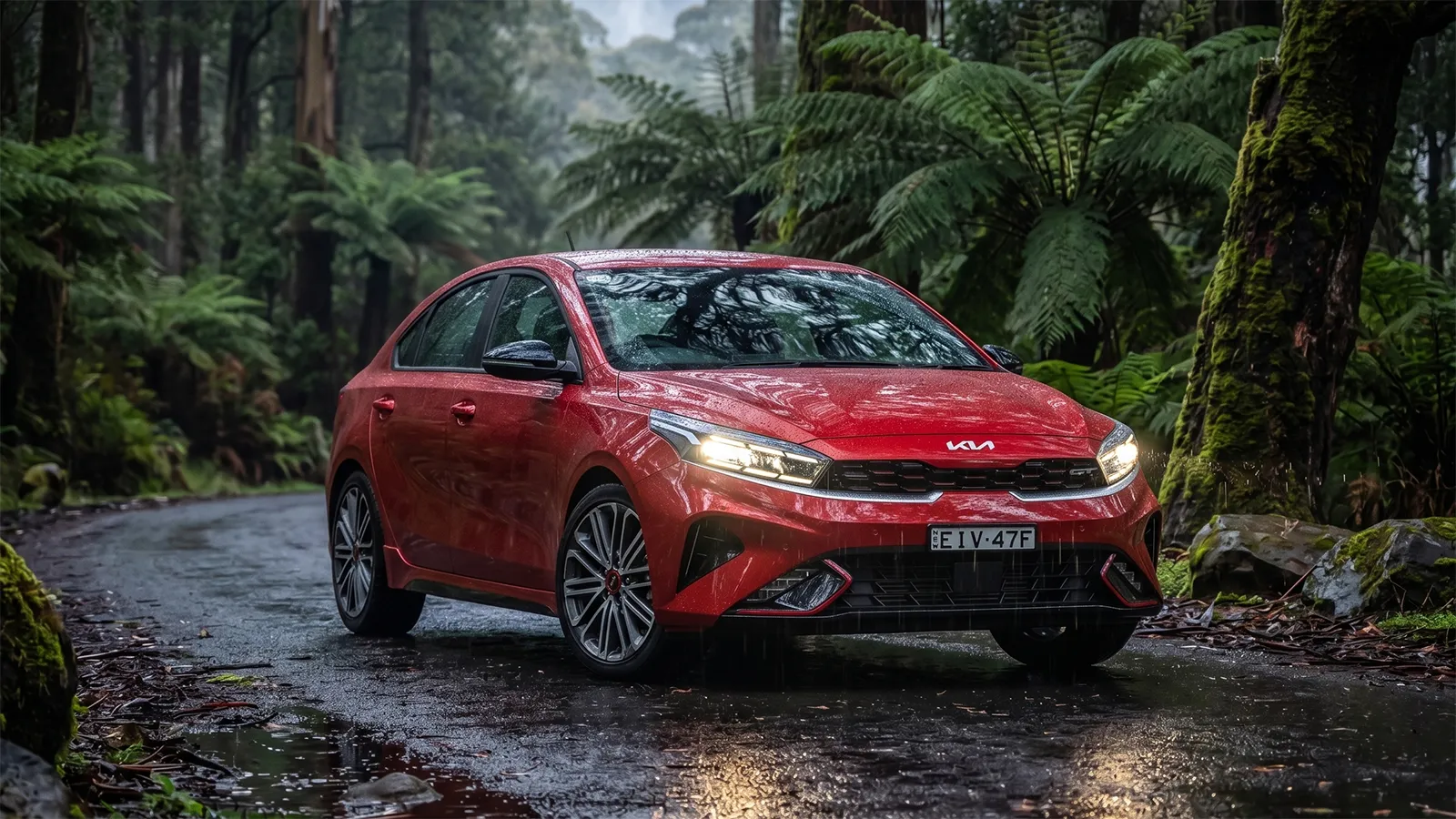
The real difference between these two cars is how they manage Australian roads. The Hyundai strikes a compliant balance for the daily commute. The Kia takes a significantly firmer approach, sacrificing urban comfort for sharper turn-in and superior body control.
Both feature a multi-link rear suspension setup, but the tuning philosophies push them in completely different directions. The Hyundai i30 N Line benefits from a tune that strikes an impressive balance between mid-corner stability and daily ride compliance. Potholes and corrugations on rural backroads are absorbed with surprising grace.
The Kia Cerato GT is unapologetically stiff. The ride is noticeably firmer around town. You will feel manhole covers and expansion joints through the driver seat. The payoff arrives when you find a twisty road. The Kia offers sharper turn-in and significantly less body roll when tackling tight switchbacks.
Interior Head-to-Head: Screens and Seating
Who has the better cabin technology?
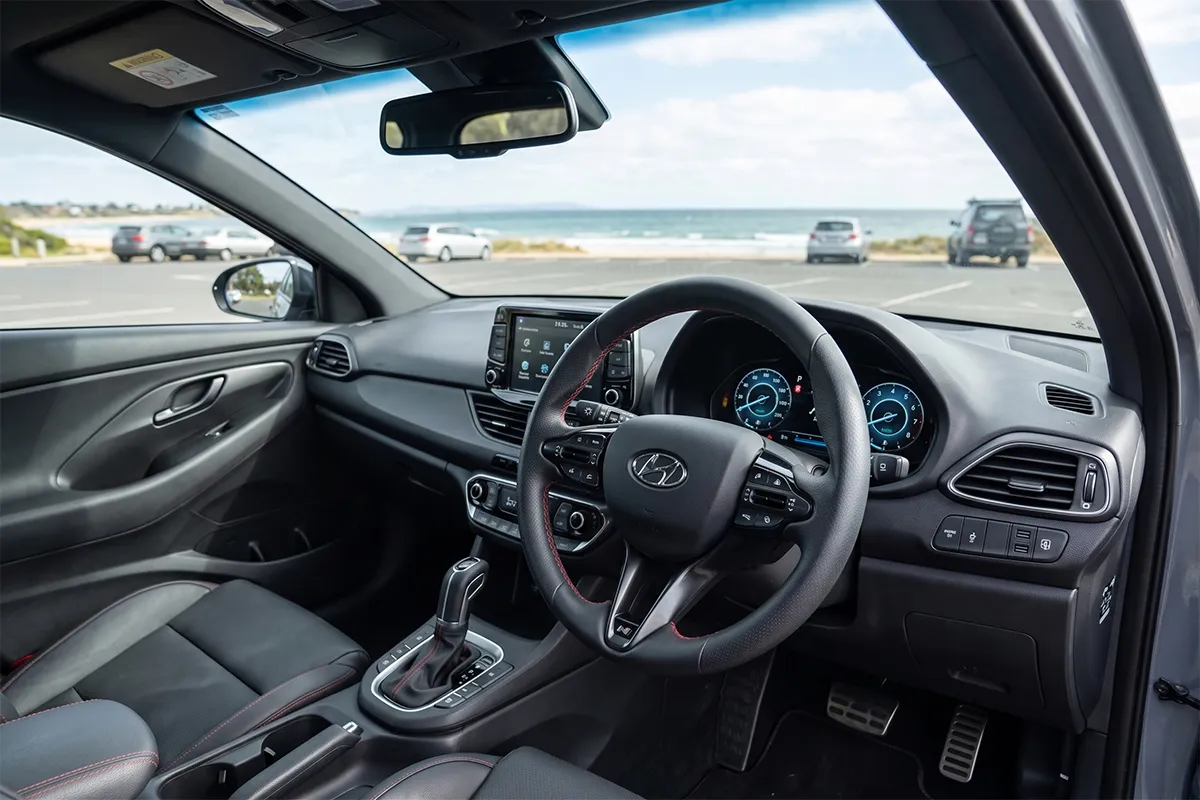
The i30 N Line leans into modern minimalism with a fully digital 10.25-inch instrument cluster. The Cerato GT feels slightly more traditional, relying on analogue dials and prioritising wider sports seats over the aggressive performance aesthetic found in the Hyundai.
Stepping into the i30 N Line feels focused and deliberate. The front seats are heavily bolstered and grab you tightly around the ribs. Red stitching and N-branded accents dominate the dark cabin. It feels built entirely around the driver experience, though broader frames might find the seats slightly restrictive.
The Cerato GT interior feels slightly more mature. The leather-appointed sports seats are highly supportive but noticeably wider, accommodating larger adults better than the Hyundai. Flat-bottomed steering wheels feature in both vehicles, but the Kia leans more heavily on gloss black plastics across the central dashboard area.
Hyundai takes a clear victory in digital presentation. The i30 N Line features a sharp 10.25-inch fully digital instrument cluster that displays vital information beautifully. Kia retains traditional analogue dials flanking a smaller central display. Traditionalists often prefer the physical needles, but the Hyundai setup undeniably feels a generation newer.
Kia sensibly retains more physical buttons for crucial daily functions. You can adjust the climate control or skip a music track without taking your eyes off the road. Hyundai integrates more controls into the digital displays. While it looks exceptionally clean, it requires a steeper learning curve to operate quickly while driving.
Both vehicles offer central touchscreens with Apple CarPlay and Android Auto. The interfaces are highly intuitive and quick to respond. Storage solutions are deeply practical in both cabins, offering deep door bins and generous centre console storage for your daily items.
The Cargo and Load Case: Practicality Meets Performance
Does the hybrid system ruin boot space?
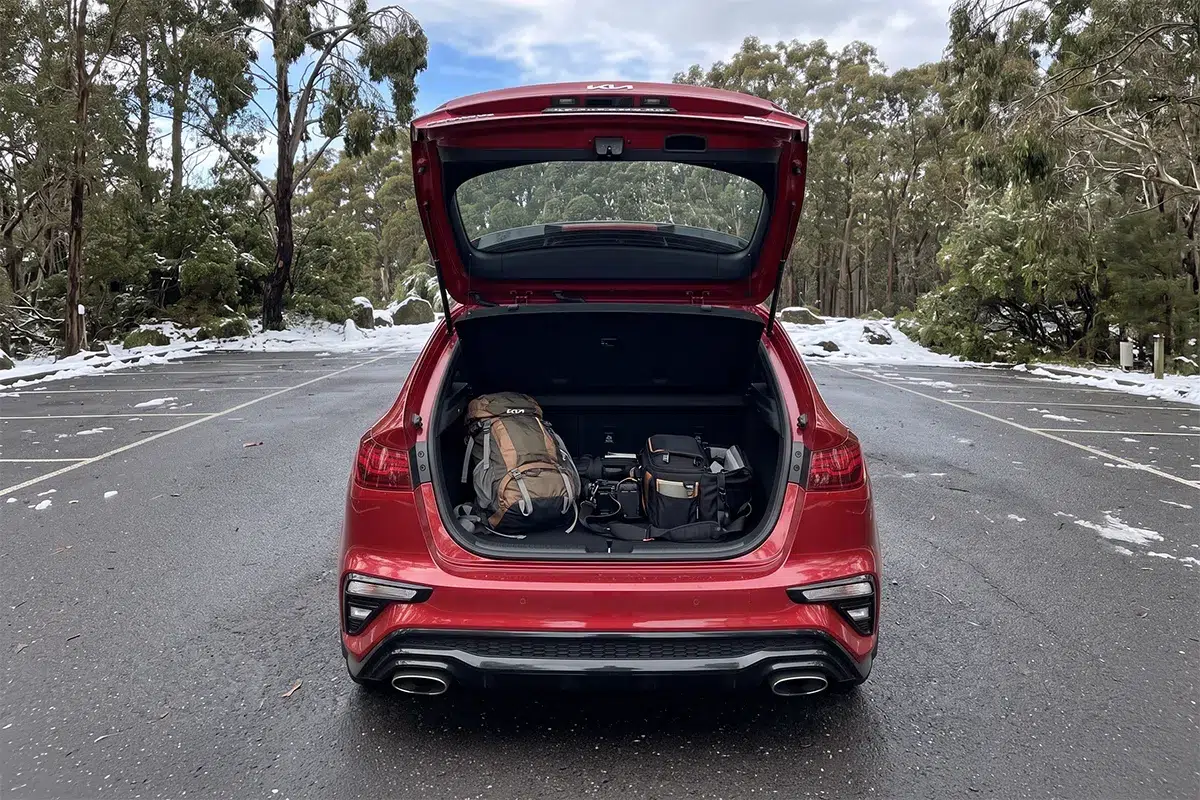
Despite the Hyundai housing a battery beneath the floor, the cargo space is not noticeably shallower. The Kia claims 428 litres while the Hyundai offers 395 litres. Both will easily swallow a weekend away or a substantial grocery run.
A warm hatch is completely useless if it cannot handle daily life. The Cerato GT dominates the spreadsheet practicality metric. The boot offers a massive 428 litres of space with the rear seats raised. That is an exceptionally large cargo area for this segment, easily swallowing bulky sporting gear.
The i30 N Line boot measures 395 litres. On paper, this seems like a loss. In reality, the cargo space is not noticeably shallower. The load floor remains highly usable for everyday errands, meaning you will rarely notice the 33-litre deficit during the weekly grocery run.
The primary difference lies beneath that boot floor. The mild-hybrid battery in the Hyundai sits where a spare tyre would normally go, meaning the i30 relies entirely on a tyre repair kit. If you suffer a severe sidewall puncture on a regional road, the repair kit will not save you. Kia owners have the reassurance of a space-saver spare sitting securely beneath their boot floor.
Rear seat accommodation heavily favours the Kia. Taller adults will find significantly more legroom and headroom in the back of the Cerato. The i30 N Line feels slightly claustrophobic in the rear row, exacerbated by the dark headlining and a rising window line that restricts outward visibility for passengers.
Safety and Ownership: The Sensible Stuff
Which hatchback offers better long-term value?
Performance stats are meaningless if the car costs a fortune to run. Both cars carry maximum safety ratings and comprehensive driver assistance. Kia takes the clear win on warranty length with seven years compared to the five years from Hyundai.
Both models come standard with autonomous emergency braking, lane-keeping assist, and blind-spot monitoring. The lane-keeping systems can feel intrusive on narrow country roads, gently tugging the steering wheel towards the centre line. Thankfully, both manufacturers allow you to disable these systems relatively easily via steering wheel controls.
When assessing long-term value, the manufacturer warranty is a massive differentiator. The Cerato GT is backed by an industry-leading seven-year, unlimited-kilometre warranty. This provides incredible peace of mind for long-term owners. The i30 N Line offers a five-year, unlimited-kilometre warranty. It remains a solid guarantee but falls short of its corporate cousin.
Servicing costs are relatively matched, requiring maintenance every 10,000 kilometres or 12 months. This is a shorter interval than many naturally aspirated competitors. If you are calculating your monthly budget, reading our guide on the true cost of owning a car in Australia will help you factor in insurance and depreciation.
Predicting resale value for these vehicles requires looking at historical data. The Kia holds its value exceptionally well, buoyed by that transferable seven-year warranty. Second-hand buyers are willing to pay a premium for a car that still has factory backing. The Hyundai also performs solidly on the used market, though the shorter five-year warranty means it loses that safety net sooner.
Spec-to-Spec: By the Numbers
Comparing the spec sheets reveals how these former twins have diverged for 2026. The Kia retains the higher power output, while the Hyundai leans into mild-hybrid efficiency and modern interior screens. Both maintain highly usable boot capacities.
2026 Cerato GT vs i30 N Line
The Warm Hatch Verdict: Which Should You Buy?
These two hatchbacks prove that you do not need a massive budget to enjoy driving. They provide a vital entry point into performance motoring without the terrifying insurance premiums associated with pure hot hatches. The fact that they can comfortably handle the mundane daily tasks makes them genuinely compelling ownership propositions.
Who should buy the Hyundai i30 N Line?
If your commute involves heavy traffic and broken suburban roads, the Hyundai is the clear winner. The compliant suspension tune makes the daily grind far more bearable, and the mild-hybrid efficiency will save you money at the petrol pump.
The i30 N Line is highly accessible and deeply sensible. You get genuine sporting aesthetics without punishing your spine over every pothole. It is a highly polished all-rounder that rarely puts a foot wrong on the weekday run. If you prioritise comfort and fuel economy over outright pace, buy the Hyundai.
Who should buy the Kia Cerato GT?
If you live for early Sunday drives on empty mountain roads, the Kia deserves your attention. The firm suspension and full-fat 150kW engine reward aggressive driving with brilliant body control and sharp steering response.
The Cerato GT delivers a more uncompromising driving dynamic. You must accept the harsh ride around town to enjoy the benefits when the road opens up. It remains one of the best value performance bargains on the market. If you are willing to sacrifice some daily comfort for sharper handling, buy the Kia.
For the P-Plater Upgrading
Moving from a first car to a turbocharged hatch is a significant step. Both cars offer comprehensive safety suites, but the Kia provides a crucial safety net for young buyers with its massive seven-year warranty.
If you are stepping out of one of the best used first cars for P-platers, the jump in technology will be staggering. The Kia offers more peace of mind with its longer warranty and potent engine. The Hyundai offers a slightly easier learning curve. Pick the one that matches the roads you actually drive, not the ones you wish you did.


