
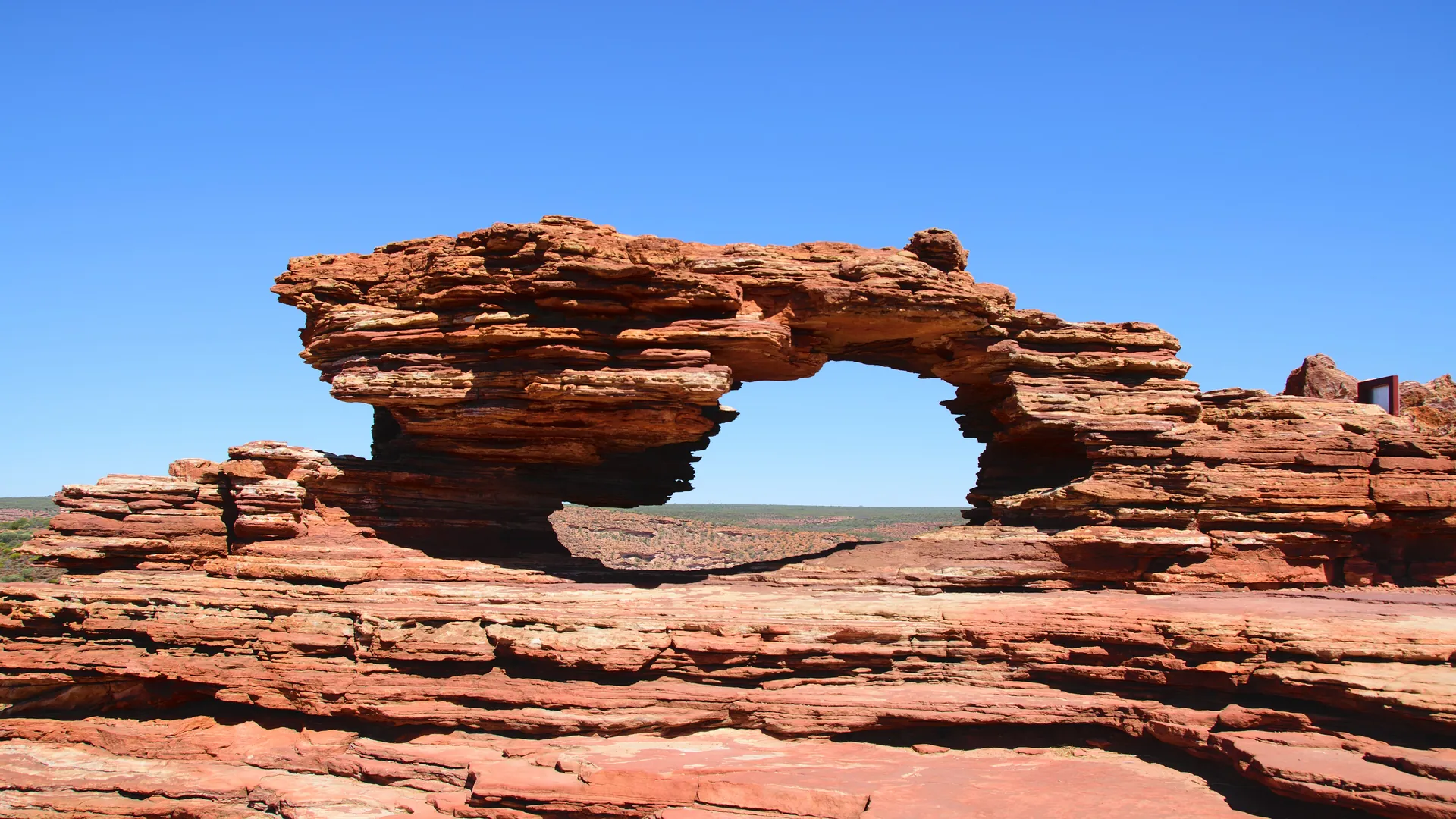

Kalbarri is the kind of place that makes a 600km drive feel short. The Murchison River has carved a gorge through banded red sandstone, the coast drops 100 metres into the Indian Ocean, and on the way up you pass the Pinnacles, a pink lake and a rock lobster factory you can tour. The drive itself is half the point.
Timing matters more than usual this year. From 1 November, the Loop Trail to Nature's Window closes to anyone starting after 7am until April, and summer turns the gorges into an oven. This guide covers the coastal route over three days, where to fill up, where to camp, the rules for towing, and what changes once the heat arrives.
Coast road or highway? Pick your route north
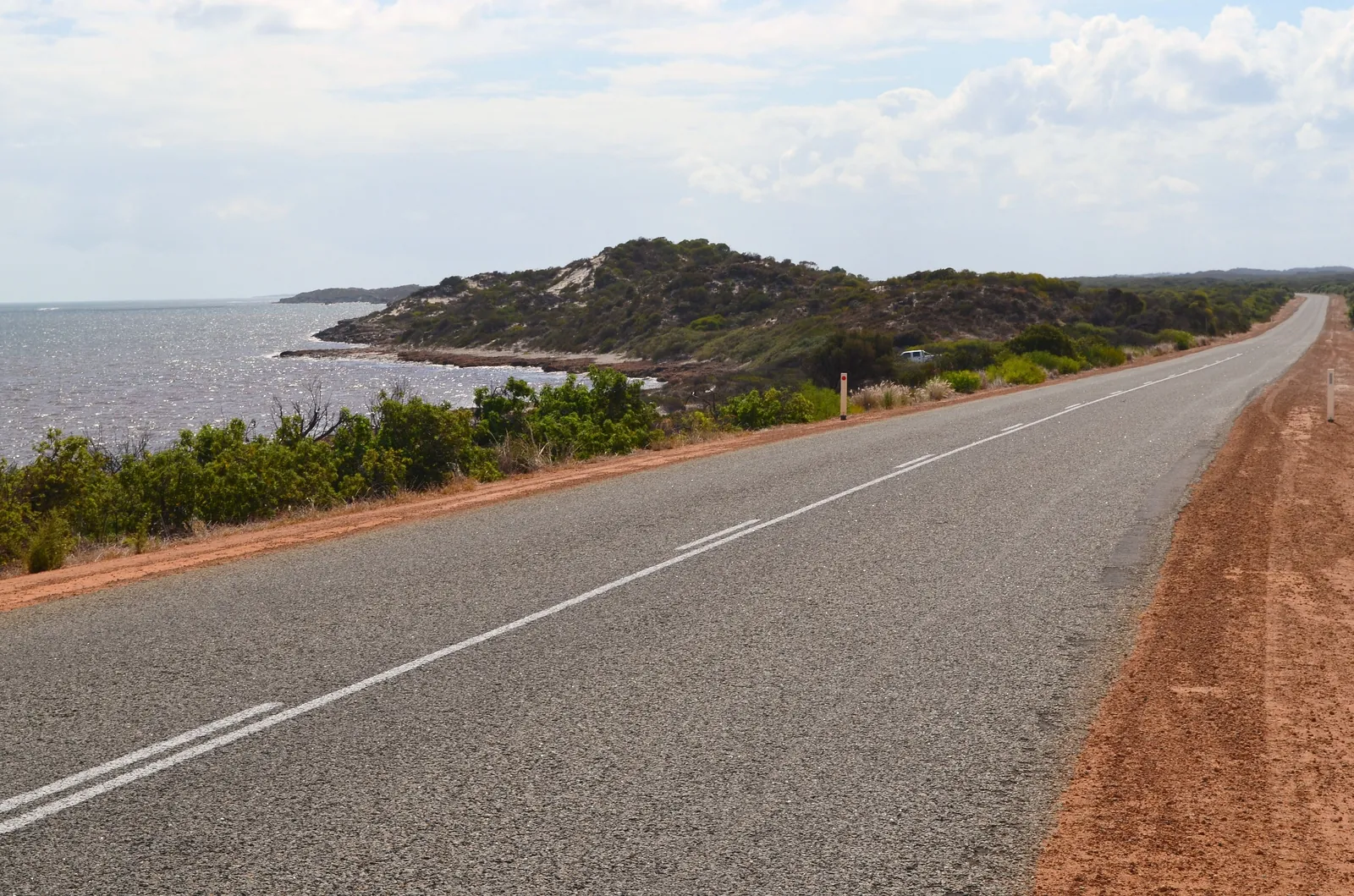
Take Indian Ocean Drive. It adds only about 30km over Brand Highway, a little under an hour of extra driving by routing estimates, and it passes almost everything worth stopping for. The northern section is now properly sorted: Main Roads finished widening Leeman to Brand Highway in April 2025, with two passing lanes and audible edge lines added.
| Route | Distance | Driving time | Best for |
|---|---|---|---|
| Brand Highway all the way | About 573km | About 7 hours | Getting there in a day, and towing |
| Indian Ocean Drive and Port Gregory | About 606km | About 8 hours | The scenery, over two or three days |
| Brand Highway, then Ajana-Kalbarri Road | About 583km | About 7.3 hours | Arriving at the gorges first |
Driving times are free-flow estimates from OpenStreetMap routing with no stops, caravan or roadworks allowance. The national parks agency rounds Perth to Kalbarri to 590km and about six hours.
Brand Highway still has a job. If you're towing a big van or working to a deadline, it's the faster and simpler run, with roadhouses at Badgingarra and Eneabba. Many drivers split the difference: highway up in one hit, coast road home over two days, when the gorges are already ticked off and there's no rush.
Day one: Perth to Jurien Bay via the Pinnacles
Leave Perth early and the first stop is Lancelin, 125km north, where the dunes behind town are open to registered 4WDs and motorbikes from 8am to 7pm. Drop your pressures with a decent tyre deflator and keep the 2WD in the car park. The dunes have hidden drop-offs, and the shire is blunt that medical help is minimal.
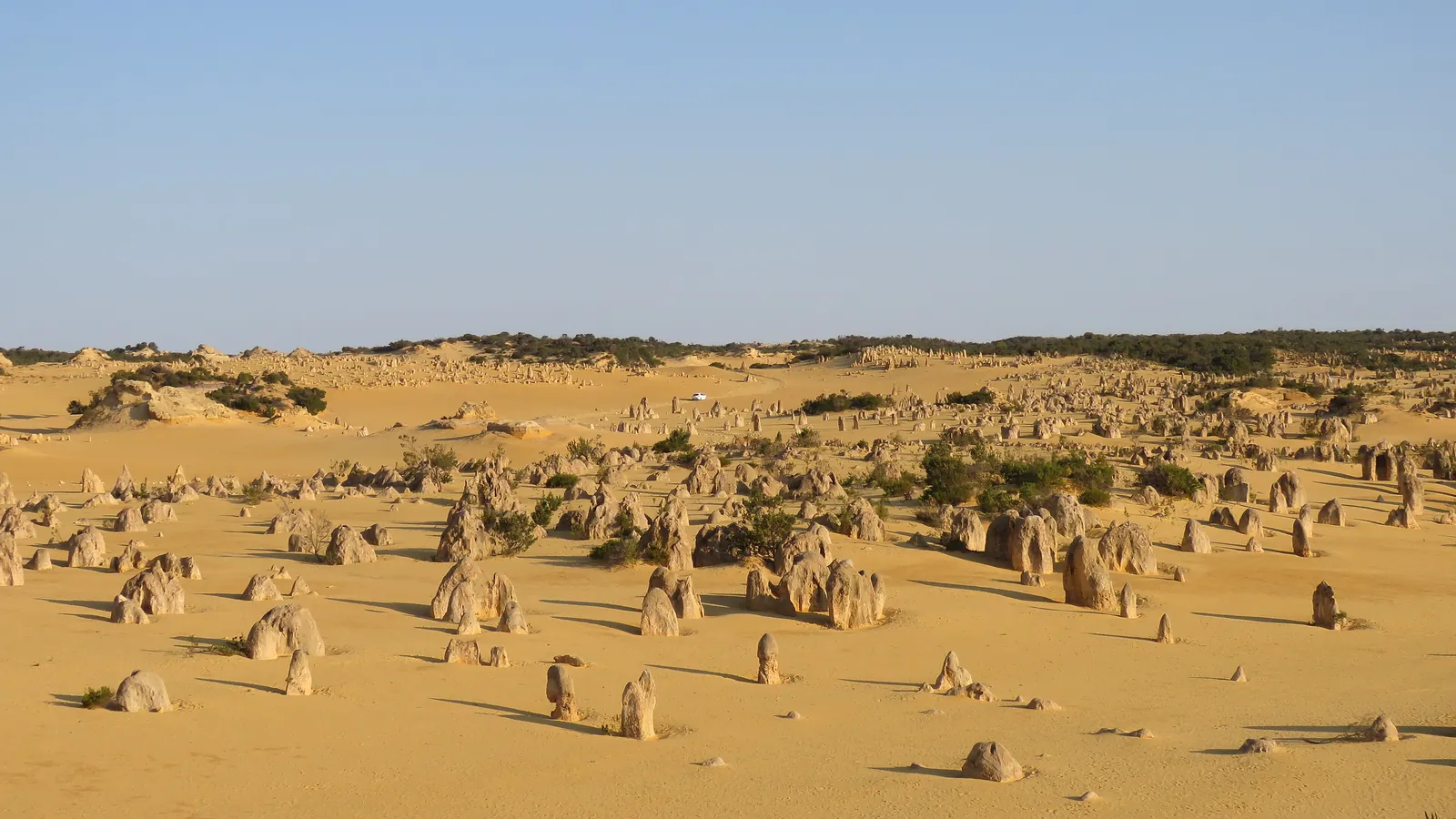
From there it's 86km to Cervantes and the Pinnacles. The Pinnacles Desert drive is a one-way loop of about 4km through limestone pillars up to 3.5 metres tall, and it's now closed to motorbikes and bicycles. Park entry is $17 a vehicle. Late afternoon is when the pillars glow orange and the tour coaches have gone back to Perth.
In Cervantes, the Lobster Shack is a working rock lobster factory with tours at 12pm and 2pm daily ($15 adults), and a kitchen open from 11am to 3pm. Lunch there, Pinnacles in the afternoon, then 27km on to Jurien Bay for the night. If you have time, the sealed Lesueur Scenic Drive inland is an 18.5km loop through grasstrees and spring wildflowers.
Day two: Jurien Bay to Kalbarri via the Pink Lake
The run north through Green Head and Leeman is Indian Ocean Drive at its best: heath, limestone and glimpses of turquoise water, with the newly widened section leading back to Brand Highway. Dongara-Port Denison is the natural coffee stop. Then it's 65km to Geraldton, where the HMAS Sydney II Memorial on Mount Scott lists all 645 men lost in 1941.
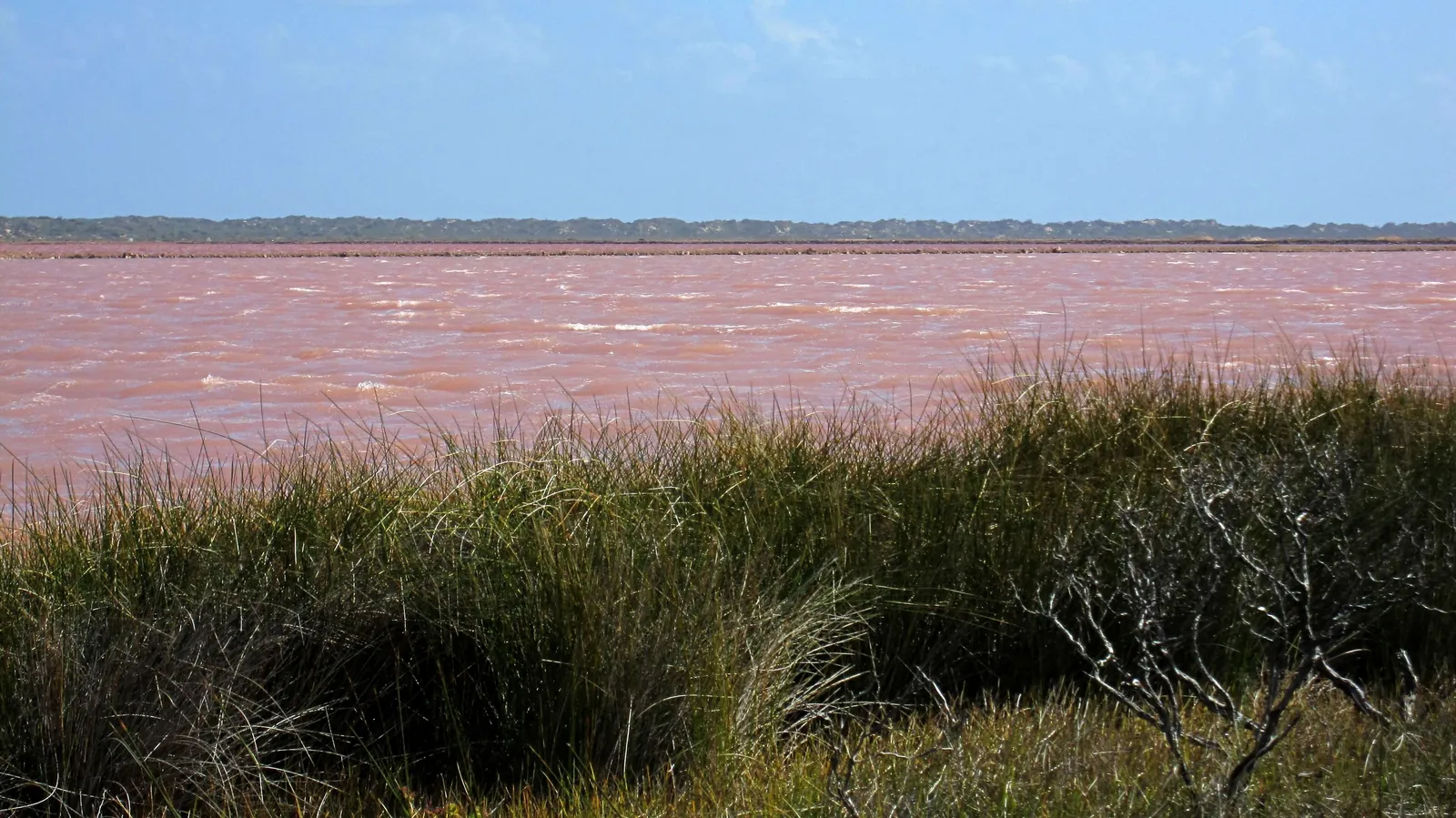
North of Northampton, swap the highway for Port Gregory Road. Hutt Lagoon turns pink thanks to a beta-carotene-rich microalga, and the colour is strongest around 10am to 2pm on a sunny day. The lookout car park is unsealed, there are no facilities at the lake, and the salt crust can be sharp. Toilets are at Port Gregory.
From Port Gregory it's George Grey Drive into Kalbarri, about 68km past the coastal cliff turn-offs. There's no fuel between Northampton and Kalbarri on this route, so arrive with a reasonable tank. If the light's right, the coastal lookouts are better at sunset than the gorges, which are better first thing in the morning.
Where should you fill up between Perth and Kalbarri?
Fuel isn't scarce on this route, but it's patchy and the price swings are wild. Two gaps run to more than 85km, the last stretch into Kalbarri via Port Gregory has nothing at all, and the dearest pump on the coast charged well over 60 cents a litre more than the cheapest when we checked prices for this guide.
The orange legs are the long gaps. On the day we checked, unleaded at Cervantes cost 63.5 cents a litre more than the cheapest pump in Geraldton. That's about $38 on a 60-litre fill, so fill up in Perth, top up in Jurien Bay, and fill properly in Dongara or Geraldton before the run to the gorges.
Distances are approximate road distances between towns (OpenStreetMap routing). Prices are cents a litre for unleaded 91 from FuelWatch, 27 October 2026. Prices change daily; check FuelWatch before you leave. The Pinnacles side trip adds about 40km.
Day three: the gorges first, the cliffs last
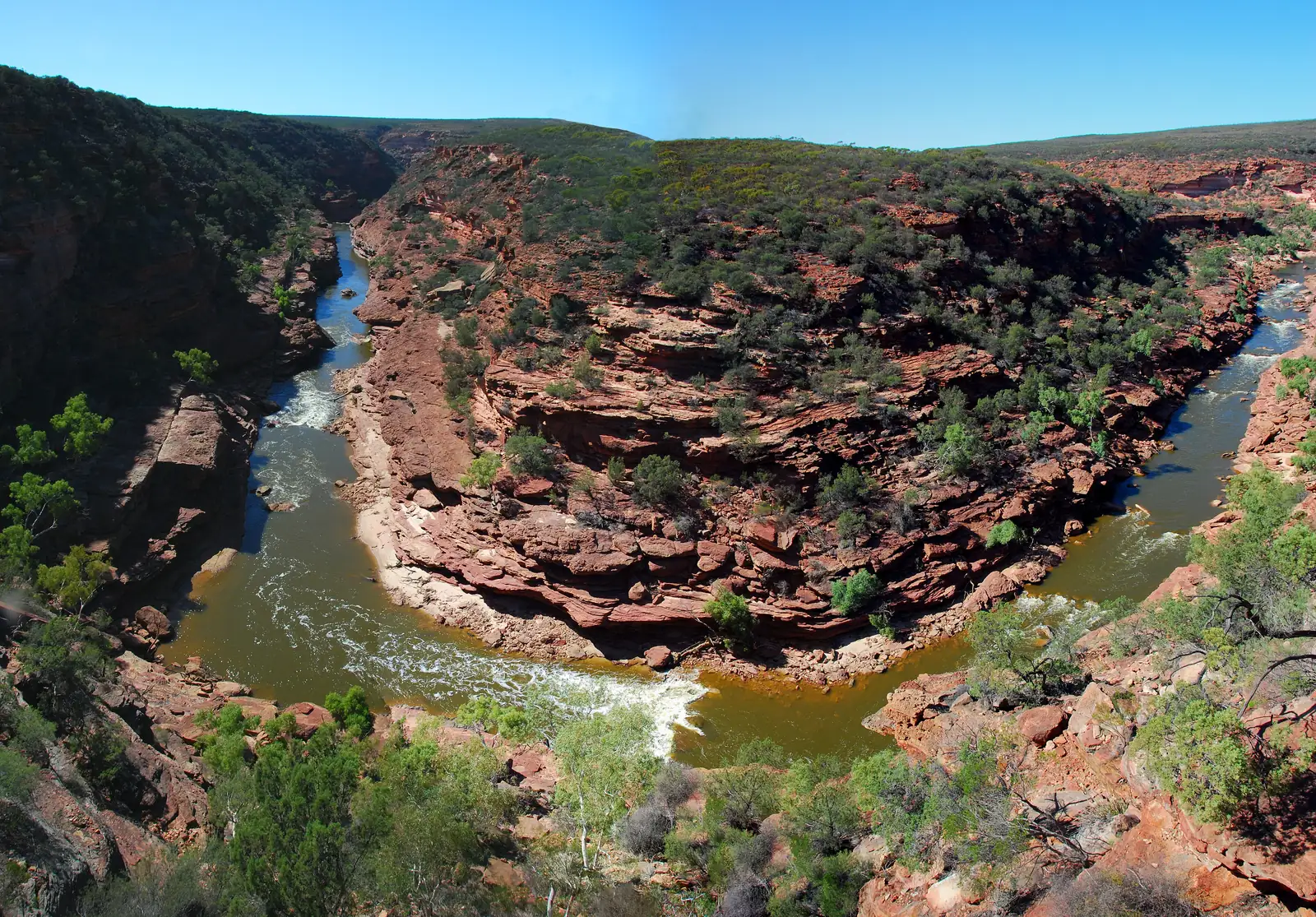
Head inland early. The Kalbarri Skywalk has two platforms cantilevered 25 and 17 metres beyond the gorge rim, about 100 metres above the Murchison River, reached by a wheelchair-accessible 150-metre path. Nature's Window is a 1km return walk with stairs and rock, and the Z Bend lookout is an easy stroll. All the park roads are sealed.
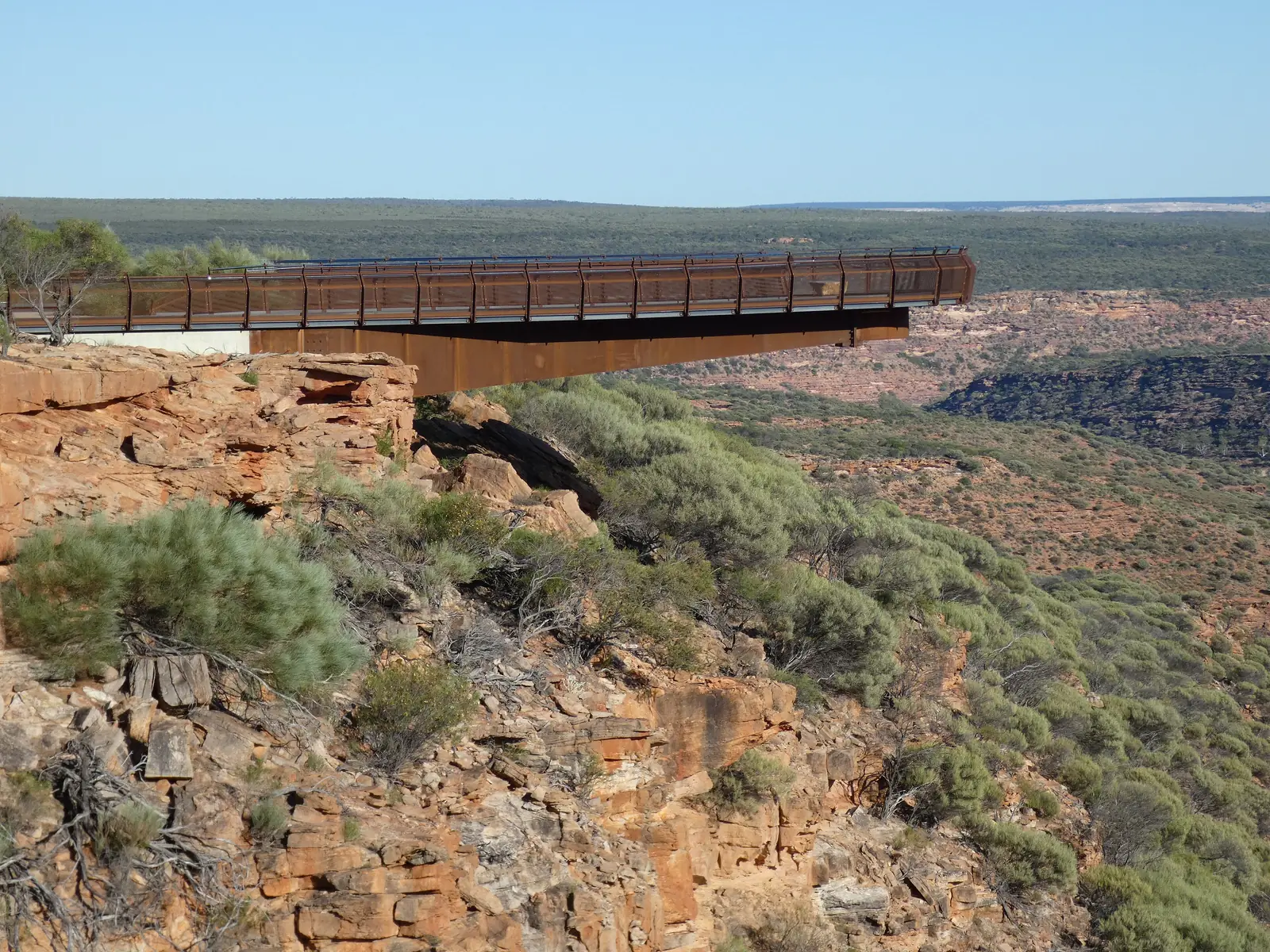
Kalbarri National Park charges the same $17 entry as the Pinnacles, and one fee covers several parks visited on the same day. Visit on separate days and a five-day Holiday Pass at $30 is cheaper than two day passes. Dogs aren't allowed anywhere in the park, not even inside your car, because of 1080 fox baiting. Details are on the park entry fees page.
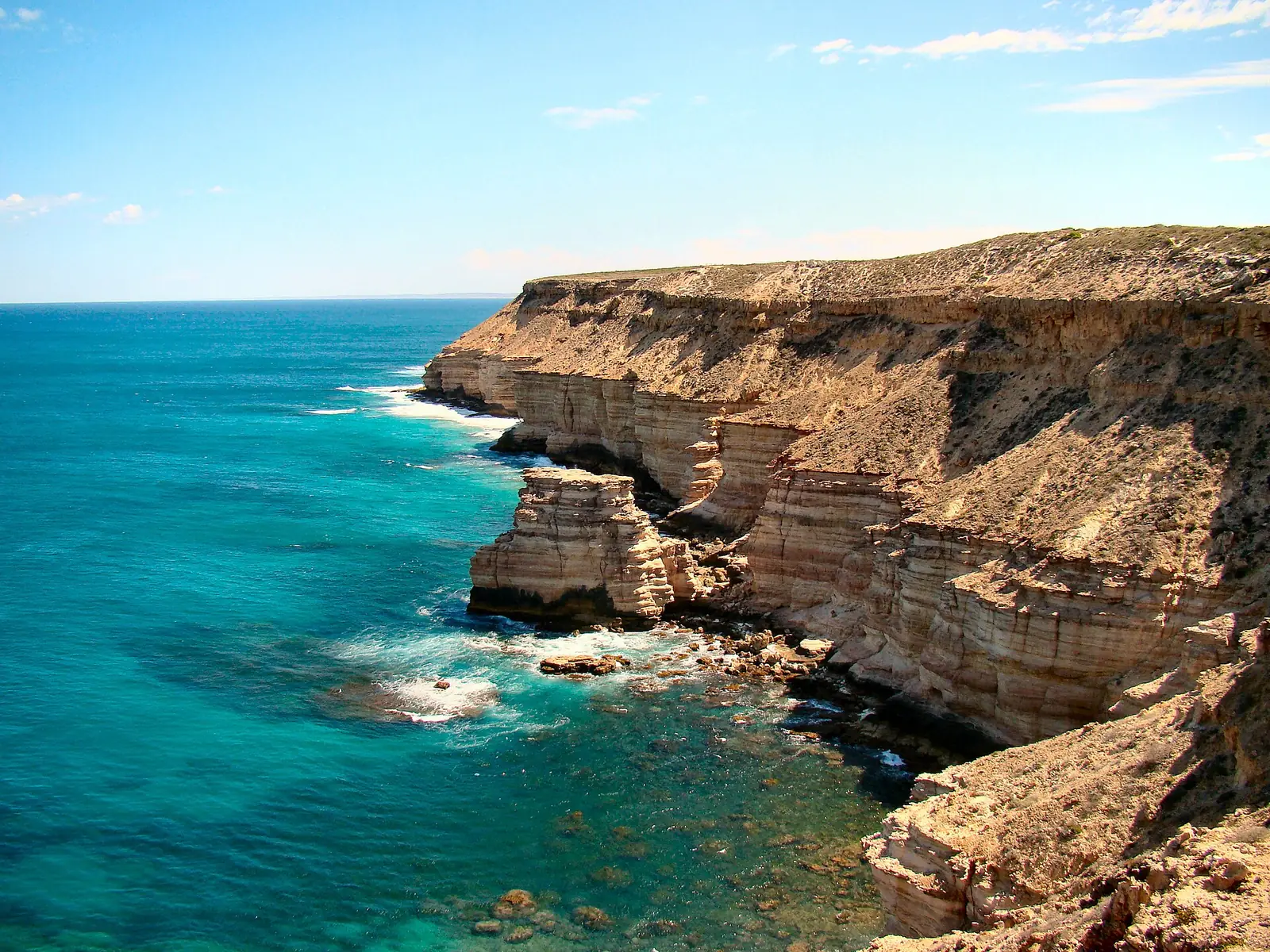
Finish on the coast. Red Bluff, Island Rock and Natural Bridge sit off George Grey Drive along 13km of cliffs, and the visitor centre says these coastal lookouts are free. Humpbacks pass from about June to November. Stay well back from the edges: the park's own guide warns that massive wave surges have claimed lives on these rock platforms.
Back in town, the pelican feeding on the foreshore has run every morning at 8:45am since 1975, with volunteers and a gold-coin donation. The pelicans are wild, so they don't always turn up. Blue Holes is the sheltered snorkelling spot, fishing is banned there, and Chinaman's Beach on the river suits small kids.
What changes when summer arrives
From 1 November 2026 to 1 April 2027, the 9km Loop Trail is open only to walkers who start before 7am. The park warns gorge temperatures can reach 50 degrees, and the gorges run hotter than the town forecast. Average January maxima in Kalbarri town already sit above 33 degrees, according to the Bureau of Meteorology. Carry three to four litres of water per person.
Plan around closures too. The inland gorges close from 1 to 5 February 2027 for feral goat control, and they can close without notice on 40-degree days, according to the visitor centre. Check DBCA park alerts the night before. Kangaroo Point in Nambung National Park is closed for construction works from 26 October.
Towing a caravan to Kalbarri
You can tow to Kalbarri, but not into the gorges. Caravans, boats and trailers have to be unhitched in town for the Loop, Z Bend and Skywalk roads, using the long-vehicle bays or the extended bays at the visitor centre. Hawks Head, Ross Graham and most coastal sites are fine with a van, but Pot Alley is steep, winding and off limits. A digital rear-view mirror helps on the long straights.
Summer afternoons bring a strong southerly. Geraldton's average 3pm wind speed runs at about 30km/h from December to February, nearly double July's, so expect crosswinds with a tall van. Road trains up to 60 metres long use these roads. Main Roads' overtaking advice is simple: wait for a long straight, and after passing, wait until you can see the truck's headlights in your mirror.
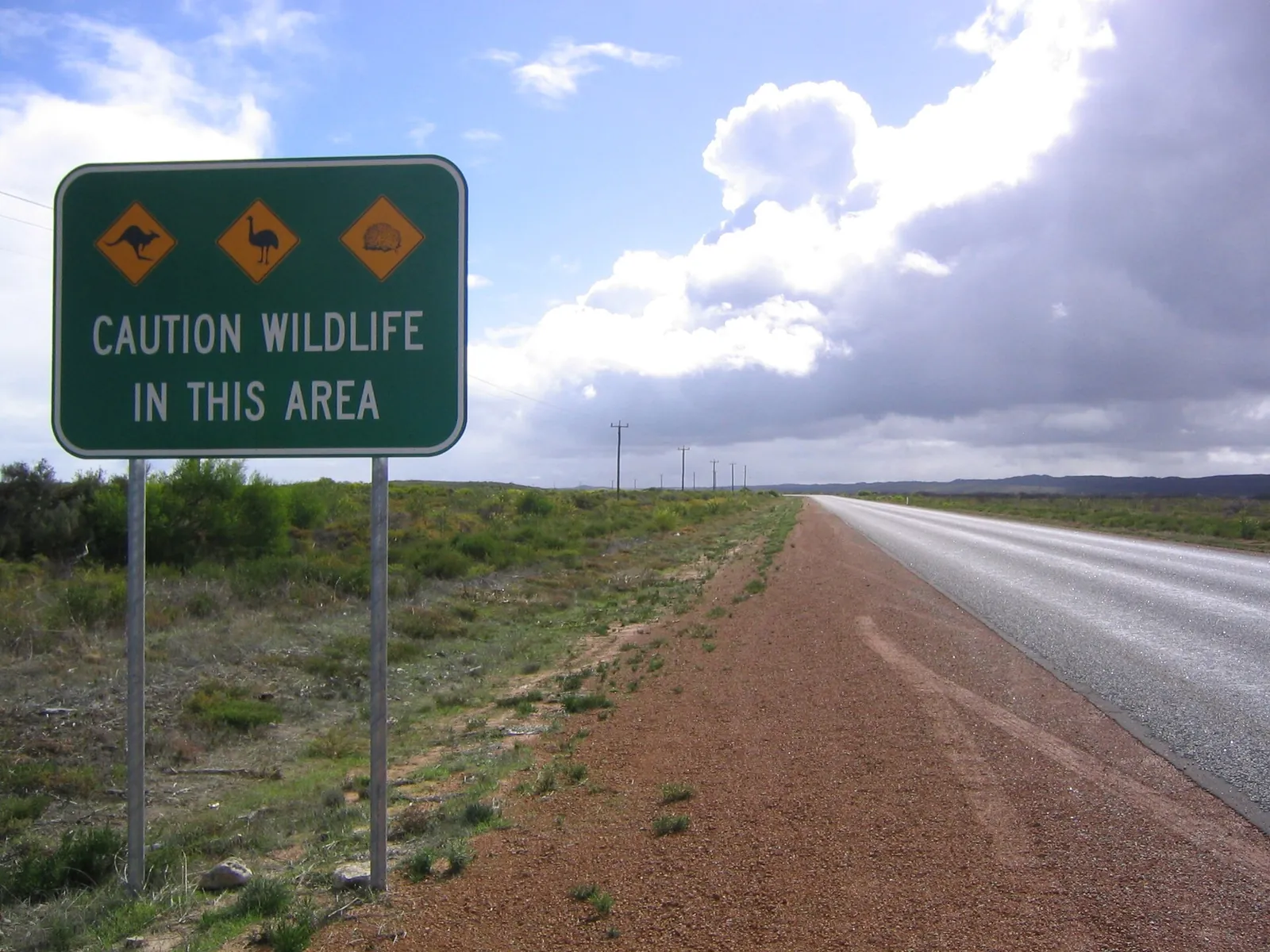
Wildlife is the other hazard. Kangaroos and emus are most active around dawn and dusk, and the visitor centre asks drivers on the park roads to slow down, so avoid driving at those times where you can. WA's Road Safety Commission says to take a break every two hours, and on a 600km day, that's at least three stops. Swap drivers if you can.
Where to camp along the way
There's no camping inside Kalbarri, Nambung or Lesueur national parks, and no free camping in Kalbarri town. DBCA's Karda Campground near Lesueur costs $15 per adult a night, needs booking, and has only 12 sites that suit caravans. Milligan Island, between Green Head and Leeman, charges $35 per site and allows dogs on a lead.
One thing older guides get wrong: the Shire of Irwin's coastal camps at Cliff Head, Freshwater Point and Knobby Head are no longer free. They now cost $20 per vehicle per night, with a three-night limit, no fresh water and no campfires from October to April. Book Kalbarri's caravan parks early for school holidays, which the visitor centre calls peak season.
Before you leave Perth
Most of this trip is sealed highway, so preparation is more about heat and distance than recovery gear. Mobile reception in the park is variable, and the park guide spells it out: if there's no coverage, you won't be able to call triple zero. Download the Emergency+ app and consider a personal locator beacon for the longer walks.
- Tyres: check pressures cold, and carry a portable inflator if you'll be airing down at Lancelin.
- Water and food: four litres per person per day, plus a 12V fridge for the gaps between towns.
- Park pass: buy a five-day Holiday Pass online and print it for the windscreen.
- Fuel: leave with a full tank and never pass Geraldton or Dongara on less than half.
- Roads: check the Main Roads Travel Map or call 138 138 on the day.
- EV drivers: there are chargers at the Kalbarri Visitor Centre car park; plan the rest with our EV road trip guide.
Go now and you catch the tail of the wildflowers and the whales, with mornings still cool enough for the Loop. Go in January and you'll have the cliffs mostly to yourself, but the gorges only at dawn. Either way, take the coast road north. Brand Highway gets you there faster, and that's the only thing it does better.
Prices, fees and closures as at 27 October 2026. Header image: Bojan von Känel, CC BY-SA 4.0, via Wikimedia Commons (cropped).


