
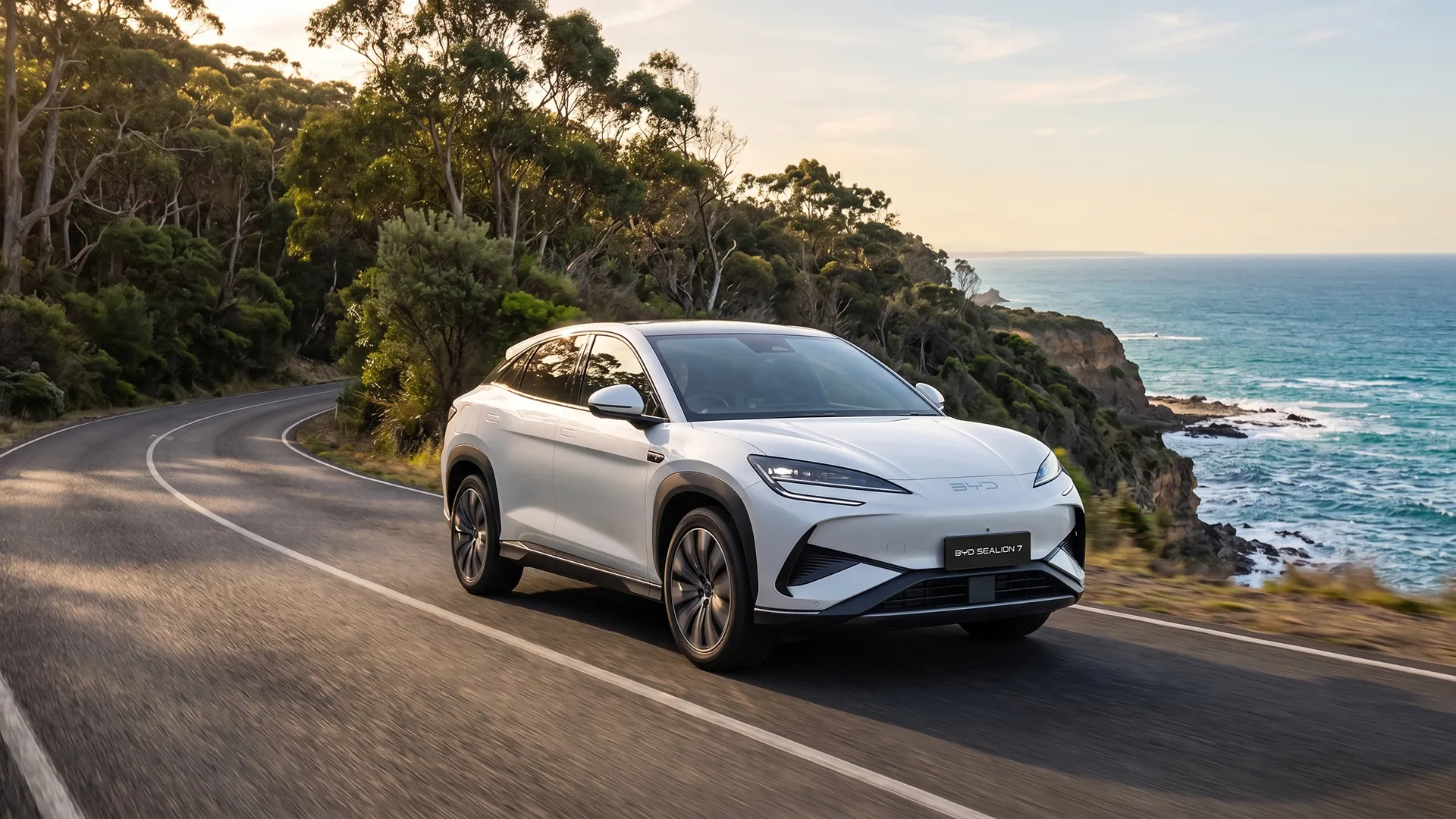

The most useful number for planning an electric road trip in Australia is not your car’s WLTP range. It is 150. That is the longest gap, in kilometres, between fast chargers on the Hume, Pacific, Bruce and Western highways, according to a June 2026 analysis by Luke Moulton for The Driven. Plan around that figure and most of the anxiety evaporates.
Moulton counted 703 public fast chargers of 50kW or more nationally, with more than half of them in NSW and Victoria. Victoria alone has 208, nearly as many as WA, SA, the NT, Tasmania and the ACT combined. That lopsided map is why the six routes below were picked by charger density first and scenery second. Every one of them still happens to be beautiful.
How These Six Routes Made the Cut
Each route had to clear four tests. A DC fast charger of 50kW or more roughly every 200km, with every site checked against the operator or a state government listing. At least two networks, or one government-backed network, so a single outage does not strand you. Sealed roads a standard EV can handle. And every town, lookout and campsite named here confirmed to exist as of September 2026.
That ruled out some famous drives. The Stuart Highway between Katherine and Tennant Creek still has a 625km hole with no public fast charging, per the same June 2026 analysis, and the North West Coastal Highway has a gap near 250km. Those trips are possible with patience and a slow charger. They are not road trips you would recommend to a mate.
Australian Electric Road Trips
Great Ocean Road: Melbourne to Port Fairy
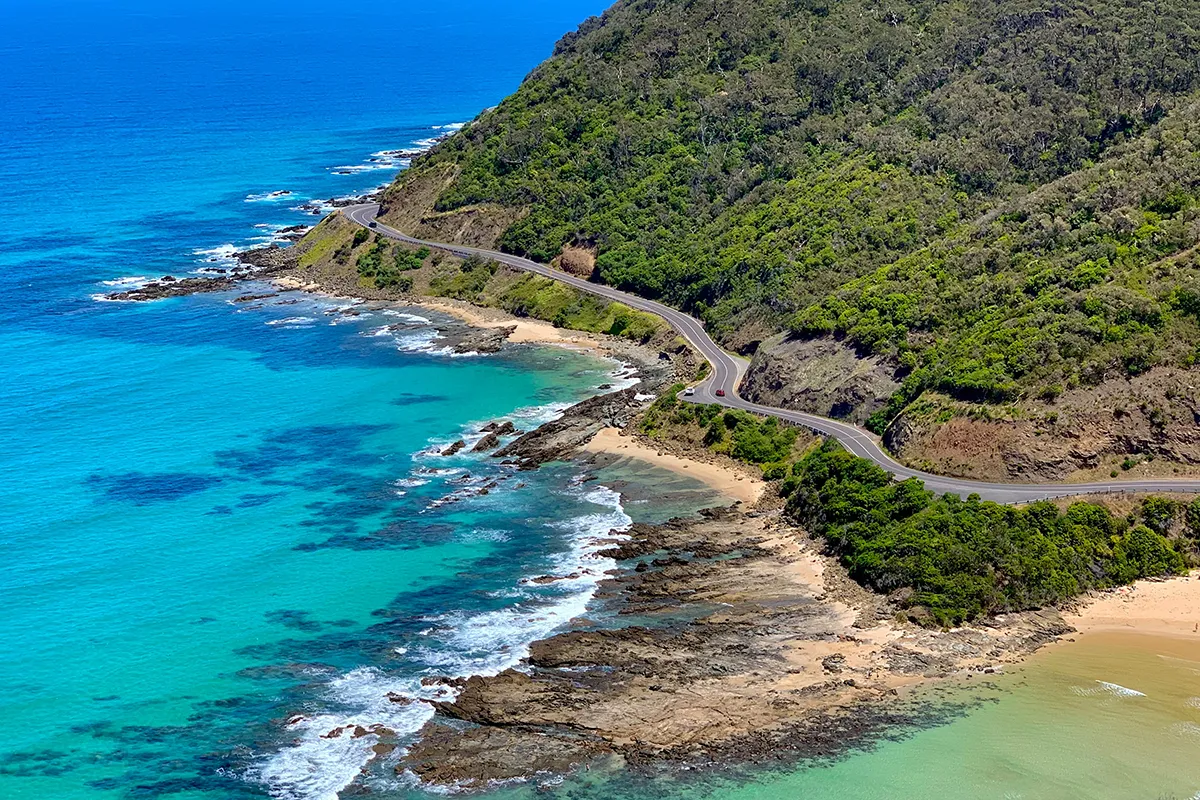
The Great Ocean Road is the easiest of these six to do badly. Chargers cluster at both ends and thin out exactly where the cliffs get good. Tesla’s Geelong Supercharger at Corio runs six stalls at up to 300kW, then the Victorian Government’s Destination Charging Across Victoria program funded 50kW units at Winchelsea, Anglesea and Lorne, with Aireys Inlet scheduled for 2026.
Past Lorne you are on Evie’s Apollo Bay charger in the Pascoe Street car park, then nothing fast until Warrnambool, where Tesla runs eight stalls at up to 250kW and Chargefox has a 50kW unit at Flagstaff Hill. Colac Otway Shire said in July 2026 it still could not find a site for more. Charge to 80 per cent at Apollo Bay: the Twelve Apostles leg is about 160km with no confirmed fast charger at Port Campbell.
What the road itself demands
Roughly 240km of the route runs between limestone cliffs and the Southern Ocean, with speed limits swinging between 50 and 100km/h and rockfall signs near Torquay. Flash flooding in January 2026 closed the section between Skenes Creek and Lorne for several days, so check VicTraffic before you leave. Regenerative braking earns its keep on the descents into Wye River and Kennett River.
Stop at Loch Ard Gorge rather than fighting the coaches at the Apostles, which move to paid, timed entry in late 2026 once the new visitor centre opens. Cape Otway Lightstation is worth the detour. Southcombe Caravan Park in Port Fairy puts you a short walk from the Evie charger on Bank Street. If you are weighing this against the mountains, the Great Alpine Road comparison settles it.
Tasmania: The Lap That Starts on a Boat
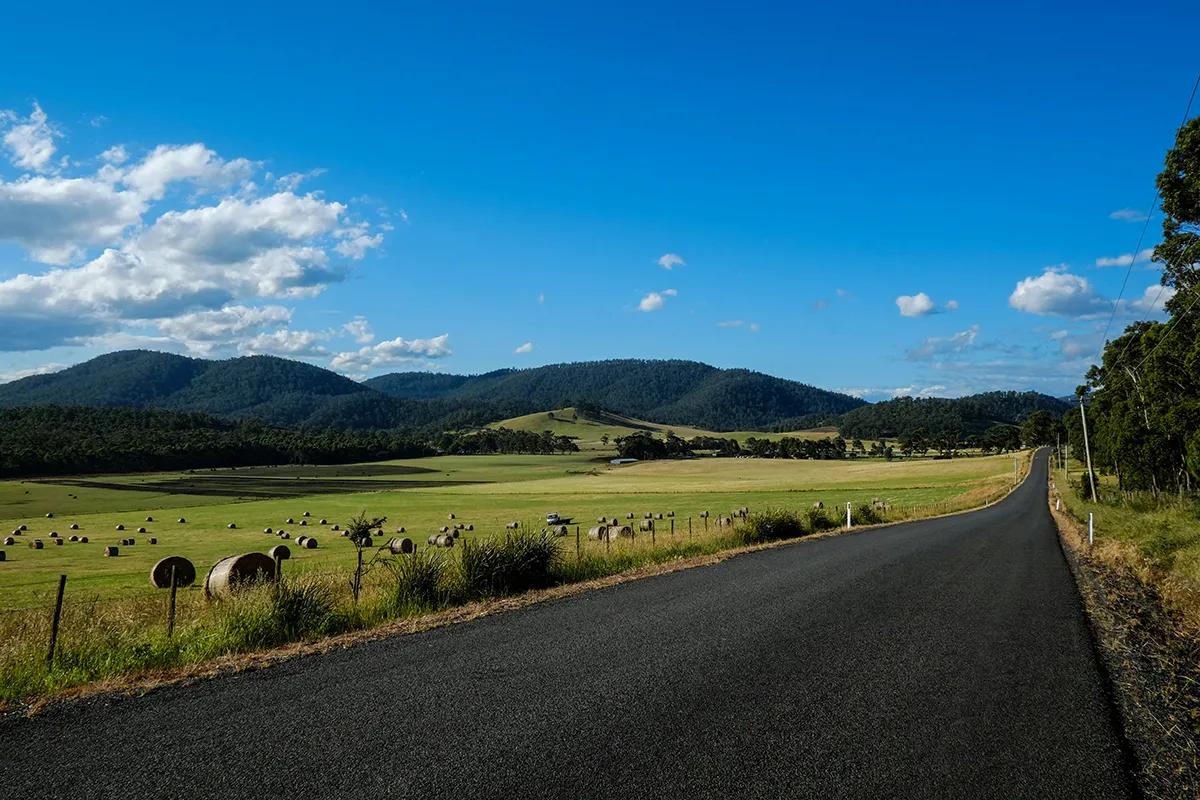
Tasmania punches well above its size for chargers, and the ferry is the only part that needs a rulebook. Spirit of Tasmania carries EVs but you must declare the car at booking, park it in a designated area, and arrive with enough charge to drive off. Charging onboard is prohibited, and the Geelong to Devonport crossing runs nine to eleven hours.
Off the ramp, Tesla’s East Devonport Supercharger sits at the terminal with three stalls at 250kW. The Midland Highway to Hobart is then covered by Evie’s 350kW sites at Westbury, Campbell Town and Brighton, plus Electric Highway Tasmania’s 350kW hub at Kings Meadows in Launceston. Hobart gained five more fast sites in August 2025 through an ARENA-backed project at Sandy Bay, Kingston, Glenorchy, Rosny Park and Moonah.
Where does the Tasmanian lap get thin?
The West Coast. Strahan and Queenstown have fast chargers, but between there and Cradle Mountain the only stop is a 25kW unit at Tullah, which is a coffee-and-a-long-wait charger rather than a splash-and-dash. Cradle Mountain itself improved sharply in January 2025 with a four-stall Kempower system at the Cradle Mountain Hotel running up to 80kW and open to all brands.
The Lyell Highway plateau between Derwent Bridge and Mount King William is often closed in winter for ice and snow, and cold weather trims range at exactly the point you can least afford it. One more caution: Chargefox runs 83 per cent of Tasmania’s chargers, so an app outage hurts more here than anywhere else in the country.
Port Arthur got a new Electrona charger through the state’s 2025 ChargeSmart round, so the Tasman Peninsula is now a comfortable side trip from Hobart. For the driving itself, the Targa Tasmania stages you can legally drive overlap much of this loop, and the Midland Highway chargers keep every one of them within reach.
Pacific Highway: Sydney to Byron Bay Without a Single Long Gap
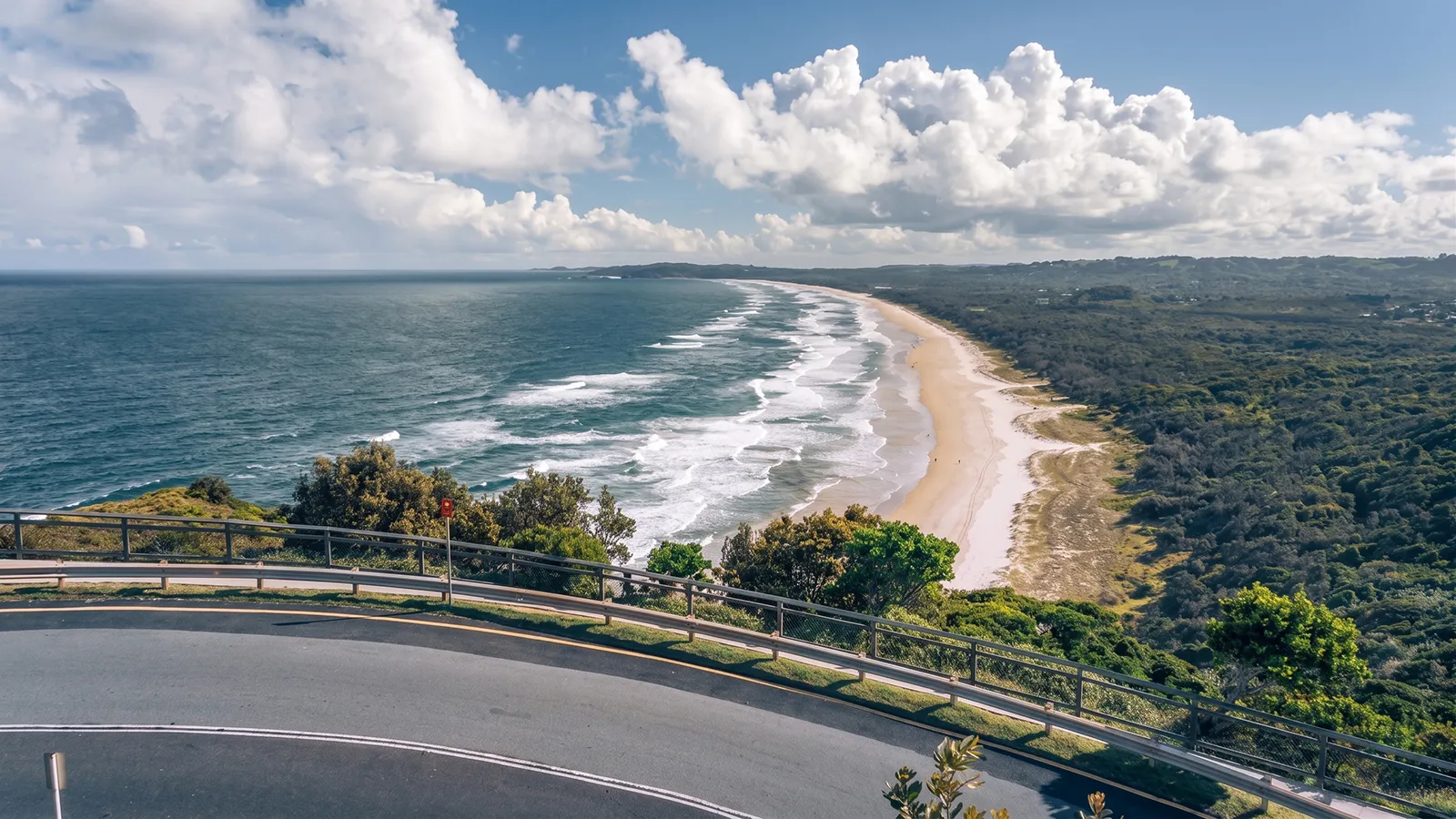
This is the one to give a nervous first-time EV owner. Nothing between Sydney and Byron Bay is more than about 150km from the next fast charger, and Tesla’s Superchargers along the M1 are open to any CCS-equipped car. Heatherbrae runs six stalls at 130kW, Taree twelve at up to 300kW, Kew eight at 300kW, and Coffs Harbour six at the Big Banana.
Chargefox fills the other half of the corridor with a 350kW site at Port Macquarie and an ultra-rapid station at Ballina with two 350kW bays and one 50kW. NRMA covers the inland detour with chargers at Grafton Library and a 50kW unit in Casino. The road is divided highway nearly the whole way, which means steady speeds, which means predictable consumption. Boring is the point.
Stops that justify leaving the M1
Sea Acres National Park at Port Macquarie has an elevated boardwalk through coastal rainforest that ends at the beach. From Coffs, the Waterfall Way climbs to Dorrigo National Park and the Crystal Shower Falls walk, 3.2km return to a cavern behind the water. At the far end, the Walgun Cape Byron track is a 3.7km loop from the lighthouse, and the Byron charger sits on Jonson Street.
NSW committed $54 million in 2024 to co-fund up to 140 more fast charging sites, on top of the 2022 round that seeded NRMA, BP and Tesla along this coast, so expect the corridor to keep filling in. Drive it in a mid-size EV and you will barely think about charging. Drive it towing anything and you will think about little else.
Bruce Highway: Brisbane to Cairns on the Electric Super Highway
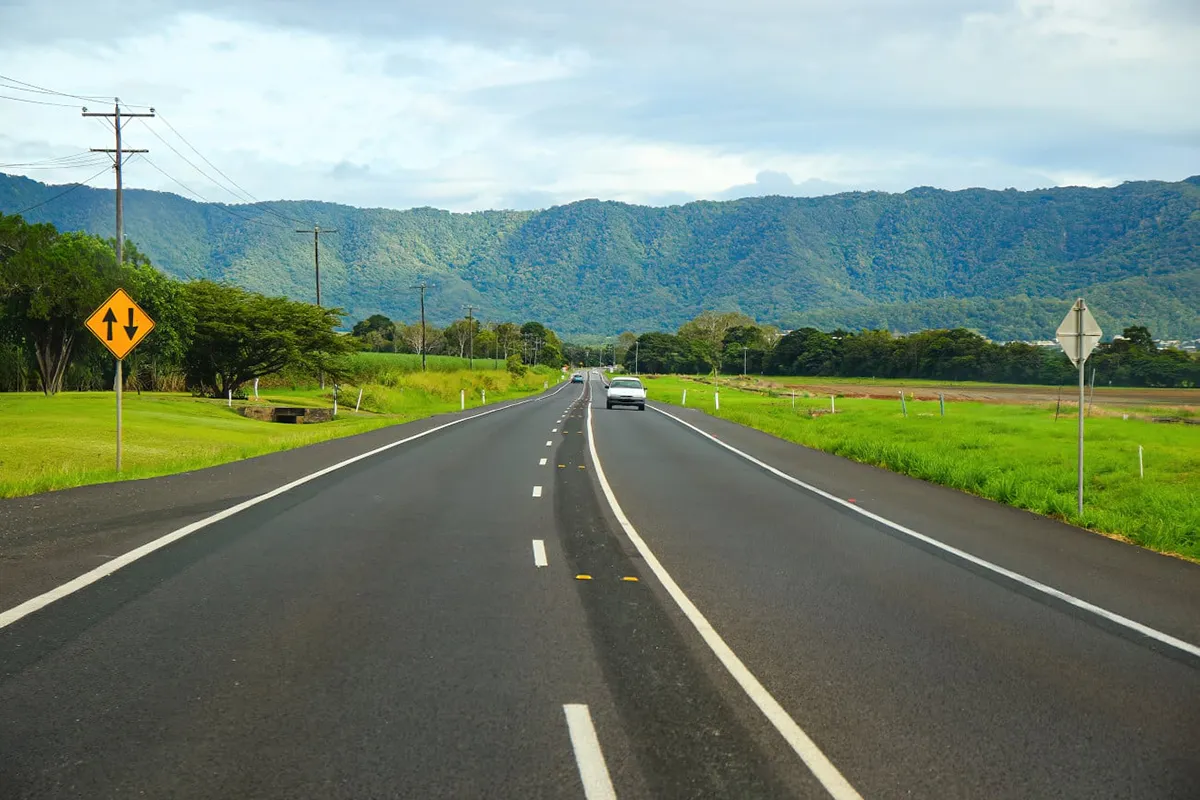
The Bruce is the longest trip here at 1,670km, and the only one where the state built the chargers before the market did. The Queensland Electric Super Highway is run by Yurika, part of the government-owned Energy Queensland group, with more than 50 sites from Coolangatta to Port Douglas and a reported 96.6 per cent availability as of August 2024.
The state’s separate co-funding scheme added 41 sites through Evie, Exploren, NRMA, RACQ and Tesla, and the Transport and Main Roads location list reads like a Bruce Highway itinerary: Gympie, Maryborough, Bundaberg, Gladstone, two in Rockhampton, Mackay, Cannonvale for Airlie Beach, Townsville, Ingham and two in Cairns. Yeppoon is the exception. Livingstone Shire Council voted in April 2025 to shelve its planned charger, so the NRMA Capricorn Yeppoon Holiday Park is a powered-site overnight, not a fast stop.
Which stretch of the Bruce needs real planning?
Rockhampton to Mackay. It is 336km between the two fast-charger clusters, with only a low-power plug at Marlborough in between. Leave Rocky full, not at 80 per cent, and treat the Marlborough stop as a top-up rather than a plan. Everywhere else the gaps sit under 150km, in line with the national corridor analysis.
The road is the harder problem. RACQ rates 45.2 per cent of the Bruce at two stars out of five for safety, and flooding cut it at Proserpine as recently as February 2026. Break the trip at Honeyeater Lookout in Conway National Park above Airlie Beach, then Josephine Falls in Wooroonooran National Park before Cairns. Finish with the 263 corners of the Gillies Range Road above Cairns, where regen finally pays you back.
Adelaide to the Flinders Ranges on RAA Charge
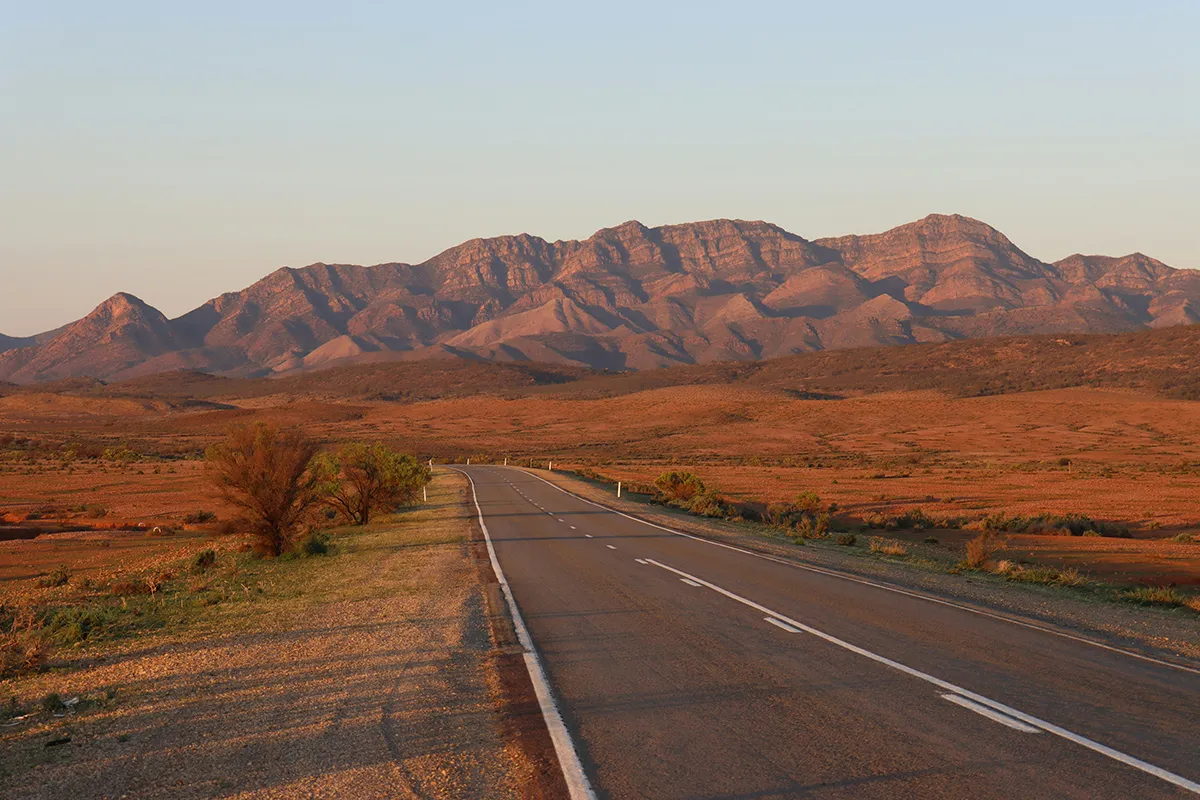
South Australia quietly built the most complete regional network in the country. RAA Charge finished its statewide rollout on 4 July 2025: 144 sites, more than 550 plugs, from Yalata to Mount Gambier, funded by a $12.35 million state grant and designed so no two sites sit more than 200km apart. Every one runs through the Chargefox app.
Head north through Nuriootpa’s 150kW hub in the Barossa, then Clare, then Snowtown, which the Electric Vehicle Council named Australia’s best charging station in 2024. Port Augusta gives you a choice of RAA’s 200kW ultra-rapid site or Tesla’s four-stall 300kW Supercharger on Tassie Street. Hawker’s 150kW charger at the visitor centre is the last fast charge before the ranges.
How far past Hawker can you go?
Wilpena Pound is about 55km on from Hawker on sealed road, and there is no fast charger there, at Quorn, Blinman or Parachilna as of September 2026. Budget a Hawker-to-Hawker round trip of at least 120km plus whatever you do inside the park. Wilpena Pound Resort has powered sites, which is your slow overnight option, and the Ikara-Flinders Ranges National Park runs ten campgrounds from $12.30 a night.
Check that Parks SA page before you commit. Bunyeroo and Brachina Gorge roads were closed for rain damage at the time of writing, and both close again on 21 September 2026 for the Flinders to Fleurieu Rally. Parachilna Gorge Road is 31km of unsealed track, rough in its second half, and kangaroos own it at dusk. Return via the eight-bay 200kW hub at Port Pirie and resist pushing north: the Oodnadatta Track is a hybrid’s problem, not yet an EV’s.
Perth to Albany and Esperance on the WA EV Network
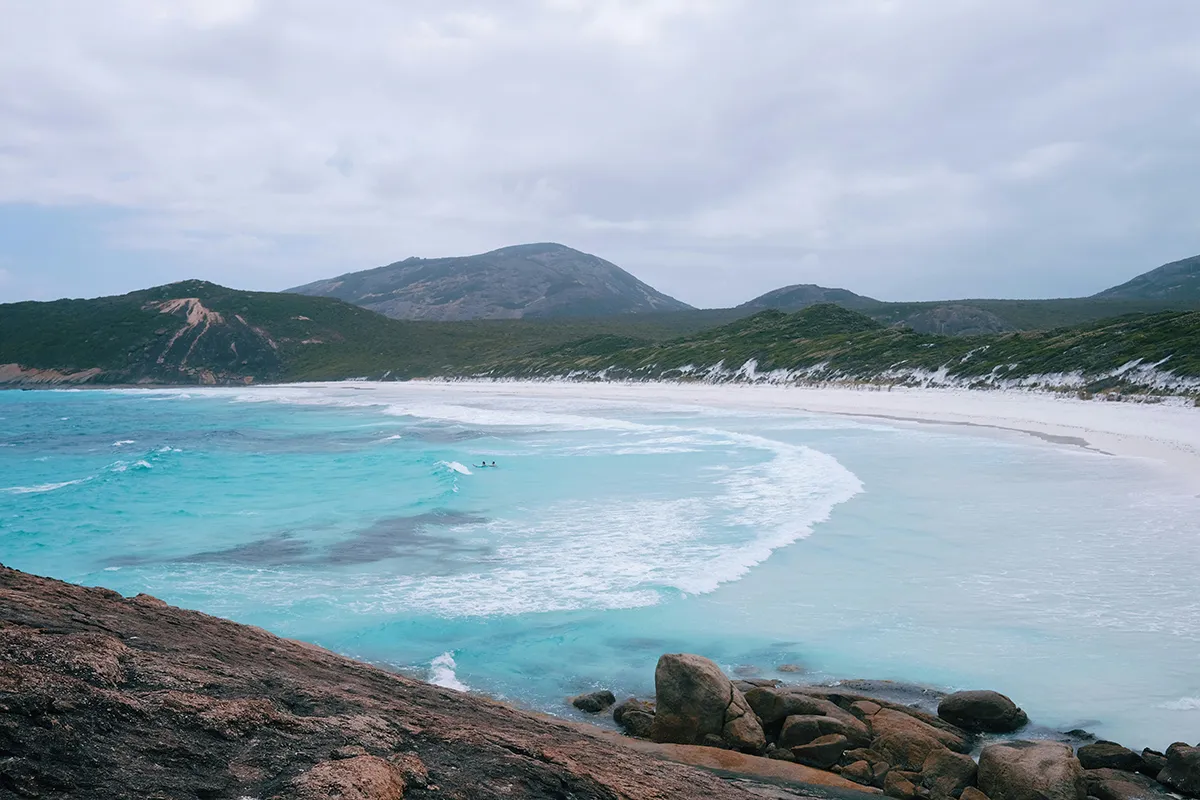
Western Australia went from the worst-covered state to owning the country’s longest single network in about three years. The WA EV Network, built by Synergy and Horizon Power with $43.5 million of state money, was declared complete in February 2025: 110 chargers at 49 locations across roughly 7,000km from Eucla to Kununurra, with sites under 200km apart by design.
The south-west leg is the mature part. Bunbury has 150kW and 75kW units across four bays, Margaret River runs 150kW with a 75kW backup, Walpole has 150kW in Pioneer Park, Albany runs two 150kW chargers, and Esperance has two 150kW units that can feed four cars at once. Jerramungup and Ravensthorpe break up the 481km Albany to Esperance run.
What changed when RAC walked away?
In July 2025 RAC ended its ten-year Electric Highway and handed its 16 older chargers to councils. Dunsborough’s closed outright. Busselton’s is now council-run on a temporary basis. Bridgetown’s went offline and forced a 30km detour to Manjimup. Denmark, meanwhile, only had slow chargers until the shire signed with eLumina for battery-backed fast units. Lean on the Synergy sites and treat the old RAC locations as bonuses.
Between Walpole and Albany, the Valley of the Giants Tree Top Walk at Tingledale is open daily. Porongurup and Stirling Range national parks sit within an hour of Albany, and Fitzgerald River National Park is the reason to push on to Esperance. Do not confuse this with the Nullarbor: the ABC reported in March 2026 that Madura Pass was delivering 11kW instead of 50kW and Mundrabilla had blacked out a roadhouse. Different road, different article.
Before You Leave: The EV Prep That Actually Matters
Set up every account before you lose signal. Chargefox, Evie, NRMA and Tesla each want their own app and a saved payment method, and the RAA and Electric Highway Tasmania sites run through Chargefox. Load PlugShare for live check-ins from other drivers and A Better Routeplanner for consumption modelling. Then plan to arrive at each charger with 15 per cent, not five.
Budget for the electricity. CarsGuide’s July 2026 survey put public fast charging at 59 to 79 cents per kWh depending on network and speed, with non-Tesla cars paying a premium on Superchargers. A 40kWh top-up lands somewhere between $24 and $32. That is still cheaper than diesel over the same distance, but it is not the near-free driving your home charger taught you to expect.
Does towing really halve your range?
Close enough to plan on it. Auto Express tested a Kia EV9 hauling a 1,446kg caravan in September 2025 and measured roughly half its rated range, with efficiency dropping further on climbs. Every gap figure above assumes an unladen car. If you are towing, halve the distance you are willing to cover between chargers, and read the Ioniq 9 review before you assume a big seven-seater fixes it.
Plugs matter less than they used to. Every fast site named here has CCS2. CHAdeMO survives at a handful of older NRMA and RAA sites, so if you drive an early Leaf, filter PlugShare for it before you commit to a route. Carry your own Type 2 cable for caravan park and destination AC charging. And if your car is a shorter-range city EV, the two-year Atto 3 long-term review is an honest look at what that means over distance.
Where Not to Take an EV Yet
The Stuart Highway north of Tennant Creek, the North West Coastal Highway, the Gibb River Road and South Australia’s outback tracks. Not because it cannot be done, but because doing it means slow chargers, long waits and a single point of failure. The June 2026 analysis found 68 per cent of WA’s public chargers and 62 per cent of SA’s are AC-only: fine overnight, useless at lunchtime.
The six routes above are the ones where the infrastructure has caught up with the scenery. Pick one, set the apps up on the couch the night before, and leave Rockhampton full. The rest of the country will get there. For now, this is where an electric road trip stops being a project and starts being a holiday.


