
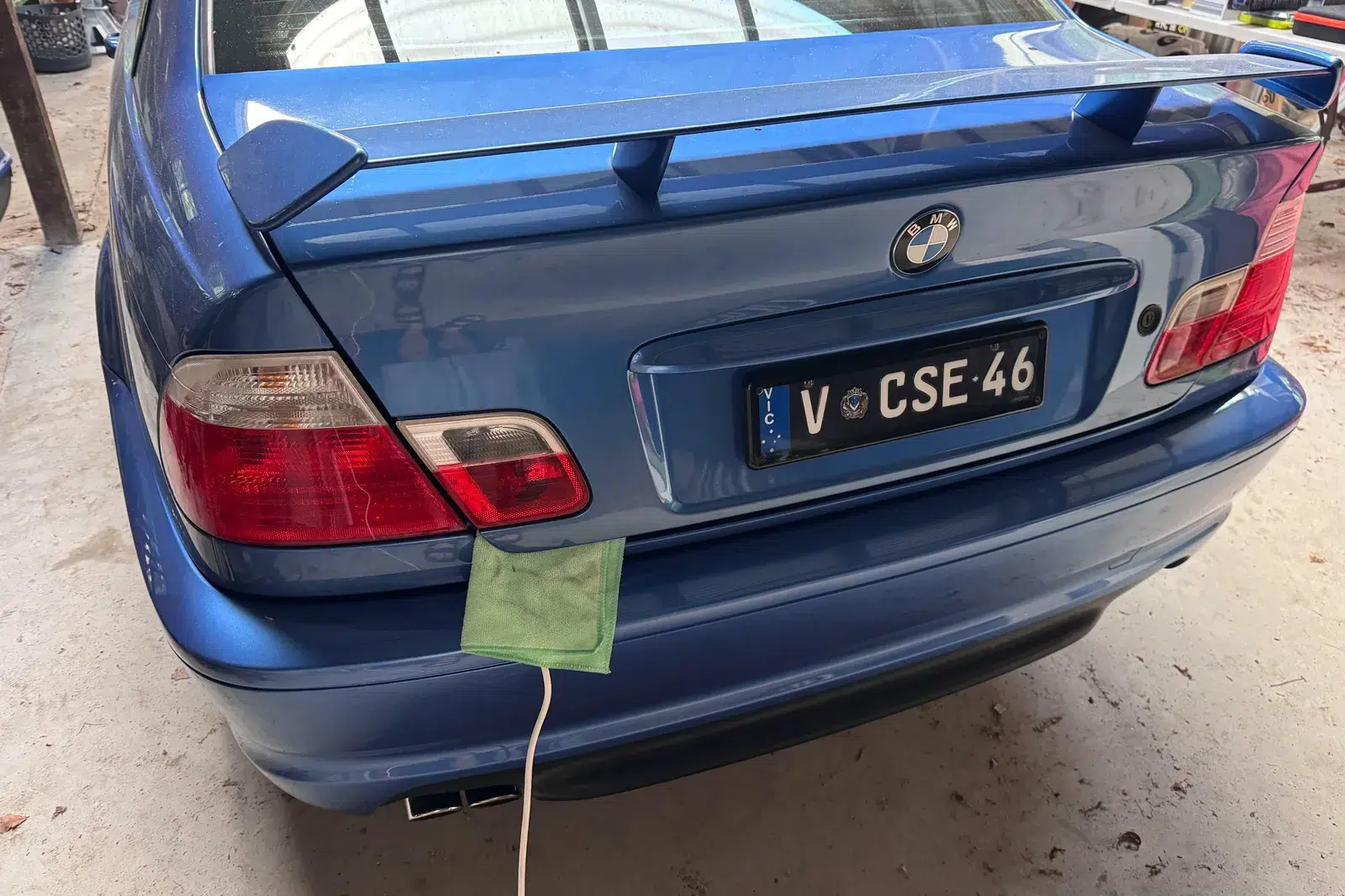

Park a car for the Christmas break and the battery doesn’t get a holiday. NRMA says most car batteries last three to five years, often closer to three in the warmer parts of Australia, and lists heat and long stretches parked among the things that cut that short. A weekend car gets both, every summer, which is exactly why my E46 lives on a charger.
A battery maintainer is the cheap fix. It’s a small smart charger that tops the battery up, then holds it at the right voltage for as long as it stays plugged in. Here are four worth buying in Australia, from $119 to $185, and the one mistake to avoid when you hook one up.
Which battery maintainer should you buy?
For most enthusiasts with a normal lead-acid or AGM battery, the CTEK MXS 5.0 is the pick. It’s sealed to IP65, has a five-year warranty and a maintenance mode built for months on the charger. If your car runs a lithium battery, the CTEK is the wrong charger, so go NOCO GENIUS5 instead.
Sources: CTEK, NOCO, Victron and Projecta specifications; prices from Supercheap Auto, Autopro, Bunnings and Auto One. Checked November 2026; prices change.
CTEK MXS 5.0: the safe bet for a lead-acid weekend car
CTEK’s own specifications cover 12V wet, maintenance-free, calcium, AGM, EFB and gel batteries, charging from 1.2Ah to 110Ah and maintaining up to 160Ah. It compensates for temperature automatically and uses a float/pulse maintenance mode designed for batteries left connected for long periods.
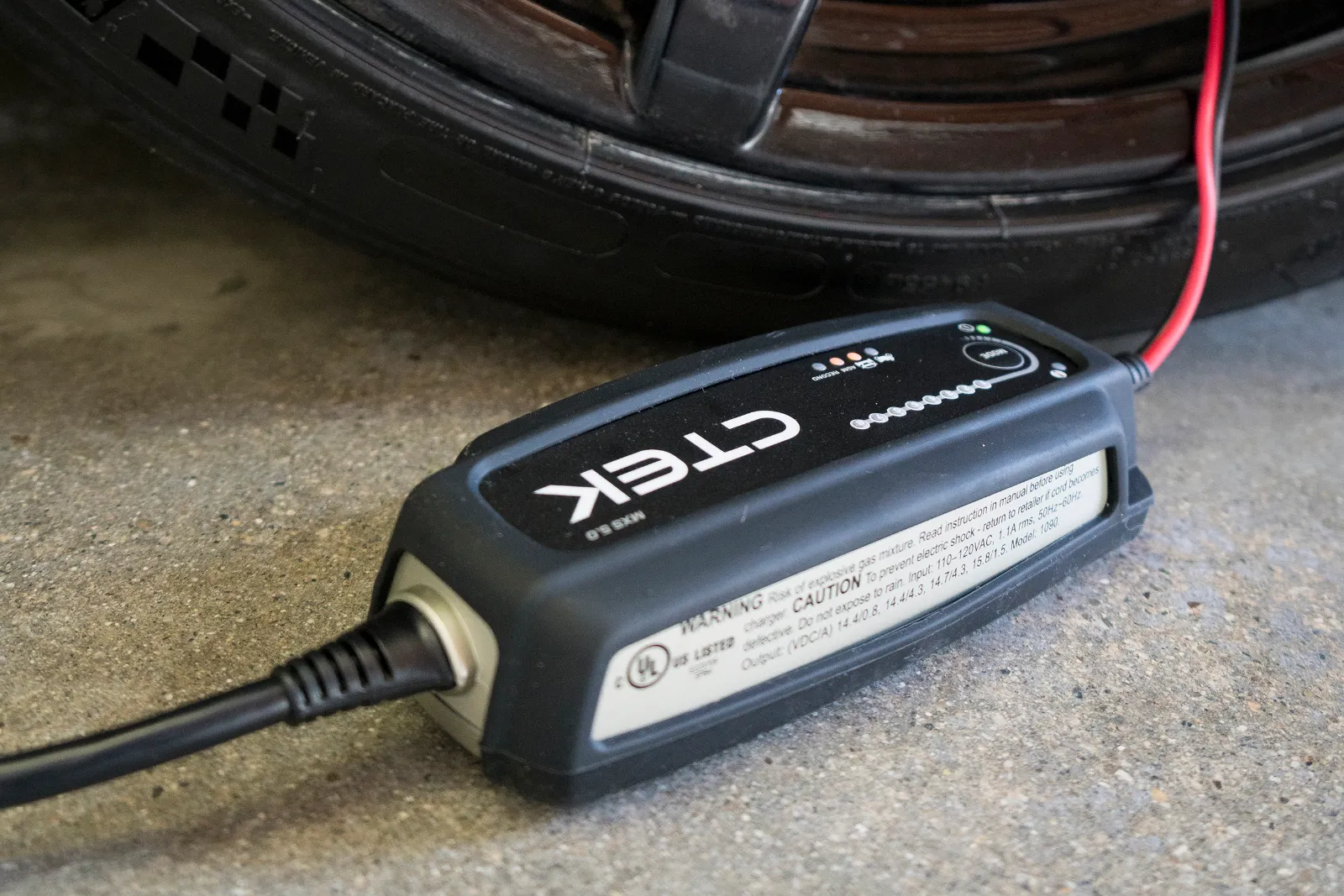
There’s a Recond program for deeply flat batteries and an AGM setting for stop-start cars. It’s $184.99 at Supercheap Auto, which makes it the dearest 5 amp charger here.
The real weakness is chemistry. CTEK lists the MXS 5.0 as lead-acid only, so if you’ve fitted a lithium battery to save weight, look elsewhere. For everything else it’s the one to buy and forget about.
NOCO GENIUS5: the one that handles lithium
The GENIUS5 does everything the CTEK does and adds a lithium mode. NOCO rates it for lead-acid and lithium batteries, charging up to 120Ah and maintaining any size, with an IP65 case. Supercheap’s listing notes a thermal sensor that adjusts the charge for hot and cold weather.
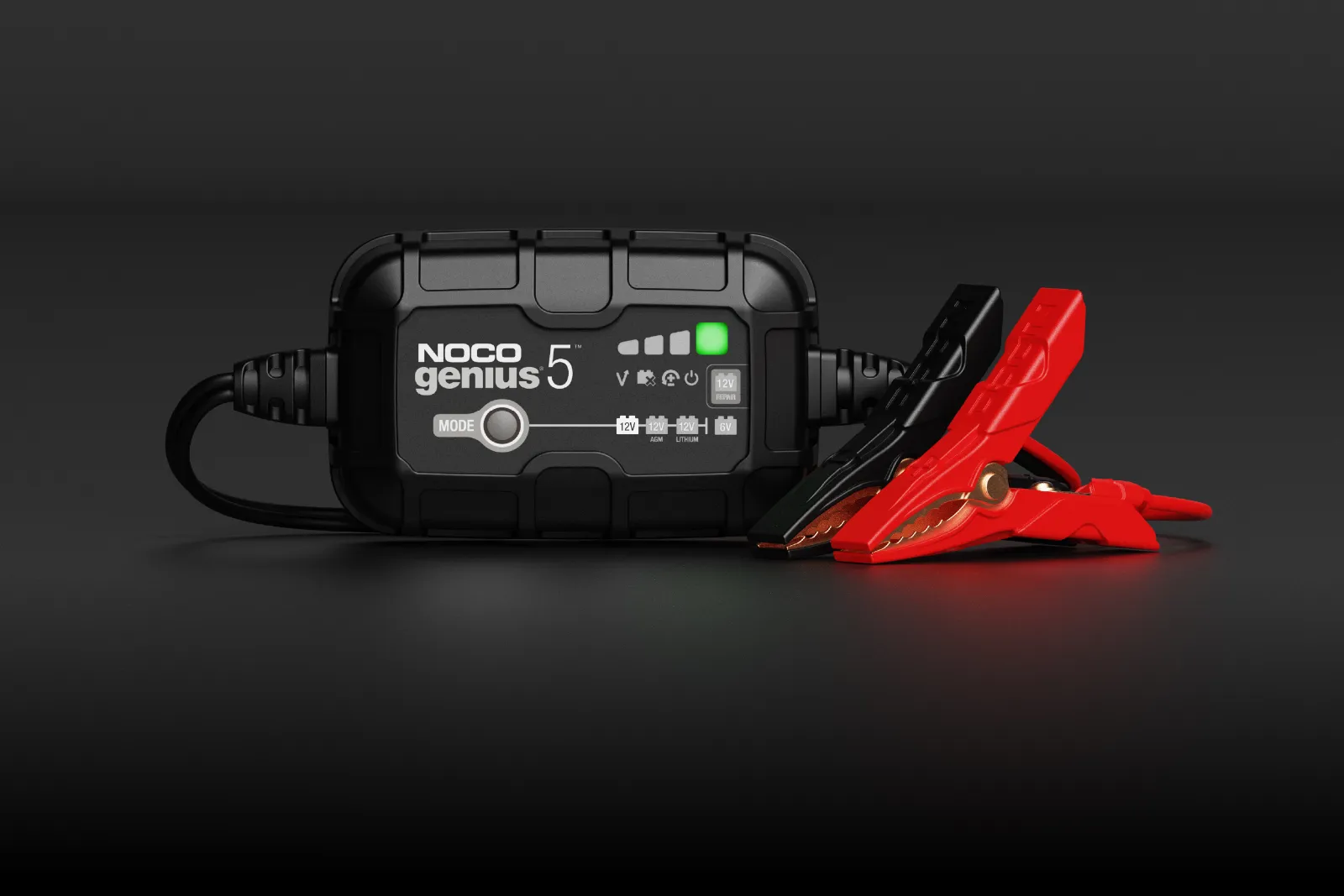
It also has a Force mode for batteries that have dropped too low for the charger to detect, which is handy when a car has sat for months. Autopro lists it at $134.99, and Supercheap stocks it too.
The catch is the warranty: Supercheap lists 36 months, against five years for the CTEK and Victron. That’s still fine for a $135 charger, but it’s the shorter promise.
Victron Blue Smart IP65s 12/5: for the owner who wants the data
Victron’s charger talks to your phone. The VictronConnect app shows what it’s doing and lets you change settings, and the manual describes a storage stage that drops the voltage below float, then runs a one-hour refresh charge every seven days. It handles lead-acid and lithium (LiFePO4).
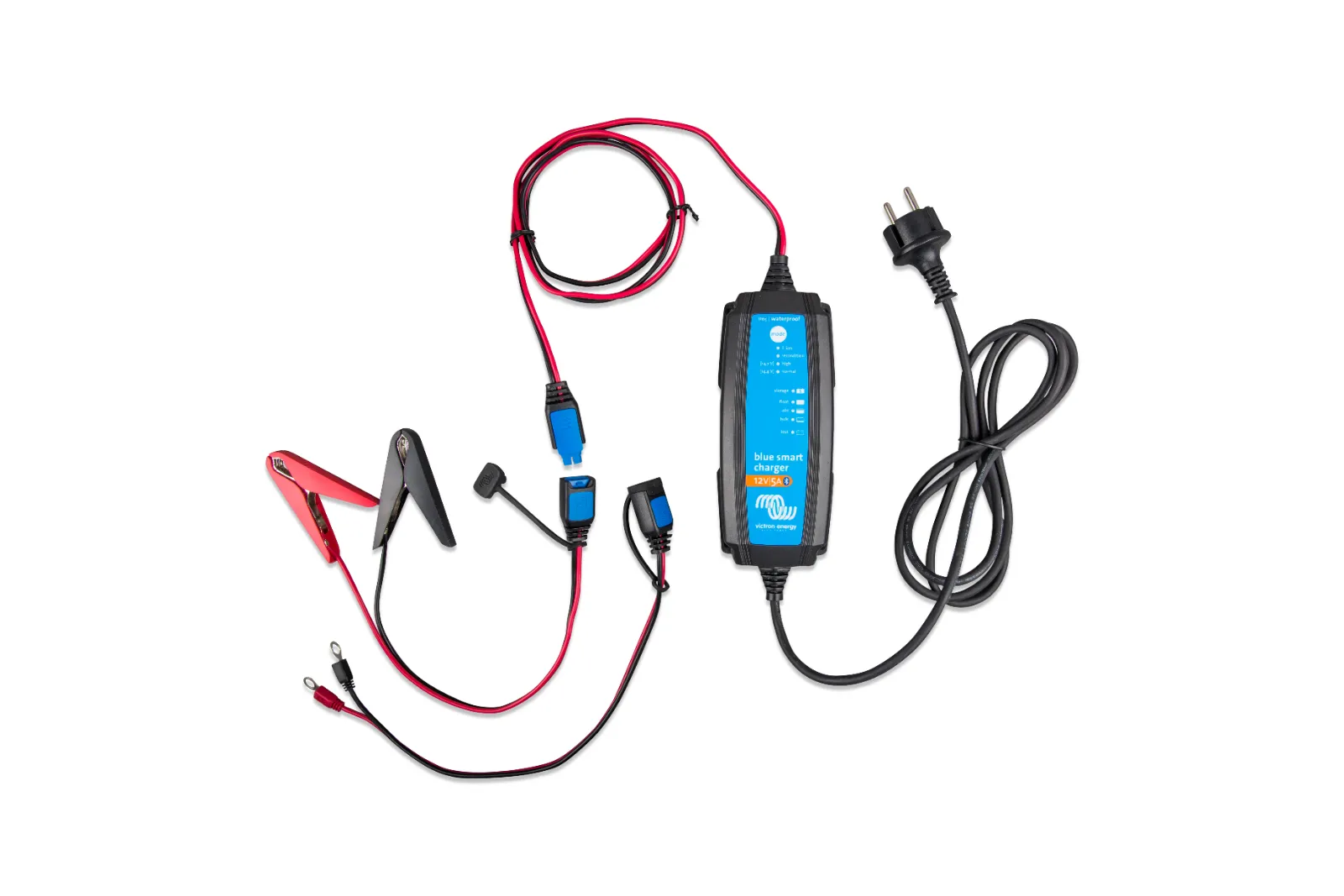
It’s silent, with no cooling fan, and carries a five-year warranty. Victron has replaced the original IP65 12/5 with the smaller IP65s 12/5, so that’s the model to look for. Bunnings’ online marketplace lists the 12/5 at $127.24, which makes it the cheapest 5 amp charger here.
The weakness matters in Australia. Victron’s data sheet rates full output only up to 30°C, so in a hot garage it will charge more slowly. For maintaining a battery that’s already full, that barely matters. For recovering a flat one in January, it does.
Projecta IC100L: small, slow and Australian
Projecta is an Australian brand, and the IC100L is the smallest charger in its Intelli-Charge range. It’s a 12V, 1 amp unit with a lithium profile that still handles wet, AGM and calcium batteries. Projecta pitches it at motorcycles, jet skis and ride-on mowers.
It comes with clamps and a fused vehicle harness, and Auto One lists it at $119. The lithium Intelli-Charge range is backed by a two-year warranty.
Don’t buy it to bring a flat car battery back. At 1 amp, with no adjustable output, that will take a very long time. Buy it to keep a bike or a small battery topped up, which is exactly what it’s for.
Is a battery maintainer the same as a trickle charger?
Not quite. An old-style trickle charger keeps pushing a small current into the battery whether it needs it or not, which can overcharge it over weeks. A smart maintainer charges the battery, then drops to a lower holding voltage and only tops up when needed. That’s what makes it safe to leave connected all summer.
All four chargers here are the smart kind. CTEK calls its holding stage float/pulse, Victron calls it storage mode, and NOCO says its Genius chargers can run continuously with no risk of overcharging.
Why my BMWs live on a charger
I keep my E46 on a cheap charger, and my old E36 needed one too. BMWs somehow always find a way to go flat, especially when they’re weekend-only cars.
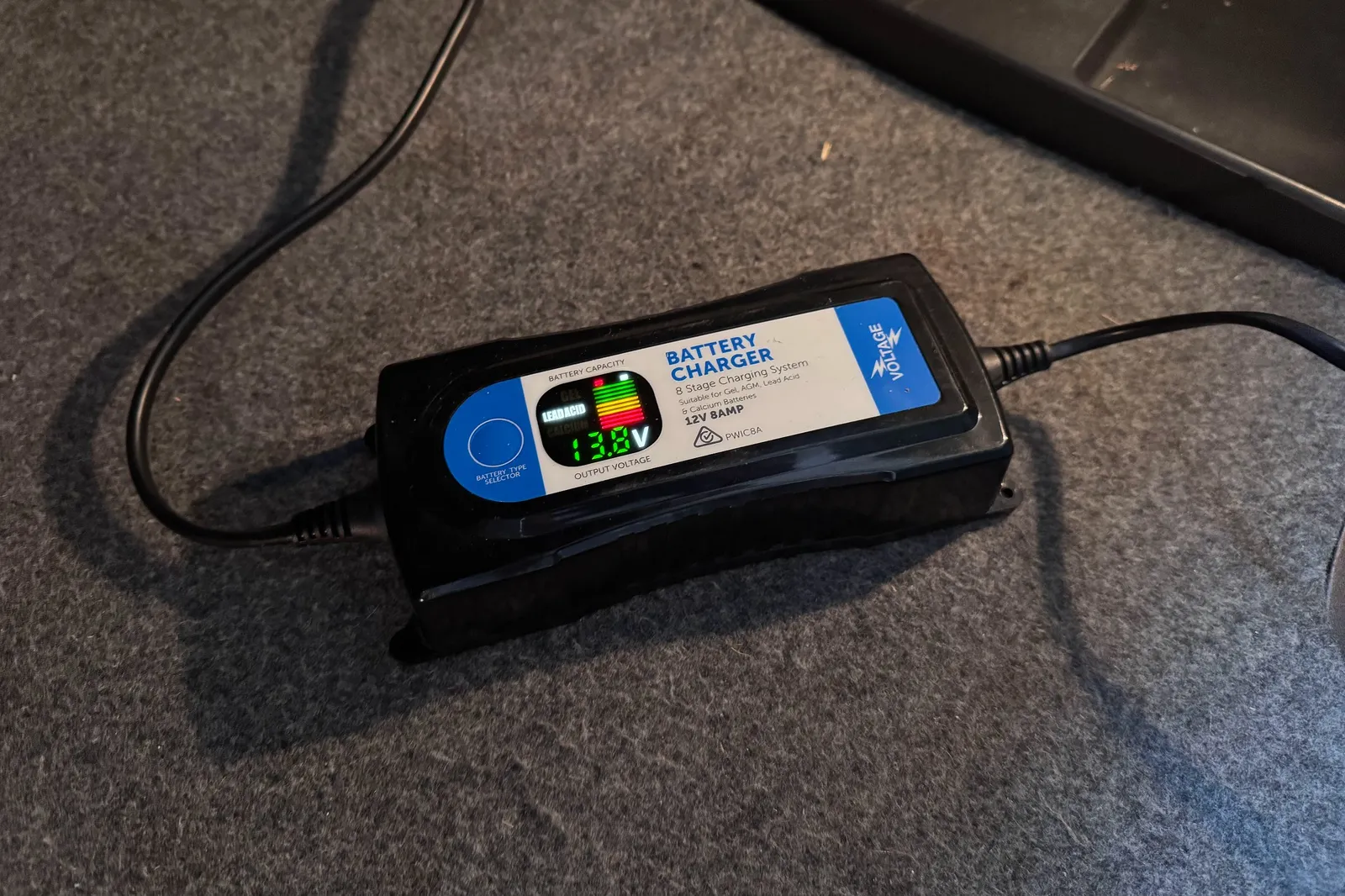
Mine is a Voltage 12V 8 amp unit, the sort of thing most people would call a trickle charger. The label says otherwise: it’s an eight-stage charger with a selector for gel, AGM, lead-acid and calcium batteries, and here it’s showing 13.8V. It isn’t one of the four above, and that’s the point. A cheap smart charger still beats a flat battery.
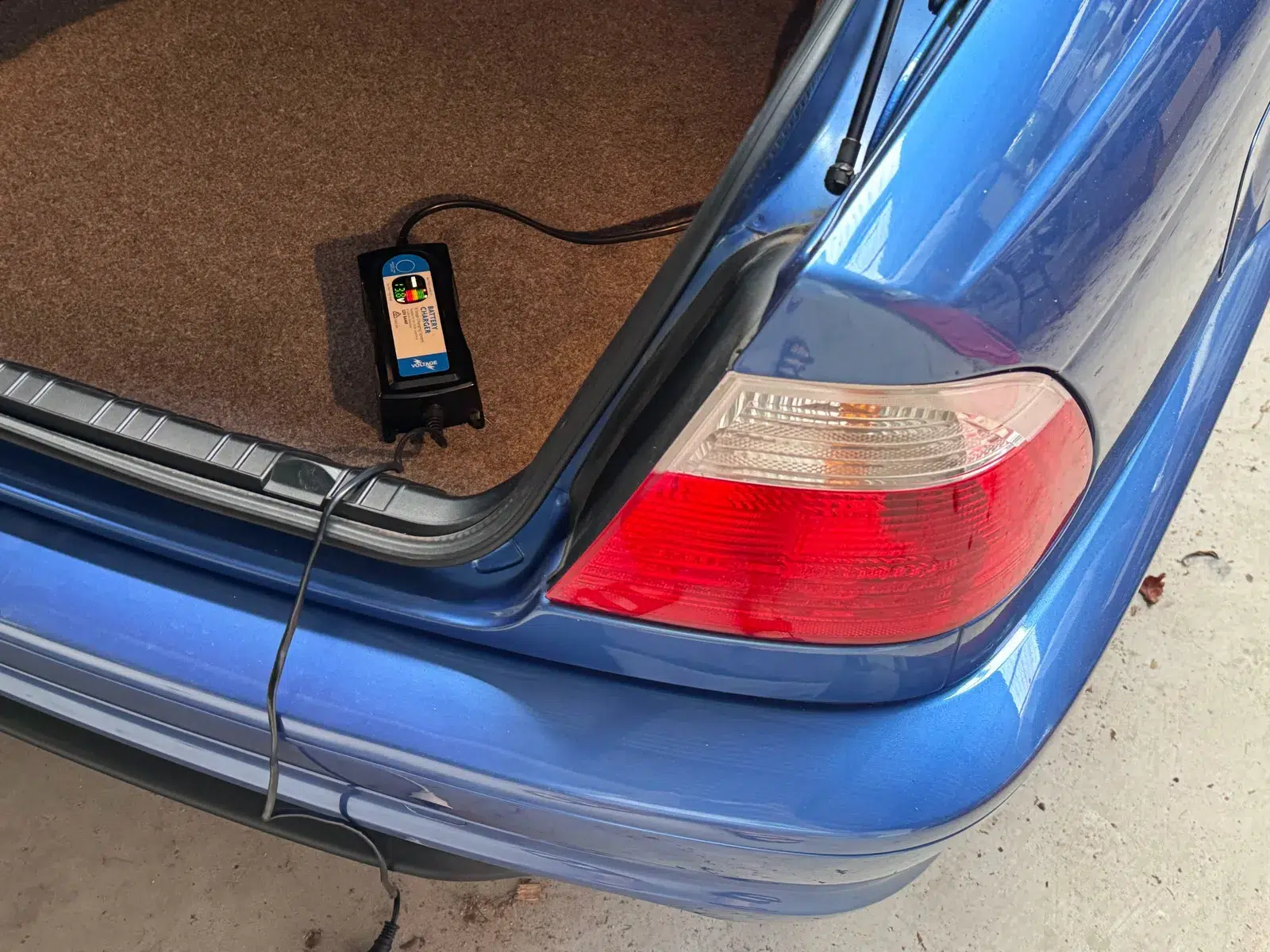
On the E46 the battery lives in the boot, so the charger does too, with the lead run out under the boot lid.
How do you connect a battery maintainer to a modern car?
Read the owner’s manual first, because plenty of cars don’t want you clamping straight onto the battery. BMW’s manuals, for example, name an under-bonnet starting-aid terminal as the positive connection and a body earth nut as the negative for jump-starting. Check what yours says about charging before you clamp on.
Don’t plug a charger into the car’s accessory sockets unless the manual says you can. BMW’s own M3 manual tells owners not to connect battery chargers to the factory-fitted sockets. Clamp on with the charger unplugged from the wall, then plug it in.
Match the mode to the battery. AGM batteries want the AGM setting, and lithium batteries need a charger with a lithium profile. Projecta warns that conventional chargers aren’t suitable for lithium batteries.
Do you need one, or just a better battery?
If the car starts every day and still struggles, a maintainer won’t save it. Test the battery, and if it’s on the way out, our battery replacement cost guide covers what a new one should cost. A jump starter is the backup for the day you forget.
If the car sits for weeks at a time, a maintainer is the cheapest insurance in the garage. Pair it with a decent outdoor car cover if it lives outside, and an OBD2 scanner to clear the odd low-voltage fault code.
The verdict: CTEK for lead-acid, NOCO for lithium, Victron if you want to watch it work, Projecta for the bike. Any of them costs less than a new battery, and all of them beat a click and silence on the first hot Saturday of January.
Prices and specifications checked November 2026 against each maker’s published specifications and the Australian retailers linked; prices change, so check before you buy. The four chargers above haven’t been tested by TorquePress; the Voltage charger is my own. This guide is general information only. Header image: Matt Hutchinson.


