

The 90 decibel limit everyone quotes almost certainly does not apply to your car. If it was built in the last decade, your legal ceiling is a number specific to your exact model, and nearly every article on this subject gets it wrong.
Worse, passing the noise test is not the same as being legal. Those are two separate offences in New South Wales, and most owners know only one.
The 90dB figure is probably not your number
New South Wales sets exhaust limits through the Protection of the Environment Operations (Noise Control) Regulation 2017. The NSW EPA’s own fact sheet lays out the table, and the 90dB(A) figure applies only to cars built from 1 January 1983 that predate ADR 83/00.
For anything certified to ADR 83/00, which came into force progressively from 2005, the calculation changes entirely. Vehicles with a compliance plate after 1 September 2011 are limited to that model’s ADR 83/00 signature noise level plus 5dB(A). Not 90. Your car’s own type-approval figure, plus five.
Cars plated on or before that date get the more generous of the two tests, whichever is higher. Signature levels are published by the Commonwealth department, not by your exhaust shop.
The upshot is blunt. A shop quoting 90dB as a target is reading the wrong row, and a modern performance car with a low signature level may have a ceiling well under it.
What is the exhaust decibel limit in NSW?
It depends on when the car was built. The NSW EPA’s 90dB(A) figure covers cars built from 1 January 1983 that predate ADR 83/00. A car with a compliance plate after 1 September 2011 is capped at its own ADR 83/00 signature noise level plus 5dB(A). ADR 83/00 cars plated on or before that date get whichever of the two limits is higher.
You can pass the test and still be illegal
This is the part almost nobody knows. The Regulation defines defective noise control equipment as including equipment that makes more noise than the original equipment fitted by the vehicle’s manufacturer. Not more noise than a published threshold. More noise than the system the car left the factory with.
The EPA states it plainly: an aftermarket exhaust louder than the factory system is defective noise control equipment whether or not it passes a decibel test. Using a vehicle in that condition carries a $200 penalty, and modifying one to get there carries another $200.
So the answer to the headline is closer to yes than the modified-car scene would like. Louder than standard is the legal test, and the dB number is a separate hurdle you also have to clear.
Vehicle Noise Offences (NSW)
Corporations pay double throughout. The revving offence sits under the Road Rules rather than the noise regulation.
What a defect notice actually does
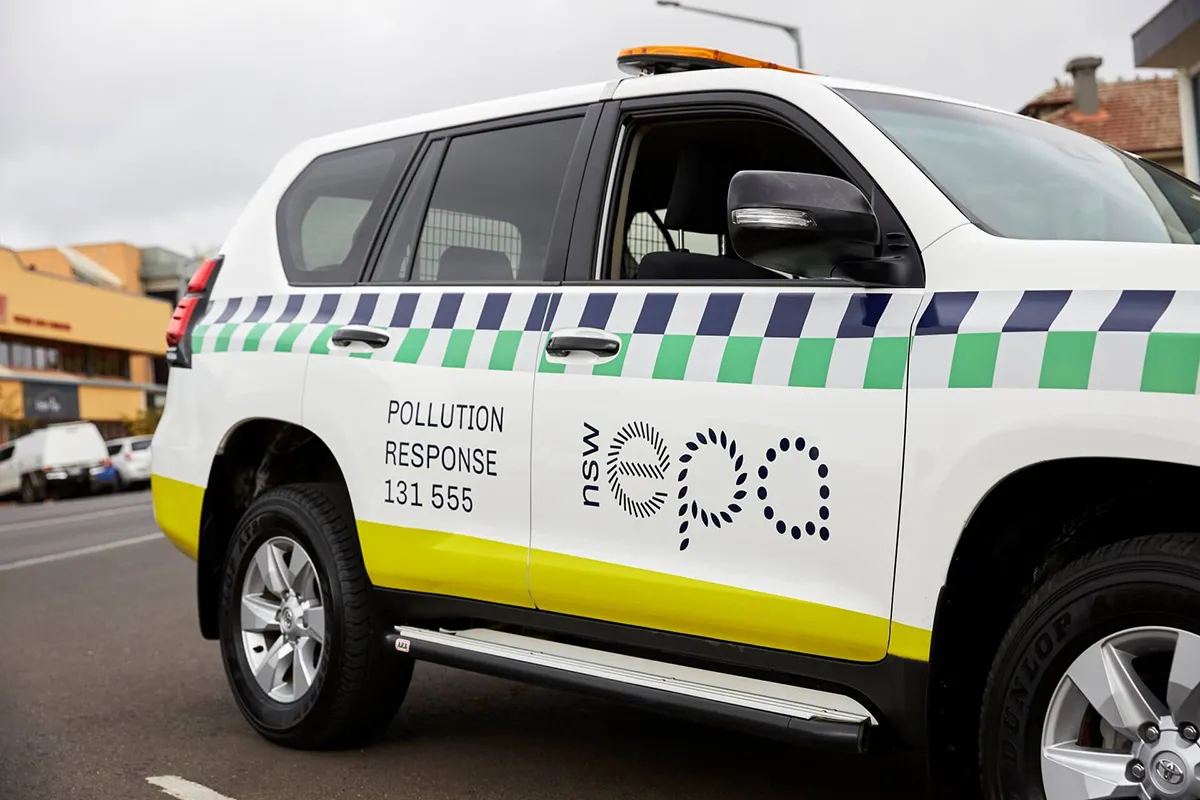
Police can issue a defect notice for a noisy vehicle, which directs the owner to fix the problem. The consequence for ignoring it is the serious part: the EPA can temporarily cancel the vehicle’s registration. At that point the car is unregistered, and driving it is a separate offence entirely.
A member of the public can start this process too. The EPA notes that if someone reports your vehicle you may be required to present it at an approved inspection station, with penalties following if it fails.
The modifications named in the regulation
Several popular modifications are called out specifically rather than left to interpretation. Temporary noise-reduction devices and packing are prohibited outright, and the EPA’s examples are unambiguous: baffles that are not welded or riveted in place, valves or other adjustable items, and materials such as steel wool.
That middle one matters enormously. A valved or switchable aftermarket exhaust is an adjustable item, which puts a large slice of the performance market in the regulation’s sights. Bolted baffles remain permitted on motorbikes.
The list extends past the exhaust. Blow-off valves and turbo wastegates that vent to atmosphere are both prohibited, with wastegates required to discharge upstream of the mufflers or catalytic converter. Pod-type air filters are flagged for intake noise, with a boxed filter recommended.
None of this is new law. It is existing law the modified-car market has quietly ignored, which is a different and more expensive problem. It sits alongside the regulations closing in on the manual, and is why any tuning decision should start with the rules.
Are blow-off valves illegal in NSW?
A blow-off valve that vents to atmosphere is, under the same Noise Control Regulation that sets the decibel limits. The rule targets the open-air discharge, which is the whoosh most owners fit one for. A recirculating valve returns that air to the intake, as factory turbo cars do, so it isn’t caught by that wording, though the car must still meet its noise limit.
What to do about it
Get it assessed before an officer does. The EPA’s own advice is to have exhaust work checked by a qualified person, naming a licensed muffler repairer, an EPA-approved mechanic or a licensed vehicle certifier. A written assessment from one of those is worth considerably more than a receipt from an exhaust shop.
If you receive a defect notice, the pathway is to rectify and present the vehicle for inspection within the stated timeframe. Keep the documentation, because a cleared defect is a matter of record and an uncleared one becomes a registration problem.
And if you are buying a modified car, listen to it. The EPA specifically warns buyers that a noisier-than-expected system may have been replaced or had its baffles removed, and that the new owner is the one who gets fined.
The honest summary for 2026: in New South Wales a louder-than-stock exhaust is not a grey area, it is a defined defect. Enthusiasts getting away with it is not the same as it being allowed.


