
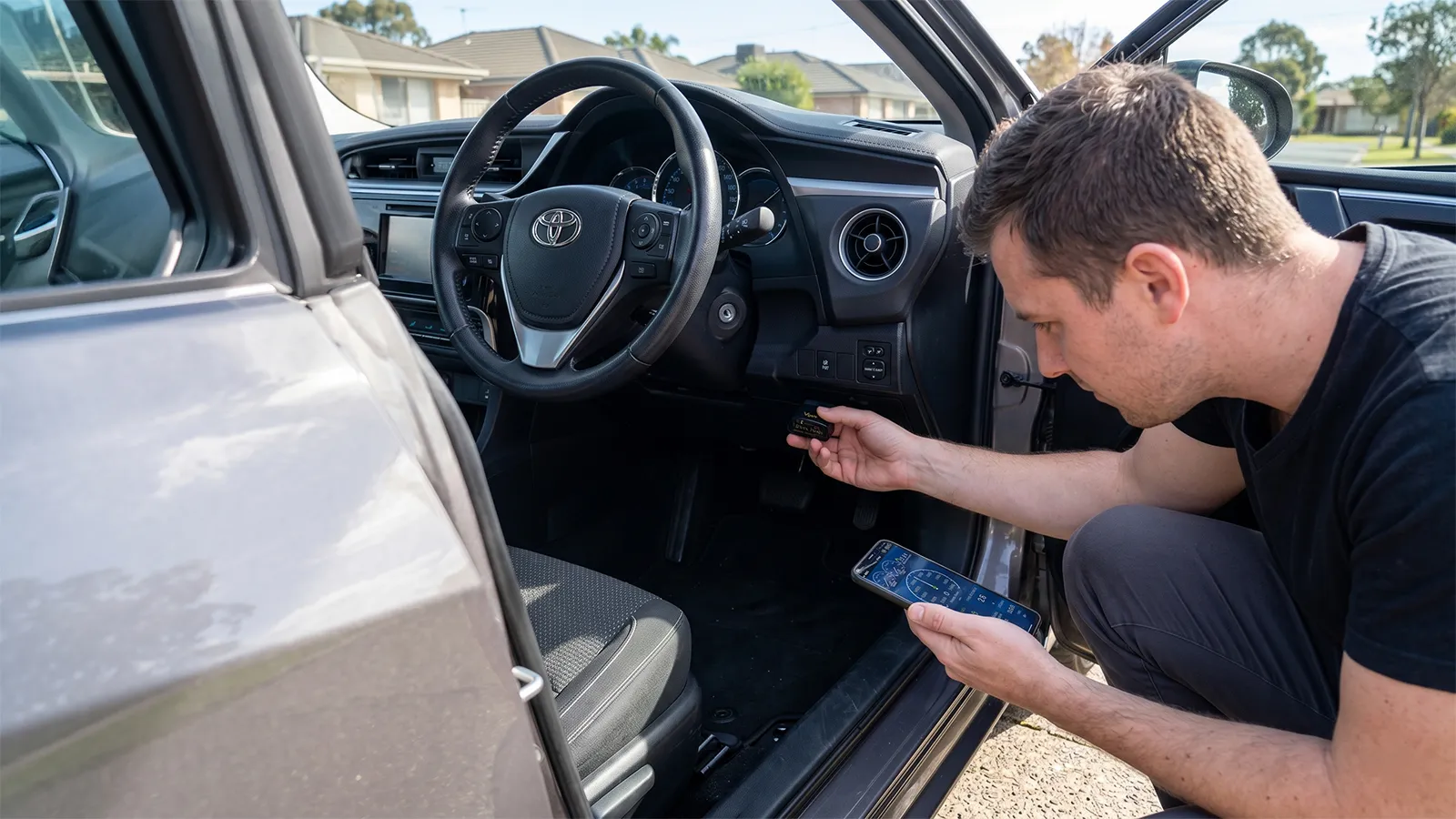

A clean interior and a smooth test drive prove almost nothing. The car can idle sweetly in the driveway while it quietly stores a transmission fault, a dead airbag sensor, or a dying catalytic converter in its memory. A $30 scanner reads that memory in about three minutes. The seller is betting you won’t bring one.
That bet pays off more often than it should. Most buyers walk around the car, kick a tyre, listen to the engine, and hand over the cash. The data that actually predicts a four-figure repair sits one plug away, under the dashboard, and nobody asks for it.
This is the case for treating a scanner as a buying tool, not just a fix-it tool. Plug in before you commit, read what the car already knows about itself, and you shift the odds in your favour.
What a Scanner Sees That a Test Drive Hides
A short test drive only tells you how the car feels for ten minutes. A scanner reads stored and pending fault codes, freeze-frame data, and live sensor values, surfacing problems in the engine, transmission, ABS, and airbag systems that never show up as a warning light or a noise.
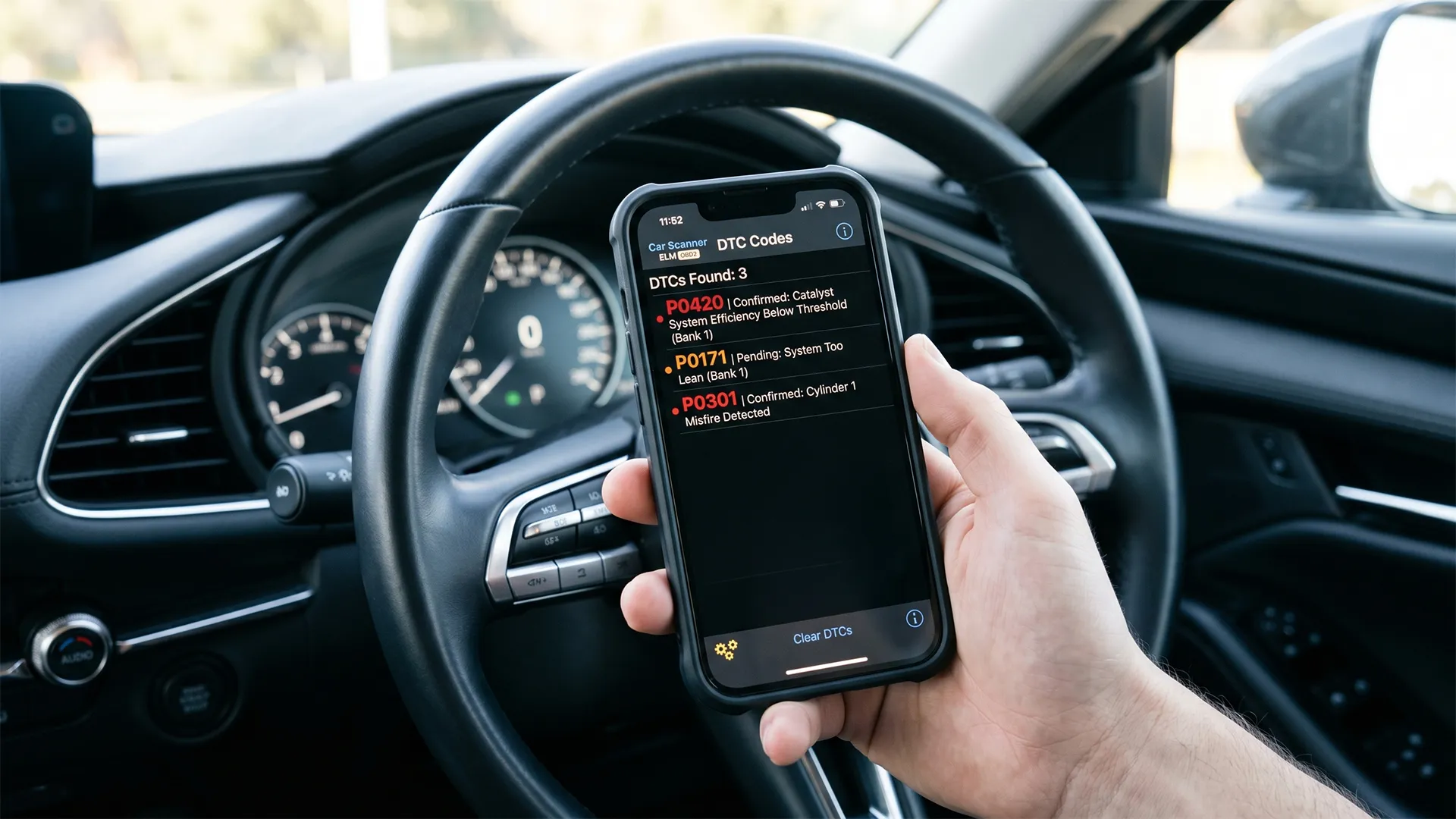
The trap is that many faults stay silent until they’re expensive. A failing catalytic converter is the classic example. It produces no obvious symptom on a quick drive, yet the car’s oxygen sensors track its efficiency and set a code like P0420 long before you’d feel a flat spot.
The same goes for safety systems. A fault stored in the ABS or airbag module often leaves the warning light off and the car driving normally. The scanner reads those modules directly and tells you what the dashboard won’t.
Pending codes are the real gold. These are faults the car has noticed but hasn’t fully confirmed yet, the problem that’s developing but hasn’t tripped the light. A seller can’t easily hide a pending code, because the car is still actively logging it.
The Readiness Monitor Lie Detector
Can a seller hide a fault by clearing the codes?
They can clear the codes, but they can’t hide that they did it. Erasing fault codes also wipes the car’s readiness monitors back to “Not Ready,” and those monitors take a full drive cycle to reset. A daily-driven car showing “Not Ready” is the tell.
Here’s the mechanism, because understanding it is what separates a confident buyer from a nervous one. When anyone clears codes, the car’s computer does three things at once. It turns off the check engine light, it erases the freeze-frame data, and it resets every readiness monitor to “Not Ready.”
Readiness monitors are the self-tests every OBD2 car runs in the background: catalytic converter, oxygen sensors, EVAP, EGR and others. They only complete after the car has been driven through a specific cycle of conditions. You can’t fake them ready. You have to actually drive the car for them to pass.
So picture the scene. The seller swears the car is driven every day, but you plug in and most monitors read “Not Ready.” That’s the digital equivalent of fresh paint over a water stain right before the open house. It almost always means the codes were cleared recently, and the only reason to clear codes before a sale is to make a problem disappear for an afternoon.
Ask them straight: “The readiness monitors haven’t completed. Was the battery just replaced, or were the codes cleared?” A battery disconnect resets monitors too, so it’s a fair question. Their answer, and how fast it comes, tells you most of what you need to know.
If you do find a stored code, check the freeze-frame data attached to it. That’s the snapshot of exactly what the car was doing when the fault triggered: speed, revs, engine temperature. A stored code with no freeze frame is itself suspicious, because it suggests the data was manually wiped.
Your Driveway Scan, Step by Step
Scan the car cold, before the test drive, not after. Plug in with the ignition on, pull the stored and pending codes, check the readiness monitors, then read freeze-frame and live data. The whole sequence takes a few minutes and happens before you’ve committed to anything.
Timing matters more than people realise. A long test drive changes the car’s live conditions and can start completing readiness monitors, which muddies the picture. Plug in while the engine is still cold, ideally before you’ve driven anywhere, so you’re reading the car as the seller left it.
Turn the ignition to on, let the scanner connect, and run a full scan. The order you’re looking for: stored codes first (confirmed faults), then pending codes (developing faults), then monitor status (the reset tell), then freeze frame and live data for anything that turned up.
This first-pass screen won’t tell you everything, but it tells you whether to keep going. A car with no active powertrain codes, complete monitors, and believable live values has earned a proper test drive. A car with active codes or suspiciously blank monitors has earned a polite goodbye, or a much lower offer.
A scanner is the highest-value tool a used-car buyer can carry, and the cheapest insurance against a money pit. If you’re still deciding which one to keep in the glovebox, our rundown of the options is the place to start.
Where a Cheap Scanner Runs Out of Road
A budget Bluetooth dongle reads engine and emissions data brilliantly, but most can’t see into the ABS, airbag, or transmission modules. Those are exactly where the expensive, invisible faults hide, so a powertrain-only tool gives you a first-pass screen, not a clean bill of health.

This is the honest limit, and it’s worth knowing before you trust a green screen. Full OBD2 covers the standardised emissions and powertrain codes every scanner can read. Full-system diagnosis goes further, into the manufacturer-specific modules: ABS, airbags, transmission control, body control. A cheap dongle usually stops at the first group.
For a used-car inspection, that gap is the one that bites. A transmission quietly logging a fault, or an airbag system with a dead sensor, can sit completely outside what a basic reader sees. If you’re buying often, full-system access is a bigger upgrade than any number of fancy service-reset functions.
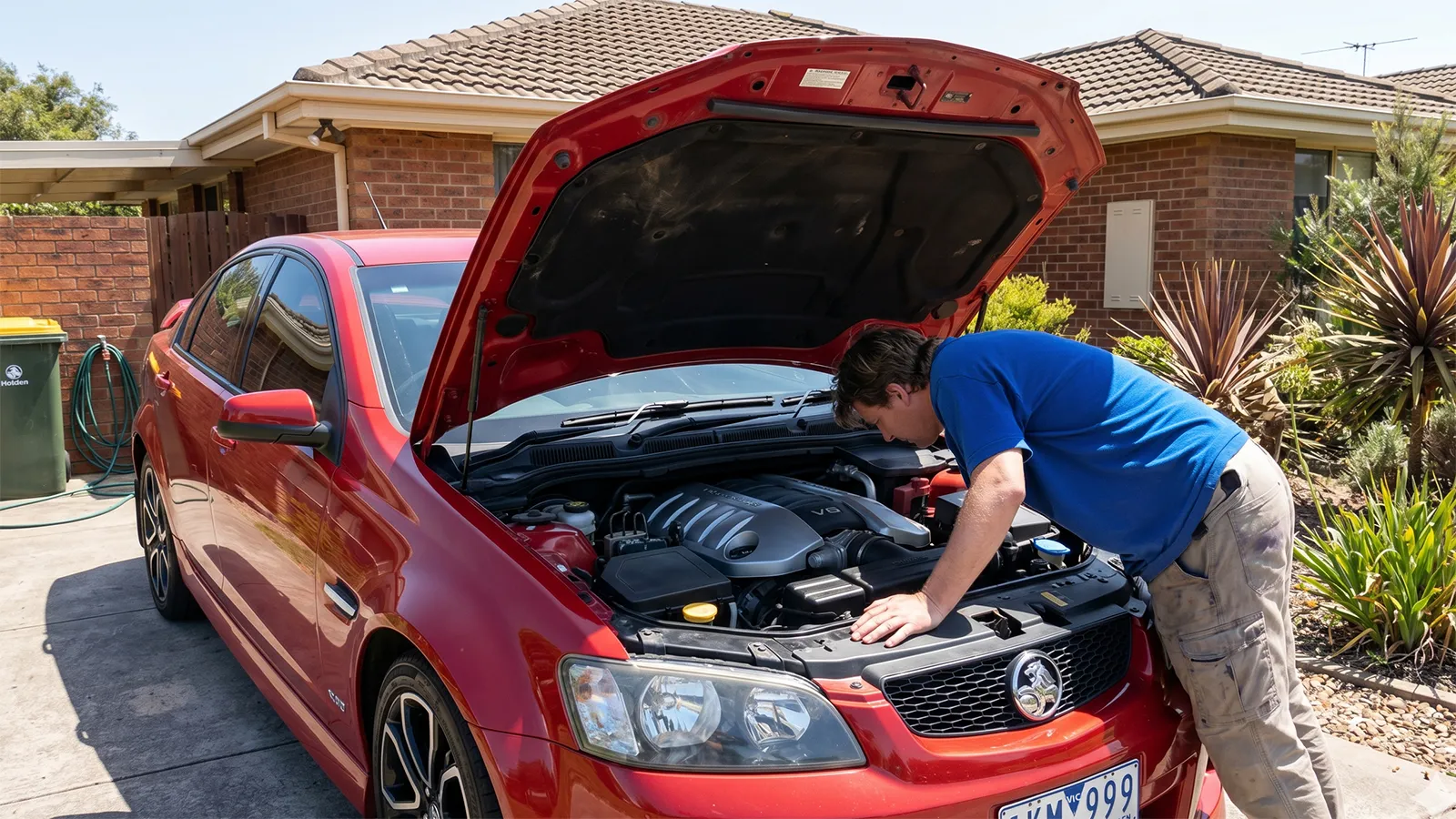
There’s also a brand-specific layer the generic tools miss. Software like Forscan, paired with a compatible adapter, digs into deeper history codes on Fords and Mazdas that standard scanners can’t reach. Given how many used Mazda3s and Rangers move through Aussie driveways, that’s not a niche point. The same rules apply when digging into the deep module history of local performance heroes, if you are hunting for a clean V8, using a tool that scans hidden modules is exactly the kind of diligence we highlight in our VF Series II Commodore SS Buying Guide.
And the obvious one: a scanner is not a mechanical inspection. It can’t see a rust-rotted chassis rail, worn suspension bushes, or a clutch on its last legs. It reads the car’s electronic memory, not its physical condition. Treat it as the first filter, then pay for a proper pre-purchase inspection on anything that passes. This is the same diligence that makes the difference on a tight budget.
Which Australian Years to Watch
Anything built from 2006 onward is almost certainly OBD2-compliant and will talk to a standard scanner. The grey zone is cars built right around 2006 and 2007, where local compliance was inconsistent. Pre-2006 imports are the real gamble.

Australia made OBD2 mandatory for new vehicles from January 2006, slightly behind the United States. For anything built in the last fifteen years, the port under the steering wheel is universal and a generic scanner will connect without drama.
The catch is the border years. Compliance on cars built around 2005 to 2008 can be genuinely hit-and-miss, especially right on the 2006 line. A car from this vintage might connect perfectly, or use a regional protocol your scanner can’t read. Confirm the specific model is compliant before you rely on a scan.
Older grey imports are the wildcard. A pre-2006 Japanese import may not play nicely with a standard tool at all. If the car predates the mandate, don’t assume the scanner will save you. Lean harder on a mechanical inspection instead.
The Verdict
A scanner won’t make you a mechanic, and it won’t replace one. What it does is strip the guesswork out of the riskiest part of buying used: the gap between how a car presents and what it’s actually carrying in its memory.
For the price of a tank of fuel, you get to ask the car directly instead of taking the seller’s word. Plug in, read the codes, watch the monitors, and walk away from anything that’s been scrubbed clean the morning you arrived. The faults a code points you toward, like a lean-running engine flagged by a P0171, are often cheap DIY fixes once you know what you’re chasing.
The seller who refuses to let you plug in has just told you everything. Bring the scanner. Use it before you sign.


