
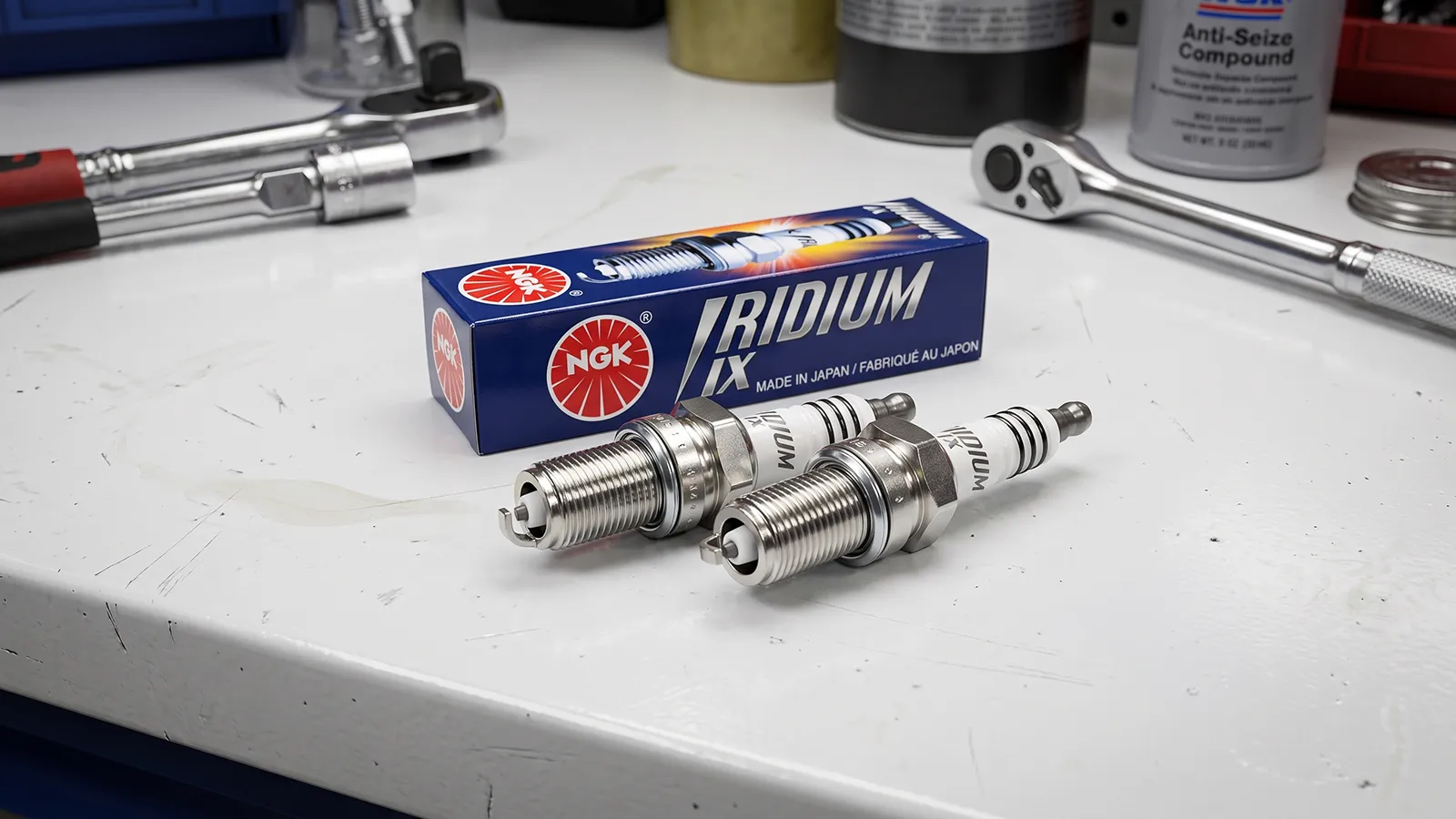

Four plugs in the box, already gapped, and a forum thread insisting you check every one before it goes near the head. NGK Australia’s position is blunter than the forum’s: gap a precious metal plug, snap the fine tip, and the company says it will not warrant the breakage.
That one line settles most of this argument. Not all of it, though. There is a category of engine where setting the gap is not optional at all, and plenty of people driving one have no idea they are in it.
The short answer, before any of the detail
Check the gap on every new plug. Then leave it alone. Almost every petrol car built this century runs fine-wire iridium or platinum plugs that arrive set for the application, and the centre electrode is not built to take force from a gapping tool. The exception is a tuned or boosted engine, where a tighter gap is part of the tune.
Checking and adjusting are two different jobs, and the difference is basically this whole guide. A wire gauge slipped through the gap tells you whether the plug survived the shipping carton. A coin gauge levered against the tip tells you nothing and costs you a plug.
Why NGK and Denso do not give you the same answer
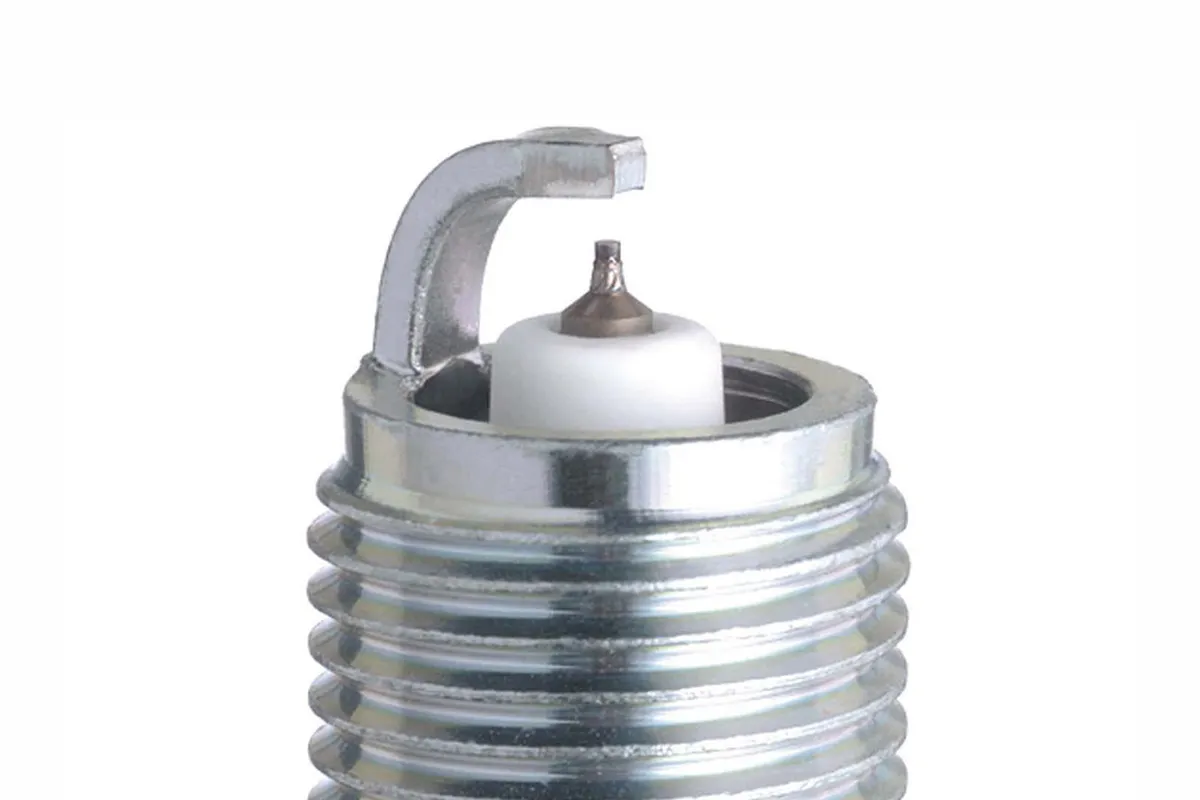
Denso says no. NGK Australia says no, and attaches a warranty exclusion to it. NGK’s international technical pages say a careful adjustment is possible provided you move only the ground electrode. Two companies, three answers, and the space between them is where most of the bad advice on this subject breeds.
Denso’s global installation guidance is the least ambiguous of the three. The instruction reads: “Do not adjust the gap of a spark plug that has a fine electrode, such as a platinum plug or an iridium plug. It may result in damage of the centre electrode.” Denso repeats the point for its Iridium Power range, on the grounds that the gap already sits at the optimum distance.
NGK Australia explains the physical reason. Those fine tips measure 0.6mm across and are laser welded to the centre electrode, putting them between a 0.5mm and a 0.7mm mechanical pencil lead in thickness. NGK calls them “very fragile and not designed to withstand any force,” then states it will not provide warranty for broken precious metal tips.
NGK’s international resource is softer. It notes the factory setting “may not be the right gap for your particular engine” and that “the gap should be adjusted by only moving the ground electrode.” Both positions are defensible. For a stock road car in this country, follow the local one.
Worth knowing either way: a manufacturer’s warranty terms sit alongside your consumer guarantees under Australian Consumer Law, not instead of them. Snap a tip with a pair of pliers and that is on you. A plug that was faulty in the box is a completely different conversation.
Audi, BMW, Nissan or Toyota: what your car actually needs
The same thing, which is the part owners struggle to accept. All four fit fine-wire precious metal plugs across their modern petrol ranges, so the instruction does not change with the badge: measure it, confirm it against the workshop figure for your specific engine, fit it. What differs is where that figure lives and what each brand punishes you for getting wrong.
Spark Plug Gapping by Brand
Notice what that table refuses to give you. There is no single Audi gap and no single Toyota gap. Specifications are set per engine and sometimes per model year, so any chart online offering one number for an entire marque is guessing. Your figure comes from the owner’s manual, the workshop data, or the plug maker’s catalogue entry for that exact part number.
The engines where setting the gap is the entire point
Boost rewrites the arithmetic. NGK’s guidance is to close the gap by roughly 0.10mm, about 0.004 inches, for every 50hp added, near enough to 37kW, because higher cylinder pressure lifts the voltage needed to jump that gap. Leave a Stage 2 car sitting on the factory setting and the coil eventually loses that argument at full load.
Tuners publish real numbers for this. Integrated Engineering specifies 0.61 to 0.69mm (0.024 to 0.027 inches) across the 1.8T and 2.0T EA888 families depending on generation and turbo, tightening to 0.61 to 0.66mm (0.024 to 0.026 inches) on Gen 3 MQB engines. Running a tuned Mk7 Golf GTI or R? That is your range, not the factory one.
The pattern holds as power climbs. Speaking to Performance Racing Industry in 2023, ProCharger’s Erik Radzins put boosted street cars making 600 to 800hp at 0.71 to 0.81mm (0.028 to 0.032 inches), and high-output Coyote builds tighter again at 0.46 to 0.56mm (0.018 to 0.022 inches). More cylinder pressure, less gap. Every time.
Heat range travels with it. Integrated Engineering’s position is that tuned engines want a colder plug to shed heat, and that the wrong heat range invites pre-ignition or fouling. Buying a colder plug and then gapping it to the factory figure is doing half the job and expecting a whole result.
What a gap that is too wide for the boost feels like
Idle is fine. Cruising is fine. Then you hold third to redline and the car stumbles, cuts, or feels like somebody brushed the brake pedal. That is the spark failing to bridge the gap at peak pressure, and it surfaces as misfire codes on the cylinders seeing the most load. A basic OBD2 scanner will name the cylinder for you.
On a VW or Audi, push further than the code. VCDS and OBDeleven both read live misfire counters per cylinder, which turns a vague “it feels a bit off” into a number climbing while you watch. That is the line between diagnosing a fault and replacing parts until it goes away.
The tool that quietly ruins fine-wire plugs
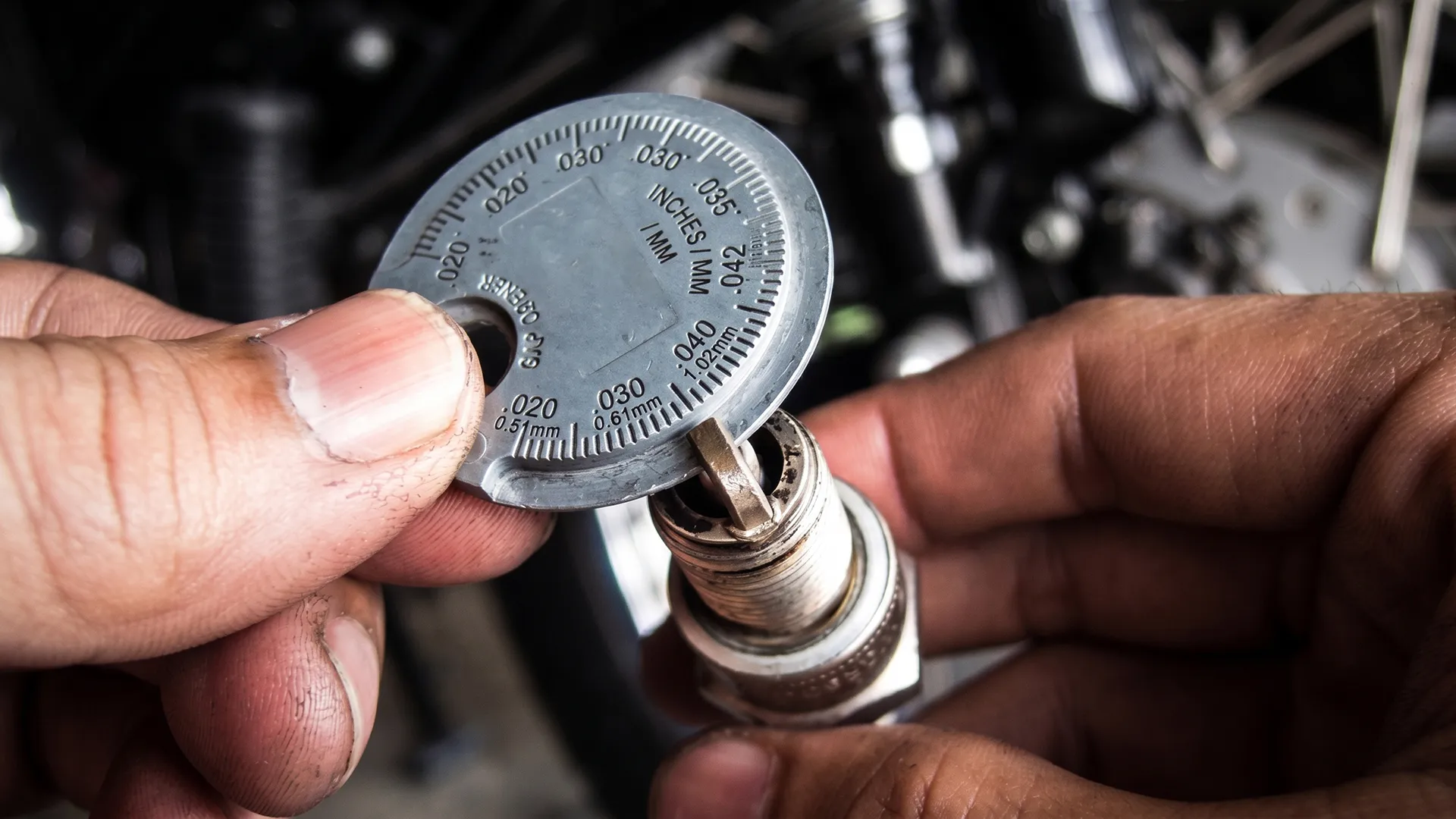
The round coin gauge in the bottom of the toolbox drawer is the culprit. It works by dragging a tapered edge through the gap, which means it bears directly on the centre electrode and pushes. On an old nickel plug, harmless. On a laser-welded iridium tip, that is precisely the force NGK says the tip cannot take.
For checking, use a wire gauge or feeler gauge and slide it through without contacting the tip. If a plug genuinely needs adjusting, and on a stock car it almost never does, the only acceptable method moves the ground electrode alone using a purpose-made tool that hooks the strap. Never lever anything against the centre.

Walk away from a plug that arrives visibly bent or with the strap knocked sideways. Return it. A plug the carton has already abused is not something you rescue on the bench with long-nose pliers, and a fresh set of four is cheap next to a coil pack or a scored bore.
The mistake that ruins more plugs than gapping ever has
Torque. Denso publishes a figure for every thread size, from 8 to 10Nm on an M8 plug up to 30 to 40Nm on an M18, and warns specifically against putting thread lubricant or anti-seize on a plug because it leads you to over-tighten and break the thread. Most people fit plugs by feel and discover this later.
Handling counts just as much. Denso flags tilted wrenches in deep plug wells as a way to crack the insulator, which is a familiar European problem where the plug sits at the bottom of a long tube. And a plug you drop on concrete goes in the bin, not the head. A hairline fracture in the insulator stays invisible right up until it fails under compression.
What the wrong gap actually costs you
NGK lists the consequences of improper gapping directly: “a high rate of misfires, loss of power, plug fouling, poor fuel economy and accelerated plug wear.” Note where fuel economy sits in that sentence. A car running a marginal gap does not always throw a code. Sometimes it just quietly drinks more.
Which is the trap worth naming. Rough running gets blamed on plugs constantly when the real fault is elsewhere, and a dirty MAF sensor produces symptoms close enough to fool most people. Scan it before you spend. Plugs are a maintenance item, not a diagnosis.
Replacement interval is the other half of it. Fine-wire plugs are built to run long service lives, which is exactly why owners forget them until the car starts missing, and why they belong on the same checklist as the rest of the basics.
What to do with the box sitting on your bench
Work through it in this order and the whole job runs about twenty minutes:
- Find the gap specification for your exact engine, from the manual or the plug maker’s catalogue, not a generic chart.
- Check each plug with a wire or feeler gauge without touching the centre electrode.
- If one reads out of spec, exchange it rather than adjust it, unless the engine is tuned and you have a tuner-specified figure to hit.
- Fit dry, no anti-seize, and torque to the manufacturer’s number with an actual torque wrench.
- Clear stored codes, then check misfire counts after a decent drive.
The honest answer to the question in the headline is that gapping new plugs was standard practice for a generation of cars that has almost entirely left the road. On anything modern and stock, checking is diligence and adjusting is damage. On a tuned car it flips completely, and the number you need comes from whoever wrote your map, not from the box.


