
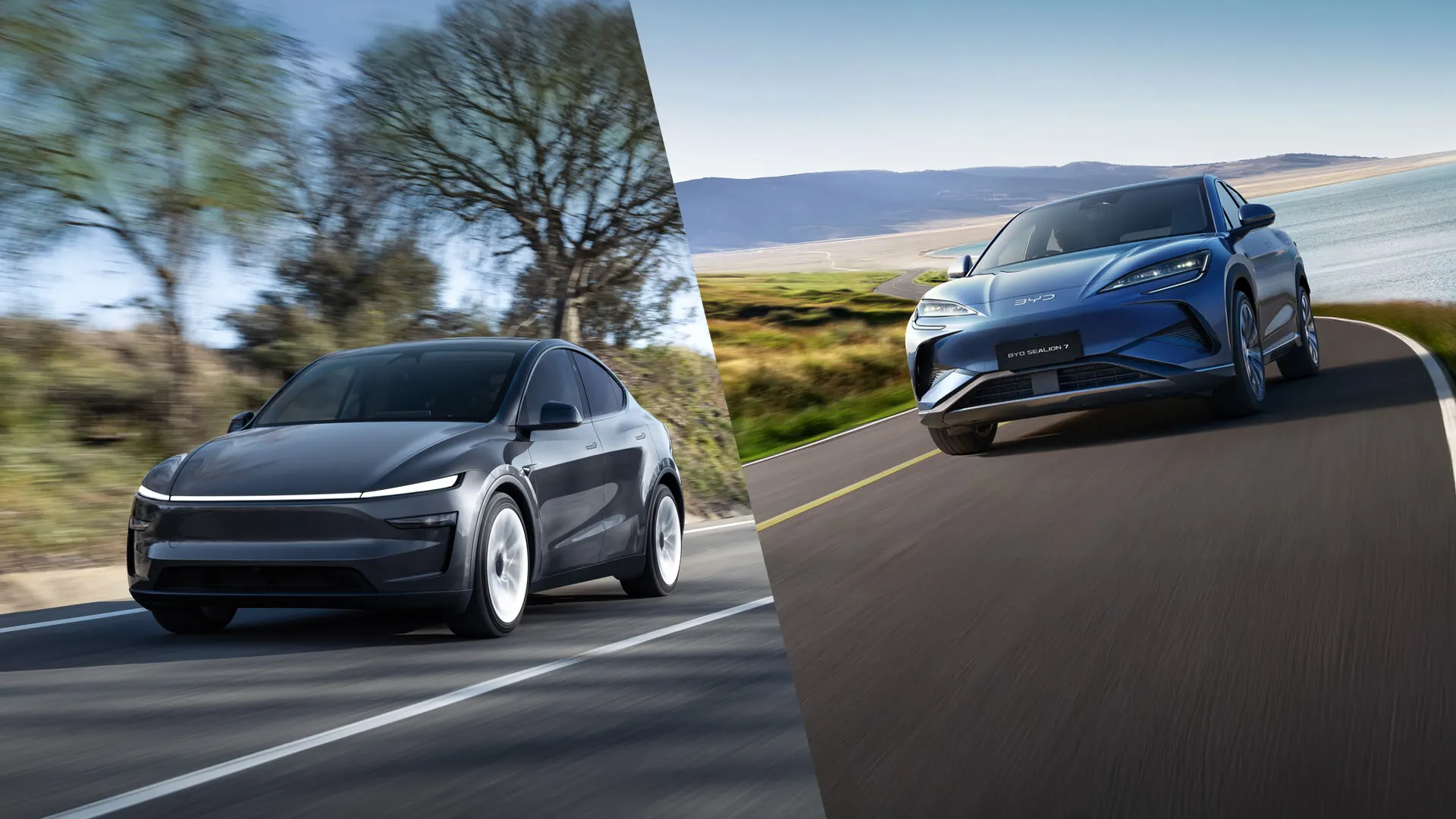

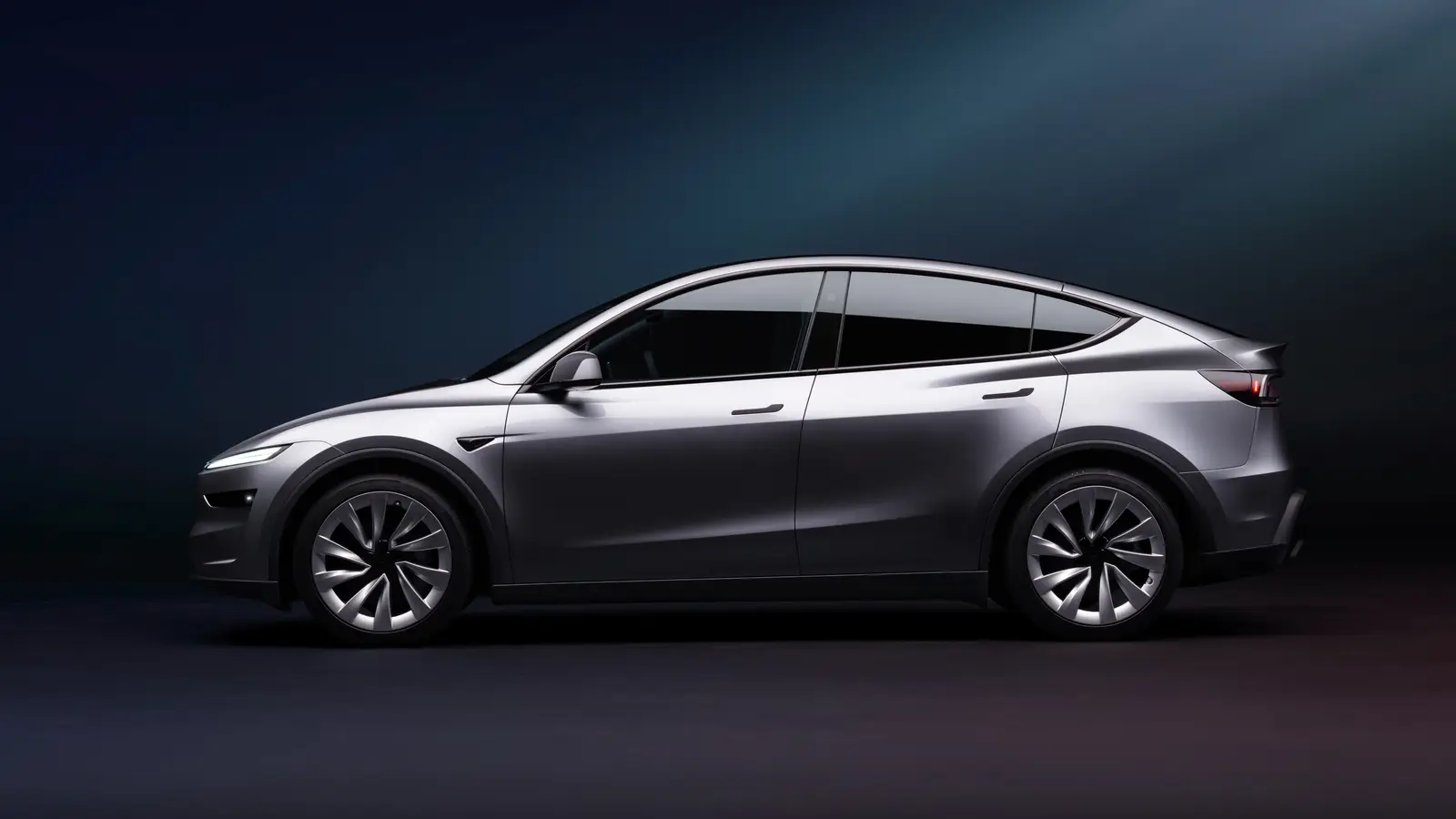
Australians bought 31,454 Tesla Model Ys and 17,277 BYD Sealion 7s in the first eight months of 2026. They’re the country’s two best-selling electric cars. They’re priced within $5,000 of each other at both ends of the range, and the BYD gives you a bigger battery for less money. It’s the Tesla that goes further. That contradiction is the whole story.
This comparison lines up the pairs buyers actually cross-shop. The Model Y Premium RWD at $58,900 against the Sealion 7 Premium RWD at $54,990. Then the Model Y Premium Long Range AWD at $68,900 against the Sealion 7 Performance AWD at $63,990. The $89,400 Model Y Performance and the six-seat Model Y L sit outside this fight and get a mention at the end.
BYD saves you $3,910 and carries 22.5kWh more battery, yet travels only 27km further at highway speed.
BYD saves you $4,910 and wins the sprint, but the Tesla goes 73km further on the highway from a smaller battery.
Sources: Tesla Australia and BYD Australia specifications (September 2026). Usable battery and highway range from EV Database real-world estimates at 110km/h, mild weather.
Why Does the Bigger Battery Go Less Far?
Efficiency. The Sealion 7 carries 82.5kWh of usable battery against 60kWh in the Model Y RWD, but it uses roughly 27 per cent more energy per kilometre at highway speed. That wipes out most of the advantage. At a steady 110km/h on a mild day, the base BYD reaches about 378km and the base Tesla about 351km.
Those highway figures come from EV Database, which models every car on the same real-world test cycle. That makes it a fairer ruler than WLTP, where the base BYD claims 482km and the base Tesla 466km. Same story on the laboratory cycle, just with smaller gaps. The spread in consumption is what matters, and it’s big.
Source: EV Database real-range estimates (Wh/km converted to kWh/100km). Cold figures use EV Database's −10°C scenario with cabin heating, a worst case for most of Australia.
Where does the difference come from?
Mass is the obvious culprit. The Sealion 7 Premium weighs 2,225kg on BYD’s own figures, while EV Database’s listing puts the Model Y RWD roughly 300kg lighter. That weight costs energy on every hill and every overtake. Tesla’s motors and software are also the product of a decade spent chasing losses. BYD’s Blade LFP pack is excellent, but it can’t argue with physics.
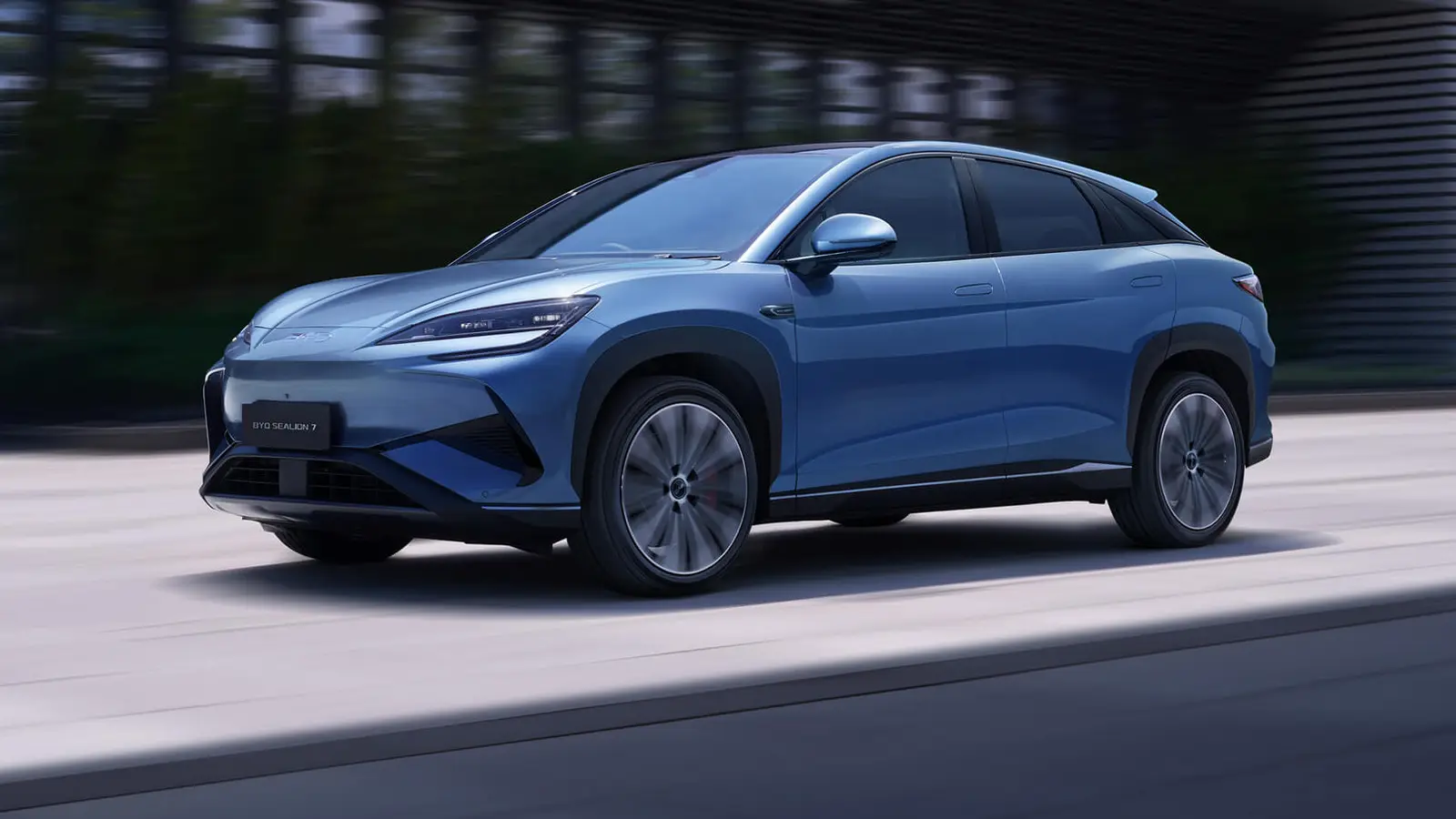
The acceleration numbers flip depending on which pair you read. The Sealion 7 Premium is the slowest car here at a claimed 6.7 seconds to 100km/h, while the Model Y RWD does it in 5.9. At the top of the range the BYD turns the tables. Its 390kW Performance claims 4.5 seconds, a tenth quicker than Tesla’s 4.8-second Long Range. Nobody needs either figure on the M1.
If this pattern sounds familiar, it played out almost exactly in the Model 3 Performance versus Seal Performance comparison earlier this year. BYD brought more power for less money. Tesla brought the more efficient car that went further. Two brands, two sedans, two SUVs, same result.
Sydney to Melbourne: How Many Charging Stops?
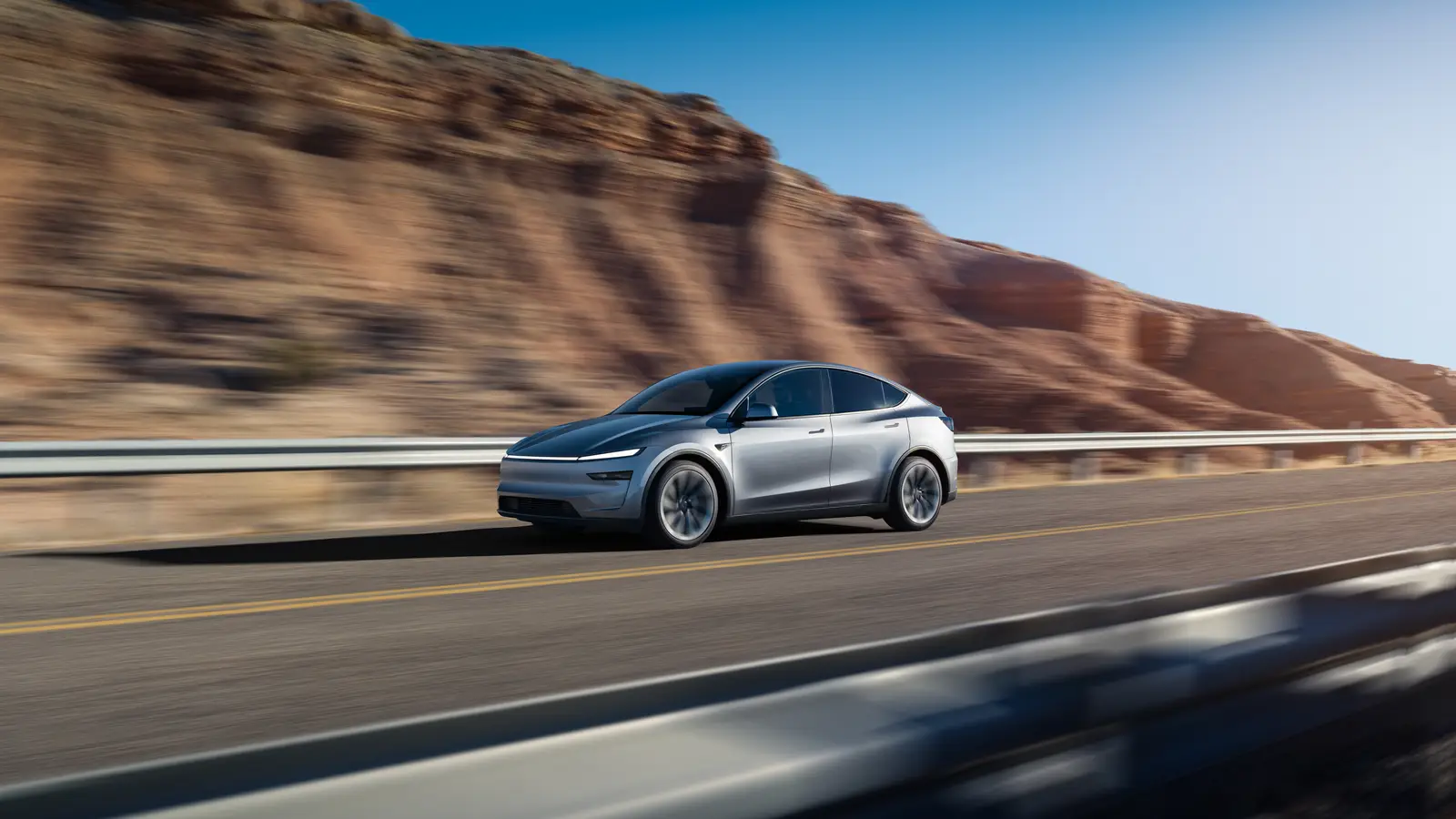
On the 865km Hume run, the Model Y Long Range needs two stops and about 42 minutes of charging on a mild day. The Sealion 7 Premium also needs two stops, but spends about 63 minutes plugged in. The base Model Y RWD makes three shorter stops totalling 54 minutes. In a worst-case cold scenario, three of the four add a stop.
The simulation uses deliberately simple rules. You leave Sydney at 100 per cent, never arrive below 10 per cent, and charge from 10 to 80 per cent at each stop. Charging time scales with each car’s EV Database 10 to 80 per cent figure. Speed is a steady 110km/h, the limit for most of the Hume. The road distance comes from a routing engine, not a guess.
Mild day (23°C)
~54 min charging
~42 min charging
~63 min charging
~66 min charging
Worst case: EV Database cold test (−10°C)
~79 min charging
~66 min charging
~92 min charging
~95 min charging
Our calculation using EV Database highway consumption and 10–80% charge times. Assumes 100% departure charge, 10% minimum arrival and a charger where you need one. Real stops will fall earlier, at actual charging sites.
The BYD’s bigger battery earns it fewer stops than the base Tesla on a mild day, and only just. Its 150kW peak charging rate then hands the time back. The Model Y RWD tops out at 175kW, the Long Range at 250kW, and both reach 80 per cent in under half an hour on EV Database’s figures. The Sealion 7 takes 32 minutes on BYD’s own claim.
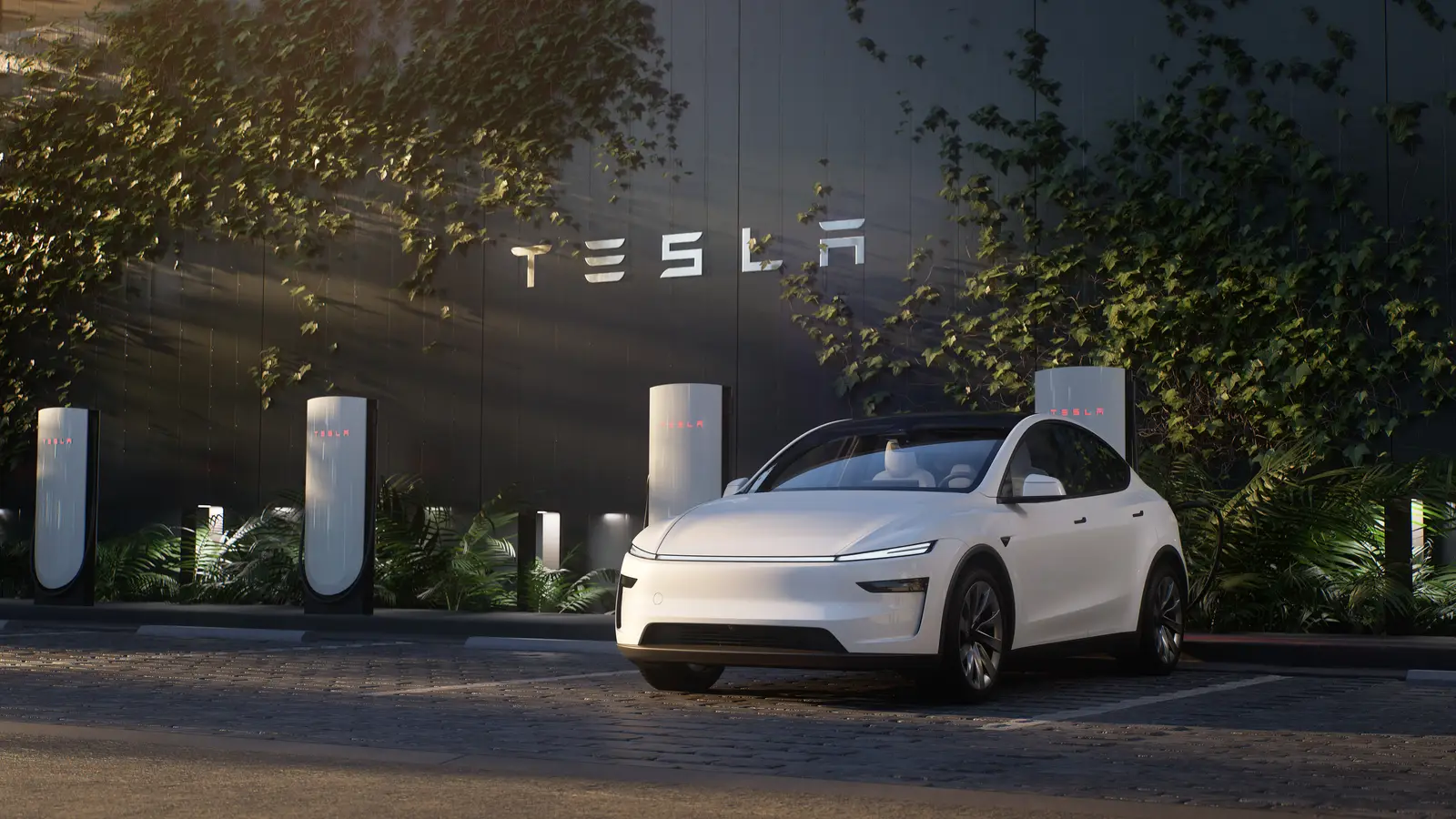
Network matters as much as hardware. Model Y owners plug into Tesla’s Supercharger network with no app or card, and billing just happens. Sealion 7 owners use the growing number of Supercharger sites open to all EVs, plus Evie, Chargefox and the rest. It works. It’s just more admin at 9pm in Gundagai. Our EV road trip guide covers how to plan around it.
Screens, CarPlay and the Cabin You Live With
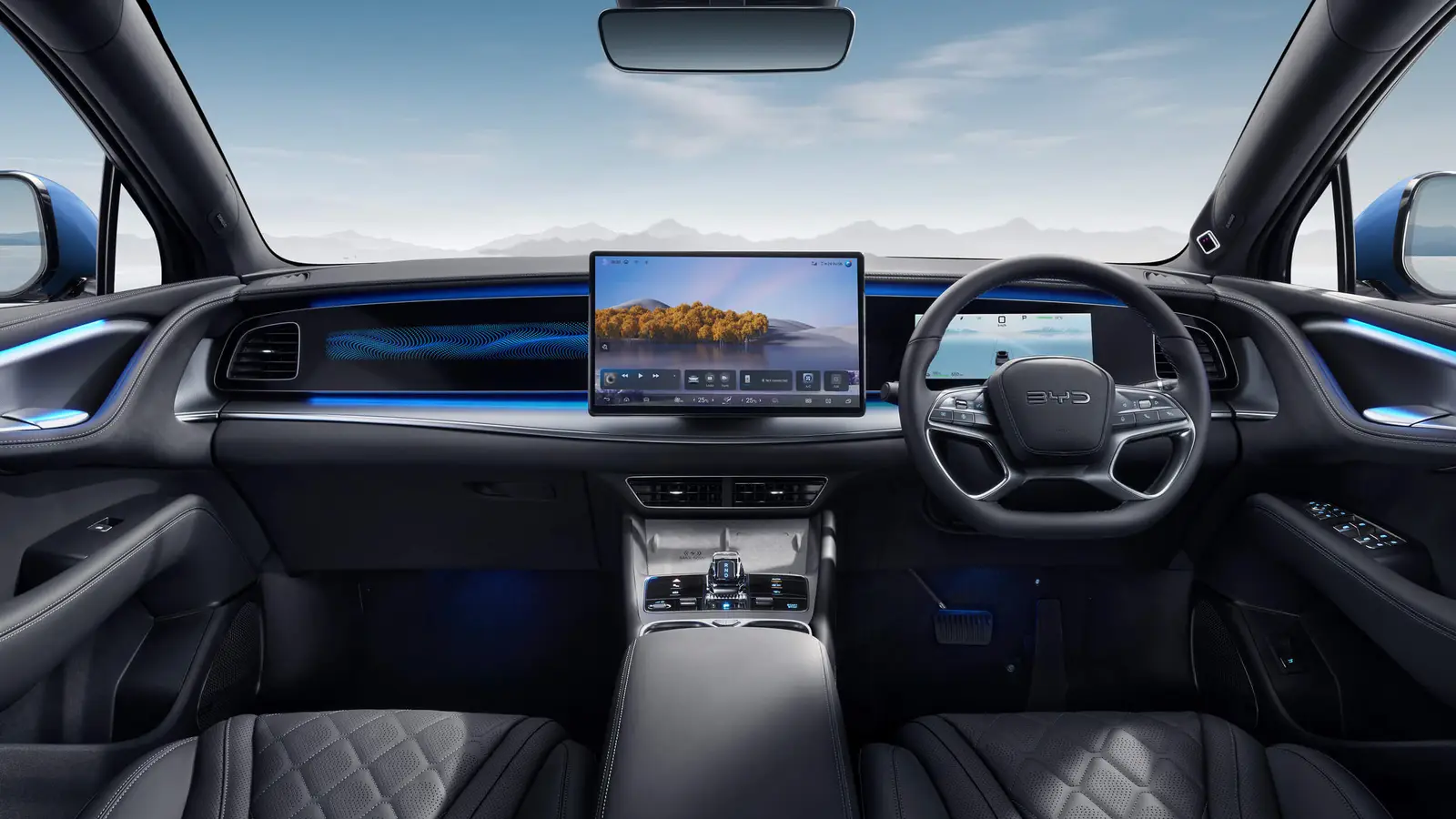
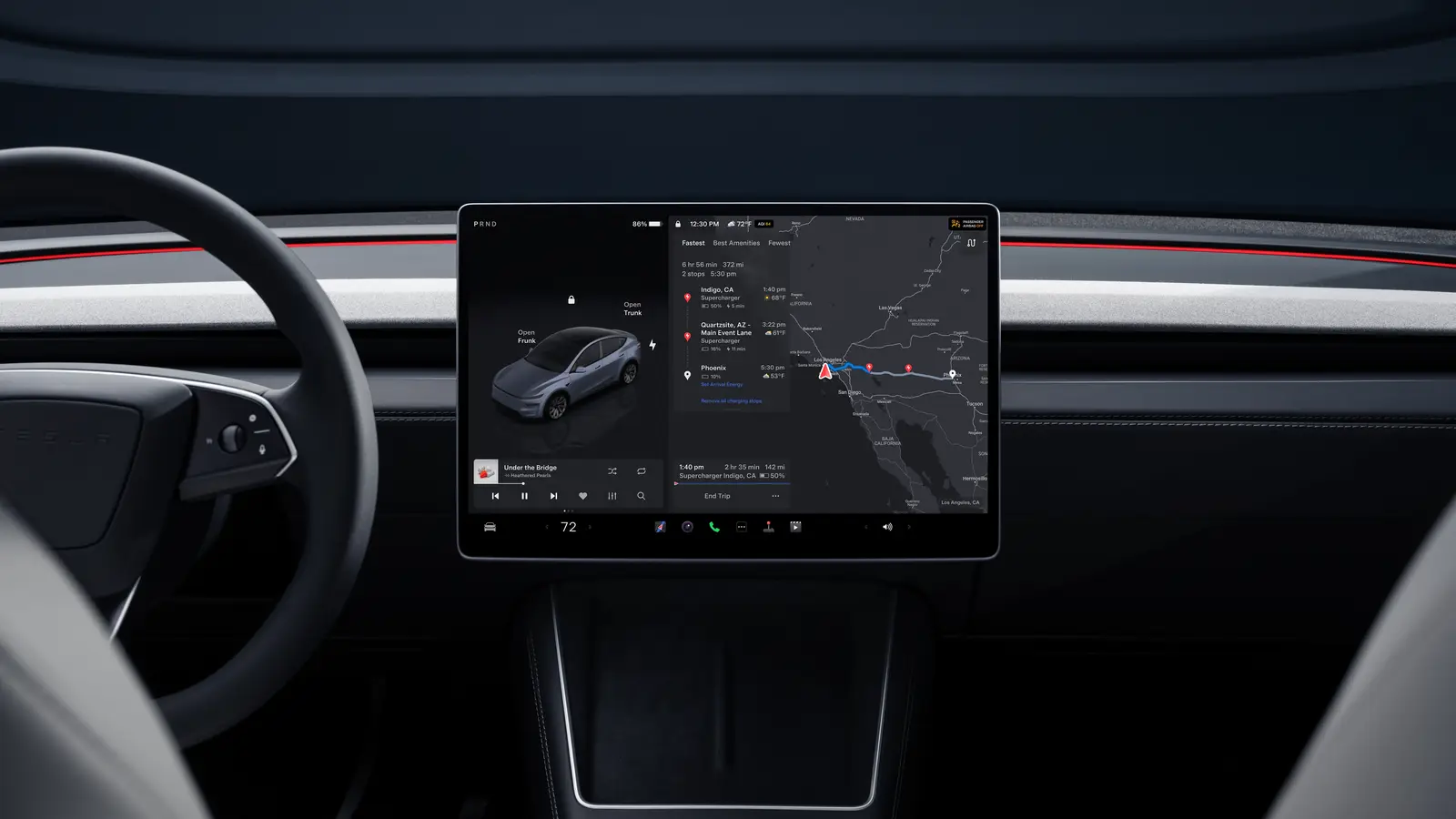
The Sealion 7 is the more conventional car inside, and many buyers will prefer it. It has a dedicated driver display, a head-up display, a 15.6-inch rotating centre screen and wireless Apple CarPlay and Android Auto. The Model Y has one 16-inch screen, an 8-inch rear screen and no phone mirroring at all. That last point settles it for plenty of households.
Tesla’s defence is that its own software makes CarPlay unnecessary, and its navigation plans charging stops automatically, which phone apps can’t do as neatly. Fair enough. But you still read your speed off a screen beside the steering wheel, and you control almost everything through it. Tesla’s January 2026 update brought the 16-inch display to every Model Y grade at no extra cost.
Both cars are rolling data collectors, with driver-monitoring cameras, connected apps and remote access. Tesla’s system is the more mature, and arguably the one that knows the most about how you drive. If that bothers you, read up on where Australia is heading on car data privacy before you download either app. Both cars are also built in China, the Model Y at Tesla’s Shanghai factory.
That last detail surprises plenty of Tesla buyers. The question of Chinese-built cars wearing legacy badges is now bigger than this fight. Here it means both cars come off modern Chinese production lines, and quality differences come down to design and parts, not origin. Tesla’s full self-driving software, now a $149-a-month subscription only, is the one tech extra BYD can’t match.
Boot, Towing and the Family Test
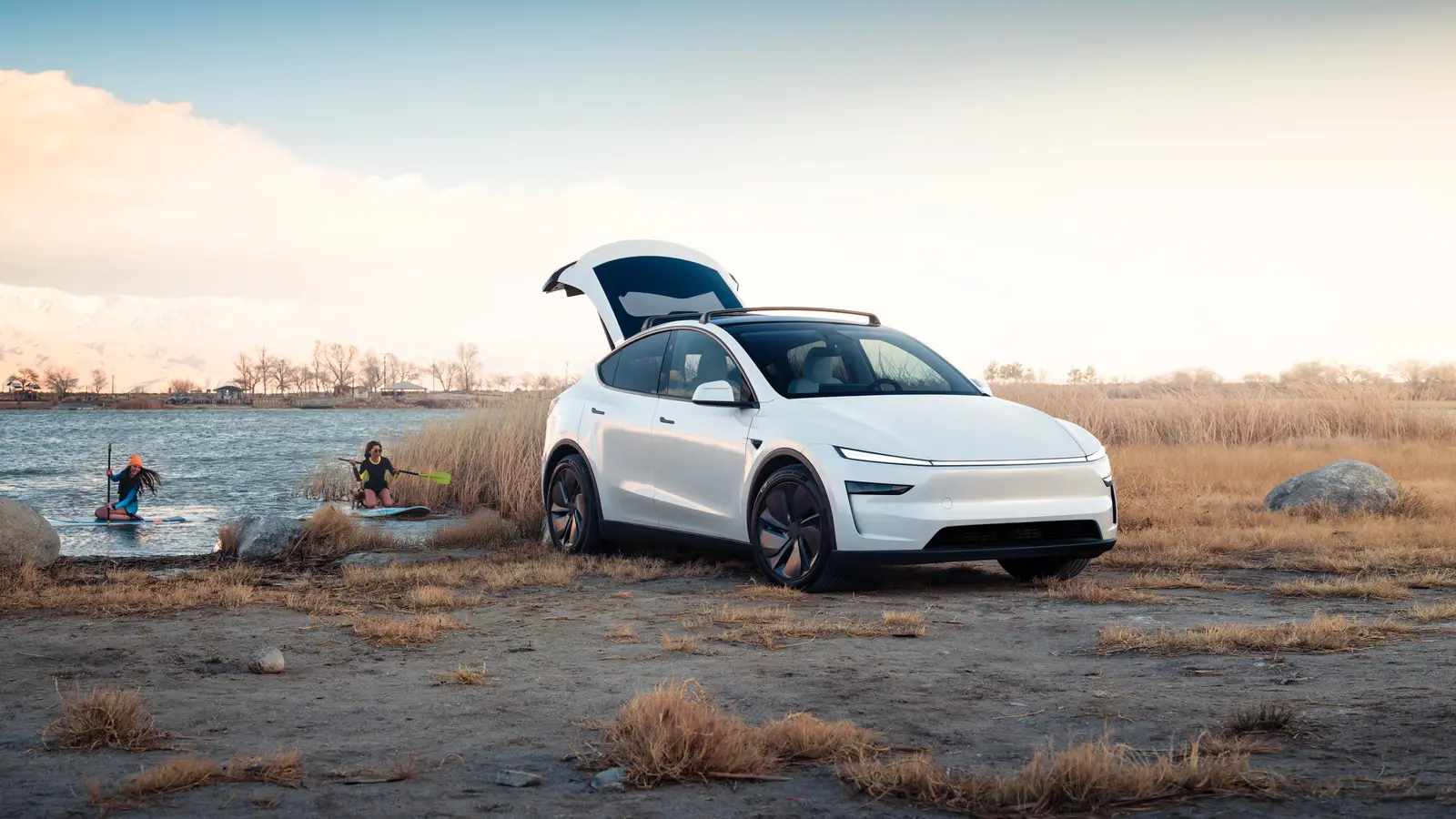
The Model Y is the more practical car by a clear margin. EV Database lists 854 litres behind the Tesla’s rear seats against 520 for the Sealion 7, plus a front boot twice the size. It’s rated to tow 1,600kg braked in every variant. The Sealion 7 Premium manages just 750kg braked, which rules out most camper trailers before you get to range.
Sources: Tesla Australia and BYD Australia specifications; boot and frunk volumes from EV Database. Treat the boot gap as indicative, as makers measure differently.
Outside, they’re almost the same size. The BYD is 38mm longer with a 40mm longer wheelbase, and the heights are within 4mm. Neither fits a third row. The Sealion 7’s sloping coupe roof costs rear vision, a point RACV’s review also raised. For the pram-and-dog weekend, the Tesla’s deep load bay with its under-floor well is simply easier to use.
Can the Sealion 7 tow a caravan?
The Performance can tow a small one. It’s rated at 1,500kg braked, close to the Model Y’s 1,600kg, but the Premium stops at 750kg, the same as its unbraked limit. Expect towing to cut either car’s range by a third or more. A 1,500kg van on the Hume turns that two-stop trip into four or five. For regular heavy towing, neither is the right tool.
Safety is a closer fight than the brochures suggest, but the Tesla still leads. ANCAP says the Model Y recorded the highest overall weighted score of any vehicle it assessed in 2025. It scored 91 per cent for adult occupants and 92 for safety assist. The Sealion 7 scored 87 and 78. Both ratings date from 2025, so neither is near the six-year ANCAP expiry that catches older designs.
Price, Warranty and the Novated-Lease Clock
The BYD is cheaper to buy, but the gap is smaller than it looks once you divide price by usable range. At highway speed, a Sealion 7 Premium costs about $145 per kilometre of range. The Model Y RWD costs about $168, and the Long Range about $156. The Sealion 7 Performance is the worst value on this measure at roughly $173.
| Variant | Price (RRP) | Highway range | Price per km of range | Energy, 15,000km a year |
|---|---|---|---|---|
| Model Y Premium RWD | $58,900 | 351km | $168 | 2,400kWh |
| Sealion 7 Premium | $54,990 | 378km | $145 | 2,955kWh |
| Model Y Premium LR AWD | $68,900 | 443km | $156 | 2,498kWh |
| Sealion 7 Performance | $63,990 | 370km | $173 | 3,076kWh |
Our calculation. Highway range from EV Database at 110km/h, mild weather. Annual energy uses EV Database average real-world consumption.
Running costs barely move the needle. Over 15,000km a year, the Sealion 7 Premium uses about 555kWh more than the Model Y RWD. At an assumed home rate of 30 cents per kWh, that’s roughly $167 a year. It would take more than 20 years to earn back the Tesla’s $3,910 premium. Buy the Tesla for its engineering, not its power bills.
Warranty is now close to even. Tesla now offers five years and unlimited kilometres, plus eight years or 160,000km on the RWD battery (192,000km on the Long Range). BYD offers six years or 150,000km, and eight years or 160,000km on the battery. Five years of BYD capped servicing costs $1,543 for the Premium. Tesla has no fixed service schedule; its manual lists only time-based items like brake fluid checks.
Does the FBT change affect either car?
Not yet, and probably not for these four. Both cars sit well under the $91,661 fuel-efficient luxury car tax threshold, so novated leases remain FBT-exempt until 31 March 2027. Draft laws released this month would keep full relief only for EVs with a base value of $75,000 or less after that. Every variant here clears that line. The $74,900 Model Y L is a different matter.
Base value includes dealer delivery and fitted options, so the Model Y L could tip over $75,000 once it’s on the road. The rules are still draft, according to the ATO’s summary of the measure, and existing leases won’t be affected. This is general information only, not tax advice. If a lease is part of your plan, run your numbers past a registered tax agent before you sign.
The Verdict: Which One Should You Buy?
Buy the Model Y Premium RWD. It’s lighter, more efficient and more practical, and it tows twice as much as the base BYD. It carries the best ANCAP score of 2025 and now matches the warranty. The Sealion 7 Premium is the right car for one buyer: the city family who won’t give up CarPlay, never tows and wants $3,910 back in their pocket.
Our verdict, based on the figures in this comparison. We receive no payment from Tesla or BYD for coverage.
Among the all-wheel-drive pair, the Model Y Long Range is the stronger car by some distance. It charges faster and covers 73km more highway per charge, and it needs one fewer stop to Melbourne. The Sealion 7 Performance is a genuine thrill for $63,990, and quicker off the line. But it’s the least efficient car in this test. Buy it for the fun.
A few firm don’ts. Don’t buy the Sealion 7 Premium if a camper trailer is anywhere in your future. Don’t buy either Model Y if your household runs on CarPlay and nobody wants to learn a new system. And don’t pay $89,400 for the Model Y Performance unless you’ll use it. That’s $20,500 more than the Long Range for 1.3 seconds to 100km/h and adaptive dampers.
If the charging maths on this page doesn’t fit your life, a hybrid remains the honest answer. The RAV4 Hybrid versus Sportage Hybrid comparison covers that fight. For everyone else, this is the choice between the better car and the better-equipped one. At these prices, the better car wins. It’s why the Model Y topped the national sales chart in August.
Tesla Model Y vs BYD Sealion 7: The Full Spec Sheet
| Spec | Model Y Premium RWD | Model Y Premium LR AWD | Sealion 7 Premium RWD | Sealion 7 Performance AWD |
|---|---|---|---|---|
| Price (RRP) | $58,900 | $68,900 | $54,990 | $63,990 |
| Usable battery | 60kWh LFP | 79kWh | 82.5kWh LFP Blade | 82.5kWh LFP Blade |
| WLTP range | 466km | 600km | 482km | 456km |
| Highway range (110km/h) | 351km | 443km | 378km | 370km |
| 0–100km/h | 5.9s | 4.8s | 6.7s | 4.5s |
| Power | Not published | Not published | 230kW / 380Nm | 390kW / 690Nm |
| Peak DC charging | 175kW | 250kW | 150kW | 150kW |
| 10–80% DC | 24 min | 28 min | 32 min | 32 min |
| Braked towing | 1,600kg | 1,600kg | 750kg | 1,500kg |
| Boot / frunk | 854L / 117L | 854L / 117L | 520L / 58L | 520L / 58L |
| Length / wheelbase | 4,792 / 2,890mm | 4,792 / 2,890mm | 4,830 / 2,930mm | 4,830 / 2,930mm |
| Kerb weight | About 1,930kg | About 1,990kg | 2,225kg | 2,340kg |
| ANCAP (AOP / SA) | 5 stars (91% / 92%) | 5 stars (91% / 92%) | 5 stars (87% / 78%) | 5 stars (87% / 78%) |
| Warranty | 5yr / unlimited km | 5yr / unlimited km | 6yr / 150,000km | 6yr / 150,000km |
| Battery warranty | 8yr / 160,000km | 8yr / 192,000km | 8yr / 160,000km | 8yr / 160,000km |
| CarPlay / Android Auto | No | No | Wireless | Wireless |
Sources: Tesla Australia, BYD Australia, ANCAP (2025 ratings). Usable battery, highway range, 10–80% time and Tesla kerb weights are EV Database estimates. Prices as of September 2026 and subject to change.
Article prices are Australian RRP before on-road costs, as of MY26 (September 2026). Figures are manufacturer claims unless stated otherwise.


