
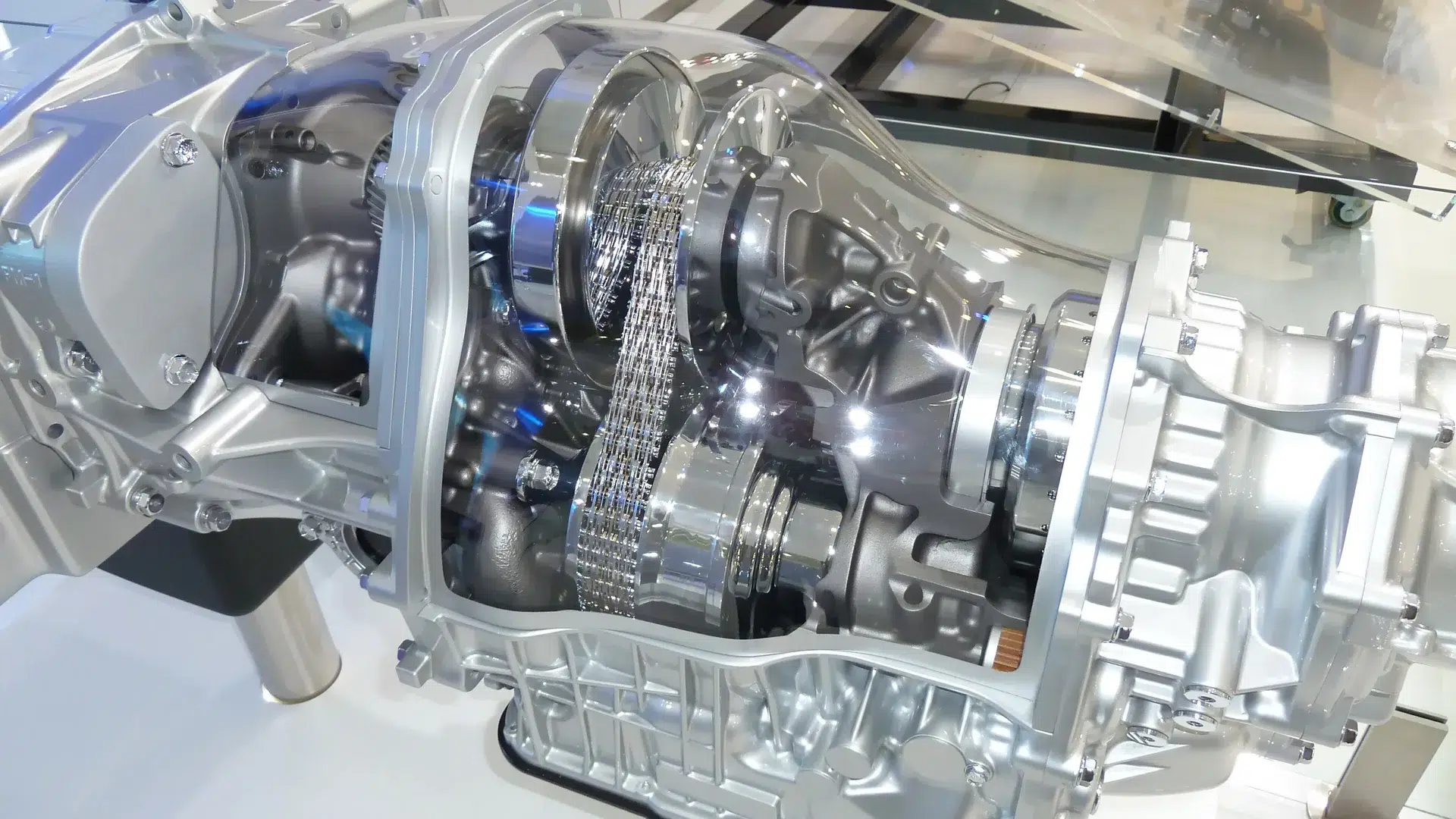

A hybrid's e-CVT and a belt-driven CVT share three letters and almost nothing else, and that's where most of the online horror stories get muddled. One is a pair of pulleys and a steel belt or chain. The other is a set of planetary gears and two electric motors. Lumping them together scares people off some of the most durable drivetrains on the road.
The real problem with a conventional CVT isn't the design. It's the word lifetime printed next to the fluid on the service schedule. Here's how each type works, which Australian cars use them, what goes wrong, what it costs to fix and what to check before you buy a used one.
How does a CVT transmission work?
A conventional CVT swaps a fixed set of gears for two cone-shaped pulleys joined by a steel belt or chain. As each pulley's halves squeeze together or spread apart, the belt rides higher or lower, changing the ratio smoothly instead of in steps. Bosch, which makes the push-belt used in many CVTs, describes pulleys that change the belt's circumferential diameter on both sides.
That's why a CVT can hold the engine at its most efficient revs while the car speeds up, giving the elastic, flaring feel some drivers hate. Subaru's Lineartronic uses a chain rather than a push-belt, while Hyundai and Kia call their chain-type unit an IVT. Many makers now program fake steps into their CVTs to feel more like a conventional auto.
Why Toyota added a launch gear
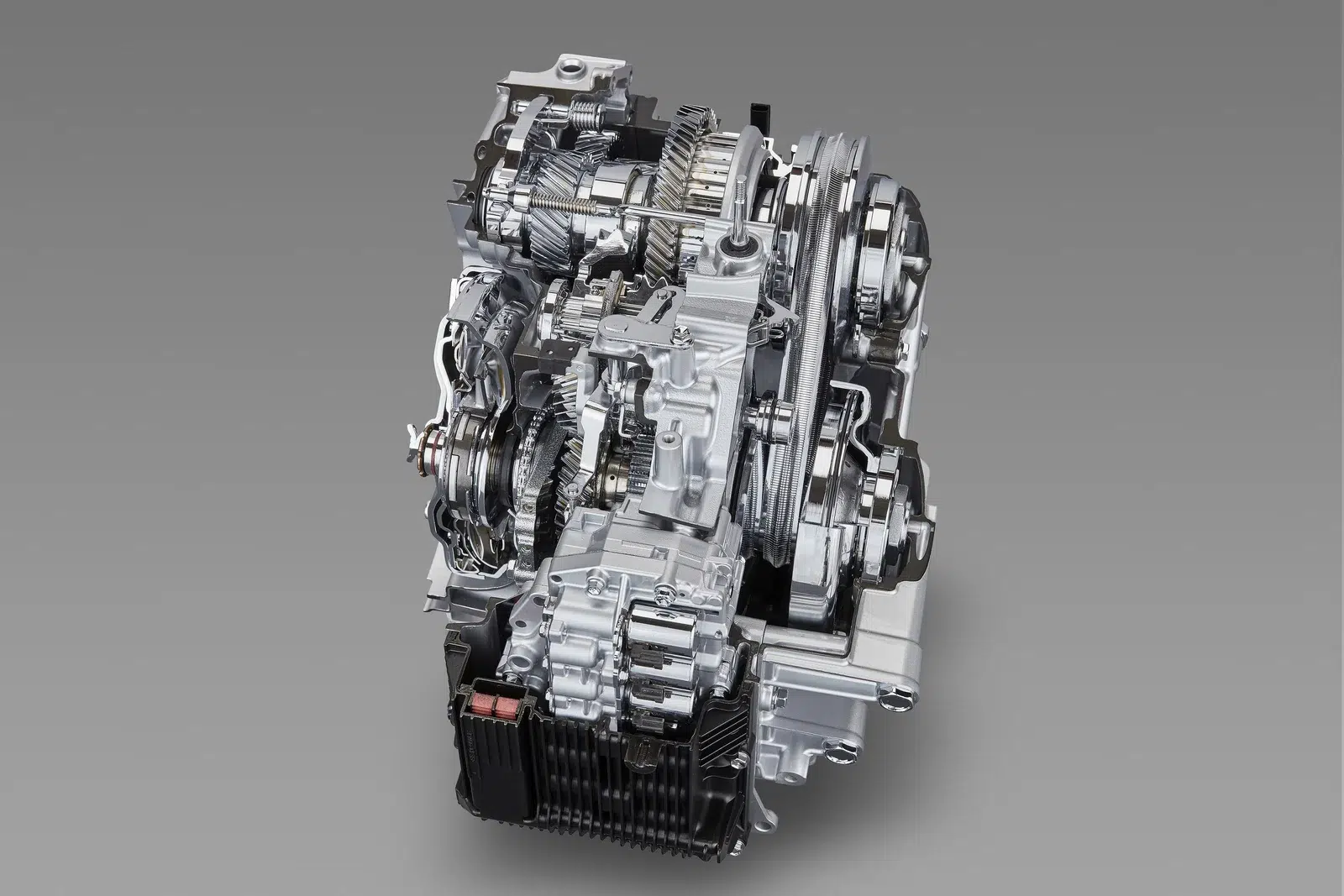
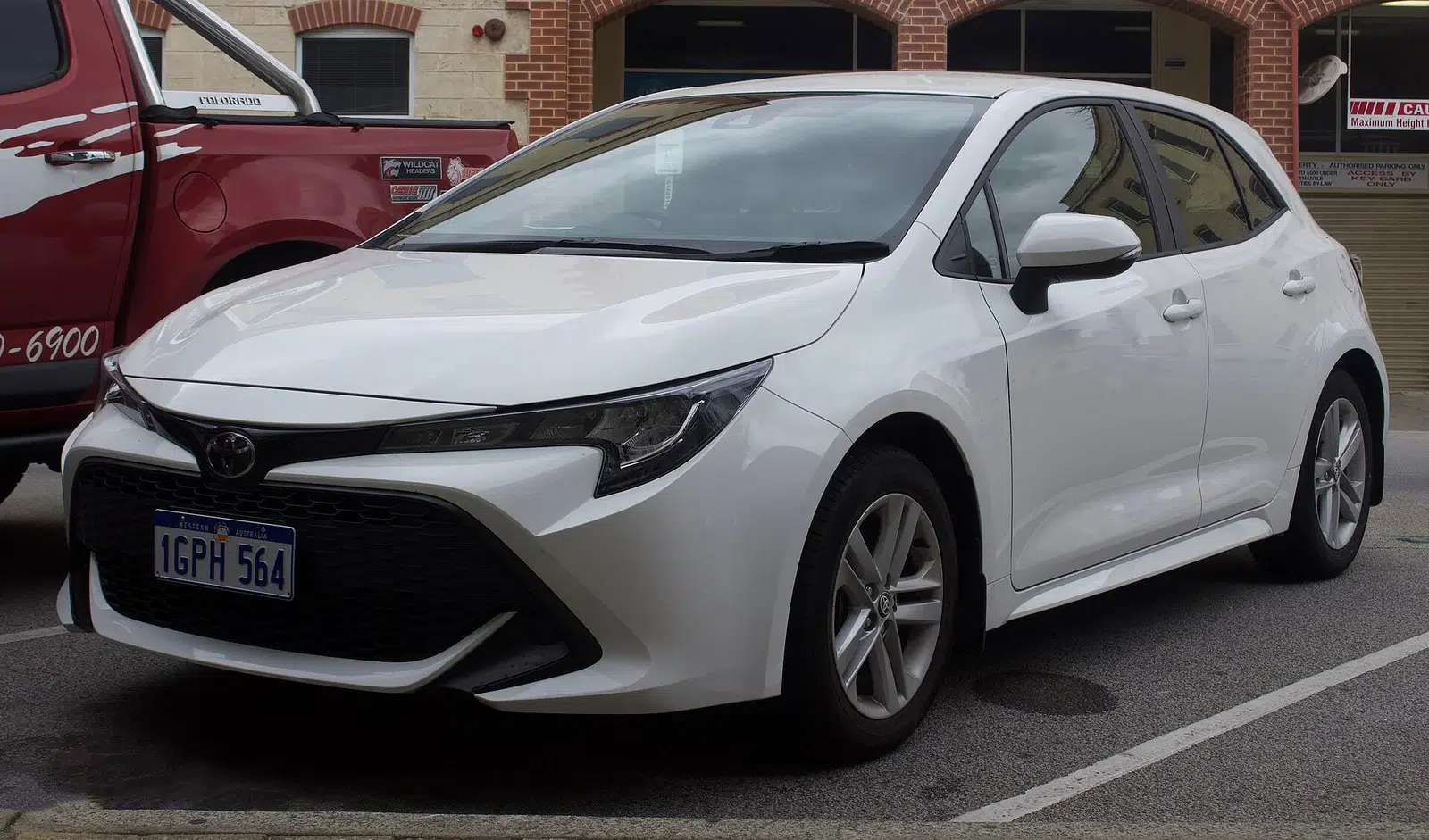
Toyota's Direct Shift-CVT, fitted to the 2018 Corolla 2.0 petrol, adds a world-first launch gear. A conventional gear handles take-off, then the belt takes over at higher ratios. It answers the classic CVT complaint, a rubbery, slurring start, and takes the heaviest load off the belt when it matters most.
Is a hybrid e-CVT the same as a CVT?
No. Toyota's hybrid system has no belt or pulleys at all. Its power split device uses a planetary gear set to blend the petrol engine with two electric motors, and the whole unit behaves like a continuously variable transmission. Honda's e:HEV is different again: it mostly drives on electric power and uses a lock-up clutch for direct engine drive at speed.
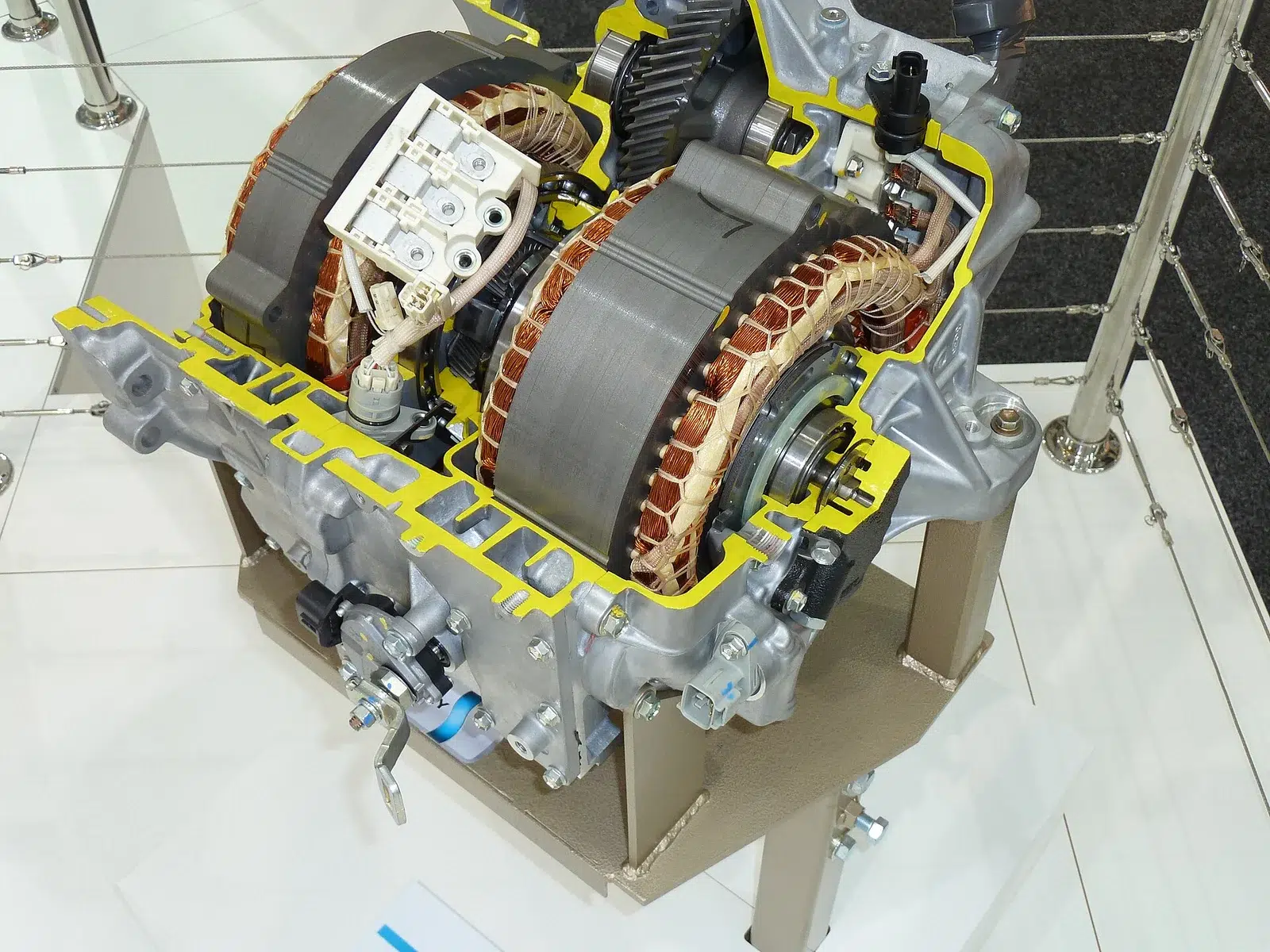
The track record reflects that. Back in 2015, Consumer Reports' Jake Fisher said the CVTs in Honda and Toyota hybrids had been strong performers while some belt-type CVTs drove up repair rates. If you're reading a CVT horror story, check which kind it's about before it changes your mind about a Corolla Hybrid or a RAV4 Hybrid.
Which cars in Australia use a CVT?
More than most buyers realise. Nissan, Subaru and Mitsubishi used CVTs across much of their petrol SUV ranges, Honda fits them to its petrol HR-V and CR-V, and Toyota used them in petrol Corollas until its hybrid-only switch in 2024. The common used-car buys are below, with the e-CVT hybrids and non-CVT models flagged separately.
| Model | Years (AU) | Transmission | Type |
|---|---|---|---|
| Toyota Corolla 2.0 petrol | 2018 to 2024 | Direct Shift-CVT | CVT with launch gear |
| Toyota Corolla, RAV4, Camry hybrids | Current | Hybrid transaxle | e-CVT, no belt |
| Toyota RAV4 2.0 petrol (2WD) | 2019 to 2024 | CVT | Belt CVT |
| Nissan X-Trail T32 2.5 petrol | 2014 to 2022 | Xtronic CVT | Belt CVT |
| Nissan X-Trail T33 2.5 petrol | 2022 on | CVT | Belt CVT |
| Nissan X-Trail and Qashqai e-Power | 2023 on | Engine acts as generator | Not a CVT |
| Subaru Forester and Outback | Current and recent | Lineartronic | Chain CVT |
| Honda Jazz (GK) | To 2021 | CVT | Belt CVT |
| Honda HR-V 1.5 petrol, CR-V 1.5 turbo | 2022 on, 2023 on | CVT | Belt CVT |
| Mitsubishi ASX 2.0 and 2.4 petrol | To 2025 | CVT | Belt CVT |
| Mitsubishi ASX 1.3 turbo | 2025 on | 7-speed dual-clutch | Not a CVT |
| Mitsubishi Outlander 2.5 petrol | 2021 on | CVT | Belt CVT |
| Hyundai Kona 2.0, Kia Seltos 2.0 | Current | IVT | Chain CVT |
Compiled from manufacturer releases and Australian launch coverage (WhichCar, Drive, CarExpert, GoAuto, CarsGuide). Belt or chain type is the maker's description where published. Check the exact variant: some models offered a manual or a different auto.
What goes wrong with a CVT?
The early warnings are consistent across Australian workshops. A To Z Automotive in Cardiff, NSW lists a whine that rises with road speed, revs flaring while acceleration falls away, and hesitation when pulling out. Auto Stop in Queensland adds overheating on long drives or in hot climates. A shudder or judder from a standstill is the other classic sign.
Behind those symptoms sit worn belts or chains slipping on their pulleys, noisy pulley bearings, a tired valve body or solenoids, and torque converter faults. Nissan's US dealer bulletins link judder codes P17F0 and P17F1 to chain and valve body problems. A cheap OBD2 scanner will show stored codes before you buy.
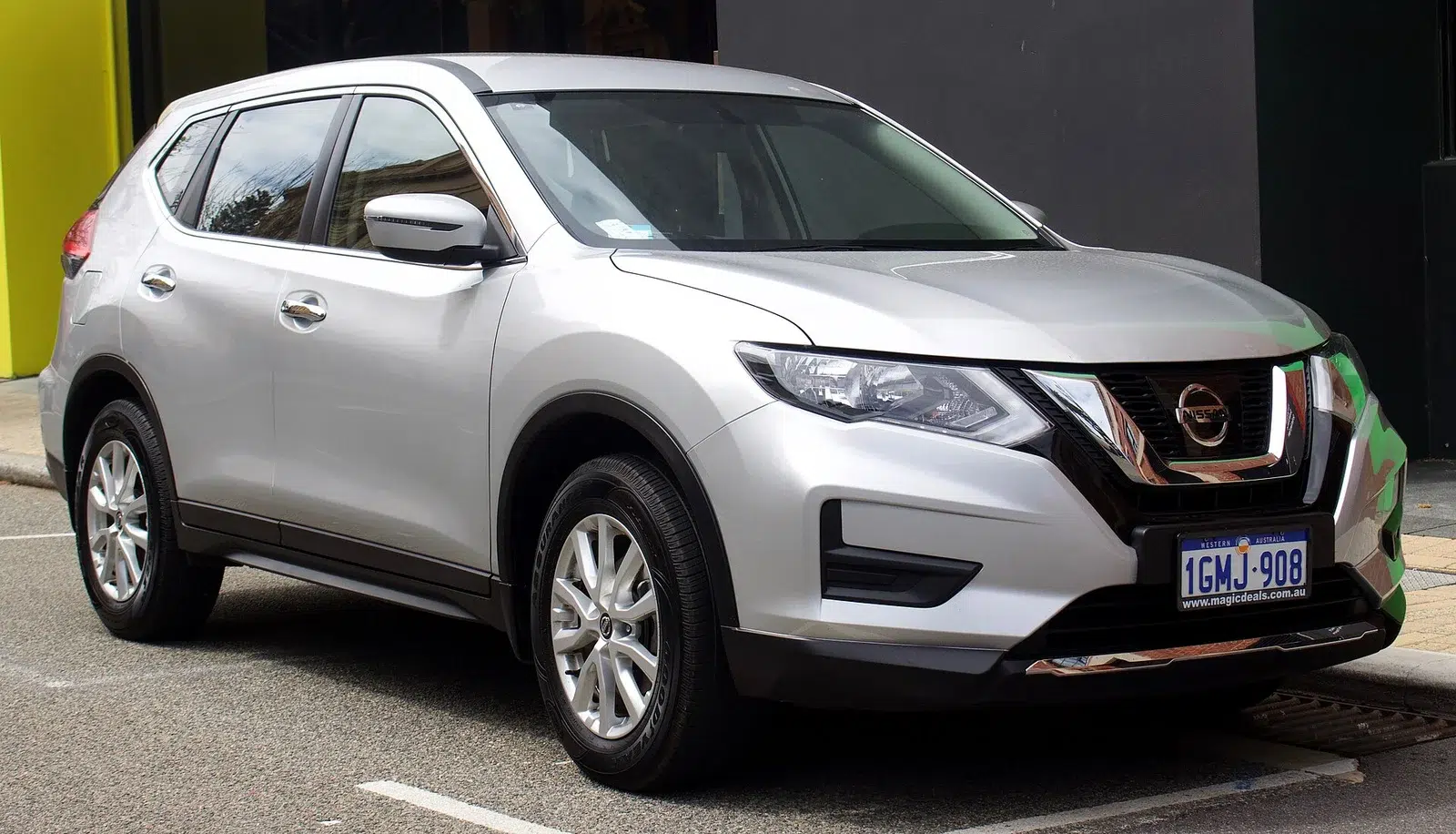
Recalls show it isn't only Nissan. Toyota recalled 2,640 early Corolla 2.0 hatches in 2018 to replace the whole CVT and torque converter, and Mitsubishi updated software on 31,965 Lancer, Outlander and ASX models in 2016 to cure delayed acceleration. Both were fixed free by dealers, so check a used car's recall history.
Does CVT fluid really last a lifetime?
The makers say yes. JATCO, the Nissan-affiliated CVT maker, said in October 2024 that its CVT fluid is guaranteed to last the life of the product. Kia's UK Seltos manual lists the IVT fluid as “No check, No service required” under normal use. Australian specialists disagree, and so do the makers' own severe-use schedules.
Sources: Auto Stop (June 2025), Ultimate Car Expert (May 2026), A To Z Automotive (July 2026), Nissan NZ T32 X-Trail capped-price schedule, Kia UK Seltos owner's manual (2023), JATCO press release (31 October 2024). Australian service handbooks for these models are not published online. Check your own logbook.
The catch is what counts as normal. Nissan NZ's T32 X-Trail schedule says to change the fluid every 90,000km if you tow, carry a roof load or drive rough roads and skip the inspection. Most Australian driving, with heat, stop-start traffic, towing and dirt roads, sounds a lot like severe use.
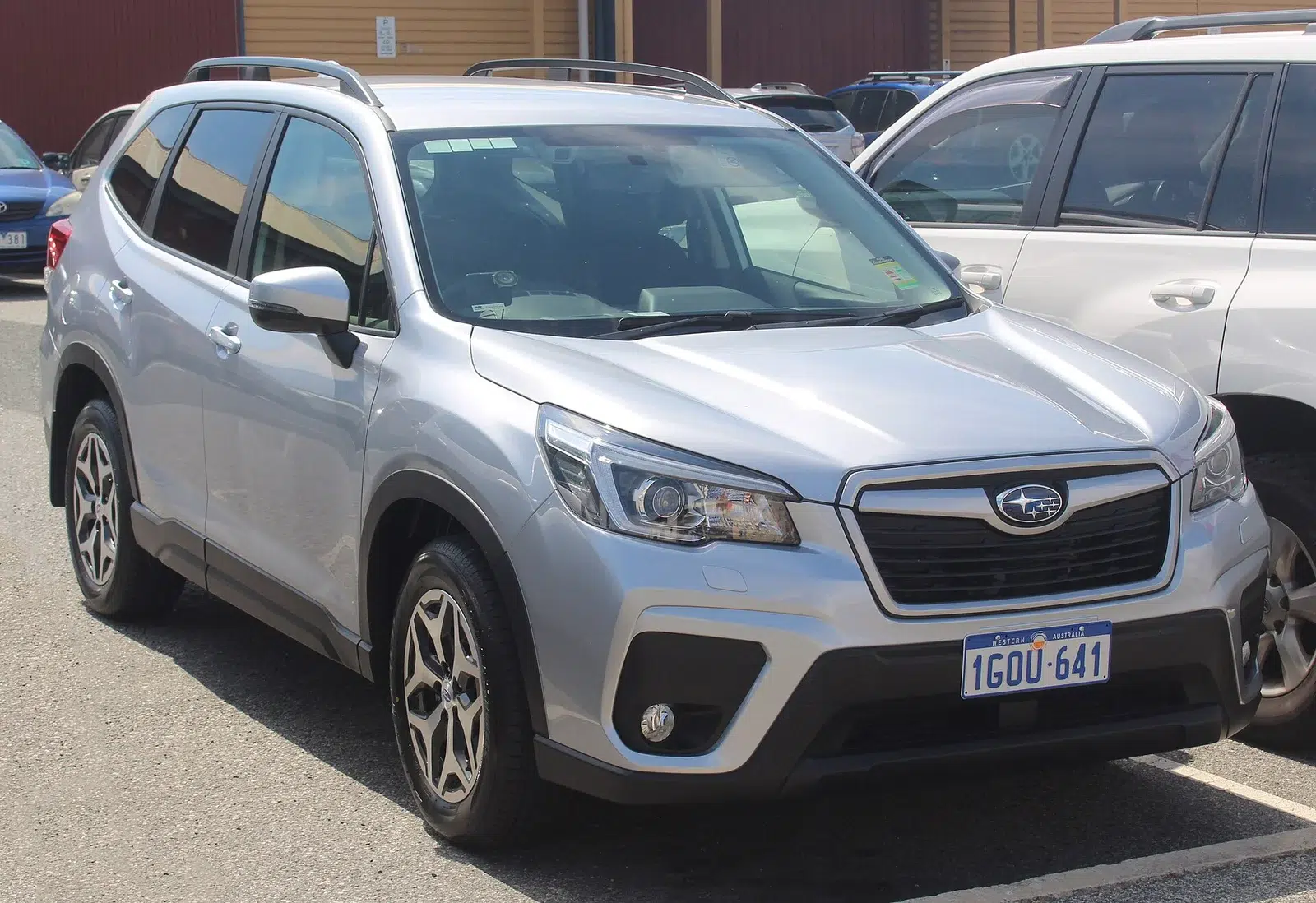
Our view: treat lifetime as the life of the warranty, not the car. If you tow, live somewhere hot or plan to keep the car past 150,000km, budget for a fluid change from about 60,000km. Use the specified fluid only. Ultimate Car Expert warns regular automatic transmission fluid will destroy a CVT in under 10,000km.
How much does a CVT repair cost in Australia?
From a few hundred dollars to more than $10,000. Just Honda lists $250 to $500 for a CVT fluid flush and $500 to $1,500 or more for solenoid work. Auto Stop puts minor CVT repairs at $800 to $2,000 and a full replacement at $8,000 to $12,000. That gap is the whole argument for servicing.
One CVT replacement at Auto Stop's $8,000 to $12,000 pays for roughly 18 to 27 fluid services at about $450 each. At one service every 60,000km, that's more than a million kilometres of fresh fluid.
Sources: Just Honda (August 2025), Auto Stop (June 2025), Ultimate Car Expert (May 2026). Ultimate Car Expert's replacement range covers automatics generally, not only CVTs. Fluid service cost for our calculation is Ultimate Car Expert's “from $449”. Prices vary by model and location.
Those replacement costs hit resale hardest on older, high-kilometre cars. A $12,000 gearbox can wipe out much of an ageing SUV's value, which is why a car with a failing CVT often ends up sold cheap as a mechanic's special. A documented fluid change is one of the few things that props up a CVT car's value.
What to check before buying a used CVT car
Start the car from cold, as RAC WA advises, because a slipping automatic may behave better before it warms up, then drive it until it reaches full temperature. Feel for judder on take-off, listen for a whine that rises with speed, and watch for revs climbing without the car accelerating. Any of those on a test drive means walk away.
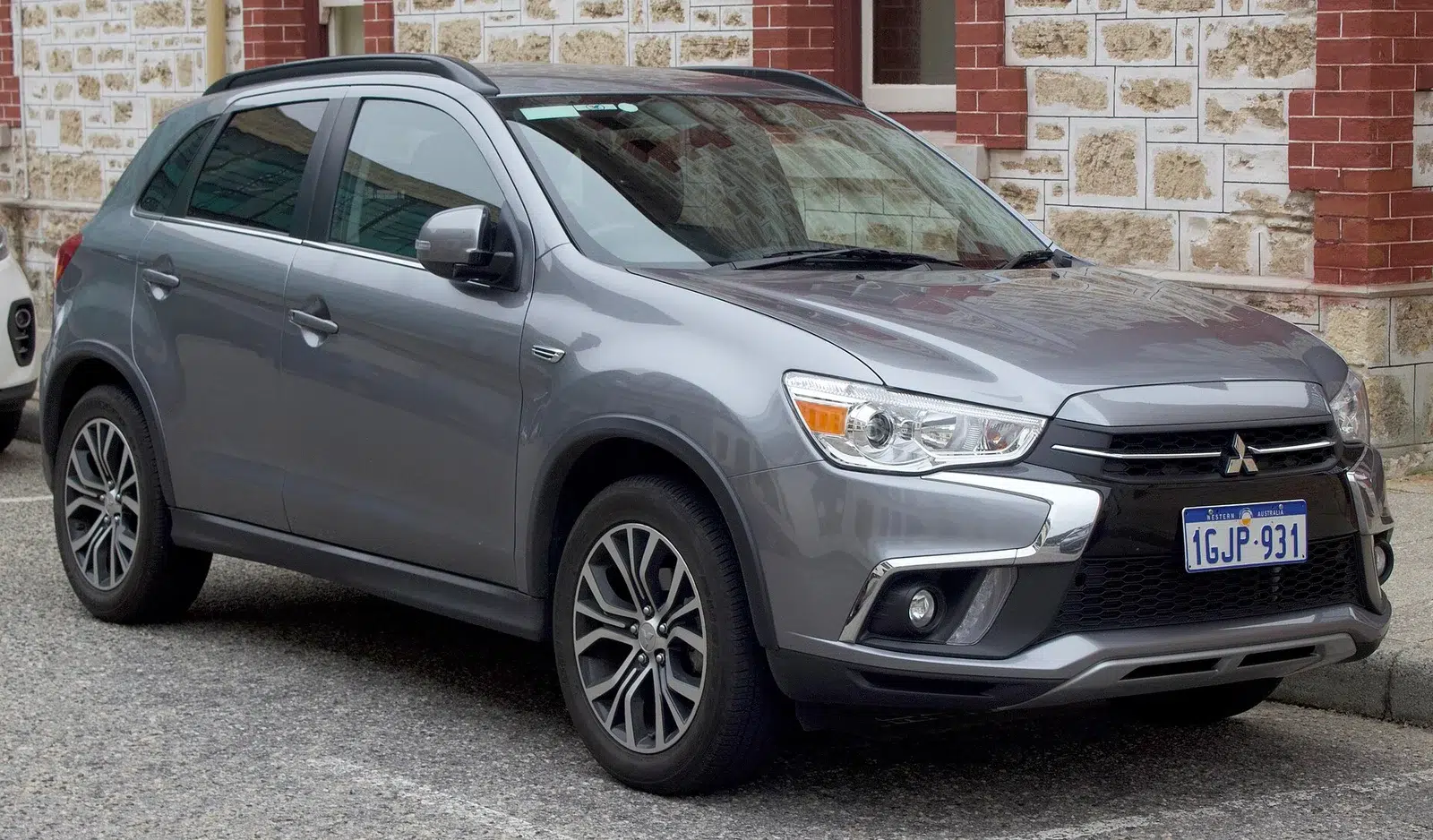
Ask for the logbook and look for a CVT fluid change, not just oil services. Pay for an independent inspection. The same thinking applies to a used DSG Golf or checking whether an engine has a timing belt or chain: it's the expensive part nobody mentions in the ad. Our best first cars under $10,000 guide covers the safer cheap buys.
Can you claim CVT repairs on tax?
Only if the car is used for work, and only the work-use share. Under the ATO's logbook method, you claim the business-use percentage of your car expenses, and the ATO's own example includes repairs. A car used 60 per cent for work could claim 60 per cent of a CVT repair. A car on a novated lease typically has servicing budgeted into the lease instead.
Is a CVT reliable? A well-serviced one usually is, and a hybrid e-CVT is a different, tougher machine altogether. The CVTs that fail are mostly the ones nobody touched because the book said lifetime. Buy the car with the receipts, or budget for the gearbox. Don't buy the one with neither.


