

Most of what you'll read about window tint laws is written by people selling tint. Here are just the numbers, taken from each state's road authority and regulations. The short version: 35 per cent on the front side windows everywhere, 20 per cent behind the driver almost everywhere, and factory privacy glass doesn't give you a free pass to go darker.
Last updated 21 October 2026. Every limit below was checked against the relevant regulation or road authority, and we've flagged where official sources disagree.
What is the legal window tint limit in each state?
Front side windows must let through at least 35 per cent of visible light in every state and territory. Behind the driver, the limit is 20 per cent in NSW, Victoria, Queensland, WA, SA and Tasmania, as long as the car has an exterior mirror on each side. The NT allows 15 per cent. The ACT's guidance says 20 per cent, but its regulation still says 35.
| State | Front side windows | Rear sides and rear window | Windscreen | Source |
|---|---|---|---|---|
| NSW | 35% | 20%, or 35% without a passenger-side mirror | 70%, tinted band in top 10% or above wipers | Transport for NSW |
| VIC | 35% | 20% with a mirror each side | 70%, same band rule | Transport Victoria |
| QLD | 35% | 20% with a mirror each side | 70%, same band rule | Vehicle standards regulation |
| WA | 35% | 20% behind the B-pillar with a mirror each side | 70%, band capped at 10% of the area | DTMI bulletin IB-119D |
| SA | 35% | 20% | 70%, band in top 10% or the maker's masked area | SA Government |
| TAS | 35% | 20% with a mirror each side | 70%, same band rule | Vehicle Standards Regulations 2024 |
| NT | 35% | 15% (Registrar exemption), with a mirror each side | 75% for cars built after 1971 | MVR bulletin V51 |
| ACT | 35% | 20% per Access Canberra, but the regulation says 35% | 70%, same band rule | Access Canberra |
Passenger cars. Glass and film are measured together, and reflectance must not exceed 10 per cent in any state. Goods vehicles can go darker behind the driver in several states. Checked 21 October 2026.
The ACT needs a caution. Access Canberra's page lists 20 per cent for the rear, but the Road Transport (Vehicle Registration) Regulation 2000, republished in January 2026, still says glazing other than the windscreen can't go below 35 per cent. We couldn't find the instrument that allows 20. Until Access Canberra clarifies it, 35 per cent all round is the safe choice in Canberra.
What does VLT mean?
VLT is visible light transmission, the share of light that gets through the window. The lower the number, the darker the glass. It's measured through the glass and film together: 35 per cent VLT means 35 per cent of light passes through both, as WA's transport department puts it. So a 35 per cent film on glass that's already slightly tinted will read darker than 35.
Tinted band allowed in the top 10% or above the wiper sweep. NT: 75%
The same in every state and territory, whatever the glass behind
With a mirror each side. NT: 15%. NSW without a passenger mirror: 35%
Mirror-finish film above 10% reflectance is illegal everywhere
Sources: state and territory vehicle standards regulations and road authority guidance, checked 21 October 2026. ACT guidance says 20% for the rear, but its regulation still says 35% (see below). Goods vehicles have separate rules. Diagram is our illustration.
Why the rear windows can go darker than the front
The front side windows are where you look for the cyclist in your blind spot or a pedestrian at a crossing, so every state holds them at 35 per cent. Behind the driver you can go to 20 per cent, and the rules tie that to having an exterior mirror on each side. Take the passenger mirror away and the argument for dark rear glass falls over.
NSW spells it out: with only a driver's-side mirror, the rear windows stay at 35 per cent too. Goods vehicles get more room. In Victoria, Queensland, WA and Tasmania, the rear glazing of a goods vehicle with a mirror each side has no minimum at all, which is why some vans legally run blacked-out rear glass. That doesn't extend to the cab.
Does factory privacy glass let you go darker?
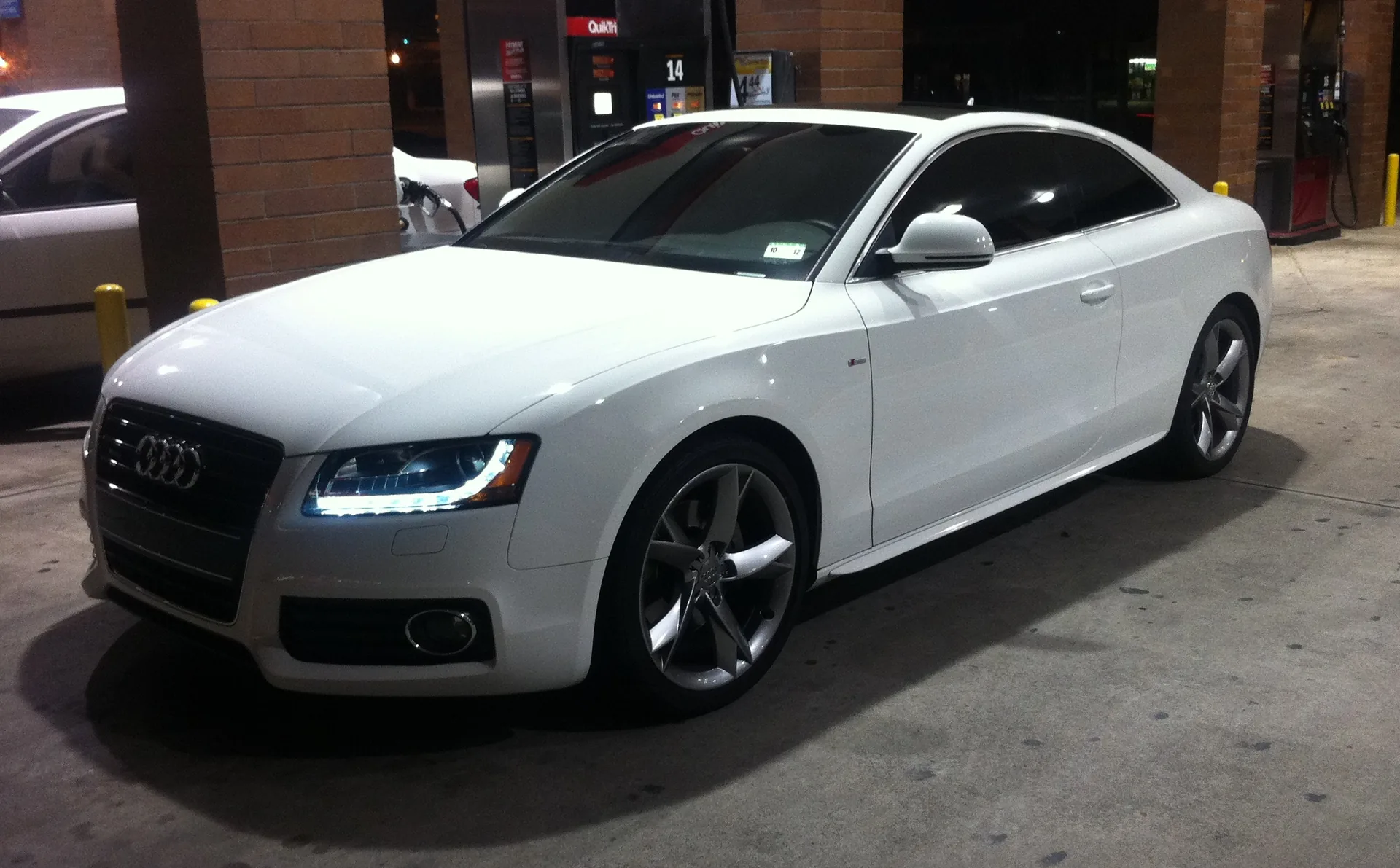
No, and this is the bit that catches out SUV and people-mover owners. Factory privacy glass is legal on its own, even darker than 20 per cent. Add film and the combined reading must meet the limit. If the glass is already darker than the limit, NSW says no film can go on it, and Victoria's guideline says that includes clear films.
That also means the front doors can't be tinted to match dark rear glass. Front sides stay at 35 per cent regardless of what's behind them. WA is the one state that will consider darker film on factory-tinted rear glass, case by case, but its bulletin says no exemption will be granted for glass forward of the B-pillar. SA says privacy glass must not be coated in a way that reduces its light transmission.
Not sure what you've got? Victoria's guideline says privacy glass is typically marked with the word TINTED, or the codes AS3 or V, in the stamp in the corner of the glass. A decent tint shop will put a meter on the glass before it quotes. If it won't, find one that will.
The windscreen strip rule, and what AS1 means
The windscreen must let through at least 70 per cent of light, or 75 per cent in the NT for cars built after 1971. The exception is a tinted band across the top. In most states it can cover the upper 10 per cent of the windscreen or the area above the wipers' sweep, whichever is greater. SA uses the top 10 per cent or the band the manufacturer masked.
You'll also hear about the AS1 line. On Australian glass markings, AS1 simply means clear glass, while AS2 and AS3 mark lighter and darker body tints, according to SA's fact sheet. The legal test for a sun strip is still the 10 per cent or wiper-sweep rule. Queensland's inspection manual words it more tightly than its regulation, so keep a Queensland strip within the top 10 per cent to be safe.
While you're looking at the screen, check for chips in the driver's line of sight. Damage there is a common roadworthy fail too, and our windscreen chip repair guide covers what it costs to fix before it spreads.
Is there any tolerance when tint is measured?
In some states, yes: 5 per cent. NSW's pink-slip inspection rules say a light meter may be up to 5 per cent out, so a car isn't rejected unless the front side windows read under 30 per cent, the rear under 15 or the windscreen under 65. Queensland's inspection manual allows the same 5 per cent, and a 2018 Tasmanian bulletin applies a 5 per cent measuring adjustment.
Don't read that as permission to buy 30 per cent film. The allowance is for meter error and the legal limit is still 35. And a film's rating doesn't include the glass it's stuck to, so 30 per cent film on lightly tinted factory glass could read well under 30. Victoria, WA, SA and the NT don't publish a tolerance at all.
What's the fine for illegal window tint?
Usually a modest fine and a defect notice. No state that publishes an amount attaches demerit points to it. Only Tasmania has a tint-specific fine, 0.75 penalty units, or $159.75 in 2026-27. Elsewhere, illegal tint falls under general offences for driving a vehicle that doesn't meet the standards, from $140 in NSW to $836.40 in Victoria.
| State | Fine | Demerit points | Meter tolerance |
|---|---|---|---|
| NSW | $140, general non-compliant vehicle offence (no tint-specific line) | None | 5% at pink-slip inspection |
| VIC | 4 penalty units, $836.40 in 2026-27 (general non-compliance) | None listed | None published |
| QLD | 1 penalty unit, about $173 in 2026-27 (defective vehicle) | None listed | 5% in inspection manual |
| WA | No set tint amount published; compliance notice or fine | Not published | None published |
| SA | Not verified from an official source | Not verified | None published |
| TAS | 0.75 penalty units, $159.75 in 2026-27 (tint-specific) | 0 | 5% (2018 bulletin) |
| NT | Not verified from an official source | Not verified | None published |
| ACT | $279 infringement penalty | None | None published |
Sources: NSW general driving offences (as at 1 July 2025); Victorian Road Safety (General) Regulations 2019 and 2026-27 penalty unit of $209.10; Queensland State Penalties Enforcement Regulation 2014 and $172.70 penalty unit; Tasmanian Traffic (Compliance and Enforcement) Regulations 2017 and $213 penalty unit; ACT Road Transport (Offences) Regulation 2005. Dollar conversions are our calculation.
The fine is rarely the expensive part. A defect notice means paying to strip the film, and possibly an inspection fee to clear it. If you're modifying a car, our guide to exhaust noise laws covers another common defect trap.
What does a defect notice mean?
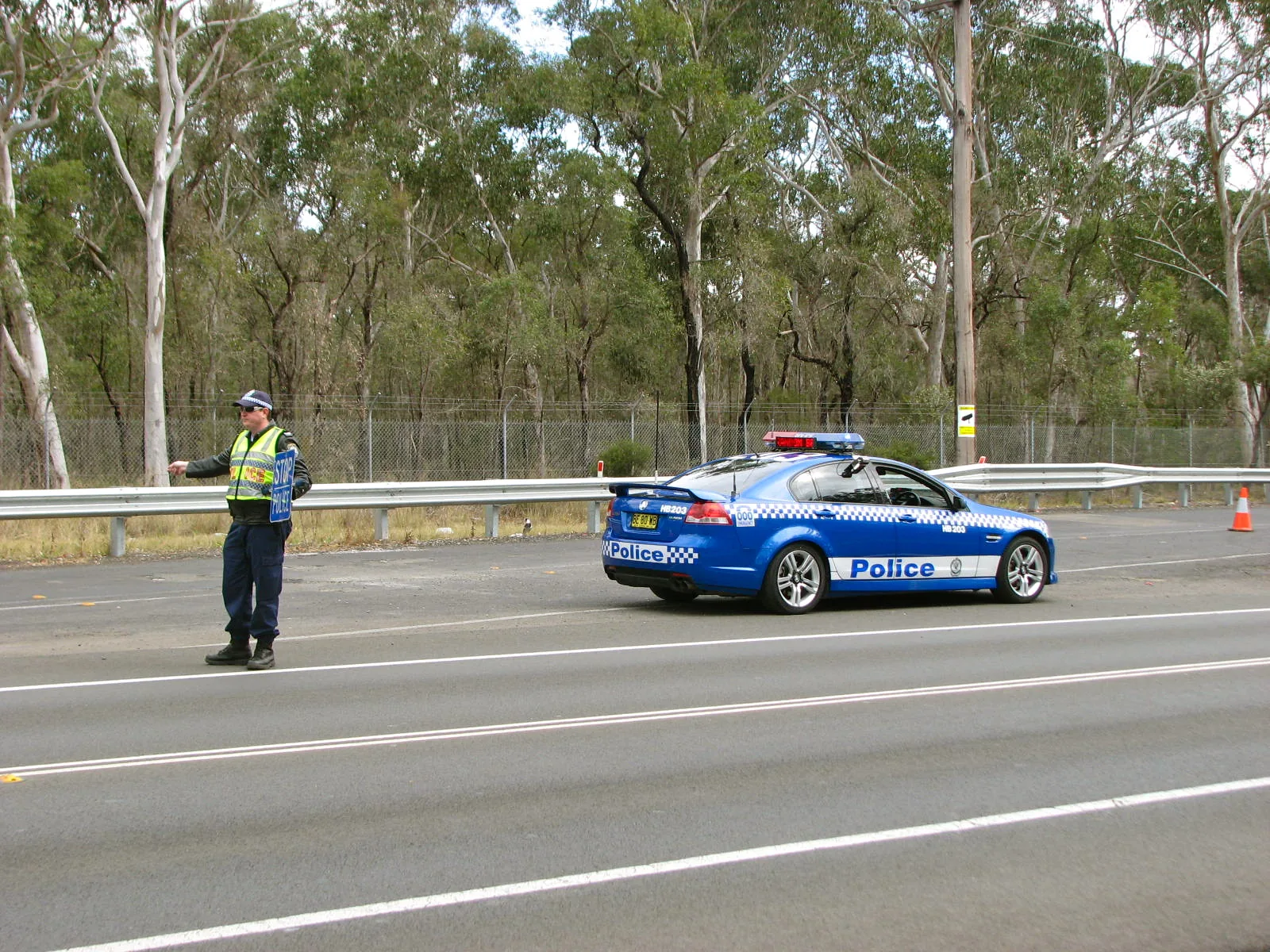
A defect notice is an official direction to fix the car, and sometimes to stop driving it until you do. Victoria issues major and minor notices, with a label on the car, cleared by a certificate from an authorised inspector. In Queensland, clearance is by your own declaration or an inspection, depending on the notice. In WA and the NT, an examiner or a nominated inspection point checks the fix.
For tint, the fix is the same everywhere: remove the film, or replace it with a legal one, then clear the notice as it directs. Don't peel off the defect label yourself. WA's Road Traffic (Vehicles) Act sets a penalty of up to 40 penalty units for removing a defect notice or sticker, and 50 for driving contrary to one.
Can you get a medical exemption for darker tint?
Western Australia is the only state with a documented medical exemption. Its window tinting bulletin says exemptions may be granted on medical grounds, with documentary evidence from a medical specialist, and applications go to the Vehicle Safety and Standards section in Kelmscott. We couldn't find a published medical exemption process in any other state or territory.
Other states do have general exemption powers. Victoria can exempt special-purpose vehicles, Queensland's inspection manual accepts tint that's specifically approved, and the NT and Tasmanian registrars can grant exemptions. If you have a light-sensitive condition, ask your road authority in writing before fitting darker film, and keep the approval in the glovebox.
Bought a used car with illegal tint?
It's your problem now, and it'll surface at the next inspection. NSW checks tint at the yearly pink slip, which most cars over five years old need. Victoria requires a roadworthy certificate when a car is sold, and aftermarket tint must comply for it to pass. Queensland's safety certificate inspection rejects tint below the limits.
Bubbled, scratched or peeling film that affects the driver's view also fails in NSW and Queensland, even if it's legal on darkness. So ask whether the tint is factory or aftermarket, check the glass markings, and get it metered if you're unsure. Budget for removal and use it to negotiate. Our guide to buying at auction covers the other roadworthy traps.
How much does legal window tint cost?
RACV says car window tinting typically starts from $200 for basic films, with a single window around $70, and better films cost significantly more. It rates ceramic film, which cuts UV by up to 99 per cent, as the best option for most cars. Carbon film blocks up to 40 per cent of infrared light, which is what makes a cabin hot.
Whatever film you choose, give the installer your state's numbers before they start and ask them to allow for the factory glass. The RACQ's tint guide is a useful second check for Queenslanders. A film rated at 35 per cent won't read 35 on glass that's already tinted. Stay legal by measuring the finished window, not by trusting the box.


