
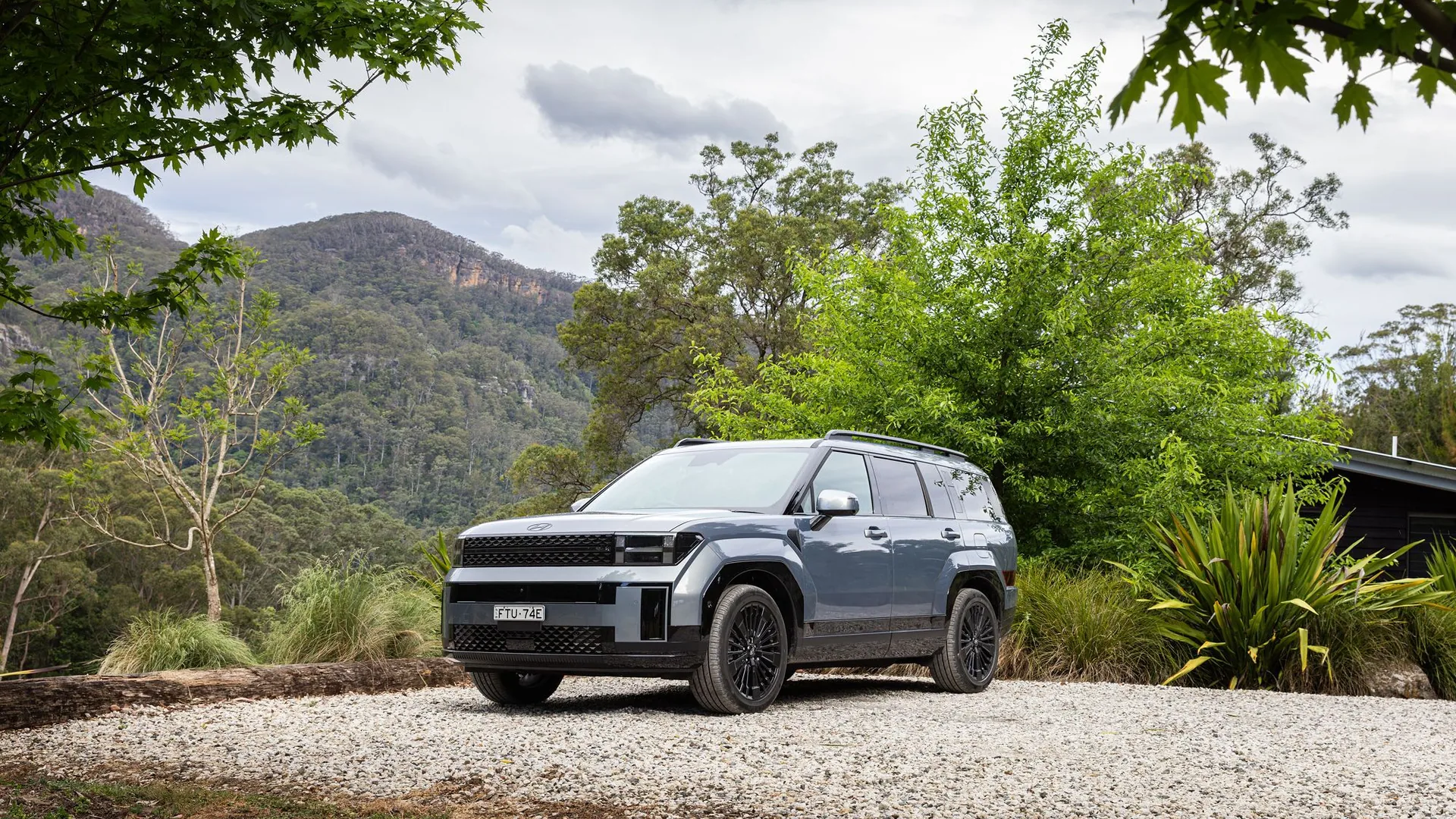

From the kerb, the 2026 Hyundai Santa Fe looks like it wants to cross the Simpson. Underneath, the Hybrid is a front-drive-based family wagon with a 1.6-litre turbo-petrol engine and an electric motor, and that’s exactly why it works. Our pick on the numbers is the Hybrid AWD seven-seater at $60,650 before on-roads, as long as you don’t tow more than 1,650kg.
We haven’t driven it. This guide works from Hyundai’s specifications and Australian road tests by Chasing Cars and The Beep.
- 172kW hybrid claims 5.6L/100km and runs on 91 unleaded
- A properly usable third row, with air-con and USB-C back there
- 628L boot with the third row folded, 1,949L with both rows down
- Wireless CarPlay and Android Auto on every grade
- Five-star ANCAP rating (2024), valid to December 2031
- Hybrid tows just 1,650kg braked
- Elite's 20-inch wheels trade ride comfort for looks
- Six-speed auto and a busy 1.6 turbo under load
- Short 12-month or 10,000km service intervals
- Child seats can't safely fit to the third-row ISOFIX
- Facelift due in 2027
Why does it look like a Defender?
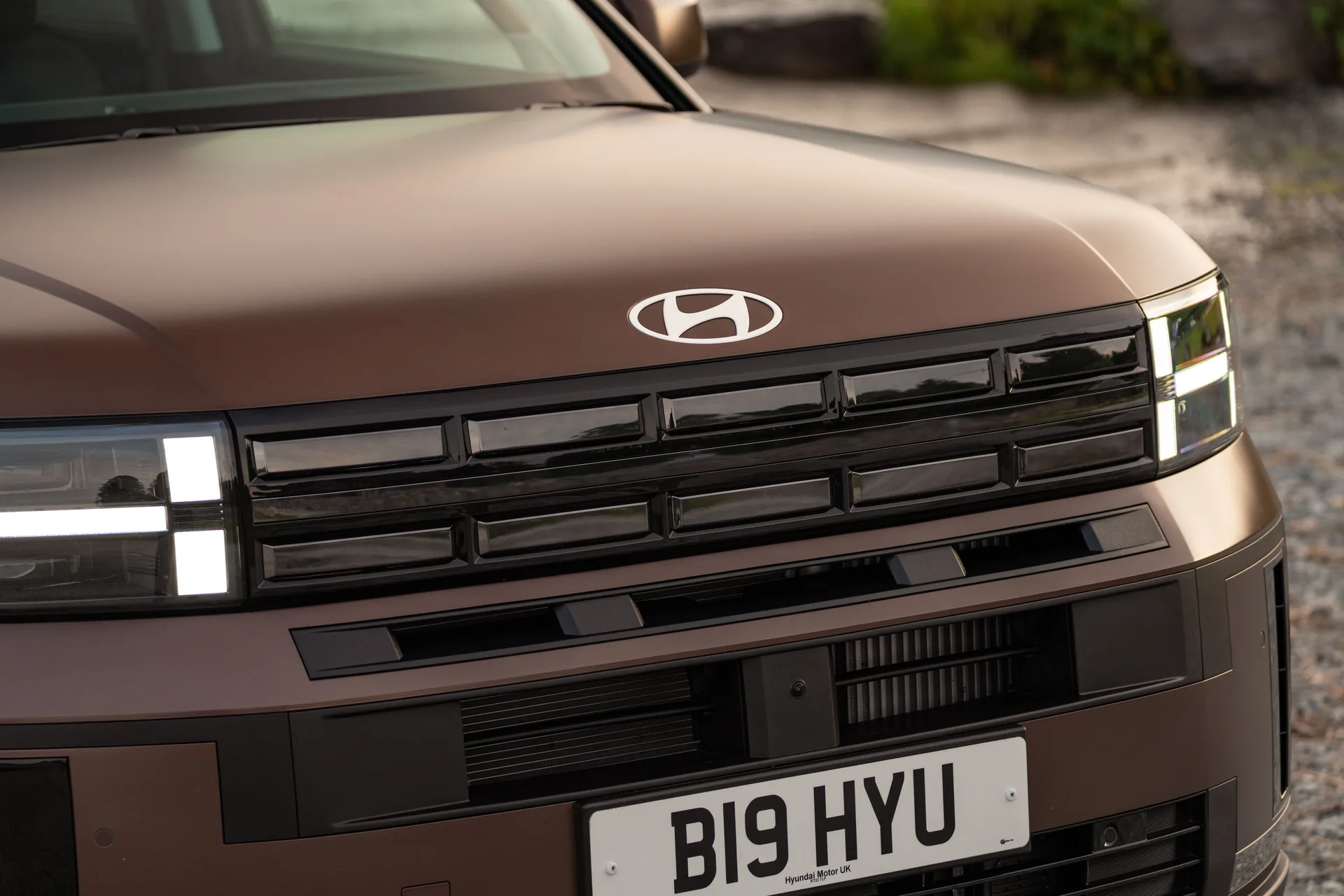
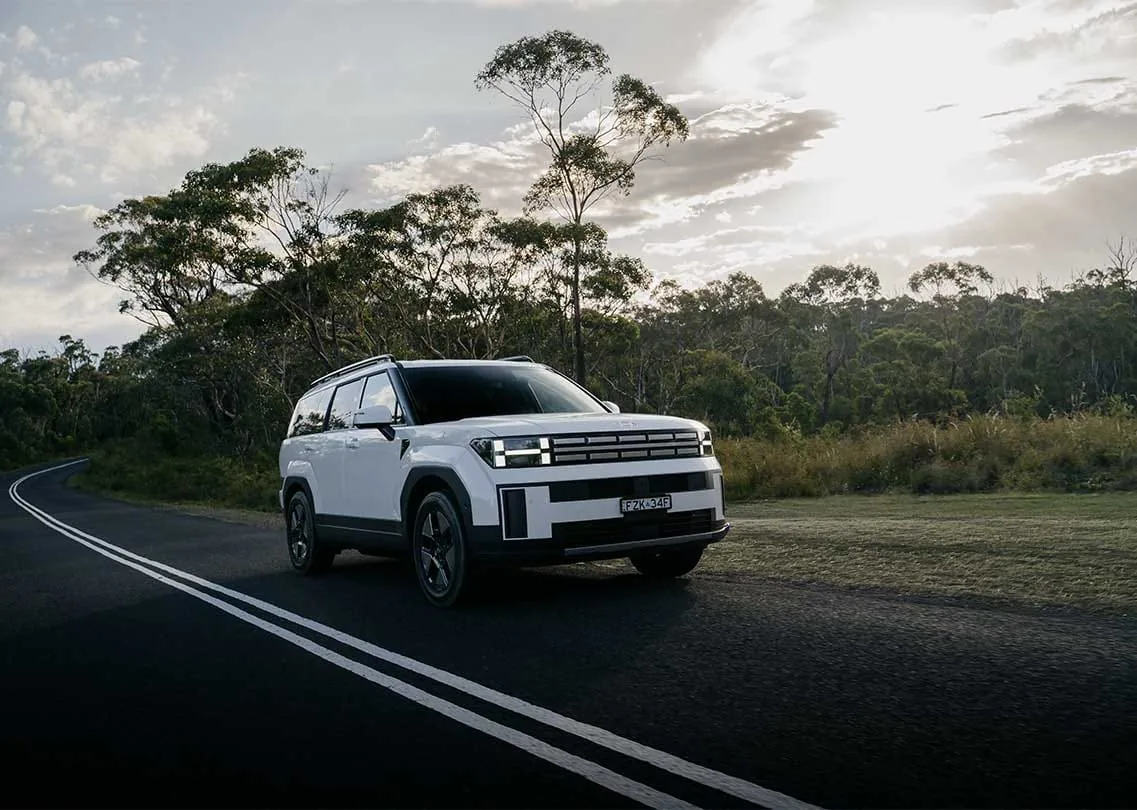
Because Hyundai drew it around the tailgate. The Hyundai Motor Group release says the boxy shape and silhouette come from the long wheelbase and wide tailgate area, and design chief SangYup Lee talks about a terrace-like tailgate space. The H-shaped lights reinterpret Hyundai’s badge. The Land Rover Defender likeness is obvious from any angle, and it’s no accident that buyers notice it.
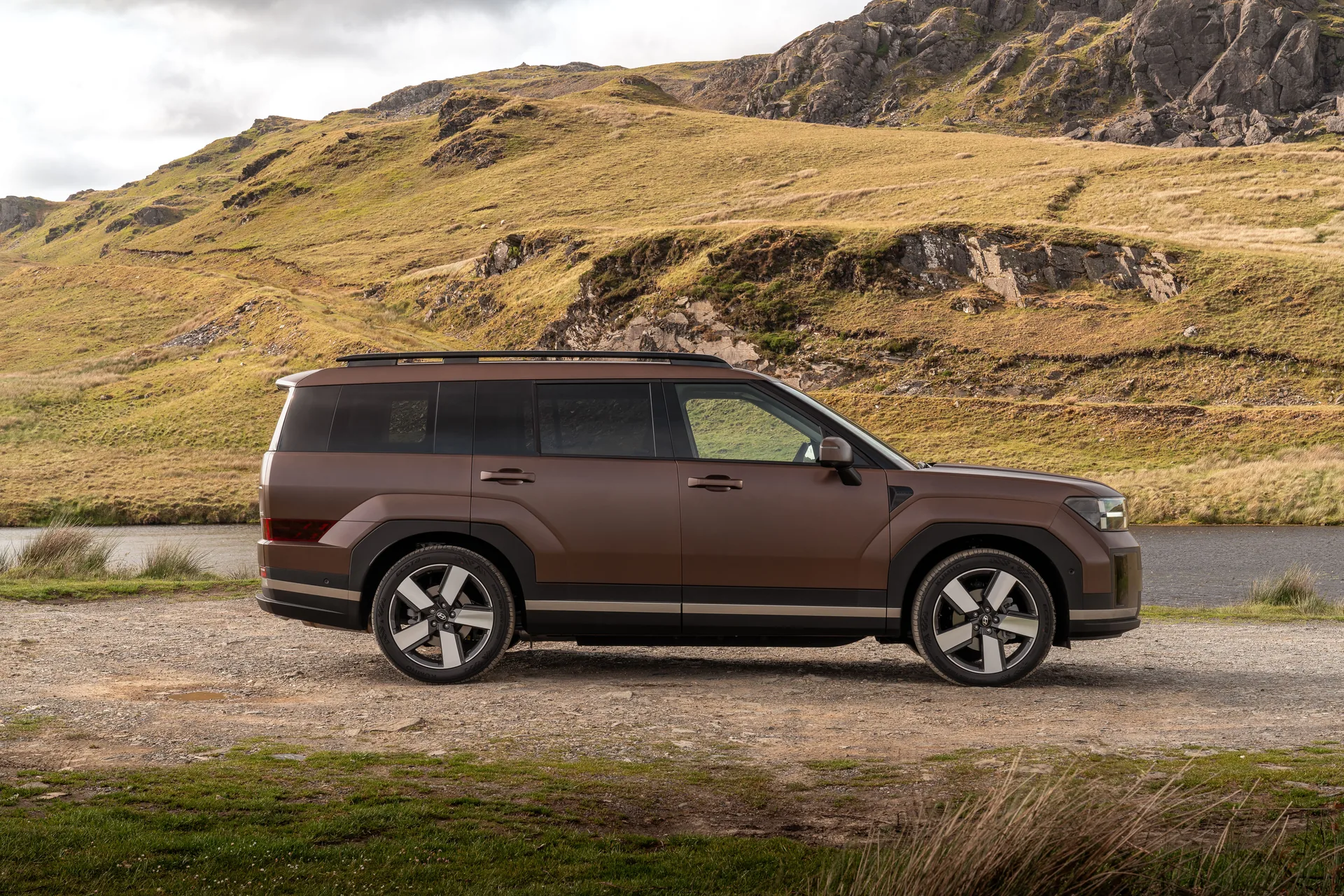
The comparison flatters it, but it isn’t an off-roader. Ground clearance is 177mm, the AWD system is an on-demand setup, and the hybrid’s approach and departure angles are 17.4 and 20.9 degrees. Think gravel roads to the campsite, not Cape York. If you want body-on-frame toughness, an SUV like the GWM Tank 500 is the better tool.
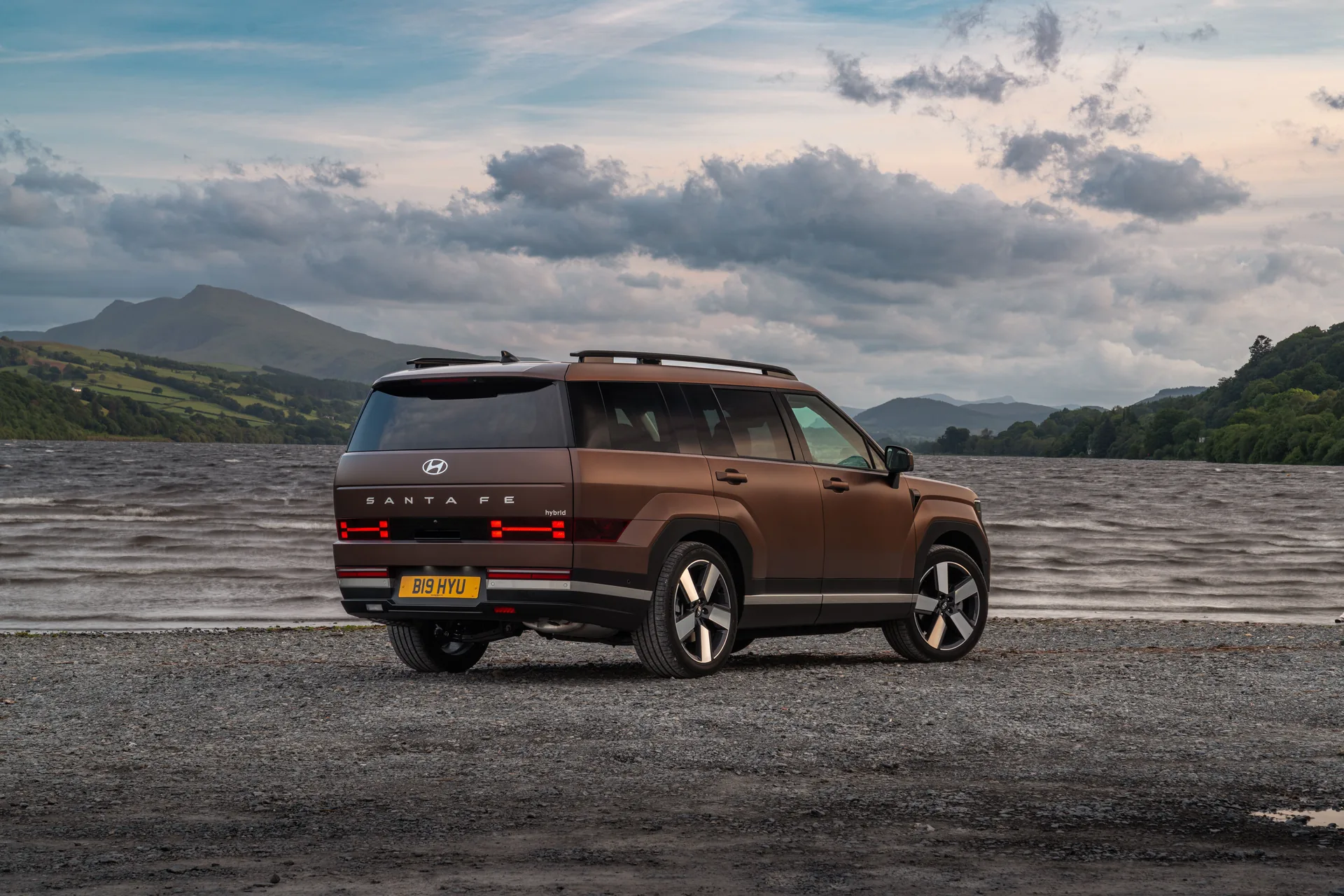
The low-slung rear lights are the one design call that divides people. From the back, it looks less like a Defender rival and more like a tall family wagon. Walk around one before you sign.
Inside: a cabin designed around families
Every grade gets a pair of curved 12.3-inch screens, wireless Apple CarPlay and Android Auto, and a column shifter that frees up a big console. The MY26 specification sheet lists USB-C charging in all three rows, air-con controls for the third row, and top tethers in every rear seat. It’s the sort of detail that tells you the designers have done a school run or two.
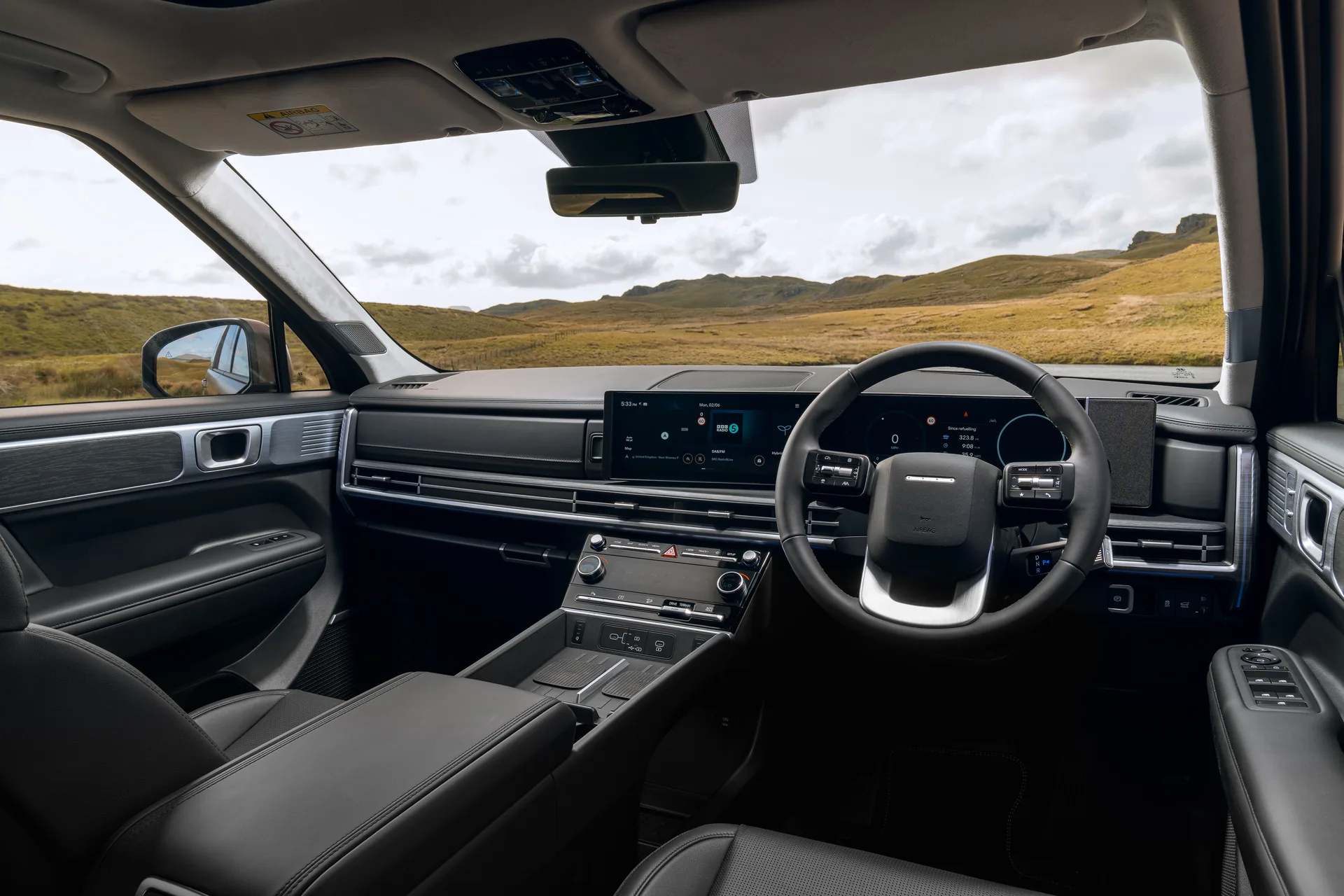
The entry grade does the basics well, with cloth trim, heated front seats, a 10-way power driver’s seat and 18-inch wheels. Elite adds leather, a 12-speaker Bose system, dual wireless chargers, a heated steering wheel and navigation. Calligraphy brings Nappa leather, ventilated front seats with a relaxation function, a head-up display, a UV-C sanitising tray and the option of six seats with second-row captain’s chairs.
The day-to-day irritant is the warning tech. The Beep’s Rob Leigh found the overspeed and driver-attention alerts chime too often and reset every time you start the car. Book a long test drive on your own commute, because whether it grates is personal.
How much room is in the third row?
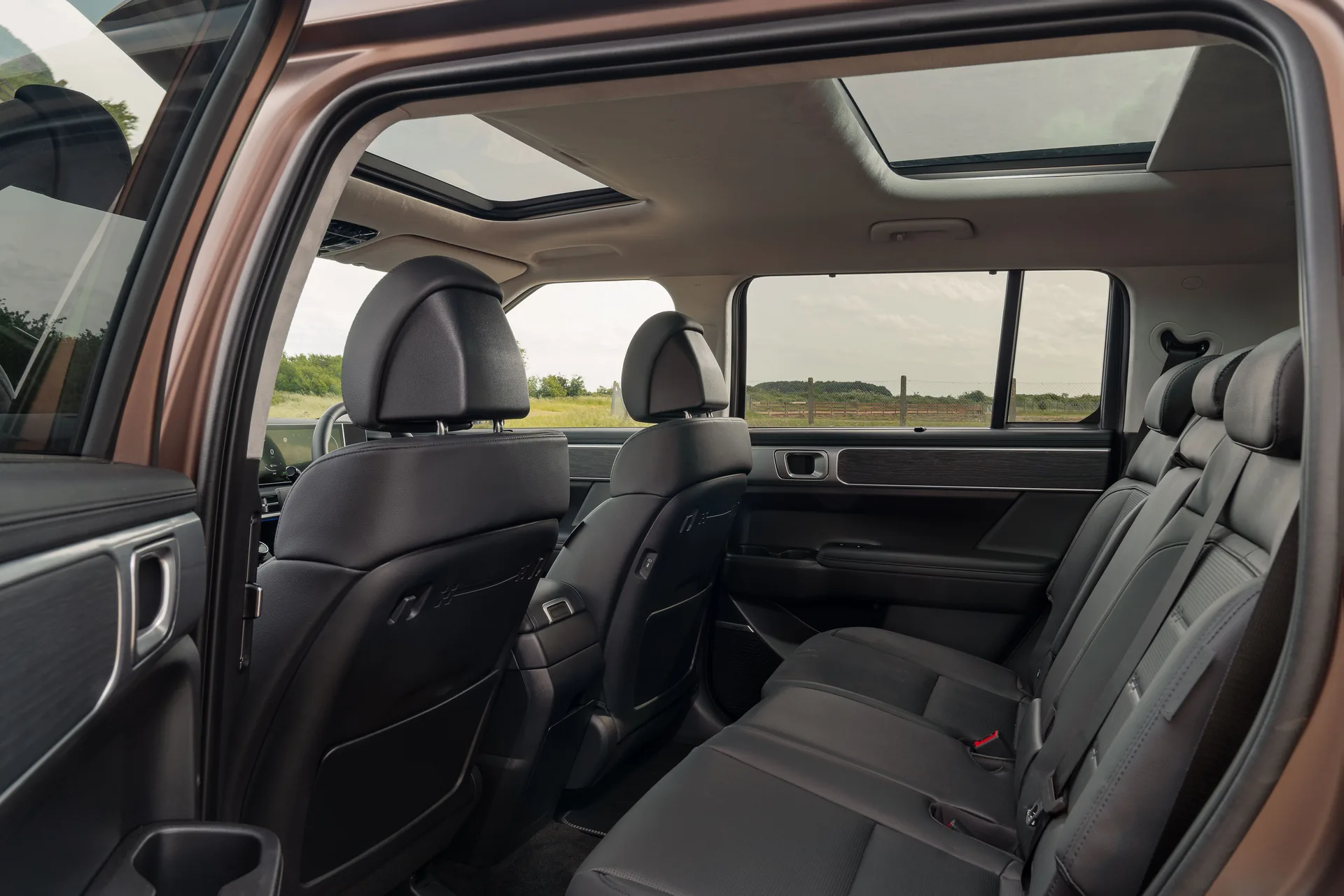
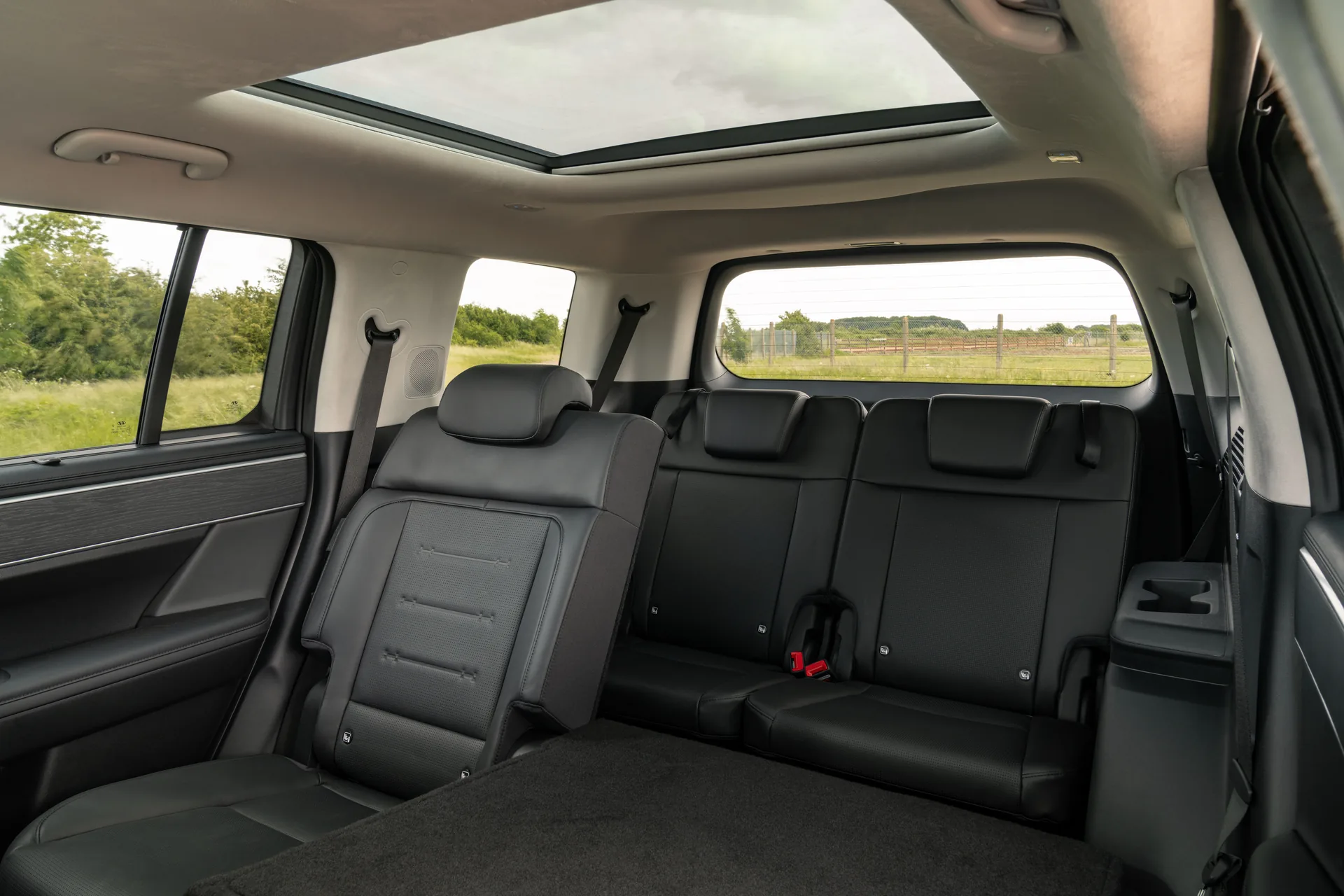
More than most rivals of this size. Hyundai quotes 761mm of third-row legroom and 958mm of headroom. On those numbers it’s a third row adults can use for short trips, not just a kids-only penalty box. There’s an outboard ISOFIX point on each side back there, with a catch covered below.
Is the boot really the most practical in its class?
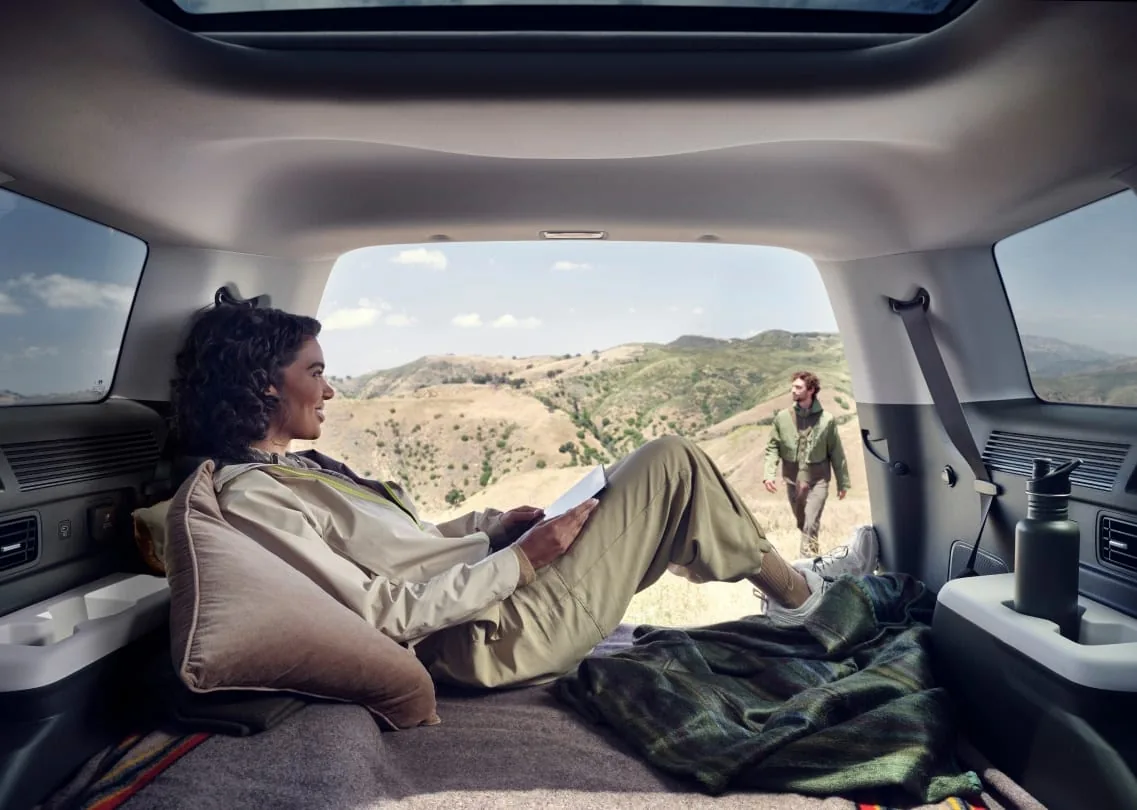
Hyundai makes a lot of the wide tailgate opening, but Hyundai Australia doesn’t publish a width, so we can’t confirm a class best. The Australian figures are 628 litres with the third row folded and 1,949 litres with both rows down, measured to the VDA standard.
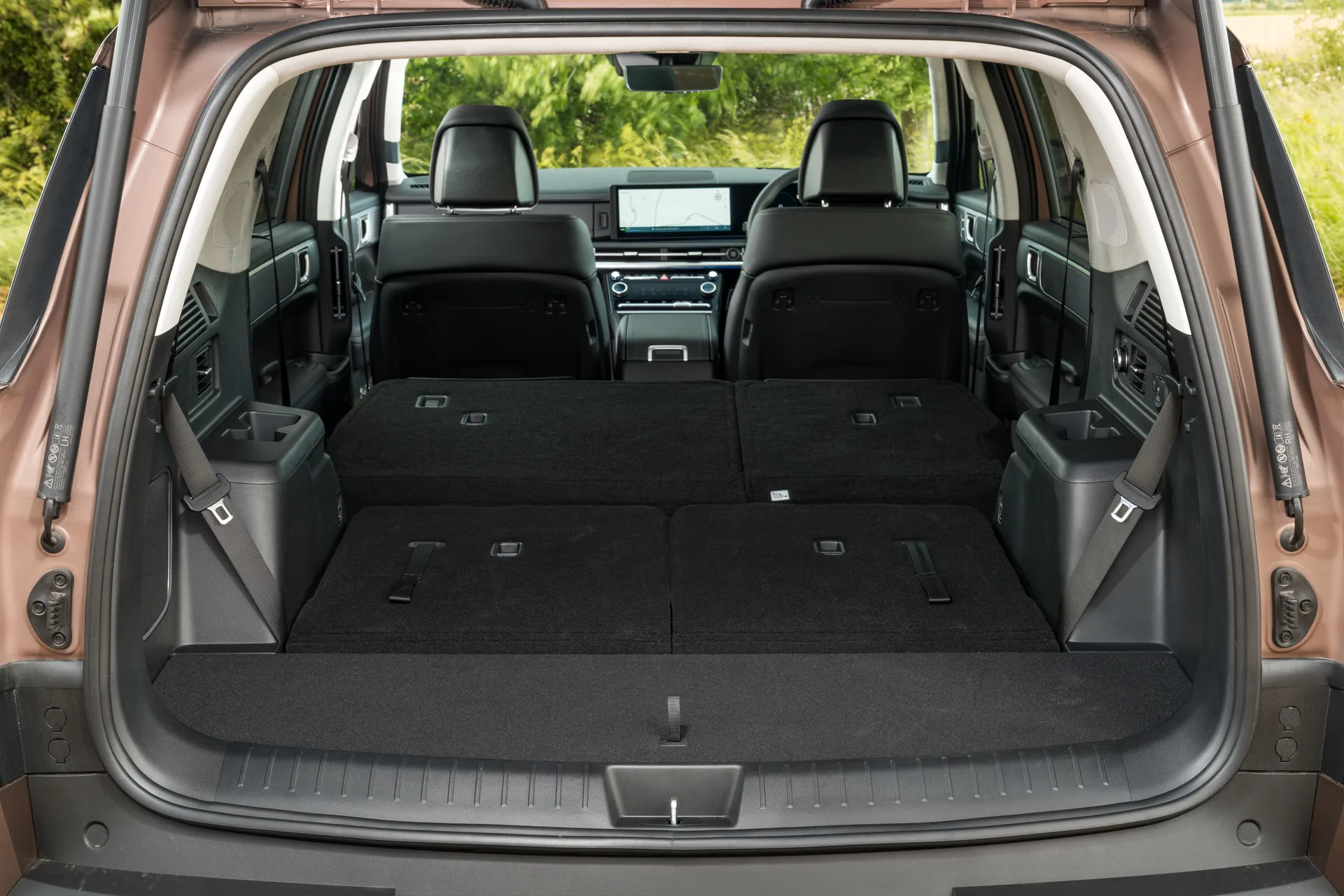
That 628-litre figure beats the Kia Sorento’s 608 litres. With every seat folded, though, the Sorento’s 1,996 litres pips it. With all seven seats up, the space left is small: school bags, not a holiday. The real advantage is the square opening. A pram should go in without a fight.
Fuel use and how it drives
The 1.6-litre turbo and electric motor make a combined 172kW and 367Nm through a six-speed automatic. Hyundai’s current spec sheet claims 5.6L/100km for the AWD and 5.2 for the front-drive car, on 91 unleaded. The Toyota Kluger Hybrid needs pricier 95.
Testers split on whether you’ll see the claim. Chasing Cars said 5.6L/100km is achievable in the real world. The Beep recorded about 7.5 in mixed driving.
Same official fuel figure, different pump. Over five years the Kluger's premium-fuel habit costs about $680 more, before you count the Santa Fe's cheaper entry price. Real-world use will be higher for both, especially loaded up for a road trip.
Our calculation from ADR combined figures (Hyundai MY26 specification sheet; Toyota) and average Perth pump prices on 23 October 2026 from FuelWatch WA: 91 at 229.6c and 95 at 245.8c a litre.
Wheel size is the ride decision. The base Hybrid rolls on 18-inch wheels with taller tyre sidewalls, while the Elite steps up to 20s. Chasing Cars found the 20s make the ride brittle and that the rear suspension can hit its bump stops with seven aboard. It rated the base grade better value. Pick the 18s if comfort matters more than looks.
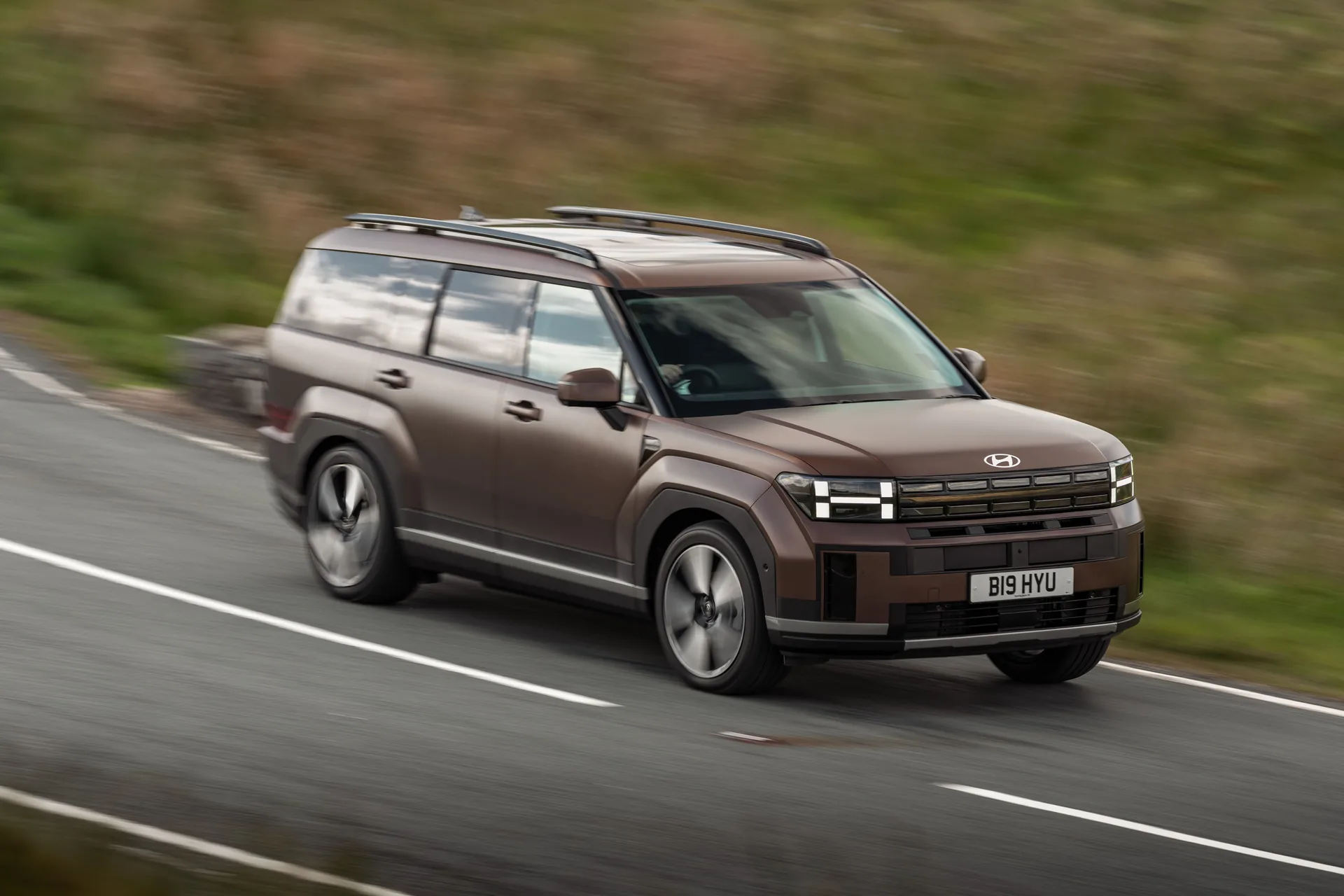
Both tests found it quiet and comfortable on a cruise. The Beep rated the ride excellent on the Calligraphy and preferred the six-speed auto to the Kluger’s CVT, but found the engine noisy when pushed. Chasing Cars thought the Bose stereo was underwhelming.
Hybrid FWD or AWD?
Spend the extra $3,000 on AWD if you leave the bitumen. The front-drive Hybrid costs $57,650 and the AWD $60,650. Both are rated to tow 1,650kg, and the front-drive car’s fuel claim is slightly lower. The on-demand AWD sends drive rearward when the fronts slip, which helps on wet boat ramps, gravel campsite roads and the occasional sandy track.
If your Santa Fe will live on suburban streets and highways, the FWD gives up very little. It’s also the cheapest way into a seven-seat Santa Fe Hybrid, and that $3,000 covers more than five years of the hybrid’s capped-price servicing.
Towing: the hybrid’s real limit
The Santa Fe Hybrid is rated to tow 1,650kg braked and 750kg unbraked, with a 100kg towball limit. The 2.5-litre turbo-petrol raises that to 2,000kg. That’s enough for a camper trailer or small boat, not a family caravan. If you’re towing a van, the Hybrid is the wrong car, and our petrol vs diesel guide covers what is.
Payload is the other number to watch. With a 2,680kg GVM and kerb weights from 1,990kg to 2,105kg, the Hybrid can carry between 575kg and 690kg depending on grade. Seven adults and a weekend’s gear will get you there quickly. Chasing Cars made the same point: the GVM is easy to exceed.
Safety: five stars, with a third-row catch
The Santa Fe holds a five-star ANCAP rating from 2024, covering all variants and valid until December 2031. It scored 84 per cent for adult occupants, 86 per cent for children, 77 per cent for vulnerable road users and 80 per cent for safety assist. Ten airbags include a front-centre bag, and direct driver monitoring is standard.
Two details matter for families. ANCAP rated chest protection marginal for the driver in the frontal offset and oblique pole tests. And it found convertible child seats couldn’t be fitted safely using the third-row ISOFIX anchorages. Use the second row for those seats, and read our guide to third-row child seat tethers first.
Price, servicing and the rivals
Hybrid prices start at $57,650 for the FWD and run to $77,650 for the six-seat Calligraphy, before on-road costs; Hyundai held hybrid prices when petrol models rose in February 2026. The warranty is five years and unlimited kilometres, extendable to seven with dealer servicing, and the hybrid battery is covered for eight years or 160,000km.
| Model | Price (before on-roads) | Combined fuel | Braked towing |
|---|---|---|---|
| Santa Fe Hybrid FWD | $57,650 | 5.6L/100km | 1,650kg |
| Santa Fe Hybrid AWD (our pick) | $60,650 | 5.6L/100km | 1,650kg |
| Santa Fe Elite Hybrid AWD | $67,150 | 5.6L/100km | 1,650kg |
| Santa Fe Calligraphy Hybrid AWD (7 / 6 seats) | $77,150 / $77,650 | 5.6L/100km | 1,650kg |
| Kia Sorento S Hybrid AWD | $59,630 | 5.7L/100km | 1,650kg |
| Toyota Kluger Hybrid GX | $62,410 | 5.6L/100km (95 RON) | 2,000kg |
| Mazda CX-80 G40e Pure | $56,100 | 8.4L/100km | 2,500kg |
Sources: Hyundai pricing from 1 February 2026 and MY26 specification sheet; rival prices and specifications as published by Kia, Toyota and Mazda. Checked 23 October 2026.
Servicing is the weak spot. Intervals are 12 months or 10,000km, short for a hybrid, and five years of capped-price servicing totals between $2,415 and $2,455 depending on which test you read. Check for open recalls before you buy as well. It’s also on our list of the best family cars in Australia.
Which Santa Fe should you buy?
Buy the Hybrid AWD seven-seater at $60,650. It has the economy, the space and the safety, and its 18-inch wheels ride better than the Elite’s 20s. Step up to Elite only if you want leather, Bose and the extra driver aids. Calligraphy is lovely, but at $77,150 it costs more than a Kluger Hybrid GXL at $71,930.
Don’t buy the Hybrid to tow a caravan. For everything else a family does with a big wagon, the numbers and the road tests both say it’s a sensible choice that happens to look like it’s off on an adventure.


