
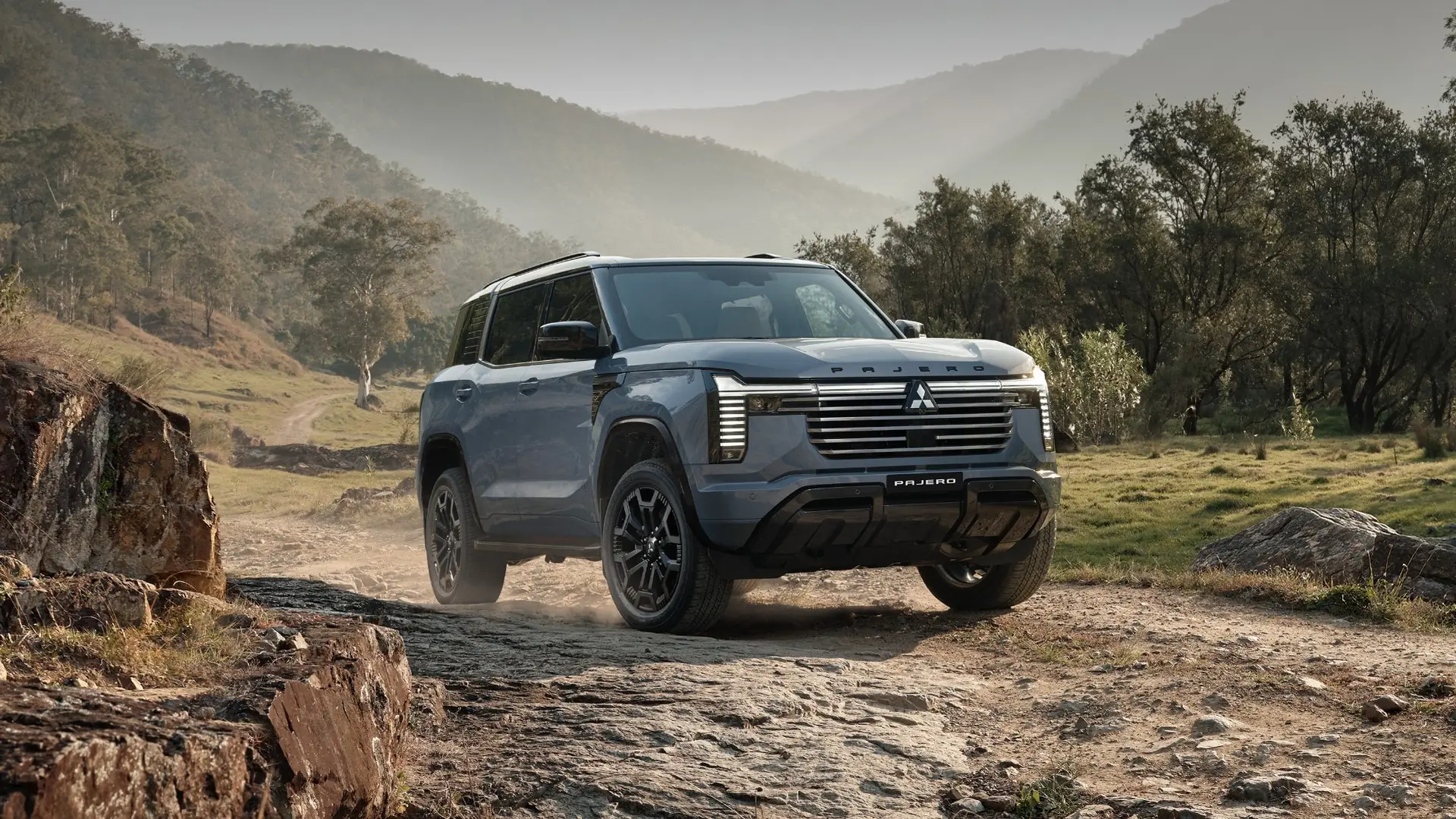

The Pajero is back after a five-year break, on a ladder frame, priced to fight the Prado. Orders are open and first deliveries are due in December. More than 3,000 people had pre-registered before pricing was announced, according to 4X4 Australia.
Nobody outside Mitsubishi has driven one on a public road yet, us included. So this is a preview, not a review: the published specs, the sums on towing, and what Australian journalists found in short drives of pre-production cars.
- Full-time-capable Super Select 4WD-II and a rear diff lock on every grade
- 3,500kg towing with more payload left at full tow than a Prado
- 7.1L/100km claim, equal-best among its rivals
- Up to 10 years of warranty and capped-price servicing
- 150kW and 480Nm is less torque than the Prado, Everest V6 and Tank 500
- Not yet rated by ANCAP
- Just 131 litres of boot behind the third row
- Service prices not yet announced, and no deliveries until December
How much is the new Pajero?
Four grades, from $68,490 to $84,990 before on-road costs. The GLS 5 starts the range, the seven-seat GLS 7 adds $1,500, then the Exceed at $79,990 and the GSR at $84,990. Mitsubishi hasn’t published drive-away prices. Check its Pajero page for any current launch offers.
| GLS 5 | GLS 7 | Exceed | GSR | |
|---|---|---|---|---|
| Price, before on-roads | $68,490 | $69,990 | $79,990 | $84,990 |
| Seats | 5 | 7 | 7 | 7 |
| ADR combined fuel | 7.1L/100km | 7.1L/100km | 7.2L/100km | 7.2L/100km |
| Kerb / payload | 2,397 / 818kg | 2,432 / 783kg | 2,481 / 734kg | 2,513 / 702kg |
| Wheels | 18-inch | 18-inch | 20-inch | 20-inch |
| Screens | Twin 12.3-inch | Twin 12.3-inch | Twin 14.3-inch | Twin 14.3-inch |
| Highlights | See-through bonnet camera, power tailgate | Third row with curtain airbags | Leather, heated rear seats, Yamaha audio | Panoramic roof, ventilated seats, adaptive high beams |
Source: Mitsubishi Motors Australia 27MY Pajero brochure and pricing announced 3 September 2026. Every grade: 2.4 diesel, 150kW/480Nm, 8-speed auto, 3,500kg towing, 80-litre tank.
The engine is the question
Every Pajero uses a 2.4-litre single-turbo diesel with 150kW and 480Nm, through an eight-speed automatic. That’s a close relative of the Triton’s engine, with one turbo instead of two and 10Nm more torque. That’s less than its main rivals: the Prado makes 500Nm, the Everest V6 600Nm and the Tank 500 diesel 620Nm. Only the MU-X and the four-cylinder Everest make less.
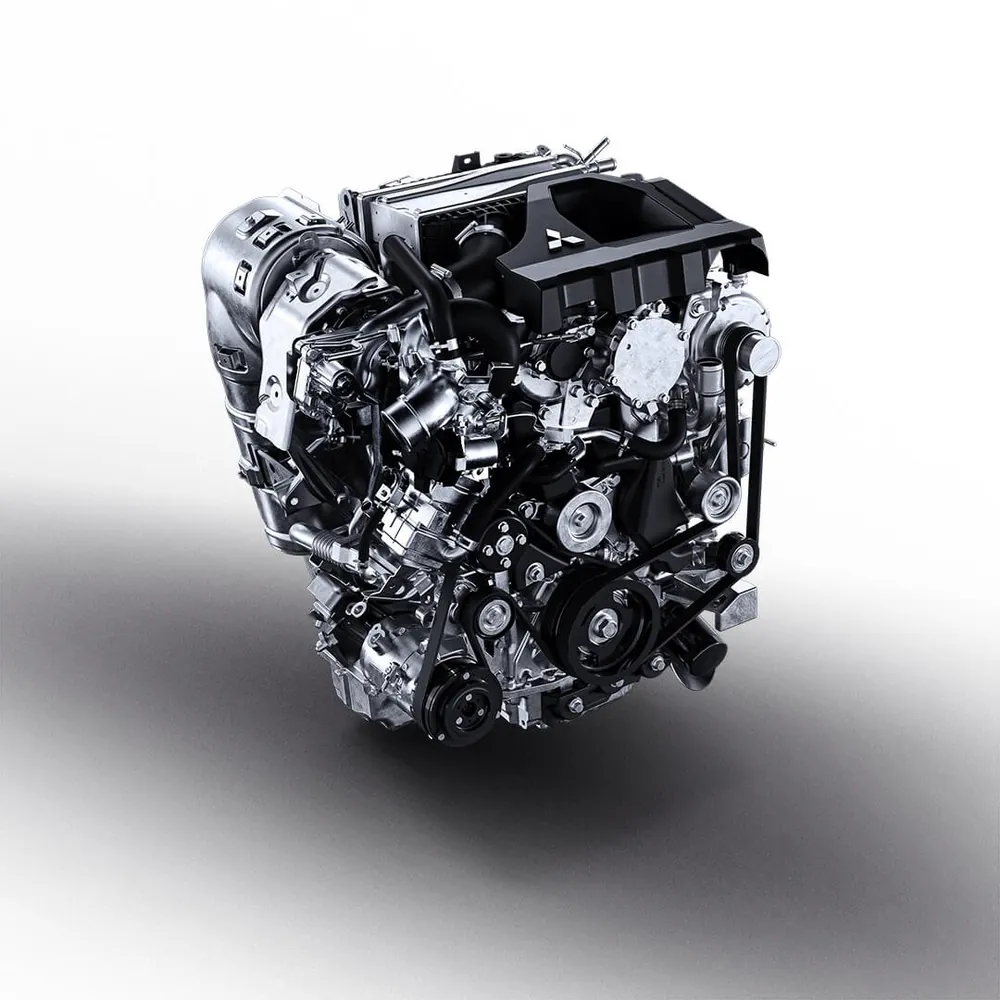
The payoff is economy. Mitsubishi claims 7.1L/100km for the GLS and 7.2 for the Exceed and GSR, from an 80-litre tank. That matches the Tank 500 diesel and the four-cylinder Everest, and beats the Prado and Everest V6 on paper. It runs AdBlue. Our petrol vs diesel guide explains why diesel still suits this job.
Is the Pajero good off-road?
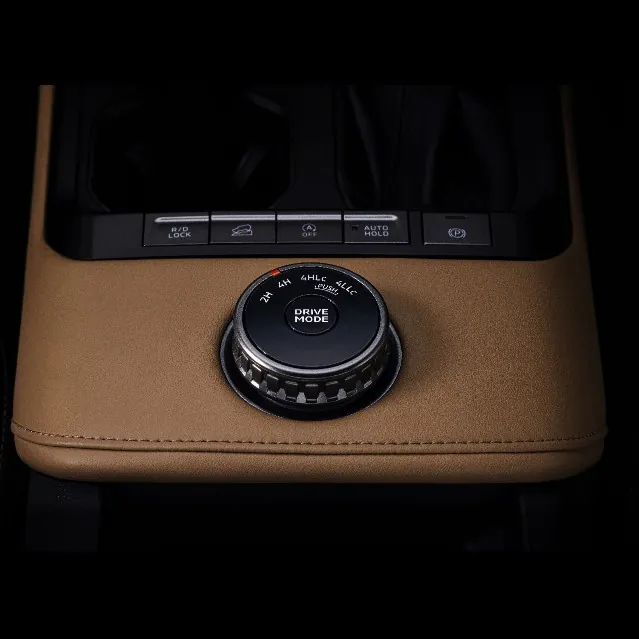
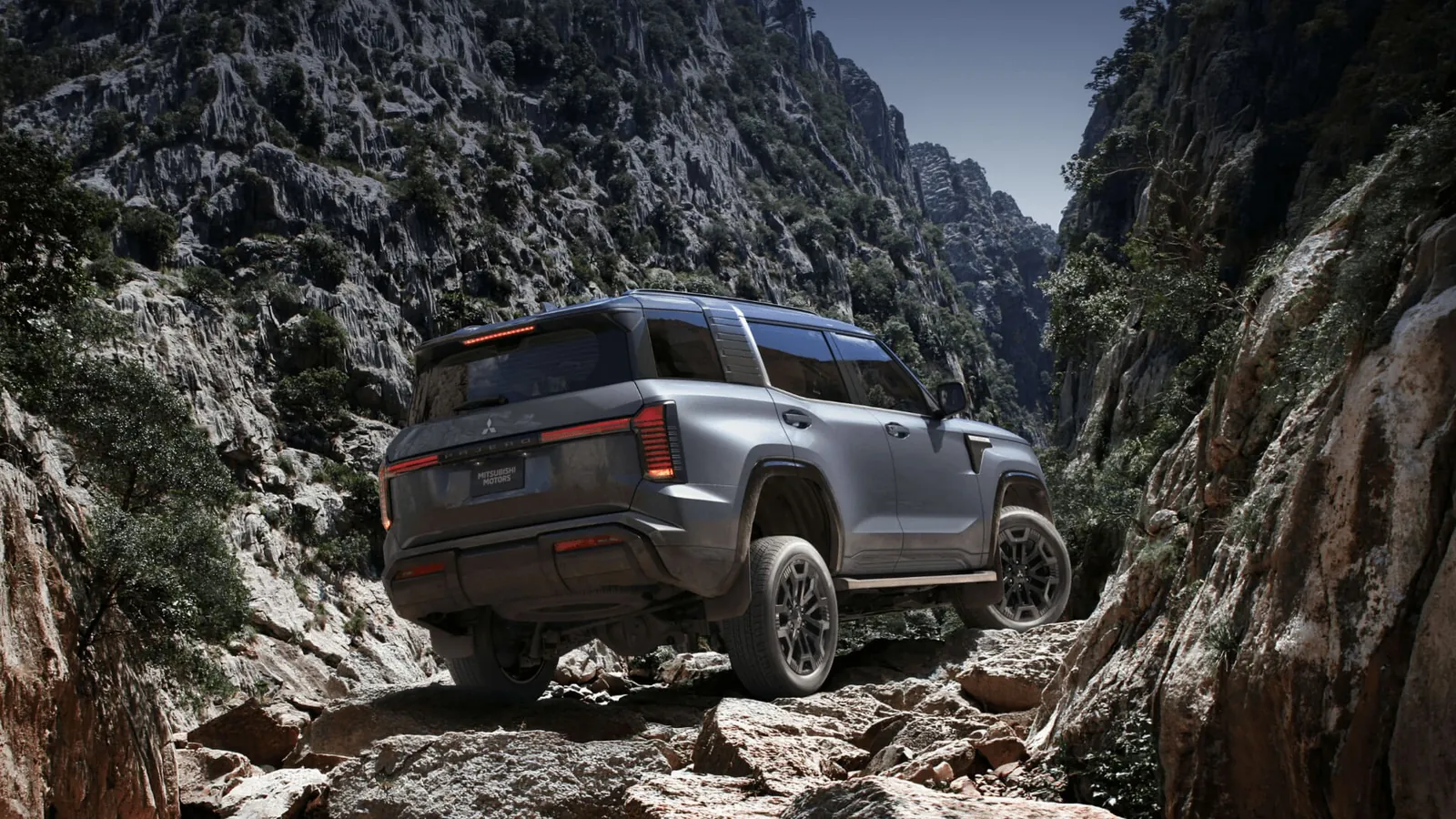
On paper, very. Every grade gets Super Select 4WD-II, which runs in 2H, full-time 4H, and locked 4H and 4L modes, so unlike a part-time system you can leave it in 4H on wet bitumen. A rear diff lock is standard, as are seven drive modes and hill descent control. There’s no front locker.
The numbers back it up: about 230mm of ground clearance (228mm for the GSR), a 30.4-degree approach angle and 25.8 degrees at the rear. That departure angle is far better than the Prado’s 17 degrees. Mitsubishi hasn’t published a wading depth. Underneath, it’s a heavily modified Triton frame with coil springs and a five-link rigid axle at the back.
Towing: 3,500kg, with room to spare
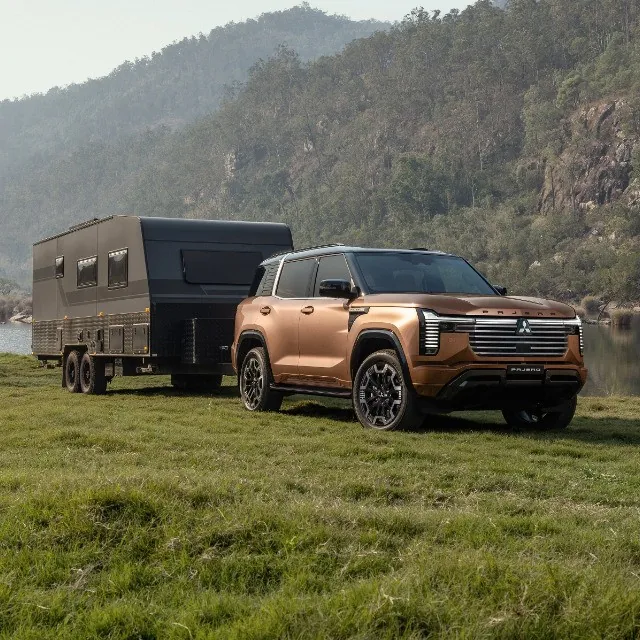
All four grades are rated to tow 3,500kg braked with a 350kg towball. The more useful number is what’s left once you hitch up. At full tow, the GLS 5 can still carry 443kg of people and gear, more than a Tank 500 Lux and far more than a Prado GXL. Our Tank 500 buyer’s guide covers that car.
With a 3,500kg van and a 350kg towball, the Pajero's 6,340kg GCM is the limit. Every grade leaves more than a Prado GXL, but the GSR's extra equipment eats 116kg of what the GLS 5 can carry. If you tow at the limit, buy the lighter grade.
Our calculation: the lower of (GCM minus 3,500kg minus kerb) and (GVM minus kerb minus 350kg), using Mitsubishi's 27MY brochure (6 October 2026). Tank 500 and Prado figures from our Tank 500 diesel vs Prado comparison.
Pajero vs Prado, Everest, MU-X and Tank 500
The Pajero lands in the middle of the most competitive class in Australia. The GLS 5 undercuts a Prado GX by $4,710, but costs $9,500 more than an entry Everest, and once on-road costs are added it’s likely to cost more than either GWM Tank 500 diesel. At the top, the GSR is dearer than an Everest Platinum with a V6.
| Pajero | Prado | Everest | MU-X | Tank 500 | |
|---|---|---|---|---|---|
| From | $68,490 | $73,200 | $58,990 | $49,900 | $65,990 d/a |
| Engine | 2.4 TD, 150kW / 480Nm | 2.8 TD 48V, 150kW / 500Nm | 3.0 V6 TD, 184kW / 600Nm (top) | 3.0 TD, 140kW / 450Nm | 3.0 TD, 170kW / 620Nm |
| 4WD | Full-time capable, rear locker | Full-time, centre lock | Full-time (V6) | Part-time | Part-time, front and rear lockers |
| ADR fuel | 7.1L/100km | 7.6L/100km | 8.5L/100km (V6) | 7.6L/100km | 7.1L/100km |
| Towing | 3,500kg | 3,500kg | 3,500kg | 3,500kg | 3,500kg |
| Boot, 3rd row up | 131L | 182L | 259L | 311L | 98L |
| ANCAP | Not rated | 5 stars (2024) | 5 stars (2022) | 5 stars (2022) | Diesel not rated |
| Warranty | 10yr / 200,000km (conditional) | 5yr unlimited | 7yr unlimited | 6yr / 150,000km | 7yr unlimited |
Sources: manufacturer specifications and published prices, October 2026. Prices before on-road costs except where marked drive-away (d/a). Boot figures to each maker's published measure.
Read across the table and the Pajero’s case is clear. It matches the Tank 500 on claimed economy, has a more flexible four-wheel-drive system than the part-time MU-X and Tank, and offers the longest warranty, on condition. It gives away torque to everyone and boot space to the Prado, Everest and MU-X, and it’s the only one of the established trio without a crash rating yet.
Triton underneath, Pajero on top
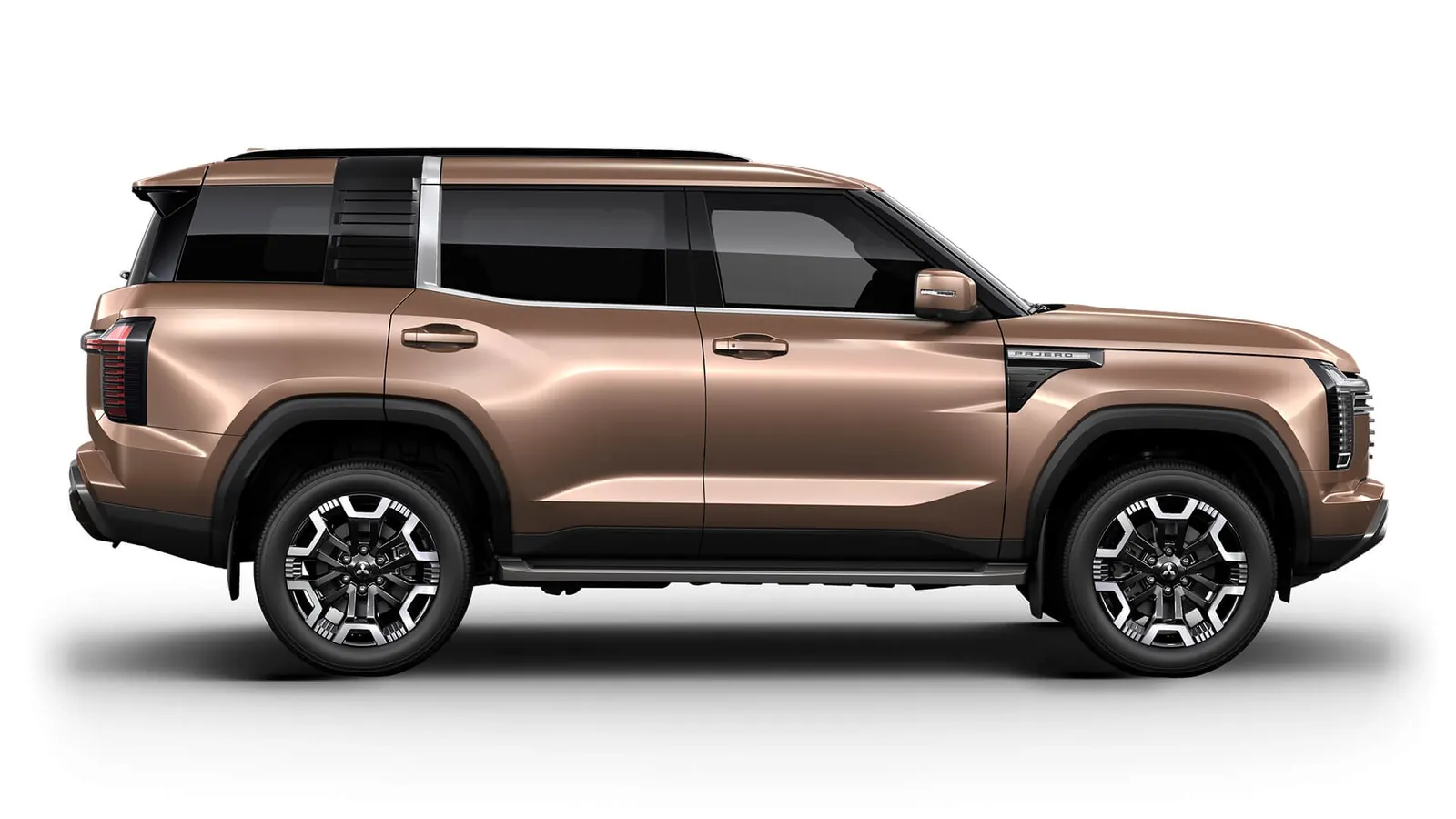
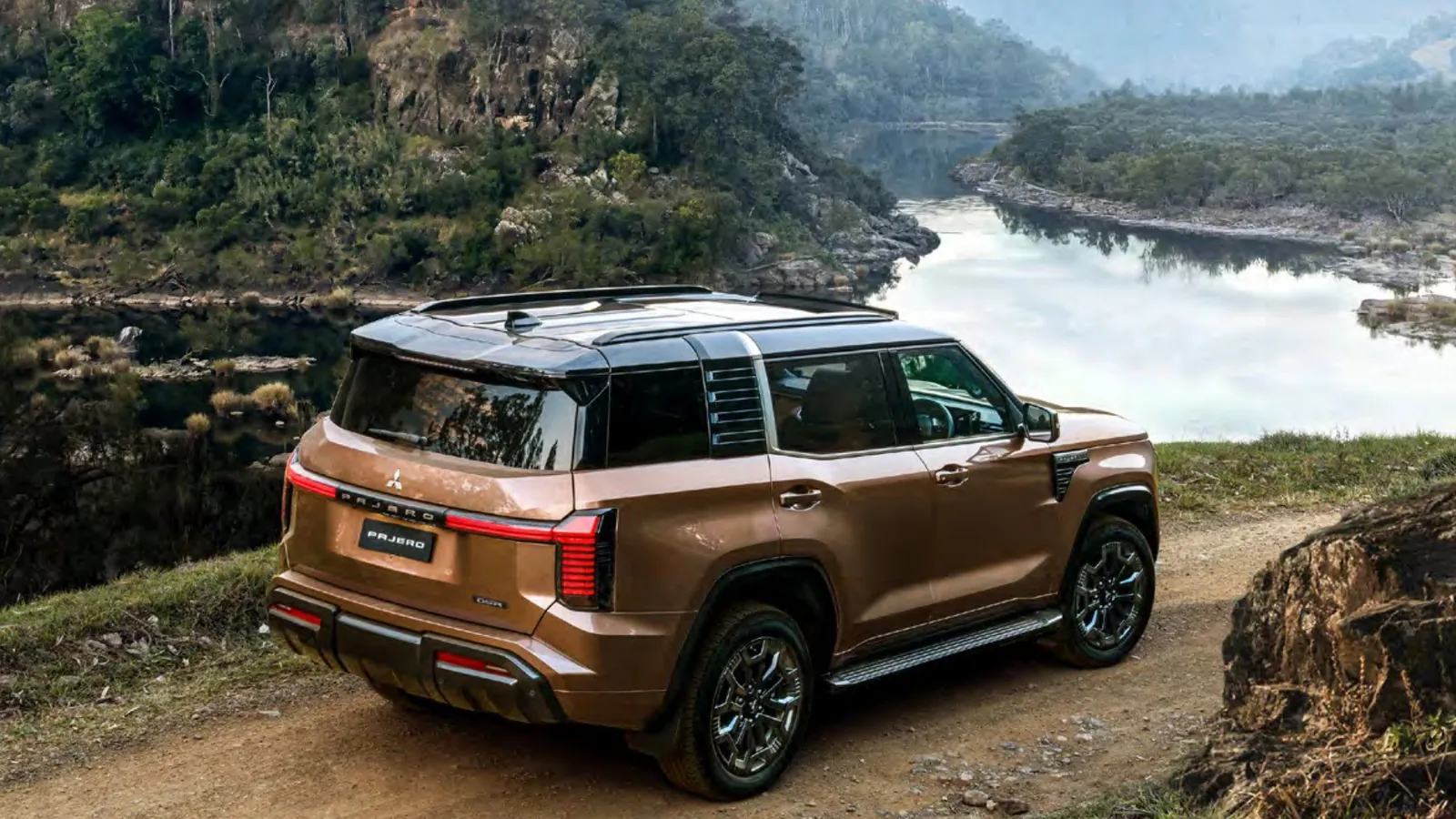
The new Pajero is built in Thailand on a heavily modified version of the Triton ute’s ladder frame, with thicker side members, extra bracing and its own front and rear sections. The wheelbase is 2,870mm, 260mm shorter than the Triton’s, and the rear end swaps the ute’s leaf springs for coils and the drum brakes for discs.
It effectively replaces the Pajero Sport, which left Australian showrooms in 2025, and it’s a step up in size and price. Against the old Sport it’s 95mm longer, 110mm wider and 75mm taller. Mitsubishi has confirmed a hybrid by 2030. A plug-in hybrid is in development with no date. The diesel is where it starts.
At 4,920mm long and 1,925mm wide it’s a big wagon, and it won’t be the only new arrival. The Nissan Patrol Y63 lands in early 2027 from $98,990 with a twin-turbo V6 and 3,700kg towing, which leaves the Pajero plenty of room underneath.
What the first drives found
Australian media have had two goes in pre-production cars: a few laps of Mitsubishi’s Okazaki proving ground in Japan in September, and about half an hour off-road at Eagle View 4WD Park near Adelaide in late October. None of it was on public roads.
The engine is adequate. carsales’ Feann Torr found a very quiet cabin and a supple ride in Japan, but called the engine “adequate rather than strong” and expects it to struggle loaded up or towing. He also noticed nose-dive under brakes.
It’s good in the rough. CarExpert’s Max Davies reported strong traction at Eagle View even on highway tyres, and a cabin much quieter than the Triton’s. His complaints: no front locker, slow low-range engagement, side steps that scrape, and a poor under-floor camera. His summary on value was “hardly a bargain”.
The ride is a step up from the ute. Chasing Cars found it far more supple than the Triton, but said the high bonnet limits forward vision and the boot is merely adequate.
The third row is tight for adults. CarsGuide’s Andrew Chesterton liked the plush cabin but found the raised floor makes the third row awkward for grown-ups.
What nobody knows yet
How it drives on a real road. What it uses in the real world (Davies saw about 14L/100km on the trip computer off-road, which tells you little). How it tows. There’s also no ANCAP rating, no published service pricing, no wading depth and no drive-away pricing from Mitsubishi.
If any of those matter to you, there’s no harm in waiting until customer cars arrive and the proper road tests land.
Inside: big screens, small boot
The Exceed and GSR get twin 14.3-inch screens, the GLS twin 12.3-inch displays, all with wireless Apple CarPlay and Android Auto and physical climate controls. USB-C ports reach all three rows. The GSR adds a panoramic roof, ventilated front seats and memory settings. Seat heating and ventilation are controlled through the touchscreen.
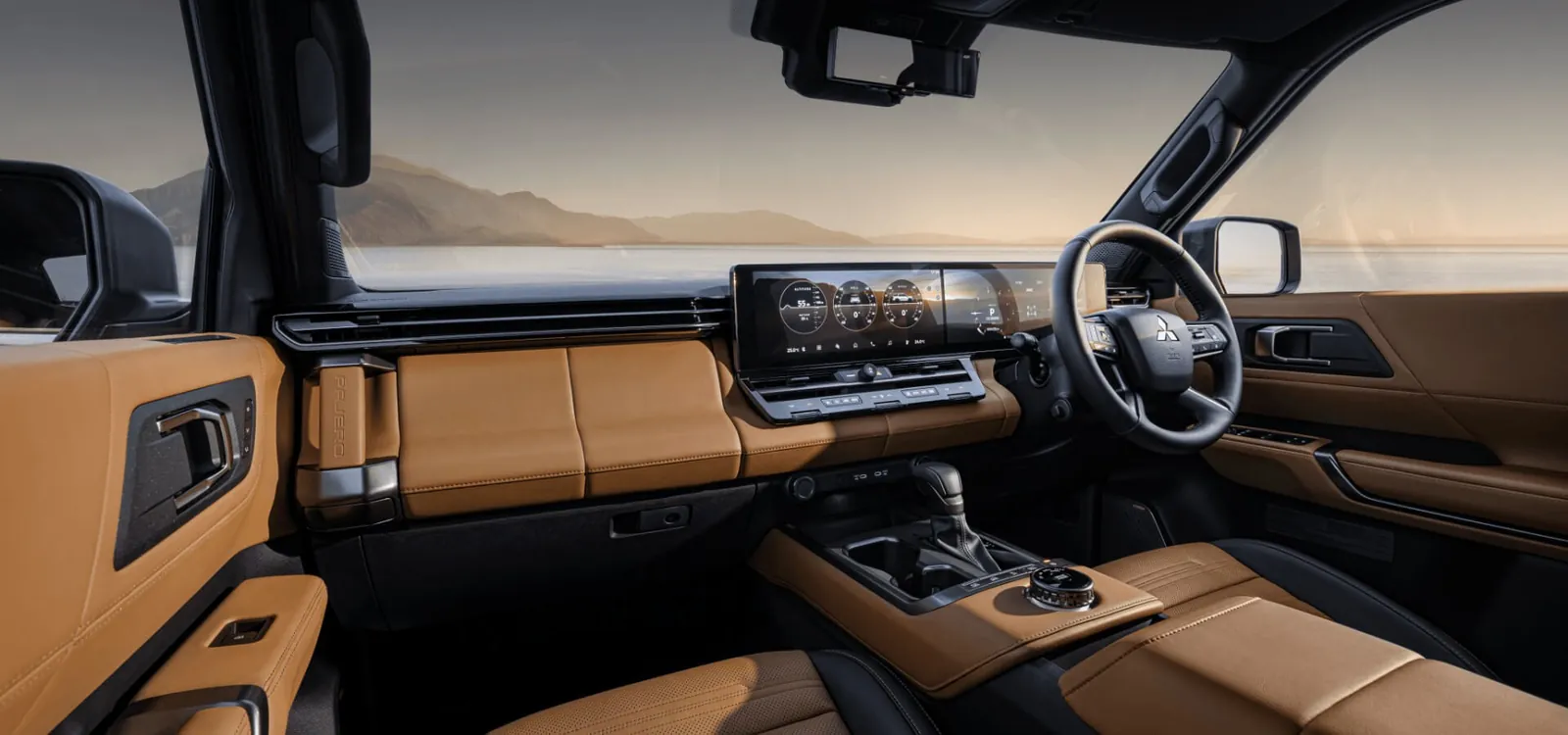
The base GLS is far from bare. It gets a see-through bonnet camera and 360-degree monitor for off-road placement, a power tailgate, a heated steering wheel, three-zone climate control, digital radio and a full-size alloy spare under the body. The cloth trim is waterproof, a smart choice for a car that will see beaches and wet dogs.
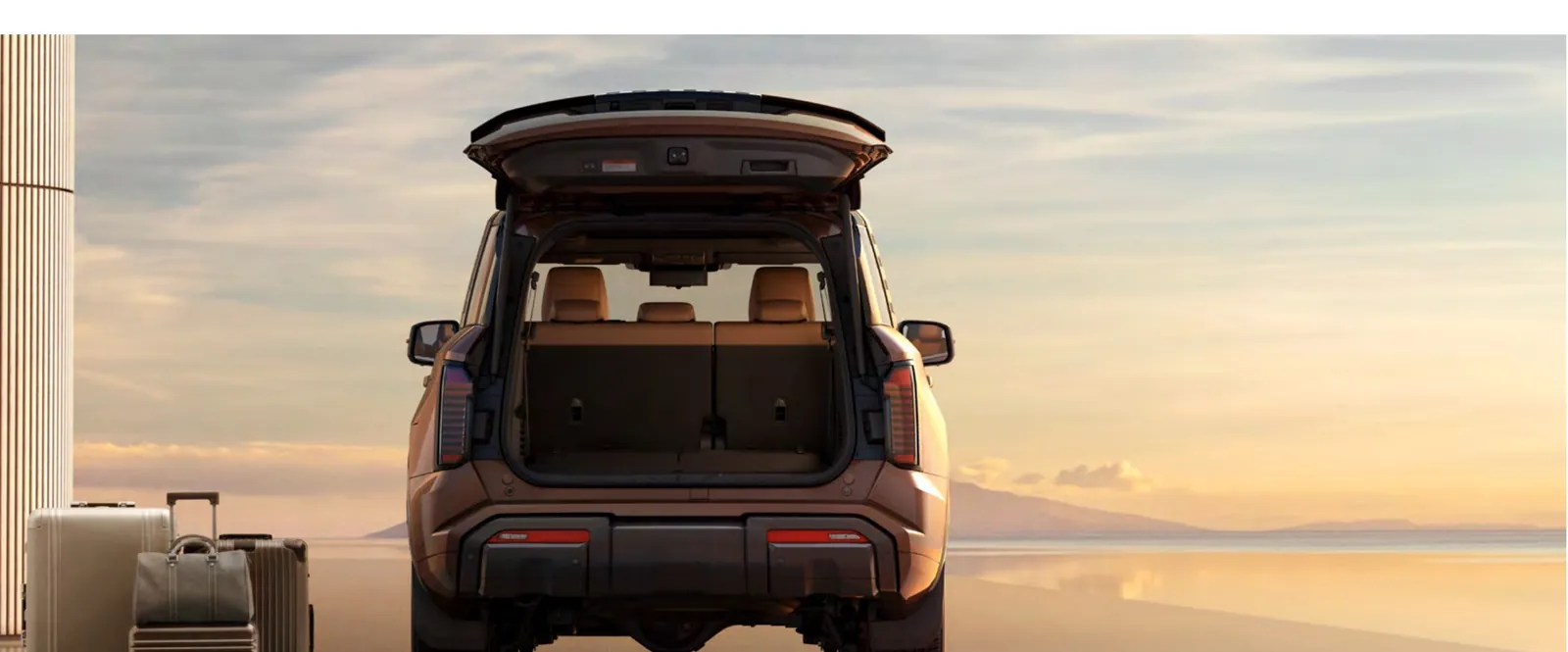
The weakness is luggage space with seven seats up: just 131 litres to Mitsubishi’s VDA measure, less than the Prado, Everest or MU-X. With the third row folded there’s 502 to 529 litres. Reports differ on whether ISOFIX points are in the second row only or the third row as well, so check the car in person before buying for a young family; our third-row tether guide explains why.
Safety: lots of tech, no rating yet
The Pajero has no ANCAP rating yet. RACV reported at launch that one hadn’t been announced. The equipment list is long: AEB with pedestrian, cyclist and motorcycle detection, rear AEB, front and rear cross-traffic alert, lane keeping, blind-spot warning, driver monitoring, adaptive cruise and a front-centre airbag. Seven-seaters get curtain airbags to the third row.
Until there’s a rating, families comparing it with a five-star Prado or Everest are taking it on trust. The Prado earned five stars in 2024 and the Everest in 2022. The Tank 500 diesel is also unrated, so the Pajero isn’t alone among the newcomers. Our best family car guide lists rated alternatives.
Warranty and servicing
Mitsubishi offers up to 10 years or 200,000km of warranty, but only if every service is done on time at a Mitsubishi dealer; otherwise it’s five years or 100,000km. Services are every 12 months or 15,000km, with capped pricing for 10 years. The prices haven’t been published yet, and the capped-price servicing page doesn’t list the new model.
Which Pajero should you buy?
- Best value: the GLS 7, at $69,990. Seven seats, the full 4WD system and the second-best towing payload in the Pajero range.
- For towing at the limit: the GLS 5, which leaves 443kg for people and gear with 3,500kg behind it.
- For comfort: the Exceed, which adds leather, heated rear seats and the bigger screens for $10,000 more.
- Skip: the GSR, unless you want the roof and ventilated seats. At $84,990 it costs more than an Everest Platinum V6.
On paper the new Pajero is a capable, frugal, well-equipped wagon with a smaller engine than most rivals and a safety rating still to come. The GLS 7 looks like the one to have if you tow and tour on a budget. If you need a V6’s shove or a five-star rating today, an Everest has both.


