
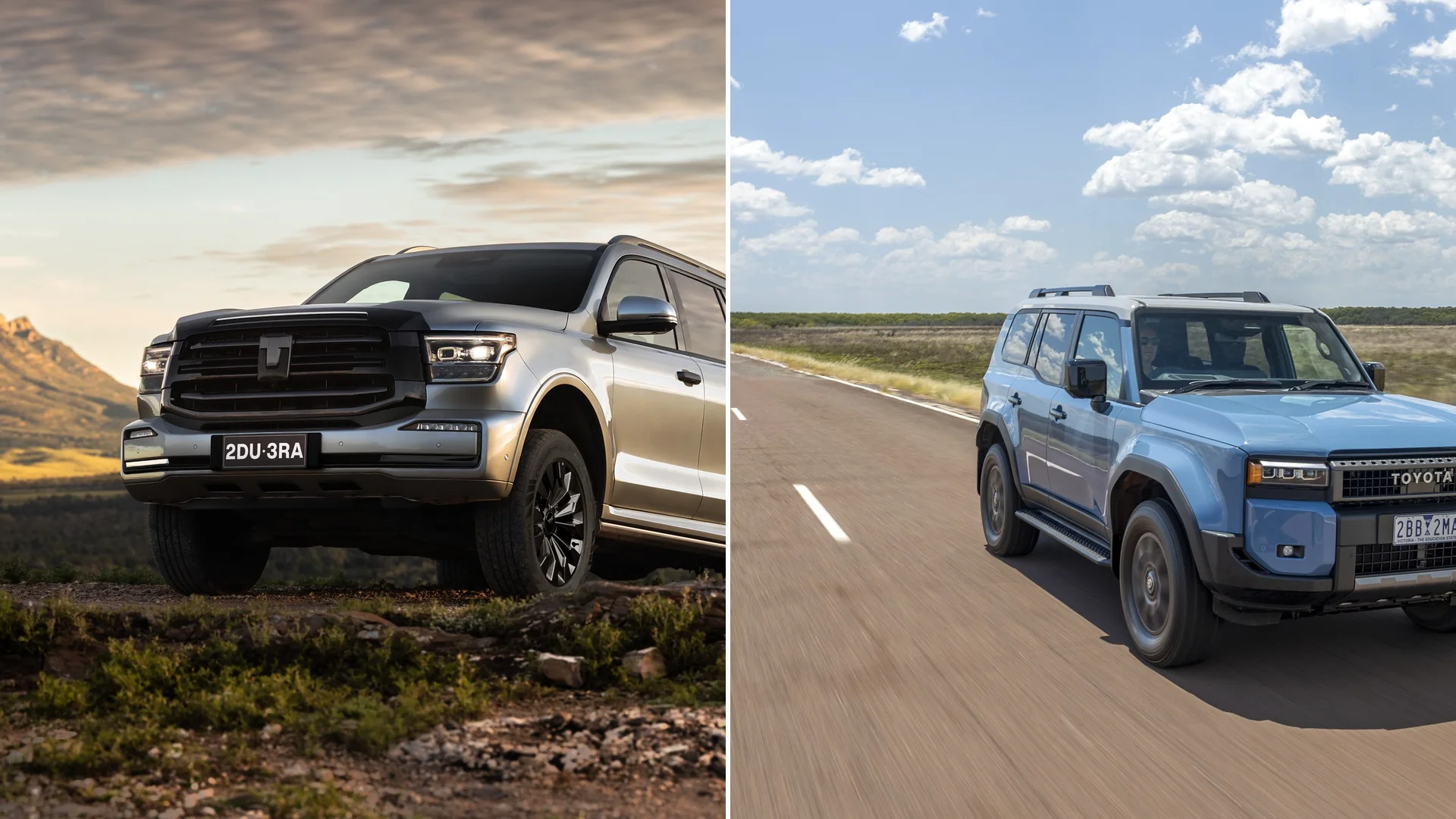

The Prado is the default family 4WD here, and the GWM Tank 500 was the cheaper alternative with the wrong engine. Not any more. The new 3.0-litre diesel Tank 500 matches the Prado's 3,500kg towing for more than $20,000 less and leaves more payload when towing. Buy on price and the spreadsheet says Tank. Buy for resale, the dealer network and kids in the third row, and it gets closer.
Tank 500 diesel vs Prado: which is cheaper?
The Tank 500, by a lot. GWM prices the diesel at $65,990 drive-away for the Lux and $71,990 for the Vanta. The cheapest seven-seat Prado, the GXL, is $80,690 before on-road costs, and a Melbourne dealer listed it at $88,613 drive-away on 23 October. Compare drive-away to drive-away and the Lux undercuts the GXL by more than $22,000.
GWM is also offering a $2,000 cash bonus or fuel card on orders delivered by 31 October 2026, according to its Tank 500 page. The Prado range runs from the five-seat GX at $73,200 to the Kakadu at $100,690, before on-roads. Toyota says average wait times across its range are now down to about three months.
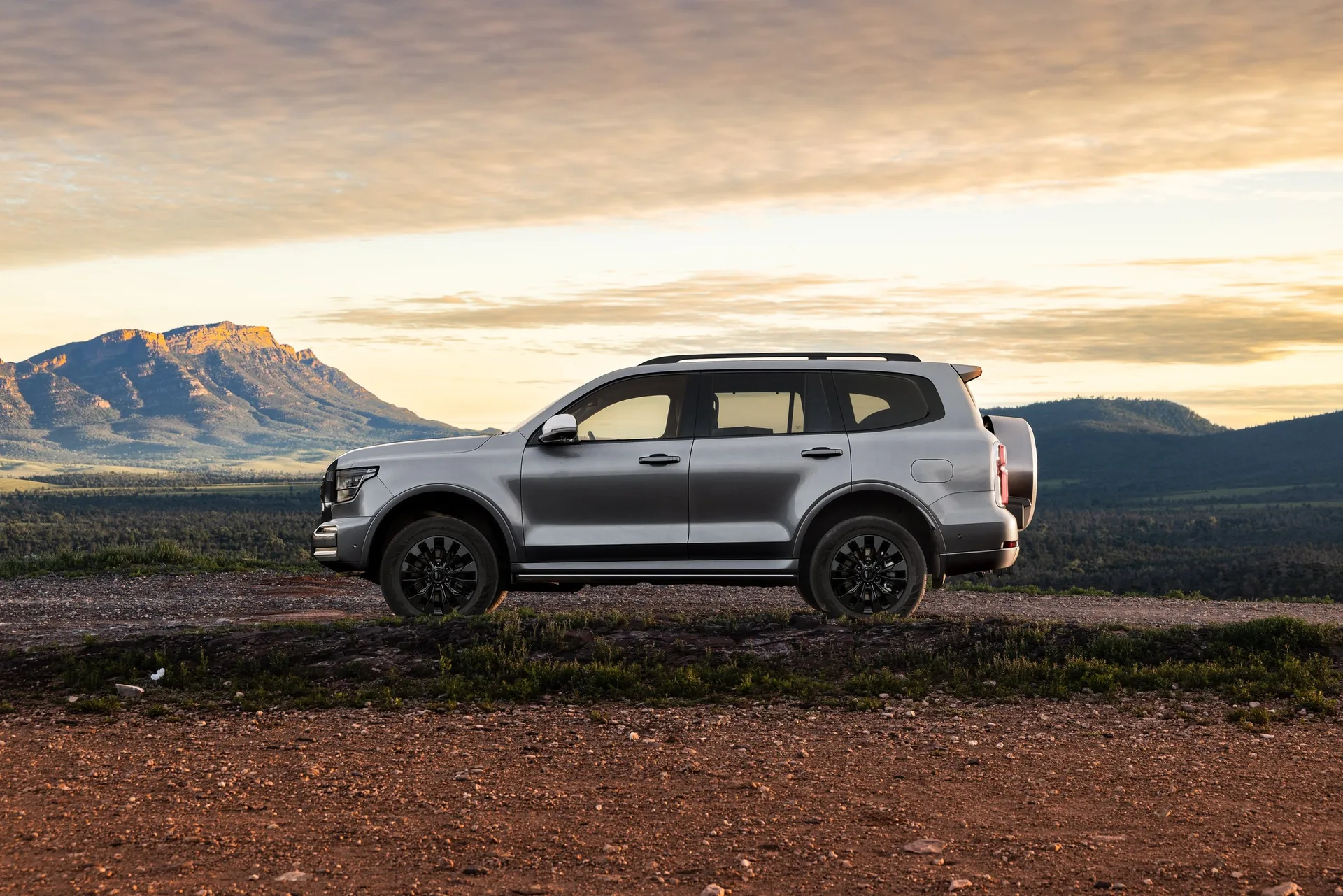
Engines: GWM's new diesel against Toyota's 2.8
On paper, the Tank wins clearly. Its new 3.0-litre four-cylinder turbo-diesel makes 170kW and 620Nm through a nine-speed automatic. The Prado's 2.8-litre makes 150kW and 500Nm with 48V mild-hybrid assistance and an eight-speed auto. That's 20kW and 120Nm more for the Tank, and GWM claims 0 to 100km/h in 10.6 seconds.
Numbers aren't the whole story. The Prado's 1GD has years of Australian outback, towing and fleet use behind it, and every country mechanic knows it. GWM's diesel is brand new, so its long-term durability is unknown. Early impressions of the Tank's refinement are positive, but the nine-speed's calibration has drawn criticism for holding gears and the odd firm shift.
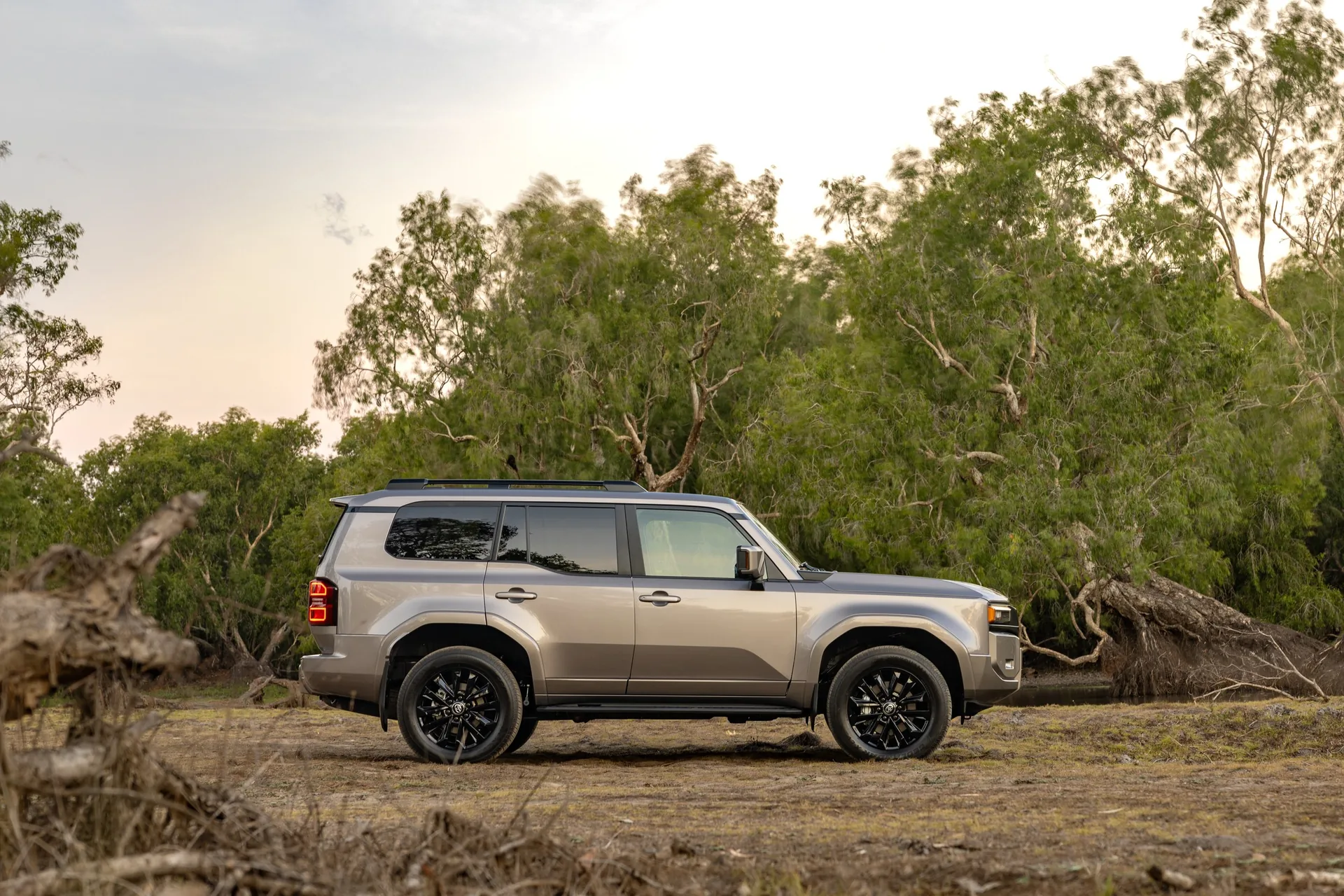
Claimed fuel use is 7.1L/100km for the Tank and 7.6L/100km for the Prado. Early real-world figures for the Tank sit close to its claim, at about 7.8L/100km. Prado owners and long-term tests report more, from the high 8s to more than 10L/100km. The Tank needs no AdBlue; the Prado carries a 17.4-litre tank of it. Our petrol vs diesel guide covers why diesel still suits this job.
Do they have the same 4WD hardware?
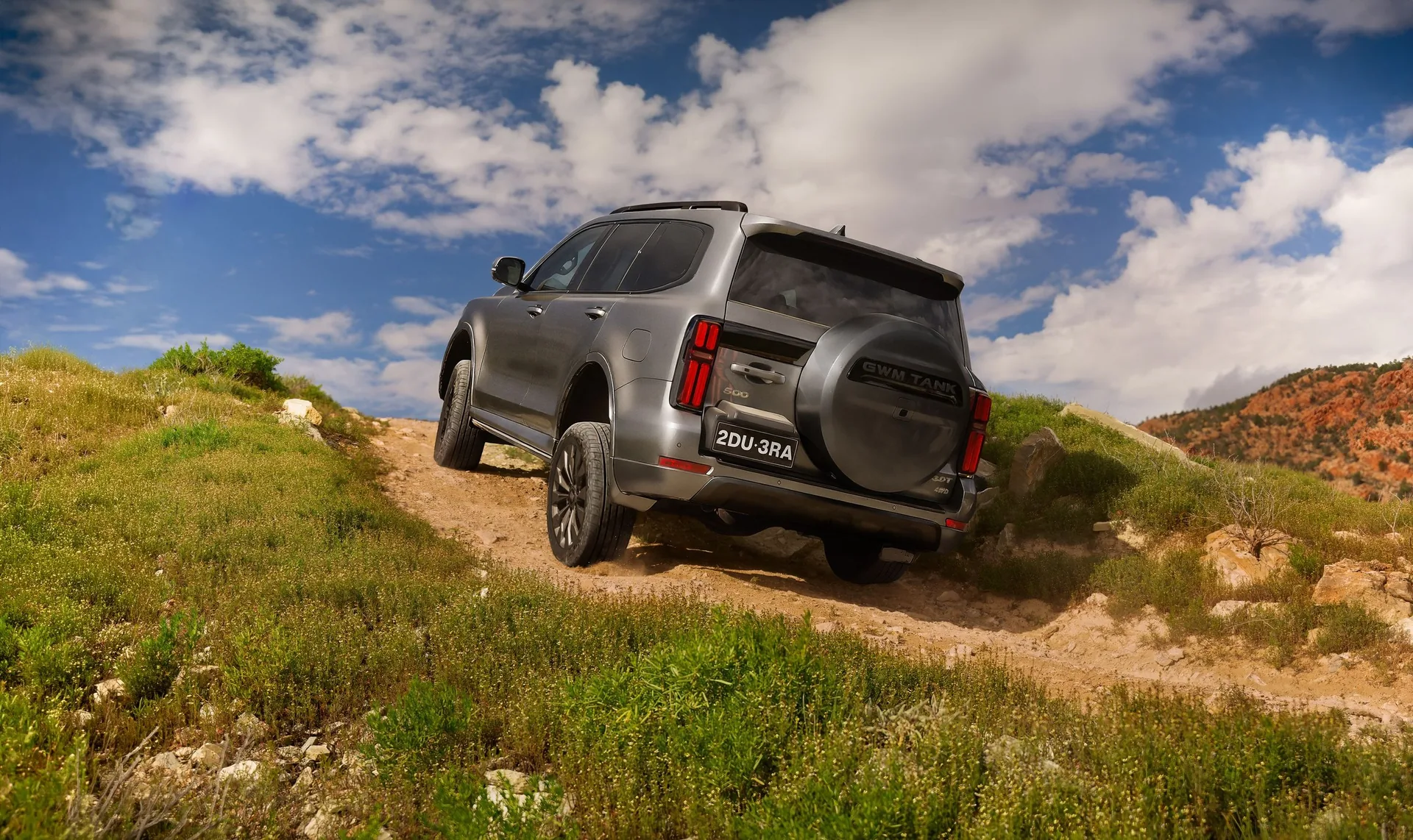
No, and it matters off-road. The Prado runs full-time 4WD with low range and a locking centre diff, but only the Altitude gets a rear locker. The Tank is part-time 4WD with low range and front and rear diff locks on both grades. What it lacks is an automatic 4WD mode, so on wet bitumen or gravel you're choosing between 2H and a part-time 4H.
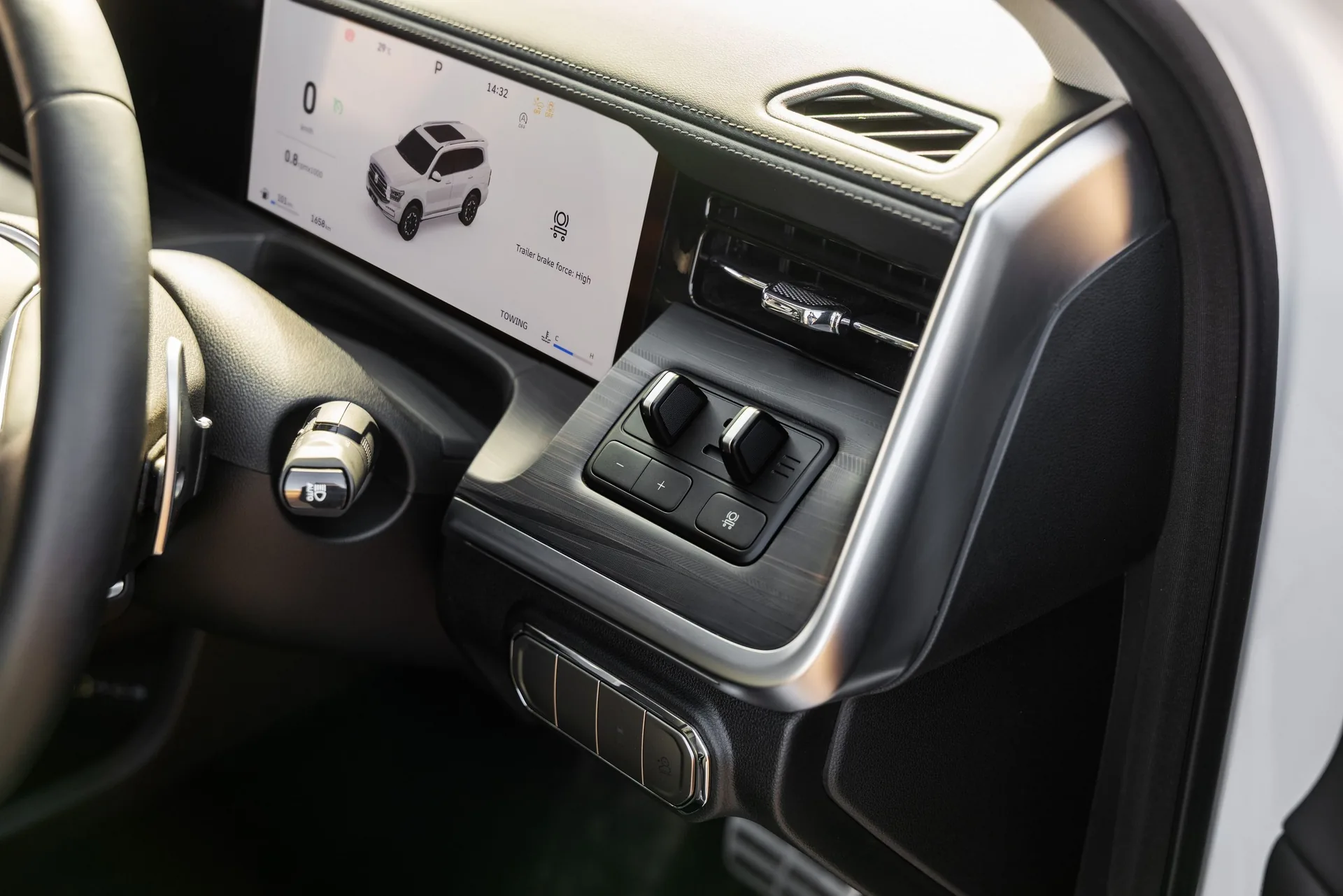
Clearance and wading favour the Tank: 220mm and 800mm, against 210mm or 221mm (depending on grade) and 700mm for the Prado. The Prado has the better approach angle, 31 to 32 degrees against 28.5. For beach runs and creek crossings, the Tank's standard lockers and deeper wading count for more. On rocky climbs, the Prado's approach angle is the bigger help.
Which is the better everyday drive?
For the school run and the highway, the Prado's full-time 4WD is the safer default. You never have to think about traction on a wet roundabout or a gravel road, and the system is proven. The Tank's part-time setup is more traditional: excellent once you're off the road, but it asks the driver to choose the right mode on mixed surfaces.
Sales show which way buyers lean. Over the first nine months of 2026 the Ford Everest has outsold the Prado 16,203 to 15,665 on VFACTS figures. The Tank 500 has managed 1,055 across all its powertrains. The diesel only went on sale in September, so it's too early to judge the new engine on sales.
Inside: luxury in the Tank, durability in the Prado
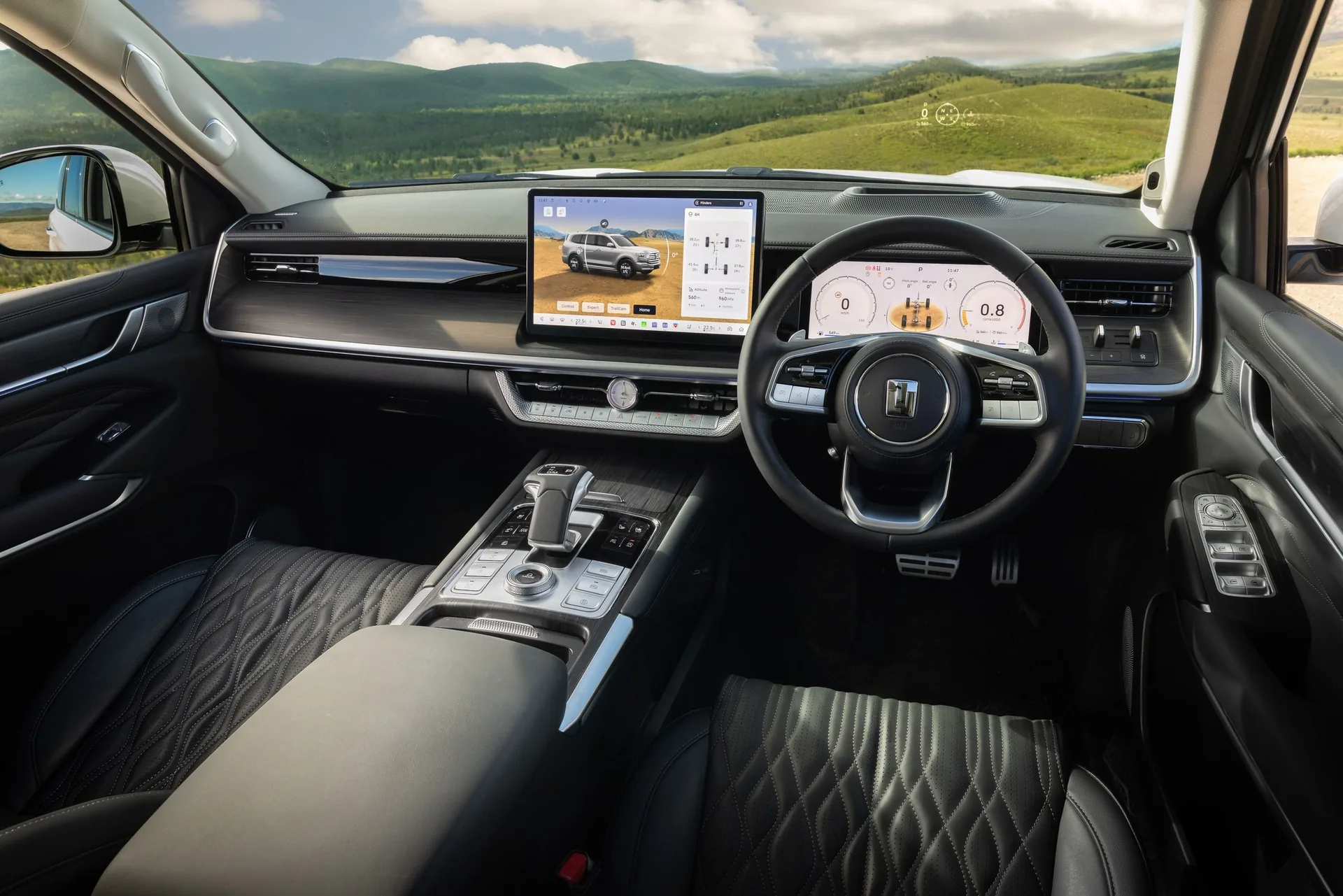
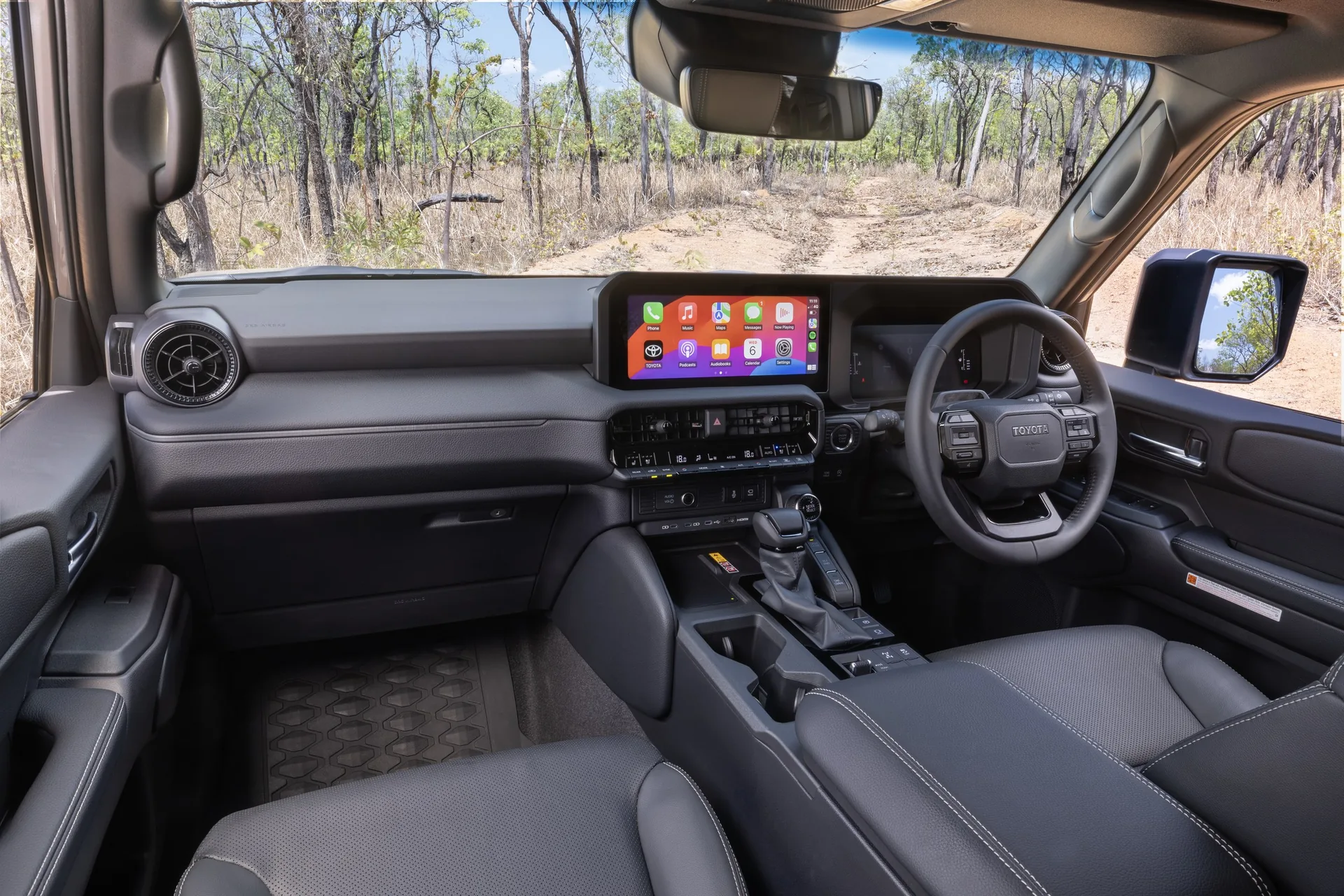
The Tank 500 is the more lavish cabin for the money. The Vanta gets quilted leather and a wide touchscreen, and even the Lux feels a class above its price. The Prado GXL is plainer, with physical climate controls and tougher surfaces, built for red dust and kids' boots rather than showroom drama. Which you prefer says a lot about how you'll use it.
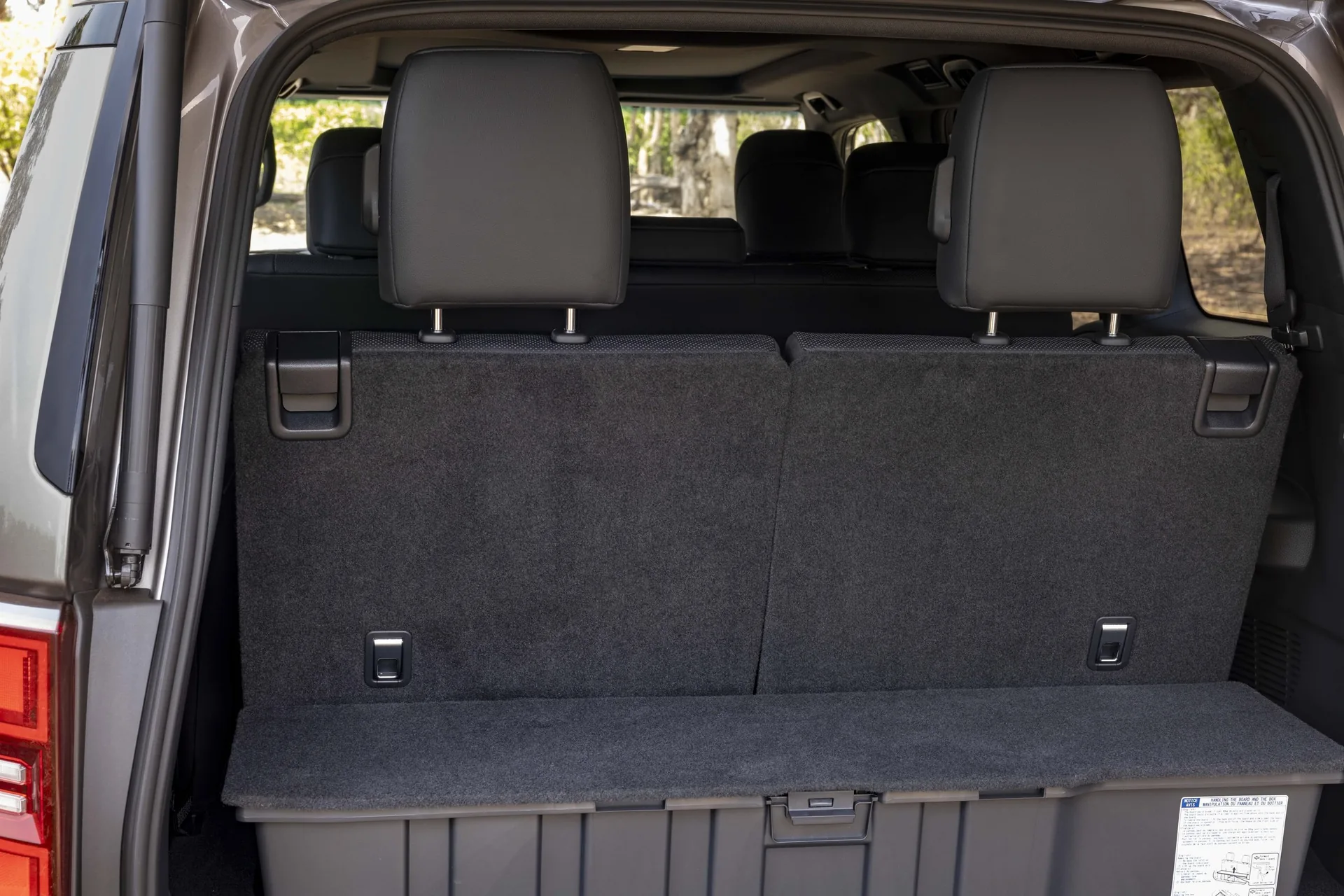
Cargo space with seven seats up is small in both. GWM quotes just 98 litres behind the Tank's third row, 795 litres with it folded and 1,489 litres with both rows down. That's a school bag and a footy kit, not a family holiday. Neither car suits seven people and a week's luggage without a roof pod or a trailer.
Which is better for young kids in the third row?
Neither. ANCAP says the Tank 500 has no top tether anchorages in the third row and is not suitable for young children there. Its Prado report says the same: no third-row tethers, so child restraints aren't recommended. If you need three child seats, our third-row tether guide lists the seven-seaters that work, and our family car guide ranks them.
Towing: the Tank has the payload advantage
Both tow 3,500kg braked with a 350kg towball, but the Tank has more weight to spare once the van is on. With a full 3,500kg trailer, the Tank Lux leaves about 410kg for people and gear, against 265kg in a Prado GXL. Our sums use GWM's brochure and Toyota's published Prado weights.
That's what's left for people, fuel and gear with a 3,500kg van and a 350kg towball. Four adults in a Prado would put it over its limits. Use the lower of GVM and GCM; here the GVM binds for the Prado, and both bind equally for the Tank.
Our calculation: the lower of (GCM minus 3,500kg minus kerb) and (GVM minus kerb minus 350kg). Tank 500 figures from GWM's October 2026 brochure; Prado figures from Toyota's published specifications.
Real-world towing figures for the Tank diesel aren't published yet. Towing a 3,000kg off-road van, the Prado has been recorded at 16.3L/100km. The Vanta's 131-litre combined fuel capacity, with its 53-litre auxiliary tank, beats the Prado's 110 litres. The Lux has only the 78-litre main tank, a real limit on long tows.
Safety, warranty and resale
Here the Prado pulls ahead. It holds a five-star ANCAP rating from 2024 across all grades. The Tank 500's 2024 five-star rating covers only its hybrid and plug-in hybrid versions: ANCAP hasn't yet rated the diesel. GWM's own page still says five stars without qualifying it, so ask your dealer, and check ANCAP before you buy.
Warranty favours GWM: seven years and unlimited kilometres, and seven years of service-activated roadside assistance, per GWM. Toyota gives five years, with engine and driveline cover extended to seven with logbook servicing. Servicing is every 12 months or 15,000km in the Tank, averaging about $540 a year, against every six months or 10,000km at $395 a visit in the Prado.
What do they cost to run over five years?
Less in the Tank, but not by as much as the sticker gap suggests. Over five years and 75,000km, using the official fuel figures and diesel at 275c a litre, the Tank saves about $1,000 in fuel. The bigger saving is servicing: five annual visits in the Tank against ten six-monthly visits in the Prado.
| Tank 500 diesel | Prado GXL | |
|---|---|---|
| Fuel (ADR combined, 275c/L) | About $14,600 | About $15,700 |
| Scheduled services | 5 at about $540 = $2,700 | 10 at $395 = $3,950 |
| AdBlue | Not needed | Extra, small cost |
| Five-year total | About $17,300 | About $19,600 |
Our calculation from official ADR combined fuel figures and published service pricing. Real-world fuel use will be higher for both, especially when towing, and the gap may change once real-world Tank diesel figures settle.
Resale is the Prado's trump card. Toyota Finance's guaranteed future value on a GXL at four years and 60,000km works out at about 60 per cent of its drive-away price, our calculation from a Melbourne dealer's listing. No equivalent exists for the Tank yet, and the diesel is weeks old. Toyota has about 275 dealers; GWM aims for 135 sites in 2026.
One footnote on the Prado: Toyota has agreed to a $750 million settlement over faulty DPFs in HiLux, Prado and Fortuner models acquired between 2015 and 2020, subject to court approval. The current 250 Series uses the same 1GD engine family with 48V help; we found no reports of DPF problems in it. Our reliability rankings cover both brands.
Tank 500 or Prado: which should you buy?
- Towing a big van regularly: the Tank 500 Vanta. More payload at full tow and a 131-litre fuel range.
- Best value: the Tank 500 Lux at $65,990 drive-away, as long as you accept the 78-litre tank.
- Remote touring and resale: the Prado GXL. The dealer network, proven engine and resale are worth paying for.
- Serious off-roading: Prado Altitude for its rear locker, or Tank for its standard front and rear lockers and 800mm wading.
- Young kids in the third row: neither. Look at an Everest or Santa Fe instead.
| Tank 500 Lux / Vanta | Prado GXL (7 seats) | |
|---|---|---|
| Price | $65,990 / $71,990 drive-away | $80,690 before on-roads |
| Engine | 3.0 turbo-diesel, 170kW / 620Nm | 2.8 turbo-diesel 48V, 150kW / 500Nm |
| Transmission and 4WD | 9-speed auto, part-time 4WD, low range | 8-speed auto, full-time 4WD, low range |
| Diff locks | Front and rear | Centre (rear on Altitude only) |
| ADR combined fuel | 7.1L/100km | 7.6L/100km |
| Fuel tank | 78L / 131L | 110L |
| Braked towing / towball | 3,500kg / 350kg | 3,500kg / 350kg |
| Kerb / GVM / GCM | 2,635–2,705 / 3,395 / 6,545kg | 2,535 / 3,150 / 6,600kg |
| Clearance / wading | 220mm / 800mm | 210mm / 700mm |
| ANCAP | Diesel not yet rated | Five stars (2024) |
| Warranty | 7 years, unlimited km | 5 years, unlimited km (7 engine and driveline) |
| Service interval | 12 months / 15,000km | 6 months / 10,000km |
Sources: GWM brochure (1 October 2026) and website; Toyota specifications; ANCAP. Kerb weights for the Prado vary by a few kilograms between data sources.
The Tank 500 diesel is the better-equipped, harder-towing, cheaper car on paper, and our earlier Tank 500 review covers the rest of the package. The Prado is the safer long-term bet. If you keep cars for a decade and drive where Toyota dealers outnumber service stations, that matters more than $20,000.


