
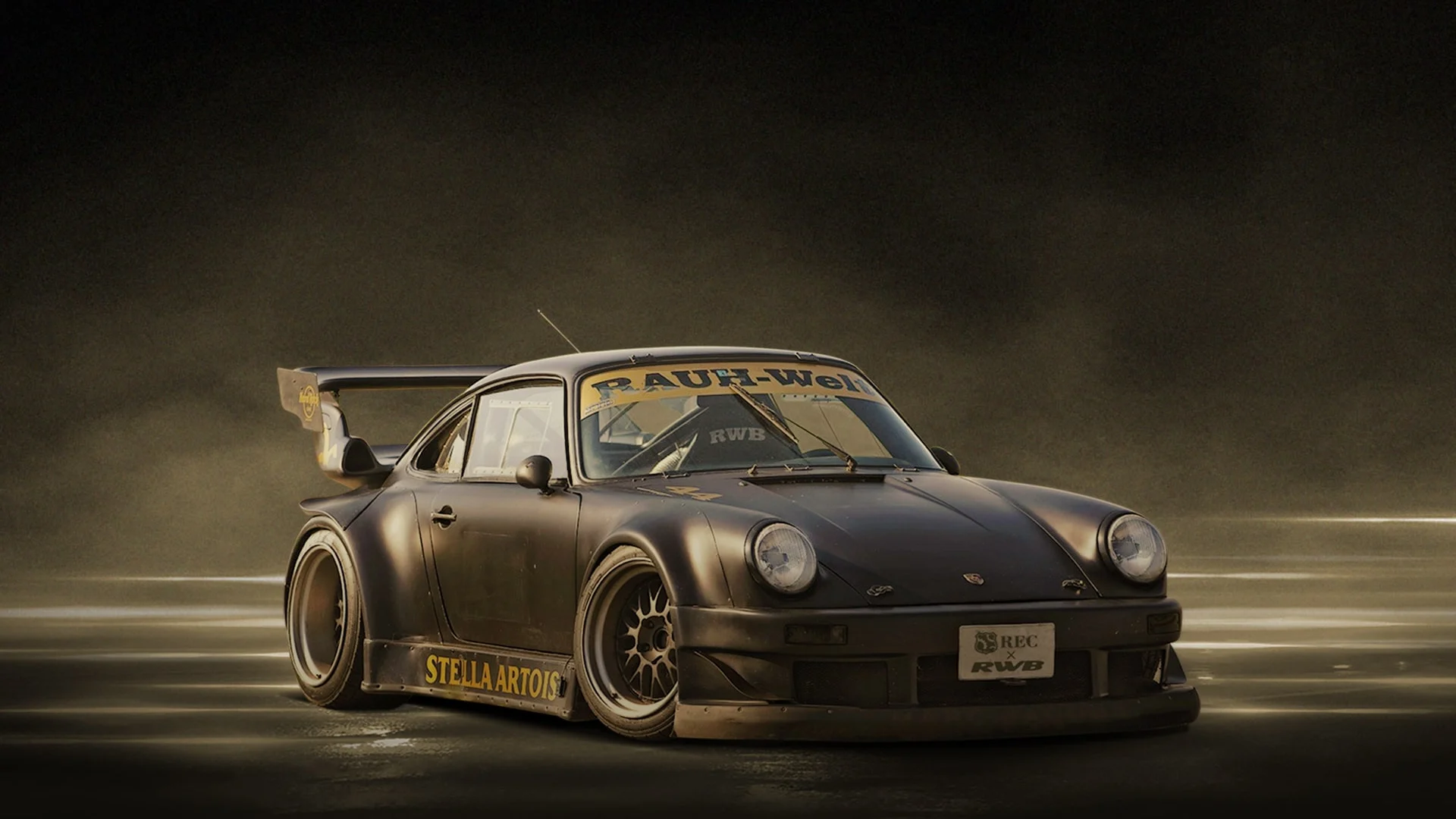

Every RWB Porsche on the planet traces back to one car, and it’s named after a beer. Akira Nakai bought a battered 930 in the late 1990s, cut its guards, bolted on his own and called it Stella Artois. More than 1,000 cars later, the original is still his and still the template for the whole cult.
This is that car’s story. It’s the origin of the biggest name in widebody culture, told through what Nakai and the people who have spent time with him have actually said. Where the sources disagree, and on a car this mythologised they sometimes do, you’ll see both versions rather than the tidier one.
Which Car Was the First RWB?
Stella Artois, Nakai’s own Porsche 930. It’s the first car he built under the RAUH-Welt BEGRIFF name and the one he still keeps. The Porsche Club of America calls it his first RWB project, and the watchmaker REC, in an officially licensed collaboration, describes it as the genesis of the RWB movement.
Two details are less settled. REC lists the car as a 1985 930, while a 2015 feature built around a Nakai interview calls it a 1986. And despite plenty of searching, no RWB source publishes its chassis number. Anyone quoting one online is guessing, so this story doesn’t.
From Rough World to RAUH-Welt
Before the Porsches there was Rough World, a crew of street drifters and pro drivers Nakai led in the late 1980s and early 1990s. They built AE86s and Mark IIs wide, low and heavily cambered, with propped bonnets. The look was pure Japanese street culture, and Nakai would carry all of it over to the 911.
Sources: RWB UK; Lenssen Photo feature (2015); Excellence magazine (2011); Porsche Club of America (2025); Yokogao Magazine. Dates for the early years vary between accounts.
The name came with him. RAUH-Welt BEGRIFF is German for Rough World Concept, and RWB UK dates the shop’s founding to 1997 in Chiba. The timing of the 930 purchase is murkier. Excellence magazine wrote in 2011 that Nakai bought it at 28 and opened RWB six years later, which doesn’t fit RWB UK’s own dates.
The Battered 930 Nakai Took On
The car he started with wasn’t special. Accounts describe a damaged or battered 911 Turbo, bought in the late 1990s while Nakai was still doing body-shop work. That matters. RWB wasn’t born from a pristine collector car, which is exactly why Nakai felt free to cut it. Anyone who has rebuilt a written-off car will recognise the mindset.
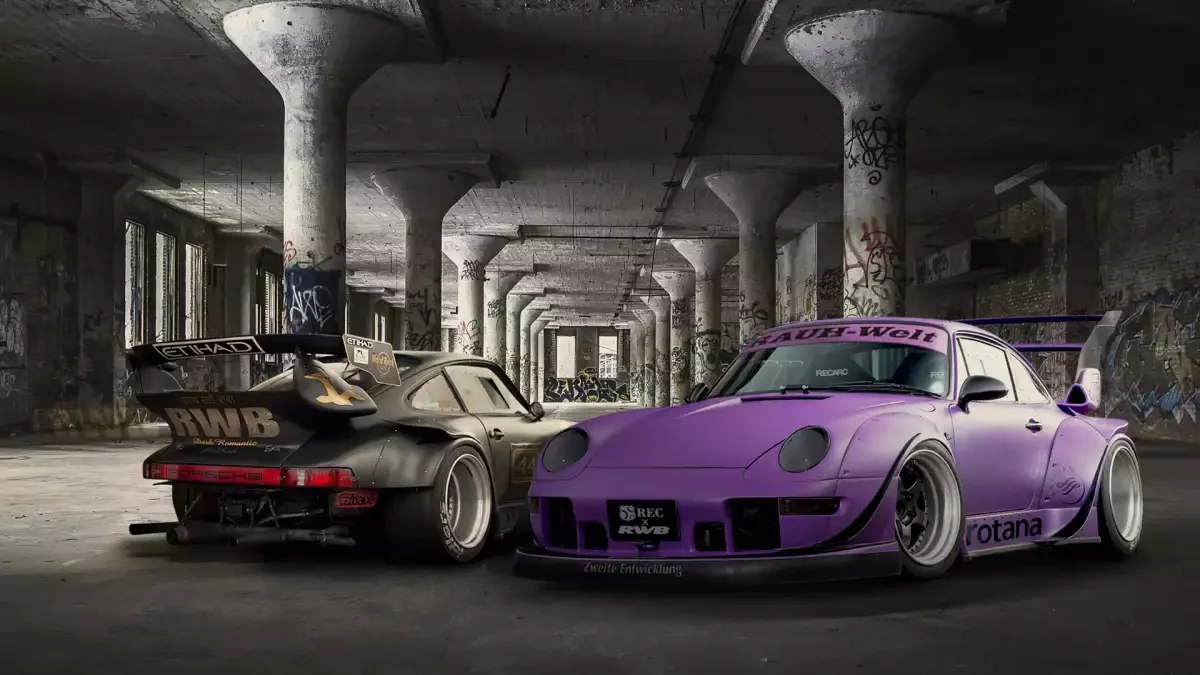
The name is simple. Nakai liked the beer. Yokogao Magazine says he discovered it on a trip to Belgium, and the PCA notes he fixed a Stella Artois bottle cap to the car as a permanent bumper sticker. The livery has been on the car ever since, and Stella Artois stickers still turn up on other RWB builds.
The Build
Engine and drivetrain
The turbo didn’t survive. By 2015 the car ran a fully built naturally aspirated 3.8-litre flat-six, quoted at 355hp, according to the Lenssen feature. Swapping a 930’s turbo motor for an atmo engine sounds backwards. But an atmo flat-six trades boost for throttle response, which suits a car that spends its weekends on track.
Chassis, wheels and body
Underneath sit Aragosta coilovers, a custom roll cage, a titanium exhaust and custom SSR wheels, all listed in the same 2015 feature. Over the top went the RWB 930 aero package, the riveted widebody every later RWB 930 grew from. Lenssen traces its coke-bottle shape to the Jägermeister 934 and the 1976 Martini 935.
Highlighted cells mark details the sources disagree on or never publish. Spec as described in 2015; the car has evolved continually since it was first built.
Treat any spec sheet for this car as a snapshot. REC describes Stella Artois as having evolved over more than twelve years into its current form, and Nakai has changed it as RWB itself changed. The 2015 build above is simply the best-documented version. Ask about any detail and the honest answer is often: at which point?
Why the Details Matter
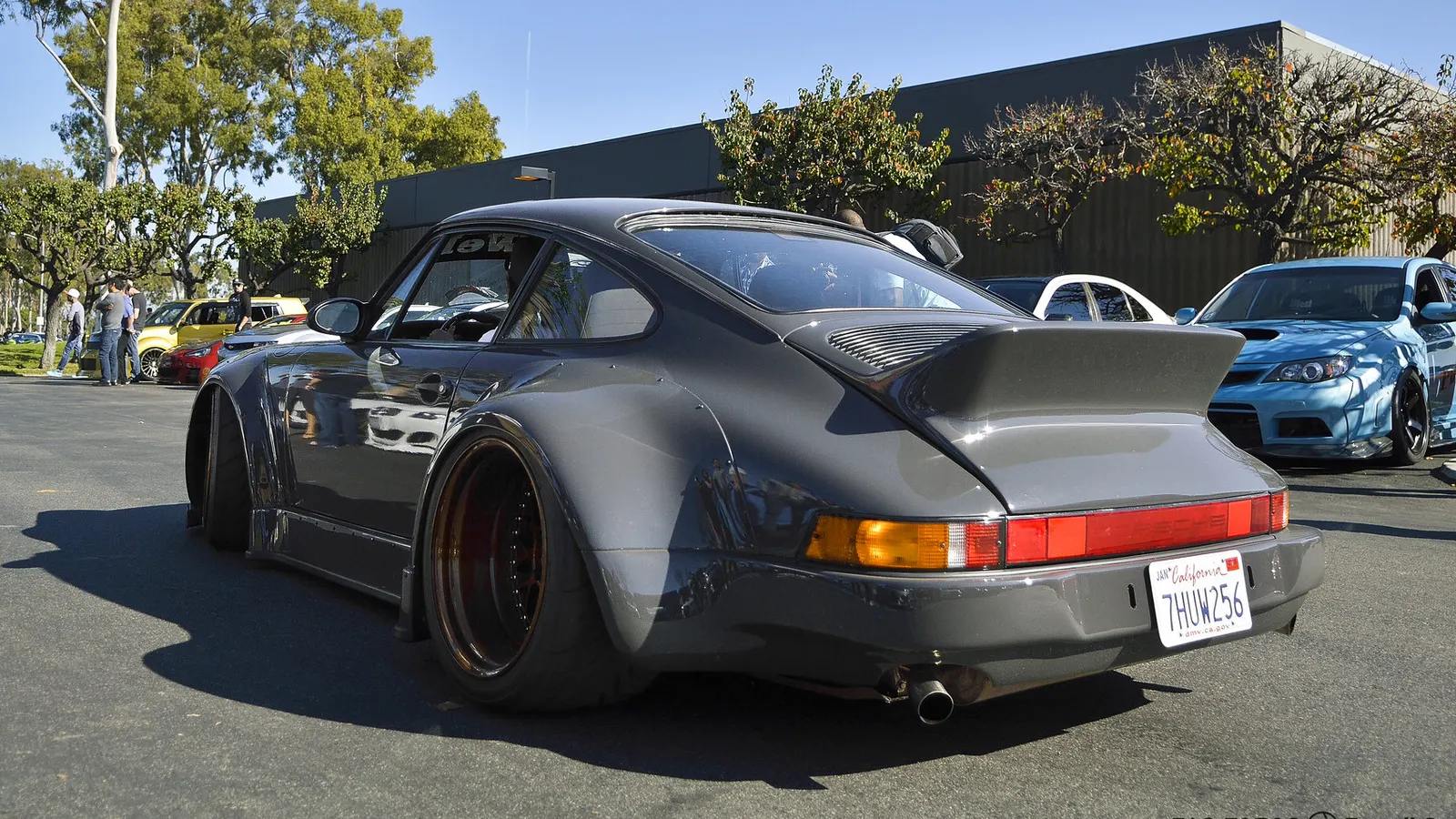
Every RWB is still built by Nakai. Jalopnik reports that the kit is paint-matched to your car, then he turns up and cuts the guards with an air saw himself. That’s why Stella Artois matters so much: every customer car since repeats what he first did on his own 911.
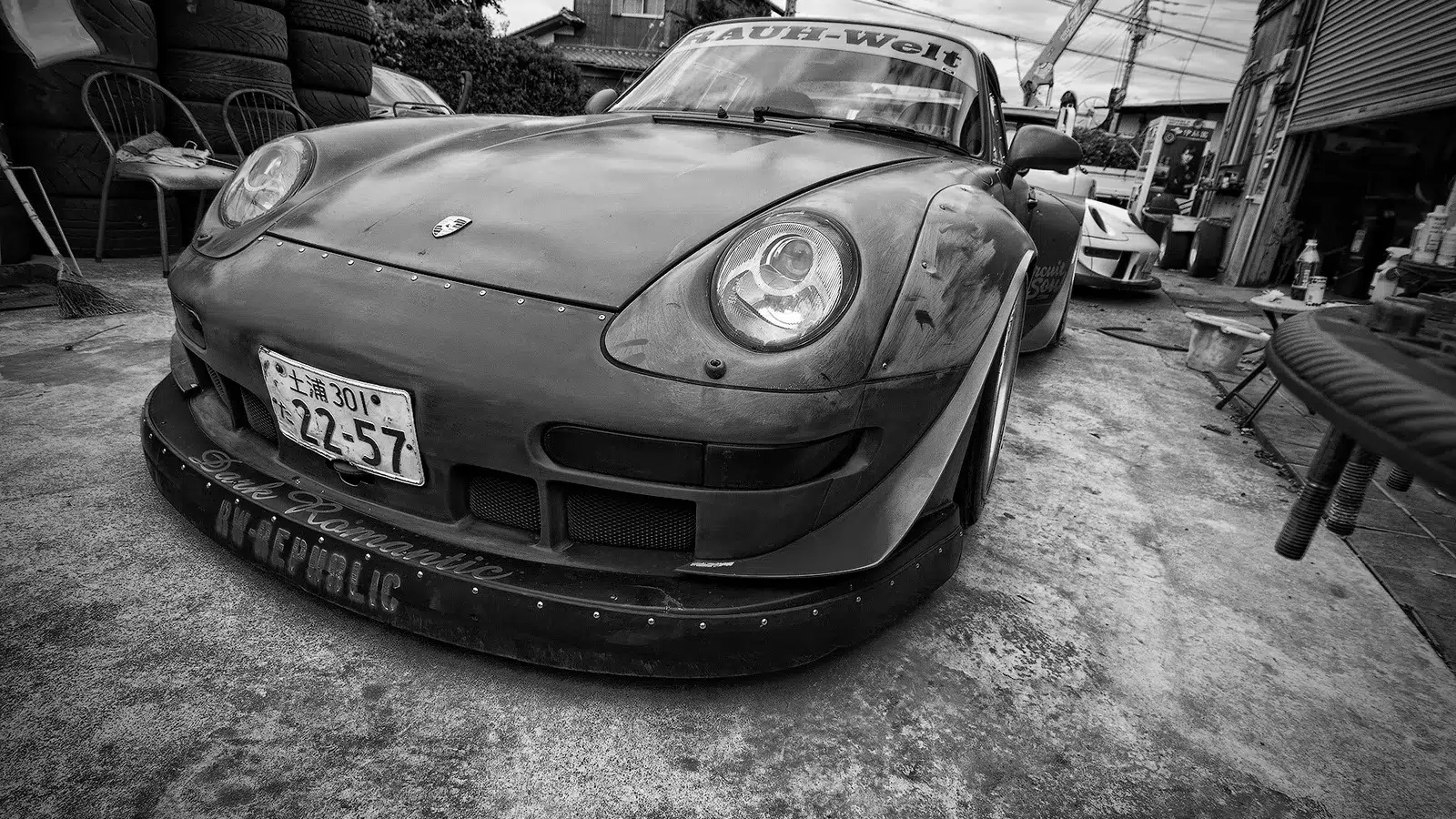
Nor is Stella a show queen. When Excellence visited in 2011, the car was still road-registered and being driven hard at Idlers club events at Tsukuba and Twin Ring Motegi. Asked about his philosophy, Nakai summed it up in three words: “Style is everything.”
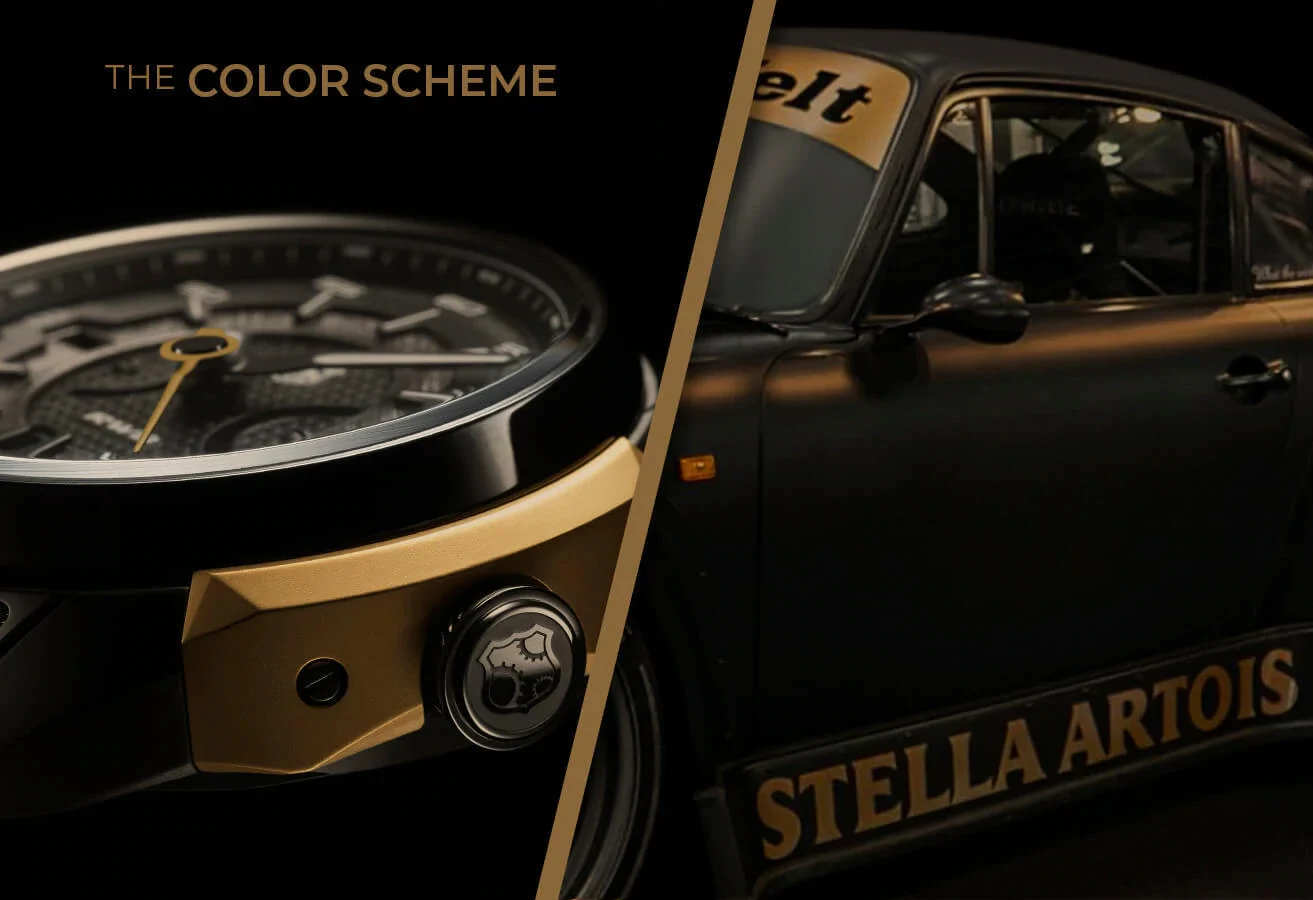
REC even used parts from the car in a limited watch, building chassis components from Stella Artois into the dial. It’s an odd thing to do with a car, but RWB has always worked on its own terms. On an Australian road it would also face exhaust noise rules and speed bump heights that no RWB was designed for.
The Car That Started a Movement
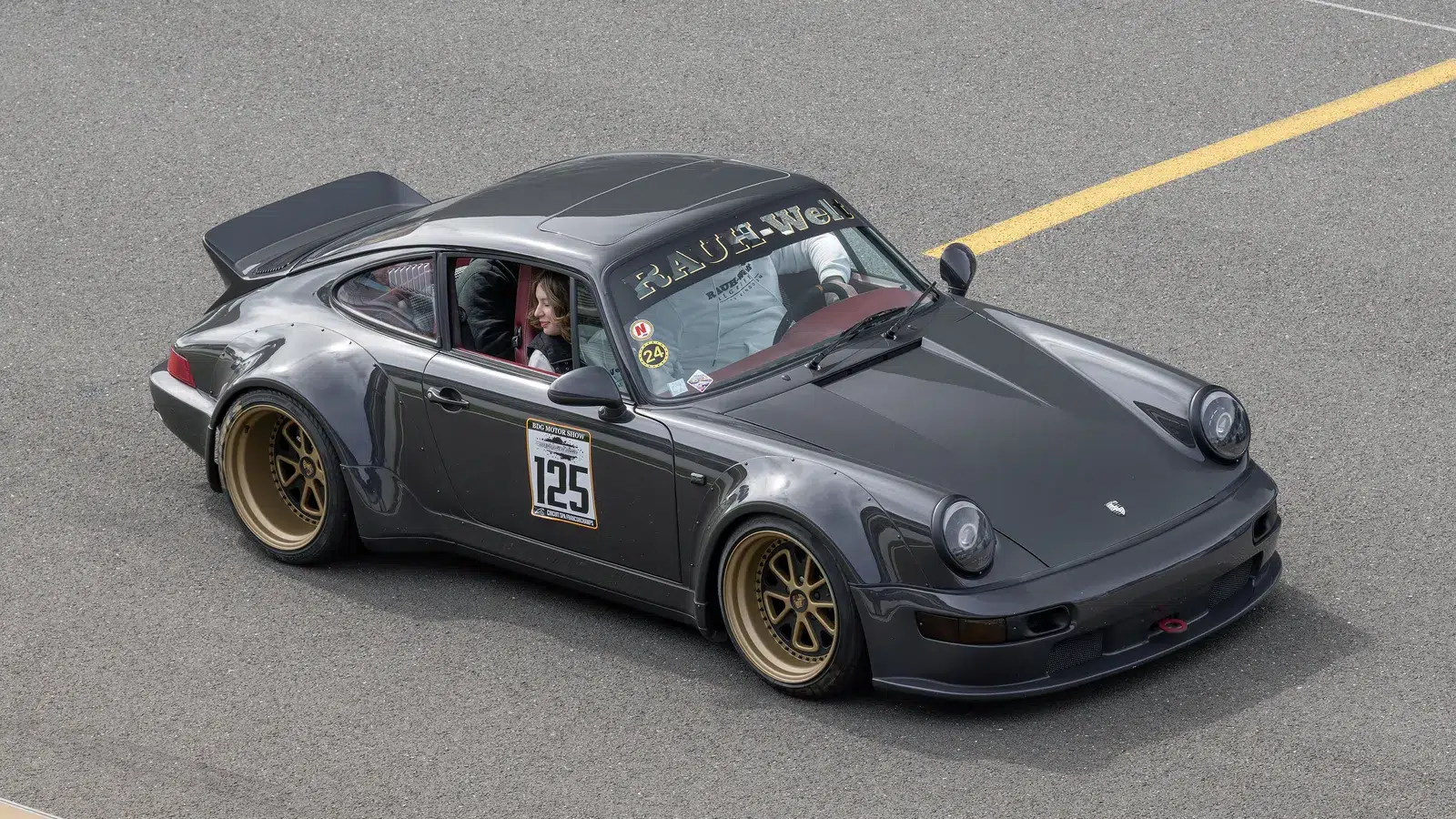
One rule sums up RWB’s grip on the Porsche world: Yokogao reported that Nakai builds one car per person, however much you offer. Customers wait years, and the PCA counted more than 1,000 builds by 2025. Not bad for a scene that most Porsche purists, the ones buying a 718 Cayman, once dismissed.
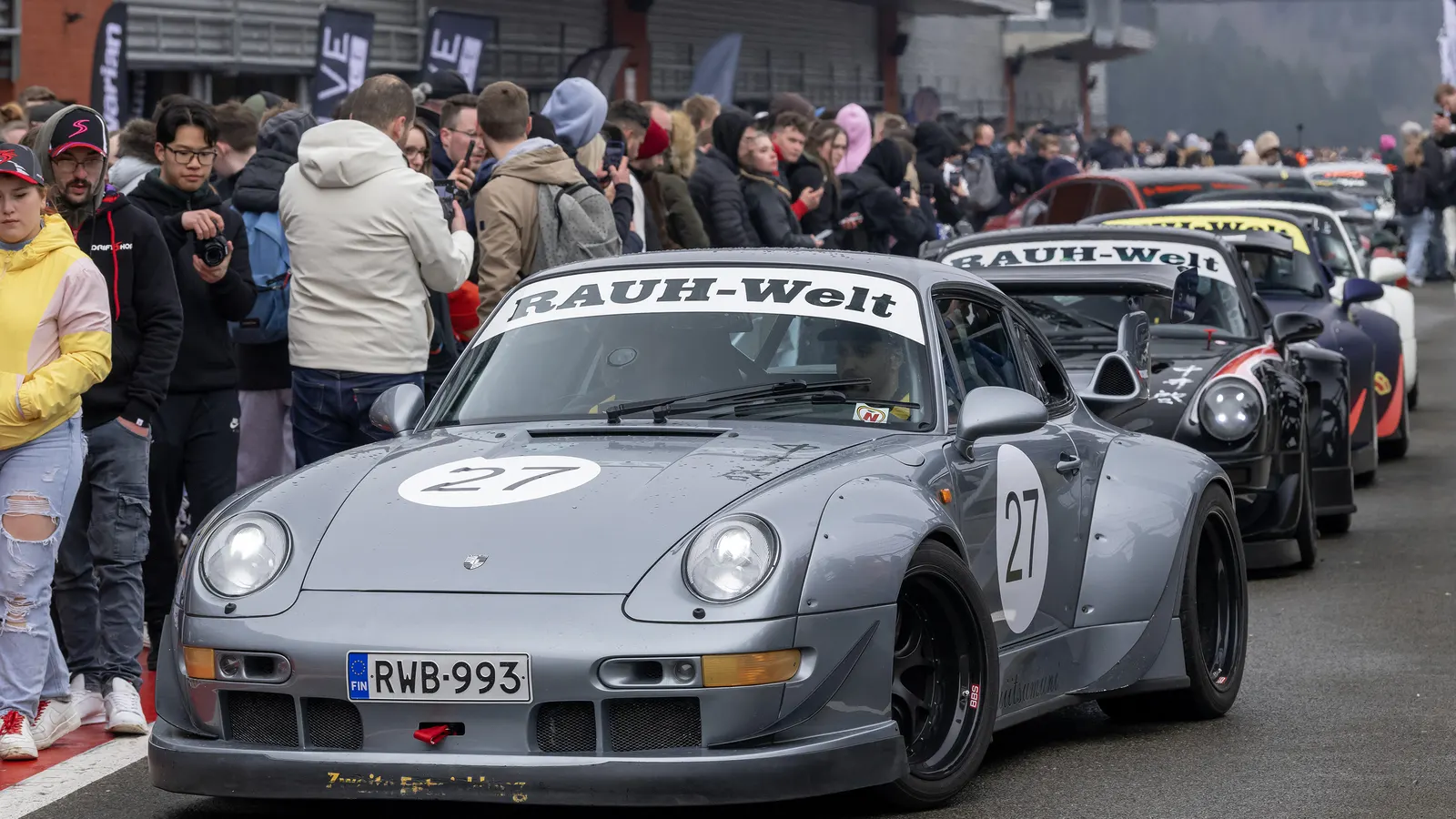
Plenty of those builds are wider, wilder and worth more than the original. None of them matter more. Stella Artois is where a body-shop worker from Chiba took a damaged 930, ignored the rule book, and named the result after his favourite beer. Every RWB on the planet still answers to it.
Source: RAUH-Welt BEGRIFF, with build details from Lenssen Photo (2015), Excellence magazine (2011) and REC Watches.
Via: Images of Stella Artois from REC Watches campaign imagery for the REC x RWB 901 watch (editorial use; campaign plates read REC x RWB). Other RWB builds via Flickr: FAS Fotos and MRC Imagery (CC BY 2.0), Alexandre Prevot (CC BY-SA 2.0 and 4.0).


