
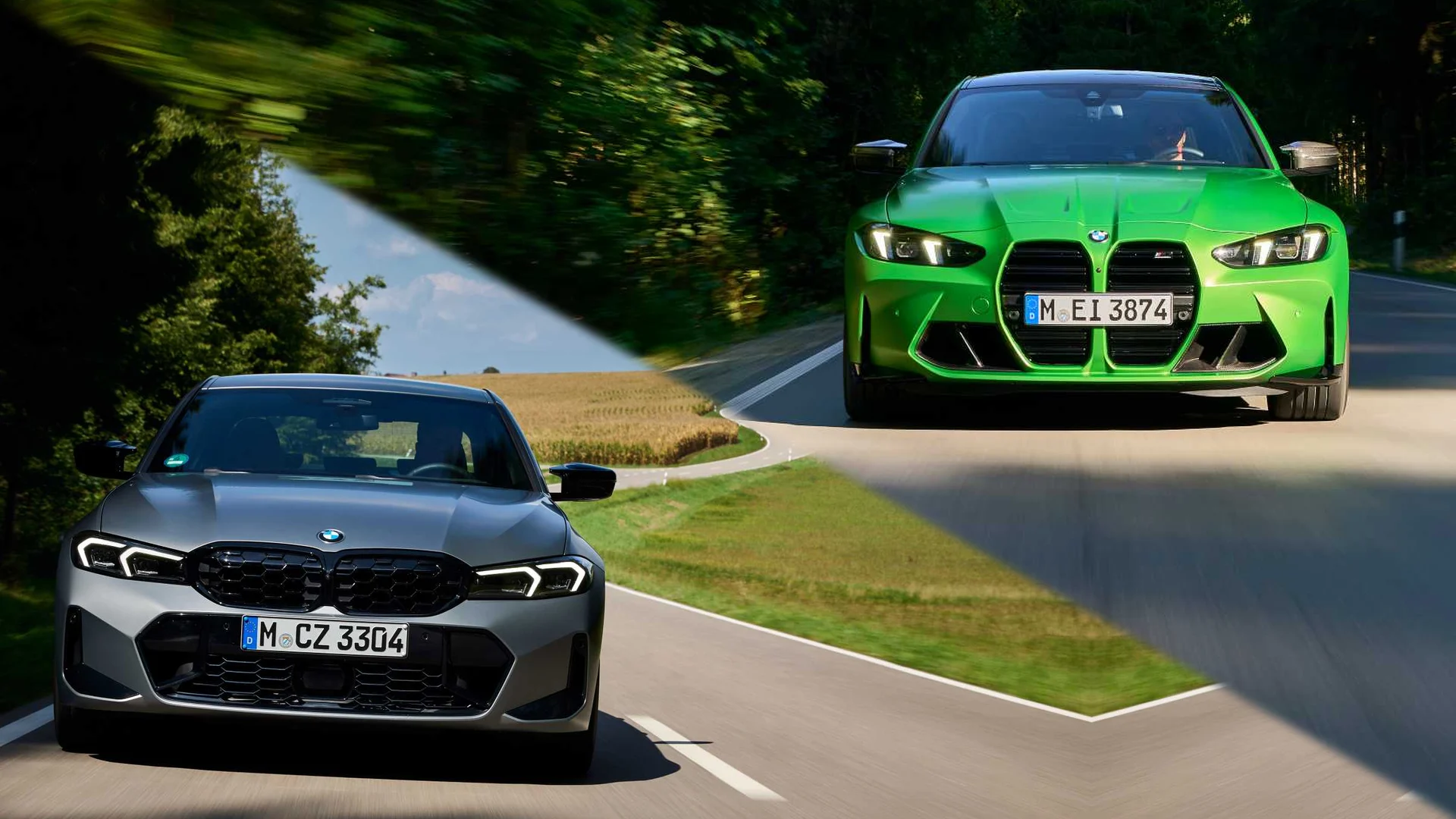

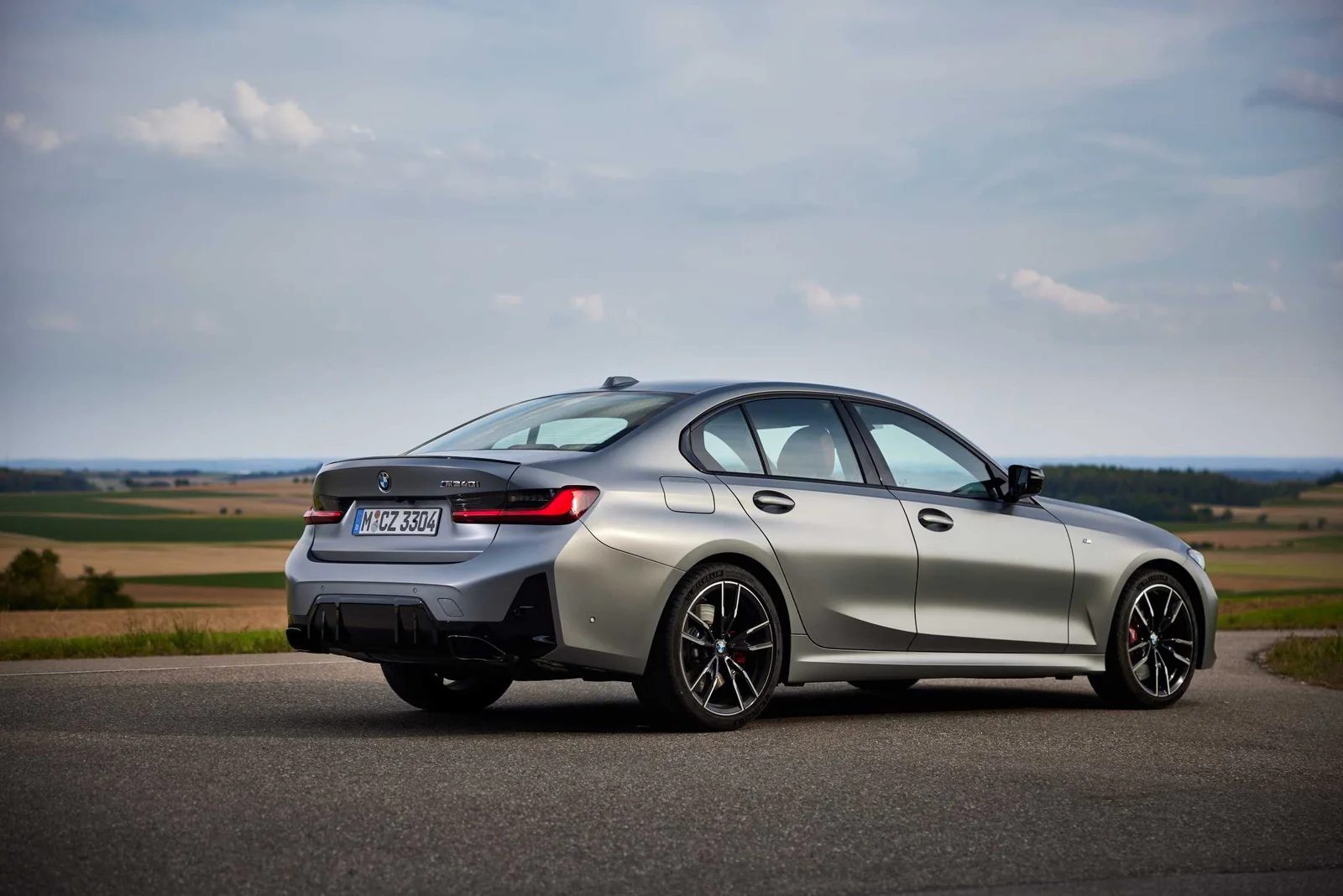
The usual advice goes like this: buy the M340i, keep $40,000 in your pocket and enjoy most of an M3 on the roads you actually drive. Half of that is right. The money isn’t. In October 2026 the M340i xDrive sedan lists at $119,000 before on-roads, and the M3 Competition M xDrive sedan lists at $187,400.
That’s a $68,400 gap. Even the six-speed manual M3, the cheapest way into the badge at $169,600, sits $50,600 above the M340i. So the real question is sharper than the forum version: what does nearly $70,000 buy you on a Monday morning, and is any of it worth having on the school run or the M1?
We’ve lined up the two cars most buyers are actually choosing between: the 2026 M340i xDrive sedan (G20 LCI) and the M3 Competition M xDrive sedan (G80 LCI). Figures are BMW Australia’s or a named source’s, and the calculations are ours. Nobody paid for this comparison, and neither car was supplied to us.
Where does the $68,400 actually go?
Roughly $20,600 of the gap is tax, not car. On our working, the M3 attracts about $15,785 more luxury car tax and $4,783 more GST than the M340i. Strip both taxes out and the M3 costs about $47,832 more, which is much closer to the $40,000 people quote. The rest is Canberra’s cut.
The mechanism is simple. LCT applies at 33 per cent to the GST-exclusive value above the 2026–27 threshold of $80,809. The M340i is only about $38,000 over that line, so it carries about $8,813 of LCT. The M3 is about $106,600 over it and carries about $24,598. Our luxury car tax explainer walks through the formula.
Our calculation from BMW list prices before on-roads ($119,000 and $187,400) and the ATO's 2026–27 LCT threshold of $80,809 for other vehicles at 33 per cent. Excludes dealer delivery and options, which also attract LCT. Figures rounded.
Treat these as close approximations. The real LCT bill is worked out on the final price including dealer delivery and options, so a well-optioned M3 pays more again. The direction doesn’t change: every dollar of value above the threshold drags another 30 cents of LCT with it, and the M3 has a lot more dollars above the line.
B58 vs S58: two 3.0-litre sixes built for different jobs
Both cars run a 3.0-litre turbocharged straight six, and that’s where the similarity stops. The M340i’s B58 makes 285kW and 500Nm through an eight-speed Steptronic Sport. The M3’s S58 makes 390kW and 650Nm through an eight-speed M Steptronic with Drivelogic. BMW claims 4.4 seconds to 100km/h for the M340i and 3.5 seconds for the M3.
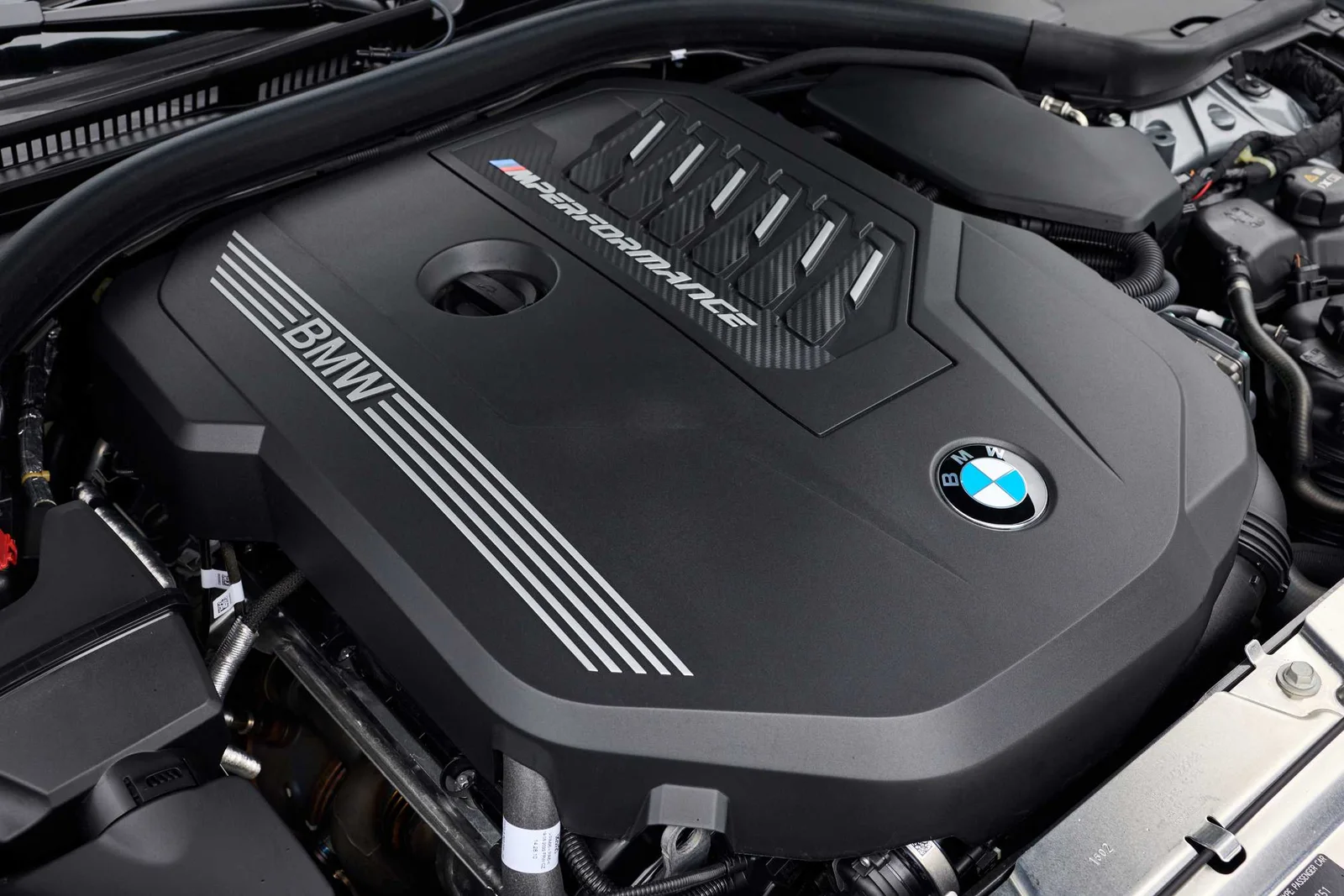
The B58 is the engine the tuning scene fell for, and for good reason. It runs a closed-deck block, a forged steel crank and a single twin-scroll turbo, according to BMWBLOG’s B58 and S58 breakdown. Peak torque arrives at 1,800rpm and holds to 5,000rpm. That broad, early shove is exactly what a daily driver wants when merging at 60km/h.
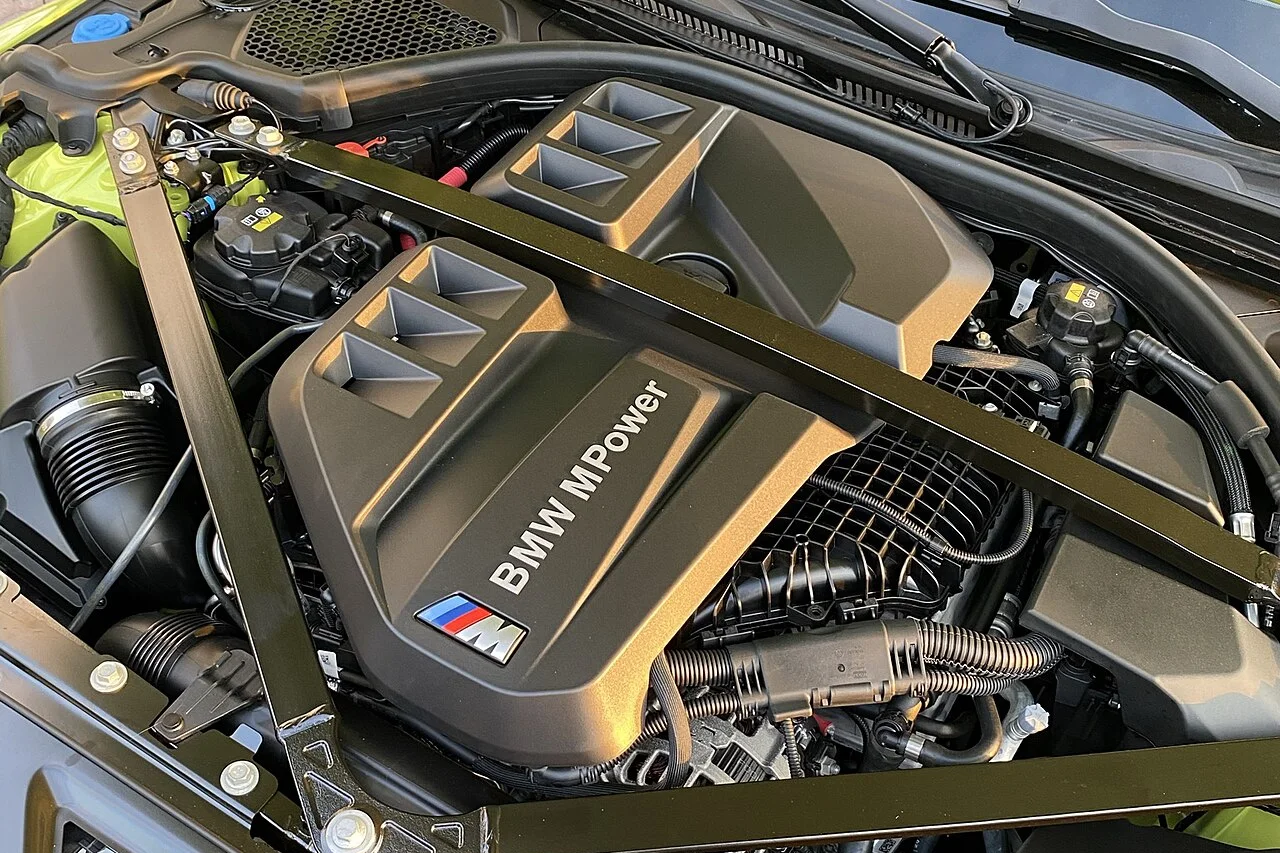
The S58 is built for a different job. It gets a shorter 90mm stroke against the B58’s 94.6mm, a lower 9.3:1 compression ratio, forged Mahle pistons and two mono-scroll turbos, one per three cylinders. It revs to 7,200rpm and doesn’t make peak torque until 2,750rpm. This is an engine engineered to survive repeated hot laps, not to feel lazy-strong at the lights.
What does each extra kilowatt cost?
On our numbers, the M340i is the cheaper source of power by a margin. It costs $418 per kilowatt to the M3’s $481, and the 105kW the M3 adds cost $651 each. The 0.9-second gain in BMW’s claimed 0–100km/h time works out at about $7,600 for every tenth of a second.
The M340i is the cheaper source of power, kilowatt for kilowatt.
The M3 adds 105kW for $68,400.
BMW claims 4.4 sec for the M340i and 3.5 sec for the M3.
A 30 per cent jump, using kerb weights of 1,695kg and 1,780kg.
Our calculation from BMW Australia list prices, outputs and claimed 0–100km/h times, and Redbook kerb weights. October 2026.
Power-to-weight is the honest counterweight. At 1,695kg kerb, the M340i carries 168kW per tonne. The M3, at 1,780kg, carries 219kW per tonne. That 30 per cent jump is real and you’d feel it everywhere above 100km/h. The catch is that no public road in Australia lets you legally use it for longer than an on-ramp.
Which one rides better on a bad Australian road?
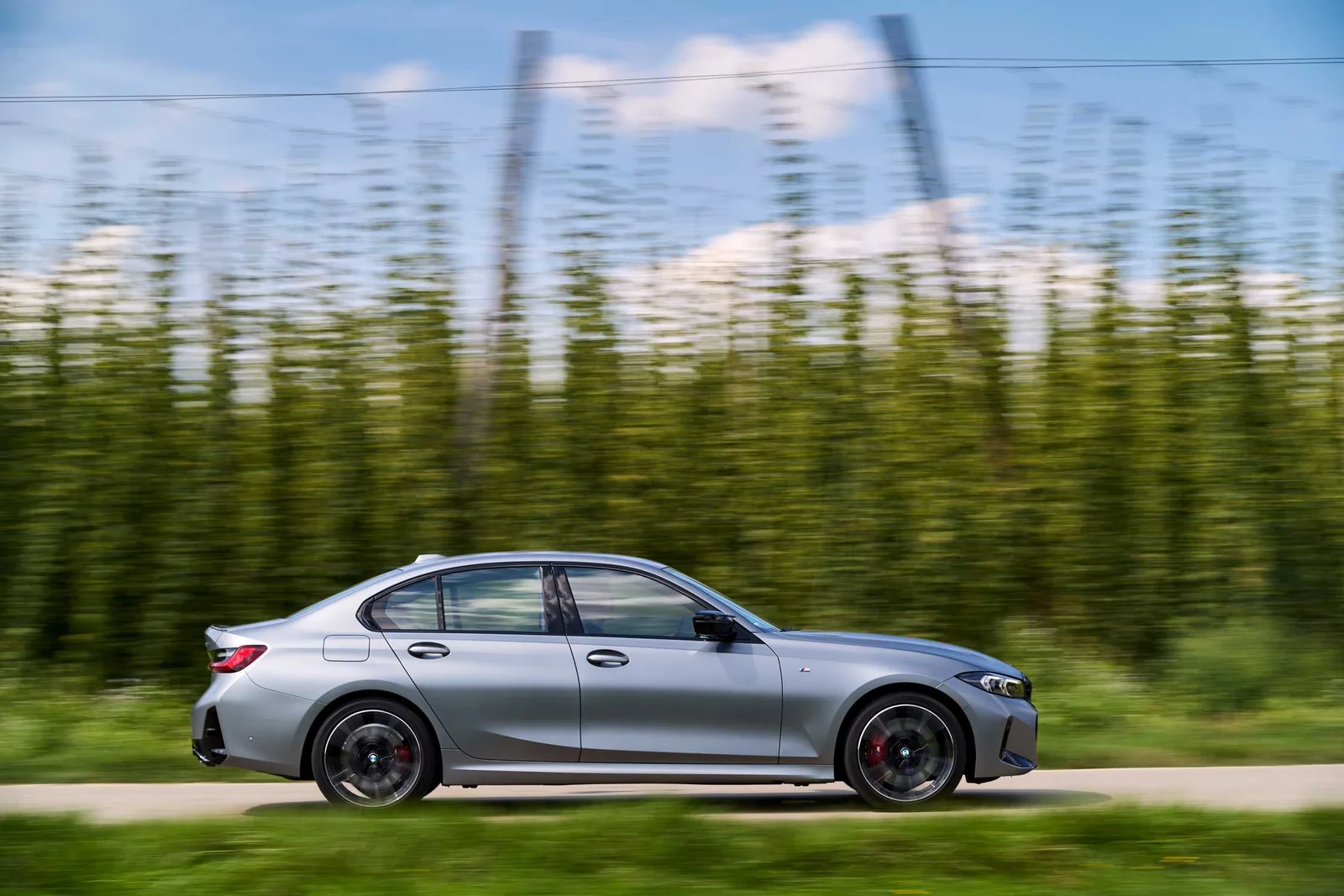
The M340i, and clearly so on broken bitumen. Both cars get adaptive dampers as standard, but the M3 adds extensive chassis bracing, wider tyres and firmer tuning aimed at the track. Reviewers keep landing in the same place: the M340i can be left in Comfort and forgotten, while the M3 asks you to choose your roads.
In CarExpert’s 2023 M340i review, James Wong called it “the pick of the range if you plan to drive it daily” and described the M3 Competition as “arguably too harsh for everyday duties”. Drive’s Tom Fraser, in his 2025 M3 Competition Touring review, found the wagon more compliant than the sedan on rough roads.
Smaller wheels won’t fix it
Here’s the part most comparisons skip. Do the maths and the M3’s front sidewall is actually taller: a 275/35 R19 has about 96mm of sidewall to the M340i’s 90mm on a 225/40 R19. At the rear the M3 has 86mm to the M340i’s 89mm. The ride gap comes mostly from springs, dampers and bracing, not rubber.
Front
Rear
Our calculation: section width multiplied by aspect ratio. Tyre sizes from BMW Australia's June 2026 specification guides. Bars scaled to 100mm.
That matters if you’re planning to buy an M3 and soften it with smaller wheels and chubbier tyres. It won’t transform the car. The chassis is tuned for a smooth racetrack surface, not the expansion joints on the Monash, and wider rubber still tramlines along the grooves of a worn freeway lane. Adjust your expectations, not your wheels.
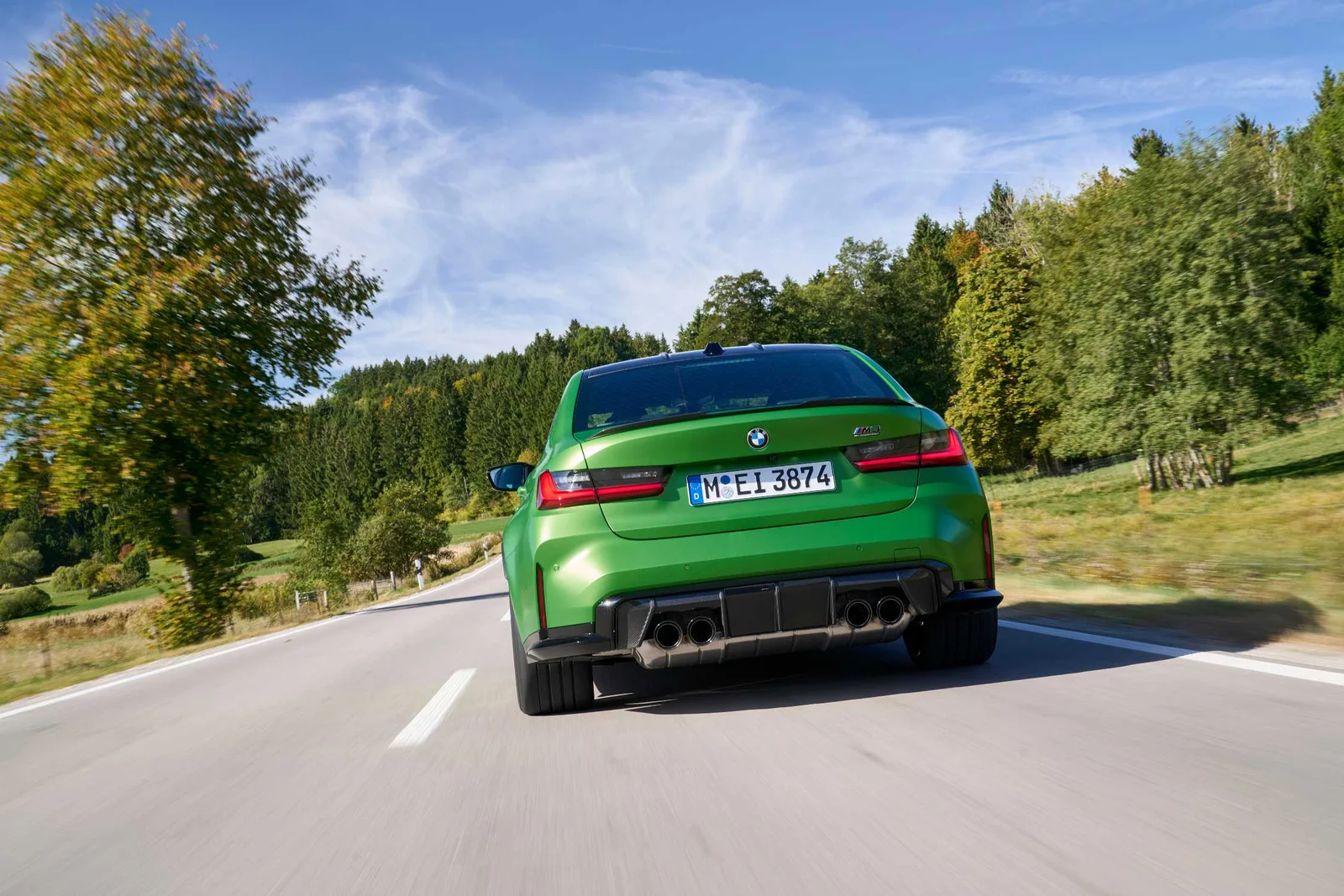
The small stuff adds up too. CarExpert’s spec data puts the M3 at 122mm of unladen ground clearance to the M340i’s 130mm, and the turning circle grows from 12.0 to 12.6 metres. If your driveway has a lip or your suburb has the taller speed humps councils keep installing, those 8mm separate clearing it from wincing.
Inside, the extra money buys seats and carbon, not screens
The cabins are closer than the price gap suggests. Both run BMW’s curved display, a 12.3-inch instrument screen joined to a 14.9-inch touchscreen with Operating System 8.5. Both get a head-up display, Harman Kardon audio, heated front seats and a heated wheel as standard. Boot space is identical at 480 litres. The M3’s extra money shows up where you sit.
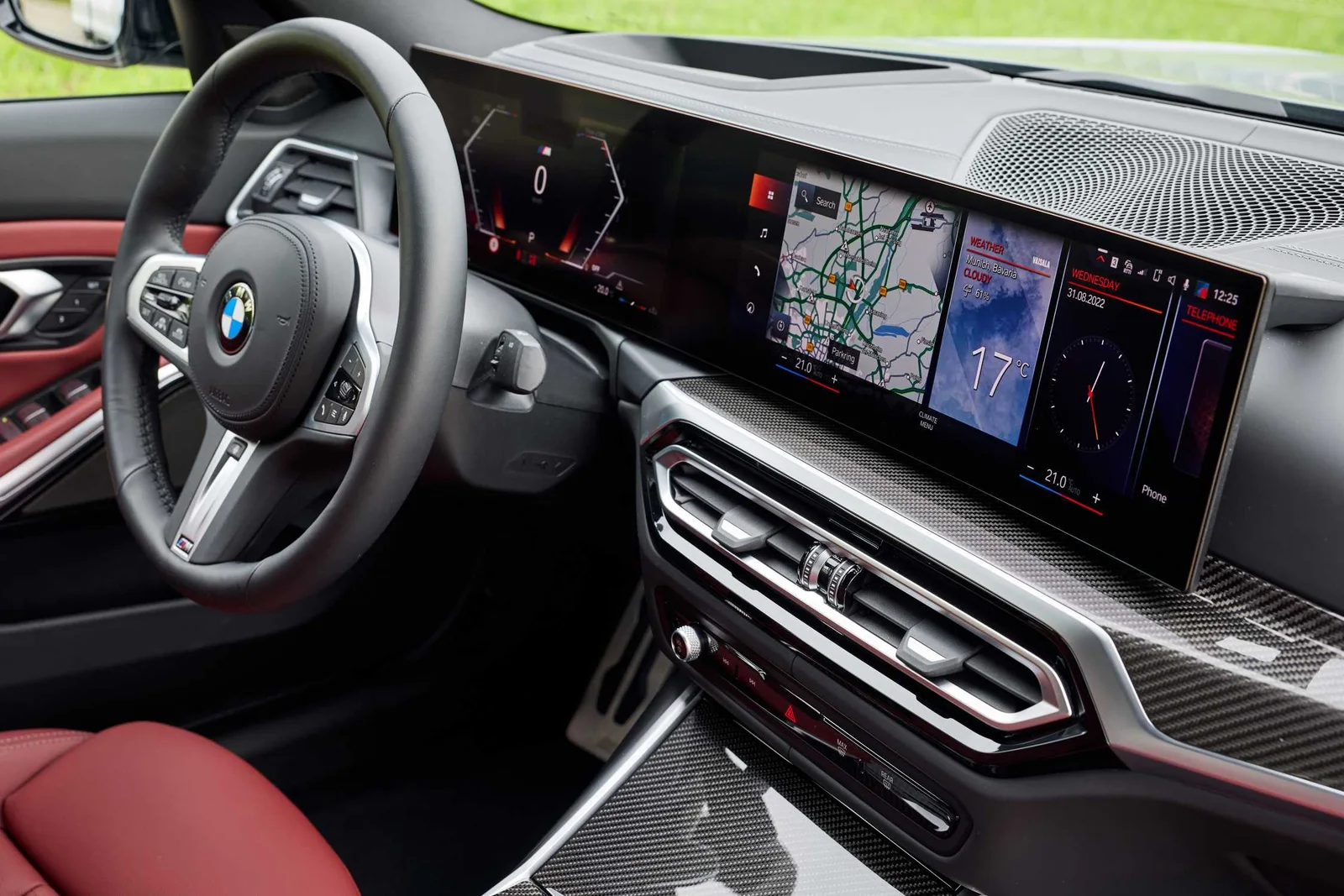
According to BMW Australia’s June 2026 specification guide, the M340i trims its seats in Vernasca leather and adds an electric glass sunroof. The M3 moves to Merino leather, M Sport seats with an illuminated M3 logo, a carbon-fibre roof and carbon interior trim. BMW also offers M Carbon bucket seats, but not with ventilated front seats, which tells you who they’re for.
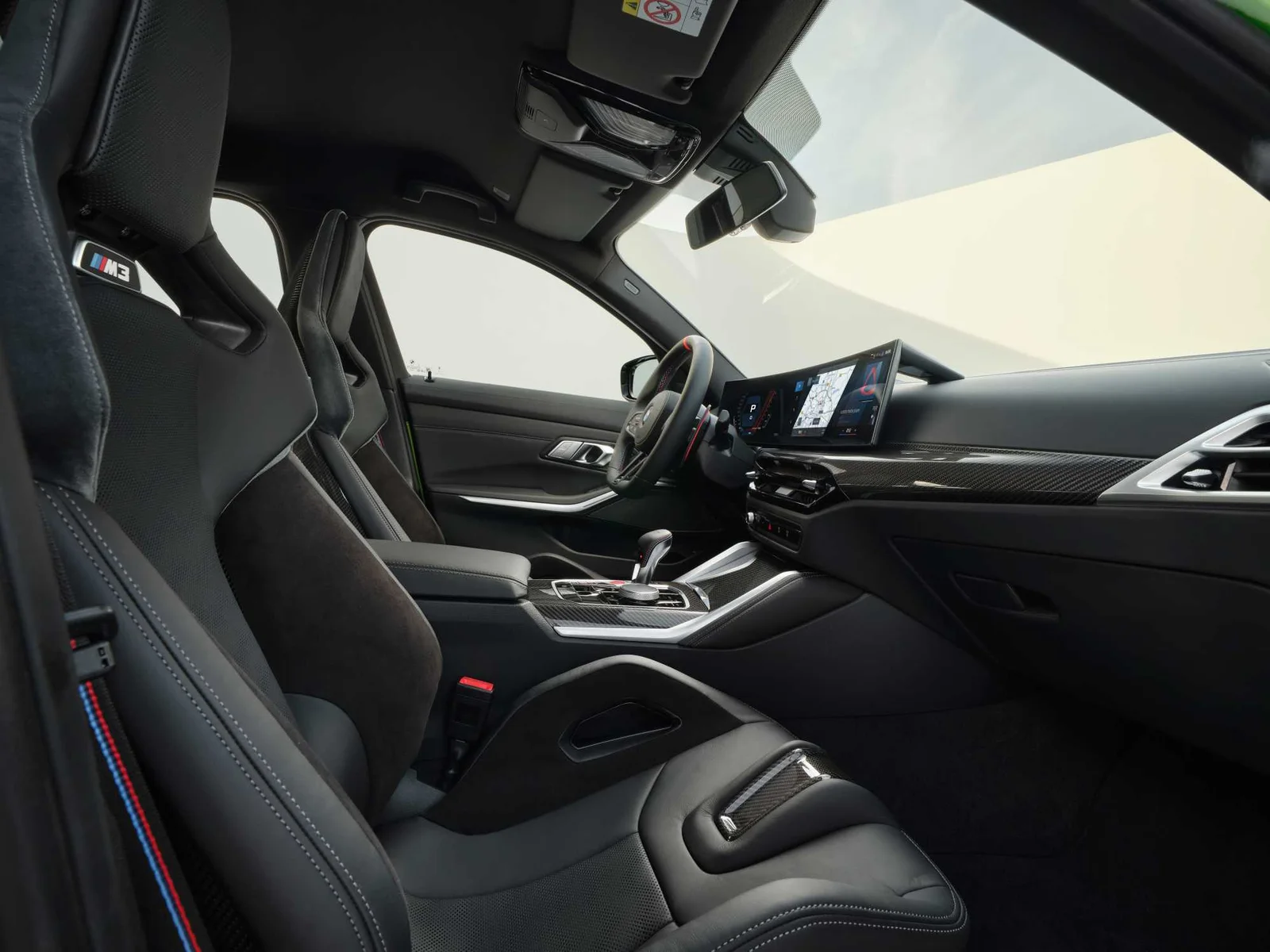
Our view: the carbon buckets look superb and are the wrong choice for a car you’ll drive every day. Tall side bolsters make getting in and out a chore in a tight shopping centre car park, and in a Brisbane January you’ll want the ventilated seats you gave up. If the M3 is your daily, keep the standard seats and tick ventilation.
The weekend load
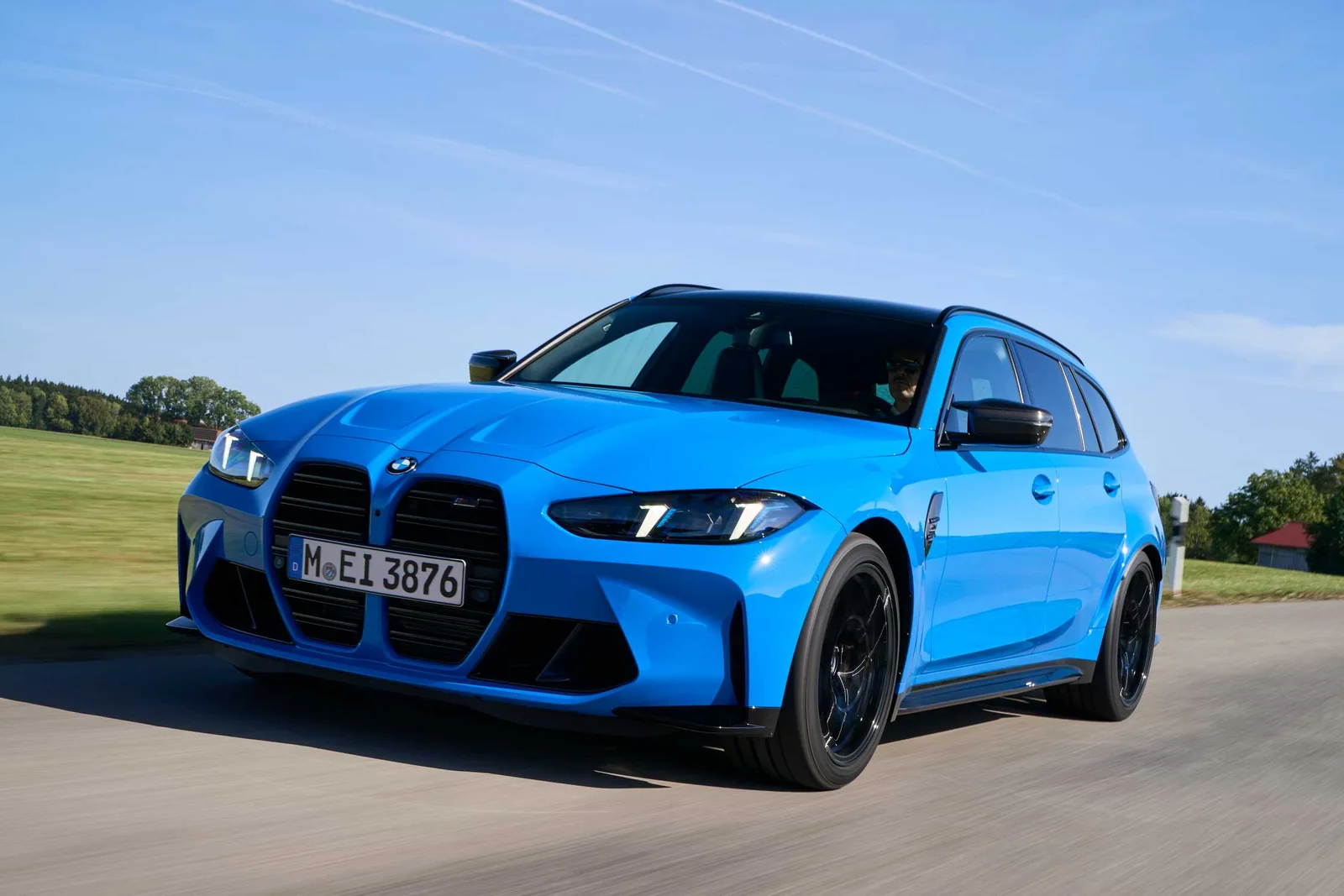
Load space is a draw in sedan form, with 480 litres in each. If you want the M3 and genuinely need to carry stuff, the M3 Competition Touring is the answer. It offers 500 litres with the seats up and 1,510 litres folded, for $189,400 before on-roads, or $2,000 more than the sedan. It’s the most sensible M3 BMW sells, which would have sounded mad a decade ago.
Running costs: the gap keeps growing after you sign
The M3 costs more every month you own it, not only on the day you buy it. On BMW’s ADR combined figures it uses 10.2L/100km to the M340i’s 8.0, and both want premium unleaded. Over 15,000km a year, that’s about 1,530 litres against 1,200. Tyres, servicing and insurance all follow the same pattern.
Claimed figures flatter fast cars more than most. Drive measured its M3 Competition Touring at around 14.5L/100km against a 10.4 claim, a wider gap than the overrun we covered in our look at real-world fuel economy. Both cars carry 59-litre tanks, so the M340i’s claimed range is about 737km and the M3’s about 578km.
Fuel and range are our calculations from BMW Australia's ADR combined figures (8.0 and 10.2L/100km) and 59-litre tanks. Tyres: BMW star-marked Michelin Pilot Sport 4S, fitted, from Tempe Tyres, 9 October 2026. Clearance, turning circle and towing: CarExpert spec data. Warranty: BMW Australia.
Tyres are the line item owners forget. Fitted, balanced and with disposal, Tempe Tyres lists BMW star-marked Michelin Pilot Sport 4S tyres at $472 and $490 for the M340i’s sizes, and $565 and $695 for the M3’s. That’s $1,924 a set against $2,520, and an M3 driven the way most M3s are driven will get through them sooner. Our performance tyre guide covers the trade-offs.
Both cars carry BMW’s five-year, unlimited-kilometre warranty. BMW Service Inclusive Basic covers five years or 80,000km on a 3 Series for $2,575, but BMW prices its M-model plans separately and doesn’t publish them. Insurance follows the logic in our look at performance car premiums: power, theft appeal and repair costs all push the M3 higher. Get quotes before you sign.
One thing neither car has is a current ANCAP rating. The 3 Series’ 2019 five-star result only ever applied to the 2.0-litre rear-drive variants, and ANCAP lists it as expired from December 2025. Neither the M340i nor the M3 was covered. That doesn’t make either car unsafe, but it’s worth knowing when a salesperson mentions five stars, as we explained in our guide to expired ANCAP ratings.
Should you wait for the new M350 instead?
For M340i buyers, the next-generation 3 Series is a bigger threat than the M3. BMW Australia has confirmed the new car arrives early in 2027, and the M340i’s replacement, the M350 xDrive, is listed from $128,900 before on-roads, according to CarExpert. It pairs a 48V mild-hybrid six with 326kW and 580Nm combined, and claims 4.1 seconds to 100km/h.
That’s $9,900 more than today’s M340i for 41kW more and a newer cabin. For buyers it means two things. Run-out M340i stock should be priced to move from here, so negotiate hard and walk away if the dealer won’t. And if you’re not in a hurry, our buy now or wait guide explains when holding off for the new model pays.
Verdict: the M340i for the street, the M3 for the weekend
For the street, the M340i is the better car. It rides better, costs $68,400 less, tows 1,800kg, turns tighter and goes further on a tank, and it’s still quicker than nearly everything you’ll meet at the lights. The M3 is the better machine. Those aren’t the same thing, and the price gap is what the difference costs.
For the daily commuter and the family buyer, it’s the M340i, easily. If you’re cross-shopping further down the range, our 330i vs Giulia Veloce comparison covers the cheaper end. Anyone who tows has only one option. Buyers who chase lap times at Phillip Island, Sydney Motorsport Park or The Bend should buy the M3. Its brakes, cooling and engine were engineered for repeated hot laps, and the M340i’s simply weren’t.
Purists get a third option. The six-speed manual M3 is rear-drive, makes 353kW and costs $169,600, and with manuals disappearing across the market, it may be the last of its kind worth holding onto. Just know it’s slower to 100km/h than the automatic, at a claimed 4.2 seconds. Nobody buys it for the stopwatch.
| Spec | M340i xDrive sedan | M3 Competition M xDrive sedan |
|---|---|---|
| Price (before on-roads) | $119,000 | $187,400 |
| Engine | B58 3.0L turbo straight six | S58 3.0L twin-turbo straight six |
| Power and torque | 285kW / 500Nm | 390kW / 650Nm |
| Transmission | 8-speed Steptronic Sport, xDrive AWD | 8-speed M Steptronic, M xDrive AWD with 2WD mode |
| 0–100km/h (claimed) | 4.4 sec | 3.5 sec |
| Kerb weight | 1,695kg | 1,780kg |
| Fuel (ADR combined) | 8.0L/100km | 10.2L/100km |
| Tyres | 225/40 R19 front, 255/35 R19 rear | 275/35 R19 front, 285/30 R20 rear |
| Ground clearance | 130mm | 122mm |
| Turning circle | 12.0m | 12.6m |
| Boot | 480L | 480L |
| Braked towing | 1,800kg | Not published |
| Warranty | 5 years, unlimited km | 5 years, unlimited km |
| ANCAP | Unrated | Unrated |
Sources: BMW Australia specification guides (June 2026) and M3 technical data; prices per Drive and Redbook listings, October 2026; kerb weight, clearance, turning circle and towing from CarExpert spec data.
Buy the M340i and spend some of the change on track days in something you don’t have to drive home. Or buy the M3 knowing exactly what the extra $68,400 is paying for. Just don’t buy the M3 to sit in traffic on Parramatta Road and then complain about the ride. Every spec sheet in this story warned you.


