

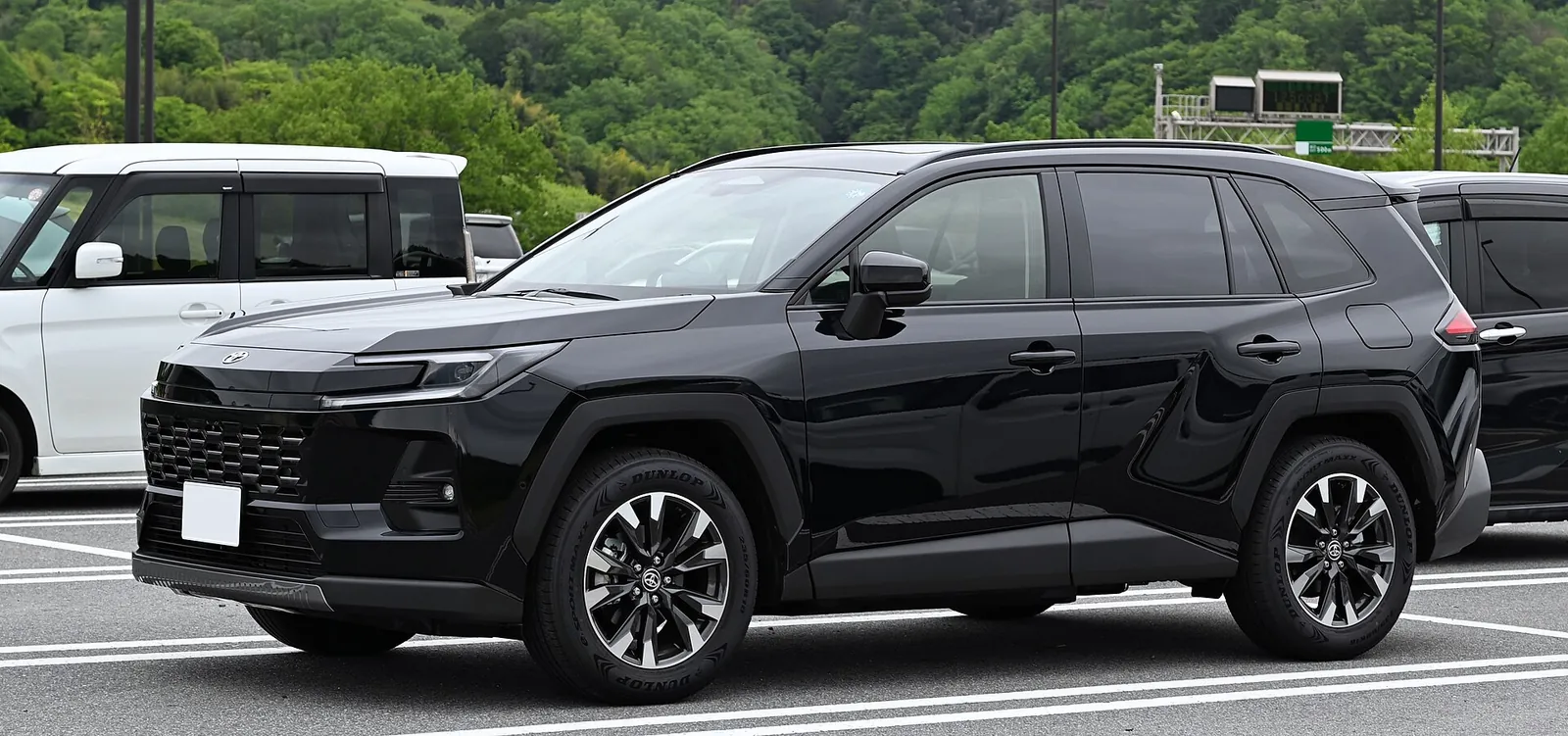
The Toyota RAV4 Cruiser is the RAV4 most private buyers aspire to, and for 2026 it’s better equipped than ever. There’s one thing the showroom won’t volunteer, though: the Cruiser hybrid has exactly the same 143kW drivetrain as the $45,990 GX.
We’re looking at the sixth-generation 2026 RAV4 Cruiser HEV, priced from $56,990 for the 2WD and $60,340 for the AWD, before on-road costs, according to Toyota’s launch pricing. Going by the road tests, it’s a refined, efficient, sensible family SUV. It’s just not the grade we’d put our own money on.
We haven’t driven it. The sums here are ours and the driving impressions are from Australian testers, linked as we go.
- Claimed 4.5L/100km (2WD) is the best in its class
- Big 12.9-inch screen, head-up display and 360-degree camera
- Ventilated front seats and heated rear seats
- Servicing capped at $325 a visit for five years
- Same 143kW as the $45,990 GX
- Still no ANCAP rating
- Toyota recommends 95-octane fuel
- Panoramic roof eats into headroom
- 2WD tows only 800kg
What the Cruiser adds inside
The Cruiser earns its price inside. You get genuine leather-accented seats, three-stage heating and ventilation for the front pair, heated outboard rear seats, a powered passenger seat and two-position driver memory. A tilt-and-slide panoramic roof, exclusive to the Cruiser, floods the cabin with light.
Sunroofs usually cost some headroom, so if you’re tall, sit in a Cruiser before you sign. Not everyone was won over by the materials either. CarsGuide’s Emily Agar called the heavy use of plastics a buzzkill, and GoAuto noted “acres of hard dash plastics”.
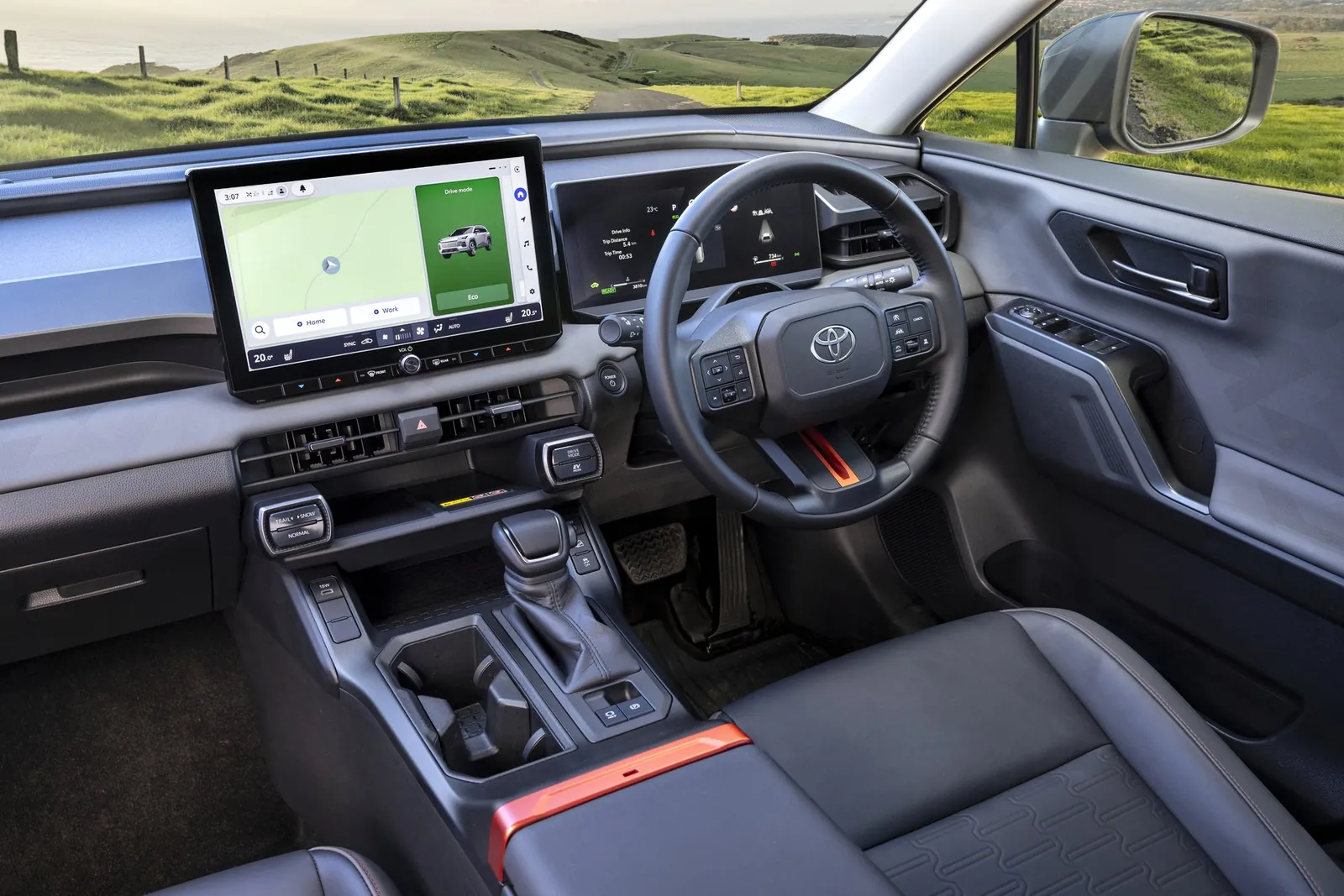
The tech is where the sixth generation leaps ahead. The Cruiser gets a 12.9-inch touchscreen, a 12.3-inch digital cluster, a head-up display, a digital rear-view mirror, a 360-degree camera, nine-speaker JBL audio and two wireless chargers. Wireless Apple CarPlay and Android Auto are standard, and Toyota kept physical buttons for volume and temperature.
It’s also the first Toyota on the company’s new Arene software, which allows over-the-air updates. Toyota also offers an embedded drive recorder that works like a built-in dash cam. Check which grades include it. Budget for subscriptions, though: remote features cost $9.95 a month after the first year, and Spotify integration $12.50 a month after three months.
Practicality is typical RAV4. Toyota quotes up to 705 litres of boot space measured to the roof, with a two-stage floor. Chasing Cars points out the old car’s 580 litres was measured to the seat tops, so the two figures can’t be compared. Underneath sits an 18-inch temporary spare, not a full-size wheel. A power tailgate with a kick sensor helps when your hands are full of shopping.
Does the Cruiser drive any differently?
No, and that’s the point to understand before you pay $11,000 more than a GX 2WD. The 2.5-litre engine makes 105kW and 221Nm, the front motor adds 100kW, and the combined output is 143kW in every hybrid grade. The AWD gets a 40kW rear motor, but system power is still 143kW.
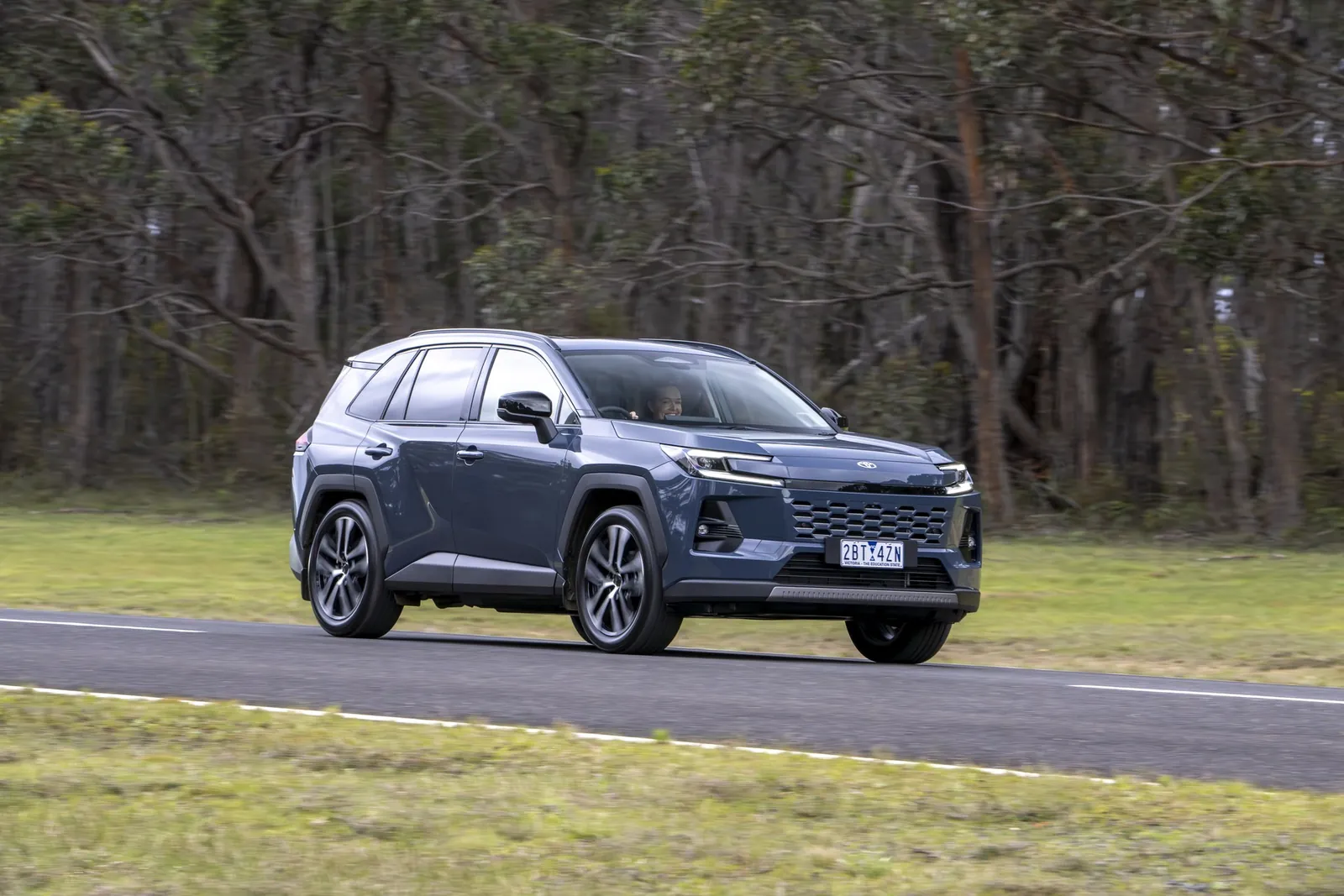
That’s less than the outgoing car’s 160kW (2WD) and 163kW (AWD). Toyota attributes the change to engine recalibration for emissions rules, and offsets it with a new lithium-ion battery and more low-speed torque. It claims 0 to 100km/h in 8.0 seconds for the 2WD and 7.7 for the AWD, which is brisk enough for a family SUV.
Australian testers have now had it on local roads. carsales’ Feann Torr found the new suspension keeps it flat in corners, but said the “lack of punch is apparent compared to its predecessor” and that the CVT drones like “an overly stressed vacuum cleaner”. CarExpert’s James Wong found the Cruiser rides a little firmer on its 20-inch wheels and called the GXL “arguably the most comfortable and refined drive of the bunch”.
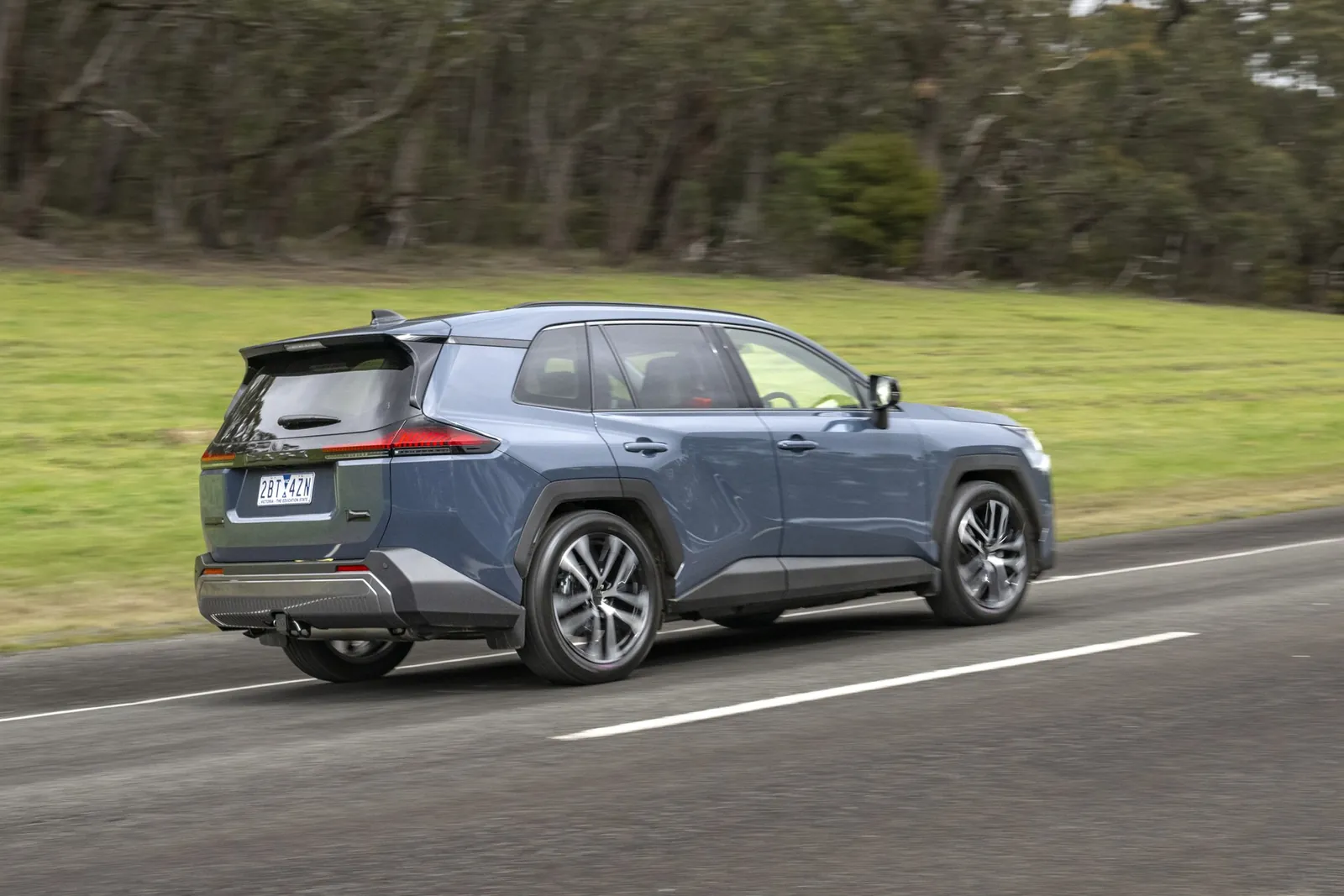
The AWD also gets downhill assist control and, from builds due between late 2026 and early 2027, new Rock and Dirt, and Mud and Sand modes in place of Trail and Snow. The 2WD gains a Snow mode at the same time. None of it turns a RAV4 into an off-roader, but it helps on a slippery campground track.
Towing is the other trade-off. The 2WD now tows 800kg braked, up from 480kg, while the AWD stays at 1,500kg. A Sportage or Tucson hybrid tows 1,900kg. If you’re pulling a camper or boat, the RAV4 is the wrong tool; our guide to digital rear-view mirrors for towing covers the bigger SUVs that suit.
Is the 2026 RAV4 safe?
Probably very, but it can’t prove it yet. ANCAP lists the sixth-generation RAV4 as unrated, seven months after launch. It has eight airbags, plus autonomous emergency braking with junction assist, blind-spot monitoring, rear cross-traffic alert, a driver monitor and safe exit assist.
Toyota has said it expects ANCAP and Euro NCAP testing late this year and anticipates five stars. It’s also making undisclosed safety upgrades to stock arriving from late October 2026, and those can’t be retrofitted to earlier cars. Our advice: ask the dealer for the build date, and buy a car built after the change.
An unrated car also matters for fleet buyers, many of whom can’t buy one at all, and possibly at resale. The only sixth-generation recall so far affects the plug-in hybrid, not this car.
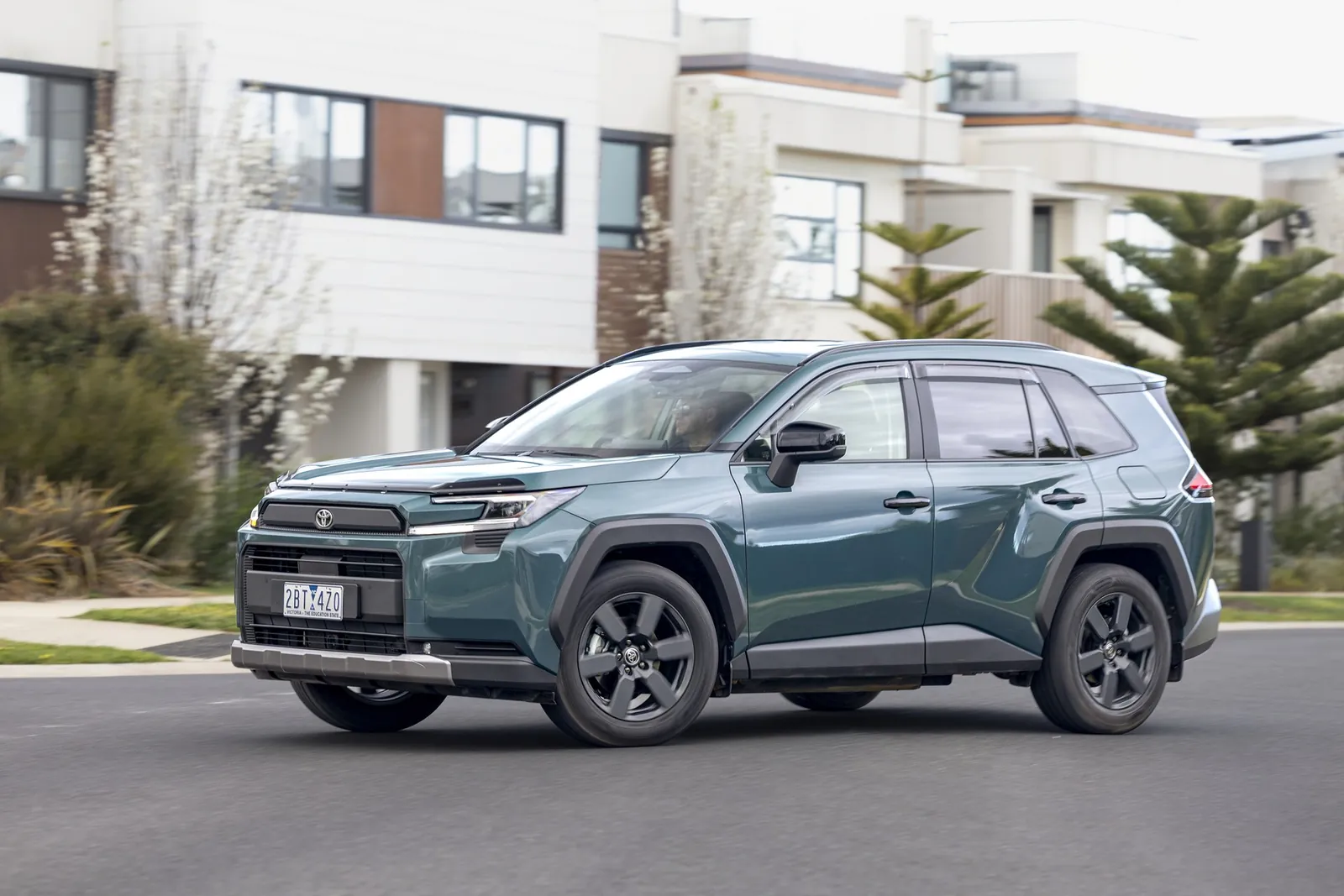
What does the RAV4 Cruiser cost to run?
Claimed fuel use is 4.5L/100km for the 2WD and 4.6 for the AWD, the lowest of the hybrid SUVs compared here. On test, CarsGuide saw 5.5L/100km in a Cruiser 2WD and GoAuto 5.1 in an AWD. The catch is octane. Toyota recommends 95 or higher, while most rivals run on 91. Our 91 vs 95 vs 98 guide explains why you shouldn’t ignore that.
The RAV4 uses the least fuel, but Toyota recommends 95. That shrinks its lead over a Sportage hybrid on 91 to about $30 a year.
Source: TorquePress calculation from manufacturer combined fuel claims and AIP national average prices for the week ended 1 November 2026 (91: 237.4c/L; 95: 254.0c/L). Real-world use will be higher.
Servicing is capped at $325 a visit, every 12 months or 15,000km, for five years: $1,625 in total. The warranty runs five years with unlimited kilometres, and Toyota extends engine and hybrid battery cover if you keep servicing on schedule. Toyota’s hybrid record is why it remains the safest bet in our most reliable brands guide.
Where the Cruiser sits in the range
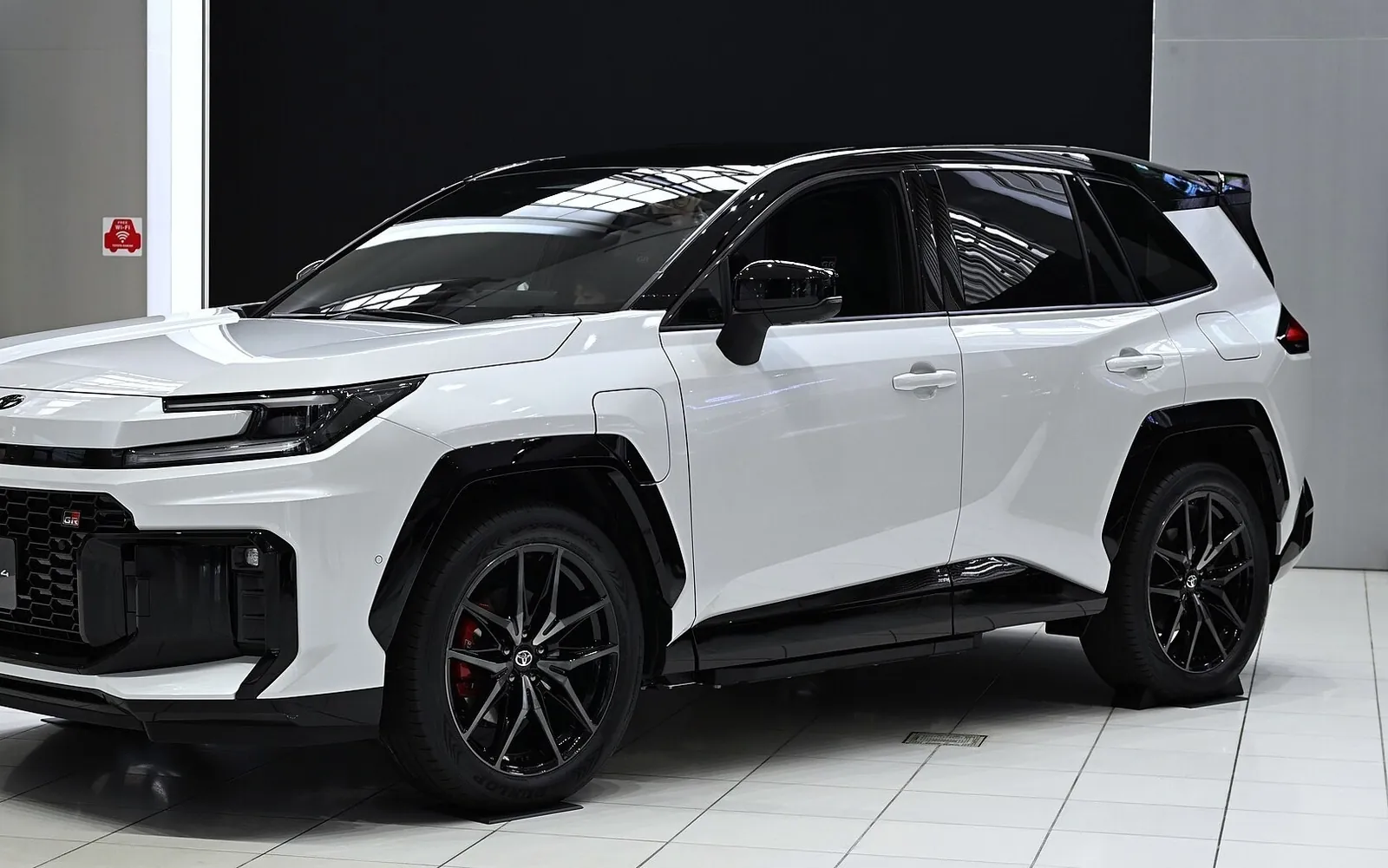
The RAV4 now spans seven grades, 11 variants and two drivetrains. The awkward one for the Cruiser is the XSE plug-in hybrid. For $58,840 plus mandatory $675 paint, the 2WD XSE PHEV makes 201kW and can run on electricity for short trips. Paint included, that’s $2,525 more than a Cruiser 2WD. A cheaper GXL plug-in hybrid is due in early 2027, with pricing still to come.
| Grade | Drivetrain | Price | Key additions |
|---|---|---|---|
| GX | 2WD / AWD hybrid | $45,990 / $49,340 | 17-inch alloys, 10.5-inch screen, fabric seats, built-in dash cam, eight airbags |
| GXL | 2WD / AWD hybrid | $48,990 / $52,340 | 18-inch alloys, power driver's seat, wireless charger, rain-sensing wipers |
| Edge | AWD hybrid | $55,340 | Rugged styling, synthetic leather, heated front seats, power tailgate, 12.9-inch screen |
| XSE | AWD hybrid | $58,340 | Black styling, sunroof, ventilated front seats, mandatory $675 paint |
| Cruiser | 2WD / AWD hybrid | $56,990 / $60,340 | Leather, panoramic roof, head-up display, 360 camera, JBL audio, 20-inch wheels |
| XSE PHEV | 2WD / AWD plug-in | $58,840 / $63,340 | 201kW (2WD) or 227kW (AWD), plus mandatory $675 paint |
| GR Sport PHEV | AWD plug-in | $66,340 | Flagship: GR suspension tune, 20mm wider track, GR styling |
Prices are Toyota manufacturer's list prices before on-road costs, as at November 2026. Dealers listed in-stock Cruisers at $63,232 (2WD, Melbourne) and $67,004 (AWD, Canberra) drive-away on 4 November.
Every hybrid RAV4 makes 143kW. From the GX up, you pay for equipment, not performance, and the plug-ins deliver more power per dollar.
Source: Toyota Australia price list, before on-road costs, as at November 2026. Excludes the mandatory $675 premium paint on XSE grades.
Which RAV4 should you buy?
Buy the GXL hybrid. At $48,990 for the 2WD, it has the same drivetrain, the same safety kit and the same running costs as the Cruiser, and CarExpert rated it the most comfortable of the range. Wong called the GXL front-drive “arguably the value pick”. That leaves $8,000 for a holiday or a decent hail cover if it lives outside.
Buy the Cruiser if you want every comfort feature and you’ve checked the headroom. Skip it if you tow more than 800kg in a 2WD or need the extra power, in which case the XSE PHEV makes more sense. Weighing it against a Kia? Our RAV4 vs Sportage hybrid comparison goes deep, and our best hybrid SUV ranking covers the field.
| Model | Price | Power | Claimed fuel | Braked tow |
|---|---|---|---|---|
| Toyota RAV4 Cruiser 2WD / AWD | $56,990 / $60,340 | 143kW | 4.5 / 4.6L (95) | 800 / 1,500kg |
| Kia Sportage GT-Line hybrid FWD | about $57,370 | 173kW | 4.9L (91) | 1,900kg |
| Hyundai Tucson Hybrid Premium AWD | about $58,350 | 172kW | 5.3L (91) | 1,900kg |
| Honda CR-V e:HEV L | $53,900 drive-away | 135kW | 5.5L (91) | 750kg |
| Nissan X-Trail Ti e-Power e-4orce | $54,580 | 157kW | 6.1L (95) | 1,650kg |
Fuel and towing from each maker's Australian spec sheet, including Kia and Nissan. Prices before on-road costs unless stated, as at November 2026; check current offers with dealers.
The Cruiser is the nicest RAV4 to sit in. The GXL is the same car to drive for $8,000 less, and that’s where we’d stop. For more on choosing the right family SUV, see our best family car guide.
Prices and specifications as at November 2026. Header image: Toyota Australia.


