
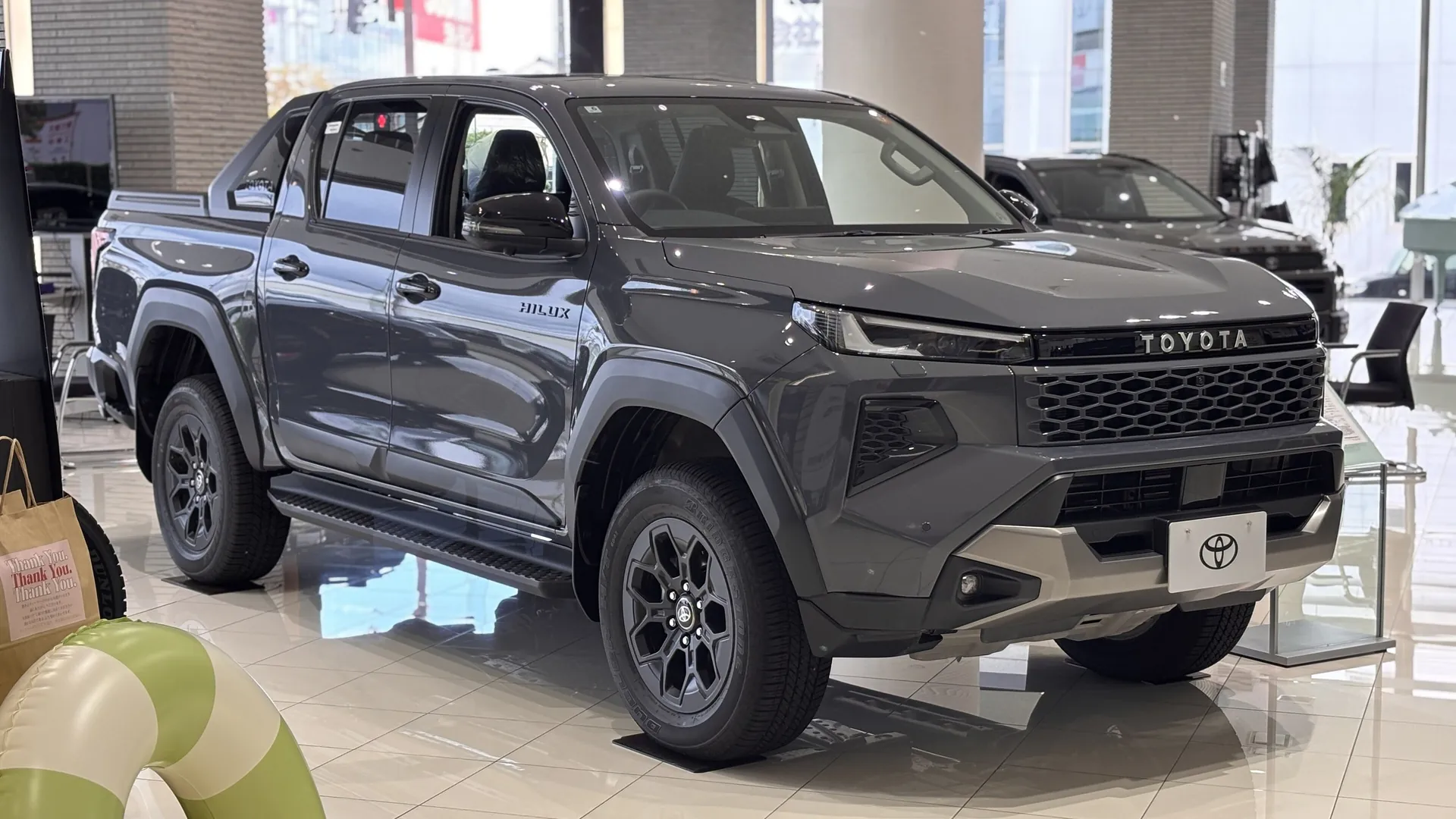

The old HiLux had a dirty secret. Hitch up a 3,500kg caravan and it could carry just 240kg more, about two adults and a fridge. The new one carries 615kg. That single fix, from a 450kg jump in its gross combination mass, does more for the HiLux than its new screens, new face and new steering put together.
This guide covers the ninth-generation HiLux SR5 2.8 48V auto double-cab pick-up 4×4, at $65,990 before on-road costs. It’s the grade most private buyers look at. The HiLux has been on sale since December 2025 and is still one of Australia’s best sellers, with 4,455 delivered in September.
We haven’t driven it. The towing and servicing sums are ours, worked from published specs, and the driving impressions come from Australian road tests, which we’ve linked.
- 615kg payload left at full 3,500kg tow, up from 240kg
- Wireless CarPlay and Android Auto, 12.3-inch screens on every grade
- Electric steering and a comfort-tuned rear end on SR5 and up
- Five-star ANCAP rating valid to December 2031
- Servicing every six months, about $3,950 over five years
- Same 2.8 diesel and cab as before; no full-time 4WD
- Ford now offers seven years' warranty; Toyota five
- No top tether in the rear centre seat
Is the new HiLux a big change?
Less than it looks. The 2.8-litre 1GD diesel carries over with 150kW and 500Nm, so does the six-speed auto, and the cab is largely unchanged from the A-pillar back. What’s new is the steering, which is now electric across the range, retuned suspension, bigger brakes, the 48V system and an all-new dashboard. Think heavy facelift on a stronger foundation, not a clean sheet.
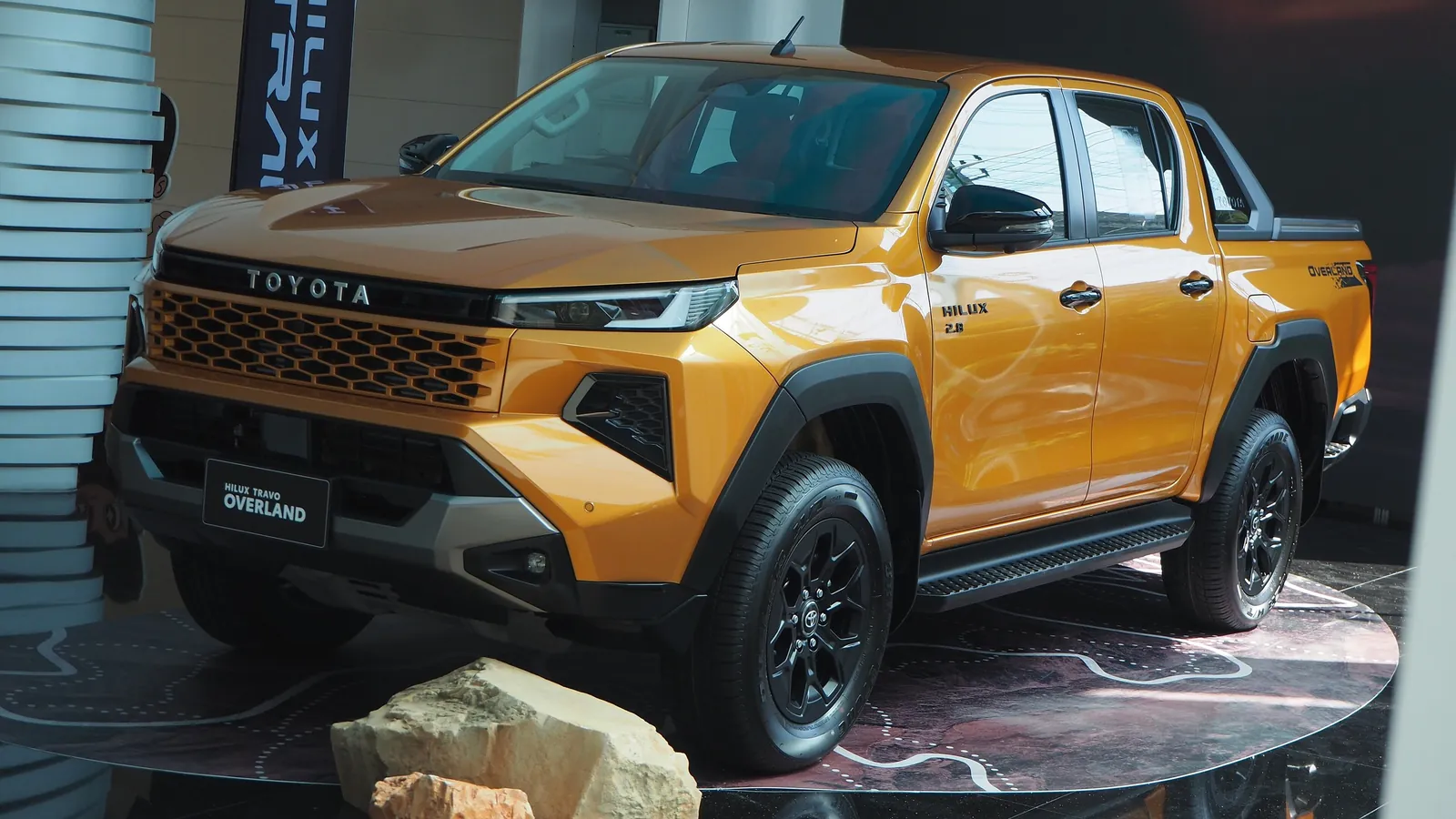
The range has been simplified around that diesel. The 2.4 diesel and 2.7 petrol are gone, so the cheapest HiLux now starts at $33,990, and the SR5 has risen $2,730. A battery-electric HiLux joined in 2026. It starts at $74,990 as a cab-chassis, with pick-ups from $76,490, and Toyota quotes up to 315km of range on the old NEDC test.
Inside: finally, a modern cabin
Every grade now gets a 12.3-inch touchscreen with wireless Apple CarPlay and Android Auto, digital radio and built-in navigation, which was overdue. The SR5 adds a 12.3-inch digital instrument cluster, dual-zone climate control, heated front seats and steering wheel, wireless charging and a cool box. Toyota kept physical buttons for the climate controls, a choice we’d like every maker to copy.
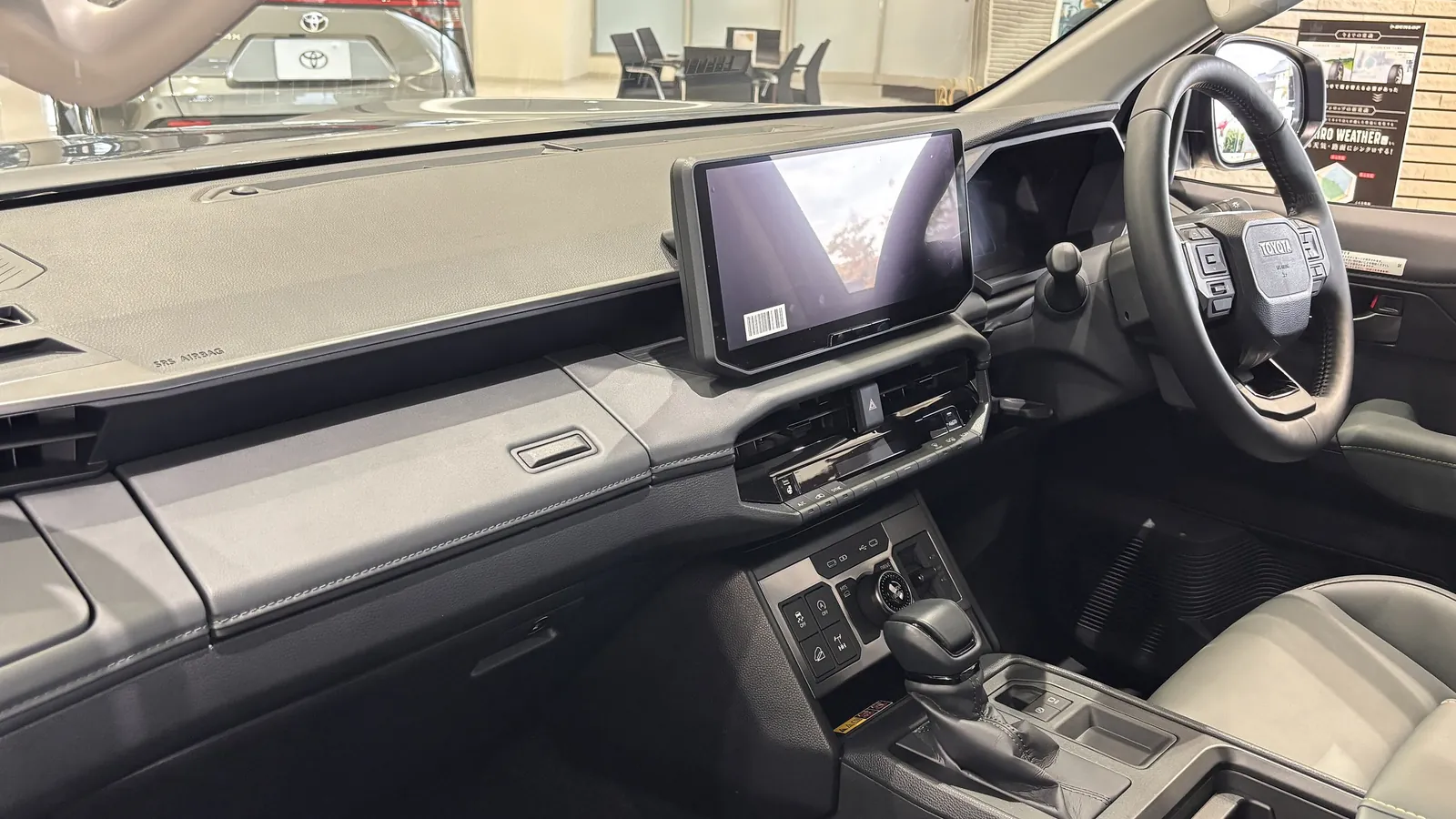
The back seat hasn’t grown. CarExpert’s Rogue review called it cramped, and the 48V battery sits under the rear bench, which eats into storage. If you’re fitting child seats, try them in the car first. Our child-seat tether guide explains what to look for.
A $2,500 Premium Interior pack adds leather-accented trim, an eight-way power driver’s seat and a nine-speaker JBL system. Premium paint is $675. Add on-road costs and a well-optioned SR5 will land past $70,000 drive-away.
What it’s like to drive, according to people who have
The biggest mechanical change is the steering. Hydraulic assistance has gone, replaced by electric power steering. carsales called it the most useful dynamic change, in a test that otherwise described the new HiLux as a facelift with steep price rises and scored it 74 out of 100. The SR5 also gets Toyota Australia’s comfort tune for the rear leaf springs, while WorkMate and SR grades keep a heavy-duty setup better suited to constant loads.
The 48V V-Active system adds a small motor-generator, 8.5kW and 65Nm, that helps the diesel off the line and lets the idle speed drop. The 2.8 itself is unchanged, and so is the part-time four-wheel-drive system, so there’s still no full-time 4WD for wet bitumen or gravel.
The ride is where testers were hardest on it. CarExpert’s Ben Zachariah, in a first drive, said the ride on broken bitumen “borders on unforgivable” even with the SR5’s comfort tune, and thought the six-speed auto felt dated. Dave Morley put 3,500km on an SR5 for 4X4 Australia and found the lane-keep system nudges the ute towards the lane edges and the tub’s tie-down points sit too high.
Claimed fuel use for the SR5 auto is 7.2L/100km, with an 80-litre tank. Morley averaged 7.9 on mostly highway running. Chasing Cars saw 9.1 in mixed driving that included off-road work.
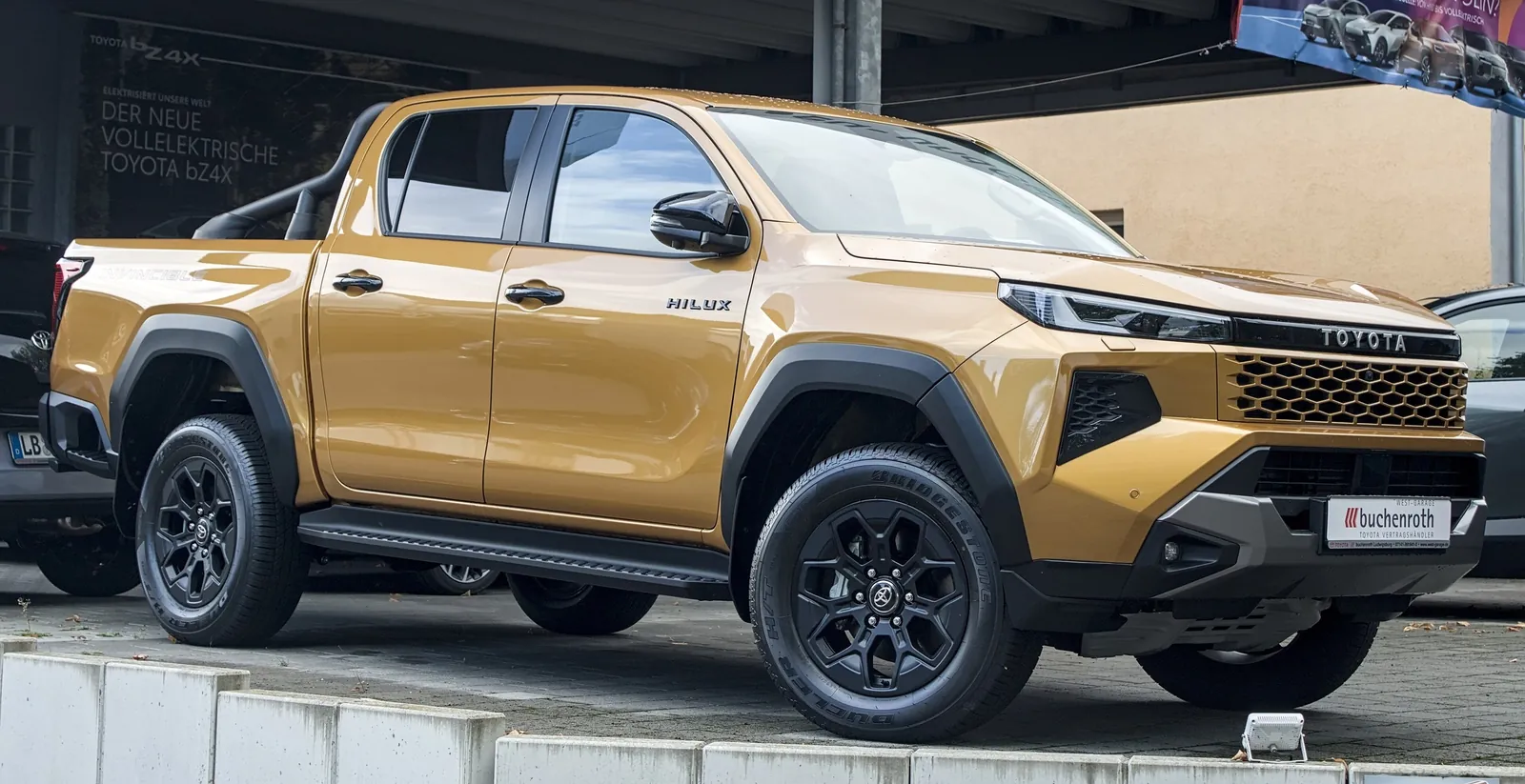
If you want more grunt, the Ranger’s V6 makes 184kW and 600Nm, and our HiLux vs Ranger comparison sets the two side by side. If you want a diesel at all, our petrol vs diesel guide explains why it still makes sense for towing. Off-road, the SR5 keeps low range, a rear diff lock and 224mm of reported ground clearance.
Towing: the fix the HiLux needed
All 4×4 double cabs are rated to tow 3,500kg braked, but that number meant little on the old model. With gross combination mass now 6,300kg, up from 5,850kg, the SR5 pick-up keeps 615kg for people, fuel and gear at full tow. That beats the Tasman SX+ and D-Max LS-U, and trails the Ranger XLT V6 by only 52kg.
The old HiLux left just 240kg once you hitched a 3,500kg van, barely two adults and an esky. The new one leaves 615kg, within 52kg of a Ranger V6. If you tow heavy, this is the single biggest improvement in the new model.
Our calculation: the lower of (GCM minus kerb minus 3,500kg) and (GVM minus kerb minus a 350kg towball load). Kerb, GVM and GCM figures from manufacturer and launch data; Ranger figures are MY26.0. Accessories, bull bars and canopies all come out of these numbers.
Two catches. The HiLux hits its gross vehicle mass limit first, so a heavy bull bar, drawers or a canopy come straight off that 615kg. And a GVM upgrade adds payload but may not lift the combination limit, so ask before you pay for one. A digital rear-view mirror and proper all-terrain tyres are worth budgeting for if you’ll tow regularly.
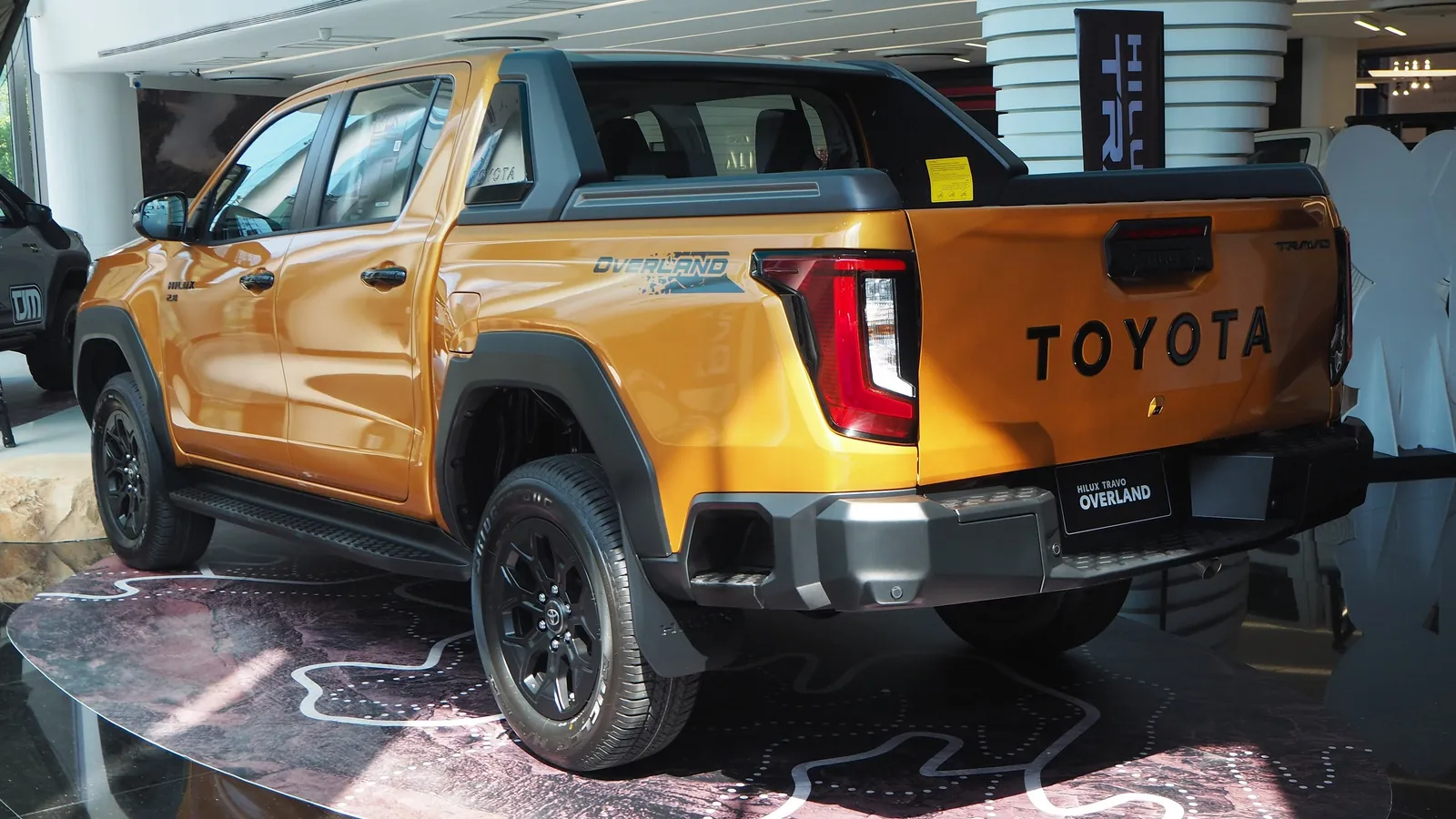
The tub hasn’t changed: about 1,570mm long, 1,645mm wide and 495mm deep, with 1,105mm between the wheel arches on reported measurements. That should mean tub liners, canopies and drawer systems from the previous model carry over, which matters if you’re trading up and want to keep your fit-out. Check with your accessory supplier first. carsales noted the gap between the arches is still too narrow for an Australian pallet.
Where the SR5 sits in the range
The SR5 is the middle of the 4×4 double-cab pick-up range, and the first grade with the comfort suspension tune, 18-inch alloys, a factory tow bar and the bigger digital cluster. The SR below it saves $6,500 but keeps the heavy-duty springs. The Rogue and Rugged X above it cost $6,000 more and add looks and off-road hardware more than towing ability.
| Grade | Price | Worth knowing |
|---|---|---|
| WorkMate | $53,990 + ORC | Heavy-duty tune, 7-inch cluster; the work-site choice |
| SR 48V | $59,490 + ORC | Adds the 48V system and a panoramic camera |
| SR5 48V | $65,990 + ORC | Comfort tune, 18-inch alloys, tow bar, heated seats; our pick |
| Rogue 48V | $71,990 + ORC | Styling and equipment upgrade over SR5 |
| Rugged X 48V | $71,990 + ORC | Off-road focus; not covered by the ANCAP rating |
Source: Toyota launch pricing (manufacturer's list prices before on-road costs). Premium paint $675; Premium Interior pack $2,500 on SR5 and above.
Safety: five stars, with a family catch
The HiLux earned a five-star ANCAP rating in 2025, with 84 per cent for adult protection, 89 per cent for children, 82 per cent for vulnerable road users and 82 per cent for safety assist. It covers every variant except the Rugged X, which is unrated, and it runs until December 2031. Every grade gets autonomous emergency braking, adaptive cruise and blind-spot monitoring.
There’s also a recall to check. Toyota recalled 13,390 new HiLux built from August 2025 to February 2026 and fitted with a genuine bull bar or nudge bar with a light bar, because the wiring could compromise the power steering earth and the steering assistance could cut out. The fix is a free inspection of about 30 minutes, so any used example should have the work done.
Servicing: the expensive part of owning one
This is where the HiLux loses ground. It still needs a service every six months or 10,000km, twice as often as most rivals, and CarsGuide quotes the capped price at $395 a visit. Over five years that’s about $3,950, against $1,596 to $2,810 for the Ranger, D-Max, Triton and Tasman. That’s a lot to ask Toyota’s reliability reputation to cover.
The HiLux needs twice as many visits as its rivals because Toyota kept the six-month, 10,000km interval. At $395 a visit it costs about $1,100 to $2,350 more to service over five years than the rest of this group.
HiLux: $395 a visit as reported at launch; confirm with your dealer, as Toyota's own price lookup isn't publicly readable. Tasman from Kia's plan prices; others from published capped-price schedules. Ranger MY26.5 pricing not yet published.
Our earlier HiLux service cost guide covers the previous generation, which was much cheaper to maintain. Warranty is the other shift. The HiLux has five years with unlimited kilometres, extendable to seven on the engine and driveline with on-time Toyota servicing. Ford now gives seven years on Rangers serviced on time at a Ford dealer, and the Kia Tasman has seven years as standard.
Which HiLux, or which rival, should you buy?
Buy the HiLux SR5 if resale value, dealer coverage in the bush and Toyota’s reputation matter most to you, and you tow up to 3,500kg. Its towing payload fix makes it a properly useful tow vehicle again. Buy a Ranger XLT V6 if you tow heavy every weekend and want more torque, and a Tasman or Triton if you want a longer warranty for less. Kia has been discounting the Tasman hard, with $5,000 cashback on 2025-build SX+ stock in November, so the list prices in the table below flatter the HiLux.
| Ute | Price | Engine | Braked tow | Payload at full tow | Warranty |
|---|---|---|---|---|---|
| Toyota HiLux SR5 48V | $65,990 + ORC | 2.8 TD + 48V, 150kW / 500Nm | 3,500kg | 615kg | 5yr unl. (7yr driveline with Toyota servicing) |
| Ford Ranger XLT V6 | $67,990 + ORC | 3.0 V6 TD, 184kW / 600Nm | 3,500kg | 667kg | 5yr unl. (7yr with on-time Ford servicing) |
| Kia Tasman SX+ | $62,390 + ORC | 2.2 TD, 154kW / 440Nm | 3,500kg | 475kg | 7yr unl. |
| Mitsubishi Triton GLS | From $57,990 d/a | 2.4 TD, 150kW / 470Nm | 3,500kg | 625kg | Up to 10yr / 200,000km (conditional) |
| Isuzu D-Max LS-U | $65,000 + ORC (MY25.5) | 3.0 TD, 140kW / 450Nm | 3,500kg | 435kg | 6yr / 150,000km |
| BYD Shark 6 Premium | $57,900 + ORC | PHEV, 321kW / 650Nm | 2,500kg | Can't tow 3,500kg | 6yr / 150,000km |
Sources: Toyota launch pricing, Ford, Kia, Mitsubishi and Isuzu sites, and launch data, October 2026. + ORC = before on-road costs; d/a = drive-away.
If you never tow, skip the SR5 and save thousands on a Triton GLS or a Kia Tasman, which our Tasman vs Ranger comparison sets against the class leader. If you want a plug-in hybrid, the BYD Shark 6 is faster and cheaper, but tows only 2,500kg in Premium form.
Buying a used HiLux instead? Run a $2 PPSR check first, because utes are more likely than most vehicles to carry finance, and check the bull-bar recall has been done. Toyota also features among our most reliable brands, which is part of what you’re paying for.
On the numbers, this is the first HiLux in years that can tow what its badge promises and still carry the family. It’s also dear to service, and the testers weren’t kind about the ride. If you’re not wedded to the badge, drive a Ranger V6 before you decide. If you are, at least the towing maths finally works.
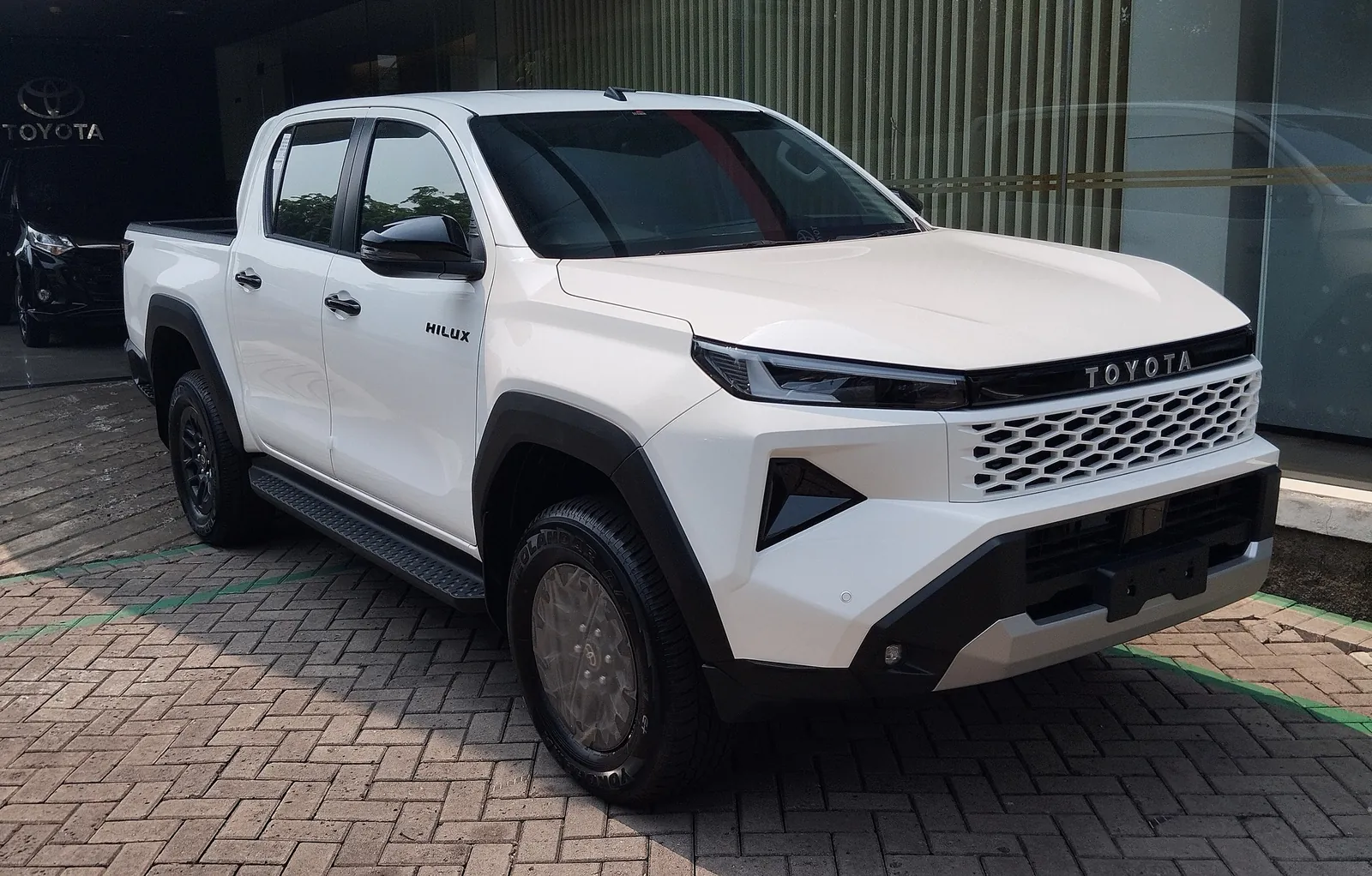
Prices and specifications as at October 2026, for the SR5 2.8 48V auto double-cab pick-up 4×4. Images show overseas-market versions of the new-generation HiLux. Header image: Oq10pass, CC0, via Wikimedia Commons (cropped).


